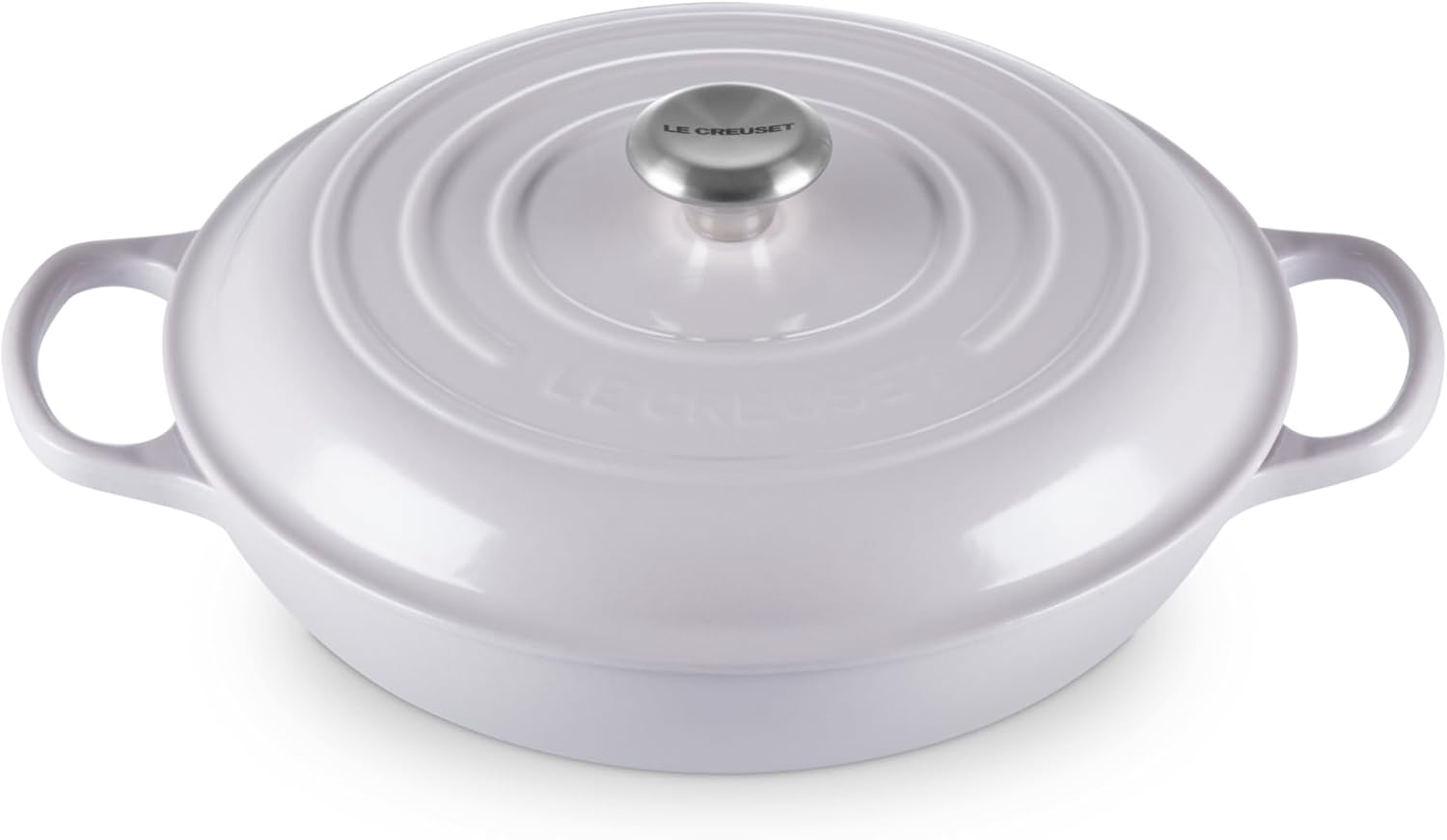
Best Braisers for 2026: Enameled Cast-Iron Picks for Low-and-Slow Cooking
Five picks from budget to premium, the geometry that makes a braiser different from a Dutch oven, and the sizing chart that tells you which one fits your table.
The best braiser for most home cooks in 2026 is the Le Creuset Signature 3.5-Quart Braiser, 11.75 inches across, enameled cast iron with a sand-colored interior that shows the fond, oven-safe to 500°F and right for two to four people.
Where to buy these picks
Affiliate links: we may earn a commission on qualifying Amazon purchases. Policy. Prices show only when checked in the last 24 hours.
- Best Overall: Le Creuset Signature 3.5-Quart Braiser $379.95 at Amazon, Check price on Amazon →
- Best Value: Lodge 3.6-Quart Enameled Cast Iron Casserole $79.90 at Amazon, Check price on Amazon →
- Best Budget: Mueller 6-Quart Enameled Cast Iron Braiser Pan $59.96 at Amazon, Check price on Amazon →
- Best for Beginners: Crock-Pot Artisan 5-Quart Braiser with Glass Lid $55.29 at Amazon, Check price on Amazon →
- Best Large / Premium: Le Creuset Signature 5-Quart BraiserCheck price on Amazon →
Quick answer
Which braiser fits how you cook?
The best value is the Lodge 3.6-Quart Enameled Cast Iron Casserole, with dual loop handles, oven-safe to 500°F and backed by a lifetime warranty. The Mueller 6-Quart Enameled Cast Iron Braiser is the budget pick, deeper than a classic braiser and induction ready. For beginners, the Crock-Pot Artisan 5-Quart Braiser has a glass lid so you can watch the simmer without lifting it, and the Le Creuset Signature 5-Quart Braiser is the large pick, 12.5 inches across, for a table of six or more.
The best braiser for most home cooks in 2026 is the Le Creuset Signature 3.5-quart braiser at $303.95 — wide enough to sear four short ribs in one layer, shallow enough that liquid reduces instead of steaming, and backed by a lifetime warranty. If that number is absurd for a pan you'll use twice a month, the Lodge 3.6-quart enameled cast iron casserole at $79.90 does 90% of the job.
Introduction: what a braiser actually is and why it's not just a shallow Dutch oven
A braiser is a wide, shallow, lidded pan — typically 2.25 to 5 quarts, 10 to 12 inches across, and 2.5 to 3.5 inches deep. A Dutch oven of the same volume is narrower and taller. That geometry difference sounds trivial. It changes the food.
Braising is a two-stage cook: dry-heat sear, then moist-heat simmer with the liquid coming partway up the food, not covering it. Both stages want surface area.
The sear stage needs the meat in a single layer with space between pieces. Four bone-in short ribs occupy about 90 square inches. A 3.5-quart braiser gives you roughly 95 square inches of floor; a 5.5-quart round Dutch oven gives you about 78 in a circle that's also taller, so the walls trap steam. In the Dutch oven you sear in two batches and the second batch steams in the first batch's moisture.
The simmer stage needs partial submersion and controlled reduction. In a braiser, liquid comes a third to halfway up the meat, and the exposed top browns in the oven's dry air while the bottom simmers. That top-browning is where braised food gets its color. In a tall pot the same volume of liquid covers the meat entirely — now you're stewing, which is a fine thing to do but a different dish.
The practical test: can you sear the whole batch at once, and does the meat sit above the liquid line? If yes, you have the right pan.
Our Top 5 Picks
#1 Best Overall: Le Creuset Signature 3.5-Quart Braiser
Verdict: The reference braiser. Buy once.
The Signature 3.5-quart is 11.75 inches across with a sand-colored interior enamel, oven-safe to 500°F, and about 9 pounds with the lid. The light interior is the underrated feature — you can actually see the fond developing, which matters enormously when the difference between "deeply browned" and "burnt" is 40 seconds.
Le Creuset's Signature line updated the handles in 2015 to be about 45% wider than the classic line. On a 9-pound pan coming out of a 325°F oven with mitts on, that's the difference between a confident lift and a scare. The lid has a stainless knob rated to 500°F rather than the older phenolic knob capped at 375°F.
Where the money actually goes: enamel quality and warranty. Le Creuset's enamel is a two-coat process that resists the chipping and crazing that shows up on budget pans after a couple of years of metal-adjacent use. The lifetime warranty is real and honored on manufacturing defects.
Where the money doesn't go: heat performance. Cast iron is cast iron. A $50 braiser and a $300 braiser hold heat almost identically, because the physics is the same iron with the same mass.
Other Signature braiser sizes in stock: the 5-quart in Sea Salt at $429.95, the 3.5-quart Flamme Doree with the crucible knob at $424.95, and the round 3.5-quart in Riviera at $379.95.
#2 Best Value: Lodge 3.6-Quart Enameled Cast Iron Casserole
Verdict: A quarter the price, same physics.
The Lodge 3.6-quart enameled casserole is the braiser-shaped pan for people who correctly refuse to spend $300 on cookware. Dual loop handles, moisture-sealing lid, oven-safe to 500°F, and Lodge's lifetime warranty.
Honest differences from the Le Creuset: the enamel is a single-coat process and slightly more prone to staining (cosmetic, not functional); the rim finish is rougher; and the lid seal is good rather than excellent, so you'll lose marginally more liquid over a four-hour braise. Add a quarter cup of stock at the two-hour mark and you'll never notice.
If you cook two braises a month, this is the correct purchase and the $224 you didn't spend buys a lot of short ribs.
#3 Best Budget: Mueller 6-Quart Enameled Cast Iron Braiser Pan
Verdict: The "try it before you commit" pan.
The Mueller 6-quart sits between a braiser and a shallow Dutch oven — deeper than the Le Creuset, wider than a standard Dutch oven, oven-safe to 500°F, and works on induction.
At six quarts it's the pick if you're regularly cooking for six or more, or if you want one pan that can braise a pork shoulder and make a batch of soup. The trade-off is that it's slightly too deep to be an ideal braiser — expect a bit more steam retention and a bit less top-browning.
The warranty is shorter and the enamel won't age like Le Creuset's. But at $49.98 you can find out whether you actually braise enough to justify the upgrade, and that's a genuinely useful thing to learn for fifty dollars.
#4 Best for Beginners: Crock-Pot Artisan 5-Quart Braiser with Glass Lid
Verdict: The glass lid is the beginner feature.
The Crock-Pot Artisan 5-quart braiser ships with an oven-safe borosilicate glass lid instead of cast iron. For someone learning to braise, being able to see the liquid level and the simmer rate without lifting the lid is worth more than any amount of enamel refinement — every lid lift costs you 25°F and a few minutes of recovery.
Trade-offs: glass doesn't hold heat like cast iron, so the lid contributes nothing thermally, and the whole pan is lighter than the others here, which means it recovers heat more slowly when you add cold meat. Neither matters much for a four-hour oven braise.
#5 Best Large / Premium: Le Creuset Signature 5-Quart Braiser
Verdict: For a table of six-plus.
The 5-quart in Marseille is 12.5 inches across and handles a whole spatchcocked chicken, eight chicken thighs, or six short ribs in one layer. It's also about 12 pounds loaded with a lid, which is a real consideration if you're moving it from a hot oven to a counter.
Buy this size only if you regularly cook for six or more. For a household of two to four, the 3.5-quart is the better pan and the extra $126 buys nothing you'll use.
On the compact end: the Signature 2.25-quart in Artichaut at $303.99 is right for solo cooks and small kitchens — two chicken thighs, a pound of greens, or a single-serving braise. Note that it costs nearly as much as the 3.5-quart, which is a Le Creuset pricing quirk rather than a value judgment.
What to Look For
| Spec | What to want | Why |
|---|---|---|
| Capacity | 3.5 qt for 2–4 people; 5 qt for 5–8 | Undersized means searing in batches |
| Diameter | 11–12.5 in | Single-layer searing |
| Depth | 2.5–3.5 in | Deep enough to hold liquid, shallow enough to reduce |
| Material | Enameled cast iron | Heat retention plus a non-reactive surface for wine and tomato |
| Interior enamel | Light / sand colored | You can see the fond |
| Lid knob rating | 480–500°F | Phenolic knobs cap at 375°F and limit oven searing |
| Handle width | Wide loop handles | 9–12 lb loaded, with oven mitts on |
| Weight | 8–12 lb | Under 7 lb usually means thin casting and hot spots |
| Warranty | Lifetime | The enamel is the failure point, and it fails slowly |
On enamel. Vitreous enamel is powdered glass fused to iron at around 1,500°F. It's non-reactive, which is why you can braise in wine or tomato for hours without a metallic taste — bare cast iron can't do that reliably. It's also brittle: thermal shock and impact chip it, and once chipped, that spot rusts.
On induction. All enameled cast iron works on induction; iron is ferromagnetic. What varies is base flatness. Every pan on this list is flat-bottomed and induction-rated.
Braiser vs Dutch Oven vs Skillet — when to grab which
| Task | Braiser | Dutch oven | Cast iron skillet |
|---|---|---|---|
| Short ribs, 4 servings | ✅ Best | Workable, sear in batches | No lid |
| Coq au vin | ✅ Best | Good | No |
| Soup / stock, 4 quarts | Too shallow | ✅ Best | No |
| Sourdough boule | No | ✅ Best | No |
| Deep frying | No — too shallow | ✅ Best | Workable |
| Chicken thighs, skin-on | ✅ Best | Good | ✅ Good (uncovered) |
| Braised greens | ✅ Best | Fine | Fine |
| Searing steak | Fine | No | ✅ Best |
| Oven-to-table serving | ✅ Best | Good | Fine |
If you own nothing, buy the Dutch oven first — it does more total jobs, including bread and stock. Our best Dutch ovens for 2026 guide covers that side of the decision in full. The 5.5-quart Le Creuset round Dutch oven at $434.95 is the reference; the Lodge cast iron combo cooker at $59.90 is the budget answer and doubles as a skillet.
If you already own a Dutch oven and braise more than twice a month, the braiser is the correct second pot. For a mid-priced alternative in the same family, the Staub 4-quart round cocotte at $149.95 has a black matte interior — better for browning, worse for watching your fond.
Care & seasoning: enamel chip prevention and the no-metal rule
Enamel doesn't need seasoning. It needs to not be shocked or struck.
- No thermal shock. Never put a hot pan under cold water, and don't put a cold pan into a preheated 500°F oven. Enamel and iron expand at different rates; the enamel loses.
- No metal utensils. Wood or silicone. A metal spoon dragged across the base leaves grey marks (harmless carbon transfer) and eventually micro-chips (not harmless).
- Hand wash. Dishwasher detergent is abrasive and dulls the exterior enamel over a few dozen cycles.
- Stains come out with baking soda. Simmer 2 tablespoons in an inch of water for 10 minutes. Do not use steel wool.
- Store with the lid off or a towel between. Lid-on storage traps moisture against the unenameled rim, which is where rust starts.
- Preheat on medium, never high. Cast iron's heat retention is also slow response — a high-heat preheat overshoots badly and scorches the enamel.
Le Creuset's own care and use guidance covers the warranty terms; the short version is that manufacturing defects are covered and thermal shock is not.
Recipes the braiser was born to cook
The pan's purpose is a tough cut, some liquid, and three hours. These are the dishes that justify the counter space. Nearly everything in our Dutch oven dinners roundup works better in a braiser than in the pot it was written for, and the wider surface reduces a fall chili faster than a deep Dutch oven does.
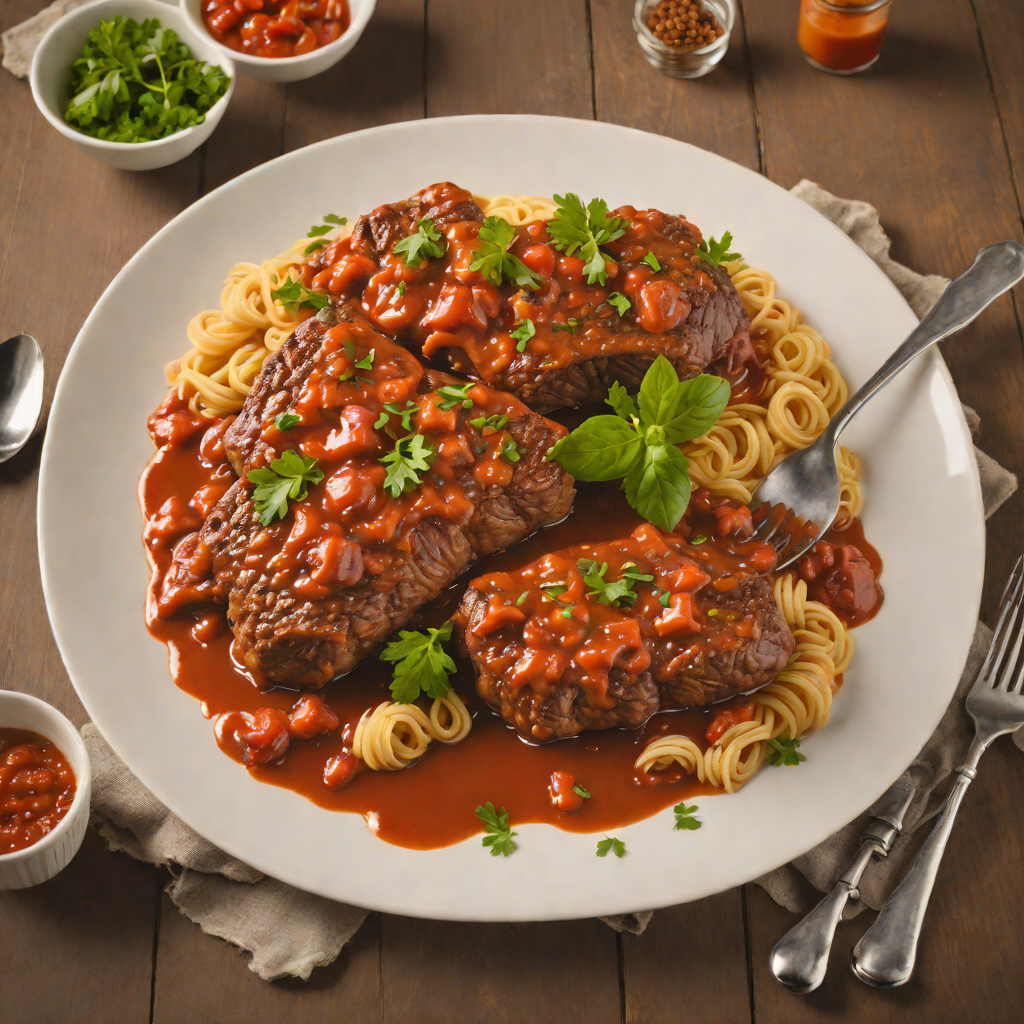
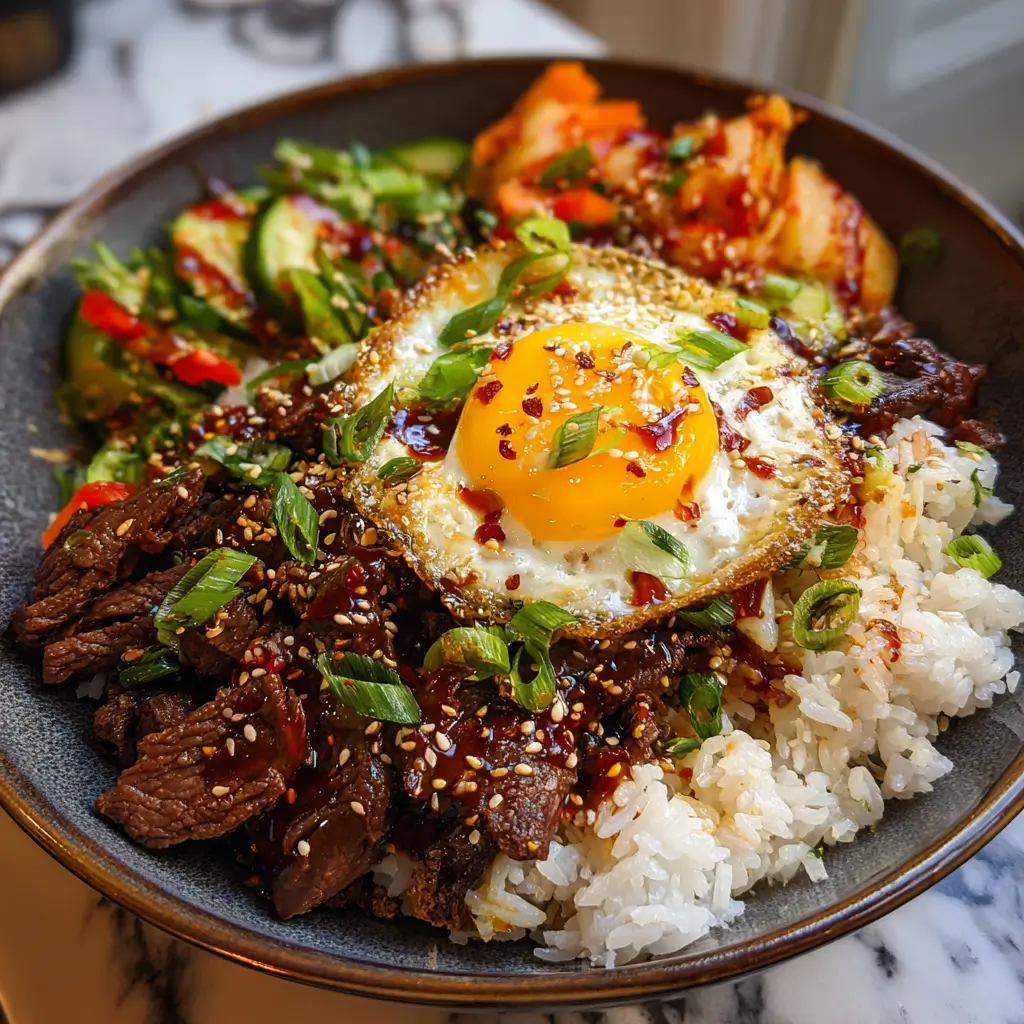
Short ribs are the flagship. Four bone-in ribs, seared hard, then 3 hours at 325°F: Whiskey-Braised Beef Short Ribs with Root Vegetables at 610 calories, Spiced Red Wine-Braised Beef Short Ribs at 480, New York-Style Braised Beef Short Ribs with Root Vegetables at 600, and Spicy Korean-Style Braised Beef Short Ribs with Gochujang at 480.
Coq au vin is the dish the shape was designed around — chicken pieces in a single layer, wine to the halfway line, lid on. Try Coq au Vin, the lighter Coq au Vin (Bistro-Style) at 380 calories, or Slow-Braised Coq au Vin with Pancetta and Mushrooms at 520.
Lamb wants the depth: Slow-Braised Lamb Shanks with Rosemary and Garlic at 650 calories and Oven-Braised Lamb Shoulder with Red Wine and Rosemary at 520. More options in the lamb recipes roundup.
Weeknight braises finish in under an hour: Stovetop Braised Chicken with Lemon and Garlic at 320 calories, Chicken Cacciatore with Olives at 420, Red Wine-Braised Chicken with Mushrooms and Thyme at 420, and Coconut-Lime Braised Caribbean Chicken Thighs at 420.
Pork and vegetables round it out: Five-Spice Braised Pork Belly with Honey and Star Anise at 550 calories, Slow-Cooked Southern Braised Pork Shoulder with Collard Greens at 550, and — proving the pan isn't just for meat — Braised Ethiopian Gomen Wat Collard Greens at 90 calories.
Real-world numbers: what fits in what
| Capacity | Diameter | Serves | Fits |
|---|---|---|---|
| 2.25 qt | 9.5 in | 1–2 | 2 chicken thighs, 1 lb greens |
| 3.5 qt | 11.75 in | 2–4 | 4 short ribs, 6 thighs, 1 spatchcocked chicken (snug) |
| 5 qt | 12.5 in | 5–8 | 6 short ribs, 8 thighs, 3 lb pork shoulder |
| 6 qt (deep) | 12 in | 6–8 | Everything above, plus 4 qt of soup |
Braising temperatures. 300–325°F oven, targeting a liquid surface that barely moves — one bubble every second or two. A rolling simmer at 375°F tightens muscle fiber and produces stringy meat. If your oven runs hot, drop to 300°F.
Time by cut: short ribs 3–3.5 hours; lamb shanks 2.5–3; pork shoulder 3.5–4; chicken thighs 45–60 minutes; beef chuck 2.5–3. Doneness is a texture test, not a temperature: a fork twists in the meat with no resistance.
How we picked
Every product on this page is a currently-stocked, currently-priced item in our catalog with a real rating count — no aspirational picks that are out of stock or discontinued, and no models we couldn't price. Where a widely-recommended braiser wasn't available (Staub's Chistera-lidded braiser, for example, isn't in stock as of this writing), we named the closest in-stock alternative rather than sending you to a dead listing.
Ranking weighted, in order: geometry (does the pan's diameter and depth actually suit braising, or is it a Dutch oven with a marketing label), enamel quality and interior color, lid rating and seal, handle ergonomics under load, rating count as a proxy for durability at scale, and price. Heat performance was deliberately not a differentiator, because at these wall thicknesses it isn't one.
Five mistakes people make with a new braiser
1. Preheating empty on high. Cast iron responds slowly, so a burner on high overshoots by hundreds of degrees before you notice. Medium, five minutes, then add oil. High heat on empty enamel is the fastest way to craze it.
2. Overfilling the liquid. Braising liquid comes one-third to one-half up the food. Cover the meat completely and you're stewing — the top never browns and the sauce never concentrates. This is the single most common braising error.
3. Crowding the sear. If the pieces touch, they steam. Sear in two batches even in a big pan rather than fitting everything at once with no gaps; the fond you build in the first batch is the base of the sauce.
4. Skipping the reduction. When the meat is tender, pull it out and boil the liquid down by a third to a half on the stovetop. That five-minute step is the difference between "braised meat in broth" and an actual sauce.
5. Cleaning it hot. Let the pan cool to warm before it meets water.
One more, for the first cook: don't start with short ribs. Start with chicken thighs. A 50-minute braise teaches you what the simmer should look like and what the fond should smell like, and it costs $8 instead of $35 if you misjudge it.
When NOT to buy a braiser
If you cook fewer than about one braise a month, a Dutch oven you already own does this job well enough that the second pan is decoration. Braisers are single-purpose in a way Dutch ovens aren't — you can't make stock in one, you can't bake bread in one, and you shouldn't deep fry in one.
Also skip it if your storage is tight. A 3.5-quart braiser needs about a square foot of cabinet floor and can't nest inside anything. Cooks in small kitchens are usually better served by the Lodge combo cooker, which is two pans in one footprint.
And skip the premium tier entirely if the only thing pushing you there is the color. The physics is identical at $50 and $430. What you're buying above about $80 is enamel longevity, warranty, and the fact that it looks good enough to put on the table — all real, none of them about how the food tastes.
Browse more in Cookware, Kitchen Gadgets, and Utensils & Tools, or compare against the best woks of 2026 if a different high-heat pan is the actual gap in your kitchen.
Sources
Frequently asked questions
Do I need a braiser if I already own a Dutch oven?
What size braiser should I buy for a family of 4?
Le Creuset vs Staub — which is worth the premium price?
Can I use metal utensils in an enameled braiser?
What can I actually cook in this thing?
Recipes to try with cast iron
Put your gear to work — save any recipe to My Recipes (no account needed) and send its ingredients to Instacart in one tap.
Shop cookware on AislePrompt →Browse the full kitchen shop →