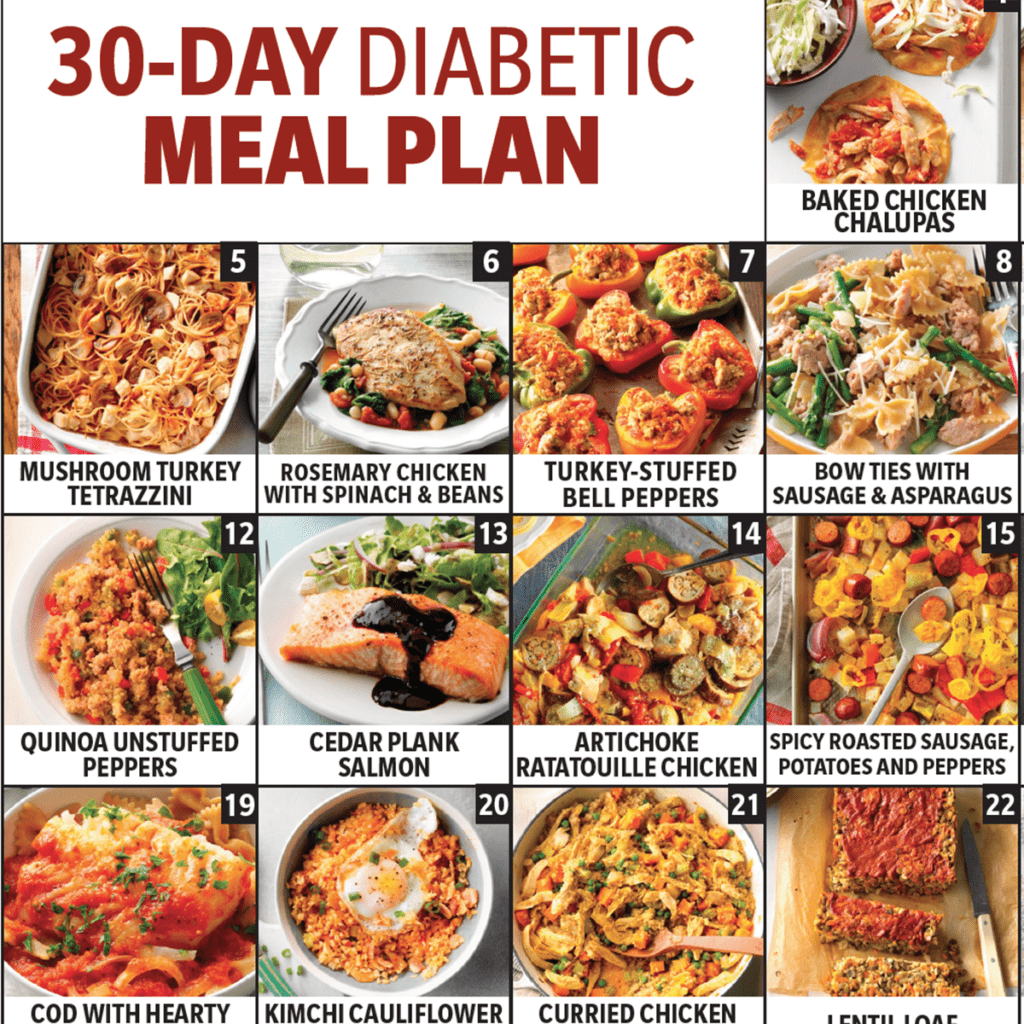
The Complete Diabetic Meal Plan: 30+ Blood-Sugar-Friendly Recipes for 2026
A plate-method framework, 7-day menu, and 10 catalog-tested recipes that keep blood sugar steady
A diabetic meal plan is a weekly eating pattern built around non-starchy vegetables, lean protein, and high-fiber slow carbs in measured portions — typically 45-60g of carbohydrates per meal and 15-20g per snack — designed to keep blood glucose steady, support gradual weight loss, and lower long-term A1C. It works for type 1, type 2, prediabetes, and gestational diabetes alike.
Get a free week of easy dinners
Seven weeknight dinners with the shopping list already totalled, sent Sunday. No account needed, unsubscribe in one click.
No spam, unsubscribe in one click. Recipes, shopping lists and Instacart carts all work without an account either way.
Introduction: Eating Well with Diabetes
Living with diabetes does not mean eating sad, beige food. It means eating predictable food — meals built so your blood sugar climbs gently after eating instead of spiking and crashing. As of 2026, the CDC's nutrition guidance for people with diabetes is clear on the fundamentals: build meals around non-starchy vegetables, choose lean proteins and whole-grain carbohydrates, drink water instead of sweetened beverages, and pay attention to portion sizes. There is no single "diabetes diet" — there's a flexible pattern that fits Mediterranean, low-carb, DASH, or plant-forward preferences.
This guide gives you a 7-day meal plan, 10 tested recipes from the AislePrompt catalog, a smart-shopping list, and the kitchen tools that make portion control automatic. The food is plain, the carb counts are honest, and every recipe uses ingredients you can buy at any grocery store. If you have type 1 diabetes or are on insulin, treat this as a framework to discuss with your endocrinologist or certified diabetes care and education specialist (CDCES) — your insulin-to-carb ratio matters as much as the menu.
A few ground rules before we dive in. First, eat on a schedule. Going six hours without food, then crushing a 90g-carb dinner, is the most common pattern people with diabetes need to break. Three meals plus 1-2 small snacks, spaced 3-4 hours apart, keeps glucose steadier than any single food choice. Second, check labels for added sugar, not just total carbs. A bowl of plain Greek yogurt and a sugary "diabetic-friendly" yogurt drink can hit your meter very differently. Third, the best meal plan is the one you actually follow. We've designed this around real recipes you'd be happy to eat on a Tuesday in November — not photogenic salads you give up on by Thursday.
The Plate Method: A Simple Framework
The plate method is the easiest portion-control system ever invented, endorsed by the American Diabetes Association and the NIDDK, and you can run it without a single measuring cup. Take a standard 9-inch dinner plate (this is non-negotiable — a 12-inch "American" plate breaks the math). Then build it like this:
- Half the plate: non-starchy vegetables. Broccoli, cauliflower, spinach, kale, bell peppers, zucchini, asparagus, green beans, salad greens, tomatoes, cabbage, mushrooms, cucumbers, Brussels sprouts. These average 5g of carbs per serving and you can essentially eat them in unlimited quantities.
- One quarter: lean protein. Skinless chicken or turkey, fish, shellfish, eggs, tofu, tempeh, low-fat cottage cheese, plain Greek yogurt, beans, or lentils. Aim for a portion roughly the size of a deck of cards (about 3-4 ounces cooked).
- One quarter: carbohydrate. Brown rice, quinoa, whole-grain bread, sweet potato, beans, lentils, corn, peas, or whole-wheat pasta. About 1/3 to 1/2 cup cooked. This is where most people overshoot — the carb quarter should not take up half the plate just because pasta is delicious.
Add a serving of fruit or a small glass of milk on the side if you want — that's another 15g of carbs, so account for it. The plate method gives you a meal that lands in the 45-60g carb range almost automatically, with enough protein and fiber to slow digestion and prevent a glucose spike. The Mediterranean Lemon-Herb Grilled Chicken with Roasted Vegetables is what this looks like on a real plate: half the plate is roasted zucchini, bell peppers, and tomatoes; one quarter is grilled chicken thigh; the other quarter is a scoop of cooked farro.
Carb Counting: What 45g Looks Like
If the plate method is the lazy-day strategy, carb counting is the precision tool. It matters most if you're on insulin or have wildly variable post-meal glucose. The target most diabetes educators use as of 2026: 45-60 grams of carbohydrate per meal for women, 60-75g for men, with adjustments for body size, activity, and medication. Here is what 45g of carbs actually looks like — these are real-world portions, not lab-bench grams:
| Food | Portion | Carbs (g) |
|---|---|---|
| Brown rice, cooked | 1 cup | 45 |
| Quinoa, cooked | 1 cup | 39 |
| Whole-wheat pasta | 1 cup cooked | 37 |
| Sweet potato, baked | 1 medium (5 oz) | 26 |
| Black beans | 1 cup | 41 |
| Lentils, cooked | 1 cup | 40 |
| Whole-grain bread | 2 slices | 28-32 |
| Apple | 1 medium | 25 |
| Berries (mixed) | 1 cup | 17 |
| Plain Greek yogurt | 1 cup | 9 |
| Steel-cut oats, cooked | 1 cup | 27 |
| Corn tortilla | 1 (6") | 12 |
Two things jump out. First, you can build a 45g-carb meal that looks like a real dinner — say, 1/2 cup brown rice (22g) + 1 cup black beans (41g, but you only need half so 20g) + non-starchy vegetables (5g) = 47g, plus 25-30g of protein from chicken or tofu. Second, "low carb" does not mean "no carb" — most diabetics on this pattern feel better at 130-180g of total daily carbs spread across meals than at 50g, because the very-low-carb track often crashes energy levels and triggers compensatory snacking on whatever's in the cupboard.
A practical rule: read the Nutrition Facts panel, divide total carbohydrate by serving size, and subtract dietary fiber to get net carbs (your meter will respond to net carbs more than total carbs). Sugar alcohols partially count — divide them by two and subtract that from total carbs.
Best Foods for Blood Sugar Control
These are the workhorses of a diabetes-friendly kitchen. Stock these and you'll find it easier to throw together a meal that keeps glucose flat:
- Non-starchy vegetables (essentially unlimited). Spinach, kale, arugula, broccoli, cauliflower, asparagus, green beans, zucchini, bell peppers, cabbage, Brussels sprouts, mushrooms, tomatoes, cucumbers, onions, garlic.
- Lean proteins. Skinless poultry, fish (especially fatty fish — salmon, mackerel, sardines for omega-3s), shellfish, eggs and egg whites, plain Greek yogurt, cottage cheese, tofu, tempeh, edamame.
- Slow carbs / high-fiber starches. Lentils, chickpeas, black beans, kidney beans, steel-cut oats, barley, farro, quinoa, brown rice, sweet potatoes, whole-grain bread (look for ≥3g fiber per slice).
- Healthy fats. Olive oil, avocados, raw nuts (almonds, walnuts, pistachios in 1-ounce portions), seeds (chia, flax, hemp, pumpkin), nut butter (no added sugar).
- Fruits with low glycemic load. Berries (strawberries, blueberries, raspberries, blackberries), cherries, apples, pears, oranges, grapefruit, peaches, plums — eaten whole, not juiced.
- Vinegar and acids. A tablespoon of vinegar with a meal blunts post-meal glucose by 10-20% in several controlled trials. Lemon juice works too. Use them generously.
Fatty fish deserves a special mention. Per the Mayo Clinic's diabetes-diet guidance, aim for two servings a week. The Maple-Dijon Baked Salmon with Roasted Asparagus gets you protein, omega-3s, and a roasted non-starchy vegetable in one sheet pan, and the maple syrup quantity is small enough (about 1 teaspoon per serving) that it doesn't move the needle on blood sugar.
Foods to Limit (Not Eliminate)
There is no banned-foods list, but several categories spike blood sugar so reliably that you should treat them as occasional, not staples:
- Sugary drinks. Regular soda, sweet tea, sweetened coffee drinks, fruit juice (even 100% juice), sports drinks, and lemonade. A 20-oz soda contains roughly 65g of sugar and will spike most people's glucose by 80-120 mg/dL within an hour. Diet sodas and zero-sugar sparkling waters are fine.
- Refined grains. White bread, white rice, white pasta, instant oatmeal packets (the flavored kind), pretzels, crackers, and most cereals. These digest fast and hit your meter hard. Switch to whole-grain versions and portion-control them.
- Fried foods and trans fats. Anything labeled "partially hydrogenated" is a slow-burn cardiovascular risk and worsens insulin resistance. Fast-food fried fish, donuts, commercial baked goods — out.
- Processed meats. Bacon, sausage, deli meats, hot dogs. High sodium, often nitrate-cured. The American Heart Association links daily processed-meat consumption to a 32% higher risk of type 2 diabetes onset. Once a week is fine; daily is not.
- Concentrated sweets. Candy, full-sugar desserts, ice cream, pastries. The smarter approach is one small portion (e.g., one square of dark chocolate) consumed at the end of a meal that contained protein and fiber, not on an empty stomach.
- High-carb tropical fruits and dried fruit. Mango, pineapple, and banana have more concentrated sugars than berries. Raisins, dates, dried mango, and dried apricots concentrate the sugar even further while removing some of the water and fiber. Eat them — just in smaller portions.
Notice nothing on this list is forbidden. The goal is a 90/10 pattern: 90% of your calories come from blood-sugar-friendly foods, 10% are whatever you want, and your A1C drops anyway.
7-Day Diabetic-Friendly Meal Plan
Every day below averages 1,500-1,700 calories, 130-160g net carbs (split roughly 45g per meal, 15-25g per snack), 90-120g protein, and ≥25g fiber. Scale portions up by 20-30% if you're a larger frame or more active. Each linked recipe pulls up the full ingredient list, instructions, and a one-click meal-plan add.
Monday
- Breakfast: One-Pan Spinach and Feta Egg Skillet (310 cal, 8g net carbs) + 1 slice whole-grain toast (15g)
- Lunch: Cumin-Spiced Chickpea and Quinoa Bowl (440 cal, 42g net carbs)
- Snack: 1 oz almonds + 1 small apple (22g)
- Dinner: Mediterranean Lemon-Herb Grilled Chicken with Roasted Vegetables (480 cal, 38g net carbs)
Tuesday
- Breakfast: Plain Greek yogurt (1 cup, 9g) + 1/2 cup mixed berries (9g) + 2 tbsp chia seeds + walnuts
- Lunch: Leftover Mediterranean grilled chicken bowl
- Snack: Carrot sticks + 2 tbsp hummus (12g)
- Dinner: Maple-Dijon Baked Salmon with Roasted Asparagus (440 cal, 18g net carbs) + 1/2 cup wild rice (20g)
Wednesday
- Breakfast: Steel-cut oats (1/2 cup dry, ~27g cooked) topped with raspberries and cinnamon
- Lunch: Slow-Simmered Lentil and Vegetable Soup with Tomato (380 cal, 44g net carbs) + side salad
- Snack: 1 hard-boiled egg + cherry tomatoes
- Dinner: Turkey-Stuffed Bell Peppers with Zucchini (420 cal, 30g net carbs)
Thursday
- Breakfast: 2-egg veggie scramble (spinach, mushrooms, bell pepper) + 1 slice whole-grain toast
- Lunch: Leftover stuffed peppers + small side salad with olive-oil vinaigrette
- Snack: 1 oz pistachios + 1 small pear (25g)
- Dinner: Cauliflower "Rice" Stir-Fry with Shrimp and Broccoli (360 cal, 22g net carbs)
Friday
- Breakfast: One-Pan Spinach and Feta Egg Skillet + 1/2 grapefruit (10g)
- Lunch: Big salad — mixed greens, grilled chicken, chickpeas, cucumber, feta, olive-oil dressing (35g carbs)
- Snack: Plain Greek yogurt (1 cup) + cinnamon
- Dinner: Baked Cod with Fresh Herbs and Lemon (290 cal, 6g net carbs) + 1/2 cup farro (30g) + roasted Brussels sprouts
Saturday
- Breakfast: Cottage cheese (1 cup, 8g) + strawberries + sliced almonds + flaxseed
- Lunch: Leftover cod + farro bowl with extra greens
- Snack: Apple slices + 2 tbsp natural peanut butter (no added sugar)
- Dinner: Cauliflower 'Rice' Stir-Fry with Chicken and Vegetables (380 cal, 22g net carbs)
Sunday
- Breakfast: Veggie omelet (3 eggs) + 1/4 avocado + 1 slice whole-grain toast (16g)
- Lunch: Slow-Simmered Lentil and Vegetable Soup with Tomato + whole-grain crackers (15g)
- Snack: Lemon Blueberry No-Bake Parfait with Greek Yogurt — yes, dessert is allowed (24g)
- Dinner: Grilled chicken thigh + sheet-pan roasted vegetables + 1/2 cup quinoa (20g)
If you batch-cook on Sunday — grill 2 lbs of chicken, roast a sheet pan of vegetables, simmer a pot of lentil soup, and hard-boil six eggs — you've already prepped four lunches and have two dinners' worth of components ready. That's the single biggest win for people who say "I don't have time to eat this way."
Top 10 Diabetic-Friendly Recipes
These are pulled from the AislePrompt catalog because they meet every test we apply to a diabetic-friendly recipe: ≤45g net carbs per serving, ≥20g protein, ≥6g fiber, and no added sugar above 5g. Click through for full ingredient lists, instructions, and nutrition details.
1. Mediterranean Lemon-Herb Grilled Chicken with Roasted Vegetables — the flagship plate-method dinner. 38g carbs, 36g protein, 7g fiber.
2. Maple-Dijon Baked Salmon with Roasted Asparagus — omega-3 winner, sheet-pan easy. 18g carbs, 32g protein.
3. Cumin-Spiced Chickpea and Quinoa Bowl — plant-forward, batch-cooks beautifully. 42g carbs but 12g of those are fiber.
4. Turkey-Stuffed Bell Peppers with Zucchini — freezer-friendly, makes 4 portions. 30g carbs, 28g protein.
5. Slow-Simmered Lentil and Vegetable Soup with Tomato — heartiest soup on the list, 44g carbs but ≥15g fiber.
6. Cauliflower "Rice" Stir-Fry with Shrimp and Broccoli — 22g net carbs total; ideal for low-carb weeks.
7. One-Pan Spinach and Feta Egg Skillet — 10-minute breakfast that holds in the fridge for 3 days.
8. Lemon Blueberry No-Bake Parfait with Greek Yogurt — the dessert you can actually have. 24g carbs, no refined sugar.
9. Baked Cod with Fresh Herbs and Lemon — 6g carbs, 26g protein, ready in 18 minutes.
10. Cauliflower 'Rice' Stir-Fry with Chicken and Vegetables — the no-leftover weekday dinner.
Cycle through these for two weeks before adding new recipes; you'll learn how each one actually moves your glucose meter, which matters more than any published nutrition label.
Diabetes-Smart Shopping List
A diabetes-smart shopping list is mostly what isn't on it — no sugary drinks, no refined-grain snacks, no sweetened yogurts, no jarred sauces with added sugar in the top three ingredients. Here's a one-week list for the 7-day plan above, broken by section:
Produce
- 2 lbs mixed non-starchy vegetables (broccoli, cauliflower, zucchini, bell peppers)
- 1 lb asparagus, 1 lb green beans
- 4 large bell peppers (for stuffing)
- 2 large zucchini
- 1 bag fresh spinach, 1 bag mixed greens, 1 bag arugula
- 1 lb cherry tomatoes
- 2 lemons, 1 grapefruit, 2 apples, 2 pears, 1 pint berries (mixed)
- 1 avocado
- 2 yellow onions, 1 head garlic, 1 piece fresh ginger
- Fresh herbs: parsley, cilantro, basil, dill
Protein
- 2 lbs boneless skinless chicken breasts or thighs
- 1 lb wild salmon fillet
- 1 lb cod fillet
- 1 lb ground turkey (93% lean)
- 1 lb peeled raw shrimp
- 1 dozen large eggs
Pantry (slow carbs + healthy fats)
- 1 lb dry lentils (red or brown)
- 1 can chickpeas (or 1/2 lb dry)
- 1 cup quinoa, 1 cup brown rice, 1 cup farro
- 1 cup steel-cut oats
- 1 loaf whole-grain bread (≥3g fiber/slice)
- Extra-virgin olive oil, apple-cider vinegar
- Raw almonds, walnuts, pistachios, chia seeds, flaxseed
Dairy
- 32 oz plain Greek yogurt (full fat or 2%, never flavored)
- 16 oz cottage cheese
- 4 oz feta cheese
Frozen
- 1 bag riced cauliflower
- 1 bag frozen mixed berries (no added sugar)
- 1 bag frozen broccoli florets
A weekly grocery run with this list, for a household of two, runs roughly $95-$135 at a mainstream US grocery store in 2026 — well under the "diabetes-friendly food is expensive" stereotype. The expensive part of the standard American diet is processed snacks, sugary drinks, and takeout. Strip those out, and a clean diabetes diet is cheaper, not pricier.
Kitchen Tools That Make Portion Control Easier
You can run this whole plan with a chef's knife, a sheet pan, and a measuring cup. But four pieces of gear remove enough friction that adherence goes up dramatically:
- A digital food scale. This is the single highest-leverage purchase. Eyeballing 1/2 cup of rice routinely turns into 3/4 cup, which is 14 grams of carbs you didn't account for. Browse the kitchen gadgets catalog for a scale in the 0.1-gram precision tier — that's enough resolution for portioning grains, nuts, and dense ingredients.
- 9-inch dinner plates. As covered in the plate-method section, the size of your plate quietly drives portion size. Most "American" dinner plates are 11-12 inches and bake an extra 200-300 calories into every meal. A set of true 9-inch plates costs about $30 from the dining and serving category and is the cheapest weight-loss intervention you'll ever buy.
- Glass meal-prep containers. A six-pack of 3-cup glass containers ($28-$40) lets you portion Sunday's batch-cook into Monday through Friday lunches the moment the food cools. Out-of-sight, out-of-mind doesn't work for diabetes; in-the-container-already-portioned does. The storage and containers section has compartmentalized variants that pre-split protein + carb + vegetable.
- A good chef's knife and a sharp paring knife. Most home cooks underspend on knives, which means produce prep takes twice as long, and a 30-minute meal plan turns into a 45-minute one. A serviceable 8-inch chef's knife runs $35-$80; see knives and cutting for current picks. Pair with a 4-inch paring knife for fruit and small tasks.
A bonus item that pays for itself in a month: an air fryer or convection toaster oven in the small appliances section. Air-fried tofu, salmon, and roasted vegetables come out crisp without the oil load of pan-frying — and you'll actually eat the vegetables when they're crispy on the edges.
Frequently Asked Questions
What foods should I avoid with type 2 diabetes?
Refined sugar, sugary drinks, white bread, white rice, fried foods, processed snacks, and high-carb desserts spike blood sugar most aggressively. Trans fats and fatty cuts of red meat also worsen insulin resistance over time. The smarter focus is on whole grains, lean proteins, non-starchy vegetables, legumes, and healthy fats. AislePrompt filters recipes by carbs-per-serving so you can stay in your target range without reading every label.
How many carbs per meal for a diabetic?
Most diabetes educators target 45-60 grams of carbs per meal and 15-20 grams per snack, totaling roughly 135-180g daily. The exact number depends on weight, medications, and activity level — your endocrinologist or dietitian should set yours. Spreading carbs evenly across meals prevents the post-meal glucose spikes that hurt A1C readings more than total daily carbohydrate intake does.
Can a diabetic meal plan help with weight loss?
Yes — most diabetic-friendly meal plans naturally support weight loss because they emphasize protein, fiber, and vegetables while limiting refined carbs and added sugar. Losing 5-10% of body weight improves A1C, insulin sensitivity, and blood pressure in most people with type 2 diabetes. The 7-day plan in this guide averages 1,500-1,700 calories with adjustable servings for higher activity levels or larger frames.
Are fruits okay on a diabetic diet?
Most whole fruits are fine in controlled portions. Berries (strawberries, blueberries, raspberries) have the lowest glycemic load and are diabetic-friendly favorites. Apples, pears, oranges, and stone fruits work in single-serving portions. Avoid fruit juice, dried fruit, and large servings of tropical fruits like mango and pineapple, which raise blood sugar fastest because of concentrated sugars and the absence of slowing fiber.
Do I need to count calories or just carbs?
Counting carbs has a larger immediate impact on blood sugar than counting calories. That said, total calorie balance still determines weight, and weight loss is the single biggest lever for improving type 2 diabetes outcomes long-term. Most readers do best tracking carbs strictly and calories loosely. The AislePrompt meal planner shows both totals so you can see how each meal stacks up against your daily targets.
Related Resources
For deeper dives into specific eating patterns that overlap with diabetes-friendly eating, the meal-plan builder lets you generate a fully personalized weekly menu against your carb and calorie targets, and the shopping list feature auto-compiles the grocery run from your selected recipes. If you want to layer in additional structure, the Mediterranean and DASH patterns documented across AislePrompt's diet guides overlap heavily with what's above — both lean on vegetables, lean proteins, whole grains, and olive oil and have decades of clinical evidence behind them. Loop in your care team before making large changes to your medication-paired diet, and recheck your A1C every three months to confirm the pattern is working for you.
Frequently asked questions
What foods should I avoid with type 2 diabetes?
How many carbs per meal for a diabetic?
Can a diabetic meal plan help with weight loss?
Are fruits okay on a diabetic diet?
Do I need to count calories or just carbs?
Sources
Plan a week of meals in two minutes.
Tell our AI what you have and what you like — it builds your plan, shopping list, and Instacart cart. No account needed.
Try free →