Grilling Guide: 20+ Recipes, a 3-Zone Fire and Pull Temps
Build a 3-zone fire, pull meat by thermometer, and you'll outcook your neighbors at every cookout — here's the playbook with 20+ catalog recipes.
Affiliate disclosure: AislePrompt may earn a commission on qualifying purchases made through Amazon and Instacart links in this article, at no additional cost to you. See our affiliate policy →
Summer grilling recipes come down to one rule: build a 3-zone fire so you can sear, finish, and rest meat without burning anything. That mental model plus an instant-read thermometer turns weekend cookouts from inconsistent guessing into reliable, restaurant-grade results — across mains, sides, vegetables, and the marinades that hold the season together from June through Labor Day.
What you'll use with it
A one-second read means one second with your hand over a 600°F grill, not eight. The thermometer guide has five picks under $100 and explains why a backlit, auto-rotating display matters when you grill after dark. Read the instant-read thermometer guide →
Instant-read thermometer guide’s top pick: ThermoMaven Professional Digital Meat Thermometer $19.99 at Amazon, Check price on Amazon →Instant-read thermometer guide’s Best Value pick: Alpha Grillers Digital Instant Read $14.97 at Amazon, Check price on Amazon →Instant-read thermometer guide’s Best for Beginners pick: TempPro TP19 Waterproof Thermocouple $27.99 at Amazon, Check price on Amazon →A brisket or a grilled turkey cooks for hours with the lid shut. A leave-in probe stays in the meat and alarms at your target; a second probe can watch the breast or the grill temperature. Read the leave-in probe thermometer guide →
Leave-in probe thermometer guide’s Best Value pick: TempPro TP17 Dual-Probe $26.99 at Amazon, Check price on Amazon →
Introduction: grilling season is here — what's actually new this year
Peak grilling season runs from Memorial Day through Labor Day, but the heart of it is June through August. As of 2026, the home-cook landscape has shifted in three specific ways. Pellet grills (Traeger, Recteq, Weber SmokeFire) are now in roughly one in four US backyards, up from one in eight in 2020 — which means more home cooks are doing real low-and-slow brisket and ribs without dedicated offset smokers. Lump charcoal pricing has stabilized after the post-pandemic spike, with a 20-lb bag of Jealous Devil running $26–$32 at most hardware stores. And induction-burner side cookers are quietly taking over outdoor kitchens for finishing sauces and starches because they handle wind better than propane side burners.
The fundamentals haven't changed. Whether you're working a $50 Weber kettle or a $3,000 Yoder offset, the cooks below all reduce to the same five mechanical questions: what temperature, direct or indirect, how long, when to flip, when to pull. This guide walks each one, with 20+ catalog-tested recipes you can take straight to the grill this weekend.
The 3-zone fire setup that makes home cooks dangerous-good
A 3-zone fire is the single most useful concept in live-fire cooking. Set up gas or charcoal so one side is direct-high heat (500°F+ at grate level), the middle is medium (350–400°F), and one side runs indirect — coals or burners off, food just sits there bathed in residual oven heat (~225–275°F). This isn't a sophisticated technique; it's about giving yourself somewhere to MOVE food when it's about to burn. Most home cookouts fail because everything cooks on direct flame: steaks char outside and stay raw inside, chicken thighs flame up from rendered fat and turn black before the bone is done.
For a kettle: dump a full chimney starter of lit coals on one half, leave the other half empty. Vents wide open on the hot side, half-closed on the cool side. For a 3-burner gas grill: high on one end, off on the other, middle on medium. For a 6-burner: hot at one end, indirect at the other, two transition zones in between. Lid down once food's on, lid open only to flip or move.
The 3-zone fire is non-negotiable for thick proteins like ribeye, pork tenderloin, and chicken thighs. You sear on the hot side, slide to indirect to finish to temperature, then rest off-grill on a wire rack. The same logic carries skewered and high-fat cuts: short ribs need to render fat over indirect heat first, then crust over direct heat at the end. The Serious Eats grilling fundamentals guide is the canonical reference if you want to go deeper.
Direct vs indirect: a one-paragraph mental model
Direct heat is fast and intense — 500°F+ at the grate, ideal for thin cuts under 1.5 inches (skirt steak, flank, chops, burgers, shrimp, vegetables that need char). Indirect is slow and even — 225–325°F with the lid down, ideal for thick cuts (whole chickens, pork shoulder, brisket, ribs) and anything that needs to render fat before the exterior is finished. The hand test: hold your palm 5 inches above the grate and count "one Mississippi, two Mississippi" — high heat is 2 seconds before you pull away, medium is 4, low is 6+. The instant-read thermometer makes this guesswork obsolete for anything thicker than a hot dog.
Best grilling proteins by season (June: shrimp + chicken, July: ribs + brisket, August: skirt + lamb)
Hardware-store butcher cases telegraph the season. June is shrimp, boneless chicken thighs, and flatiron steak — quick cooks for warm-but-not-brutal weather and weekday cookouts. July is when the long-cook proteins peak: spare ribs, brisket, pork shoulder. The 4th of July weekend is the unofficial start of brisket season because it's the first stretch where most cooks have a full Saturday to babysit a 14-hour cook. August is the connoisseur month: skirt steak (cheap, intense, perfect at 130°F), lamb chops (now in season from domestic farms), and any cut of pork that benefits from the smoke ring you can only get with a hard 4-hour wood-fire bath.
Match the protein to the day's commitment:
| Time you have | Best protein bets | Heat / method |
|---|---|---|
| 20 minutes | Shrimp skewers, chicken thighs (boneless), zucchini, peaches | Direct high |
| 45 minutes | Flank steak tacos, lamb chops, salmon, ribeye | 3-zone direct + rest |
| 2 hours | Whole chicken, pork tenderloin, half-rack ribs | Indirect 325°F |
| 4–6 hours | Spare ribs, pork shoulder | Indirect 225°F + smoke |
| 10–16 hours | Brisket, beef shoulder clod | Indirect 225°F + smoke |
5 must-make grilled mains (recipe cards with cook times + temps)
These are the catalog mains we'd serve at any cookout this season. Each has been tested on a Weber kettle and a 4-burner gas grill so the timing translates either way.
1. Wood-Grilled Ribeye with Charred Scallion Chimichurri — A 1.5-inch ribeye seared 2 minutes per side over direct heat, then moved to indirect until the center hits 125°F (medium-rare). Rest 10 minutes off-grill before slicing across the grain. The chimichurri goes on at the table. Total time: 25 minutes including rest.
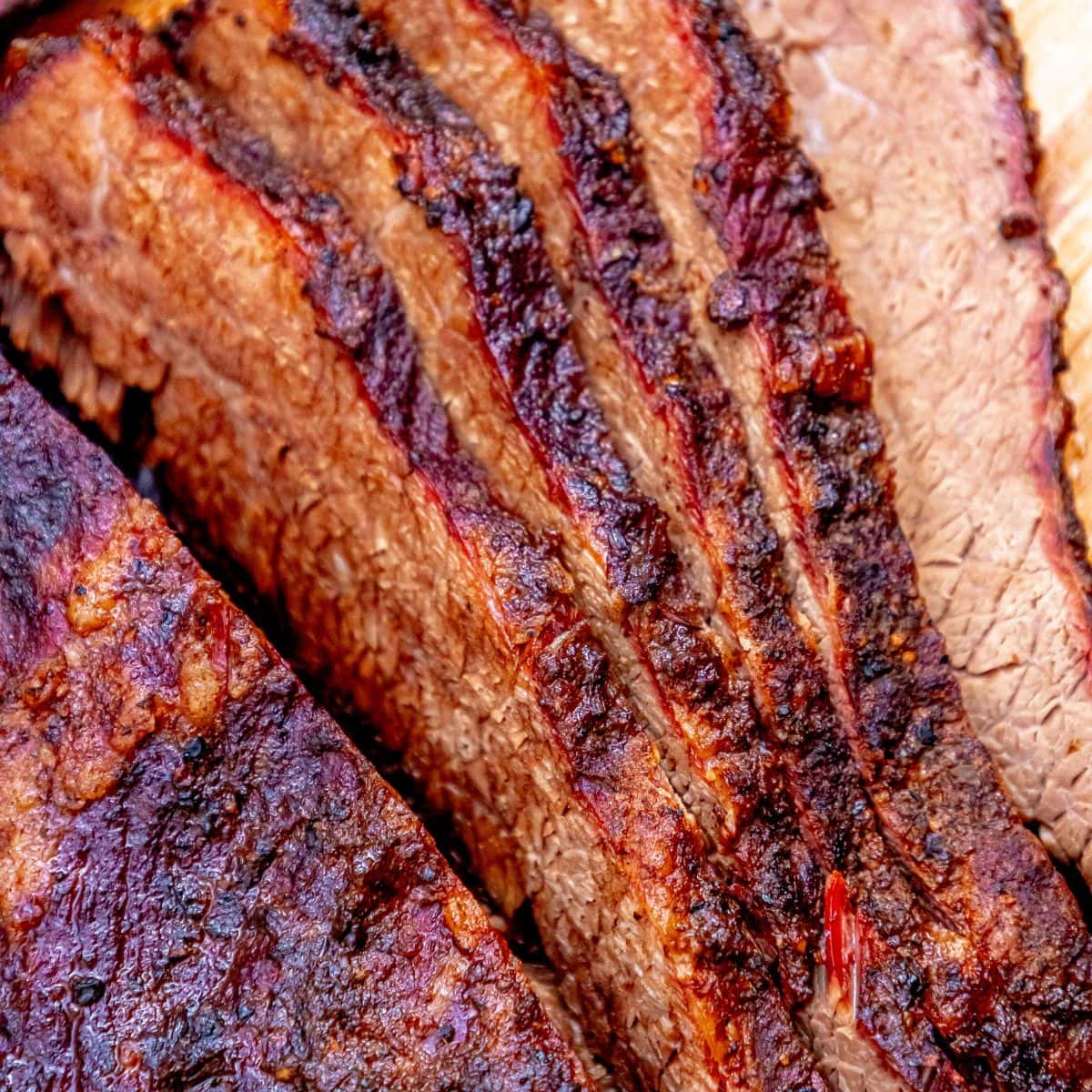
2. Alvarado-Style Smoked Brisket with Chipotle Rub — A 12-pound packer brisket trimmed to a quarter-inch fat cap, rubbed the night before, smoked at 225°F over post oak until the flat hits 165°F (~6 hours), then wrapped in butcher paper until the point probes like room-temperature butter at 203°F (~6 more hours). Rest in a dry cooler for 90 minutes before slicing.
3. Spanish-Style Grilled Marinated Pork Tenderloin — A two-tenderloin combo (about 2 pounds total) marinated 4 hours in smoked paprika, sherry vinegar, and garlic. Direct sear at 500°F for 2 minutes per side, then indirect at 325°F until the thickest part hits 140°F (about 12 minutes). Pulls juicy at 145°F internal after rest.
4. Serious Korean BBQ Short Ribs — Flanken-cut beef short ribs (the thin cross-cut style) marinated in pear-soy-garlic-sesame for 4 hours, then grilled hot and fast — 2 minutes per side directly on a screaming-hot grate. The marinade caramelizes into a lacquered crust. Sweet, savory, and the fastest crowd-pleaser on this list.
5. Authentically Grilled Lemon-Herb Chicken Thighs — Bone-in skin-on thighs marinated 2+ hours in lemon, oregano, garlic, and olive oil. Skin-side down over indirect heat with the lid closed for 25 minutes, then a 4-minute flip-and-crisp over direct. Pull at 175°F internal — bone-in thighs are forgiving and tastier above the breast-meat 165°F target.
The hard rule on every cut here: use an instant-read thermometer (our instant-read thermometer guide has picks under $100). Pull steak at 125°F for medium-rare (it carries over to 130°F resting), pork at 140°F (carries to 145°F), chicken thighs at 175°F. The right knife at the slicing board matters too — see our knives picks for the brisket slicer and the boning knife that turn a whole packer into clean slices.
5 grilled sides that aren't corn-on-the-cob (but include the corn)
A great cookout lives or dies on sides. Skip the bagged-coleslaw default. These five rotate through every menu we run from Memorial Day forward.
| Side | Cook time | Notes |
|---|---|---|
| Charred elote-style corn | 12 min | Direct high; husk on for 8, husk off and char for 4. Cotija + chile + lime crema. |
| Aperol watermelon salad | 5 min (no grill) | Cubed watermelon, feta, mint, Aperol-shallot vinaigrette. Make ahead. |
| Grilled chicken-and-asparagus salad | 15 min | See linked recipe — works as a side for a steak plate. |
| Grilled portobello caps | 10 min | Mushrooms hold heat better than tomatoes; great for vegetarian guests. |
| Smoky beans | 20 min | Canned cannellini, hot smoked paprika, garlic, on the indirect side in a cast-iron skillet. |
The two catalog standouts are Grilled Chicken and Asparagus Salad with Balsamic Glaze (eat it warm, dress it cold) and Grilled Portobello Mushrooms with Goat Cheese — the goat cheese melts into the gills and you serve it like a small open-faced pizza. Both translate to a vegetarian guest's whole plate if you serve them with a starch.
5 grilled vegetable techniques (smash, char, plank, foil, grill-basket)
Vegetables are where home cooks lose the most ground to restaurants. The five techniques below cover 90% of what shows up at a cookout.
Smash: parboil small potatoes 12 minutes, drain, smash with the bottom of a glass to half-inch thickness, oil and salt, then grill direct-high 4 minutes per side. The exterior crisps; the interior stays creamy.
Char: the dry-pan move — onions, peppers, scallions, halved romaine — go on the hottest part of the grate, oiled, hit hard for 90 seconds per side. Pull while there's still some snap.
Plank: wood plank (cedar, oak, alder) soaked 1 hour, set on indirect heat, then food on top. Fish takes plank smoke better than any other method. The Cedar-Planked Alaskan Sockeye Salmon with Wild Onion Compote is the canonical home-cook plank recipe.
Foil: the "hobo packet" for delicate things — sliced peppers, halved cherry tomatoes, sliced fennel. Olive oil, salt, herbs, sealed tight, indirect 20 minutes. The vegetables steam in their own juices.
Grill-basket: the cheapest tool that earns its keep — perforated stainless basket for anything too small to grate-grill (chickpeas, sliced okra, halved Brussels sprouts, cubed eggplant). The basket lets you toss without losing pieces to the coals.
For Mediterranean-style mixed-vegetable assemblies, Mediterranean Grilled Vegetable and Chickpea Skewers with Olive Oil is the template — pre-cook the chickpeas, skewer with peppers, zucchini, and red onion, brush with garlic-lemon oil. Pre-cooking the legumes is the trick most home cooks miss.
5 marinades + rubs (Texas, Korean, Mediterranean, jerk, BBQ)
Marinades break into two physics groups: acid-based (citrus, vinegar, wine — work on the surface, denature proteins fast, never marinate over 4 hours or the texture turns mealy) and enzyme-based (pineapple, papaya, kiwi — penetrate deeper, max 2 hours or the meat becomes mush). Rubs are different — they're flavor, not tenderization, and they need contact with dry meat to form a crust.
1. Texas brisket rub (50/50 kosher salt and coarse black pepper). That's the whole recipe. Half a cup of each, mixed. Coat trimmed brisket the night before, rest uncovered in the fridge so the surface dries. The 12-hour smoke does the rest.
2. Korean bulgogi marinade. Soy, brown sugar, grated Asian pear, garlic, sesame oil, scallion, gochugaru, black pepper. The Asian pear has a natural enzyme that tenderizes; the sugars caramelize on a hot grate. 4 hours marinate, hot-and-fast cook.
3. Mediterranean herb marinade. Olive oil, lemon, garlic, oregano, thyme, salt. Universal — works on chicken, fish, lamb, vegetables. 1–4 hours. The base technique behind half the catalog grilled-protein recipes.
4. Jamaican jerk paste. Scotch bonnet (or habanero), scallion, thyme, allspice, brown sugar, lime, soy, ginger. Spicy, sweet, fragrant. Try the Punch of the Caribbean Jerk Chicken Skewers — paste the chicken 6 hours minimum for the heat to settle.
5. Memphis dry rub for ribs. Paprika, dark brown sugar, kosher salt, black pepper, granulated garlic, granulated onion, dry mustard, cayenne. Heavy coat, refrigerate 4+ hours, smoke at 225°F until the meat pulls back from the bone. No glaze — let the crust do the work.
For a Mexican-style steak-taco crossover, Mexican-Spiced Grilled Flank Steak Tacos uses a dry-rub-then-citrus approach: rub the steak with cumin, ancho, garlic, salt 30 minutes ahead, then squeeze lime over right when it comes off the grill. The rub stays on; the lime brightens.
A quick crowd-pleaser when guests are already on the patio: Herb-Infused Mediterranean Grilled Shrimp Skewers take 4 minutes total. Soak wooden skewers an hour first or they char black before the shrimp turn pink.
Food-safety temps + the 4-hour rule for outdoor parties
Outdoor cookouts are where food safety goes sideways most often. The two numbers you need to know come from the USDA's food-safety guidance: 40°F (the top of the cold-zone) and 140°F (the bottom of the hot-zone). Any cooked food held between those for over 4 hours total has to be tossed — and at 90°F+ ambient outdoor weather, that window shrinks to 2 hours.
Internal pull temps (use an instant-read):
| Protein | Pull temp | Carryover-to | Notes |
|---|---|---|---|
| Steak (medium-rare) | 125°F | 130°F | Rest 10 min, slice against grain |
| Steak (medium) | 135°F | 140°F | Same |
| Pork tenderloin / chops | 140°F | 145°F | USDA-safe at 145°F resting |
| Chicken breast | 160°F | 165°F | Carryover is real — pull early |
| Chicken thigh (bone-in) | 175°F | 180°F | Forgiving above 165°F |
| Spare ribs | 195°F probe-tender | 198°F | Bend-test the rack |
| Brisket | 203°F probe-tender | 205°F | Like room-temp butter |
| Shrimp | Opaque + curled | n/a | Visual only — 2 min/side |
| Salmon | 125°F | 130°F | Translucent center is fine |
Outdoor-buffet rules: keep cold things below 40°F in coolers with ice. Hot things go on the grill's indirect side or a warming rack above 140°F. Serve in small batches and replace platters fresh — never top up old food with new (the old becomes a bacterial seed). Always-cold proteins (poached chicken, deviled eggs, shrimp cocktail) sit on ice underneath the serving dish, not just next to it.
The 4-hour clock starts when food leaves the grill or comes out of the cooler — not when guests arrive. Set a phone timer when you put the platter out and you'll never have to guess.
Into fall: grilling or smoking the Thanksgiving turkey
The same 3-zone fire roasts a turkey and frees the oven for the sides. Set the bird on the indirect side over a drip pan, shut the lid and hold the grill around 325°F; a 12- to 14-pound bird is the practical limit for a standard 22-inch kettle. Spatchcocking (cutting out the backbone and pressing the bird flat) cooks it faster and more evenly. Smoking instead? Run the smoker at 275–325°F, not brisket-low 225°F, or the skin turns rubbery.
Doneness works like the chicken rows in the table above. The USDA-safe temperature is 165°F, checked in the thickest part of the breast and the innermost thigh. Pull the breast around 160°F and let carryover finish it while the bird rests, loosely tented, for 30 minutes.
With the lid shut for two to three hours, this is the cook a leave-in probe earns its keep on: one probe in the thigh, a second in the breast or on the grate to watch the grill temperature. Our leave-in probe thermometer guide picks five, and the instant-read thermometer guide covers the check before you carve.
Grill gear that's actually worth buying
The 12-piece BBQ tool set you got as a wedding present has six tools nobody uses. The four tools below cover 95% of cookouts.
1. Digital instant-read thermometer ($15–30). The single best $20 you'll spend on grilling. A ThermoPop or ThermoWorks Classic transforms an inconsistent home cook into a reliable one in one weekend. Skip the dial-style ones — they read slow and drift. Our instant-read thermometer guide names the current top picks.
2. Chimney starter ($20). For charcoal users only — fills with briquettes or lump, ignites with a newspaper underneath, gives you hot coals in 15 minutes with zero lighter fluid. Saves money on lighter fluid forever and the food tastes better.
3. Long-handled tongs and a sturdy grill brush. $25 combined. Tongs should be 16-inch minimum — closer and your hand cooks. Brush should have replaceable bristle heads; the all-wire kind shed and end up in food. The utensils section has both.
4. Heavy cast-iron griddle or grill-pan insert ($35–80). Turns any grill into a flat-top for smash-burgers, eggs, vegetables that need contact heat. Lodge makes the cheap-and-good version; FINEX makes the heirloom version.
Optional but pays off: a leave-in 2-probe thermometer (Thermoworks Smoke, Inkbird IBT) for low-and-slow cooks where you need both pit temp and meat temp on your phone from inside the air-conditioned house. For long brisket cooks, this is the difference between a fun weekend and a 12-hour porch shift. Our leave-in probe thermometer guide picks five, from a wired two-probe unit under $50 to a two-probe wireless set with a Wi-Fi base.
A solid set of knives & cutting tools — chef's knife, paring, slicer — makes the prep and the carve. A 10-inch granton slicer is the difference between a brisket that looks like a restaurant plate and one that looks like a pile of beef. And for storing the leftovers (because there will be leftovers): airtight glass containers from the storage and containers line beat plastic for sauces with vinegar or citrus.
For the full season, also worth considering: a cookware cast-iron skillet for the smoky beans and side-burner work, and a few decent small appliances like a vacuum sealer for marinade-prep ahead of cookouts.
Sources
- USDA / Foodsafety.gov — Keep Food Safe: The Four Steps — official temperature, holding, and cross-contamination guidance referenced in the food-safety section above.
- Serious Eats — The Food Lab Complete Guide to Grilling — Kenji López-Alt's exhaustive guide to direct vs indirect, thermal mass, and the 3-zone fire setup.
- Cook's Illustrated — 2026 Summer Grilling Essentials — current-year gear tests informing the grill-gear picks in this guide.