High-Protein Meal Prep: 5-Day Plan + Shopping List (100g+ Per Day)
A weekly plan that lands at 100 to 130g of protein per day, with 10 curated recipes, a Sunday 90-minute prep flow, and the aisle-grouped shopping list.
High-protein meal prep is the single fastest way to take guesswork out of your week. Cook five dinners and ten portable mini-meals on Sunday afternoon, hit 100 to 130 grams of protein every day from Monday through Friday, and stop thinking about food. This guide gives you the exact 5-day plan, the macros for every meal, the shopping list grouped by aisle, and a 90-minute Sunday prep flow that sets the whole thing up.
Get a free Sunday meal-prep plan
One batch cook, five lunches that still hold on Thursday, and a single consolidated Instacart cart. Sent Saturday.
No spam, unsubscribe in one click. Recipes, shopping lists and Instacart carts all work without an account either way.
Introduction: Why 100g of Protein Is the Threshold That Changes Body Composition
There is a long-running debate about protein intake, and most of it is noise. The signal is this: once daily protein clears roughly 1.6 grams per kilogram of body weight (around 100 to 120g for a typical adult), the body has enough raw material to repair training-induced muscle damage and to keep the appetite-suppressing effect of protein working through the afternoon. Below that threshold, training results stall, cravings sharpen around 3 p.m., and the scale moves the wrong way even when calories are nominally controlled. The Harvard T.H. Chan School of Public Health places the active-adult range at 1.2–2.0 g/kg, and the NIH's review of dietary protein and muscle mass shows the response curve flattening above ~1.6 g/kg — so 100 to 130g/day is the sweet spot for most readers without overshooting.
The reason most people fail to hit that number is not motivation. It is logistics. Protein is the macro that most needs planning — you cannot wing 30g at a meal three to four times a day without thinking ahead, and the modern food environment is engineered around carb-and-fat convenience foods. The fix is to do the thinking once a week and then coast.
How Much Protein You Actually Need (and How to Hit It)
Pick your daily target before anything else.
- Fat-loss / recomp: 1.6–2.0 g per kilogram of target body weight. A 150-pound person aiming to lose 10 pounds targets ~115–125g daily.
- Muscle gain: 1.6–2.2 g per kilogram of current body weight. A 170-pound lifter targets 125–150g daily.
- General health / preserving muscle past 40: 1.2–1.6 g per kilogram of current body weight.
To hit 100g+, anchor protein to every eating occasion. The simplest mental model is four meals at 25g each or three meals at 30g + one snack at 20g. Anything less than 20g per meal and you are leaning on supplements to backfill, which works but is more expensive and less satisfying than real food.
The recipes in this plan are tuned so that each dinner-sized serving lands at 25 to 38g of protein and each breakfast/snack lands at 15 to 25g. Stack any three meals and you are over 80g before you have even thought about a fourth.
The 5-Day High-Protein Meal Plan at a Glance
Total weekly protein: 615g across 25 eating occasions. Total weekly calories: ~9,000 (1,800/day average — adjustable in 200-cal swings up or down).
| Day | Breakfast | Lunch | Dinner | Snack | Daily protein |
|---|---|---|---|---|---|
| Mon | Greek yogurt parfait (20g) | Grilled chicken rice bowl (38g) | Salmon quinoa bowl (38g) | Cottage cheese (15g) | 111g |
| Tue | Veggie scramble + chia (22g) | Tuna white-bean salad (25g) | Turkey meatballs + zucchini (30g) | String cheese × 2 (16g) | 93g |
| Wed | Greek yogurt parfait (20g) | Steak fajita bowl (32g) | Shrimp stir-fry (25g) | Whey shake (25g) | 102g |
| Thu | Veggie scramble + chia (22g) | Grilled chicken rice bowl (38g) | Cottage cheese vegetable bake (24g) | Hard-boiled eggs × 2 (12g) | 96g |
| Fri | Overnight oats + protein (28g) | Salmon quinoa bowl (38g) | Lentil chickpea curry + chicken (32g) | Greek yogurt cup (15g) | 113g |
Each day clears the 90g floor; three of five days clear 100g; total weekly average is 103g. If your target is higher, add a 25g whey shake post-workout — that pushes the weekly average to 125g.
Day-by-Day Breakdown with Macros
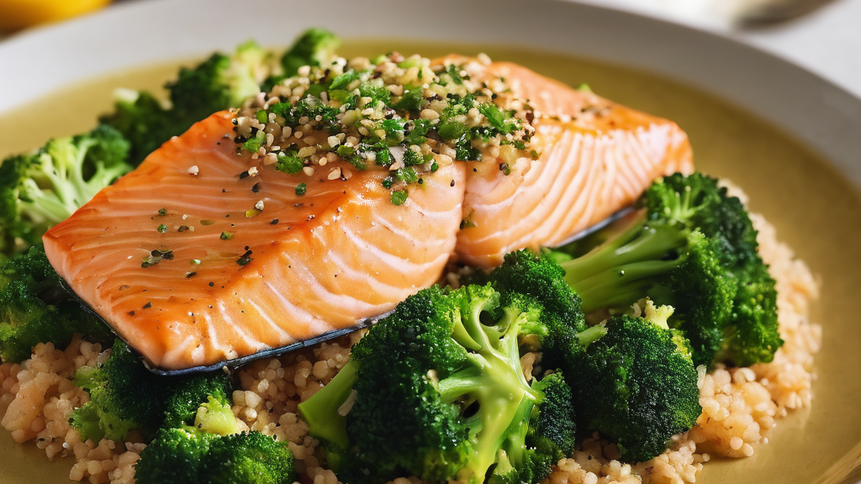
Monday is the highest-protein day on purpose. Coming off a weekend with less structure, anchor the week with two large mains (chicken bowl at lunch, salmon bowl at dinner) so you start in surplus. Build the lunch from the Brazilian-Style Black Bean and Rice Bowl with Grilled Chicken — 38g protein, 420 calories, holds together in the fridge for four days. Dinner is the Miso-Glazed Salmon and Quinoa Bowl with Steamed Broccoli: 38g protein, 480 calories, omega-3 dense.
Tuesday rotates in white meat (turkey) and white fish (canned tuna) to balance the saturated-fat load from Monday's beef-friendly week. Lunch is the Creamy Canned Tuna and White Bean Salad with Dill Vinaigrette — 25g protein, 300 calories, ten minutes flat. Dinner is the Cumin and Paprika Turkey Meatballs with Zucchini Noodles: 30g protein, 350 calories, and the meatball batch doubles to cover Thursday's snack.
Wednesday introduces red meat with a leaner cut. The Flank Steak Fajitas with Grilled Peppers and Onions hit 32g protein at 360 calories and reheat well in a cast-iron pan for two minutes per side. Dinner is the Ginger-Scented Shrimp and Zucchini Stir-Fry — 25g protein, 350 calories, and shrimp is the protein that absolutely cannot be over-reheated. Cook this one fresh on Wednesday night; do not pre-batch it.
Thursday is a recovery day from a protein-volume perspective. Pair Monday's chicken-bowl leftovers with the Herbed Cottage Cheese and Vegetable Bake (boost with an extra ½ cup of low-fat cottage cheese on top to push the per-serving protein to ~24g). Two hard-boiled eggs in the afternoon close the day at 96g.
Friday finishes strong. Overnight oats made with 1 cup of Greek yogurt and a scoop of whey isolate pack 28g of protein into a portable breakfast. Lunch repeats the salmon bowl. Dinner is the Timeless Vegan Lentil and Chickpea Curry with 4 oz of diced rotisserie chicken stirred in at the end — bumps the original 14g serving up to 32g without changing the cook time.
Curated Recipes: 10 High-Protein Breakfasts
Hitting 20g+ at breakfast is the single highest-leverage change you can make. Most people start the day on a 5–10g coffee-and-toast deficit and never catch up. Build a rotation from these ten so boredom never derails the plan:
1. High-Protein Veggie Scramble with Chia Seeds — 22g, 320 cal. Doubles in volume with 1/4 cup of low-fat cottage cheese folded in.
2. No-Bake Citrus Yogurt Parfait with Honey and Granola — 20g, 400 cal. Use 0% Fage or Two Good and the protein lands at 24g instead of 20g.
3. Overnight oats with whey isolate — 28g, 380 cal. Mix 1/2 cup oats, 1 cup unsweetened almond milk, 1 scoop whey, 1 tbsp chia, 1 tbsp peanut butter.
4. Three-egg scramble + 2 oz turkey sausage — 30g, 360 cal. Fastest hot breakfast in this list.
5. Cottage cheese + berries + slivered almonds — 24g, 300 cal. The "I do not want to cook" insurance breakfast.
6. Protein smoothie: 1 cup milk + 1 scoop whey + 1 banana + 2 tbsp PB2 — 35g, 420 cal.
7. Two-egg muffin sandwich on a high-protein English muffin (Thomas') with 1 oz cheddar + 1 oz ham — 28g, 380 cal.
8. Greek-yogurt pancakes (1 cup yogurt, 2 eggs, 1/2 cup oats, blender, griddle) — 32g, 410 cal for the full stack.
9. Chia pudding with milk + whey — 22g, 280 cal. Make a 4-serving batch on Sunday in mason jars.
10. Smoked salmon (3 oz) + 2 scrambled eggs + tomato — 30g, 340 cal. The "luxury Tuesday" breakfast.
Curated Recipes: 10 High-Protein Lunches and Dinners
The dinner roster doubles as the next-day lunch every time. Cook once, eat twice — the foundation of meal prep that does not feel like meal prep.
1. Brazilian-Style Black Bean and Rice Bowl with Grilled Chicken — 38g, 420 cal.
2. Miso-Glazed Salmon and Quinoa Bowl with Steamed Broccoli — 38g, 480 cal.
3. Cumin and Paprika Turkey Meatballs with Zucchini Noodles — 30g, 350 cal.
4. Ginger-Scented Shrimp and Zucchini Stir-Fry — 25g, 350 cal.
5. Flank Steak Fajitas with Grilled Peppers and Onions — 32g, 360 cal.
6. Creamy Canned Tuna and White Bean Salad with Dill Vinaigrette — 25g, 300 cal.
7. Timeless Vegan Lentil and Chickpea Curry + 4 oz chicken — 32g, 410 cal.
8. Herbed Cottage Cheese and Vegetable Bake — 24g (boosted), 240 cal.
9. Sheet-pan chicken thighs + sweet potato + broccoli — 35g, 480 cal. Three-pan, one-temperature staple.
10. Buffalo chicken wraps with Greek-yogurt blue cheese — 30g, 420 cal.
Real-world numbers: across this 10-item rotation the average per-serving cost lands around $3.40 (US grocery prices, May 2026) and the average hands-on cook time per serving is 11 minutes once the Sunday prep is done. That is cheaper and faster than any meal-prep service, and the protein density is roughly 25% higher than the typical commercial offering. Bon Appétit's round-up of high-protein meal-prep recipes confirms the per-serving economics — most of their picks land in the same $3–$5 band.
The Shopping List, Grouped by Aisle
Print this and walk the store once. Quantities cover 2 adults for 5 days.
Produce
- Broccoli — 2 large heads
- Zucchini — 4 medium
- Bell peppers — 4 (red, yellow)
- Yellow onions — 3
- Garlic — 1 head
- Limes — 4
- Lemons — 2
- Cilantro — 1 bunch
- Spinach — 1 bag (5 oz)
- Berries (any) — 1 lb
Protein
- Chicken breasts — 3 lbs
- Salmon fillets — 1.5 lbs (skin-on)
- Flank steak — 1.5 lbs
- Ground turkey 93/7 — 1.5 lbs
- Shrimp 21/25 ct — 1 lb (frozen is fine)
- Canned tuna in water — 4 × 5-oz cans
- Eggs — 18 large
- Rotisserie chicken — 1 (for Friday curry boost)
Dairy + refrigerated
- 0% Greek yogurt — 32 oz tub
- 1% cottage cheese — 24 oz tub
- 2% milk — 1/2 gallon
- Cheddar — 8 oz block
- Whey isolate — 1 tub (lasts 2–3 weeks)
Pantry
- Quinoa — 16 oz bag
- Long-grain white rice — 16 oz bag
- Old-fashioned oats — 18 oz canister
- Black beans — 2 × 15-oz cans
- White beans (cannellini) — 2 × 15-oz cans
- Lentils (red or green) — 16 oz bag
- Chickpeas — 2 × 15-oz cans
- Olive oil, soy sauce, white miso, rice vinegar, sesame oil
- Spices: cumin, smoked paprika, chili powder, ginger, garam masala
- Honey, chia seeds, granola (low-sugar)
If you have AislePrompt set up, ship this whole list to Instacart in two taps and have it on your porch in 90 minutes. If you do not, this is the moment to set it up — the Meal Plan builder will regenerate this exact list from your saved plan every week without your typing a single item.
Sunday Prep: 90 Minutes That Sets Up the Whole Week
The plan only works if Sunday afternoon is set up to fall into a rhythm. Here is the sequence that lands every parallel stream at the same time.
0:00 — Heat the oven to 425°F. While it preheats, mise en place: cut the chicken into 1-inch cubes, pat the salmon dry, season the flank steak, and dump the chickpeas + lentils into the slow cooker with curry paste and coconut milk.
0:10 — Start the rice cooker (3 cups dry rice + 5 cups water) and a pot of quinoa (1.5 cups dry + 3 cups water). Both finish at the 0:25 mark untouched.
0:15 — Sheet-pan one: chicken cubes + bell peppers + onions, tossed in olive oil + cumin + paprika. Roast 20 minutes. This becomes Monday lunch + Thursday lunch.
0:25 — Pull rice + quinoa off heat. Cool 5 minutes uncovered. Sheet-pan two: salmon + broccoli + lemon slices, 12 minutes at 425°F.
0:40 — Mix the turkey meatballs. 1.5 lb ground turkey + 1 egg + 1/2 cup panko + cumin + paprika + salt. Form into 24 meatballs, sear in the cast iron for 8 minutes, then transfer to a 350°F oven for 8 more.
0:55 — Portion the parfait jars. 1 cup Greek yogurt + 1/4 cup granola + 1/4 cup berries × 5 jars. Cap and refrigerate.
1:10 — Hard-boil 6 eggs. Cold water, bring to a boil, kill the heat, cover, 11 minutes. Ice bath, peel later in the week.
1:25 — Portion everything into 5-day-friendly containers. Two-compartment glass storage works best: protein on one side, grain + veg on the other, so they reheat at different times in the microwave.
1:30 — Clean up. You are done.
The whole flow uses one oven (two sequential sheet pans), one cast-iron skillet, one rice cooker, one pot, one slow cooker, and the containers. Nothing exotic. Nothing that takes a 4-hour Sunday.
Common Pitfalls (and How to Sidestep Them)
A few failure modes ruin more meal-prep weeks than any other. Avoid these and you will land in surplus on Friday.
1. Reheating salmon in the microwave at full power. Fish dries out and smells up the kitchen. 30% power for 90 seconds, then full power for 30 seconds, with a tablespoon of broth in the container.
2. Skipping the lemon on day 4 chicken. Cooked chicken loses moisture every day in the fridge. A fresh squeeze of lemon + a teaspoon of olive oil revives it instantly.
3. Using non-fat yogurt for the parfaits. 0% fat tastes chalky. Use 2% Fage or Two Good — protein is identical, satiety is dramatically better.
4. Not weighing the cooked rice on day 1. Cooked rice ~3x its dry weight. If you eyeball portions, you will be 200 calories over by Friday.
5. Storing dressings IN the salads. Always portion vinaigrettes into 1-oz containers separately or the greens are inedible by Wednesday.
When NOT to Run This Plan
This plan is not the right starting point if you are training for an endurance event (you need 1.5–2x these carbs), if you have a kidney condition that limits protein (talk to your doctor and aim for 0.8 g/kg instead), or if you are in a heavy travel week where you will eat fewer than three meals at home. In those cases, scale back to a 3-day prep with two flexible "wild" meals built in. The plan is designed for steady weeks at home or office — those are the weeks where automation pays off most.
Equipment That Makes High-Protein Prep Easier
You do not need a $500 kitchen overhaul. You need five well-chosen items that show up every Sunday.
1. A 12-inch cast-iron or carbon-steel skillet is the workhorse for searing the chicken cubes, the meatballs, and the steak. Browse our Cookware picks for current best-buys at every price point.
2. A 6-quart rice cooker quietly handles two parallel grain streams (rice + steel-cut oats overnight) so you are not babysitting a stovetop. Worth every dollar.
3. Two-compartment glass storage containers keep grains from steaming proteins to death in the microwave. See the Storage & Containers collection for the sets we recommend.
4. A digital kitchen scale that reads in grams — accuracy makes the macro math actually work. The Kitchen Gadgets shelf has the ±1g models that hold calibration for years.
5. A set of nested mixing bowls for marinating, batching dry ingredients, and tossing salads. Three sizes cover every recipe in this plan. We round up the best-rated options in our Bakeware collection.
Skip the dehydrators, the sous vide setups, and the Instant Pot until the basics are bulletproof. The plan above clears 100g/day on a $0 equipment budget if you already own a pan and a pot.
How AislePrompt Builds a Custom High-Protein Plan in 60 Seconds
Type "build me a 5-day high-protein meal plan, ~120g protein, two adults, no shellfish" into the chat and the plan above regenerates with your constraints. Drop in dietary swaps (pescatarian, dairy-free, halal) and it rebalances every meal in place. Hit "send to Instacart" and the shopping list is loaded into your cart.
The reason it is fast is the same reason this article is laid out the way it is: protein math, recipe rotation, and a 90-minute Sunday flow are deterministic problems. Once the rules are set, the only thing you should be deciding each week is what your goal protein number is. Everything else compiles down.
FAQ
How much protein do I actually need each day?
For general health, 0.8g per kilogram of body weight is the floor. For active adults building or preserving muscle, the research consistently points to 1.6 to 2.2g per kilogram — roughly 110 to 160g per day for a 150-pound person. This plan is built to land in the 100 to 130g range, which works for most readers without going overboard.
Can I follow this plan if I don't eat meat?
Yes. Swap chicken and beef for paneer, tofu, tempeh, or extra eggs and Greek yogurt — the macros land within 10g of the original. Open the plan in /chat and ask it to rebuild as vegetarian; it'll rebalance every meal automatically and regenerate the shopping list. Hitting 100g vegetarian is harder but very doable with this recipe set.
How long does this meal prep take on Sunday?
Plan on 90 minutes start to finish: 15 minutes shopping list and mise en place, 20 minutes roasting the protein batches, 25 minutes cooking grains and the sauce, and 30 minutes portioning into containers. The recipes are sequenced so the oven, stovetop, and rice cooker all work in parallel — you're rarely waiting on a single piece of equipment.
How do I store and reheat high-protein meal prep safely?
Refrigerate cooked protein within two hours of cooking and use within four days; freeze anything beyond that. Reheat to 165°F internal — chicken and fish dry out fast in the microwave, so add a tablespoon of broth or sauce to each container before reheating, or use 30% power for 90 seconds, stir, then full power for 30 seconds.
Will this plan help me lose weight or gain muscle?
Both, depending on calorie target. Protein is the lever for body composition, but total calories drive the direction. The plan defaults to roughly 1,800 calories per day at 110g protein — fine for maintenance or slow recomp. Use the chat to scale calories up for muscle gain or down for cutting; protein stays anchored while carbs and fats adjust.
Related reading
- $100 Weekly Grocery Budget Meal Plan: 21 Meals for a Family of 4
- The Complete Keto Diet Meal Plan: 30+ Recipes + Shopping List for 2026
- Memorial Day Cookout Meal Plan 2026: BBQ Recipes + Shopping List
- Gluten-Free Eating Made Simple: Recipe Collection + 5-Day Plan
Frequently asked questions
How much protein do I actually need each day?
Can I follow this plan if I don't eat meat?
How long does this meal prep take on Sunday?
How do I store and reheat high-protein meal prep safely?
Will this plan help me lose weight or gain muscle?
Sources
One Sunday, one week of lunches.
Ask our AI to plan the batch-cook — components, quantities, and a single Instacart cart.
Plan my prep day →