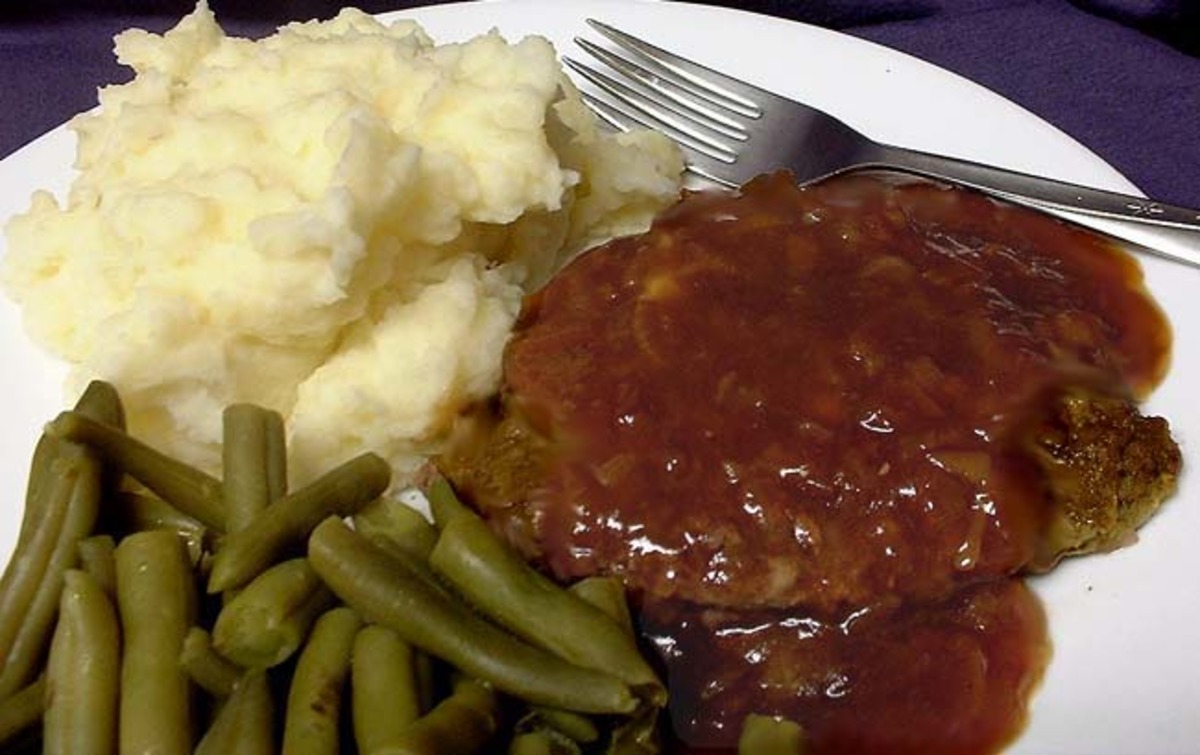
How to Cook Cube Steak: 22 Cheap-Cut Dinner Recipes + Complete Tenderizing Guide
Two minutes a side or ninety minutes in liquid -- the middle ground is what makes cube steak tough.
Cube steak is top or bottom round that's been run through a mechanical tenderizer at the butcher counter, which is where the diamond "cube" pattern comes from. Cook it one of two ways: hot and fast (dredged, seared two minutes a side, rested three) or low and slow (browned, then braised 90 minutes or more). Medium heat for eight minutes -- the instinct most people have -- is the one approach that guarantees shoe leather.
Get a free week of easy dinners
Seven weeknight dinners with the shopping list already totalled, sent Sunday. No account needed, unsubscribe in one click.
No spam, unsubscribe in one click. Recipes, shopping lists and Instacart carts all work without an account either way.
Twenty-two recipes below across both lanes, plus how to buy it, three ways to tenderize further, and what to put next to it.
Introduction -- what cube steak actually is (and why it's under $5/lb)
The confusion around cube steak is that it isn't a cut -- it's a process applied to a cut. Round is the rear leg of the animal: hard-working muscle, very lean, and full of collagen. Left alone it's tough. A cubing machine drives rows of blades through it, severing the long muscle fibers and the connective tissue mechanically, which is exactly the work a two-hour braise would otherwise do.
That's why it's cheap. As of 2026 cube steak typically runs $4.50-$6.50 per pound in most US markets, against $9-$12 for sirloin and $16+ for ribeye. You're paying for a cut nobody wants to grill.
| Cut | Typical 2026 price/lb | Fat content | Best method |
|---|---|---|---|
| Cube steak | $4.50-$6.50 | Very lean | Hot-fast or braise |
| Ground beef (85/15) | $5.50-$7.00 | Moderate | Any |
| Chuck roast | $6.00-$8.00 | Moderate | Braise only |
| Sirloin | $9.00-$12.00 | Lean | Grill, sear |
| Ribeye | $16.00-$22.00 | High | Grill, sear |
Beef It's What's For Dinner's cut reference confirms the round origin and the intended cooking methods. The practical consequence of "very lean" is that there's almost no intramuscular fat to keep it moist, which is why every classic cube steak recipe arrives under a gravy. The sauce isn't decoration; it's the fat the cut doesn't have.
How to buy: cut, thickness, marbling, what to avoid at the counter
Four things to check at the case:
Thickness. You want 1/2 inch, evenly. Thin, ragged pieces (some counters cube down to 1/4 inch) overcook before a crust forms and there's no way to recover them. If everything on offer is thin, pick the thickest and shorten the sear to 90 seconds a side.
Color and moisture. Bright to deep red is fine -- beef darkens with oxygen exposure and that's not spoilage. What you don't want is a package sitting in a pool of purge; that liquid is water and protein that left the meat, and the steak will be dry.
The cubing pattern. Look for an even, complete pattern across the whole surface. Patchy cubing means patchy tenderness. Some counters double-pass; that's better, not worse.
Round versus chuck. Most cube steak is top or bottom round. Occasionally you'll find cubed chuck, which has more fat and is genuinely better -- buy it when you see it. Ask the butcher; they'll tell you.
What to avoid: anything pre-breaded (you're paying beef prices for flour), anything marked "beef patties" or "sandwich steaks" (usually formed and pressed rather than whole-muscle), and anything more than a day from its sell-by date, since the cubing process increases surface area and speeds spoilage.
Storage: 3-5 days refrigerated in the original package, or wrapped flat and frozen up to 4 months. The USDA's food guidance covers safe handling for fresh beef; the short version is 40°F or below, and thaw in the fridge rather than on the counter.
Three ways to tenderize further at home (marinade, buttermilk, mechanical)
The cut arrives tenderized, but for pan-searing there's real headroom.
1. Buttermilk soak, 30 minutes to 4 hours. Buttermilk's lactic acid works slowly and gently, and its calcium activates enzymes in the meat that break down protein. It's the traditional Southern approach and it's the one to use before chicken-fried steak, because the residual buttermilk also helps the dredge stick. Longer than about 8 hours and the surface turns mealy.
2. Acidic marinade, 1-2 hours. Lemon juice, wine, vinegar or tomato, plus oil and aromatics. Faster than buttermilk and more aggressive -- two hours is the maximum for a cut this thin. Acid denatures surface proteins; past a point that reads as mushy rather than tender.
3. Mechanical, 2 minutes. A jaccard-style blade tenderizer or the flat side of a meat mallet, with the steak between two sheets of plastic wrap. Use the flat side, not the spiked one -- the spikes tear a cut that's already been perforated. Work from the center outward. This is the right choice when you bought thin, ragged pieces.
| Method | Time | Best before | Skip when |
|---|---|---|---|
| Buttermilk | 30 min - 4 hr | Frying, chicken-fried steak | Braising |
| Acidic marinade | 1-2 hr | Fajitas, stir-fry, grilling | Anything over 2 hr |
| Mechanical mallet | 2 min | Thin or uneven pieces | Already 1/2-inch even |
| Salt (dry brine) | 15 min max | Any pan method | Any longer -- it draws water out |
| Baking soda slurry | 15-20 min | Stir-fry, velveting | Braises (soapy) |
The salt timing is the one that catches people. Salt applied 15 minutes ahead draws moisture to the surface and hasn't had time to reabsorb, so the steak steams instead of searing. Either salt right before it hits the pan, or salt 40+ minutes ahead and pat the surface bone dry. Serious Eats' tenderizing guide covers the mechanism in more detail.
The classic playbook: cube steak with gravy, chicken-fried steak, Salisbury steak
1. Slow-Simmered Cube Steak with Caramelized Onion Gravy -- the low-and-slow benchmark. Brown hard, then 90 minutes barely simmering. The collagen melts into the gravy and the steak goes fork-tender.
2. Slow Cooker Cube Steak with Mushroom Gravy -- the same result with less attention. Brown in a skillet first; skipping that step costs you most of the flavor.
3. Herb-Infused Crockpot Cube Steak with Root Vegetables -- one pot, a full dinner, about 15 minutes of hands-on work.
4. Classic Chicken-Fried Steak with Creamy White Gravy -- the hot-and-fast benchmark, and the technical high point of the cut. The sequence is buttermilk soak, seasoned flour, egg wash, flour again, then 350°F oil for 3 minutes a side. Rest on a wire rack, never on paper towels -- towels trap steam and the crust goes soft in ninety seconds.
5. Mushroom-Infused Salisbury Steak with Herb Gravy -- Salisbury steak is traditionally ground, but cube steak makes a version with actual bite.
6. Korean-Inspired Salisbury Steak with Gochujang Pan Sauce -- the modern rework.
7. Pan-Seared Hamburger Steak with Onion Gravy and 8. Beef Steak with Onion Gravy -- both about 25 minutes.
The gravy technique underneath all of these is one thing: after searing, pour off all but two tablespoons of fat, whisk in two tablespoons of the seasoned dredging flour, cook 90 seconds until it smells nutty, then whisk in liquid gradually. Milk gives you white gravy, beef stock gives you brown. Lumps come from adding liquid too fast, not from the flour.
10 modern spins: fajitas, philly, stroganoff, teriyaki, mushroom-cream, slow-cooker
Cube steak sliced thin against the grain is a genuinely good stir-fry and sandwich meat, and almost nobody uses it that way.
9. The Best Classic Beef Stroganoff -- slice into 1/4-inch strips, sear in two batches, build the sauce, return at the very end. Sour cream goes in off the heat or it splits.
10. Beef and Mushroom Stroganoff and 11. Whiskey-Infused Beef Stroganoff -- the variations worth having.
12. Philly Cheese Steak Sandwiches -- freeze the cube steak 20 minutes, then slice paper-thin. The freeze is what makes home slicing possible without a deli machine.
13. Sauteed Philly-Style Beef and Provolone Sandwich -- 15 minutes.
14. Flank Steak Fajitas with Grilled Peppers and Onions -- swap cube steak in directly; marinate 90 minutes in lime and chile, sear hard, slice across the grain.
15. Chipotle-Lime Beef Fajita Bowls -- the meal-prep format.
16. Beef and Broccoli Stir-Fry and 17. Sesame-Ginger Beef with Broccoli -- velvet the strips first: 1/2 teaspoon baking soda per pound, tossed and rested 15 minutes, then rinsed and dried. This is the actual restaurant technique and it changes the texture completely.
18. Chimichurri Beef Stew -- cube steak cut into 1-inch pieces, braised, finished with a bright herb sauce that does the job the missing fat would have.
19-22. Four more directions worth cooking: teriyaki (slice thin, glaze in the last two minutes), Swiss steak (braised in tomato with peppers and onions), country-fried with sausage gravy, and diced small for chili or ragu where cube steak gives more textured bites than ground beef at a similar price.
What to serve alongside (mashed potatoes, rice, buttered noodles)
Cube steak dishes are gravy dishes, and gravy needs a vehicle.
Mashed potatoes are the default for a reason -- Best-Ever Mashed Potatoes or Rosemary-Garlic Mashed Potatoes. Use a ricer if you have one; a masher gives you texture, a food processor gives you glue.
Buttered egg noodles for stroganoff, always. Wide noodles, salted water, butter and parsley.
Rice for the stir-fry and teriyaki versions, and for the fajita bowls.
A sharp side. This is the part people skip and it matters most. Cube steak with gravy over potatoes is three soft, rich things in a row -- it needs acid or crunch alongside. A vinegary slaw, quick-pickled onions, green beans with lemon, or a plain green salad with a sharp vinaigrette. Ten minutes, and it's the difference between a heavy plate and a balanced one.
| Dish | Starch | Sharp side |
|---|---|---|
| Cube steak and gravy | Mashed potatoes | Vinegar slaw |
| Chicken-fried steak | Mashed or biscuits | Green beans, lemon |
| Salisbury steak | Buttered noodles | Pickled onions |
| Stroganoff | Egg noodles | Cucumber salad |
| Fajitas | Rice, tortillas | Lime, cilantro, salsa |
| Philly | The roll | Pickled peppers |
Common pitfalls
- Medium heat. The lane between hot-fast and low-slow is where cube steak dies. Commit to one.
- Crowding the pan. Two pieces at a time in a 12-inch skillet. Three steams.
- Salting 15 minutes ahead. Either immediately before, or 40+ minutes with a dry-off.
- Resting fried steak on paper towels. Wire rack. The crust depends on it.
- Braising with too much liquid. Halfway up the meat, not covered. Fully submerged is boiling, not braising.
- Slicing with the grain. Look at the fiber direction and cut across it, always.
When not to buy cube steak
Skip it if you want a steak that tastes like steak -- the cubing process is a texture fix, not a flavor upgrade, and a cheap chuck roast braised for three hours will beat it on flavor every time. Skip it for the grill, too: it's too thin and too lean, and it dries out over open fire before it gets any char. And skip it for burgers, meatballs or meatloaf, where the ground texture is the entire point.
Equipment
A 12-inch cast-iron or carbon-steel skillet is the one thing you actually need -- nonstick can't hold the temperature required for a crust, and cast iron recovers heat fast enough to sear a second batch. See our cookware picks for the pans we recommend, knives & cutting for a blade sharp enough to slice half-frozen steak thin, small appliances for the 6-quart slow cooker the braises use, and utensils & tools for tongs and the wire rack that keeps a fried crust crisp.
FAQs
What exactly is cube steak?
Cube steak is a lean cut (usually top or bottom round) that's been run through a mechanical tenderizer at the butcher, which leaves the characteristic diamond "cube" pattern. That tenderizing is what makes it cheap and quick-cooking — the machine breaks down connective tissue that would otherwise need hours to soften. It's essentially the same cut used for chicken-fried steak, cube steak with gravy, and Salisbury steak.
Do I need to tenderize cube steak more before cooking?
It's already mechanically tenderized, but a 30-minute buttermilk soak or a 2-hour acidic marinade (lemon, wine, vinegar) makes a noticeable difference for pan-searing and frying. For braises and slow-cooker recipes, skip the extra step — the long cook does the work. Never salt cube steak more than 15 minutes ahead or it can toughen; salt in the pan or on the plate.
What's the best way to cook cube steak without it going tough?
Two paths work: hot-and-fast (dredge in flour, sear in a screaming-hot skillet 2 minutes per side, rest 3 minutes) or low-and-slow (brown, then braise in liquid for 90+ minutes until fork-tender). What ruins cube steak is medium heat for 8–10 minutes — the collagen has no time to melt but the muscle fibers seize up. Pick one lane and commit.
Can I use cube steak in place of ground beef?
For most stovetop dishes where ground beef is browned and simmered — chili, taco meat, stroganoff, ragu — cube steak works if you dice it small (1/4-inch pieces) and cook it hot and fast. It costs less than lean ground beef in many markets and gives more textured bites. It doesn't substitute for burgers, meatballs, or meatloaf where the ground texture is the point.
What kitchen tools do I need for these recipes?
A 12-inch cast-iron or carbon-steel skillet is the single most important tool — nonstick can't get hot enough for a proper crust. A sharp knife for slicing (see knives & cutting), tongs for turning without piercing, and a wire rack for resting cover everything else. For slow-cooker recipes, any 6-quart oval works; see small-appliance picks for our tested picks.
What to cook next
For more cheap-cut weeknight cooking, see the ground beef dinners roundup and the budget meal prep guide. The frying and gravy techniques above come straight out of the Southern comfort food guide, and the braises adapt directly to the slow cooker dinners roundup.
Sources
- Beef It's What's For Dinner -- Cube Steak -- official cut definition and recommended methods.
- Serious Eats -- How to Tenderize Meat -- tested comparison of mechanical, enzymatic and acidic methods.
- USDA -- Food and Nutrition -- safe handling, storage times and thawing guidance.
Frequently asked questions
What exactly is cube steak?
Do I need to tenderize cube steak more before cooking?
What's the best way to cook cube steak without it going tough?
Can I use cube steak in place of ground beef?
What kitchen tools do I need for these recipes?
Sources
Plan a week of meals in two minutes.
Tell our AI what you have and what you like — it builds your plan, shopping list, and Instacart cart. No account needed.
Try free →