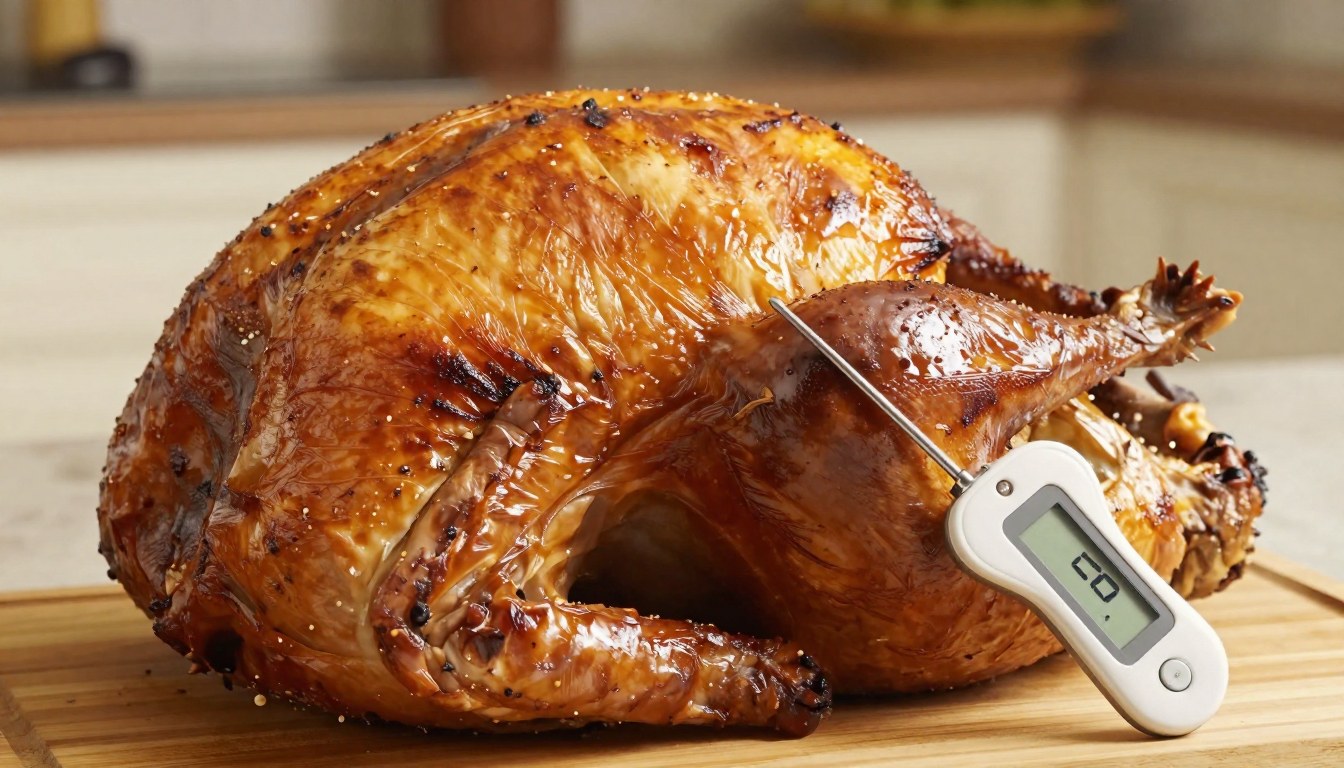
Lavatools Javelin PRO vs Alpha Grillers: Is the Premium Instant-Read Thermometer Worth It for Your Turkey?
Two seconds versus a few, a rotating display, and the 165°F turkey check either one handles.
Where to buy these picks
Affiliate links: we may earn a commission on qualifying Amazon purchases. Policy. Prices show only when checked in the last 24 hours.
Short answer: for most kitchens, buy the Alpha Grillers instant-read thermometer. It sits in the under-$25 tier and reads a turkey thigh against the USDA's 165°F poultry line in a few seconds. Step up to the Lavatools Javelin PRO Classic, roughly twice the price, if you cook meat several times a week or grill after dark. You get a published ±0.9°F accuracy figure, a display that rotates and lights itself when you pick it up, NSF certification and an IP65 rating. Either one will tell you when the bird is done long before the pop-up timer does.
This page is the follow-up to our best instant-read thermometers guide, where the Alpha Grillers is the Best Value pick and the Javelin PRO is the Best Premium pick. They are the two products readers of that guide click most, and the question that comes up over and over is whether the premium one is worth it. This article answers that one question, with Thanksgiving 2026 in mind.
The two thermometers side by side
Every figure below comes from the makers' own listings (the Javelin PRO specs are from Lavatools' Javelin PRO page) or from our parent guide. Where the Alpha Grillers listing doesn't publish a number, the table says so instead of guessing.
| Spec | Lavatools Javelin PRO Classic | Alpha Grillers Instant Read |
|---|---|---|
| Claimed read time | 2–3 seconds (marketed as "2-second") | 2–3 seconds per the listing; our parent guide files it at 2–4 s |
| Stated accuracy | ±0.9°F from -4°F to 302°F | No tolerance published; ships pre-calibrated with a recalibration function |
| Temperature range | -40°F to 482°F | Varies by listing; check the box if you fry or make candy |
| Water rating | IP65 (dust-tight, protected against water jets, not submersion) | Sold as water resistant, IP66 on most listings (stronger jets, still not submersion) |
| NSF certification | Yes | Not listed |
| Backlight | Yes, wakes on motion | Yes, blue backlight |
| Auto-rotating display | Yes | Not listed |
| Probe | 4.5 in, 1.6 mm tapered tip | Folding probe; length not consistently published |
| Battery | 1 × CR2032, rated 4,000+ hours | Coin cell (most listings say CR2032), spare included on some listings |
| Storage | Built-in magnet | Magnetic back |
| Warranty | 3-year limited | Per listing |
| Price tier | $40–$60 | Under $25 |
Two things jump out. First, the speed gap is smaller than the marketing suggests: both makers claim two to three seconds. Second, the real differences are the ones you notice by hand and in the dark. The Javelin's display turns to face you whichever way you hold it and lights up as soon as you lift it. It also comes with a published accuracy figure and a commercial-kitchen certification. You can check the live price for each on its product page: Javelin PRO and Alpha Grillers.
What IP65 and IP66 actually mean
The IP code is a standard from the International Electrotechnical Commission. The first digit is dust protection and the second is water protection; Wikipedia's IP code table spells out each level. A 6 for dust means fully dust-tight. A 5 for water means protection against low-pressure jets from any direction. A 6 for water means protection against powerful jets. Neither rating covers immersion; that starts at 7. So in practice both thermometers can be rinsed under the tap, and neither should go in a sink of soapy water or the dishwasher.
When the Alpha Grillers is the right buy
The Alpha Grillers is the right thermometer for most people reading this, and there's no catch in saying so.
You roast a few times a month, and Thanksgiving once a year. A thermometer that sits in a drawer most weeks gets very little extra from premium features. What it has to do is give a trustworthy number on the days it comes out. The Alpha Grillers does that, and its recalibration function lets you correct it against an ice bath if it drifts (the method is in our parent guide's calibration section).
It's your first thermometer. If you've been judging doneness by timing charts and poking, the jump from no thermometer to any decent thermometer is far bigger than the jump from a good one to a premium one. Start with a Classic Roast Turkey with Herb-Butter and Pan Gravy or a weeknight Herb-Rubbed Roast Chicken with Lemon and Thyme. One correct reading at the right moment pays for the tool.
You want two. Because it costs so little, you can own a pair: one for raw protein and one for checking finished food. That keeps the question of probe hygiene simple during a busy holiday cook.
It's a gift. The Alpha Grillers is a common stocking stuffer for a reason: it does the core job, it comes boxed, and nobody has to think hard about whether it was worth the money. Our kitchen gifts under $50 guide has more small tools in the same spirit.
The counter-case: dark grills and awkward angles
The Alpha Grillers has a backlight, so "you can't read it in the dark" isn't the issue. Its weak spots are smaller:
- No auto-rotating display is listed. If you probe a steak on the far side of the grate with your left hand, or reach over a roasting pan from the "wrong" side, you may end up reading the number upside down. That's a small irritation, but it happens every cook.
- No published accuracy tolerance. It ships pre-calibrated and you can recalibrate it, but the listing gives no ± figure. For a turkey, that rarely matters. For a medium-rare steak, where the target window is about 5°F wide, you'll want to run the ice-water check before trusting it.
- No NSF certification. That matters to a commercial kitchen inspector and much less at home.
If none of those three bother you, stop here and buy the Alpha Grillers.
When the Javelin PRO is worth the step up
The Javelin PRO earns its higher price through frequency. Each feature it adds saves you a moment on every reading, so the value grows with how often you probe.
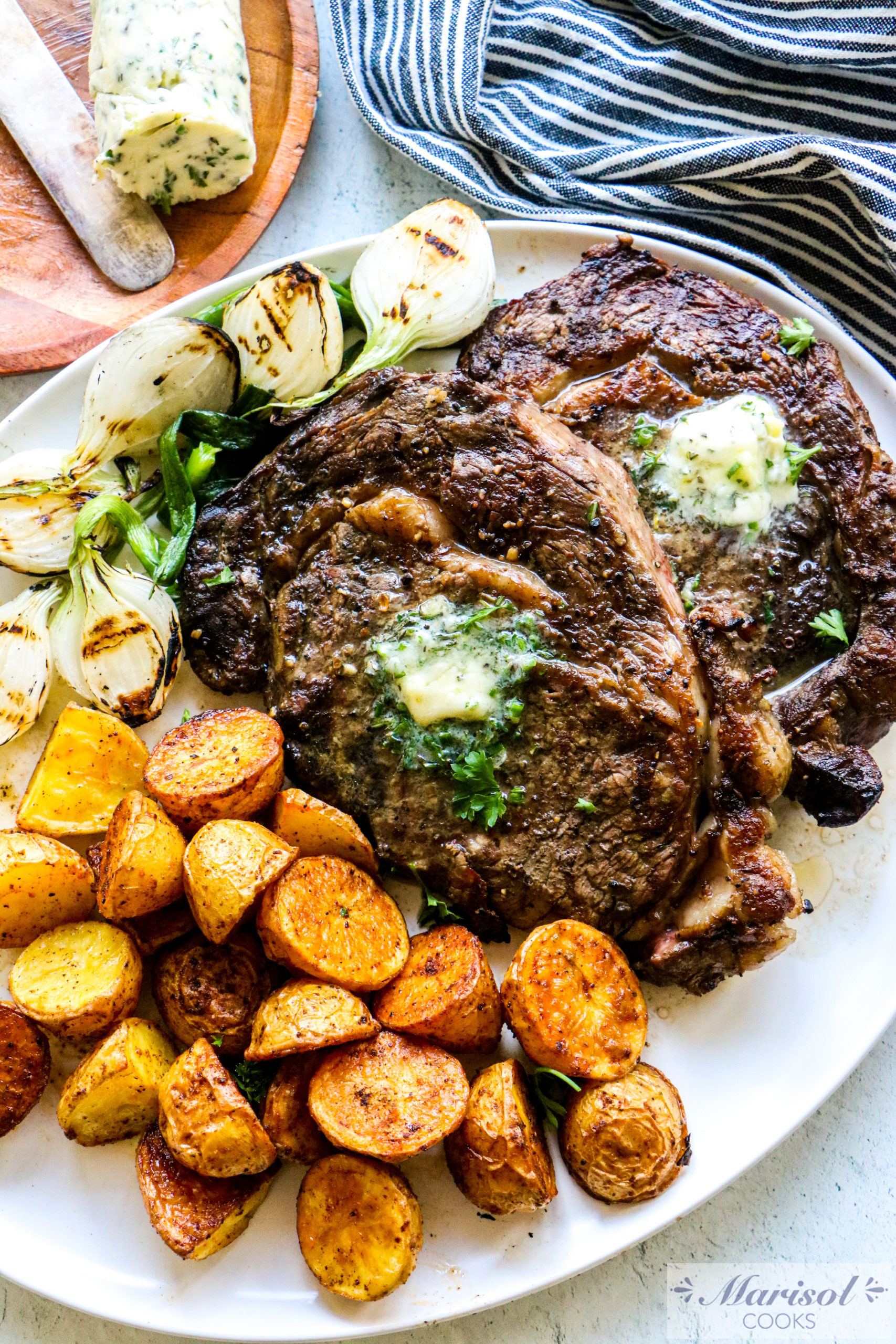
You cook steak, chops or chicken every week. Thin cuts move through their target fast. A Pan-Seared Ribeye with Garlic Butter and Roasted Vegetables can slide from medium-rare to medium in the time it takes to find a thermometer in a drawer. That's where a magnet on the range hood, a display that faces you and a backlight that comes on as you pick it up make the difference. If you reverse-sear, as in a Red Wine Reduction Reverse Sear Steak or a Reverse-Seared Tomahawk Steak with Garlic Herb Butter, you're probing several times through the low phase and again at the sear. Lavatools' published ±0.9°F is the figure you want behind those calls.
You grill after dark. In November the light is gone by dinner. The Javelin's backlight comes on when you lift it, so it works even when you're wearing a heat-proof glove and can't press a button. The auto-rotating display means you read it the right way up from whichever side of the grill you're on. A Grilled Spatchcock Chicken with Chili-Lime Marinade needs both the breast and the thigh checked, and that's two readings from two different angles.
You rinse it at the sink after raw meat. IP65 is built for the "rinse under the tap" routine: the probe touches raw poultry, you wash it under running hot water with soap, dry it and fold it away. It's not built for leaving in a soapy basin or putting in the dishwasher. If your habit is to drop tools in the sink, neither of these thermometers is right for you (see "When neither is right" below).
You'll keep it for years. A three-year warranty and a battery rated for more than 4,000 hours mean the Javelin is a tool you buy once.
Checking a Thanksgiving turkey with either thermometer
This is the part that matters in November, and it works the same with both thermometers. As our parent guide's turkey section puts it: a turkey is done when the innermost part of the thigh, the innermost part of the wing and the thickest part of the breast all read 165°F. That's the poultry minimum in the USDA FSIS safe minimum internal temperature chart.
1. Start with the thigh. Push the probe into the thickest part of the thigh, toward the body but not touching bone. Bone conducts heat differently and gives a falsely high reading.
2. Draw back slowly. The sensor sits just behind the tip, so push slightly past where you think the center is and watch the number as you pull back. The lowest reading is the one that counts.
3. Check the wing joint and the breast too. The breast usually finishes before the thighs, which is exactly why you check it. If the breast reads 165°F and the thigh doesn't, the thigh decides when the bird comes out. Tenting the breast with foil slows it down while the legs catch up.
4. Ignore the pop-up timer. The parent guide covers why. By the time it pops, the breast has usually gone past done.
5. Let it rest. A large bird keeps climbing a few degrees after it leaves the oven. Many cooks pull it a little early and let carryover heat finish the job, but only do that once you trust your thermometer's accuracy.
The method is the same whether you're roasting a Classic Roast Turkey with Herb-Butter and Pan Gravy or smoking an Oak-Smoked Whole Turkey with Citrus Herb Butter. If you're only cooking a breast for a small table, a Maple-Glazed Roasted Turkey Breast with Autumn Spices needs just one reading, in its thickest point. The USDA's kitchen thermometers guidance covers placement for every thermometer type if you want the primary source.
On the day, speed matters for a practical reason: every second the oven door is open, the oven loses heat. Both thermometers claim two to three seconds, so three probe spots means the door is open for well under half a minute. The Javelin's rotating display saves you a little fumbling. That's real, but it won't make or break the turkey.
Worked examples
A once-a-year host. You roast a 14-pound bird on Thursday, a chicken now and then, and grill burgers in summer. Buy the Alpha Grillers, run the ice-water check the week before Thanksgiving, and spend the difference on a roasting rack: our roasting pans guide covers why lifting the bird matters.
A weekly griller. You cook steaks or chops on the back deck two or three nights a week, often after dark. Buy the Javelin PRO and keep it on a magnet by the back door. The display that wakes and rotates on its own will save you a little fiddling every single cook.
The household that wants both. Thanksgiving smoker, weeknight pan-searing and a teenager learning to cook. Buy the Javelin for the main cook and the Alpha Grillers for the second station. The two together still cost less than many single premium thermometers.
When neither is right: a leave-in probe
Both of these are spot-check thermometers. You insert them, read them and take them out. Neither is rated to stay in the oven: the electronics in the handle aren't built to sit in that heat for hours.
If you want the oven door shut until an alarm tells you the thigh has hit its number, you want a leave-in probe instead. A cable or wireless probe stays in the meat for the whole cook, and the display sits outside. That's the better tool for a long turkey roast in a crowded oven, or for an all-day smoke on a Smoked Whole Turkey with Citrus and Herb Brine. Our leave-in probe thermometer guide has the picks. Many hosts own both kinds: the leave-in watches the thigh, and the instant-read confirms the breast and the other thigh before the bird comes out.
Neither is right either if you need a thermometer that can go in the dishwasher. Look at a pocket thermometer rated dishwasher safe, like the Best Compact pick in the parent guide. Or for the surface temperature of a pan or pizza stone, use an infrared gun. Neither instant-read measures surfaces well.
Common pitfalls with either thermometer
- Probing to bone. Bone reads hot and gives a false "done." Aim for the center of the muscle.
- Taking one reading on an irregular cut. A whole bird has at least three temperatures. A pork tenderloin tapers, so the thin end runs hotter than the middle.
- Submerging an IP65 or IP66 body. These ratings are for rinsing under running water. A soak in the sink or a dishwasher cycle can let water into the battery compartment.
- Skipping the ice-water check. It takes five minutes and is the only way to know whether a thermometer with no published tolerance reads true. Do it before the holiday, not during it.
- Leaving it in the oven. Instant-reads are spot-check tools. Leaving one in the oven will cook the handle.
How we picked
We compared these two thermometers on paper, not at the stove. The sources were the makers' listings and product pages (Lavatools' published Javelin PRO specs and the Alpha Grillers listing copy), the figures in our best instant-read thermometers guide, and USDA FSIS thermometer and safe-temperature guidance. We didn't run our own read-speed or accuracy tests. Every speed and accuracy figure above is the maker's claim, and where a maker doesn't publish a figure we say so. These two products were chosen because they are the Best Value and Best Premium picks of the parent guide and the two products its readers click most. Prices change often, so check the live price on each product page rather than trusting a number printed in an article.
Browse more small tools in Kitchen Gadgets and Utensils & Tools, and once the bird is done, our carving knives guide covers the next step.
Shop the two thermometers
- Lavatools Javelin PRO Classic (premium, $40–$60 tier): Shop on Amazon
- Alpha Grillers Instant Read (budget, under $25): Shop on Amazon
Sources
- USDA FSIS — Safe Minimum Internal Temperature Chart: 165°F for all poultry.
- USDA FSIS — Kitchen Thermometers: thermometer types, placement and calibration.
- IEC — IP ratings: the standard behind IP65 and IP66.
- IP code — Wikipedia: what each digit of an IP rating certifies.
- Lavatools — Javelin PRO: the maker's read-time, accuracy, probe, battery and IP65 specifications.
Frequently asked questions
Is the Javelin PRO more accurate than the Alpha Grillers?
What temperature should a Thanksgiving turkey reach?
Can I put either thermometer in the dishwasher?
Do I need a leave-in probe as well for turkey?
Which one makes a better gift?
Recipes to try with the grill
Put your gear to work — save any recipe to My Recipes (no account needed) and send its ingredients to Instacart in one tap.

Shop kitchen gadgets on AislePrompt →Browse the full kitchen shop →