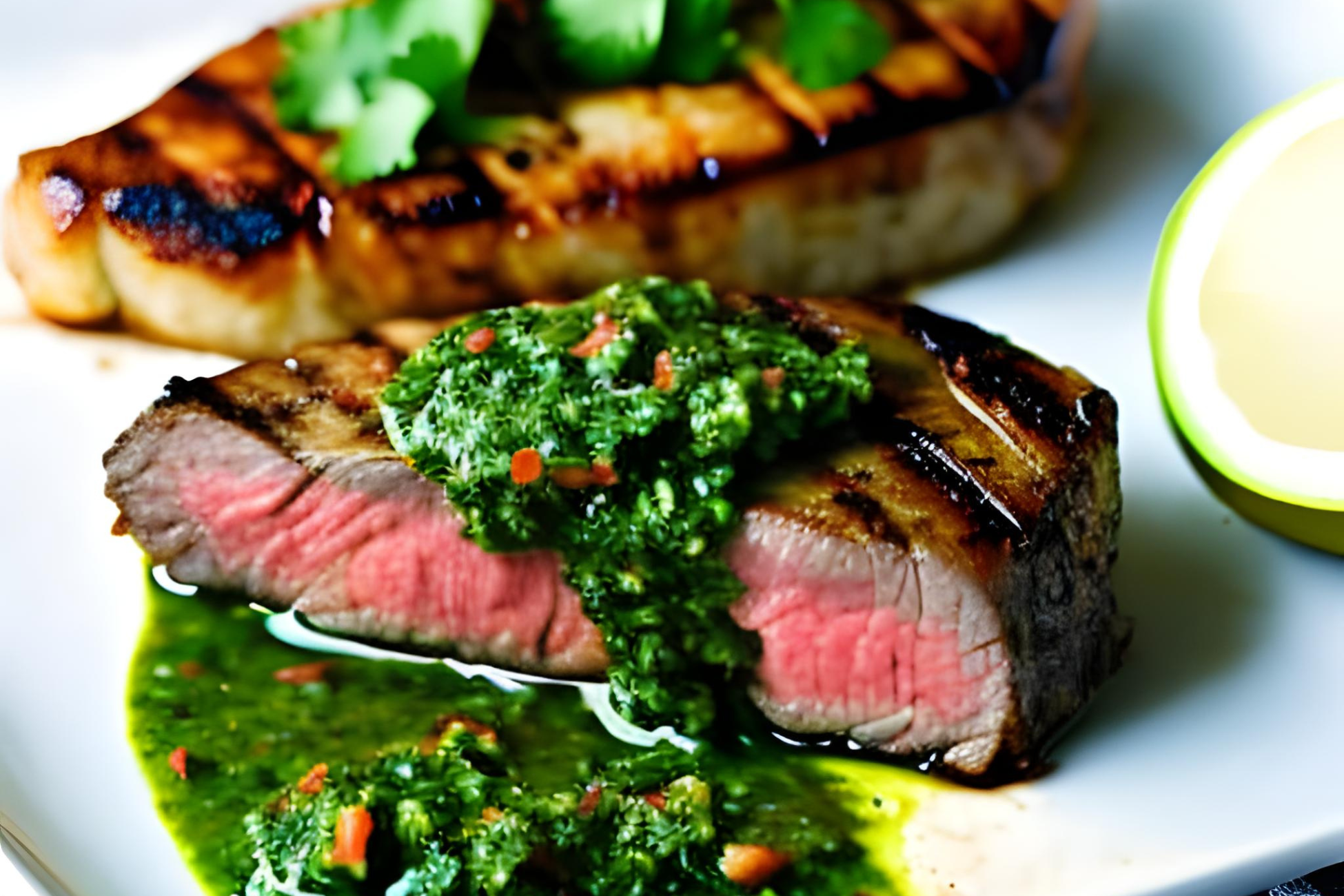
20 Argentine Recipes: Chimichurri, Empanadas & Asado Classics
Low coals, thin-sliced beef, and a green sauce with nothing cooked in it — the three things the whole cuisine rests on.
Affiliate disclosure: AislePrompt may earn a commission on qualifying purchases made through Amazon and Instacart links in this article, at no additional cost to you. See our affiliate policy →
Argentine cooking is built on fire, beef, and a green sauce with no cooked ingredients in it. The technique that matters most isn't a recipe at all — it's cooking meat slowly over low, indirect coals until the fat renders instead of flares. Get that and chimichurri right, and the other 18 dishes here are variations on a very good theme.
Fire, beef, and chimichurri: the flavor pillars
An asado is not a barbecue in the American sense. There's no sauce mopped on, no smoke ring chased, and no 12-hour brisket. It's a long, sociable cook over wood-derived embers at a temperature most Americans would call "too low" — the parrilla grate sits high, the coals are raked thin, and a rack of ribs takes two to three hours to reach tender without ever seeing a flame.
The second pillar is the beef itself. Argentine cuts don't map cleanly onto US butchery: entraña is skirt steak, vacío is roughly flank, and asado de tira is short ribs cut across the bones into half-inch strips rather than into blocks — ask your butcher for "flanken cut" and you'll get exactly it.
Third is chimichurri, which is emphatically not a marinade and not a pesto. It's a loose, sharp, uncooked sauce of parsley, oregano, garlic, red wine vinegar, and oil, chopped by hand and rested. Blending it makes it pasty and dulls the parsley; the texture is supposed to be distinct leaf fragments suspended in oil.
Fourth, quietly, is the influence of Italian immigration. Roughly two-thirds of Argentines have Italian ancestry, which is why milanesa, provoleta, and a serious pizza and pasta culture sit alongside the grill without contradiction.
The Argentine pantry
| Item | Notes | US price (2026) |
|---|---|---|
| Flat-leaf parsley | By the bunch, 2–3 bunches for a batch of chimichurri | $1.50 / bunch |
| Dried oregano | Standard Mediterranean is fine here | $4 / jar |
| Red wine vinegar | The acid backbone; don't swap for white | $4 / 500 ml |
| Sweet paprika (pimentón dulce) | Not smoked, not hot | $5 / jar |
| Dried chile flakes (ají molido) | Mild, coarse | $6 / jar |
| Dulce de leche | Jarred is standard, even in Argentina | $7 / 450 g |
| Hardwood lump charcoal | Quebracho if you can find it; oak otherwise | $22 / 20 lb |
| Provolone (aged, thick-cut) | For provoleta — needs to be firm, not deli-sliced | $12 / lb |
Chimichurri: the recipe underneath everything
There is no separate recipe card for this because it takes four minutes and no heat.
For about 1.5 cups: 1 cup finely chopped flat-leaf parsley, 4 cloves garlic minced fine, 2 tbsp dried oregano, 1 tsp red chile flakes, 1 tsp coarse salt, 1/2 cup red wine vinegar, 3/4 cup olive oil. Combine everything except the oil, let it sit 10 minutes (the vinegar takes the raw edge off the garlic), then stir the oil in.
Rest it at least 30 minutes; two hours is better. Chimichurri made and served immediately tastes like raw garlic in vinegar. The same sauce two hours later tastes like chimichurri. It keeps two weeks in the fridge and improves for the first three days.
Chimichurri rojo swaps in 1 tbsp sweet paprika and doubles the chile — smokier, deeper red, and better against heavily charred meat.
The asado
- Authentic Argentine Chimichurri Steak — the baseline. Salt the steak 40 minutes ahead, not 5; that window lets the salt draw moisture out and then reabsorb, which seasons the interior and dries the surface for a better crust.
- Wood-Fired Argentine Skirt Steak with Chimichurri Sauce — entraña, the cut most Argentines would pick first. Thin, fast, intensely beefy.
- Grilled Chimichurri Marinated Skirt Steak — the exception to "chimichurri isn't a marinade": a short 30-minute soak before grilling works on thin cuts, as long as you serve fresh sauce alongside rather than the used marinade.
- Slow-Cooked Beef Ribs with Chimichurri Sauce — the asado de tira approach adapted to an oven, for anyone without a grill.
- Charcoal-Grilled Spiced Beef Ribs with Smoky BBQ Glaze — a hybrid; leave the glaze off for the last 20 minutes if you want it closer to Argentine.
- Grilled Argentine Beef Skewers with Chimichurri Sauce — the party format.
- Argentinian-Inspired Barbecue Lamb Chops with Chimichurri — lamb is genuinely Patagonian, not a fusion invention.
- Pan-Seared Skirt Steak with Avocado Salsa Verde — the indoor version for a January Tuesday.
- Grilled Argentine-Inspired Chicken with Chimichurri Sauce — pollo al asador; spatchcock it and the cook time halves.
Provoleta deserves its own line even though it barely needs a recipe: a 3/4-inch slab of aged provolone, dusted with oregano and chile flakes, cooked in a small cast-iron pan directly on the grate until the bottom crusts and the middle goes molten — about 4 minutes a side. The pan must be preheated and the cheese must be thick-cut. Deli slices leak oil and never crust.
Asado timing, for a real one
| Clock | On the grate | Notes |
|---|---|---|
| −60 min | Light the charcoal; let it burn to gray ash | No flames touch food, ever |
| 0:00 | Chorizo and morcilla | First course, eaten standing |
| 0:20 | Provoleta in a cast-iron pan | Serve immediately |
| 0:30 | Asado de tira (short ribs) go on, bone side down | 90–120 min at low heat |
| 1:30 | Vacío / flank goes on | 45–60 min |
| 2:15 | Entraña / skirt goes on | 8–12 min total |
| 2:30 | Everything rests, sauce on the table | Chimichurri, salsa criolla |
Total: about 3 hours, of which maybe 25 minutes is active. That pacing is the point — the asado is the event, not the preparation for it.
That three-hour outline is the short version. If you want to run the full four-hour ritual — the complete order of service, the exact cuts to ask a US butcher for (and what to say when they mislabel them), and the charcoal-versus-hardwood fire setup — the Argentine asado guide covers it end to end.
Empanadas
- Argentine Beef Empanadas with Spiced Tomato Sauce — the canonical filling: hand-cut beef (not ground), onion in roughly equal volume to the meat, cumin, sweet paprika, and chopped hard-boiled egg and green olive.
- Street-Style Chicken Empanadas with Fresh Tomato Salsa — the second-most-common filling in Argentina.
- Empanadas de Puerco — pork, richer, and a good use for leftover roast.
- Spiced Plantain Empanadas — a sweet-savory variation for the vegetarian slot.
The two rules of empanada filling: chill it completely before you fill, and keep it drier than feels right. Warm filling melts the fat in the dough and the seams split; wet filling steams the pastry from inside and the bottom goes soggy.
The crimp (repulgue) is a hand fold, not a fork press: seal the half-moon, then fold small overlapping pleats along the edge, each one pressed over the last, working left to right. A fork works and holds fine — it just reads as a first attempt. Baked empanadas want 400°F for 20–25 minutes with an egg wash; fried want 350°F oil for about 3 minutes a side.
Weeknight Argentine
- Breaded Chicken Cutlets with Tomato Sauce and Mozzarella — this is milanesa napolitana in everything but name: a pounded breaded cutlet topped with tomato sauce, ham, and melted cheese. Pound to 1/4 inch and the cook time drops to 3 minutes a side.
- Slow-Cooked Argentine Beef Stew with Root Vegetables — estofado, the winter counterweight to all the grilling.
- Salsa Criolla Chicken with Roasted Garlic — salsa criolla (diced onion, tomato, bell pepper, vinegar, oil) is the second table sauce at every asado and works as a marinade too.
Choripán — a grilled chorizo split down the middle in a crusty roll with chimichurri — is the other weeknight staple and needs no recipe: grill the sausage over medium heat for 12–14 minutes turning often, split the roll, spoon chimichurri on both cut faces.
Sides
Argentine sides are deliberately plain, because the meat and the sauces are doing the work. The standard spread is salsa criolla, a simple green salad dressed only with oil and vinegar, and either grilled provoleta or humita — a creamed-corn preparation, sometimes steamed in the husk, essentially a savory corn pudding with onion, sweet paprika, and a little cheese. Grilled sweet potato and papas al plomo (whole potatoes wrapped in foil and buried at the edge of the coals) round it out.
Sweets — dulce de leche runs the table
Dulce de leche appears in most Argentine desserts, and jarred is the norm even in Argentina, so buy it.
- Baked Dulce de Leche Cheesecake Bars — the easiest high-return dessert here.
- Dulce de Leche Filled Sopapillas with Honey Drizzle — fried dough and caramel, which is the entire pitch.
Alfajores, the national cookie, are two soft cornstarch-heavy shortbread rounds sandwiched with dulce de leche and rolled in coconut. The ratio to remember: 1 part flour to 1.5 parts cornstarch is what makes them crumble the way they should. Flan casero — a dense caramel custard — is the other constant, served with a spoonful of dulce de leche on top because Argentina does not believe in restraint about this.
For the neighbouring South American traditions, 20 Brazilian dinner recipes and 22 Peruvian recipes are the closest companions to this one. Chile, Paraguay and the rest of the Southern Cone are covered in 22 Latin American dinners beyond tacos.
Real-world numbers
| Dish | Serves | Ingredient cost (Aug 2026) | Active time |
|---|---|---|---|
| Full asado (ribs + flank + skirt + chorizo) | 8 | $92 | 25 min over 3 hrs |
| Chimichurri (1.5 cups) | 12 servings | $5 | 4 min |
| 24 beef empanadas | 8 | $21 | 70 min |
| Milanesa napolitana | 4 | $14 | 30 min |
| Dulce de leche cheesecake bars | 12 | $13 | 20 min |
An asado for eight at $92 is about $11.50 a head for four cuts of grilled meat — the reason it's a weekly institution rather than a special occasion.
Common pitfalls
- Cooking over flames. Wait for gray ash. Flames make soot, not char.
- Blending chimichurri. Chop by hand; a blender turns it into green paste.
- Serving chimichurri immediately. Rest 30 minutes minimum.
- Ground beef in empanadas. Hand-cut or coarsely chopped, or the filling turns to paste.
- Warm or wet empanada filling. Chill it, and drain it.
- Deli-sliced provolone for provoleta. It needs to be at least 3/4 inch thick.
- Cooking short ribs fast. Asado de tira wants 90+ minutes at low heat, not 15 minutes over a rager.
- Skipping the 40-minute salt. It's the difference between a crust and a gray band.
When not to cook Argentine
If you're cooking for one on a weeknight, most of this is the wrong shape — the asado is a three-hour social format and empanadas are a 70-minute assembly job that only makes sense in batches of 24. Cook the milanesa or the stew instead. And if you don't have outdoor access to charcoal, be honest that a gas grill or a cast-iron pan gets you good steak with a good sauce, but not asado; the wood smoke is a real ingredient rather than a flourish.
Kitchen tools for grilling and empanada folding
The tools that matter: a charcoal grill you can control by coal placement rather than a dial, long-handled tongs for reaching across a wide grate, and a heavy cast-iron pan for provoleta and for indoor skirt steak — nothing else holds the heat when a cold steak hits it. For empanadas, a 3-inch round cutter and a rolling pin beat freehand cutting, and a sharp chef's knife makes the hand-cut beef filling a five-minute job instead of a chore.
Sources
Last verified: August 2026.