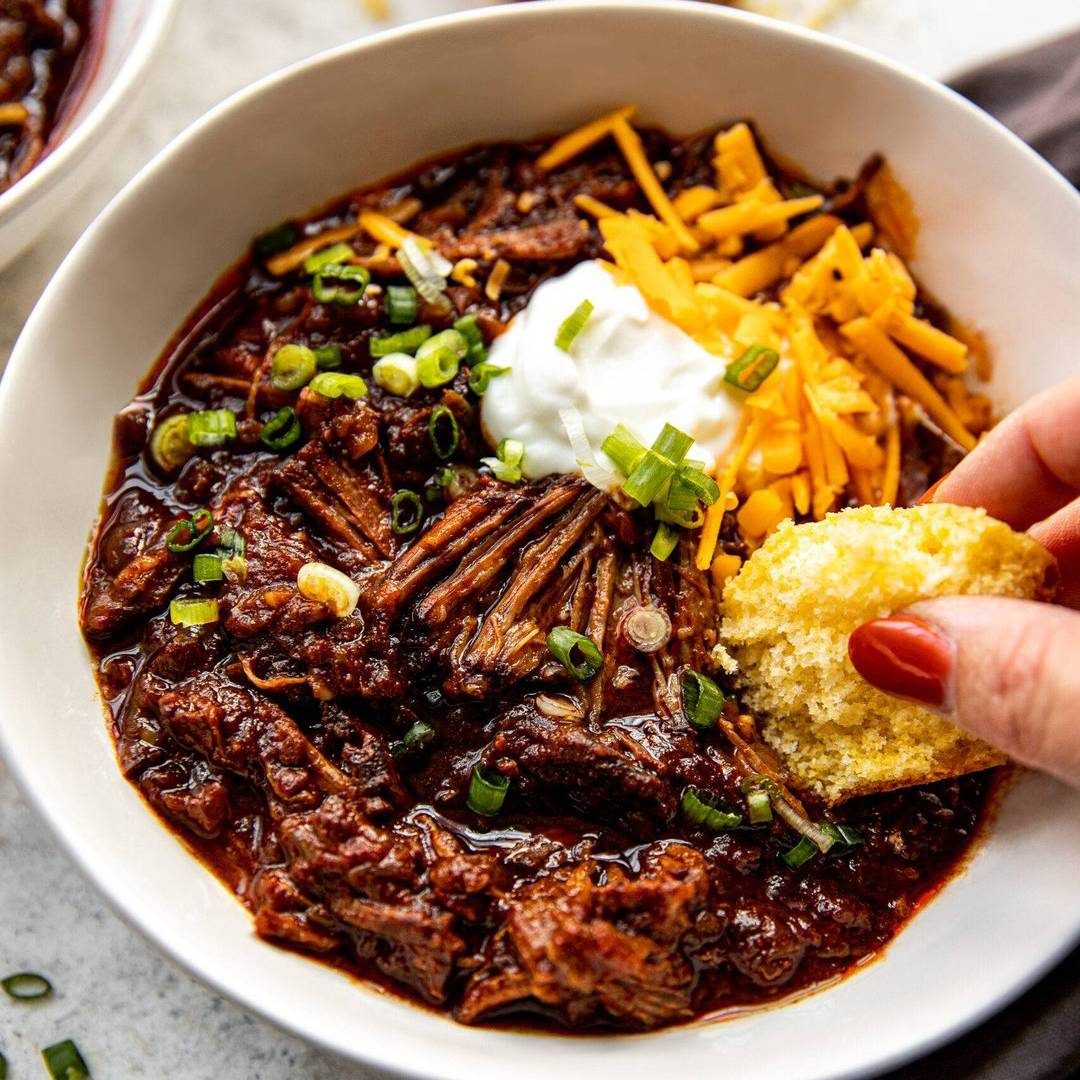
20 Chili Recipes for Fall: Beef, White Chicken & Vegetarian Bowls
Four regional traditions, twenty tested bowls, and the toast-and-bloom step that separates deep chili from dusty chili.
The best chili recipes are the ones matched to your pot and your clock: a slow cooker Texas red for a lazy Sunday, a 30-minute stovetop white chicken chili for a Tuesday, a three-bean vegetarian pot for a crowd with mixed diets. Below are 20 tested bowls across four regional traditions, with prep times, calories, and conversions for stovetop, slow cooker, and Instant Pot.
Get a free week of easy dinners
Seven weeknight dinners with the shopping list already totalled, sent Sunday. No account needed, unsubscribe in one click.
No spam, unsubscribe in one click. Recipes, shopping lists and Instacart carts all work without an account either way.
Introduction: Why chili is the perfect fall one-pot
Chili earns its September-through-February run for four reasons that have nothing to do with nostalgia.
It scales without extra work. A 6-quart pot of chili feeds six people at roughly the same effort as feeding two. Doubling a stir-fry means two pans and two rounds of searing; doubling chili means one more can of beans and fifteen more minutes of simmer. For a football Sunday or a Wednesday that has to become Thursday's lunch, that ratio is the whole game.
It improves overnight. Most one-pot dinners peak the moment they leave the stove. Chili is the opposite: the fats carry the toasted chile compounds into the beans and meat as it cools, and the starches from the beans thicken the liquid. A pot made Saturday and eaten Sunday is measurably better — this is why competition cooks at ICS-sanctioned cookoffs build their pots the day before.
It is cheap protein. A pound of ground beef at roughly $6, two cans of beans at $1.20 each, and a can of tomatoes stretches to six servings at 38g of protein each. That is under $2 per serving for a dinner that eats like a restaurant bowl. The Cajun-Spiced Beef Chili with Roasted Corn and Black Beans hits 480 calories and 38g protein per serving on exactly that math.
It freezes flat. Portioned into freezer bags and frozen flat, chili stacks like books and thaws in about 30 minutes under cool running water. Three months of shelf life, no texture loss, no separation.
As of 2026, "chili recipes" is one of the steepest seasonal search curves in American home cooking — the interest roughly triples between the last week of August and the first week of December. If you are going to learn one cold-weather pot properly, learn this one.
Building flavor: dried chiles vs powder, the toast-and-bloom method
The single biggest quality gap between a forgettable chili and a memorable one is where the chile flavor comes from.
Whole dried chiles beat pre-ground, and it is not close. Ground chili powder sold in supermarkets is usually a blend — chile, cumin, oregano, garlic powder, and often salt and anti-caking agents. It also oxidizes fast: an opened jar loses most of its aromatic top notes within 4-6 months. Whole pods keep for a year in a sealed jar and taste like fruit, not dust.
The three pods worth keeping on hand:
| Chile | Scoville | Flavor | Use |
|---|---|---|---|
| Ancho (dried poblano) | 1,000–2,000 | Raisin, dark cocoa, mild | The base — use 3-4 per pot |
| Guajillo | 2,500–5,000 | Bright, tart, berry | The mid-range acidity |
| Chipotle (smoked jalapeño) | 5,000–10,000 | Smoke, medium heat | 1-2 for depth, not fire |
Those numbers are Scoville scale ranges; the ancho-heavy blend above lands a finished pot around a mild-medium heat that most tables can eat without doctoring.
The toast-and-bloom method, in four steps:
1. Toast the pods dry. Stem and seed 3 anchos and 2 guajillos. Press them flat in a dry skillet over medium heat for 20-30 seconds per side, until they smell nutty and go slightly pliable. Any browning past that turns bitter — this is the step people overshoot.
2. Rehydrate. Cover with 2 cups of just-boiled water or stock, weigh down with a plate, and steep 20 minutes.
3. Blend. Purée the softened pods with a cup of the soaking liquid until completely smooth. You want a paste with no flecks; flecks mean grit in the finished bowl.
4. Bloom the ground spices in fat. After you brown the meat and soften the onion, push everything aside and cook the cumin, oregano, and any powdered chile in the rendered fat for 45-60 seconds before the liquid goes in. Capsaicin and the aromatic compounds in cumin are fat-soluble — capsaicin will not fully release into a watery pot. Skipping the bloom is why some chilis taste flat despite having plenty of spice in them.
If you have 15 minutes, do all four. If you have five, do step 4 only — blooming supermarket chili powder in fat still buys you most of the depth. Serious Eats' chili archive covers the chemistry of this in more detail if you want the long version.
Thickeners, ranked. Masa harina (2 tablespoons slurried in water, stirred in at the end) is the traditional and best choice — it thickens and adds corn flavor. Crushed tortilla chips work in a pinch. Cornstarch works but tastes of nothing. Simply simmering uncovered for an extra 20 minutes is free and often enough.
Regional chili styles: Texas red, Cincinnati, New Mexico, white chicken
There is no single correct chili, and the four American traditions below disagree with each other on almost every point.
Texas red is the purist school: beef (often chunked chuck rather than ground), dried chiles, no beans, no tomato. The meat breaks down over hours and thickens the pot itself. Chili con carne in its Texan form is the ancestor of everything else here, and the state's cookoff culture still treats beans as disqualifying. Slow Cooker Texas-Style Beef Chili is the six-hour version; Texan Chili Con Carne with Black Beans and Corn is the heretical-but-delicious 60-minute weeknight compromise.
Cincinnati chili is the strangest and most misunderstood. It is a Greek-American Mediterranean-spiced meat sauce — cinnamon, allspice, sometimes cocoa and clove — served over spaghetti, ordered by "way": three-way adds cheddar, four-way adds onions or beans, five-way adds both. Cincinnati chili is not trying to be Texas red and should not be judged as such. The Slow Cooker Cincinnati-Style Chili over Spaghetti is the full eight-hour treatment.
New Mexico style leans hard on a single ingredient: Hatch or New Mexico chile, red or green, often with pork and often without tomato at all. The green version — chile verde, built on tomatillos and roasted green chile — is a different dish entirely from the red. Slow-Cooked Chili Verde with Tomatillos and Pork Shoulder is the reference bowl.
White chicken chili is the newest tradition and the most weeknight-friendly: chicken or turkey, white beans, green chiles, cumin, and a dairy finish (sour cream, cream cheese, or Monterey Jack) instead of tomato. It cooks in 30-40 minutes because there is no tough cut to break down. Walter's White Chili is the 45-minute total benchmark.
Beef chilis (6 recipes)
The default. All six below use ground or chunked beef and land between 450 and 550 calories per serving.
1. Slow Cooker Texas-Style Beef Chili — 15 min prep, 6 hours in the cooker, 6 servings, 480 cal, 38g protein. The set-it-Sunday-morning option. Sear the beef before it goes in; skipping that step is the single most common slow-cooker chili mistake.
2. Texan Chili Con Carne with Black Beans and Corn — 15 + 45 min, 4 servings, 450 cal. Weeknight Texas red with beans added for bulk. Purists will object; your Tuesday will not.
3. Slow Cooker Cincinnati-Style Chili over Spaghetti — 20 min prep, 8 hours, 6 servings, 550 cal. The cinnamon-and-allspice outlier. Serve three-way with a mountain of shredded cheddar.
4. Mole-Inspired Beef Chili with Dark Chocolate — 15 + 40 min, 4 servings, 480 cal. An ounce of 70% chocolate at the end rounds the acidity without reading as sweet. The best entry point if you find standard chili one-note.
5. Cajun-Spiced Beef Chili with Roasted Corn and Black Beans — 15 + 40 min, 4 servings, 480 cal, 38g protein. Cajun trinity instead of the usual onion-only base; the roasted corn adds sweetness that offsets the cayenne.
6. Slow-Cooked Beef Chili with Ancho and Chipotle Peppers — 20 min + 3 hours, 6 servings, 450 cal, 40g protein. The best showcase for the toast-and-bloom method above; the whole-pod purée is the entire point of this recipe.
Chicken and turkey chilis (5 recipes)
Faster, leaner, and the answer when someone at the table does not eat red meat. All five come in under 400 calories.
1. Spiced Chicken & White Bean Chili — 10 + 55 min, 6 servings, 380 cal, 40g protein. The highest protein-per-calorie ratio in this roundup.
2. Walter's White Chili — 15 + 30 min, 6 servings, 320 cal. Forty-five minutes door to table, which makes it the genuine weeknight pick.
3. Stovetop Ground Turkey and White Bean Chili — 10 + 20 min, 6 servings, 310 cal, 35g protein. Thirty minutes total. Ground turkey needs more salt and more fat than beef — do not under-season it.
4. Chipotle Turkey Chili with Sweet Potato — 25 + 55 min, 4 servings, 390 cal. The sweet potato dissolves partway and thickens the pot, so it needs no masa.
5. One-Pot Texas BBQ Chicken and Black Bean Chili — 15 + 40 min, 6 servings, 380 cal, 35g protein. A molasses-and-smoke profile that reads closer to barbecue beans than to chili; good for a crowd that claims not to like chili.
Pork, brisket, and hybrid chilis (4 recipes)
The long-cook tier. These reward three hours and punish shortcuts, and they are the ones that win cookoffs.
1. Slow-Cooked Chili Verde with Tomatillos and Pork Shoulder — 20 min + 2h10m, 6 servings, 420 cal. Broil the tomatillos and poblanos until blackened before they go in the pot; raw tomatillo makes the whole dish taste green and sour.
2. Smoky Texas Brisket Chili — 15 min + 3h30m, 6 servings, 450 cal. Cubed brisket point, not flat — you want the fat cap to render into the pot.
3. Smoked Beef and Sausage Chili with Roasted Peppers — 20 min + 2 hours, 6 servings, 450 cal. The two-protein hybrid; the sausage fat does the seasoning work.
4. Slow-Cooked Brisket Chili with Local Craft Beer — 20 min + 3h15m, 6 servings, 450 cal. Use a brown ale or porter, not an IPA — hop bitterness concentrates as the pot reduces and turns harsh.
Vegetarian and vegan chilis (5 recipes)
Beans and vegetables carry chili better than almost any other savory dish, because the chile paste and the long simmer supply the depth that meat usually provides.
1. One-Pot Sweet Potato and Black Bean Chili — 15 + 35 min, 4 servings, 450 cal. The most calorie-dense vegetarian pot here; the sweet potato does double duty as thickener and sweetness.
2. Three-Bean Chili with Smoky Cornbread — 20 + 50 min, 6 servings, 420 cal. Kidney, pinto, and black; the cornbread is baked on top of the pot.
3. Hearty Vegetarian Chili with Kidney Beans and Spices — 15 + 40 min, 4 servings, 360 cal. The straightforward one. Add a tablespoon of soy sauce or miso for the umami that meat would otherwise supply.
4. Wickedly Spicy Mango Chili with Quinoa and Avocado — 30 + 25 min, 4 servings, 380 cal. The outlier: quinoa instead of beans, mango against the heat. Genuinely spicy — halve the chile if you are cooking for a mixed table.
5. Hearty Vegetable Chili with Lentils — 15 + 30 min, 6 servings, 280 cal, 16g protein. The lightest bowl in the roundup and the fastest of the five. Brown lentils hold shape; red lentils collapse into the sauce — either works, they just produce different dishes.
Toppings bar: quick sides that make chili a spread
One pot of chili plus six bowls of toppings turns a weeknight dinner into something that looks like hosting. Everything below takes under five minutes.
| Topping | Prep | What it does |
|---|---|---|
| Sour cream or Greek yogurt | none | Cools heat per-bowl; lets one pot serve mild and hot eaters |
| Sharp cheddar, shredded off the block | 2 min | Melts properly — pre-shredded is coated in anti-caking starch |
| Pickled red onion | 5 min + 30 min rest | Acid, which nearly every long-simmered chili is short on |
| Sliced scallion or raw white onion | 2 min | Bite and crunch against the soft pot |
| Cilantro | 1 min | Freshness; skip for Cincinnati style, it fights the cinnamon |
| Crushed tortilla chips or Fritos | none | Texture; also the base for a Frito pie |
| Diced avocado | 3 min | Fat and body, especially for lean turkey chilis |
| Lime wedges | 1 min | The cheapest fix for a pot that tastes flat |
The single best table trick: salt the pot slightly under where you want it and put flaky salt and lime on the table. Chili concentrates as it sits in the bowl, and a pot seasoned perfectly at minute 60 is over-salted by minute 90.
Sides that pair without competing: cornbread (baked in a skillet while the pot simmers), a plain green salad with a sharp vinaigrette, or rice for the Cincinnati and verde styles. Skip garlic bread — it fights the cumin.
Curated 20-recipe roundup with links
Every recipe above in one table, sorted by total time. Use it to pick by the clock rather than by the craving.
Reading the table: anything under an hour is a weeknight recipe. The 2-4 hour tier is Saturday afternoon. The two slow cooker entries at the bottom are morning-load, evening-eat — the only two where total time is mostly unattended.
Stovetop, slow cooker, and Instant Pot conversion table
Every recipe here can move between vessels. The conversions below hold for essentially any chili; the only non-negotiable is that you sear the meat first in all three.
| Original method | Stovetop | Slow cooker (low) | Slow cooker (high) | Instant Pot |
|---|---|---|---|---|
| Ground beef / turkey chili | 40-50 min simmer | 6 hours | 3 hours | 20 min high pressure, 10 min natural release |
| Chunked chuck / brisket chili | 2.5-3.5 hours | 8 hours | 4-5 hours | 35 min high pressure, full natural release |
| Pork shoulder verde | 2-2.5 hours | 8 hours | 4 hours | 35 min high pressure, full natural release |
| White chicken chili | 25-35 min | 4 hours | 2 hours | 12 min high pressure, 10 min natural release |
| Bean-only / vegetarian (canned beans) | 30-45 min | 4 hours | 2 hours | 12 min high pressure, quick release |
| Dried beans, unsoaked | not recommended | 8-10 hours | 5 hours | 45 min high pressure, full natural release |
Four rules that survive every conversion:
- Sear first, always. Use the sauté function on an Instant Pot or a skillet before the slow cooker. Meat added raw gives you a boiled, gray-tasting pot no amount of spice fixes.
- Cut the liquid by about a third for pressure and slow cooking. Neither method evaporates. A stovetop recipe calling for 3 cups of stock wants roughly 2 in a sealed vessel.
- Add dairy and fresh herbs at the end. Sour cream, cream cheese, and cilantro break down or go bitter over a long cook. Stir them in after the lid comes off.
- Full natural release for tough cuts. Quick-releasing brisket or pork shoulder makes the muscle fibers seize; you lose an hour of tenderness in ten seconds.
Reheating and storage. Chili holds five days refrigerated and three months frozen. Reheat over medium-low with a splash of stock or beer to loosen — the microwave works but heats unevenly and scorches the bottom of the bowl. Cool the pot to room temperature before it goes in the fridge, and get it in within two hours; a covered 6-quart pot of hot chili left on the counter overnight sits in the bacterial danger zone for most of that time.
Common pitfalls
Five failure modes that account for most disappointing pots:
1. Under-browning the meat. Crowding the pan steams the beef instead of searing it. Work in two batches; the fond on the bottom of the pot is where a third of the flavor lives.
2. Adding acid too early. Tomatoes, vinegar, and beer slow bean softening. If you are cooking dried beans, get them tender before the tomatoes go in, or you will simmer for three hours and still have chalky beans.
3. Scorching the toasted chiles. Thirty seconds per side, no more. Burnt pods make the entire pot bitter and there is no recovery — you start over.
4. Salting to taste at minute 30. The pot will reduce by 20-30% before it is done. Season lightly during, correct at the end.
5. Serving it the day you make it. Not a disaster, but you are eating a worse version of your own recipe. Make it Saturday for Sunday whenever the schedule allows.
When NOT to make chili
Chili is a bad choice for a genuinely fast weeknight if you are starting from a cold kitchen at 6:30pm and have not prepped — even the 30-minute turkey version needs an onion diced and a pound of meat browned. Cook something sheet-pan instead.
It is also a poor choice for a small household that dislikes leftovers. The whole economics of chili assume you want six servings; scaling it to two loses the cost advantage and the overnight improvement, and most recipes do not halve cleanly because a half-can of chipotle in adobo is a nuisance.
Finally, skip chili as a dinner-party centerpiece if presentation matters to you. It is brown, it does not plate well, and the toppings bar that makes it fun at a casual table reads as unfinished at a formal one.
What to buy: the right pot, spice storage, and ladle
Four purchases cover every recipe on this page. None of it is exotic.
The pot. A 6-quart enameled cast iron Dutch oven is the correct default: heavy enough to hold a steady low simmer without scorching, oven-safe for the cornbread-on-top recipes, and it goes stovetop-to-table. Browse cookware for the size range — 5.5 to 7 quarts covers a 6-serving pot with headroom. A tri-ply stainless stockpot is the cheaper alternative and works fine, but thin-bottomed pots scorch chili, and once it scorches the whole pot tastes of it.
The electric option. If you want the morning-load, evening-eat workflow, a 6-quart multicooker with both slow-cook and pressure functions covers both bottom rows of the conversion table with one appliance. Check small appliances for models with a real sauté function — searing in the same vessel is the entire convenience argument.
Spice storage. Whole dried pods and ground spices both die from light and air. Small airtight jars in a drawer or cabinet beat a countertop rack near the stove, where heat accelerates the loss. See storage for jar sets. A set of magnetic measuring spoons that actually fits inside a spice jar saves the spill-and-scrape routine every time you bloom a spice blend.
The ladle. An unglamorous purchase that matters more than it should for a dish served from pot to bowl at the table. A deep nylon or silicone ladle will not scratch enamel; the metal one that came with your utensil set will. Browse utensils for a 4-6 oz bowl size, which is roughly one serving per scoop.
What you do not need: a dedicated chili pot, a spice grinder (a $20 blade coffee grinder does the same job), or a "chili seasoning" packet — that last one is the thing this entire article is trying to talk you out of.
Related guides
- 20 Football Tailgate Recipes: Chili, Wings & Game-Day Snacks for a Crowd
- 22 Dutch Oven Dinners: Braises, Stews & One-Pot Meals for Cool Weather
- Early Fall Soup Season: 22 Comforting Soups & Stews for September Weeknights
- 22 Tex-Mex Recipes: Fajitas, Enchiladas & Chili Con Carne Family Dinners
- 20 Cozy Slow Cooker Fall Recipes: Soups, Stews & Sunday Dinners
FAQ
What makes a great chili — beans or no beans, thickener or not?
That depends on region. Texas red is purist: beef, dried chiles, no beans, no tomato — the meat itself thickens the pot as it breaks down. New Mexico and California styles embrace beans and tomatoes freely. Chicago and Cincinnati go their own directions entirely. There's no single 'right' — this roundup covers all four traditions and lets you pick by mood or ingredient inventory.
Should I use chili powder or whole dried chiles?
Whole dried chiles (ancho, guajillo, pasilla) toasted for 30 seconds in a dry skillet and rehydrated in hot water deliver deeper, cleaner flavor than pre-ground chili powder, which oxidizes fast and often includes filler. If you have 15 extra minutes, use whole. For weeknight speed, buy small containers of pure ancho and pasilla powder and skip 'chili blend' — the sodium and dust taste nothing like the pure pods.
How can I make chili less spicy for kids or heat-sensitive eaters?
Remove the seeds and white ribs from dried chiles before rehydrating (most of the capsaicin lives there), swap ancho and guajillo for milder New Mexico or California chiles, and stir in a spoon of masa harina or a splash of dairy near the end. Serve toppings — sour cream, shredded cheese, avocado — separately so hotter portions can be doctored per bowl.
Can I make chili in a slow cooker or Instant Pot instead of a stovetop pot?
Yes — every stovetop recipe in this roundup includes a slow cooker conversion (6 hours low, 3 hours high) and Instant Pot conversion (35 minutes high pressure with natural release). Sear the meat first in either device's sauté function to build depth; skipping this step gives you boiled-tasting chili. The AI chat at /chat converts any of the 20 recipes to your preferred vessel automatically.
How long does chili keep, and does it really taste better the next day?
Chili holds five days in the fridge and three months in the freezer. The flavor genuinely improves overnight as the fats and spices bond into the beans and meat — most competition cooks make it the day before. Reheat gently over medium-low heat with a splash of stock or beer to loosen. Portion into freezer bags flat for stackable, thaw-in-30-minutes storage.
Sources
- Serious Eats — Chili Recipes
- Wikipedia — Chili con carne
- Wikipedia — Cincinnati chili
- Wikipedia — Scoville scale
- Wikipedia — Chili powder
- Wikipedia — Capsaicin
- International Chili Society (ICS)
Frequently asked questions
What makes a great chili — beans or no beans, thickener or not?
Should I use chili powder or whole dried chiles?
How can I make chili less spicy for kids or heat-sensitive eaters?
Can I make chili in a slow cooker or Instant Pot instead of a stovetop pot?
How long does chili keep, and does it really taste better the next day?
Sources
- seriouseats.com
- en.wikipedia.org
- en.wikipedia.org
- en.wikipedia.org
- en.wikipedia.org
- en.wikipedia.org
- chilicookoff.com
Plan a week of meals in two minutes.
Tell our AI what you have and what you like — it builds your plan, shopping list, and Instacart cart. No account needed.
Try free →