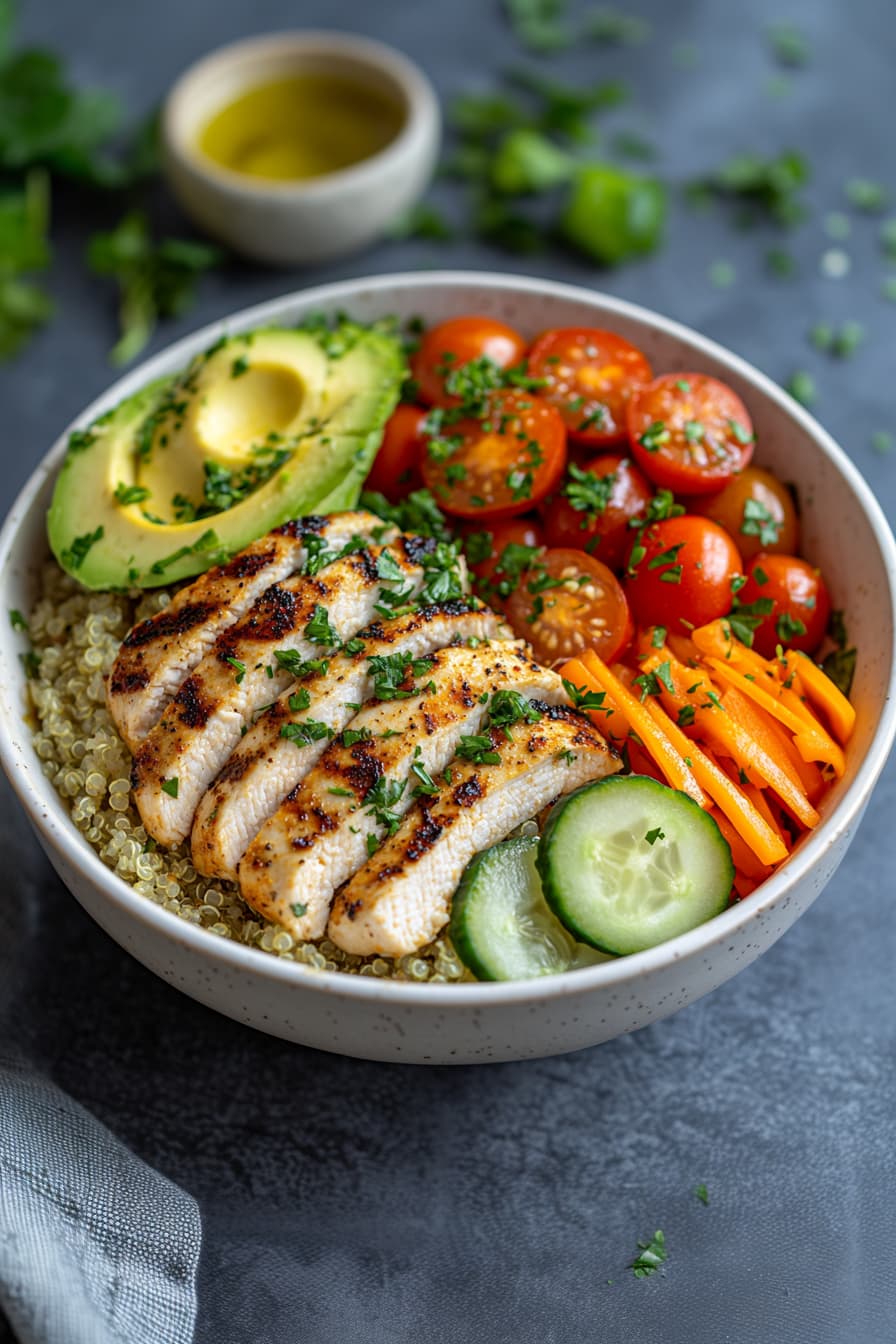
20 Grain Bowl Dinners: Meal-Prep-Friendly Buddha Bowls With 30g+ Protein
Twenty bowls that actually clear 30g of protein per serving, plus the five-component formula and a 90-minute Sunday prep plan.
A grain bowl that actually keeps you full needs five things: a cooked grain, 30g or more of protein, two vegetables, something crunchy, and a sauce with acid and fat. Skip the protein and you have a side dish that leaves you hungry by 8pm. Below are 20 bowls from the AislePrompt catalog that clear 30g of protein per serving, plus 10 more in the 20–29g range you can push over the line with one topping.
Get a free Sunday meal-prep plan
One batch cook, five lunches that still hold on Thursday, and a single consolidated Instacart cart. Sent Saturday.
No spam, unsubscribe in one click. Recipes, shopping lists and Instacart carts all work without an account either way.
The bowls here are built for Sunday-to-Thursday reality: batch the grain once, roast one sheet pan of vegetables, cook two proteins, and mix and match through the week.
The Anatomy of a Bowl That Keeps You Full
Satiety comes from protein, fiber, and fat — in that order of impact. Harvard's Nutrition Source puts adequate protein at roughly 0.36g per pound of body weight as a floor, which for a 160-pound adult is about 58g a day. If dinner is one of three meals, 30g in the bowl is not an aspirational number — it is the arithmetic.
The failure mode of most homemade grain bowls is that they are 80% grain and vegetable by volume and land around 12g of protein. A cup of cooked quinoa has about 8g; a cup of brown rice, about 5g. That is a base, not a meal.
The 5 Components
1. The grain (½–1 cup cooked). Quinoa, farro, brown rice, freekeh, wild rice, barley. Cook it in stock instead of water — the single cheapest upgrade available.
2. The protein (aim for 30g+). Roughly 5 oz cooked chicken breast (38g), 5 oz salmon (34g), 4 oz lean beef (30g), 1.5 cups chickpeas (18g), a full block of tofu split two ways (20g each). Plant-only bowls usually need two protein sources stacked.
3. Two vegetables. One raw for freshness and one roasted for depth. Roasting is what stops a bowl from tasting like a salad.
4. Crunch. Toasted nuts, seeds, crispy chickpeas, fried shallots, wonton strips. This is the most-skipped component and the most noticeable when missing.
5. Sauce with acid AND fat. Tahini-lemon, yogurt-herb, peanut-lime, gochujang-sesame, chimichurri. Fat carries flavor; acid keeps a heavy bowl from going dull halfway through.
Base Grains Compared
| Grain | Cook time | Protein (cooked cup) | Texture | Holds up in the fridge? |
|---|---|---|---|---|
| Quinoa | 15 min | ~8g | Fluffy, slightly popping | 5 days, excellent |
| Farro (pearled) | 20–25 min | ~7g | Chewy, nutty | 5 days, excellent |
| Brown rice | 40–45 min | ~5g | Soft, separate grains | 4 days, good |
| Freekeh | 20 min | ~8g | Chewy, smoky | 5 days, excellent |
| Wild rice | 45–55 min | ~7g | Firm, distinctly chewy | 5 days, excellent |
| Barley (pearl) | 25–30 min | ~4g | Plump, slightly slick | 4 days, good |
| Bulgur | 10 min (soak) | ~6g | Light, couscous-like | 3 days, softens |
Quinoa is the only one on this list that is a complete protein on its own, which matters for plant-based bowls. Farro is the best all-rounder for texture — it stays chewy under sauce for days where rice goes mushy. For the fiber and micronutrient case for using whole grains over refined ones at all, Harvard's whole grains page is the short version.
Batch rule: 2 cups dry grain yields roughly 6 cups cooked — five to six bowl bases. A 10-cup rice cooker handles quinoa, farro and brown rice on the same "white rice" setting for the first two and "brown" for the third, and holds them warm while you cook everything else.
10 Sauces That Elevate Any Bowl
Make one 8-ounce jar on Sunday; it dresses five bowls.
1. Lemon-tahini — ⅓ cup tahini, juice of 2 lemons, 1 garlic clove, water to thin, salt.
2. Yogurt-herb — 1 cup Greek yogurt, handful dill + parsley, lemon, garlic. Adds ~6g protein per bowl on its own.
3. Peanut-lime — ¼ cup peanut butter, 2 tbsp soy, lime, 1 tsp chili crisp, hot water to thin.
4. Gochujang-sesame — 2 tbsp gochujang, 1 tbsp rice vinegar, 1 tbsp sesame oil, 1 tsp honey.
5. Chimichurri — parsley, oregano, garlic, red wine vinegar, olive oil, red pepper flake.
6. Miso-ginger — 2 tbsp white miso, 1 tbsp grated ginger, rice vinegar, neutral oil.
7. Green goddess — yogurt or avocado base with basil, chives, tarragon, anchovy optional.
8. Chipotle-lime crema — sour cream or yogurt, 1 chipotle in adobo, lime, cumin.
9. Harissa-honey — 2 tbsp harissa, 1 tbsp honey, lemon, olive oil.
10. Soy-maple-sesame — 3 tbsp soy, 1 tbsp maple, 1 tbsp rice vinegar, 2 tsp toasted sesame oil.
Whisk them in a mixing bowl set and store in a jar; most keep 5–7 days refrigerated (the yogurt and avocado ones, 3).
The 30g+ Protein Club: 20 Bowls
Every recipe below lists 30g or more of protein per serving as published.
Mediterranean & Middle Eastern
1. High-Protein Chicken and Quinoa Bowl — 20 min prep, 15 min cook, 450 cal, 42g protein. The highest protein-per-calorie bowl in this list.
2. Lebanese-Inspired Chicken Shawarma Bowl with Garlic Sauce — 20/30 min, 520 cal, 45g protein.
3. Mediterranean Chicken Puttanesca Bowl — 20/25 min, 480 cal, 42g protein.
4. Mediterranean One-Pot Chicken & Veggie Bowl — 15/25 min, 420 cal, 38g protein. One pot, no assembly.
5. Grilled Lemon-Thyme Chicken with Mediterranean Quinoa Salad — 40/25 min, 460 cal, 42g protein.
6. Authentic Chicken Shawarma with Spiced Rice — 40/35 min, 480 cal, 35g protein. Weekend build, five weekday lunches.
7. Lemon-Garlic Shrimp with Mediterranean Quinoa Salad — 15/20 min, 420 cal, 35g protein.
8. Baked Lemon-Garlic Salmon with Mediterranean Herb Quinoa — 15/20 min, 450 cal, 38g protein.
9. Mediterranean Quinoa Salmon Bowls with Lemon-Dill Dressing — 20/25 min, 415 cal, 34g protein.
Korean & Japanese
10. Korean Bulgogi Beef Bibimbap — 25/40 min, 540 cal, 36g protein. Bulgogi marinade does double duty as the sauce.
11. Five-Color Rice Bowl with Sesame-Glazed Chicken — 50/25 min, 610 cal, 36g protein.
12. Miso-Glazed Salmon Bowls — 25/35 min, 550 cal, 39g protein.
13. Genuine Japanese Teriyaki Salmon Bowls — 25/15 min, 380 cal, 32g protein.
14. Sake-Infused Teriyaki Chicken Bowl — 20/35 min, 520 cal, 38g protein.
15. Honey-Sesame Glazed Salmon Bowls — 15/15 min, 480 cal, 36g protein. Thirty minutes total.
16. Authentic Japanese Beef Bowl with Caramelized Onions — 15/60 min, 620 cal, 32g protein.
Mexican & Southwest
17. Grilled Chicken Taco Bowls with Avocado Lime Crema — 30/20 min, 520 cal, 36g protein.
18. Southwest Chicken and Black Bean Bowl — 25/30 min, 480 cal, 32g protein.
19. Chipotle-Lime Beef Fajita Bowls — 25 min prep plus a 2-hour braise, 380 cal, 34g protein.
20. Air Fryer Chicken Taco Bowls with Cilantro-Lime Slaw — 10/15 min, 350 cal, 32g protein. Fastest bowl here.
Also clearing 30g
- One-Pan Salmon and Quinoa Bowl — 20/20 min, 380 cal, 42g protein.
- Coconut Lime Chicken and Rice Bowl — 20/35 min, 420 cal, 32g protein.
- Poki's Playful Poke Bowl — 25 min, no cooking, 510 cal, 34g protein.
- One-Pan Chicken and Veggie Bowl — 20/30 min, 450 cal, 35g protein.
- One-Pan Chicken and Rice Bowl — 20/25 min, 450 cal, 32g protein.
- Quick Chicken Taco Bowls — 25/10 min, 410 cal, 32g protein.
- Miso-Glazed Chicken Bento Bowls — 20/35 min, 350 cal, 30g protein.
The 20–29g Bowls: Good, One Topping Short
These are excellent bowls that land just under the line. Each note says exactly what closes the gap.
| Bowl | Protein | Add this | New total |
|---|---|---|---|
| Herb-Roasted Chickpea & Quinoa Bowl | 28g | 2 tbsp hemp seeds | ~34g |
| Korean Beef Bulgogi Quinoa Salad | 28g | 1 jammy egg | ~34g |
| Korean Kimchi Beef Bibimbap | 26g | 1 fried egg | ~32g |
| Spicy Tofu Stir-Fry Bowls | 25g | ½ cup edamame | ~34g |
| Thai-Inspired Tofu and Vegetable Bowl | 25g | 2 tbsp peanuts + edamame | ~33g |
| Authentic Tofu Buddha Bowl with Quinoa | 22g | ½ cup chickpeas | ~29g |
| Zesty Quinoa and Black Bean Grain Bowl | 22g | ¾ cup Greek yogurt crema | ~32g |
| Smoky Lentil & Sweet Potato Power Bowl | 22g | 2 tbsp pumpkin seeds + feta | ~30g |
| Mediterranean Chickpea & Farro Bowl | 18g | Grilled chicken thigh | ~40g |
| Spiced Chickpea and Quinoa Bowl | 20g | 1 cup Greek yogurt sauce | ~40g |
Two more worth knowing for lighter nights: Lemon-Garlic Farro and Kale Bowl and Mushroom and Thyme Wild Rice Bowl — both vegetable-forward, both improved by a scoop of Lemon-Herb Roasted Chickpea & Farro Bowl-style crisped chickpeas on top.
The Sunday Prep Plan: 5 Bowls in 90 Minutes
| Time | Task | Runs in parallel with |
|---|---|---|
| 0:00 | Start 2 cups farro and 2 cups quinoa (separate pots or rice cooker) | Heat oven to 425°F |
| 0:05 | Sheet pan 1: broccoli, red onion, sweet potato — oil, salt, in | Cube everything else |
| 0:10 | Sheet pan 2: chickpeas + cauliflower, in | Grain still cooking |
| 0:20 | Season and sear 2 lb chicken thighs; finish in oven | Sheet pans roasting |
| 0:35 | Pull grains; spread on a tray to cool fast | Chicken finishing |
| 0:40 | Make two sauces (lemon-tahini, gochujang-sesame) | — |
| 0:55 | Pull sheet pans and chicken; rest 10 min | Wash bowls |
| 1:05 | Portion into containers: grain, protein, two veg, keep sauce separate | — |
| 1:30 | Done — 5 bowls, sauces in small jars | — |
Three rules that make this hold up:
- Sauce goes in a separate container. Dressed grain goes soggy by Tuesday. This is the single biggest reason meal-prep bowls fail.
- Crunch goes on at serving. Nuts and crispy chickpeas soften in a sealed container overnight.
- Cool grains before sealing. Warm grain steams itself into paste and shortens fridge life by two days.
Glass containers reheat better than plastic and do not stain from turmeric or tomato — a 12-piece Pyrex set covers a full week with room for sauces. Two half sheet pans let you roast both vegetable trays at once instead of in sequence, which is where the 90 minutes actually comes from.
The Vegetables: What Roasts Well, What Belongs Raw
Roasting is what separates a bowl from a salad, but not everything belongs on the sheet pan.
| Vegetable | Roast at 425°F | Holds 5 days? | Better raw? |
|---|---|---|---|
| Broccoli / cauliflower | 20–25 min | Yes | No |
| Sweet potato, cubed | 25–30 min | Yes | No |
| Red onion, wedges | 20 min | Yes | Also good raw, thinly sliced |
| Bell peppers | 20 min | Yes | Either |
| Brussels sprouts, halved | 20–25 min | Yes | No |
| Carrots, coins | 25 min | Yes | Either |
| Zucchini | 15 min | No — weeps by day 2 | Yes, ribboned |
| Cherry tomatoes | 15 min | No — collapses | Yes |
| Cucumber, radish, cabbage | Never | Yes, raw | Yes — this is your crunch |
| Greens (kale, spinach) | Only kale, 8 min for chips | Kale yes, spinach no | Yes |
The pattern: dense vegetables roast and store; high-water vegetables go raw. A bowl that includes one of each column reads as composed rather than assembled.
What a Bowl Actually Costs
Per-serving math for a five-bowl batch, at typical US grocery prices:
| Component | Cost per bowl |
|---|---|
| Grain (½ cup dry farro or quinoa) | $0.40–$0.70 |
| Chicken thigh, 5 oz cooked | $1.40 |
| Salmon, 5 oz cooked | $4.50 |
| Chickpeas from dry, 1.5 cups | $0.35 |
| Two roasted vegetables | $1.10 |
| Sauce (per-bowl share of a jar) | $0.45 |
| Crunch (nuts or seeds) | $0.30 |
A chicken-and-farro bowl lands around $3.65 per serving; the chickpea version around $2.60; the salmon version around $6.75. That is meaningfully under what the same bowl costs from a fast-casual counter, which is most of the reason people start prepping them.
Common Pitfalls
Under-counting protein. A bowl of quinoa, roasted vegetables, and a tahini drizzle is about 14g. It reads healthy and behaves like a snack. Weigh or measure the protein for the first week until you can eyeball 5 ounces.
Dressing everything on Sunday. Grain absorbs dressing and turns to porridge. Sauce on the side, always.
One texture. Soft grain, soft roasted vegetable, soft protein, creamy sauce — it eats like baby food. Something raw and something crunchy in every bowl.
No acid. Bowls without lemon, vinegar, or pickled anything taste flat by the third bite. A jar of quick-pickled red onion in the fridge fixes every bowl you make for two weeks.
Reheating the whole bowl. Microwaving a bowl with fresh greens wilts them. Heat the grain and protein, then add the cold components.
Cooking grains in water. Stock, a bay leaf, and salt cost nothing and change the base from filler to an actual component.
When a Grain Bowl Is the Wrong Call
If you are eating low-carb, the grain base is 30–45g of carbohydrate before anything else goes in — swap to a cauliflower-rice or greens base and accept that it is a salad. If you need dinner in under 15 minutes with nothing prepped, a bowl is the wrong format; it assumes a cooked grain already exists. And if you are cooking for people who dislike mixed food, deconstruct it — the components are the same, but a plate with separated sections avoids the argument.
Related Reading
- Vegetarian Meal Prep: 10 Plant-Based Bowls With 30–50g Protein
- High-Protein Meal Prep: 5-Day Plan, 40g Per Meal
- 22 Korean Weeknight Dinners: Bibimbap, Bulgogi, Kimchi Bowls
- Best Meal Prep Containers 2026
- Best Mixing Bowls 2026
Sources
- Harvard T.H. Chan School of Public Health — Protein — daily protein requirements and quality of protein sources
- Harvard T.H. Chan School of Public Health — Whole Grains — fiber and micronutrient case for whole over refined grains
- USDA FoodData Central — protein and calorie values per cooked cup of quinoa, farro, brown rice and wild rice
- Quinoa — complete-protein amino acid profile
- Farro — the wheat species sold as farro and how pearling changes cook time
- Bulgogi — the Korean marinade behind several bowls above
Frequently asked questions
How do I actually get 30g of protein into a grain bowl?
Which grain holds up best for meal prep?
Should I dress the bowls when I prep them or later?
Can I freeze grain bowls?
What is the cheapest way to hit 30g of protein in a bowl?
Sources
- nutritionsource.hsph.harvard.edu
- nutritionsource.hsph.harvard.edu
- fdc.nal.usda.gov
- en.wikipedia.org
- en.wikipedia.org
- en.wikipedia.org
One Sunday, one week of lunches.
Ask our AI to plan the batch-cook — components, quantities, and a single Instacart cart.
Plan my prep day →