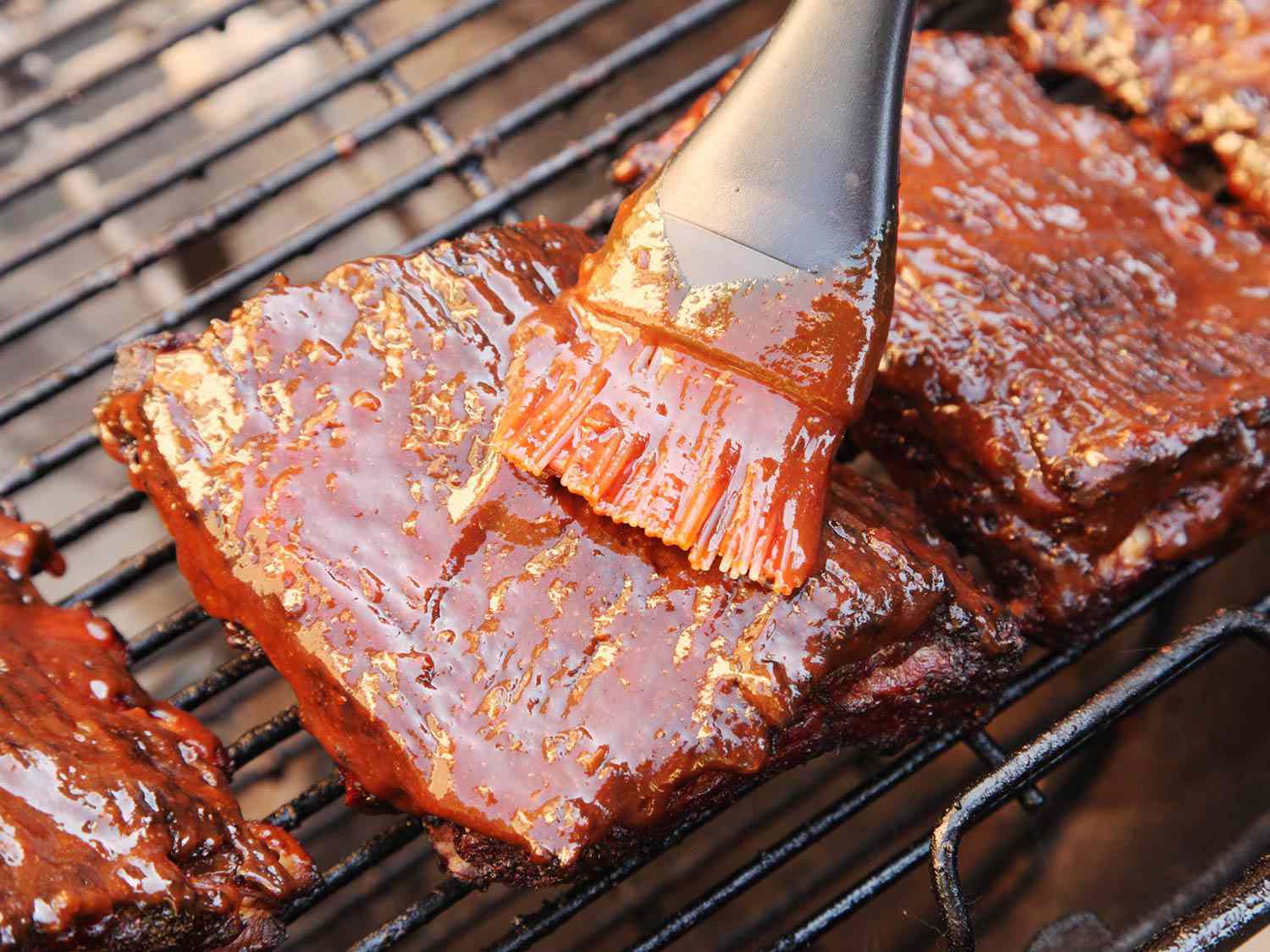
20 Homemade BBQ Rubs & Marinades: Dry Blends and Wet Brines
One 2:2:1:1:1 ratio generates every dry rub, wet marinade, brine and finishing sauce here — plus the timing chart that keeps them from going wrong.
A homemade BBQ rub is salt, sugar, paprika, one aromatic, and one heat source, mixed 2:2:1:1:1 by volume. That single ratio generates every dry rub below. Wet marinades swap in acid and oil; brines swap in water and time. You can mix a full cup in four minutes, and it will beat any $9 jar on the shelf.
Get a free cookout plan for a crowd
Mains, sides and quantities scaled to your headcount, with one Instacart cart instead of a spreadsheet.
No spam, unsubscribe in one click. Recipes, shopping lists and Instacart carts all work without an account either way.
Introduction: why store-bought rubs plateau at "fine" and homemade blends actually caramelize better
Pick up a $9 jar of competition rub and read the label in order. Salt is almost always first, sugar second, and somewhere in the middle you will find silicon dioxide or calcium silicate — anti-caking agents that exist so the powder survives eighteen months on a warehouse shelf without clumping. Those agents do their job. They also mean roughly 2-3% of what you paid for is inert filler, and that the blend was formulated for shelf stability rather than for what happens on the surface of a pork shoulder at 250°F.
The bigger problem is age. Ground spices lose most of their volatile aromatic oils within about six months of grinding, and the jar you just bought was ground long before it was bottled. Whole cumin seed that you crack yourself thirty seconds before mixing is a different ingredient than pre-ground cumin from a jar that has been open since last summer — not "fresher," different. The spice rub technique depends entirely on those aromatics surviving to the plate.
Then there is the sugar, which is where homemade rubs genuinely outperform rather than just taste brighter. Commercial rubs lean on refined white sugar or dextrose because both flow freely and resist caking. Turbinado and dark brown sugar clump, so they get used sparingly — but they are exactly what you want on a smoker. Brown sugar begins to caramelize near 320°F, and the Maillard reaction between those sugars and the surface proteins of the meat runs meaningfully from about 285°F upward. That browning is the bark. A rub built around free-flowing dextrose browns thinner and paler than one built on turbinado, which is why competition cooks who buy commercial rubs still cut them with their own sugar.
The cost math is not close either. A cup of homemade rub built from bulk paprika, kosher salt, turbinado sugar, granulated garlic, and black pepper runs about $1.80 at grocery-store prices. The equivalent volume in jarred rub costs $16 to $22. If you smoke six times a summer you are spending roughly $100 a year for a worse result, and you have no way to dial the salt down for a thin pork chop or the heat up for wings.
Everything below is built from one ratio. Learn it once and you will stop buying rubs entirely.
Rub vs. Marinade vs. Brine: when to reach for each
These three get used interchangeably in recipe headlines, and they are not interchangeable at all. They move different things in different directions.
| Method | Base | How far it penetrates | Best for | Working time |
|---|---|---|---|---|
| Dry rub | Salt + sugar + ground spice, no liquid | Salt to the center; spice stays on the surface | Low-and-slow smoking, anything where you want bark | 15 min to 24 hr |
| Wet marinade | Acid + oil + aromatics | About 1/8 inch, regardless of how long you wait | Hot-and-fast grilling, thin cuts, skewers | 30 min to 8 hr |
| Wet brine | Salt dissolved in water, 5-6% by weight | Salt and water throughout the muscle | Lean proteins that dry out: poultry, pork loin, shrimp | 30 min to 12 hr |
| Dry brine | Salt alone, applied and rested uncovered | Salt to the center, surface dehydrates | Large roasts, whole birds, thick steaks | 12 to 48 hr |
The rule that clears up most confusion: salt travels, flavor mostly does not. Salt ions move through muscle tissue readily. The large aromatic molecules in garlic, oregano, and chile do not — they sit on the surface and get concentrated there as the exterior dries. This is why a 14-hour marinade does not taste four times stronger than a 3-hour one; you hit the penetration ceiling early and the only thing that keeps changing after that is the acid slowly turning the outer layer chalky.
It is also why dry-rubbing overnight is functionally the same operation as brining. The salt in the rub pulls moisture to the surface, dissolves into it, and gets reabsorbed carrying the seasoning with it. You get seasoned meat and a dry exterior — the two conditions bark needs. A rub applied fifteen minutes before the meat hits the grate gives you flavor and nothing else.
Choose by cooking method, not by preference. Smoking a Texas brisket with a dry rub and mop sauce for twelve hours? Rub, always — a marinade would just steam off in the first hour. Throwing Korean bulgogi beef on a screaming-hot pan for four minutes? Marinade, because there is no time for bark to form and you want the sugar and soy to lacquer instead. Roasting a whole turkey breast? Brine, because the breast will hit 165°F long after the thighs and needs the water.
The Master Rub Formula: 2 salt : 2 sugar : 1 paprika : 1 aromatic : 1 heat (by volume)
Five slots, measured by volume, not weight. Fill the slots differently and you get a different regional style out of the same arithmetic.
| Slot | Parts | Default | Swaps |
|---|---|---|---|
| Salt | 2 | Diamond Crystal kosher | Morton kosher (use half), smoked sea salt, celery salt |
| Sugar | 2 | Turbinado | Dark brown, maple sugar, coconut sugar; omit for fish under 30 min |
| Paprika | 1 | Sweet Hungarian | Smoked (pimentón), hot Hungarian, ancho powder |
| Aromatic | 1 | Granulated garlic | Onion powder, ground cumin, ground coriander, dried thyme |
| Heat | 1 | Coarse black pepper | Cayenne, chipotle powder, gochugaru, white pepper |
Scale it in whatever unit is in your hand — tablespoons, quarter-cups, film canisters. The ratio holds.
| Batch | Salt | Sugar | Paprika | Aromatic | Heat | Yield | Covers |
|---|---|---|---|---|---|---|---|
| Test | 2 tsp | 2 tsp | 1 tsp | 1 tsp | 1 tsp | ~2 Tbsp | 2 chicken thighs |
| Standard | 2 Tbsp | 2 Tbsp | 1 Tbsp | 1 Tbsp | 1 Tbsp | ~1/2 cup | 1 rack of ribs |
| Cookout | 1/4 cup | 1/4 cup | 2 Tbsp | 2 Tbsp | 2 Tbsp | ~1 cup | 12-14 lb brisket |
| Season stock | 1/2 cup | 1/2 cup | 1/4 cup | 1/4 cup | 1/4 cup | ~2 cups | 4-5 cooks |
The salt caveat that ruins more rubs than anything else: Diamond Crystal kosher salt and Morton kosher salt are not interchangeable by volume. Morton's crystals are denser and pack roughly twice as much salt into the same tablespoon. If a recipe was written for Diamond Crystal and you measure Morton one-for-one, you have doubled the salt in a five-slot formula where salt is already two of six parts. Use Diamond Crystal, or cut Morton by half. Table salt is worse still — cut it to one-third and expect a harsher finish.
Two structural adjustments worth memorizing. Drop the sugar to 1 part for anything cooked above 400°F, because at direct-grill temperatures the sugar burns before the interior is done and you get an acrid crust. Drop the salt to 1 part for anything under an inch thick, because a thin pork chop does not have the mass to buffer a brisket-strength blend.
5 Dry Rubs by Protein
Every one of these is the master formula with the slots filled differently. Mix in a bowl with a fork, breaking up brown-sugar lumps against the side. Store as described in the FAQ.
1. Texas-Style Brisket Rub
1/4 cup coarse black pepper · 1/4 cup Diamond Crystal kosher salt · 1 Tbsp granulated garlic
Central Texas famously runs "dalmatian rub" — equal parts coarse pepper and salt, and that is genuinely it. No sugar, because a brisket sits at 250°F for twelve hours and any sugar you add will scorch long before the point renders. Grind the pepper coarse, 16-mesh if you buy it that way; fine pepper turns to dust and burns. One tablespoon of granulated garlic is the only concession most Texas pits make. Apply about 1/3 cup to a 12-pound packer, all sides, the night before. This is the rub behind a pepper-crusted Texas brisket and it is the one blend on this list where adding ingredients makes it worse.
2. Sweet-Heat Pork Shoulder Rub
1/4 cup dark brown sugar · 3 Tbsp kosher salt · 2 Tbsp smoked paprika · 1 Tbsp granulated garlic · 1 Tbsp chipotle powder · 2 tsp dry mustard
Pork shoulder can take sugar in a way brisket cannot — it is fattier, it is usually cooked wrapped for part of the run, and the sugar becomes part of the sticky exterior rather than a burnt shell. Dark brown sugar over turbinado here for the molasses note. Dry mustard is the sleeper ingredient: it adds a sharp back-palate bite that reads as "seasoned" rather than "spicy." Use about 3/4 cup on a whole 8-pound shoulder, applied 12 hours ahead. Works on hickory-smoked pulled pork and on thick-cut chops alike.
3. Kansas City Rib Rub
1/4 cup turbinado sugar · 3 Tbsp kosher salt · 2 Tbsp sweet paprika · 1 Tbsp granulated onion · 1 Tbsp granulated garlic · 2 tsp black pepper · 1 tsp cayenne · 1 tsp celery salt
The most-ingredient blend on the list, and Kansas City earns it — this is the sweet, layered, slightly savory style that gave the city its reputation. Celery salt is not optional; it is the marker note that separates a KC rub from a generic sweet rub. Because the sugar load is high, ribs get cooked at 225-250°F and wrapped at the three-hour mark. Roughly 3 tablespoons per rack, both sides, one hour before the smoke. Try it against applewood-smoked pork ribs with a brown sugar rub or on a Kansas City-style smoked brisket.
4. Herbs-and-Lemon Chicken Rub
2 Tbsp kosher salt · 1 Tbsp turbinado sugar · 1 Tbsp sweet paprika · 2 tsp dried thyme · 2 tsp granulated garlic · 2 tsp black pepper · zest of 2 lemons, dried
Chicken skin needs less sugar and more herb than red meat. Dry the lemon zest on a plate for two hours before mixing, or it will clump the whole batch into paste within a day. Half the salt of a brisket rub, because chicken pieces are thin and you are seasoning a lot of surface relative to mass. Apply and rest uncovered in the fridge for at least four hours — that uncovered rest is what gives you skin that actually crisps. Pairs directly with herb-rubbed roast chicken with lemon and thyme, and scaled up it is a good smoked turkey breast blend.
5. Brown-Sugar-Dill Salmon Rub
3 Tbsp dark brown sugar · 2 Tbsp kosher salt · 1 Tbsp dried dill · 2 tsp coarse black pepper · 1 tsp granulated garlic
Sugar leads for fish, inverting the usual ratio, because salmon cooks in twelve minutes and the sugar's job is to form a glaze rather than a bark. Sugar-forward blends on oily fish also do something no other rub on this list does: cure it slightly. Leave this on salmon for four hours and you have a fast gravlax; leave it on for twenty minutes and it is a seasoning. Twenty minutes is what you want on a weeknight. The same blend is excellent on trout and on a cedar-planked whitefish, and it is worth keeping a separate small jar since the dill will scent anything stored next to it.
Two bonus blends worth mixing: a coffee rub (swap the paprika slot for finely ground dark-roast coffee, as in these coffee-rubbed grilled pork chops) and a wing rub (the KC blend with the sugar halved and the cayenne doubled, which is what carries smoked BBQ chicken wings with a spicy dry rub).
5 Wet Marinades: Korean bulgogi, Cuban mojo, Mediterranean lemon-oregano, teriyaki, Jamaican jerk
All five are built on the same four-part chassis: acid, fat, salt, aromatics. Quantities below make enough for about 2 pounds of protein.
1. Korean Bulgogi
1/2 cup soy sauce · 1/4 cup grated Asian pear · 3 Tbsp brown sugar · 2 Tbsp toasted sesame oil · 6 cloves garlic, grated · 1 Tbsp grated ginger · 4 scallions · 1 tsp black pepper
The grated pear is the whole trick and the reason bulgogi works on cheap cuts — it carries calpain-family enzymes that break down muscle fiber without the mushy surface that a vinegar marinade produces over the same window. Kiwi works faster and is easier to overdo; twenty minutes with kiwi will turn sirloin to paste. Marinate thin-sliced beef 30 minutes to 4 hours, no longer. Cook screaming hot and in batches so the sugar lacquers instead of steaming. See it in action on Korean bulgogi beef with scallions or on gochujang-marinated short ribs.
2. Cuban Mojo
3/4 cup sour orange juice (or 1/2 cup orange + 1/4 cup lime) · 1/2 cup olive oil · 12 cloves garlic, mashed to a paste · 2 tsp ground cumin · 1 tsp dried oregano · 2 tsp kosher salt
Twelve cloves is not a typo. Mojo is a garlic delivery system with citrus attached, and the standard mistake is treating garlic as an accent. Mash it with salt into an actual paste using the flat of a knife before the liquid goes in — chopped garlic will not emulsify and you will end up with garlic chunks that burn on the grate. Sour orange is the authentic acid; the orange-lime blend is a legitimate substitution. Pork shoulder takes this for 12-24 hours, as in mojo-marinated pork shoulder with citrus. Chicken takes 4 hours maximum.
3. Mediterranean Lemon-Oregano
1/2 cup olive oil · 1/3 cup lemon juice · 2 Tbsp dried Greek oregano · 6 cloves garlic, minced · 2 tsp kosher salt · 1 tsp black pepper · zest of 1 lemon
The most acid-forward marinade here and therefore the most time-sensitive. Lemon juice will turn the surface of chicken or fish opaque and chalky in about six hours — you are effectively making ceviche past that point. Two hours for fish, four for chicken, six for lamb, which has enough connective tissue to absorb the punishment. Use dried Greek oregano rather than fresh; the dried form is more concentrated and stands up to the acid. This is the marinade under Greek lamb chops with lemon-oregano marinade, and it doubles as a finishing dressing if you reserve a quarter cup before the meat goes in.
4. Teriyaki
1/2 cup soy sauce · 1/2 cup mirin · 1/4 cup sake · 3 Tbsp sugar · 1 Tbsp grated ginger · 2 cloves garlic
Real teriyaki has no acid, which makes it the most forgiving marinade on the list — you cannot over-marinate in it the way you can in citrus. Simmer the sauce for five minutes first to cook off the alcohol and slightly thicken it, then cool completely before it touches raw protein. Warm marinade on cold meat is a food-safety problem and it partially cooks the surface. Use half for the marinade and reserve half, reduced further, as the glaze you brush on in the last two minutes — the reduce-and-brush method behind 20 glazed recipes. That two-stage application is what separates restaurant teriyaki from the flat version.
5. Jamaican Jerk
6 scallions · 4 Scotch bonnet peppers · 3 Tbsp soy sauce · 2 Tbsp lime juice · 2 Tbsp brown sugar · 2 Tbsp fresh thyme · 1 Tbsp allspice berries, ground · 2 tsp cinnamon · 1 tsp nutmeg · 8 cloves garlic · 2 Tbsp grated ginger · 2 tsp kosher salt
Blend to a coarse paste. Allspice — pimento, in Jamaica — is non-negotiable and is what makes jerk taste like jerk rather than generic hot sauce; the warm baking spices behind it are the second half of that signature. Scotch bonnets bring roughly 100,000-350,000 Scoville units, so two peppers is a reasonable starting point and four is authentic. Wear gloves. This is a paste, not a pourable marinade, so it clings and behaves partly like a wet rub. Chicken takes 4-24 hours, as in jerk-marinated coconut chicken skewers. Pork takes the full 24.
A note on yogurt-based marinades: they behave differently from every marinade above. Yogurt's lactic acid tenderizes far more gently than citrus or vinegar, and the milk proteins cling to the surface and brown beautifully — which is why a tandoori-spiced chicken with yogurt and turmeric marinade can sit for a full 24 hours with no chalky-surface penalty.
5 Brines: basic poultry, quick pork chop, apple cider turkey, buttermilk fried chicken, dry brine for large roasts
A working wet brine is 5-6% salt by weight of water — about 1/2 cup of Diamond Crystal kosher salt per quart. Weaker than that and you are just soaking meat; stronger and you will cure it.
1. Basic Poultry Brine
1 gallon cold water · 1 cup Diamond Crystal kosher salt · 1/2 cup sugar · 2 Tbsp black peppercorns · 4 bay leaves · 6 cloves garlic, smashed
Dissolve the salt in a quart of hot water, then add the remaining three quarts cold so the brine goes onto the bird at refrigerator temperature. A whole 4-pound chicken wants 4-6 hours; bone-in pieces want 2; a 14-pound turkey wants 12-14. Rinse and pat completely dry afterward, then leave it uncovered in the fridge for at least an hour before cooking — a wet-brined bird that goes straight to the oven has rubbery skin, every time. The sugar is there for browning, not sweetness.
2. Quick Pork Chop Brine
4 cups water · 1/4 cup kosher salt · 2 Tbsp brown sugar · 1 Tbsp black peppercorns
Thirty minutes. That is the entire commitment, and it is the single highest-return technique for anyone who thinks they dislike pork chops. Modern pork is bred lean enough that a 1-inch center-cut chop has almost no margin between done and dry; thirty minutes in this brine adds enough water and salt to widen that window by several degrees. Do not go past two hours or the texture turns spongy and faintly ham-like. Pat dry, then apply a dry rub with the salt slot cut in half since the chop is already seasoned.
3. Apple Cider Turkey Brine
2 quarts apple cider · 2 quarts water · 1.5 cups kosher salt · 1/2 cup brown sugar · 4 sprigs rosemary · 2 Tbsp black peppercorns · 3 bay leaves · 2 oranges, quartered
Simmer the cider with the salt, sugar, and aromatics for ten minutes, then add the water cold and chill fully before use. The cider contributes acidity as well as sugar, so this brine works faster than a plain saltwater brine — 10-12 hours for a 14-pound bird, not 14-16. The fructose in the cider browns aggressively, so tent the breast with foil once it takes color or it will be mahogany at hour two. Same principle carries the sweet tea brined chicken with charred lemon — a sugared brine, a fast bird, and a watchful eye on the skin.
4. Buttermilk Fried Chicken Brine
1 quart buttermilk · 2 Tbsp kosher salt · 1 Tbsp black pepper · 1 Tbsp paprika · 2 tsp cayenne · 1 Tbsp hot sauce
Buttermilk sits between a brine and a marinade: it carries salt in solution like a brine, but its lactic acid tenderizes at roughly a tenth the aggression of vinegar, so 24 hours is safe where 24 hours in a citrus marinade would be ruinous. The other job it does is mechanical — the residual buttermilk clinging to the chicken is what the flour dredge grabs onto, so a well-brined bird produces visibly craggier crust. Twelve to 24 hours for bone-in pieces. See buttermilk-brined Southern fried chicken for the full dredge-and-fry sequence.
5. Dry Brine for Large Roasts
1/2 tsp Diamond Crystal kosher salt per pound of meat. That is the whole recipe.
For prime rib, whole turkey, pork loin roasts, and thick steaks, a dry brine beats a wet one on every axis except speed. Salt the meat, set it on a wire rack over a sheet pan, and leave it uncovered in the fridge for 24-48 hours. The salt draws moisture out, dissolves, and gets reabsorbed as concentrated seasoning while the surface dehydrates — which is exactly the condition you need for a hard sear or a good bark. You also skip the five-gallon bucket and the refrigerator Tetris. For anything you plan to sear or smoke, dry-brine by default. Even vegetables benefit from the principle, which is what vinegar-brined pickled vegetables run on at a longer timescale.
5 Finishing Sauces & Bastes: Alabama white sauce, Kansas City tomato-molasses, Carolina mustard, mop sauce, chimichurri
Sauce is the last 5% and it goes on at the end — brushing a sugar-heavy sauce on early is the most common way home cooks burn an otherwise perfect cook. Apply in the final 15-20 minutes, or off-heat at the table. These are the working ratios; for the full regional treatment including exact simmer times and the history behind each style, we went deep in 18 homemade BBQ sauce recipes: Kansas City, Carolina & Texas regional styles.
Alabama white sauce — 1 cup mayonnaise, 1/4 cup cider vinegar, 1 Tbsp lemon juice, 2 tsp coarse black pepper, 1 tsp horseradish, 1/2 tsp cayenne. Mayonnaise-based, unheard of outside north Alabama until recently, and unbeatable on smoked chicken. Never heat it; it will break. Pairs with Alabama BBQ pulled pork.
Kansas City tomato-molasses — 2 cups ketchup, 1/2 cup molasses, 1/3 cup cider vinegar, 1/4 cup brown sugar, 2 Tbsp tomato paste, 1 Tbsp smoked paprika. Thick, sweet, and the style most people picture when they hear "BBQ sauce." Simmer 20 minutes to lose the raw-ketchup edge.
Carolina mustard — 3/4 cup yellow mustard, 1/4 cup cider vinegar, 1/4 cup honey, 1 Tbsp brown sugar, 2 tsp black pepper, 1 tsp hot sauce. South Carolina's midlands sauce, built for pork. It is on Kentucky pulled pork with tangy mustard BBQ sauce and it makes eastern-style Carolina pulled pork with tangy vinegar sauce look positively restrained.
Mop sauce — 2 cups beef broth, 1/2 cup cider vinegar, 1/4 cup Worcestershire, 2 Tbsp of whatever rub you used. Thin by design. It is not a finishing sauce at all — you mop it on every hour during a long smoke to keep the surface from drying past the point where smoke will stick.
Chimichurri — 1 cup flat-leaf parsley, 1/2 cup olive oil, 1/4 cup red wine vinegar, 4 cloves garlic, 2 Tbsp oregano, 1 tsp red pepper flakes, salt. Argentine, raw, and the only sauce here that is also a marinade. Chimichurri is chopped, never blended — a food processor turns it into green paste. Let it sit an hour before serving, then spoon it over Brazilian-style pork skewers.
How Long to Rub or Marinate by Protein: printable timing chart
The numbers that matter, in one place. "Minimum" is where you start seeing a difference; "maximum" is where texture begins to degrade.
| Protein | Method | Minimum | Sweet spot | Maximum |
|---|---|---|---|---|
| Brisket (12-14 lb) | Dry rub | 4 hr | 12-18 hr | 24 hr |
| Pork shoulder (8 lb) | Dry rub | 4 hr | 12 hr | 24 hr |
| Pork ribs (full rack) | Dry rub | 30 min | 2-4 hr | 12 hr |
| Whole chicken | Dry brine | 6 hr | 24 hr | 48 hr |
| Chicken pieces | Wet marinade | 30 min | 4 hr | 12 hr |
| Chicken pieces | Citrus marinade | 30 min | 2 hr | 4 hr |
| Steak (1-1.5 in) | Dry brine | 45 min | 12 hr | 48 hr |
| Thin-sliced beef | Bulgogi marinade | 20 min | 30-60 min | 4 hr |
| Pork chops (1 in) | Wet brine | 20 min | 30-45 min | 2 hr |
| Whole turkey (14 lb) | Wet brine | 8 hr | 12 hr | 16 hr |
| Whole turkey (14 lb) | Dry brine | 12 hr | 24-36 hr | 72 hr |
| Salmon fillet | Sugar rub | 15 min | 20-30 min | 4 hr |
| Shrimp | Wet marinade | 15 min | 30 min | 1 hr |
| Firm tofu | Dry rub or marinade | 20 min | 1-2 hr | overnight |
| Vegetables | Dry rub | 0 min | 15 min | 1 hr |
Two lines in that chart deserve emphasis. Shrimp maxes out at an hour in anything acidic — past that the acid firms the proteins and you get rubbery shrimp before they ever see heat. And thin-sliced beef in an enzymatic marinade (pear, kiwi, pineapple, papaya) degrades fast; four hours is a hard ceiling, and with pineapple or papaya it is closer to one.
What You'll Need: mixing bowls, spice grinder, non-reactive bags/containers, digital scale
The gear list is short and none of it is exotic.
A dedicated electric spice grinder ($25-40). The single biggest quality jump available, because it lets you buy whole cumin, coriander, and peppercorns and grind them thirty seconds before mixing. Buy a second one rather than using your coffee grinder — spice oils will haunt your coffee for months, and this is not reversible. Browse small appliances for burr and blade options; a cheap blade grinder is entirely adequate for spices.
Non-reactive containers and bags. Aluminum and unlined cast iron react with acidic marinades and will give you a metallic off-taste within a few hours. Glass, stainless, food-grade plastic, or a zip bag. A zip bag is genuinely better than a bowl for marinades because you can press the air out and get full contact with a quarter of the liquid volume. See storage for the airtight jars that keep whole-spice rubs sharp for a year, and grocery for buying bulk spices at a sane price per ounce.
Mixing bowls and a whisk. Nested stainless bowls, one small for test batches and one large for cookout quantities. A fork works for dry rubs; a whisk matters for emulsifying oil-and-acid marinades. Both live in utensils.
A digital scale ($15-25). Only strictly necessary for wet brines, where percentage salinity is the whole game and volume measurements vary by salt brand. Also the fastest way to portion a rub across multiple racks. Find them in gadgets.
A sharp boning or trimming knife. Brisket fat caps need trimming to about 1/4 inch before rubbing — thicker and the rub sits on fat that renders away, taking your seasoning with it. See knives. If you are outfitting a smoker setup more broadly, our best grilling tools and BBQ gadgets guide covers thermometers and grates.
The Mistake to Avoid: salting a marinade AND a rub — you'll cure the meat and turn it grey
Here is the failure mode, and it is more common than it should be: you brine a pork shoulder overnight in a 6% salt solution, pat it dry, and then apply a full-strength dry rub in which salt is two of six parts. You have now applied two full seasoning doses to the same piece of meat.
The result is not just "too salty," though it will be that. At high enough combined salt concentration and long enough contact time, you have moved from seasoning into curing. The surface proteins denature differently, the texture near the exterior turns firm and slightly rubbery in the way deli ham is, and — because nitrite-free curing produces the grey-brown of cooked meat rather than the pink of cured meat — the outer half-inch goes an unappetising grey that no amount of smoke will fix. It is not dangerous. It just is not what you were trying to make.
The rule: season once. If the protein went through a wet brine, a dry brine, or a salted marinade, the rub that follows gets zero salt or, at most, half of one part. Mix a small "post-brine" batch of your rub with the salt slot empty — the other four slots still deliver all of the flavor and all of the bark. If you are dry-rubbing only, use the full formula.
Three related errors worth naming while we are here:
- Rinsing a dry brine off. Do not. The salt has already been absorbed; rinsing only rewets the surface you spent 24 hours drying. Pat, do not rinse.
- Reusing marinade as a sauce without boiling it. It has held raw meat. Boil for at least one full minute, or reserve a portion before the meat goes in.
- Applying rub to wet meat. It dissolves into slurry and slides off during handling. Pat the surface dry first, then rub — no oil binder needed, though a thin film of mustard works if you want one.
FAQ
How long should I dry-rub meat before cooking?
Depends on thickness — thin cuts (chicken thighs, pork chops, steaks under 1 inch) want 1-4 hours; thick cuts (brisket, pork shoulder, whole ribs) want 12-24 hours in the fridge, uncovered on a wire rack so the surface dries. The step people skip is that overnight dry-rubbing is functionally the same as a dry brine — the salt penetrates and the surface dehydrates for better bark. Rubbing 15 minutes before cooking gets you flavor but not that texture.
What's the difference between a rub and a marinade?
A rub is salt + sugar + spices with no liquid; it draws moisture out then reabsorbs it as concentrated flavor, and it forms the bark on smoked meats. A marinade adds an acid (vinegar, citrus, yogurt) and oil, which tenderizes the surface and delivers herbaceous flavor but never penetrates more than about 1/8 inch. Rubs are for low-and-slow; marinades are for hot-and-fast.
Can I use these rubs on vegetables and tofu?
Yes, with one adjustment — cut the salt by half. Vegetables and firm tofu don't have the mass to buffer a full-strength meat rub, so a rub calibrated for brisket will over-salt cauliflower steaks or tofu slabs. Toss with a bit of neutral oil first so the rub sticks, and roast at 425°F or grill over medium-high. The paprika-heavy rubs are especially good on eggplant, mushrooms, and firm tofu.
How do I store homemade rubs?
Airtight jar, cool dark cupboard, no fridge (moisture is the enemy). Ground spices lose potency after about 6 months, so mix in half-batches unless you cook BBQ every weekend. Label with the date. If a rub contains fresh garlic or fresh citrus zest, that batch has to live in the fridge and only lasts about a week. AislePrompt's storage category stocks the airtight spice jars that keep whole-spice rubs sharp for a year.
Do I need special equipment to grind my own rubs?
A dedicated electric spice grinder (do not use your coffee grinder — the oils cross-contaminate for months) at $25-40 makes rubs 3x more aromatic because you're grinding whole cumin seeds, coriander, and peppercorns fresh. A mortar & pestle works but takes longer. For wet marinades all you need is a bowl and a whisk. The whole-spice-to-fresh-grind step is the single biggest quality gap between homemade and store-bought.
Related reading
Once the flavor base is handled, the rest of the cook is technique and timing:
- 18 smoker recipes for beginners: brisket, ribs & pulled pork — where these rubs actually get used
- 18 homemade BBQ sauce recipes: Kansas City, Carolina & Texas regional styles — the finishing-sauce chapter in full
- Summer grilling marinades & rubs — the seasonal cookout version of this playbook
- 18 citrus marinade recipes: lemon, lime & orange — going deeper on acid-forward marinades
- Best grilling tools & BBQ gadgets for 2026 — thermometers, grates, and the rest of the kit
Frequently asked questions
How long should I dry-rub meat before cooking?
What's the difference between a rub and a marinade?
Can I use these rubs on vegetables and tofu?
How do I store homemade rubs?
Do I need special equipment to grind my own rubs?
Sources
- en.wikipedia.org
- en.wikipedia.org
- en.wikipedia.org
- en.wikipedia.org
- en.wikipedia.org
- en.wikipedia.org
- en.wikipedia.org
Plan the whole cookout in one go.
Ask our AI for mains, sides and quantities for your headcount — one Instacart cart, no spreadsheet.
Plan my cookout →