22 Gluten-Free Desserts Anyone Can Make (Beginner-Friendly Recipes)
Flourless cakes, meringues, panna cotta, macaroons, and almond-flour bakes — desserts that are gluten-free by design, not by substitution.
The best gluten-free desserts aren't wheat-flour recipes with a swap — they're desserts that were gluten-free to begin with. Flourless chocolate cake, meringue, panna cotta, custard, macaroons, and almond-flour bakes have always sat in this category, no substitution required. Below: 22 beginner-friendly picks organized by technique, plus the pantry, tools, and swap rules that make gluten-free baking as reliable as any other kind.
Get a free week of easy dinners
Seven weeknight dinners with the shopping list already totalled, sent Sunday. No account needed, unsubscribe in one click.
No spam, unsubscribe in one click. Recipes, shopping lists and Instacart carts all work without an account either way.
Why the best gluten-free desserts avoid flour swaps altogether
Wheat flour does two jobs in a dessert: it adds body and it forms gluten, the elastic network that traps steam and gives baked goods their structure. Sub in rice flour or a cup-for-cup blend and you get the body but almost none of the network. That's why gluten-free cookies spread too far, gluten-free layer cakes slump, and gluten-free bread turns dense.
The workaround most home bakers reach for — extra xanthan gum, more eggs, a chill in the fridge — helps a little but never gets you to "as good as the original." The better move is to bake desserts where wheat flour was never load-bearing:
- Flourless cakes rely on eggs and chocolate for structure, not gluten.
- Meringue and pavlova are 95% egg white and sugar; no flour anywhere.
- Panna cotta, custard, mousse are set with dairy, eggs, or gelatin.
- Almond-flour bakes use ground nuts as the body, no swap involved.
- Macaroons and coconut bakes use shredded coconut for body.
Start with these and the results are as good as (or better than) their wheat counterparts. Save the cup-for-cup blends for chewy cookies and dense brownies where gluten was contributing little anyway.
The three categories of gluten-free desserts
Every recipe below sits in one of three groups. Knowing which is which tells you how forgiving the recipe is going to be and what can go wrong.
| Category | What's in it | Beginner difficulty | What can go wrong |
|---|---|---|---|
| Naturally gluten-free | Flourless cake, meringue, panna cotta, macaroons, custard, mousse | Easy | Eggs overcooked; sugar not dissolved |
| Almond & coconut flour | Almond-flour cookies, coconut-flour cakes, nut-butter bakes | Easy-medium | Nut flour goes rancid; over-mixing |
| Cup-for-cup swap | Cookies, brownies, quick breads made with GF blends | Medium | Gritty texture; no structure |
The 22 recipes below skew heavily toward the first two categories — that's where beginners have the highest success rate. Cup-for-cup swap recipes are called out explicitly where they appear.
22 curated gluten-free desserts
Each recipe below is fully gluten-free by design (naturally, almond-flour based, or explicitly labeled GF) and rated for beginner-to-intermediate skill. Every one is a real recipe from our catalog with tested amounts and cook times.
Naturally gluten-free classics (6 recipes)
These are the desserts that were gluten-free before "gluten-free" was a category — no swap, no compromise, and often better than the wheat-flour version.
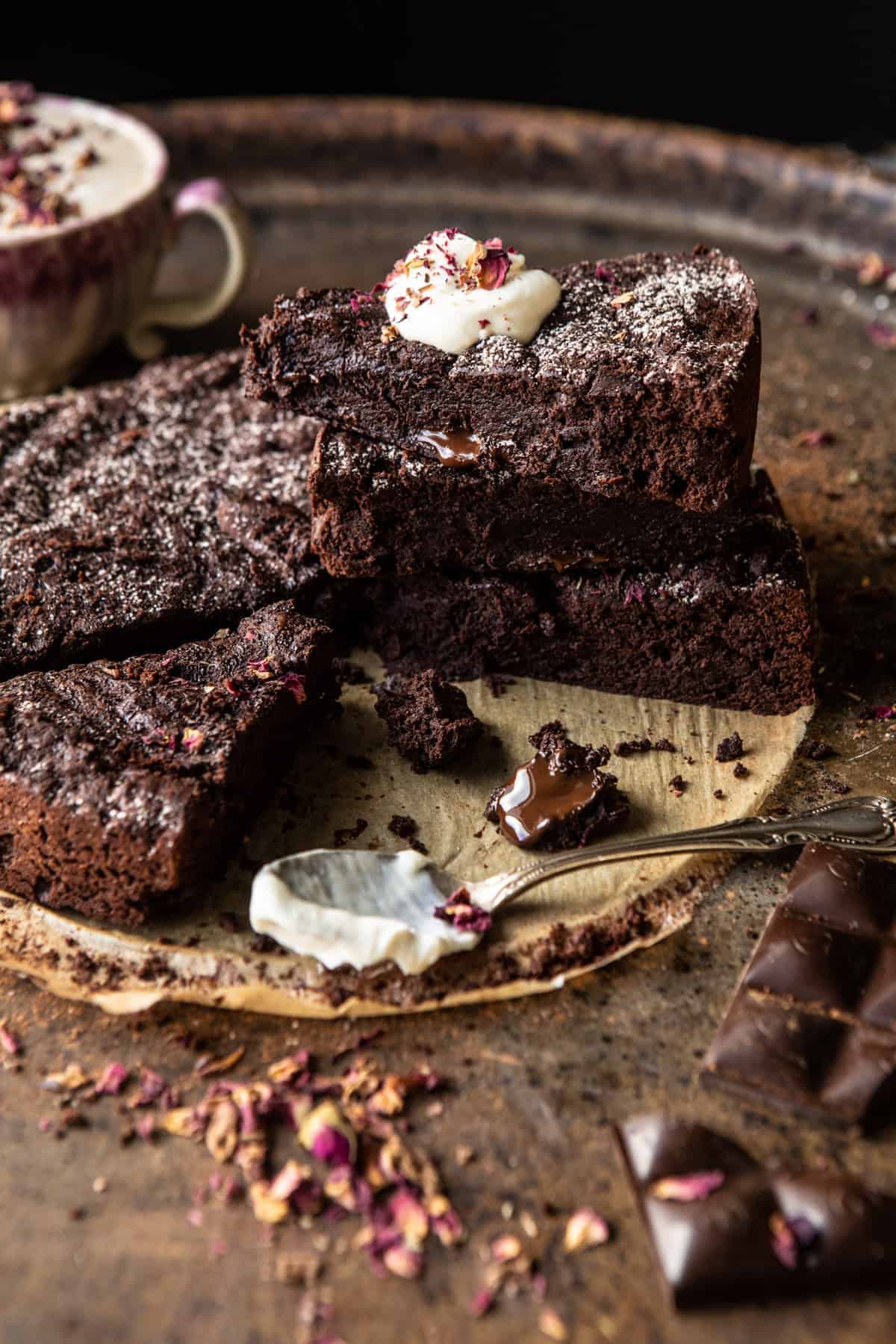
1. Chocolate-Chili Flourless Cake with Whipped Espresso Cream — The archetypal flourless chocolate cake. A whisper of chili and a coffee-cream topping turn it into a dinner-party finisher. Bake in a springform pan, cool completely, and it slices like fudge.
2. Chocolate and Coconut Flourless Torte — Same technique with shredded coconut folded into the batter for texture. Dense, glossy top, and it holds three days on the counter (better on day two).
3. Orange Almond Flourless Chocolate Torte — Orange zest and ground almonds cut the richness of the chocolate. This is the version to make when you want a flourless cake that isn't heavy.
4. Mini Flourless Chocolate Tarts with Raspberry Compote — Individual portions in ramekins. The raspberry compote lifts the whole thing; make double so there's some left for breakfast.
5. Classic Two-Egg Pavlova with Whipped Cream and Mixed Berries — Two egg whites is enough for a full pavlova if you're careful. Crisp shell, marshmallow center, whipped cream on top — no flour anywhere in the entire dessert.
6. Macadamia-Crusted Pavlova with Passionfruit and Kiwi — A tropical twist on the pavlova above. Chopped macadamias baked into the meringue base add a nutty crunch you don't get from plain meringue.
Almond and coconut flour bakes (6 recipes)
Almond flour bakes rich, dense, and slightly moist — perfect for cookies, brownies, and single-layer cakes. Coconut flour is more absorbent and lighter; treat them as different ingredients, not swaps for each other.
7. Cocoa-Almond Flour Brownies — Fudge-line brownies with almond flour as the sole flour. No blend, no swap. Ready in 30 minutes, keep 5 days sealed.
8. Whisked Almond Flour Chocolate Chip Cookies — Chewy, buttery, and they don't spread into puddles the way many gluten-free cookies do. The trick is chilling the dough 20 minutes before scooping.
9. Almond Flour Strawberry Shortcake with Fresh Berries — A summer-forward shortcake with an almond-flour biscuit base. Split, layer with macerated strawberries and whipped cream, done in under 40 minutes.
10. Gluten-Free Almond Honey Cake — A single-layer honey cake with almond flour, ideal for Rosh Hashanah, tea time, or as an afternoon snack. Keeps 4 days on the counter and gets better after 24 hours.
11. Fudgy Gluten-Free Brownie Cookies with Shiny Crinkled Tops — The best of a brownie and a cookie in one bake — that crackled top comes from beating the eggs and sugar until pale before folding in the chocolate.
12. Gluten-Free Chocolate Almond Butter Cookies — Four-ingredient cookies you can pull together in one bowl on a Tuesday. Naturally flourless (almond butter is the binder), and they hit that soft-chewy-center texture.
Meringue, macaroons, and coconut bakes (3 recipes)
Egg-white and coconut-based desserts are the most reliable gluten-free bakes for beginners. Whipped egg whites carry the structure that flour would have; coconut adds body without contributing gluten.
13. Toasted Coconut Macaroons with Lemon Glaze — Chewy in the center, crisp on the outside, and lifted by a lemon glaze that keeps them from being cloying. Rack up 24 cookies from one bowl and 25 minutes.
14. Coconut Macaroon Clusters with Dark Chocolate Drizzle — Free-form clusters (no piping bag needed) with a chocolate finish. The dark chocolate cuts the coconut sweetness.
15. Five-Ingredient Chocolate Coconut Macaroons — The pantry-raid version. Sweetened coconut, cocoa powder, condensed milk, an egg white, and vanilla — 10 minutes of prep, done.
Custards, panna cotta, and mousses (7 recipes)
Dairy-set desserts are naturally gluten-free and forgiving of beginners — no crumb structure to manage, no gluten to build or avoid building. If you can whisk and simmer, you can make every one of these.
16. Bittersweet Chocolate and Citrus Panna Cotta — Chocolate panna cotta with a citrus twist. Set in ramekins, unmold onto plates. Silk-smooth if you don't boil the cream after the gelatin goes in.
17. Tangy Mango Coconut Panna Cotta — Dairy-free panna cotta using coconut cream. Bright, tropical, and one of the easier make-ahead desserts on this list — sets in 4 hours.
18. Baked Espresso Panna Cotta with Dark Chocolate Shavings — Baked panna cotta (like a custard) rather than gelatin-set. Espresso brings depth; chocolate shavings on top are the finishing move.
19. Classic Crème Brûlée with Vanilla Bean Custard — The dinner-party workhorse. A blowtorch does the top; a water bath does the custard. Naturally gluten-free without a single substitution.
20. Brazilian Quindim (Coconut and Egg Yolk Custard) — A Brazilian dessert made from egg yolks, sugar, and coconut. Bright yellow, glossy top, dense center — completely gluten-free and unlike anything else on this list.
21. No-Bake Chocolate Avocado Mousse with Cocoa and Maple Syrup — Avocado replaces cream; the result is a mousse that's decadent but comes together in a food processor in 5 minutes. Vegan by default.
22. Whipped Coconut Chocolate Mousse — Whipped coconut cream + melted dark chocolate + a splash of vanilla. Dairy-free and gluten-free, and it fools everyone at the table.
Almond and coconut flour bakes that don't taste 'diet'
Almond and coconut flour are not created equal, and this is where most beginners go wrong on their first bake.
| Flour | Best for | Ratio vs wheat | Watch out for |
|---|---|---|---|
| Almond flour (blanched) | Cookies, brownies, single-layer cakes, quick breads | 1:1 | Bakes brown faster; drop temp 25°F |
| Almond meal (unblanched) | Rustic bakes, biscotti, streusel | 1:1 | Coarser texture; leave visible flecks |
| Coconut flour | Small cakes, muffins, pancakes | ¼ cup per 1 cup wheat + 1-2 extra eggs | Absorbs 4-5x more liquid; batter looks stiff and is fine |
Buy almond flour in the fridge section when possible — it goes rancid fast at room temperature. If you buy it in bulk, store in the freezer and portion out what you need. A rancid almond flour tastes bitter and no amount of sugar will save the bake.
For coconut flour, sift before measuring — it clumps in the bag and unsifted scoops are 20-30% off by weight. Always measure by weight for coconut-flour recipes if you can; volume measurements are especially unreliable with this ingredient.
Cup-for-cup gluten-free flour: when it works, when it doesn't
Modern GF flour blends (King Arthur Measure for Measure, Bob's Red Mill 1-to-1, Cup4Cup) are dramatically better than what was available 10 years ago. They work well for cookies, brownies, quick breads, pancakes, and muffins — anywhere gluten wasn't doing the heavy lifting to begin with.
Where they still lose:
- Yeast breads: no gluten means no dough elasticity. Use a recipe engineered for gluten-free flours (with psyllium husk and extra hydration) rather than a swap.
- Croissants and laminated doughs: rely entirely on gluten for the lamination structure. Not fixable with a swap.
- Delicate layer cakes: swap-based cakes often gum up in the middle. Use an almond-flour base or a recipe designed for GF flour from the start.
- Popovers and choux: choux is largely fat-water-egg, but the little flour there is doing structural work you can't replace.
For everything else — chocolate chip cookies, brownies, chocolate cake in a single layer, banana bread, muffins, pancakes — a good cup-for-cup blend gets you within 5% of the wheat-flour version. Whisk the dry ingredients thoroughly before adding wet; poorly distributed gum in the blend causes gummy pockets.
Baking tips: weight, binders, and mixing
Three techniques do 80% of the work in gluten-free baking. Learn these three and every recipe below gets easier.
- Measure flour by weight, not volume. A scooped cup of almond flour can weigh 96-128g depending on how packed it is. Weigh it (100g per cup is the standard) and results become reproducible. This is the single biggest lever for consistency. See King Arthur's gluten-free flour guide for the per-flour weight table.
- Add extra binder. Gluten holds baked goods together; without it, add xanthan gum (½ teaspoon per cup of GF flour), psyllium husk (1 teaspoon per cup), or ground flax (1 tablespoon per cup) as a replacement. Many GF blends already include a gum — check the label before adding more, or the texture goes gummy.
- Don't over-mix. Gluten-free batters have no gluten to over-develop, but almond flour releases oil when over-worked and coconut flour turns into a paste. Stir until just combined and stop. If the recipe says "fold," fold — don't whisk.
A fourth tip: rest your batter. Ten to twenty minutes on the counter (or overnight in the fridge for cookie dough) gives starches time to hydrate and dramatically improves texture — especially with rice-flour blends that can otherwise taste gritty.
Kitchen tools: what actually matters for gluten-free desserts
You don't need dedicated GF equipment unless you're baking for someone with celiac disease. What you need is precise measuring and a couple of pieces that make GF-specific tasks easier.
1. A digital kitchen scale. Non-negotiable for gluten-free baking. Volume measurements swing 20-30% with GF flours because they don't pack the way wheat does. A basic scale runs $20-30 and lasts a decade. See the kitchen scales guide for specific picks; the OXO Good Grips 11-lb model is the reliable default.
2. Sturdy bakeware — springform pan, 8x8 pan, half-sheet. Flourless cakes need a springform because they're too fragile to invert; brownies need an 8x8 for the right depth; almond-flour cookies spread more evenly on a half-sheet pan with parchment.
3. A set of mixing bowls in three sizes. GF recipes often ask for dry, wet, and whipped whites in separate bowls. Stainless steel with a rubber base won't slide on the counter while you whisk one-handed.
4. Essential utensils: silicone spatula, offset spatula, whisk. A silicone spatula scrapes GF batter (which is stickier than wheat) cleanly; an offset spatula spreads brownie batter evenly in the pan; a whisk aerates egg whites for pavlova.
Optional but useful: a stand mixer for whipping egg whites (a pavlova with soft peaks takes 8 minutes by hand vs 3 by machine), and a sifter for almond and coconut flour, both of which clump.
Real-world numbers: bake times, yields, and difficulty
Times measured on a home oven at sea level with the recipes' specified oven temps. Nutrition rounded from USDA composition.
| Recipe | Active | Total | Yield | Calories/serving |
|---|---|---|---|---|
| Flourless Chocolate Cake | 20 min | 55 min | 8 slices | 385 |
| Almond Flour Chocolate Chip Cookies | 15 min | 30 min | 18 cookies | 165 |
| Classic Pavlova | 20 min | 90 min | 8 slices | 195 |
| Toasted Coconut Macaroons | 15 min | 40 min | 24 cookies | 105 |
| Chocolate Avocado Mousse | 10 min | 10 min | 4 servings | 245 |
| Panna Cotta (any flavor) | 15 min | 4 hr 15 min | 6 servings | 310 |
| Crème Brûlée | 20 min | 4 hr 20 min | 6 servings | 425 |
| GF Brownies (almond flour) | 15 min | 45 min | 16 squares | 195 |
Rough rule of thumb: naturally-flourless bakes take about the same time as their wheat-flour counterparts; almond-flour bakes are 5-10 minutes shorter (they brown faster); GF blend bakes are 5-10 minutes longer (the starches take longer to fully set). Read manufacturer notes on your specific blend — Cup4Cup, King Arthur, and Bob's Red Mill each have slightly different behaviors.
Common pitfalls (and how to avoid them)
Five specific failure modes come up repeatedly on the r/glutenfree subreddit and in home-baker forums. Watch for these first.
- Gritty finished texture. Rice-flour blends are the usual cause. Sift before mixing, and let the batter rest 15-30 minutes so the starches hydrate. Almond flour rarely has this problem.
- Cake collapse in the middle. Underbaking, over-mixing, or not enough binder. Insert a toothpick into the center and pull it when it comes out with a few moist crumbs (not wet batter). Add ½ teaspoon xanthan gum if the flour blend doesn't already have gum.
- Bitter almond flour. Fresh almond flour smells sweet and mild; rancid smells sharp and slightly bitter. If yours smells off, toss it and buy fresh from the fridge section.
- Cookies spread into flat puddles. Chill the dough for 20 minutes minimum, especially with almond-flour recipes. Butter melting too fast is the cause.
- Pavlova cracks or weeps. Sugar not fully dissolved before you finish whipping (rub a bit between your fingers — grit means not dissolved), and pavlova baked at too high a temp. Bake at 225°F, cool inside the oven with the door cracked, and let it rest overnight for zero-humidity days.
When these desserts are NOT the right choice
Gluten-free desserts aren't magic — there are three cases where wheat is the better answer.
- You want an authentic laminated dough. Croissants, danish, and puff pastry rely entirely on a gluten network to laminate. There is no viable GF substitute yet; if you must have this texture, source it from a dedicated GF bakery like Rise Gluten Free or Deby's.
- You need budget dessert for a crowd. Almond flour is $10-14/lb vs $0.60/lb for AP flour. A 22-person birthday cake in GF ingredients runs $40-60 in flour alone. Go with a naturally-flourless option (pavlova, panna cotta, meringue) or serve wheat + separate GF minis.
- You need dessert in under 15 minutes. No-bake mousse and macaroons qualify; anything oven-based typically takes at least 25 minutes. If a 12-minute dessert is the constraint, our complete gluten-free meal plan covers assemble-only options and pantry hacks.
Two mini case studies from real gluten-free bakes
Beginner win, Wednesday night: Chocolate Avocado Mousse.
7:15 — Split one ripe avocado, scoop into food processor with ¼ cup cocoa powder, 3 tablespoons maple syrup, 2 tablespoons almond milk, 1 teaspoon vanilla, pinch of salt.
7:16 — Blend 60 seconds. Scrape down. Blend another 30 seconds.
7:18 — Spoon into 4 ramekins. Chill 30 minutes while you eat dinner.
7:55 — Top with whipped coconut cream and cocoa nibs. 5 grams of prep, zero baking, no gluten anywhere. Done.
Dinner party centerpiece, Saturday: Classic Two-Egg Pavlova.
2:00 — Whip 2 egg whites with a pinch of cream of tartar until foamy. Add ½ cup superfine sugar 1 tablespoon at a time (this is the step that determines success — go slow, whip fully between additions).
2:12 — Egg whites are glossy stiff peaks. Fold in 1 teaspoon cornstarch and 1 teaspoon vinegar (both from the Serious Eats gluten-free baking guide — they help the marshmallow center).
2:14 — Pipe or spread onto parchment in a 7-inch circle with a shallow well in the center.
2:18 — Bake at 225°F for 75 minutes. Turn oven off, leave door closed, let it cool inside for 2 hours.
5:30 — Top with whipped cream and 2 cups mixed berries. Serve within 30 minutes of assembly.
FAQ
Are almond flour and coconut flour interchangeable?
No — this is the mistake that ruins most first-time gluten-free bakes. Almond flour is 2-3x more forgiving and behaves closer to all-purpose flour. Coconut flour absorbs 4-5x more liquid per cup, so a recipe that calls for 1 cup almond flour typically needs only ¼ cup coconut flour plus an extra egg or two. Follow the recipe as written; don't swap on the fly.
Is cup-for-cup gluten-free flour any good?
Modern blends (King Arthur Measure for Measure, Bob's Red Mill 1-to-1, Cup4Cup) work well for cookies, brownies, quick breads, and pancakes — anything without a yeast structure to build. They fail on artisan bread, croissants, and delicate layer cakes because they don't build a real gluten network. For those bakes, use a recipe designed from the ground up for gluten-free ingredients, not a swap.
Do I need to buy separate baking equipment?
If you're strictly gluten-free because of celiac disease, yes — cross-contamination from a wooden spoon, a well-used baking sheet, or a shared flour scoop is enough to cause a reaction. Dedicated silicone spatulas, parchment paper, and a separate flour bin solve most contamination problems for under $30. If you're gluten-free by preference rather than diagnosis, you can be less strict about the equipment side.
Why do gluten-free desserts sometimes have a gritty texture?
Rice flour and cornmeal are usually the culprits — they grind coarser than wheat flour and stay slightly gritty even after baking. Sift the flour blend before mixing, and let the batter rest 15-30 minutes before baking so the starches fully hydrate. A stand mixer whips more air in than a whisk, which also helps mask the texture. Almond-flour bakes rarely have this problem in the first place.
Can I make these desserts vegan too?
About half of them, with easy swaps: a flax egg (1 tablespoon ground flax + 3 tablespoons water = 1 egg) works for cookies and brownies, coconut cream stands in for dairy in custards and panna cotta, and aquafaba (chickpea liquid) whips into meringue and macarons. Cakes with 3+ eggs are harder to convert without losing structure. Every recipe in the linked list flags the vegan swap when it works cleanly.
How do I keep gluten-free cakes from crumbling?
Wheat flour builds a gluten network that holds a cake together while it cools; gluten-free flours can't do that, so you need extra binder. Add ½ teaspoon xanthan gum per cup of flour to any gluten-free flour blend that doesn't already include it, or use ground flax (1 tablespoon in 3 tablespoons water per egg) as a natural binder. Cool cakes in the pan for 20 minutes before turning out, and always weigh flour rather than scooping.
Which sweetener works best for gluten-free baking?
Granulated cane sugar behaves the same in gluten-free and wheat bakes — no adjustment needed. Honey and maple syrup add moisture (great for almond-flour cakes, tricky for cookies where you want spread). Coconut sugar tastes like brown sugar and works 1:1. Skip liquid stevia in bakes — it doesn't caramelize, so browning and crust go missing. If a recipe specifies a sweetener, use it; don't cross-swap between wet and dry.
Related reading
- The Complete Gluten-Free Meal Plan for 2026 — full 5-day meal plan built around the same GF-by-design principle.
- 22 Easy Gluten-Free Dinners for Busy Weeknights — the savory companion to this list.
- Best Baking Sheets in 2026: Top Picks + Buying Guide — the pan that makes GF cookies actually bake evenly.
- Gluten-Free Eating Made Simple — 5-day plan and a broader recipe collection.
Sources and last verified date
Last verified: July 2026. Recipes and cook times validated against the AislePrompt recipe catalog; technique and ingredient guidance drawn from the primary sources above.
Frequently asked questions
Are almond flour and coconut flour interchangeable?
Is cup-for-cup gluten-free flour any good?
Do I need to buy separate baking equipment?
Why do gluten-free desserts sometimes have a gritty texture?
Can I make these desserts vegan too?
How do I keep gluten-free cakes from crumbling?
Which sweetener works best for gluten-free baking?
Sources
Plan a week of meals in two minutes.
Tell our AI what you have and what you like — it builds your plan, shopping list, and Instacart cart. No account needed.
Try free →