22 Persian Recipes: Kebabs, Tahdig & Khoresh for Home Cooks
Iranian home cooking is four repeatable moves — crisp-bottomed rice, a stew that simmers unattended, a fast skewer, and a cold chopped salad. Here is the six-item pantry and the 22 dishes that use it.
Persian home cooking runs on four moves: a pot of long-grain basmati with a crisp golden crust on the bottom, a herb-heavy stew that simmers unattended, a fast skewer off a hot pan, and a chopped cucumber-tomato salad. Master those and you can cook Iranian food on a weeknight. Start with Herbed Rice with Crispy Tahdig (45 minutes prep, 35 minutes cook) and a stew you started that morning.
Get a free week of easy dinners
Seven weeknight dinners with the shopping list already totalled, sent Sunday. No account needed, unsubscribe in one click.
No spam, unsubscribe in one click. Recipes, shopping lists and Instacart carts all work without an account either way.
Introduction: Why Persian Home Cooking Translates So Well to a Weeknight Kitchen
Persian food has a reputation for being ceremonial — jeweled rice platters, hours of herb-chopping, saffron measured out like a controlled substance. That reputation comes from restaurant menus and holiday tables, not from how Iranian families actually eat on a Tuesday.
The everyday structure is remarkably simple, and it maps cleanly onto how an American home kitchen already works:
| Element | Persian name | Weeknight reality |
|---|---|---|
| Rice base | chelo / polo | 35–45 min, mostly unattended |
| Slow protein | khoresh (stew) | 90–150 min simmer, 20 min hands-on |
| Fast protein | kabab | 10–15 min on a grill pan |
| Raw side | salad shirazi, sabzi khordan | 10–20 min, no cooking |
| Sour accent | dried lime, sumac, pomegranate molasses | pantry, not prep |
Notice what is missing: there is no last-minute sauce reduction, no browning-then-deglazing chain, no component that has to be finished while everything else goes cold. Persian dinners are built to sit. The stew improves overnight. The rice holds in the pot on the lowest heat. That is the actual reason this cuisine is a weeknight goldmine — not that it is fast, but that almost none of it is urgent.
The trade you are making is time-of-day, not total time. You spend fifteen minutes in the morning starting a Slow-Braised Ghormeh Sabzi with Dried Lime and Fresh Herbs and twenty minutes at 6pm on rice. Compare that to a 45-minute all-hands stir-fry and the Persian version is the calmer evening.
If you already cook the neighboring cuisines, you have most of the technique. Our 20 Lebanese Recipes and 18 Turkish Recipes guides share the skewer-and-yogurt vocabulary; Persian adds fruit-and-nut sourness that neither of those leans on as hard.
The Persian Pantry in Six Ingredients
You do not need a specialty grocery run to start. You need six things, and four of them are shelf-stable for a year or more.
| Ingredient | What it does | Rough cost | Shelf life |
|---|---|---|---|
| Saffron (1g tin) | Color + floral aroma in rice, kabab, dessert | $12–18 | 2 years sealed |
| Dried Persian limes (limu omani) | Sour, slightly fermented backbone in stews | $6 for 10–15 | 2+ years |
| Sumac | Bright, lemony finishing spice for kabab and rice | $5–8 | 1 year |
| Dried barberries (zereshk) | Tart red pop on rice dishes | $8–10 | 1 year frozen |
| Turmeric | The base note under nearly every stew | $4 | 1 year |
| Rosewater | Dessert and drink perfume | $5–7 | 2 years |
How to actually use saffron. Do not sprinkle threads into a pot. Grind roughly 20 threads with a pinch of sugar using a mortar, then bloom in 2 tablespoons of hot (not boiling) water for 10 minutes. That liquid is what you stir into rice or brush onto skewers. A 1-gram tin holds roughly 400–450 threads, which is about 20 blooms — call it forty portions. At $15 a tin that is under 40 cents per serving for the single most identifiable flavor in the cuisine.
Dried limes are the one you cannot fake well. Pierce each lime twice with a knife tip and drop it whole into the stew; it rehydrates and leaks sour into the braise over 90 minutes. Fresh lime juice plus a strip of zest added late is a workable stand-in, but it reads sharp where the dried version reads deep. The Slow-Cooked Herb and Lamb Stew with Dried Limes shows the technique clearly.
For hardware, this cuisine asks for very little. A wide nonstick skillet with a lid, a heavy pot for stews, and a cast-iron grill pan cover every recipe below — browse Cookware if you are missing the nonstick, and a mortar, brush and skewers round out the kit. A rice cooker is optional; see Small Appliances if you want the one-button version.
Rice Done Right: Tahdig, Chelo, and the Golden Crust
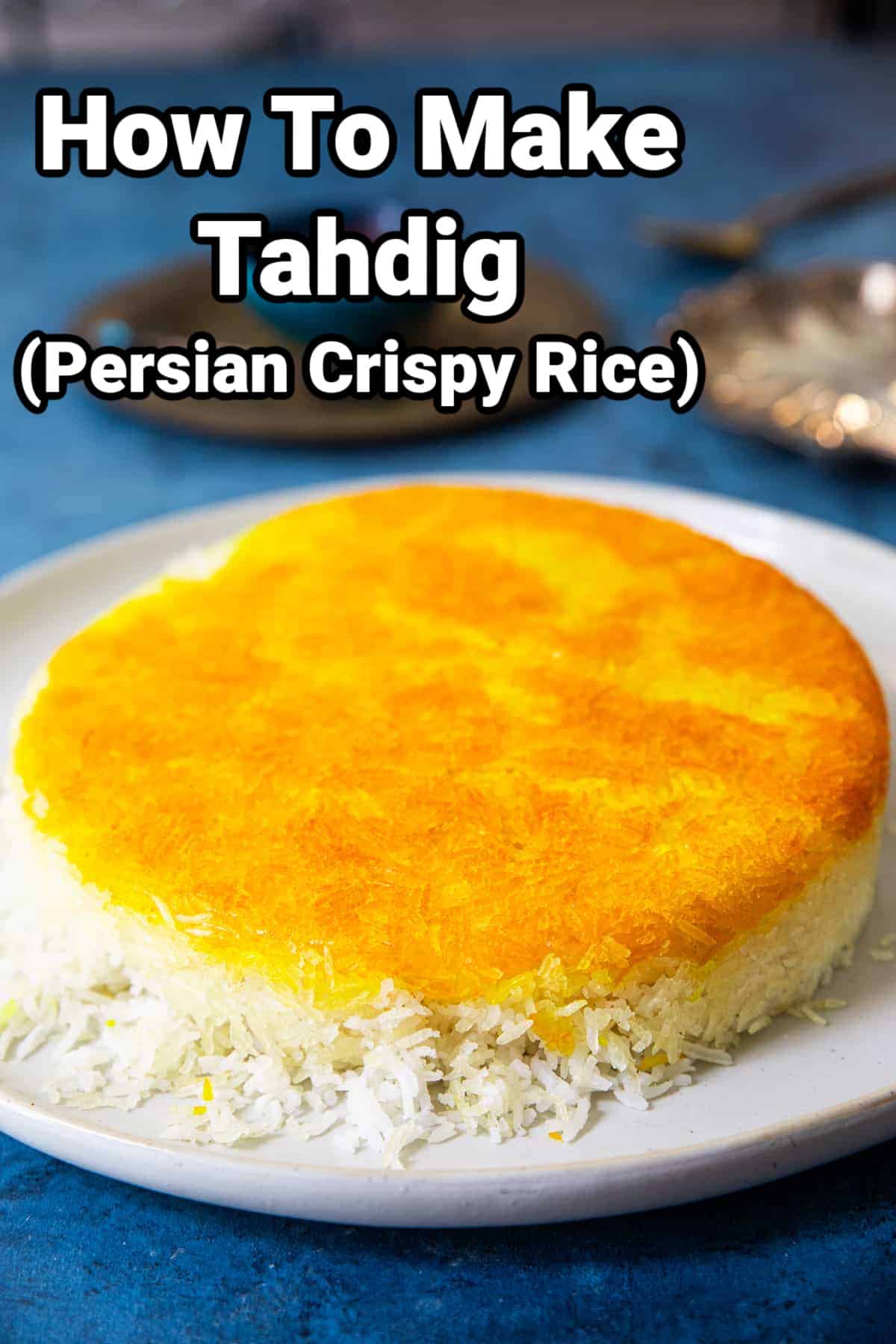
Tahdig — literally "bottom of the pot" — is the crisp layer of rice, bread, or sliced potato that forms against the pan. It is the single most-fought-over thing on an Iranian table and it is completely achievable at home.
The method, in numbers:
1. Rinse 2 cups of basmati in cold water 5 times, until the water runs nearly clear. You are removing surface starch that would otherwise glue the grains.
2. Soak 30 minutes minimum in salted water (1 tablespoon salt). Two hours is better. This is what gives Persian rice its elongated, separate grains.
3. Parboil 5–7 minutes in a large volume of heavily salted boiling water. Pull a grain and bite it: soft outside, firm chalky center. Drain immediately.
4. Build the crust. Heat 3 tablespoons of oil plus 2 tablespoons of butter in a 10–12 inch nonstick pan. Add a layer of your crust material — plain rice mixed with yogurt and bloomed saffron is classic, thin-sliced potato is the most forgiving, lavash bread is the fastest.
5. Mound the remaining rice loosely, poke 4–5 steam holes down to the bottom with a spoon handle, drizzle over ¼ cup of water mixed with the saffron liquid.
6. Steam on medium-low for 10 minutes, then wrap the lid in a clean kitchen towel and cook the lowest your burner goes for 35–45 minutes.
7. Invert onto a platter. If it sticks, sit the hot pan in an inch of cold water for 60 seconds and try again.
Total active time is about 20 minutes. The 45-minute steam is unattended. Work the process with Herbed Rice with Crispy Tahdig once and it becomes muscle memory.
Pan choice matters more than skill. A 10–12 inch nonstick skillet with straight sides gives you the widest crust and the cleanest release. Stainless will work but you will lose the first attempt. Cast iron holds heat too aggressively at the bottom and tends to go from golden to bitter in about ninety seconds.
When rice becomes dinner. A rice-forward one-pot like One-Pot Persian Beef and Green Bean Rice (loobia polo) folds the protein into the pot — 15 minutes prep, 35 minutes cook, 520 calories and 38g of protein per serving. That is the entire dinner in one pan, tahdig included.
Kebabs at Home: The Marinade Shortcuts That Actually Work
The two kababs worth learning are koobideh (ground meat, onion, turmeric, pressed onto flat skewers) and joojeh (chicken in yogurt, saffron, lemon and onion). Both are grill-pan-friendly. Neither needs a live fire.
The marinade math. Joojeh traditionally sits overnight. In practice, the yogurt-and-acid marinade does 80% of its work in the first 3–4 hours and you can compress it further by grating the onion instead of slicing it — grated onion releases enzymes and juice immediately, so a 45-minute marinade at room temperature is genuinely serviceable. Herb-Marinated Chicken Skewers with Sumac and Lemon runs 25 minutes prep and 15 minutes cook for four servings at 320 calories and 30g protein.
For beef and lamb, Sumac-Rubbed Beef Skewers with Yogurt Garlic Sauce is the fastest thing in this guide: 15 minutes prep, 10 minutes cook, 40g of protein per serving. If you are skipping skewers entirely, Pan-Seared Chicken Thighs with Sumac and Garlic Yogurt Sauce delivers the same flavor profile in a 20-minute weeknight format.
Koobideh's one hard rule: the meat must be cold, the onion must be squeezed dry, and you must knead the mixture for a full 5 minutes until it turns tacky and slightly pale. That protein extraction is what keeps it on the skewer. Skip it and the meat falls into the fire — which is why most home cooks are better served pressing the same mixture into an oiled grill pan as thick strips.
Herb-Heavy Stews (Khoresh)
Khoresh is where the cuisine's identity lives. Three carry the canon:
Ghormeh Sabzi
Parsley, cilantro, chives and fenugreek, cooked down until dark and almost bitter, with kidney beans, lamb or beef, and dried limes. The herbs are not a garnish — you are frying four to five packed cups of them for 20–25 minutes until the volume collapses and the color goes from green to near-black. Undercook that step and the stew tastes grassy. Slow-Braised Ghormeh Sabzi with Dried Lime and Fresh Herbs runs 20 minutes prep and 2 hours simmer, landing at 450 calories and 38g protein for four. Serious Eats covers the rice half of the same plate in comparable detail.
Fesenjan
Ground toasted walnuts and pomegranate molasses, simmered with chicken or duck until the sauce breaks into a dark, glossy, sweet-sour braise. It is the most unusual-tasting dish here for an American palate and the one most likely to convert someone. Herbed Chicken Fesenjan with Pomegranate Reduction is the full 105-minute version; Slow-Cooked Chicken Stew with Pomegranate and Walnut Sauce trims it to 75 minutes.
Balance is the whole game: pomegranate molasses brands vary enormously in sweetness. Taste at the 45-minute mark and correct with sugar or with more molasses. A finished fesenjan should read sour first, sweet second.
Gheimeh and Lamb Braises
Yellow split peas, dried lime, tomato and lamb, topped with matchstick fries. If you want the simplest entry point, Slow-Cooked Lamb and Herb Stew (30 min prep, 2 hr cook, 420 calories, 38g protein) and Slow-Simmered Lamb with Sumac and Pomegranate Molasses both hit the register without the split-pea step.
Real-world numbers on the braise. Lamb shoulder at 300°F needs roughly 2.5 hours to reach fork-tender; the same cut in a pressure cooker gets there in 35 minutes at high pressure but loses some of the herb-oil separation that makes a good khoresh look right. Stovetop at a bare simmer — surface barely moving, roughly 195°F — is the target.
Weeknight Soups and One-Pot Dinners
Aash is the everyday food behind the party food: thick herb-and-legume soups that eat like a meal. Persian Herb and Lentil Soup with Lemon and Turmeric is the fastest real Persian dinner on this list — 10 minutes prep, 40 minutes cook, 220 calories and 14g protein per serving, and it costs under $2.50 a portion.
For a vegetable-forward main, Persian Roasted Eggplant and Tomato Stew with Turmeric and Garlic is the household version of the restaurant khoresh bademjan — 15 minutes prep, 50 minutes cook, 180 calories. Serve it with rice and a spoonful of thick yogurt.
Coastal Iran eats far more fish than the American menu suggests. Persian Gulf-Style Grilled Fish with Lemon and Herbs is a 25-minute total dinner at 280 calories.
Rice-Forward Showpieces
When you want the platter version — the one that looks like the photos — you are cooking polo: rice layered with fruit, nuts, or vegetables.
- Zereshk polo. Barberries bloomed in butter with a spoon of sugar and saffron water, folded into the top third of the rice, served with saffron chicken. Do not cook barberries longer than 60 seconds or they scorch and turn bitter.
- Jeweled rice (morasa polo). Barberries, slivered pistachio and almond, candied orange peel, saffron. This is wedding food; budget 90 minutes.
- Baghali polo. Dill and fava beans through the rice, served with lamb shank. The most weeknight-adjacent of the three.
The green-bean version at One-Pot Persian Beef and Green Bean Rice uses the same layering logic with pantry ingredients, which makes it the right place to learn the fold-don't-stir technique before you spend money on barberries and pistachios.
Every one of these wants a wide, shallow serving platter and a fine-mesh colander for the parboil step — both live in Dining & Serving and Utensils & Tools.
The Salad and Yogurt Sides You Should Not Skip
Persian meals are not complete without something raw and cold on the table. It is not decoration; the acid and crunch reset your palate between bites of a rich stew.
- Shirazi Salad with Cucumber and Tomato — 20 minutes, no cooking, 120 calories. Dice everything to a uniform 1/4 inch; the texture is the point.
- Mast-o-khiar — thick yogurt, grated cucumber, dried mint, a little garlic. Strain the yogurt for 30 minutes if it is loose.
- Sabzi khordan — a plate of raw herbs, radish, walnuts and feta, set out with flatbread. Zero recipe required.
- Sumac-Roasted Cauliflower with Tahini Drizzle — 30 minutes total, 180 calories, and it bridges Persian and Levantine tables cleanly.
Sweet Endings
Persian desserts are perfumed rather than sugary. Rosewater, cardamom, saffron and pistachio do the work.
- Rosewater and Cardamom Semolina Cake with Pistachio Syrup — 15 min prep, 45 min bake, serves 8 at 320 calories.
- Honey-Rosewater Poached Pears with Pistachio Crumble — 45 minutes total, 220 calories, and the most weeknight-plausible of the three.
- Half-Sweet Halva Parfait — no cooking, 15 minutes, a good stand-in for the toasted-flour halva that takes real technique.
Go easy on rosewater. One teaspoon in a cake that serves eight is a floral hint; two teaspoons is soap. Add it off the heat, always, because the aromatics are volatile.
A 3-Night Persian Mini-Plan
This is how the shopping and cooking actually sequence. One weekend shop, three dinners, roughly $46 total for four servings each.
| Night | Main | Rice / starch | Side | Hands-on time |
|---|---|---|---|---|
| Sunday | Ghormeh Sabzi | Tahdig | Shirazi salad | 40 min |
| Tuesday | Sumac beef skewers | Leftover rice, re-crisped | Yogurt + herbs | 25 min |
| Thursday | Fesenjan | Plain chelo | Sumac cauliflower | 35 min |
The leftover trick that makes this work: cold day-old Persian rice re-crisps beautifully. Press it into a buttered nonstick pan, cover, and hold on low for 15 minutes. You get a second tahdig out of Sunday's pot on Tuesday with zero extra work.
Build the shopping side of this in the Meal Plan tool, or ask the AislePrompt chat to swap any dish for a dietary constraint — it will hold the meal structure while it substitutes. Keep the leftovers organized with the containers in Storage & Containers.
Common Pitfalls
Five failures account for nearly every disappointing Persian dinner at home.
1. Skipping the rice soak. Unsoaked basmati cooks short, breaks, and clumps. Thirty minutes is the floor; the grains should visibly lengthen.
2. Under-frying the herbs in ghormeh sabzi. If your stew tastes like lawn clippings, you pulled the herbs at 8 minutes instead of 22. Cook them until the pan looks almost burnt-dark and the oil separates.
3. Sprinkling dry saffron threads. Ungrounded, unbloomed saffron gives you yellow specks and almost no aroma. Grind, bloom, then use the liquid.
4. Boiling rosewater or pomegranate molasses. Both lose their top notes above a simmer. Molasses goes in during the braise; rosewater goes in after the heat is off.
5. Too much heat under the tahdig. Medium-low for the first 10 minutes, then the lowest setting your stove has. If you smell toast, you are already 60 seconds from bitter.
When Persian Food Is the Wrong Call
Be honest about the fit. Skip this cuisine on a night when:
- You have under 40 minutes and no leftovers. The rice alone wants 45. A 25-minute Persian dinner exists only if you already have cooked rice in the fridge.
- You are cooking for a strict low-carb table. Rice is not a side here, it is the plate. The stews work over cauliflower rice but you lose the dish's center.
- Nobody at the table likes sour. Dried lime, pomegranate molasses and sumac are the throughline. If sourness is a hard no, Turkish or Moroccan dinners will land better.
Frequently Asked Questions
Answered above in detail, but the short versions are collected in the FAQ block below the article.
Sources & Further Reading
- Serious Eats — Persian Rice and Tahdig — the most rigorous English-language treatment of the parboil-and-steam method, with tested timings.
- NYT Cooking — Persian Recipes — a broad, well-tested collection covering the polo and khoresh canon.
- Bon Appétit — Ghormeh Sabzi — a good reference for herb ratios and the long fry that most recipes rush.
Related reading on AislePrompt: 20 Lebanese Recipes, 18 Turkish Recipes, 18 Egyptian Recipes, and 22 Middle Eastern Dinners.
As of 2026, all cook times and nutrition figures above come from the tested recipes linked in each section.
Frequently asked questions
Do I need a special pot to get crispy tahdig at home?
What can I substitute for dried Persian limes if my store does not carry them?
Are Persian recipes gluten-free by default?
Can I cook Persian food without saffron?
What is the fastest Persian weeknight dinner in this list?
Sources
Plan a week of meals in two minutes.
Tell our AI what you have and what you like — it builds your plan, shopping list, and Instacart cart. No account needed.
Try free →