Best Leave-In Probe Meat Thermometers in 2026: Wireless and Wired Picks for Roasts and Turkey (Prime Big Deal Days Buying Guide)
Wired or wireless, one probe or four: the leave-in thermometers worth buying before Thanksgiving, and exactly where to put the probe in the bird.
Where to buy these picks
Affiliate links: we may earn a commission on qualifying Amazon purchases. Policy. Prices show only when checked in the last 24 hours.
- Best Overall: MEATER ProCheck price on Amazon →
- Best Value: TempPro TP17 Dual-ProbeCheck price on Amazon →
- Best for Beginners: TempPro TP16Check price on Amazon →
- Best Premium: Typhur Sync GoldCheck price on Amazon →
- Best Compact: CHEF iQ SenseCheck price on Amazon →
The best leave-in probe meat thermometer in 2026 for most cooks is the MEATER Pro. It is a truly wireless probe in the $75–$125 tier, and it has an ambient sensor rated to 1,000°F plus Bluetooth 5.2 long range that MEATER puts at about 250 feet in a typical home. That is far enough to leave the kitchen while the turkey roasts. The TempPro TP17 is the value pick: a wired, two-probe unit under $50 with a magnetic back and a high/low alarm. Beginners should start with the single-probe TempPro TP16, which has built-in preset temperatures.
Leave-in probe vs instant-read: why a turkey cook wants both
A leave-in probe and an instant-read thermometer answer different questions.
An instant-read is a spot-check tool. You open the oven, push the tip into the meat, read a number in one to three seconds, and pull it out. The USDA's kitchen thermometer guide is explicit that these digital spot-check types are not designed to stay in the food while it cooks, and should be used near the end of the estimated cooking time. It is the right tool for steaks, chops, chicken pieces and burgers, and for confirming a second spot on a big roast. Our instant-read thermometer guide covers the five best.
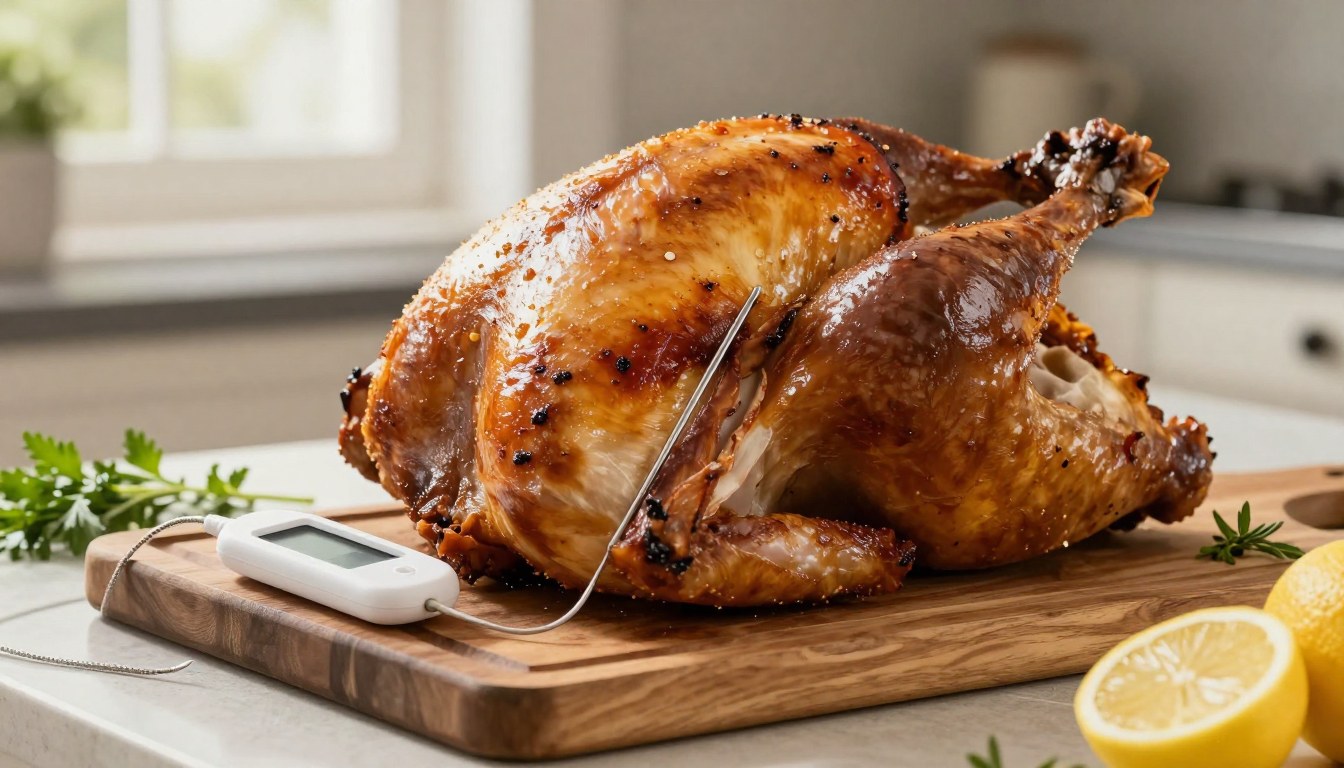
A leave-in probe stays in the meat from the moment the roast goes into the oven until it comes out. The same USDA guide describes the classic version: a probe on a long metal cord running out of the oven to a base unit with a digital screen, so you can check the food without opening the door. A display base on the counter, or an app on your phone, shows the internal temperature continuously and sounds an alarm when it reaches your target. The oven door stays shut, the oven holds its heat, and you stop guessing how many minutes per pound a 14-pound bird actually needs.
On a holiday roast the two tools work as a pair:
- The probe times the cook. It sits in one spot, usually the thickest part of the thigh on a turkey or the center of a beef roast, and tells you when to start paying attention.
- The instant-read confirms the result. Before you carve, check the other thigh and the thickest part of the breast. A single probe only knows about the one spot it is in.
If you only own an instant-read, you can still roast a turkey. You will just open the oven a lot more often. If you only own a probe, you get a reliable alarm but no quick second opinion. Most people who roast a turkey or a prime rib once or twice a year end up wanting both.
Prime Big Deal Days (Oct 6–7, 2026): the pre-Thanksgiving buying window
Amazon's fall sale runs for 48 hours on October 6–7, 2026, starting at 12:01 a.m. PT on October 6, according to Amazon's Prime Big Deal Days 2026 announcement. For probe thermometers it is the last big sale before the Thanksgiving turkey rush. It also leaves you about seven weeks before Thanksgiving to practice on a roast chicken or pork loin before the one cook that really matters.
What a normal price tier looks like, before any sale:
| Probe type | Typical tier | What you get |
|---|---|---|
| Wired, single probe | Under $25 | Base with display and alarm, one probe on a heat-rated cable |
| Wired, dual probe | Under $50 | Two probes (meat + oven air, or two cuts), timer, high/low alarm |
| Wireless, single probe with app | $50–$125 | No cable, ambient sensor, phone alerts |
| Wireless, multi-probe with base or Wi-Fi | $150–$300 | Two to four probes, standalone display base, long range |
Buy during the October event if you are hosting Thanksgiving and want to learn the thermometer before the big day, or a wireless model you want is below its usual tier during the event.
Wait for Black Friday if you only need a basic wired probe. Those sit in the under-$25 tier all year, and a sale saves you only a few dollars.
Prices change several times during the event, so every pick below links to its live listing rather than quoting a number. We don't list discounts or coupons we can't verify. Compare the live price with the tier above. If a pick isn't below its usual tier, waiting costs you nothing. For the rest of the event's kitchen categories, see our Prime Big Deal Days kitchen deals guide.
How we picked
We did not run our own thermometer tests for this guide. The picks come from four sources:
1. The AislePrompt kitchen catalog. We started from the active probe and wireless meat thermometers in our kitchen gadgets catalog. We kept only listings with a current in-stock Amazon offer, and we collapsed bundle and color variants of the same model into one entry.
2. Published manufacturer specifications. These include internal and ambient temperature limits, cable and probe heat ratings, wireless range, probe count, probe length and diameter, and battery or charging details. Every spec below comes from the maker's own product page, linked in the pick.
3. What owners report in published reviews: connection drops through oven walls, cables that fail after being pinched in a door, and apps that are hard to set up.
4. Reference guidance on how each thermometer type is meant to be used, from the USDA's kitchen thermometer guide and the general overview of meat thermometer types (cabled, wireless, single and multi-probe).
We then filled five slots the way people actually shop: one best overall, one value, one for beginners, one premium and one compact. Accuracy figures are the manufacturers' stated tolerances, not our measurements.
Our Top 5 Picks (Best Overall / Best Value / Best for Beginners / Best Premium / Best Compact)
#1 Best Overall: MEATER Pro
Award: Best Overall · Tier: mid-range, roughly $75–$125 · Type: truly wireless, single probe
Key specs (from MEATER's product page):
- 5 internal sensors plus 1 ambient sensor; ambient limit 1,000°F, internal limit 221°F, accuracy ±0.5°F
- Bluetooth 5.2 long range: about 250 ft typical in a home, 2,500 ft in open air
- 5 mm probe diameter; waterproof and dishwasher safe; a 15-minute charge gives about 12 hours of cooking
The MEATER Pro wins because it gets right the one spec that decides a leave-in probe: it has no cable, and its sensors read both the meat and the air around it. There is nothing to pinch in the oven door and nothing to melt on a grill grate. The app uses both readings to tell you when to pull the meat and how long to rest it. MEATER says the 1,000°F ambient limit means you can leave the probe in over an open flame or while searing, which older wireless probes could not handle.
Its limit is range. The standard MEATER Pro has no built-in Wi-Fi. Inside a house, MEATER's own typical figure is about 250 feet, and a full oven with a closed door shortens that. If you want to follow the roast from the couch in another room or from the backyard, you need a second phone or tablet near the oven acting as a bridge, or a Wi-Fi model (see Best Premium).
- Pros: no cable; ambient sensor; 1,000°F ambient rating; dishwasher-safe probe; single-AAA charger
- Cons: one probe (you can't watch the thigh and breast at once); Bluetooth range drops through oven walls; app-only (no standalone display)
Shop on AislePrompt → · Check the live price
#2 Best Value: TempPro TP17 Dual-Probe
Award: Best Value · Tier: under $50 · Type: wired, two probes
Key specs (from TempPro's TP17 page):
- 2 stainless-steel probes, each 8 in long on a 49 in total lead
- Range 14–572°F, accuracy ±1.8°F, 1-second refresh; USDA presets plus manual targets
- High/low alarm, timer, backlit LCD, flip-out stand and magnetic back; runs on one AAA battery
TempPro is the name ThermoPro now sells under on Amazon (the listing reads "previously ThermoPro"), so older reviews file this model under ThermoPro. The TP17 is the value pick because its second probe is the most useful upgrade you can buy for a turkey. Put one probe in the thickest part of the thigh and the other in the breast, or clip the second probe on the oven rack to watch the air temperature. Home ovens often run hotter or cooler than the dial says, and a second probe shows you that at a glance.
The base sticks to the oven door or a range hood with its magnet, and the high/low alarm is built for smokers, where the risk is the fire dying rather than the meat overshooting. The trade-off with any wired probe is the cable: route it through the hinge side of the door, and keep it off direct flame.
- Pros: two probes for the price of one wireless probe; USDA presets; high/low alarm for smokers; no app, no charging
- Cons: cables have to pass the oven door; ±1.8°F is looser than wireless probes' ±0.5°F; the base must stay within cable reach
Shop on AislePrompt → · Check the live price
#3 Best for Beginners: TempPro TP16
Award: Best for Beginners · Tier: under $25 · Type: wired, single probe
Key specs (from TempPro's TP16 page):
- 6.5 in food-grade stainless-steel probe on a 40 in stainless-steel mesh cable; TempPro says the assembly withstands up to 716°F
- Built-in preset temperatures by meat and doneness, with a programmable alarm
- Large LCD; stands on a tabletop, sticks on with its magnetic back or hangs on a wall mount
The TP16 is the simplest version of a leave-in probe: one probe, one number, one alarm. Pick your meat and doneness from the presets (or type in a target), slide the probe into the thigh, close the door and wait for the beep. There is no app to pair, no probe battery to charge and no range to worry about. The braided mesh cable is the feature beginners most need, because the cable is the part that fails. TempPro says the probe-and-cable assembly withstands up to 716°F, which is well above any home oven setting.
It is also the easiest gift on this list for someone who has never used a thermometer. It is cheap enough that nobody feels bad if it gets closed in a door.
- Pros: lowest price tier; mesh cable rated to 716°F; presets remove the guesswork; magnetic base
- Cons: single probe; no ambient reading; the base has to sit within 40 in of the oven
Shop on AislePrompt → · Check the live price
#4 Best Premium: Typhur Sync Gold
Award: Best Premium · Tier: premium, roughly $150–$250 · Type: truly wireless, two probes, standalone Wi-Fi base
Key specs (from Typhur's Sync Gold page):
- 2 probes, each with 5 internal sensors plus 1 ambient sensor; internal range 32–221°F, ambient up to 932°F; NIST-verified ±0.5°F internal accuracy
- Sub-1 GHz radio instead of plain Bluetooth, rated up to 3,000 ft of open-space range; Wi-Fi base for remote monitoring
- IPX8 waterproof probes; 50+ hours of use per charge; the standalone base shows readings and sets targets without a phone
The Sync Gold is for the cook who wants wireless freedom without the range problem. Typhur uses a sub-1 GHz radio, a lower frequency than Bluetooth that the company says gets through walls, kamado grills and Dutch ovens more reliably. The base then relays to Wi-Fi, so you can check the turkey from anywhere with a connection. With two probes you can monitor the thigh and the breast together, or a turkey and a ham in two ovens.
The standalone base makes it more practical than app-only probes. Anyone in the kitchen can read the temperature and change the target without your phone. A 4-probe version, the Typhur Sync Gold Quad, suits anyone who smokes brisket and a turkey on the same day.
- Pros: two wireless probes; long-range sub-1 GHz link plus Wi-Fi; standalone base; dishwasher-safe probes
- Cons: highest price tier here; the ambient rating is 932°F, a little below the MEATER Pro's 1,000°F; more hardware to charge and keep track of
Shop on AislePrompt → · Check the live price
#5 Best Compact: CHEF iQ Sense
Award: Best Compact · Tier: mid-range, roughly $50–$130 depending on probe count and bundle · Type: truly wireless, ultra-thin probe
Key specs (from CHEF iQ's iQ Sense page):
- 0.19 in thin, 4.75 in long probe, with marked lines every ½ in to gauge the thickness of the cut
- 4 internal sensors (accuracy within 1°F) plus 1 ambient sensor; internal range 32–212°F, ambient up to 1,000°F
- Probes talk to the Smart Hub over Bluetooth 5, and the hub relays over Wi-Fi for unlimited range; waterproof and dishwasher safe
This is the probe for smaller roasts. At 0.19 in thick and 4.75 in long, it is the thinnest probe here. That matters on a 1-pound pork tenderloin, a 3½-pound roast chicken or a thick pork chop, where a fat probe leaves a hole that leaks juice and a long probe pokes out the other side. The markings on the shaft help you set the tip at the center of the cut rather than guessing. Because the hub relays over Wi-Fi, the small probe doesn't come with small range.
Check the listing before you buy. The iQ Sense is sold in several probe counts, and the Smart Hub is what provides the Wi-Fi range.
- Pros: thinnest probe on the list; depth markings; ambient sensor; Wi-Fi range through the hub
- Cons: 4.75 in can be short for the deepest part of a very large turkey thigh; internal readings top out at 212°F; bundles vary by listing
Shop on AislePrompt → · Check the live price
Picks at a glance
| Pick | Model | Type | Probes | Deciding spec | Price tier |
|---|---|---|---|---|---|
| Best Overall | MEATER Pro | Wireless | 1 | 1,000°F ambient sensor, ~250 ft home range | $75–$125 |
| Best Value | TempPro TP17 | Wired | 2 | Two 8 in probes, USDA presets, high/low alarm | Under $50 |
| Best for Beginners | TempPro TP16 | Wired | 1 | 40 in mesh cable, 716°F-rated assembly, presets | Under $25 |
| Best Premium | Typhur Sync Gold | Wireless + Wi-Fi base | 2 | Sub-1 GHz link, standalone base | $150–$250 |
| Best Compact | CHEF iQ Sense | Wireless + Wi-Fi hub | 1+ | 0.19 in thin, 4.75 in probe | $50–$130 |
Specs are the manufacturers' published figures. Live prices are on each listing.
Three alternates worth a look
- MEATER Plus is MEATER's earlier wireless probe, a step below the Pro. MEATER says it is not meant for open-flame searing, unlike the Pro, so it is best for oven roasting.
- ThermoMaven 3000FT Smart Wireless has two thin probes and a standalone base with a large LCD. It uses sub-1 GHz long range like the Typhur, at a lower price tier.
- Escali AH1 Oven-Safe Dial Thermometer is the no-battery option: an NSF-certified analog dial you leave in the roast. It has no alarm, so you have to look through the oven window.
What to look for in a leave-in probe thermometer
Wired vs truly wireless. A wired probe connects to a display base by a heat-rated cable. It is cheap, needs no charging, and the base can't lose its connection. A truly wireless probe has the electronics and battery inside the probe handle. There is no cable, but you have to charge it, and its range depends on the radio. For a once-a-year turkey, wired is enough. For weekly grilling, smoking or rotisserie work, wireless is worth the higher tier.
Probe and cable heat rating. This is the step people skip. On a wired probe the cable is the weak point: a cable pinched in the oven door, laid across a grill grate or draped over a hot pan can be pushed past its rating and fail. Look for a braided stainless-steel cable with a published rating well above your hottest cooking temperature. The TP16's 716°F rating is a good benchmark. Run the cable through the hinge side of the door, where the gasket is softest. On wireless probes, check two numbers: the internal limit (often 212–221°F, because the battery is inside) and the ambient limit (up to 1,000°F on the MEATER Pro). The internal limit is also why a wireless probe shouldn't go deep into anything that gets hotter than boiling in the center.
Wireless range through oven walls. Manufacturers quote open-air range, and a steel oven box with the door shut cuts it sharply. MEATER, to its credit, publishes a separate typical in-home figure (about 250 ft for the Pro, against 2,500 ft in open air). If you plan to leave the kitchen, choose a model with a Wi-Fi base or hub, or a sub-1 GHz radio.
Single vs multi-probe. One probe is enough for a pork loin or a chicken. For a turkey, a second probe in the breast catches the classic problem: the breast finishes well before the thighs. For a smoker, a second probe reading the air temperature tells you when the fire needs attention.
Ambient-temperature sensing. Probes with an ambient sensor in the handle read the oven or grill air next to the meat. That is what lets an app estimate time remaining, and it also catches an oven running hot.
Alarm and app usability. A standalone base with a loud alarm beats an app that only pings your phone, especially when several people are cooking. Presets are useful for beginners. Being able to type in a custom target matters more once you pull roasts early for carryover.
Probe length and diameter. A whole turkey needs a probe long enough to reach the deepest part of the thigh without the tip hitting bone. The 6.5–8 in wired probes here have plenty of reach. A pork tenderloin or a chicken breast needs a thin probe that doesn't split the meat, which is where the CHEF iQ Sense's 0.19 in probe helps.
Where to put the probe, and when to pull the roast
Turkey: insert the probe into the thickest part of the thigh, near the body but not touching bone. Bone conducts heat and reads high. The USDA's turkey roasting guidance also calls for checking the innermost part of the wing and the thickest part of the breast. That is the job for your instant-read before carving.
Beef, pork and lamb roasts: aim for the geometric center of the thickest part, coming in from the side rather than the top so the tip sits level in the middle.
Safe minimums, from the USDA's safe minimum internal temperature chart:
| Food | USDA safe minimum | Rest time |
|---|---|---|
| Whole turkey, chicken and all poultry | 165°F | None required; rest for carving |
| Beef, pork, veal and lamb roasts, steaks and chops | 145°F | 3 minutes |
| Ground beef, pork, lamb | 160°F | None |
Carryover cooking. A big roast keeps cooking after it leaves the oven, because the hot outer layers keep pushing heat toward the center. The bigger the roast and the hotter the oven, the more the internal temperature climbs while it rests. This is why a probe alarm is so useful: set it a few degrees below your final target, pull the roast when it sounds, and let the rest finish the job. The USDA's turkey guide says to let the bird stand at least 20 minutes before carving. Then use the instant-read to confirm the thigh and breast have reached 165°F.
A note on doneness targets: many beef and lamb recipes, including several linked below, pull roasts at 125–135°F for medium-rare. Those are cook's-preference doneness targets and sit below the USDA's 145°F minimum for whole cuts. Brisket and pulled pork go the other way: recipes take them to 195–200°F. That isn't for safety but to break down connective tissue until the meat is tender, and it is exactly the kind of all-day cook a leave-in probe exists for.
Need a pan to go with the probe? Our roasting pan guide covers racks, handles and pan sizes for the holiday bird.
Put it to work: roasts that need a probe
These recipes all tell you to cook to an internal temperature rather than a clock, which is where a leave-in probe earns its place.
| Recipe | Weight | Oven / smoker | Probe target (per the recipe) |
|---|---|---|---|
| Oven-Roasted Turkey with Herb-Butter and Classic Stuffing | 12 lb | 325°F | 165°F, thickest part of the thigh |
| Smoked Whole Turkey with Citrus and Herb Brine | 12 lb | 225°F smoker | 165°F, thickest part of the breast |
| The Best Herb-Roasted Chicken | 3.5 lb | 425°F | 165°F, thickest part of the thigh |
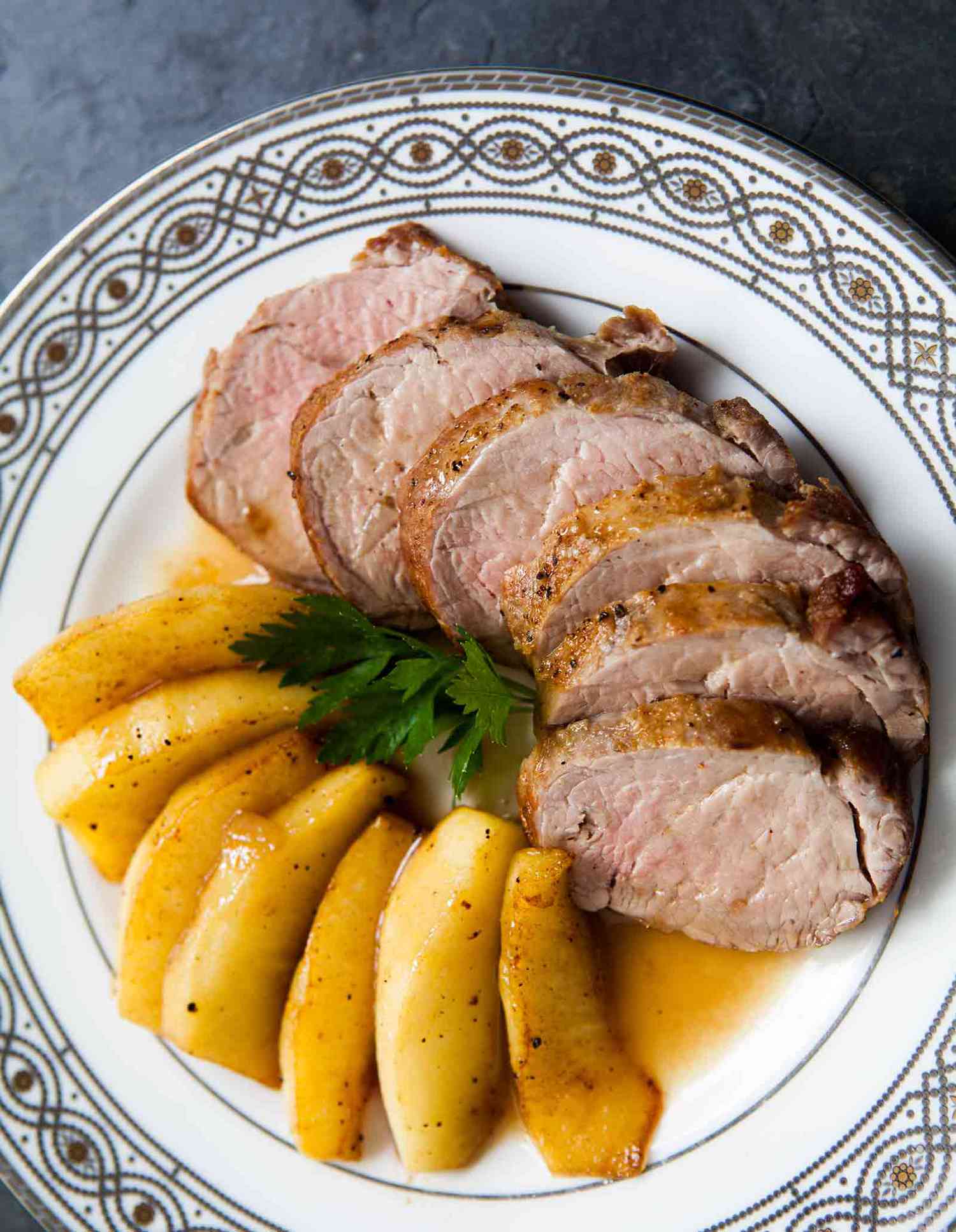
| Oven-Roasted Pork Tenderloin with Apple and Sage | 1 lb | 400°F | 145°F |
| Slow-Roasted Prime Rib with Rosemary and Dijon Crust | 5 lb | 250°F, then 500°F | 125°F (medium-rare preference) |
| Slow-Smoked Texas Brisket with Dry Rub and Mop Sauce | 5 lb | 225°F smoker | 200°F (tenderness) |
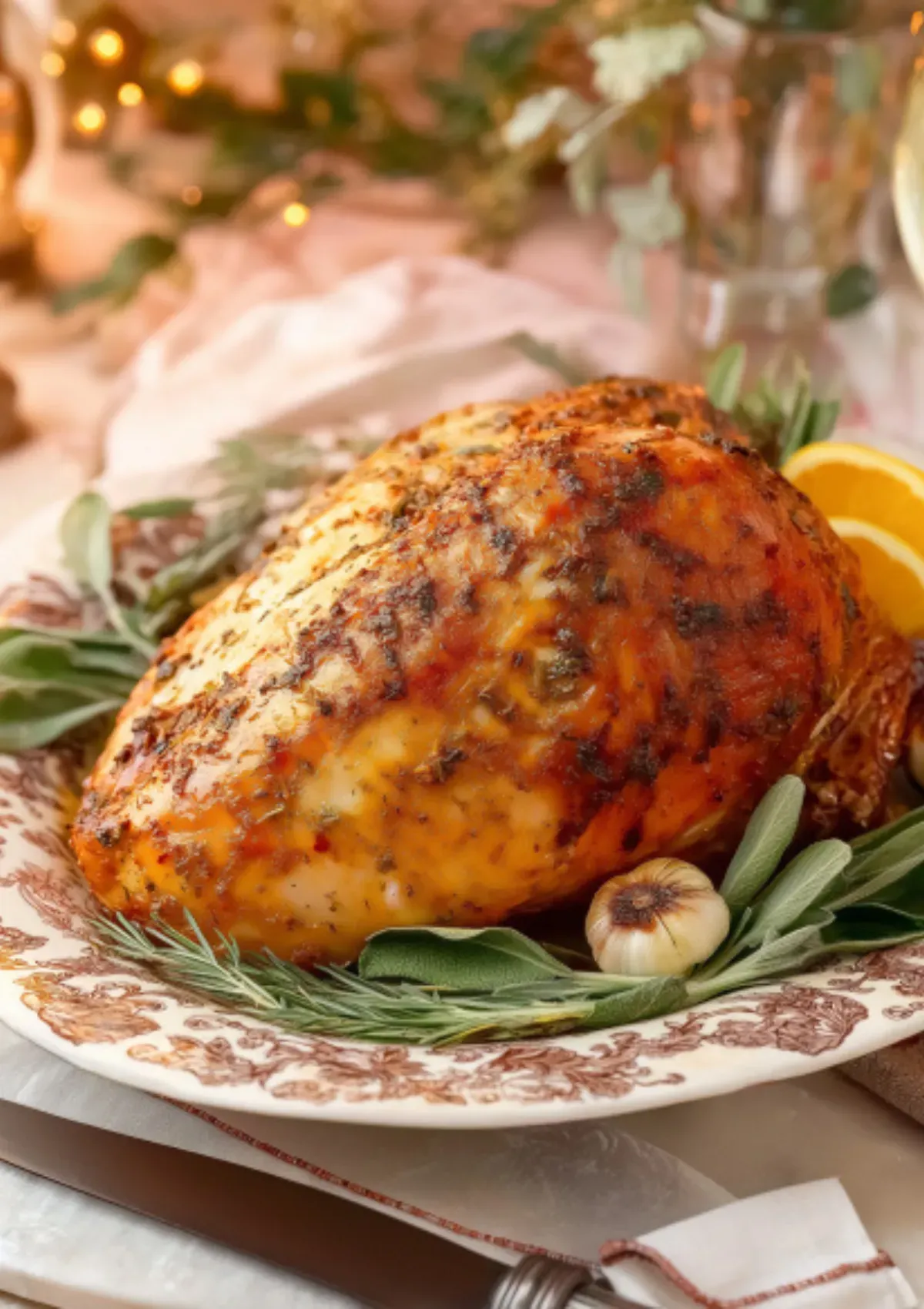
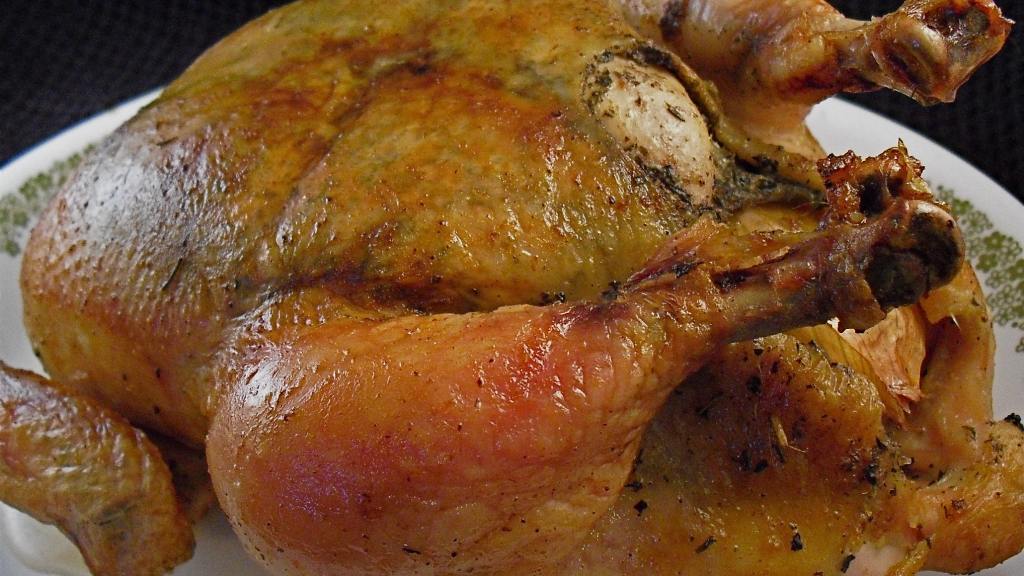
The Thanksgiving bird. The herb-butter roast turkey is a 12-pound bird at 325°F with about 3½ hours of cook time on the recipe card. That is a long time to keep opening the oven. Set the probe in the thigh, set the alarm, and let the oven hold its temperature. If you want a citrus-forward alternative, the sage and citrus butter turkey follows the same 325°F, 165°F-thigh method. Smaller gatherings can skip the whole bird for a 4-pound herb-roasted turkey breast with garlic and lemon.
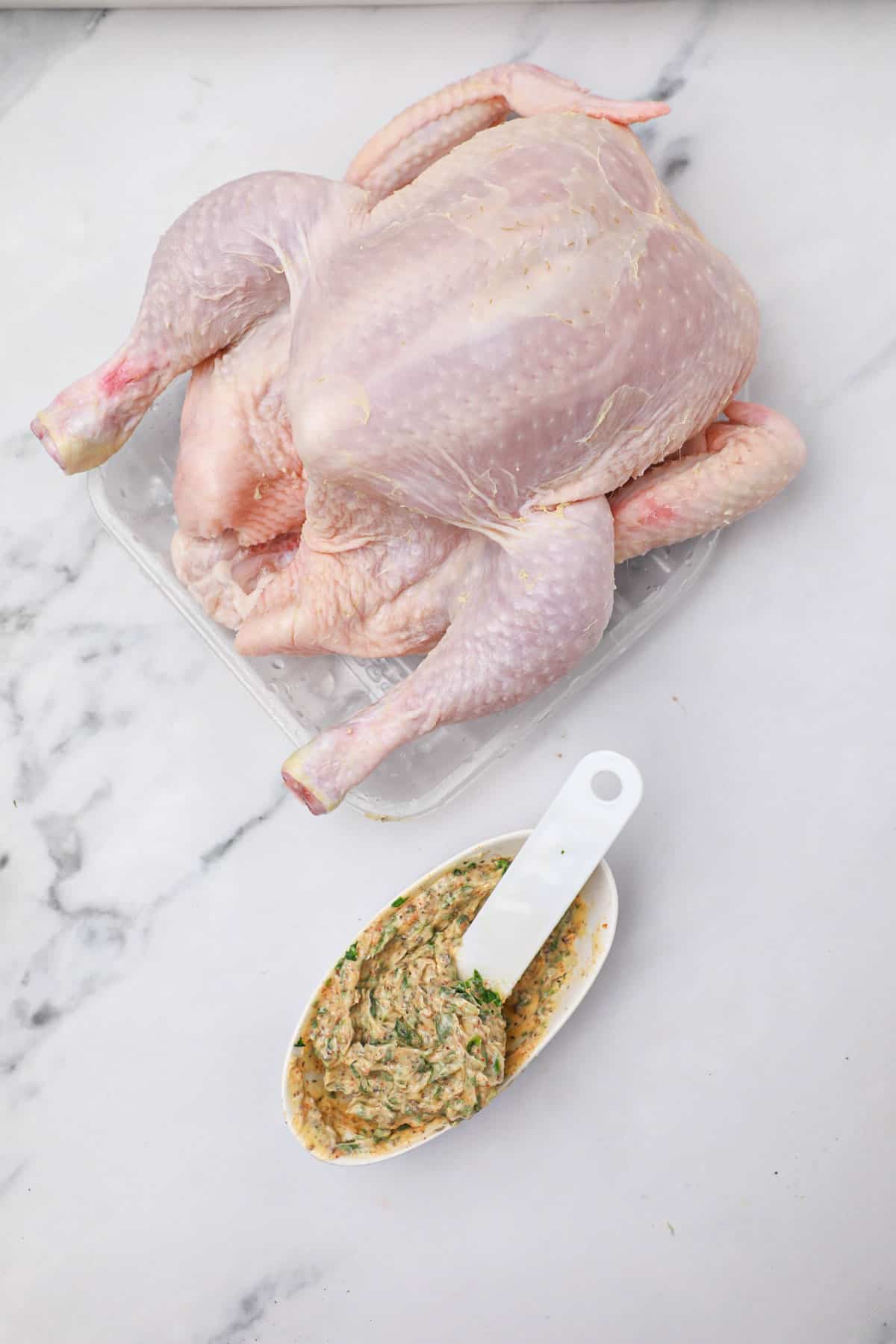
The practice run. A whole chicken is the ideal rehearsal for Thanksgiving: same probe placement, same 165°F target, and done in about 75 minutes. Try The Best Herb-Roasted Chicken or the rosemary-thyme roast chicken with lemon.
The prime rib. The slow-roasted prime rib tells you to insert an oven-safe meat thermometer into the thickest part. That makes it the textbook leave-in cook: low oven, a long slow climb, and a final 500°F blast. That blast is where a wired cable or a low ambient rating gets tested. For a 1-pound pork tenderloin, the thin CHEF iQ probe is the better fit. For more ways to cook it, see our pork tenderloin guide.
The all-day smoke. The slow-smoked Texas brisket runs about 12 hours at 225°F. A dual-probe unit like the TP17, with one probe in the flat and one reading the smoker air, is the cheapest way to sleep through part of it. Our smoker recipes for beginners collection has more low-and-slow cooks.
Browse every thermometer and timer in kitchen gadgets, or pick up roasting pans and cast iron in cookware.
Sources
- Amazon — Prime Big Deal Days 2026 is set for October 6–7 — event dates and start time (accessed 2026-09-27).
- USDA FSIS — Safe Minimum Internal Temperature Chart — 165°F poultry; 145°F with a 3-minute rest for whole cuts; 160°F ground meat (accessed 2026-09-27).
- USDA FSIS — Let's Talk Turkey Roasting — where to check a whole turkey's temperature (accessed 2026-09-27).
- USDA FSIS — Kitchen Thermometers — which thermometer types stay in food while it cooks and which are spot-check only (accessed 2026-09-27).
- Wikipedia — Meat thermometer — cabled, wireless, single and multi-probe types (accessed 2026-09-27).
- MEATER Pro product page — sensors, temperature limits, range, charging (accessed 2026-09-27).
- TempPro TP17 product page and TempPro TP16 product page — probe, cable and alarm specs (accessed 2026-09-27).
- Typhur Sync Gold product page — sensors, range and heat rating (accessed 2026-09-27).
- CHEF iQ iQ Sense product page — probe dimensions, sensors and hub range (accessed 2026-09-27).
Last verified 2026-09-27.
Frequently asked questions
Do I need a leave-in probe thermometer if I already own an instant-read?
Is a wireless meat thermometer better than a wired one?
Where exactly should the probe go in a turkey?
Should I buy a meat thermometer during Prime Big Deal Days or wait for Black Friday?
Can a leave-in probe go in the dishwasher or stay in a smoker all day?
Recipes to try with a meat thermometer
Put your gear to work — save any recipe to My Recipes (no account needed) and send its ingredients to Instacart in one tap.
Shop kitchen gadgets on AislePrompt →Browse the full kitchen shop →