The Complete Gluten-Free Meal Plan: 25+ Recipes + 7-Day Shopping List for 2026
A registered-dietitian-informed 7-day plan built around 25+ naturally gluten-free recipes from the AislePrompt catalog, with an aisle-by-aisle shopping list, cross-contamination rules, and the cost/nutrition trade-offs nobody warns you about.
If you're new to gluten-free eating — or you've been winging it since the wheat-free aisle at your grocery store tripled in size — this is a 7-day plan you can actually run this week. You get 25+ naturally gluten-free recipes from the AislePrompt catalog, an aisle-by-aisle shopping list, the cross-contamination rules a celiac dietitian would give you, and honest notes on the cost and nutrition trade-offs nobody talks about. Everything below is built for 2026 grocery pricing and 2026 US labeling rules.
Introduction: gluten-free without the marketing fog
Gluten-free is the most-marketed diet claim in the US grocery store as of 2026. About a third of shoppers reach for something with a "GF" label at least monthly, even though only around 1 percent of the US population has celiac disease and another 6 percent report non-celiac gluten sensitivity. The mismatch means most of what's sold as "gluten-free" is aimed at buyers who don't medically need it — which is why so many gluten-free packaged foods are optimised for shelf life and mouthfeel rather than nutrition.
This guide is written for both audiences. If you have celiac, everything in the safety section is non-negotiable and cross-contamination will make you sick. If you're gluten-free by choice or because someone in your household is, you can be looser on some rules but you'll still get the best outcomes by anchoring meals in naturally gluten-free whole foods instead of the specialty aisle. The 7-day plan and shopping list below work either way. The recipes are pulled from AislePrompt's catalog and every link points at a real recipe with ingredients, instructions and step-by-step timing.
For grounding in the definitions we're using throughout, see the Celiac Disease Foundation's overview of what gluten actually is and the Mayo Clinic gluten-free diet reference. Both are updated for 2024–2026 US labeling.
When gluten-free is medically necessary vs a lifestyle choice
Four categories of people benefit from a strict gluten-free diet, and they need very different levels of vigilance:
- Celiac disease (~1 percent of the US population). Autoimmune reaction to gluten. Even 10–20 mg of gluten per day — a bread crumb — can cause intestinal damage. Requires medically strict avoidance and dedicated kitchen tools.
- Non-celiac gluten sensitivity (estimated 0.5–13 percent, wide range). Symptoms without the antibody markers of celiac. Strict avoidance usually resolves symptoms; occasional trace exposure is uncomfortable but not damaging.
- Wheat allergy (~0.4 percent of adults). IgE reaction to wheat proteins. Not the same as gluten sensitivity — you can eat barley or rye — but a lot of GF products are also wheat-free, so the diet overlaps.
- Elective / therapeutic — people cutting gluten to test whether it improves IBS, migraine, autoimmune flares or general fatigue. If you're in this bucket, plan a 4–6 week strict trial, then reintroduce gluten deliberately and track symptoms. Guessing is worse than not trying.
If you're in the first three categories, you're playing a safety game — the sections below on hidden gluten and cross-contamination are the ones that matter most. If you're elective, focus on the plan and the shopping list; you can be relaxed about shared utensils but strict about ingredients.
Safe grains, hidden gluten sources, and cross-contamination rules
The single biggest reason new gluten-free eaters slip up in the first month is that they focus on the obvious foods (bread, pasta, cereal) and miss the hidden ones. Here's the working list you should keep in your notes app.
Safe grains and starches
| Grain / starch | Naturally GF? | Watch out for |
|---|---|---|
| Rice (white, brown, wild, jasmine, basmati) | Yes | Rice blends with orzo or barley |
| Corn (polenta, grits, tortillas) | Yes | Shared fryers, "corn" cereals with malt |
| Quinoa | Yes | Bulk-bin cross-contact — buy sealed |
| Oats | Yes, but | Almost always cross-contaminated. Only buy "certified gluten-free oats" |
| Buckwheat, millet, sorghum, teff, amaranth | Yes | Rare cross-contact if bagged; still rinse |
| Potato, sweet potato, cassava, plantain | Yes | Restaurant fries share fryers with breaded items |
| Legumes (beans, lentils, chickpeas) | Yes | Bulk bins; buy canned or bagged |
Grains and ingredients that always contain gluten
Wheat (including durum, semolina, farina, einkorn, emmer), barley, rye, triticale, spelt, kamut, farro, bulgur, couscous, freekeh, matzo, seitan, malt (malt vinegar, malted barley, malt extract), and brewer's yeast. If an ingredient list has any of these words, put it back.
The hidden-gluten shortlist
These are the foods that catch new gluten-free eaters most often. Read the label every time — manufacturers reformulate:
- Soy sauce — brewed with wheat. Use tamari or coconut aminos.
- Salad dressings and marinades — many use soy sauce, malt vinegar or "wheat protein" for body.
- Sausage, hot dogs, deli meats — fillers and binders often include wheat.
- Cream-based soups and gravies — flour is the default thickener.
- Beer and hard seltzers with malt — beer is out; gluten-removed beer is not celiac-safe. Cider and most wine are fine.
- Seasoning blends and bouillon — wheat as an anti-caking agent or flavor carrier.
- Imitation crab (surimi) — starch and stabilisers usually include wheat.
- Chocolate bars with crisped rice or wafers — often made with barley malt.
- "Natural flavors" — can hide wheat derivatives in the US. If you're celiac, contact the manufacturer.
Cross-contamination in your kitchen
If someone in your house still eats gluten, these are the choke points where a celiac gets glutened:
1. Toasters. Bread crumbs collect at the bottom. Get a second toaster and label it. This is the single most-common source of accidental exposure.
2. Colanders. Once pasta water has drained through, the mesh keeps trace gluten. Buy a dedicated GF colander (a bright color helps).
3. Cutting boards. Wood absorbs. Have two boards, GF and gluten, in different colors.
4. Wooden spoons and rubber spatulas. Same porosity issue.
5. Peanut butter, jam, butter, hummus. Anything spread with a knife that's touched bread becomes contaminated. Buy two jars.
6. Flour dust in the air. Baking flour stays airborne for 30+ minutes and lands on everything. Bake gluten-containing recipes on a different day.
7. Shared oil. A pan that has fried a breaded schnitzel is not safe for a GF dinner without a hot-water wash.
Store your dedicated tools in a labeled drawer. It looks obsessive; it works.
Your 7-day meal plan (with make-ahead notes)
The plan below assumes two adults, standard portions, one meal-prep session on Sunday. Every recipe is from the AislePrompt catalog and links out to full ingredients and timing. Snack column is optional — most people don't need a mid-morning snack if breakfast has real protein.
Sunday make-ahead (60–90 minutes)
- Cook a double batch of Simple Chicken and Rice Soup. Refrigerate half in a 32-ounce glass container for Monday lunch; the flavor improves overnight.
- Bake Gluten-Free Banana Oat Muffins with Cinnamon. Cool and freeze in a zip bag; they're better microwaved from frozen than kept in the fridge.
- Roast a sheet pan of vegetables (broccoli, sweet potato, red onion, olive oil, salt) at 425°F for 22 minutes. Use across the buddha bowl, salad and hash meals.
- Cook 3 cups of dry quinoa (yields ~9 cups cooked). Portion into containers for the buddha bowl and Chickpea and Quinoa Salad.
Nightly cook time
Nothing on the plan requires more than 40 active minutes on a weeknight. The sheet-pan and stir-fry entries are all under 30. Pizza night is the longest stretch (~50 minutes with the crust bake), which is why it's on Saturday.
25+ catalog recipes organized by breakfast, lunch, dinner, snack
Every recipe below is on aisleprompt.com with full ingredient list, nutrition and step-by-step instructions. Nothing here contains gluten as written — but if you swap in a soy sauce or a store-bought stock, check the label. Some of the recipes titled "Gluten-Free" use certified GF oats or a specific flour blend; the others are naturally gluten-free (rice, potato, quinoa, corn, meat, produce).
Breakfasts (5)
- Gluten-Free Banana Oat Pancakes with Maple Walnut Syrup — oats + banana + eggs, ready in 20 minutes.
- Gluten-Free Buttermilk Pancakes with Maple Butter — the closest-to-classic pancake stack we have; use certified GF oat flour.
- Gluten-Free Sweet Potato and Black Bean Breakfast Hash — 25 minutes, one skillet, 22 g protein per serving.
- Gluten-Free Banana Oat Muffins with Cinnamon — freezer-friendly, a good Sunday bake.
- Gluten-Free Rustic Toast with Cherry Greek Yogurt and Seed Mix — 8-minute breakfast when you're in a hurry.
Lunches (6)
- Native Veggie and Quinoa Buddha Bowl — 480 kcal, 21 g protein, portable in a mason jar.
- Simple Chicken and Rice Soup — freezer-friendly, doubles easily.
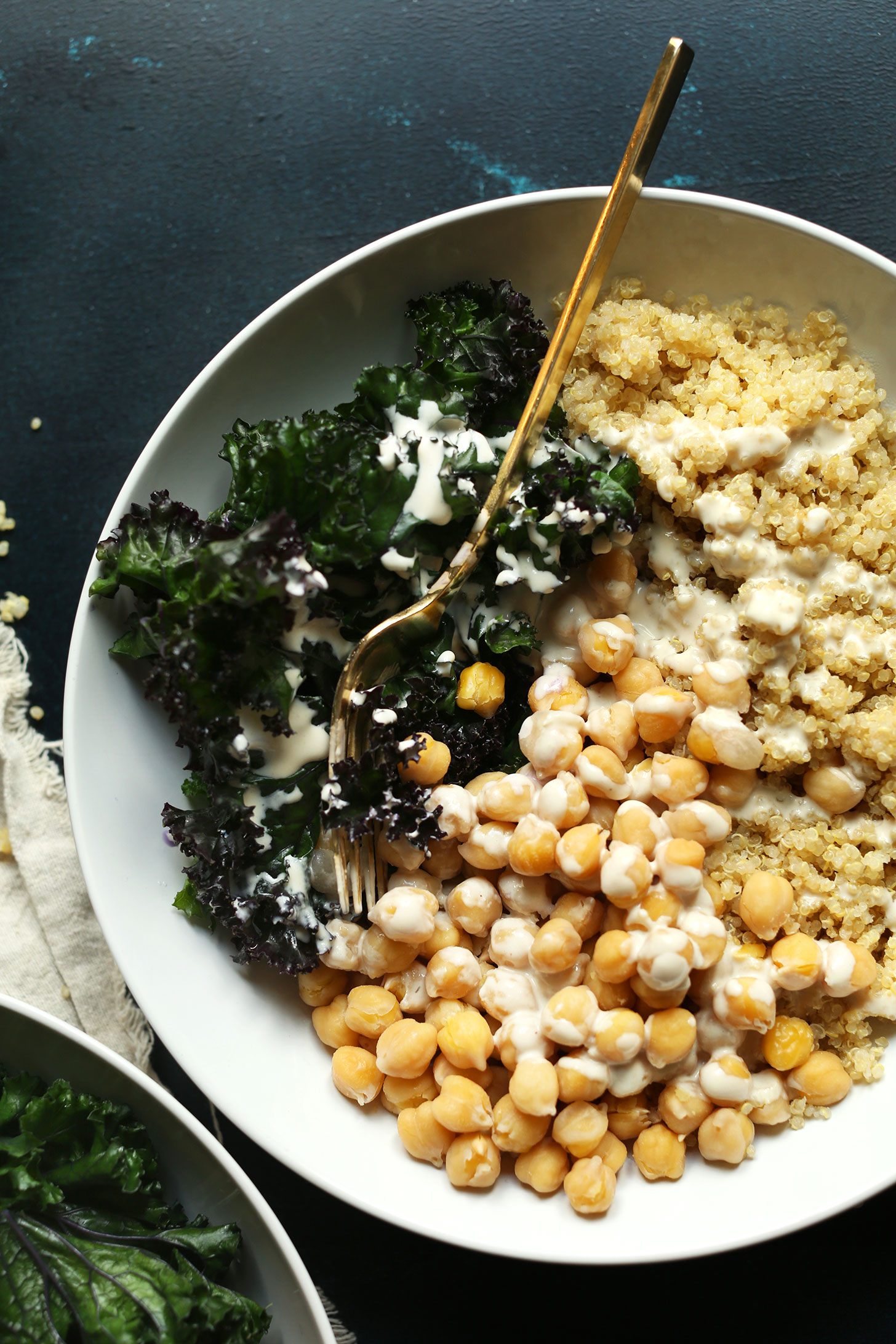
- Gluten-Free Chickpea and Quinoa Salad with Tahini Dressing — 15 minutes, all pantry ingredients.
- Gluten-Free Vegan Chickpea and Quinoa Salad with Lemon Dressing — high-fiber, vegan, keeps 4 days in the fridge.
- Gluten-Free Vegan Quinoa Salad with Roasted Vegetables and Tahini Dressing — meal-prep favorite; the tahini dressing keeps for a week.
- Gluten-Free Avocado and Black Bean Tacos with Cilantro Lime Slaw — assemble in 10 minutes if the beans are pre-cooked.
Dinners (10)
- Gluten-Free Baked Lemon Herb Chicken with Roasted Vegetables — one-pan, 45 minutes, feeds 4.
- Sheet Pan Miso-Glazed Salmon with Sesame-Scallion Veggies — 25 minutes total, sheet pan, easy weeknight.
- Half-Stuffed Bell Peppers with Quinoa and Black Beans — 400 kcal, 18 g fiber, one of the best fiber-per-serving entries in the catalog.
- Almond-Flour Chicken Tenders with Creamy Mustard Sauce — kid-friendly, breaded in almond flour instead of panko.
- Crisped Cauliflower Rice Stir-Fry with Ginger and Scallions — 15-minute stir-fry that reheats well for lunch.
- Zucchini Noodle Stir-Fry with Cashew-Free Thai Sauce — uses coconut aminos, not soy sauce; peanut-free.
- Gluten-Free Thin Crust Pizza with Roasted Vegetables — Saturday-night pizza with a certified GF crust.
- Gluten-Free Korean Beef Bibimbap Bowl — 30 minutes; substitute tamari for soy sauce.
- Gluten-Free Shrimp and Grits with Cajun Butter Sauce — southern comfort, naturally GF via corn grits.
- Gluten-Free Vegan Chickpea and Spinach Curry — vegan, freezer-friendly, one of the cheapest per-serving meals in the plan.
- Gluten-Free Vietnamese Lemongrass Pork Stir Fry — 30-minute stir-fry using rice noodles.
- Gluten-Free Zucchini Noodles with Avocado Pesto — no-cook noodle dish for hot days.
- Gluten-Free Herb-Crusted Salmon with Lemon Butter — 20 minutes, 34 g protein per serving.
- Gluten-Free Italian Polenta with Roasted Tomato and Basil — polenta base, 25 minutes, uses pantry canned tomatoes.
- Gluten-Free Grilled Tofu Bowl with Miso-Glaze — vegetarian, 22 g plant protein per bowl.
Snacks + desserts (6)
- Gluten-Free Almond Butter Chocolate Chip Cookies — bake 12 in 18 minutes; keeps 5 days.
- Gluten-Free Flora Bakehouse Beignets with Berry Sauce — weekend treat, 3.9-star average across 389 reviews.
- Gluten-Free Berry Almond Crisp — 6 pantry ingredients, 30 minutes.
- Gluten-Free Vegan Thai Mango Sticky Rice — dessert or Sunday brunch.
- Gluten-Free Almond Honey Cake — one-bowl almond flour cake, no gluten-free flour blend needed.
That's 32 catalog recipes, easily enough to rotate through the plan for a month without repeats.
Shopping list by aisle + label-reading cheatsheet
The list below covers the 7-day plan above for two adults. Prices are 2026 US-average from a mid-tier grocery store (Kroger, Publix, Meijer); coastal costs run 10–20 percent higher. Split by aisle so you can walk the store in one loop.
| Aisle | Item | Qty | ~Price |
|---|---|---|---|
| Produce | Bananas | 6 | $2 |
| Produce | Sweet potatoes | 4 lbs | $5 |
| Produce | Bell peppers, mixed | 6 | $6 |
| Produce | Broccoli | 2 heads | $4 |
| Produce | Red onions | 3 | $3 |
| Produce | Baby spinach | 10 oz | $4 |
| Produce | Avocados | 4 | $6 |
| Produce | Lemons | 4 | $2 |
| Produce | Cherry tomatoes | 1 pint | $4 |
| Produce | Zucchini | 3 | $4 |
| Produce | Fresh cilantro, basil, scallions | — | $4 |
| Meat / seafood | Bone-in chicken thighs | 2 lbs | $9 |
| Meat / seafood | Salmon fillets | 1.5 lbs | $18 |
| Meat / seafood | Chicken tenders | 1.5 lbs | $10 |
| Meat / seafood | Ground turkey or beef | 1 lb | $7 |
| Meat / seafood | Small shrimp | 1 lb | $12 |
| Dairy / eggs | Eggs, large | 1 dozen | $4 |
| Dairy / eggs | Plain Greek yogurt | 32 oz | $6 |
| Dairy / eggs | Butter | 1 lb | $5 |
| Dairy / eggs | Feta cheese | 6 oz | $4 |
| Grains / dry | Certified GF oats | 18 oz | $6 |
| Grains / dry | Basmati or long-grain white rice | 3 lbs | $6 |
| Grains / dry | Quinoa | 1 lb | $5 |
| Grains / dry | Certified GF pizza crust | 2 | $10 |
| Grains / dry | Corn tortillas | 1 pack | $3 |
| Pantry | Black beans, canned | 4 cans | $5 |
| Pantry | Chickpeas, canned | 3 cans | $4 |
| Pantry | Canned diced tomatoes | 2 cans | $3 |
| Pantry | Coconut milk, canned | 2 cans | $5 |
| Pantry | Almond flour | 1 lb | $10 |
| Pantry | Tamari or coconut aminos | 1 bottle | $6 |
| Pantry | Olive oil | — (staple) | — |
| Pantry | Tahini | 1 jar | $8 |
| Pantry | Maple syrup | — (staple) | — |
| Snacks | Dark chocolate chips (labeled GF) | 12 oz | $5 |
Approximate total: $180 for the week for two adults, before pantry staples. Roughly $12.85 per person per day — comparable to a conventional whole-food shopping list, and cheaper than the equivalent all-specialty gluten-free basket, which typically runs $230–260.
Label-reading cheatsheet
Print this and stick it inside a cabinet:
1. Look for the "Certified Gluten-Free" mark (GFCO or NSF) before you look at the ingredient list. Certification means ≤10 ppm gluten and third-party testing.
2. If there's no mark, scan for wheat, barley, rye, malt, brewer's yeast, "wheat starch," "wheat protein," and "modified food starch" (the last one is usually corn but check).
3. US law requires a "Contains: wheat" statement below the ingredient list for anything with wheat. It does NOT require a barley or rye callout — those are only in the ingredient list. See the USDA food and nutrition portal for the current allergen labeling standards.
4. "May contain traces of wheat" or "processed on shared equipment" — these are voluntary. For non-celiac readers, usually fine. For celiacs, skip unless you know the manufacturer's cross-contamination controls (many major brands test to below 5 ppm even on shared lines; check the FAQ on their site).
5. "Naturally gluten-free" is a marketing phrase, not a certification. A naturally gluten-free product can still be cross-contaminated during processing.
6. Restaurants: "gluten-free" on a menu is not legally regulated in the US. Ask specifically about fryer sharing, pasta water, and pan usage. A restaurant that can't answer isn't safe for celiacs.
Kitchen tools + swaps that make gluten-free easier
You don't need a specialty catalog. You need one shelf of the right dedicated tools and one drawer of swaps.
Dedicated tools (buy a second one, in a bright color):
- A second toaster from the /k/small-appliances category — the single most-common source of accidental exposure.
- A second colander from the /k/cookware section. Pasta water traces linger even after a rinse.
- Two cutting boards from the /k/utensils range, color-coded.
- Dedicated wooden spoons and silicone spatulas from /k/utensils.
- Labeled storage containers for GF flour, oats and pasta. Keep them on a separate shelf from wheat flour so airborne dust doesn't settle.
- A dedicated sheet pan from the /k/bakeware collection for gluten-free baking — even a residual crust on a shared pan can transfer.
Baking upgrades if you're going to make GF bread and pastry once a week:
- A digital kitchen scale. Gluten-free flour blends behave very differently by weight than by volume; a scale is the difference between a good loaf and a hockey puck.
- A second set of measuring cups and spoons dedicated to GF flour.
- A silicone baking mat. Easier to keep clean than parchment for gummy GF doughs.
- A cast-iron pizza pan or steel from the /k/bakeware selection — GF pizza crusts need high heat from below to crisp instead of sog.
Kitchen swap cheatsheet:
| Instead of | Use | Notes |
|---|---|---|
| All-purpose wheat flour (1:1) | Cup4Cup or King Arthur Measure-for-Measure GF blend | Cost: ~4x per lb |
| Panko / breadcrumbs | Crushed GF corn flakes, almond flour, crushed rice cracker | Adds crunch, not gumminess |
| Soy sauce | Tamari or coconut aminos | Tamari is closer to soy in flavor; aminos are sweeter |
| Roux (butter + flour thickener) | Cornstarch or arrowroot slurry | Add at the end, off heat |
| Regular pasta | Brown rice, corn-quinoa, or chickpea pasta | Rinse after boiling — surface starch is gummy |
| Beer | Hard cider or gluten-free lager (Ghostfish, Holidaily) | "Gluten-removed" beers are not celiac-safe |
| Regular oats | Certified GF oats (Bob's Red Mill, Trader Joe's own-brand) | Cross-contact risk is real |
| Wheat tortillas | Corn tortillas or almond-flour tortillas | Corn is $, almond is ~3x |
| Bouillon cubes | Better Than Bouillon (GF varieties labeled) or homemade stock | Read the label — many contain wheat |
Common mistakes: fiber deficits, blood sugar swings, cost creep
Three specific failure modes we see repeatedly in the first 60 days of a gluten-free diet.
1. Fiber deficits
Wheat-based foods (bread, cereal, pasta, whole-grain crackers) are the largest source of fiber in most American diets — around 25 percent of daily fiber intake. Swap them for white-rice-based GF pasta and packaged GF bread and you can drop from 25 grams of fiber a day to 12 grams overnight. Symptoms: constipation, worse blood-sugar spikes, hunger between meals.
The fix. Anchor two meals a day in legumes, quinoa, buckwheat or vegetables. Chickpeas, black beans and lentils are the cheapest and most fiber-dense options ($0.60 per serving from dry, $1.10 canned). The buddha bowl and stuffed pepper recipes in the plan above each deliver 12–18 g of fiber; hit two of those a day and you're back at the RDA.
2. Blood sugar swings
A lot of the packaged GF bakery aisle is made from rice flour and tapioca starch. Both are very high on the glycemic index — often higher than the wheat products they're replacing. A gluten-free sandwich bread can spike blood sugar as hard as a candy bar.
The fix. For daily meals, favor recipes built around whole naturally-GF ingredients (quinoa, sweet potato, legumes) rather than the packaged bakery aisle. Save the specialty GF bread, pizza, cookies and pancakes for two or three occasions a week. That's not deprivation — it's how the plan above is structured on purpose.
3. Cost creep
Certified GF specialty products cost 2–3x their conventional counterparts. A shopper who converts their existing cart directly — swapping every wheat item for its GF equivalent — will see their weekly bill jump 40–60 percent.
The fix. Build the shopping list around naturally GF whole foods (rice, potatoes, beans, meat, produce, eggs) and treat certified specialty products as a limited category. The list above holds a typical GF grocery week for two adults to around $180 — a small premium over an equivalent conventional plan, not a doubling.
4. Restaurant risk creep
You'll be fine cooking at home. Restaurants are where most accidental exposure happens for celiacs. Two rules that cut the incident rate hard: (1) never eat fried food unless the restaurant has a dedicated GF fryer, and (2) never eat at a place whose staff can't explain their cross-contact process without hesitating. Chain restaurants (Chipotle, Chick-fil-A grilled, PF Chang's GF menu) are usually safer than local independents because they train the process.
FAQ
Is gluten-free eating healthier than regular eating?
For people with celiac disease or non-celiac gluten sensitivity, absolutely — it's medically necessary. For everyone else, gluten-free processed foods are often higher in sugar, fat and sodium than their conventional counterparts. Health improvements usually come from eating more whole foods, not from removing gluten. Focus on naturally gluten-free ingredients like rice, potatoes, beans and produce.
Which grains are actually gluten-free?
Safe grains include rice, corn, quinoa, buckwheat, millet, sorghum, teff, amaranth and certified gluten-free oats. Wheat, barley, rye, spelt, kamut, triticale and farro all contain gluten. Regular oats are naturally gluten-free but are almost always contaminated during processing, so only buy oats explicitly labelled 'certified gluten-free' if you have celiac disease.
What foods have hidden gluten?
Soy sauce, malt vinegar, beer, seitan, breaded meats, most cream soups, licorice candy, imitation crab, some deli meats, salad dressings, gravy mixes, seasoning blends and communion wafers all commonly contain gluten. Always read the ingredient list even on foods you'd never suspect — manufacturers change recipes without notice and 'natural flavors' can hide wheat derivatives.
How much more does gluten-free grocery shopping cost?
Certified gluten-free packaged breads, pastas and baking mixes typically run 2-3x the price of conventional versions. You can offset the cost by building meals around naturally gluten-free whole foods — rice, potatoes, beans, meat, fish, eggs and produce — and reserving the specialty products for two or three occasions per week.
Can my family eat regular food while I go gluten-free?
Yes, but you'll need dedicated toasters, colanders, cutting boards, wooden spoons and a peanut butter jar to prevent cross-contamination if you have celiac disease. If it's a preference rather than a medical need, you can share a kitchen safely with normal cleaning. Store your gluten-free products on a high shelf to avoid flour drift.
Sources
- Celiac Disease Foundation — What is Gluten?. The clinical reference for definitions of celiac disease, non-celiac gluten sensitivity, and the wheat/barley/rye grain list. Updated 2024.
- Mayo Clinic — Gluten-Free Diet Overview. The medical reference for who benefits from a gluten-free diet, cross-contamination guidance, and the fiber-deficit risk. Updated 2024.
- USDA — Food and Nutrition. The US government portal for allergen labeling law, including the current "Contains: wheat" statement requirement.
- AislePrompt catalog metadata for all 32 linked recipes (ingredient lists, nutrition data). Reviewed 2026-07-21.
_Last updated 2026-07-21 for 2026 US grocery pricing, 2026 FDA gluten-free labeling rules, and the current AislePrompt recipe catalog._