How to Cook Mushrooms: 25 Recipes + Complete Guide
Types, buying, cleaning, storage, and four core techniques, plus 37 linked mushroom recipes from 12-minute sautés to soups, braises, and umami condiments.
Affiliate disclosure: AislePrompt may earn a commission on qualifying purchases made through Amazon and Instacart links in this article, at no additional cost to you. See our affiliate policy →
How to cook mushrooms well comes down to four things: pick the right variety
for the dish, get them dry and prepped, get the pan hot enough, and don't crowd
them. Do those and a $4 pack of cremini turns into the most savory thing on
the plate. This guide walks every cook — beginner to confident weeknighter —
through buying, cleaning, storing, and the four core techniques, then links 37 mushroom recipes from our catalog so you can put it all to work tonight.
Why mushrooms are one of the most underrated weeknight ingredients
Mushrooms are the rare ingredient that's cheap, vegetarian, freezer-friendly,
and packed with savory depth — the natural glutamates in a sautéed pan of
creminis hit the same umami receptors as parmesan or a soy reduction. A pound
costs $3–$5, cooks down in eight minutes, and turns a pot of plain rice or a
sheet of toast into dinner. They're also low-calorie (about 22 kcal per cup
raw) and a meaningful source of vitamin D when grown under UV light (see the NIH Office of Dietary Supplements vitamin D fact sheet), B-vitamins, and
the antioxidant ergothioneine. The USDA's food and nutrition resources
treat them as a vegetable for meal-pattern purposes, but their flavor and
texture make them an honest meat substitute for at least two nights a week.
If you cook from our meal plan you'll see mushrooms slip into
roughly a third of dinner suggestions across the year — they're that flexible.
Master them once and you stop running out of weeknight ideas.
Types of mushrooms: when to use which
There are ten varieties worth knowing for home cooking. Each has a sweet
spot — using a delicate oyster where a meaty portobello belongs (or vice
versa) is one of the most common mushroom mistakes.
Cremini (baby bella). The everyday workhorse. Firmer and more flavorful
than white button, available at every grocery store, and forgiving in almost
any technique. Use them when a recipe just says "mushrooms."
Portobello. Mature cremini, harvested after the cap opens. White button, cremini, and portobello are all one species, Agaricus bisporus, picked at three stages of growth. Up to four
inches across, dense and meaty, perfect for grilling whole as a burger
substitute or stuffing. The gills can be bitter and turn sauces black — scrape
them out with a spoon before cooking unless you want the color.
Shiitake. Tan-brown caps with a woodsy, almost smoky flavor. The stems are
tough and fibrous; trim them off and save for stock. Brilliant in stir-fries,
broths, ramen, and anything with soy or miso.
Oyster. Fan-shaped clusters in white, gold, or pink. Cook fast, tear into
pieces by hand rather than slicing, and treat them gently — they bruise. Great
torn into a hot pan with butter and finished with thyme.
Maitake (hen of the woods). Frilly clusters that crisp beautifully when
torn and roasted. The most expensive supermarket mushroom, around $8–$12 per
pound, but worth it when you want centerpiece texture.
Chanterelle. Golden, trumpet-shaped, fruity-apricot aroma. Seasonal
(summer–fall), often foraged. Don't wash; brush. Sauté in butter at the end of
a dish so the delicate flavor doesn't cook off.
Porcini. Usually sold dried; rehydrate in hot water for 20 minutes, save
the soaking liquid as stock. A handful of dried porcini will transform a pot
of risotto more than two pounds of fresh creminis.
Enoki. Long, thin, pale stems sold in bunches. Add raw to ramen or hot
pot, or quickly grill in foil packets. Trim the woody base before using.
King trumpet (king oyster). Thick, pale stems under a small cap, and
nearly all the eating is in the stem. Slice it into 1/2-inch coins, score a
shallow crosshatch into each face, and sear hard: the texture lands somewhere
between a scallop and calamari. It holds its shape through grilling and
braising better than any other supermarket mushroom, and it's the best
candidate for batter-frying.
Morel. Honeycomb-capped and hollow. Morels are a spring mushroom, usually
$40 or more per pound fresh, and they're easy to find dried year-round. Always
cook them thoroughly, because morels cause stomach upset when eaten raw or
undercooked (see Wikipedia's Morchella entry).
Split them lengthwise to check for grit, swish quickly in cold water, dry them
well, and cook them slowly in butter or cream.
| Variety | Texture | Best for | Approx $/lb |
|---|---|---|---|
| White button | Mild, soft | Soups, salads, pizza topping | $2–$3 |
| Cremini | Firm, savory | Weeknight everything | $3–$5 |
| Portobello | Meaty, dense | Burgers, grill, stuff | $4–$6 |
| Shiitake | Chewy, smoky | Stir-fries, ramen, broths | $6–$9 |
| Oyster | Tender, mild | Quick sauté, pasta | $5–$8 |
| Maitake | Crisp-edged | Roasting, centerpiece dishes | $8–$12 |
| Chanterelle | Silky, fruity | Butter sauté, eggs | $20–$40 |
| Porcini (dried) | Concentrated, woodsy | Risotto, stock, ragu | $40–$80 |
| King trumpet | Dense, meaty | Searing, grilling, frying | $8–$12 |
| Morel (fresh) | Spongy, nutty | Cream sauces, eggs, pasta | $40–$80 |
What's at the market this fall
Late August through November is the best stretch of the year to cook
mushrooms. Maitake and chanterelles turn up at farmers' markets and co-ops,
oyster and lion's mane growers hit peak output as the nights cool, and the new
season's dried porcini start landing in specialty stores. In fall 2026 the
smart split is still the same: cultivated cremini and shiitake for weeknights,
a quarter-pound of something wild for the weekend. Buy wild mushrooms only
from a licensed seller or a vendor who forages with an expert, and freeze any
surplus once it's cooked (see below).
How to buy mushrooms
Pick up each pack at the store and read three signals.
Cap surface. Should feel dry — not slimy, not damp. A slight tackiness is
fine; outright wetness means they've been wrapped too long.
Firmness. Press lightly. Fresh mushrooms push back. Soft, spongy, or
wrinkled caps mean they're past their prime.
Gills (for portobello and large cremini). Should be pale tan to dark
brown, intact, and not weeping liquid. Black, mushy, or wet gills mean
oxidation has set in.
For everyday cooking, buy loose creminis or 8-oz packages at any supermarket.
For shiitake and oyster, Asian grocers often have fresher product at half the
price of mainstream stores. For chanterelles and maitake, your best bet in
season is a farmers' market or a co-op with a forager relationship; in
winter, frozen wild-mushroom blends from Trader Joe's or Whole Foods are
honest substitutes for risotto and sauces (don't pretend they'll grill).
How to clean and store mushrooms
The wash-vs-brush debate is settled — but the answer is nuanced.
Cultivated mushrooms (cremini, portobello, white button, shiitake, oyster).
Rinse briefly under cool running water right before cooking, then pat dry with
a clean towel. Test-kitchen experiments, Serious Eats' Food Lab among them, have debunked the "mushrooms are sponges" myth: rinsed mushrooms pick up only a few percent of their weight in water, and nearly all of it sits on the surface. That's irrelevant once they hit a
hot pan. The dirt comes off in seconds and your food won't taste like the
mushroom farm.
Wild mushrooms (chanterelle, morel, hedgehog, lobster). These are
delicate and irregular. Use a soft brush, a barely damp paper towel, or a
quick dunk-and-shake in cold water followed by an immediate spin in a salad
spinner. Avoid soaking — wild caps hold water in their crevices and turn
slimy.
Trimming. Snap off the dry end of cremini stems (the bottom quarter-inch).
Cut shiitake stems off at the base of the cap and save them in a freezer bag
for stock. Scoop the gills out of portobellos with a teaspoon if you want
sauces to stay light-colored.
Storage. A paper bag in the main compartment of the fridge — never the
crisper drawer, never plastic. Plastic traps moisture and turns mushrooms
slimy in two days; paper wicks it away and gets you 7–10 days of usable
product. If you bought a styrofoam tray with plastic wrap, transfer the mushrooms to a paper bag the moment you get home.
Freezing. Raw mushrooms freeze badly: ice crystals rupture the cells and
they thaw to mush. Cook them first. Dry-sauté sliced mushrooms until golden,
cool them completely, freeze them flat on a sheet pan, then
transfer to a freezer bag. They keep for about 6 months and go straight from
the freezer into pasta sauces, soups, omelets, and risotto. Keep any mushrooms
you've sliced but won't cook today in the fridge at 40°F or below, as the
recommends for cut produce, in a lidded storage container lined
with a paper towel.
Four core techniques
Master these four and you can cook every recipe in this guide.
1. Dry-sauté (the foundation)
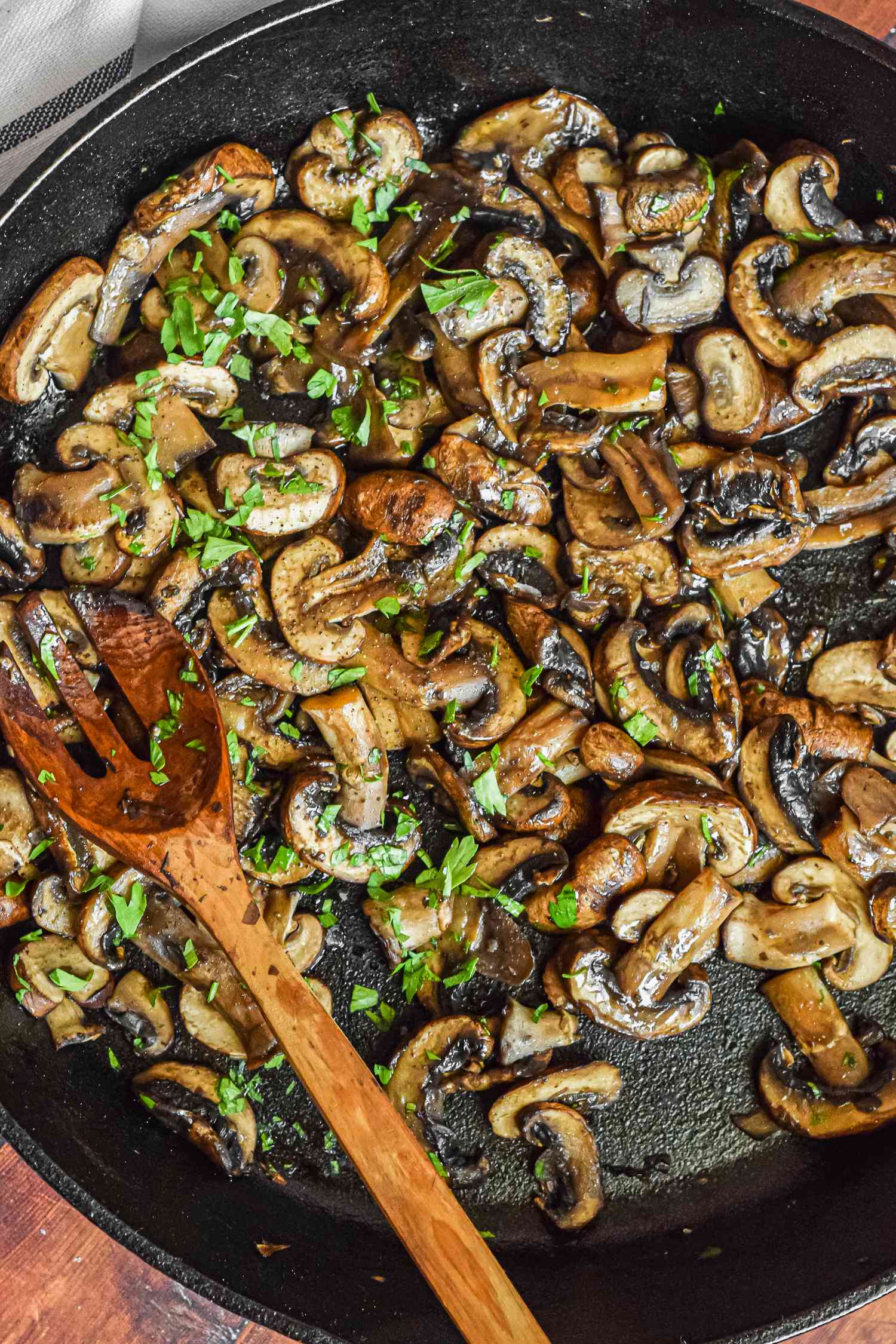
Slice mushrooms 1/4 inch thick. Heat a wide skillet — 12 inches, not 10 — over
medium-high until it's almost smoking. Add the mushrooms in a single layer
with no fat, no salt, nothing. Let them sit. They'll release water, the water
will boil off, and after about four minutes the bottom will start to brown.
Now stir, add a tablespoon of olive oil and a pinch of salt, and finish for
another three to four minutes. The dry-sauté method drives off the water
first — that's why your mushrooms now caramelize instead of stewing.
2. Butter-baste
For oyster, chanterelle, or maitake, the move is to start cold. Tear the
mushrooms into pieces. Put them in a cool pan with two tablespoons of butter,
turn the heat to medium, and tilt-and-spoon the foaming butter over them for
five minutes. Finish with a squeeze of lemon and a pinch of flaky salt. This
preserves the silky texture that dry-sauté would toughen.
3. Roast
Tear maitake or quarter creminis. Toss with olive oil (1 tablespoon per
pound), salt, and pepper. Spread on a sheet pan with at least an inch between
pieces and roast at 425°F for 18–22 minutes, flipping once. They come out
crisp-edged and intensely savory — better than any soggy stir-fried version.
This is the technique that turns mushroom-skeptical kids around.
4. Broil
For thick portobello caps, brush both sides with olive oil and a teaspoon of
soy sauce, then broil 6 inches from the element for 4 minutes per side. The
result eats like a steak. Pile on top of toasted brioche with a slice of
gruyère for the easiest dinner in your repertoire.
10 quick weeknight mushroom recipes
These all finish in 35 minutes or less, use ingredients you probably have, and
work as single-pan dinners or fast sides.
1. Sautéed Garlic Butter Mushrooms with Lemon Zest — the absolute simplest version, ready in 12 minutes.
2. Sautéed Mushroom and Herb Pasta — pasta, butter, mushrooms, thyme, parmesan. Done.
3. Smoky Grilled Portobello Mushrooms — fire up the grill and finish dinner in 10 minutes.
4. Sautéed Mushroom and Spinach Omelet with Sharp Cheddar — Sunday brunch in 15 minutes.
5. Roasted Garlic and Shiitake Mushroom Stir Fry — shiitake + garlic + soy + 8 minutes in a wok.
6. Pan-Seared Pork Chops with Mushroom Gravy — pan sauce technique you'll reuse for any cut of meat.
7. One-Pan Tomato and Mushroom Pasta with Spinach — one pan, 30 minutes, vegetarian.
8. Miso-Glazed Zucchini Noodles with Shiitake Mushrooms — light, fast, and unexpectedly umami-deep.
9. One-Pan Creamy Mushroom and Spinach Pasta — cream, spinach, mushrooms, in one skillet.
10. Sautéed Wild Mushroom Pasta with Fresh Thyme — wild mushroom blend, fresh thyme, and good olive oil.
Build a working week of dinners from any five of these and you'll never hit
the "what's for dinner" wall again. For full grocery automation, drop them
into the meal plan and let the shopping list
build itself.
10 special-occasion mushroom recipes
When you have time and want to cook something that earns its place at the
table, reach for these.
1. Mushroom Risotto — the canonical Italian classic. Use porcini and
arborio rice; don't rush the stir.
2. Sautéed Mushroom Risotto with White Wine — a version with white wine and shallot for a
brighter finish.
3. Butternut Squash and Mushroom Wellington — a true vegetarian centerpiece worth the puff
pastry effort.
4. Real English Dijon Beef Wellington with Mushroom Duxelles — the original beef-and-mushroom-duxelles
wellington, for a holiday roast.
5. Creamy Brie and Mushroom Galette — a free-form rustic galette that comes
together in one bowl.
6. Herbed Mushroom and Goat Cheese Tartlets — passed appetizers worth the prep.
7. One-Pan Beef and Mushroom Stroganoff — egg-noodle stroganoff, the dish that put sour
cream on the map.
8. Three-Cheese Stuffed Portobello Mushroom Burgers — three cheeses, one giant portobello, one
excellent dinner.
9. Buttery Herb Polenta with Roasted Mushrooms — creamy polenta is the most underrated
landing pad for any pan of mushrooms.
10. Red Wine-Braised Beef with Mushrooms — slow-braised beef with mushrooms, weekend
food at its best.
For inspiration beyond this list, the recipe libraries at Bon Appétit
and Serious Eats both have deep, technique-led
mushroom sections worth a Saturday afternoon read.
Roasted, grilled, and crispy mushroom recipes
These rely on high, dry heat (the roast and broil techniques above) or a crisp
coating, so they're how you win over anyone who calls mushrooms "slimy."
1. Creamy Polenta with Roasted Mushrooms and Parmesan — roasted cremini over soft polenta, 45 minutes, vegetarian.
2. Cheesy Spinach-Stuffed Mushrooms with Garlic Butter — the party appetizer. Roast the empty caps gill-side down for 5 minutes first so the filling doesn't go soggy.
3. Grilled Mushroom and Walnut Patties with Caramelized Onion Aioli — a meatless burger that holds together on the grill.
4. Tempura-Crisped King Oyster Mushrooms with Pickled Daikon — the best use of king trumpet stems: 1/4-inch rounds in an ice-water batter.
5. Crispy Oyster Mushroom Tacos with Lime Crema — torn oyster mushrooms crisped in a hot pan, 40 minutes, no meat.
Mushroom-forward main courses
In these dinners the mushroom is the main event, not the garnish.
1. One-Pan Beef Bourguignon with Pearl Onions & Mushrooms — our top-rated mushroom braise (4.75 stars). Brown the mushrooms separately and stir them in for the last 30 minutes so they stay meaty.
2. Classic Italian Tagliatelle with Mushroom Ragu — cremini, tomato paste, and thyme cooked down into a 30-minute ragu.
3. One-Pot Creamy Mushroom Stroganoff with Egg Noodles — a meatless stroganoff with 12 oz of cremini and vegetable broth, in one pot in 35 minutes.
4. French-Inspired Roasted Mushroom and Gruyère Tart — roasted mushrooms and Gruyère on pastry. Serve it with a green salad for brunch or dinner.
5. Stir-Fried Tofu with Oyster Mushrooms and Soy-Ginger Glaze — 25 minutes and fully plant-based.
Soups, stews, and sauces
Mushrooms give a broth the deep, long-simmered flavor it would otherwise need
a ham hock or a Parmesan rind to get. Save shiitake stems and porcini soaking
liquid in the freezer and add them to any of these.
1. Creamy French Mushroom Soup with Tarragon — a silky cream-of-mushroom soup, 40 minutes.
2. Hidden Mushroom Miso Soup — 25 minutes, and a good way to get mushrooms past skeptical eaters.
3. Earthy Lentil and Mushroom Stew with Thyme — a filling fall stew that reheats well for lunches.
4. Rustic Corn and Wild Mushroom Chowder with Thyme — the late-summer-into-fall bridge soup.
5. Pan-Seared Pork Tenderloin with Sherry and Mushroom Sauce — a 30-minute pan sauce you can reuse on chicken or steak.
6. Garlic Butter Shiitake Mushroom Ramen with Soft-Boiled Egg — a weeknight ramen bowl built on seared shiitake.
Three umami bonus recipes
These three pantry projects make everything else you cook taste more savory.
Shiitake "bacon." Slice 8 oz of shiitake caps 1/8 inch thick. Toss them
with 2 tablespoons olive oil, 1 tablespoon soy sauce, 1/2 teaspoon smoked
paprika, and a pinch of sugar. Spread them in a single layer on a
parchment-lined sheet pan and bake at 350°F for 25–35 minutes,
flipping halfway, until they're dark and crisp at the edges. They crisp more
as they cool. Crumble them over salads, baked potatoes, or a BLT-style
sandwich.
Mushroom powder. Grind 1 oz of dried porcini or shiitake to a fine powder
in a spice grinder (browse small appliances). Stir a
teaspoon into gravy, chili, burger mix, or a steak rub for savory depth
without visible mushroom. It keeps for 6 months in a sealed jar. For an
all-purpose seasoning, mix 2 parts powder with 1 part salt and 1/2 part black
pepper.
Shortcut mushroom "XO" sauce. Classic XO sauce
is a Hong Kong condiment built on dried scallops and shrimp. This riff swaps in
mushrooms. Mince 4 oz fresh shiitake and 1/2 oz rehydrated dried shiitake very
finely. Cook them in 1/2 cup neutral oil over medium heat with 4 minced garlic
cloves, 2 minced shallots, and 1 tablespoon minced ginger for 15–20 minutes,
stirring, until everything is deep brown. Add 2 tablespoons soy sauce, 1
tablespoon Shaoxing wine, 1 teaspoon sugar, and 1–2 teaspoons chili flakes, and
cook 2 minutes more. It keeps refrigerated in a jar for up to 2 weeks. Spoon it
over noodles, fried rice, or eggs, or use it in place of the jarred sauce in
this XO Sauce Shrimp and Broccoli Stir-Fry.
Tools that make mushroom cooking easier
You don't need special equipment, but four things make a real difference:
- A 12-inch skillet, cast iron or stainless, from our cookware
which is the difference between a pound of mushrooms browning in one batch
and steaming in a crowd.
- A sharp chef's knife from knives & cutting. A dull blade
- A soft pastry brush and a thin fish spatula from utensils & tools,
- Paper bags or a vented container from storage & containers,
Wild mushroom safety
Only eat foraged mushrooms after an experienced local expert has identified
them in person. Several deadly species, including the death cap, look a lot
like edible ones, and apps and photos aren't reliable. Cook all wild mushrooms
thoroughly. Morels, as noted above, make people sick when raw or undercooked.
If you're new to wild varieties, start with cultivated maitake, oyster, and
king trumpet from the grocery store. They give you most of the flavor with
none of the risk.
Pairings: what to serve with mushrooms
A pan of mushrooms is rarely the whole meal. Pair them with neutral starches
that absorb the savor: polenta, pasta, risotto, mashed potatoes, soft
scrambled eggs, toasted sourdough. For protein, mushrooms love braised beef,
roast chicken thighs, seared pork chops, and any rich fish like salmon or
black cod. For acid balance, finish with a squeeze of lemon, a splash of
sherry vinegar, a few capers, or a pickled shallot. For green contrast, wilt
spinach or escarole into the same pan once the mushrooms come out.
Wine. Earthy reds like Pinot Noir, Nebbiolo, and Oregon-style Gamay are
the textbook pairing. For white-wine drinkers, a Chardonnay with some lees
contact (not heavy oak) bridges butter-and-cream mushroom dishes.
Beer. Try a Belgian dubbel or an English brown ale. The malt sweetness
mirrors the caramelized notes you built in the pan.
Cuisine bridges. Mushrooms are universal — Italian (risotto), French
(coq au vin), Japanese (dashi with shiitake), Chinese (stir-fry with oyster
sauce), Eastern European (stroganoff), American (burger). Pick the cuisine
first, then choose the mushroom that fits its tradition.
Common pitfalls
Five things that go wrong with mushrooms, all fixable.
Crowding the pan. Mushrooms shed water; in a crowded pan that water can't
escape. Cook in two batches if you're working with more than a pound.
Pan not hot enough. Medium-high, not medium. If the pan isn't audibly
sizzling when the mushrooms hit, wait another 30 seconds.
Salting too early. Salt pulls water out of mushrooms. If you salt at the
start, you'll get more steaming and less browning. Salt at the end.
Plastic-wrap storage. Already covered above — but it's the single most
common reason home cooks throw out half a pound of mushrooms a week. Paper
bag, paper bag, paper bag.
Trusting "for-cooking" pre-sliced packs. They're convenient but pre-cut
mushrooms oxidize fast and lose flavor in 48 hours. Buy whole, slice when you
cook.
When NOT to use mushrooms
Mushrooms aren't right for every dish. Skip them when you need vibrant,
fresh-tasting brightness — a Mexican salsa, a Vietnamese herb salad, a clean
Caprese. Their savor will overshadow delicate seafood like raw scallops or
mild flounder. They also clash with strongly fruity preparations (mango
salsa, cherry compote) and any dish meant to taste primarily of citrus. When
in doubt, ask: "Does this dish want depth and savor, or freshness and
brightness?" Mushrooms belong with the former.
Real-world numbers to keep on the fridge
A few measurements worth memorizing so you can plan without guessing.
| Question | Answer |
|---|---|
| How much does a pound of mushrooms cook down to? | About 1/2 pound — they lose roughly half their weight in water during sauté or roast. |
| How long do raw cremini last in the fridge? | 7–10 days in a paper bag in the main compartment, no plastic. |
| How many ounces per person for a side dish? | 4 oz raw per person — about half a standard 8 oz package. |
| How long to dry-sauté one pound of sliced cremini? | 7–9 minutes in a 12-inch pan over medium-high heat. |
| What temperature for roasting? | 425°F for 18–22 minutes, flipped once at the halfway mark. |
| How much dried porcini equals one cup fresh? | About 1 oz dried, soaked in 1 cup hot water for 20 minutes. |
Print this once and you'll stop overbuying for parties and underbuying for
weeknights.
Cook smarter with the AislePrompt app
If picking the right recipe is your bottleneck, ask the AislePrompt assistant
in /chat for a mushroom-substitute meal plan, a "what to do with this
pound of cremini" recipe, or a full week of dinners that uses one $8 maitake.
The chat assistant pulls from the same recipe catalog that powers this guide,
so anything it suggests is actually tested and rated. Combine it with the
meal plan and shopping list, and the weekly
"what's for dinner" question goes away.
Related guides
- How to Cook Chickpeas: 25 Recipes + Complete Guide
- How to Cook Sweet Potatoes: 25 Recipes + Complete Guide
- How to Cook Tofu: 20 Recipes + Complete Guide
- How to Cook with Garlic: 30+ Recipes + Complete Guide
- How to Cook Quinoa: 15 Recipes + Complete Guide
Frequently asked questions
Should I wash mushrooms before cooking?
How do I know if mushrooms have gone bad?
What are the best mushrooms for beginners?
Can I freeze cooked mushrooms?
Why are my mushrooms watery and rubbery instead of golden brown?
Are portobello and cremini mushrooms the same thing?
Which mushrooms are the most nutritious?
Do morels and other wild mushrooms need to be cooked?
How much do mushrooms shrink when you cook them?
Sources
- usda.gov
- bonappetit.com
- seriouseats.com
- ods.od.nih.gov
- en.wikipedia.org: Agaricus bisporus
- fda.gov
- en.wikipedia.org: Morchella
- en.wikipedia.org: XO sauce
Recipes to start your week with
Save any of these to My Recipes — no account needed — and send the ingredients to Instacart in one tap.