18 Puerto Rican Recipes: Arroz con Gandules, Pernil & Mofongo
Sofrito, adobo and sazón are the whole game — build those three flavor bases and the rest of the Boricua repertoire follows.
Authentic Puerto Rican cooking starts with three flavor bases — sofrito (recaíto), adobo, and sazón — layered into rice, beans, and slow-roasted pork. Master those three and roughly 80% of the Boricua repertoire opens up: arroz con gandules, pernil, mofongo, pollo guisado, and the plantain sides that anchor every plate.
Get a free week of easy dinners
Seven weeknight dinners with the shopping list already totalled, sent Sunday. No account needed, unsubscribe in one click.
No spam, unsubscribe in one click. Recipes, shopping lists and Instacart carts all work without an account either way.
Sofrito is the foundation, and it isn't the sofrito you know
If you have cooked Spanish or Italian food, sofrito means a red, cooked base — onion, garlic, and tomato sweated slowly until jammy. Puerto Rican sofrito is a different thing entirely. It is bright green, raw-blended, and it goes into the pot at the start, not as a finished sauce.
The Puerto Rican version is properly called recaíto: cilantro, culantro (recao — a long, serrated leaf, botanically Eryngium foetidum, with a far more intense flavor than cilantro), ají dulce peppers, yellow onion, garlic, and green bell pepper, all pureed into a coarse paste. It is a marinade, a pot-starter, and a seasoning all at once. The distinction matters: swapping a Spanish red sofrito into a PR recipe produces something that tastes vaguely Latin and nothing like the thing you were trying to cook. Puerto Rican cuisine treats recaíto as the starting point of nearly every savory pot on the stove.
The Cuban version sits between the two — red like the Spanish, but with less tomato and more cumin. If a recipe calls for "sofrito" without qualifying it, look at the color in the photo. Green means Puerto Rico.
The practical move: make a double batch, freeze it in an ice cube tray, and bag the cubes. One cube (about 2 tablespoons) seasons a pot of rice or beans. This single habit turns most of the recipes below into 30-minute weeknight cooking rather than weekend projects.
The three Boricua flavor bases, from scratch
Recaíto (sofrito)
Blend until coarse, not smooth:
| Ingredient | Amount | Notes |
|---|---|---|
| Cilantro | 1 large bunch | Stems included |
| Culantro (recao) | 6-8 leaves | Substitute extra cilantro if unavailable |
| Ají dulce peppers | 8-10 | Sweet, not hot; substitute mini sweet peppers |
| Green bell pepper | 1 large | Seeded, rough chopped |
| Yellow onion | 1 medium | Quartered |
| Garlic | 8-10 cloves | Whole |
| Olive oil | 2 tbsp | Helps the blend move |
Yield: about 2½ cups. Refrigerated, 1 week. Frozen in cubes, 6 months.
Adobo
The dry rub that goes on pork, chicken, and beef before anything else touches it. (Confusingly, adobo names a wet braise in Filipino cooking and a chile paste in Mexican cooking — in Puerto Rico it is a dry seasoning salt.) Equal parts garlic powder, onion powder, dried oregano, and salt, plus black pepper and a little turmeric for color. Commercial Goya adobo is the standard and there is no shame in it, but the homemade version lets you control the salt, which matters a lot on an 8-pound pork shoulder.
Sazón
Sazón is what makes Puerto Rican rice orange. Achiote (annatto) — the seed of Bixa orellana, the same pigment used to color cheddar and butter — does the coloring; cumin, coriander, and garlic powder do the flavoring. Home blend: 2 tablespoons ground annatto, 1 tablespoon cumin, 1 tablespoon coriander, 1 tablespoon garlic powder, 2 tablespoons salt. Use 1 teaspoon wherever a recipe calls for one packet.
Rice mains: why PR rice isn't Mexican or Cuban rice
Three structural differences decide the outcome.
1. The bottom is the point. Puerto Rican rice is cooked to develop pegao — the crisp, toasted layer on the bottom of the pot. It is the most fought-over part of the dish. Mexican rice is fluffed and served loose; PR rice is scraped. Use a heavy-bottomed caldero or Dutch oven and resist stirring after the liquid goes in.
2. Gandules, not just beans. Pigeon peas (gandules) are earthy and slightly firm, and they hold their shape through a full cook. They are not interchangeable with black or pinto beans.
3. The fat is cured pork. Salt pork, bacon, or ham renders first, and the sofrito goes into that fat. That is where the depth comes from.
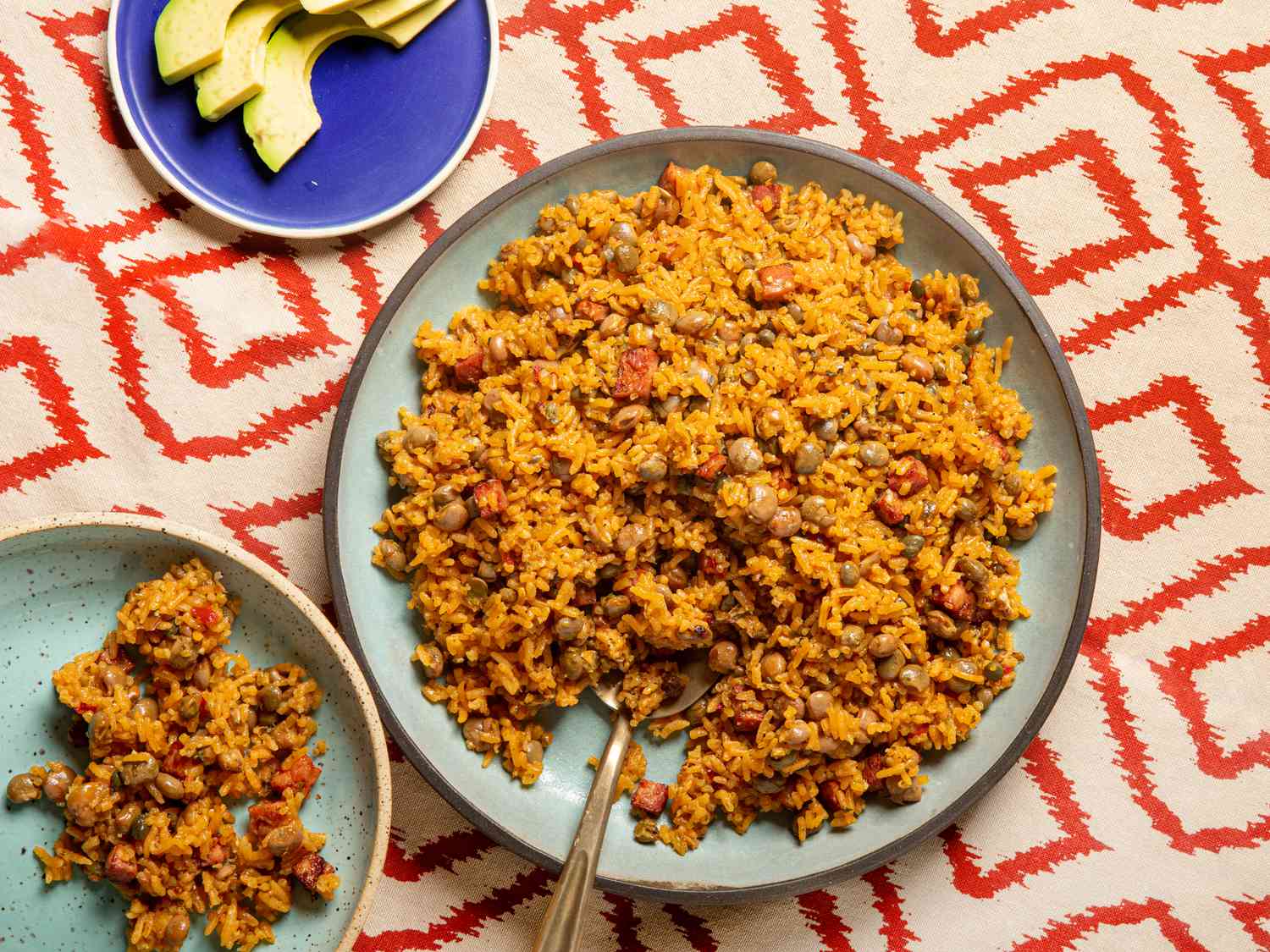
The canonical dish is Puerto Rican-Style Arroz con Gandules — arroz con gandules is the island's national dish and the plate that shows up at every holiday table. Puerto Rican Classic Arroz con Gandules is the leaner weeknight version, and Vegetarian Arroz con Gandules drops the pork without losing the sazón backbone. When you want the rice and the roast in one pot, Arroz con Gandules con Pernil does both.
For the other rice mains: Saffron-Infused Arroz con Pollo with Capers and One-Pot Arroz con Pollo with Tomato and Bell Pepper cover the chicken-and-rice territory, while Puerto Rican Sofrito-Infused Rice with Black Beans and Popular's Puerto Rican Rice and Beans handle the everyday habichuelas-and-rice plate.
Pernil, lechón, and slow-roasted pork
Pernil is a bone-in pork shoulder (picnic or butt), scored through the skin, packed with a garlic-oregano-adobo paste, marinated overnight, and roasted low until the meat shreds and the skin — the cuerito — shatters. That shattering crust is the Maillard reaction plus rendered fat, which is why the final uncovered blast at high heat is not optional.
| Method | Temp | Time (8 lb shoulder) | Result |
|---|---|---|---|
| Traditional low | 275°F | 7-8 hours, covered | Meltingly tender, best texture |
| Weeknight braise | 325°F covered + 450°F uncovered | 4 hours + 25 min | 90% of the result, half the day |
| Dutch oven | 300°F covered | 5 hours | Juiciest meat, softer skin |
| Slow cooker | Low | 9-10 hours | Great meat, no cuerito — finish under the broiler |
Whichever route you take, the marinade is non-negotiable. Twelve to twenty-four hours in the fridge with sofrito, adobo, and sazón is what separates pernil from generic roast pork.
On temperature: the USDA safe minimum internal temperature for whole cuts of pork is 145°F with a 3-minute rest — but that is the safety floor, not the target here. Pernil is pulled at 190-200°F, well past done, because the collagen in a shoulder needs that range to melt into gelatin. Keep the marinating shoulder at or below 40°F in the fridge, never on the counter (USDA, fresh pork from farm to table).
Start with Puerto Rican Pernil-Style Slow Roasted Pork Shoulder. For a weeknight-scale version, Sheet Pan Pernil-Style Roast Pork with Garlic and Oregano uses a smaller cut and finishes in about two hours. Puerto Rican-Style Mojo Pork Roast with Garlic and Sour Orange and Slow-Cooked Puerto Rican Mojo Pork Shoulder take the citrus-forward mojo route instead of dry adobo. If you want the crackling as its own dish, Slow-Cooked Pork Chicharrón with Garlic and Citrus is the target.
Plantains: green versus ripe, and why it matters
This is the single most common failure point for cooks new to the cuisine. Green and ripe plantains are the same fruit at different stages, but for cooking purposes they are not the same ingredient and cannot be substituted for each other.
| Stage | Skin | Starch/sugar | Use for |
|---|---|---|---|
| Green | Hard, bright green | High starch, no sweetness | Tostones, mofongo, mangú |
| Speckled yellow | Yellow with black spots | Balanced | Sandwich toppings, sides |
| Ripe | Mostly black, soft | High sugar | Maduros, dessert |
Green plantains fry crisp and hold their shape under a pilón. Ripe ones caramelize and burn fast — keep the heat at medium and expect them to cook in half the time.
Mofongo is green plantain, fried, then mashed in a wooden pilón with garlic, olive oil, and pork cracklings. The classic is Mofongo con Chicharrón: Classic Puerto Rican Plantain and Pork Crisp. Smoky Mofongo with Pork Shoulder and Mojo Sauce turns it into a main; Vegetarian Garlic Mofongo and Creamy Garlic Mofongo with Mushroom Chicharrón swap the pork out without losing the texture.
Tostones are green plantain rounds fried once, smashed flat, and fried again. Crisp Pan-Fried Plantain Tostones with Garlic-Lime Dip and Twice-Fried Green Plantain Tostones with Garlic-Cilantro Mojo are the two to learn. Crispy Fried Plantains covers the simpler single-fry version, and Tostones Salad with Avocado and Lime turns them into a plate.
The 18-recipe roundup
Every time and yield below is read straight out of the AislePrompt recipe catalog — prep and cook are the recipe's own figures, total is their sum. Nothing here is an estimate.
Three of the roundup entries are worth naming for what they are: asopao is the soupy rice stew that sits between paella and gumbo; alcapurrias are green-banana-and-yautía fritters stuffed with picadillo, traditionally deep-fried and here adapted for the air fryer; and coquito is the coconut-rum Christmas drink that is to Puerto Rico what eggnog is to the mainland.
Also worth cooking: Savory Pumpkin Pastelillos with Cumin, Alcapurrias de Camarón, Coconut Chicken Asopao with Plantains and Black Beans, and Slow-Roasted Pernil with Plantains and Cilantro.
Common pitfalls
- Using red sofrito. The single most common substitution error. Green recaíto is a different ingredient with a different job. If you cannot find culantro, use extra cilantro — do not reach for a jar of Spanish sofrito.
- Stirring the rice. Once the liquid is in and covered, leave it. Stirring breaks the grain and kills the pegao.
- Skipping the overnight pernil marinade. Four hours is not enough for an 8-pound shoulder. The garlic-adobo paste needs time to travel past the surface.
- Frying tostones once. The double fry is structural, not decorative. One fry gives you a soft, greasy round; the smash-and-refry drives out moisture and sets the crisp.
- Buying yellow plantains for mofongo. They will mash into sweet paste. You want the ones that look under-ripe and feel like a baseball bat.
- Marinating on the counter. An overnight marinade belongs in the refrigerator, in a covered pan, on the bottom shelf — see the FDA's safe food handling guidance. Room-temperature marinating of an 8-pound shoulder is the one shortcut in this article that can actually hurt you.
- Under-salting. Adobo is a salt-forward blend for a reason. Bland Puerto Rican food is almost always under-seasoned, not under-spiced — see the FAQ below.
A holiday Puerto Rican spread
The classic Navidad plate is four dishes, and the timing works out to about a day of loose effort.
T-minus 24 hours: Score and marinate the pork for Puerto Rican Pernil-Style Slow Roasted Pork Shoulder. Make a double batch of recaíto. Mix the coquito for Puerto Rican Coquito Coconut Eggnog so it chills overnight.
Morning of, 9 a.m.: Pernil into a 275°F oven, covered. Nothing else needs to happen for six hours.
3 p.m.: Start Puerto Rican-Style Arroz con Gandules in a heavy caldero. Once it is covered and simmering, do not touch it.
3:30 p.m.: Peel and cut green plantains for Twice-Fried Green Plantain Tostones with Garlic-Cilantro Mojo. First fry now; second fry right before serving.
4 p.m.: Uncover the pernil, crank to 450°F, and let the cuerito crisp for 25 minutes while you finish Popular's Puerto Rican Rice and Beans as the habichuelas side.
4:30 p.m.: Rest the pork 20 minutes. Second-fry the tostones. Serve.
Serves 8-10 with leftovers. Scale the pernil at roughly ¾ pound bone-in per person.
When NOT to cook this way
Puerto Rican cooking rewards patience and punishes shortcuts unevenly. If you have 30 minutes on a Tuesday, do not attempt pernil or mofongo — start with Picadillo de Res or Puerto Rican Stewed Chicken with Olives and Capers, both of which deliver the flavor profile in one skillet.
Likewise, if you cannot source green plantains, skip the plantain section entirely rather than substituting green bananas — they are botanically related but behave nothing alike under heat. And if nobody at your table eats pork, the vegetarian arroz and mofongo variants above are genuinely good rather than apologetic; the sofrito is doing most of the work anyway.
What to buy
A pilón (mortar and pestle). Mofongo requires it. A food processor turns plantain into gluey paste; the pilón crushes and folds, which is a different mechanical action. A heavy granite mortar and pestle set works if you cannot find a traditional wooden one, and it doubles for crushing garlic and toasted spices. More options in the kitchen gadgets range.
A Dutch oven or caldero. The pegao depends on even heat and a heavy base. An enameled cast iron Dutch oven, 6-quart handles both the rice and the pernil braise. Browse the full cookware selection for a traditional aluminum caldero if you want the authentic pot.
A tostonera (the hinged press for smashing plantains) is nice but optional — the bottom of a heavy glass or a small plate does the same job. Sharp knives and a large board matter more; see utensils and tools and the cutting boards selection, since you will be breaking down a lot of plantain and pork shoulder.
One planning note: this is a pork-and-starch cuisine, and the portions are generous. If you are tracking macros, look the cuts up in USDA FoodData Central rather than guessing — a 4-ounce serving of roasted pork shoulder and a 4-ounce serving of loin are not remotely the same number.
Build the shopping list in the AislePrompt meal planner. For neighboring cuisines, see our Cuban recipes guide, the Colombian recipes guide, the Caribbean dinner roundup, and the island-by-island Caribbean recipes overview.
FAQ
What's the difference between Puerto Rican sofrito and other Latin sofritos? Puerto Rican sofrito (recaíto) is bright green and raw-blended — cilantro, culantro (recao), ají dulce peppers, onion, garlic, and green bell pepper pureed into a paste. It's a marinade and pot-starter, added early to build depth. Spanish sofrito is a cooked red base (tomato, onion, garlic sautéed to jammy). Cuban sofrito falls between: red like Spanish but with less tomato. Freeze recaíto in ice cube trays — one cube per pot of rice or beans.
Can I make pernil without an outdoor oven or leaving it in overnight? Yes — a home oven does the job. The traditional 8-hour low-and-slow at 275°F is ideal, but you can shortcut with a 4-hour braise at 325°F (covered, with 1 cup chicken broth for moisture), then uncover and blast at 450°F for 20-30 minutes to crisp the cuerito. Marinate overnight in the fridge with sofrito, adobo, and sazón — that's the non-negotiable step. Skip the marinade and it tastes like plain roast pork.
Green vs ripe plantains — when do I use each? Green (unripe, hard, bright green skin) are starchy and savory — used for tostones, mofongo, and mangú. They fry crisp and hold shape. Ripe (yellow to nearly-black skin) are sweet and soft — used for maduros and dessert applications. A speckled-yellow plantain sits in between, sweet-savory, great for sandwich toppings. Ripe plantains cook faster and burn easier; keep the heat medium.
What is sazón and can I substitute for it? Sazón is a seasoning blend of achiote (annatto — for the orange color), cumin, coriander, garlic powder, and salt, sold in packets by Goya and Loisa. It's what gives PR rice, stews, and beans their signature warm-orange hue. To make it at home: 2 tablespoons ground annatto, 1 tablespoon cumin, 1 tablespoon coriander, 1 tablespoon garlic powder, 2 tablespoons salt. One teaspoon per packet the recipe calls for.
Is Puerto Rican food spicy? No — Puerto Rican cuisine is aromatic and umami-rich, not heat-driven. Ají dulce (a sweet, non-hot habanero relative) contributes the aroma without capsaicin burn. Hot sauce (pique) appears as a table condiment for diners who want heat. Kids and heat-sensitive eaters do well on standard PR cooking; the complexity comes from sofrito, herbs, and long braises rather than chili. If your dish reads bland, you likely under-seasoned with adobo or skipped the sazón — not chili.
Sources
- Wikipedia — Puerto Rican cuisine
- Wikipedia — Sofrito
- Wikipedia — Culantro (Eryngium foetidum)
- Wikipedia — Capsicum chinense (ají dulce)
- Wikipedia — Annatto (achiote)
- Wikipedia — Adobo
- Wikipedia — Arroz con gandules
- Wikipedia — Pigeon pea
- Wikipedia — Pernil
- Wikipedia — Mofongo
- Wikipedia — Tostones
- Wikipedia — Cooking banana (plantain)
- Wikipedia — Asopao
- Wikipedia — Alcapurria
- Wikipedia — Coquito
- Wikipedia — Maillard reaction
- USDA FSIS — Safe minimum internal temperature chart
- USDA FSIS — Fresh pork from farm to table
- FDA — Safe food handling
- USDA FoodData Central
Frequently asked questions
What's the difference between Puerto Rican sofrito and other Latin sofritos?
Can I make pernil without an outdoor oven or leaving it in overnight?
Green vs ripe plantains — when do I use each?
What is sazón and can I substitute for it?
Is Puerto Rican food spicy?
Sources
- en.wikipedia.org
- en.wikipedia.org
- en.wikipedia.org
- en.wikipedia.org
- en.wikipedia.org
- en.wikipedia.org
- en.wikipedia.org
- en.wikipedia.org
- en.wikipedia.org
- en.wikipedia.org
- en.wikipedia.org
- en.wikipedia.org
- en.wikipedia.org
- en.wikipedia.org
- en.wikipedia.org
- en.wikipedia.org
- fsis.usda.gov
- fsis.usda.gov
- fda.gov
- fdc.nal.usda.gov
Plan a week of meals in two minutes.
Tell our AI what you have and what you like — it builds your plan, shopping list, and Instacart cart. No account needed.
Try free →