20 Colombian Recipes: Arepas, Bandeja Paisa, Sancocho & Ajiaco
Colombia has no single national dish — it has five regional kitchens, and every one of them starts with corn.
Affiliate disclosure: AislePrompt may earn a commission on qualifying purchases made through Amazon and Instacart links in this article, at no additional cost to you. See our affiliate policy →
Authentic Colombian cooking at home comes down to four anchors: arepas off a dry griddle, a slow-simmered sancocho or ajiaco, beans-rice-plantain on the same plate, and a fried snack from the street-food canon. Master masarepa dough, hogao (the tomato-scallion sofrito), and one long-simmer soup and you can cook most of the country's repertoire with supermarket ingredients.
Colombia is the second-most biodiverse country on earth and its cooking reflects that geography more than any single national style. There is no one Colombian dish the way there is one Peruvian ceviche. There is a Bogotá dish, an Antioquia dish, a Cartagena dish, and they share almost nothing except corn. This guide maps the regions, then hands you 20 recipes you can actually cook this week from the AislePrompt recipe catalog.
Colombia's regional food map in one page
Five food regions do most of the work. Learn which one a dish belongs to and its ingredient list stops looking random.
The Andean interior (Bogotá, Boyacá, Cundinamarca) sits at 8,000+ feet, so the food is warming, potato-heavy, and mild. This is ajiaco country — chicken and three potato varieties in a broth thickened by the starch of the potatoes themselves. It is also home to changua, a milk-and-egg breakfast soup that sounds strange and tastes like a warm hug, and to chocolate santafereño, hot chocolate served with a wedge of fresh cheese dropped in to melt.
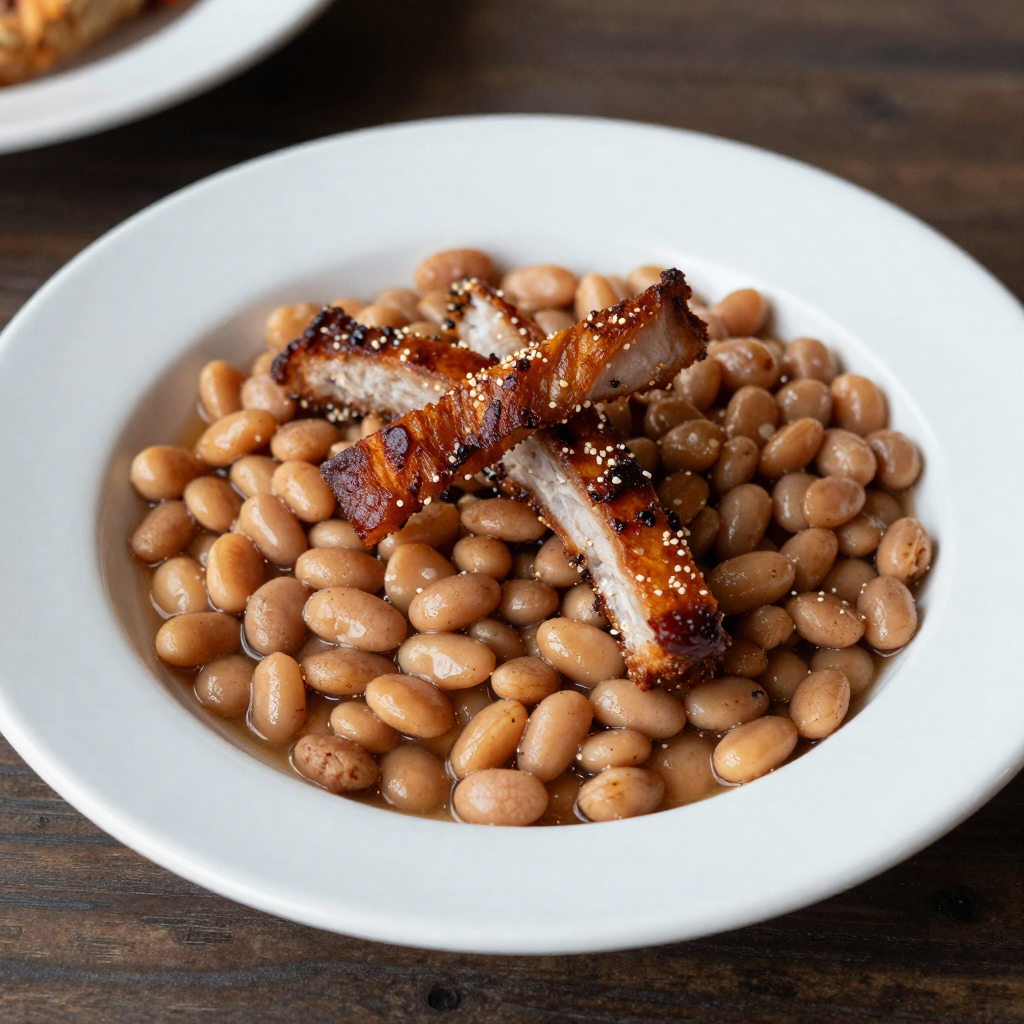
Antioquia and the coffee axis (Medellín, Manizales, Armenia) is paisa country: farm labour food, big portions, pork fat as a seasoning. Bandeja paisa is the flagship. Red beans cooked with pork, white rice, chicharrón, a fried egg, sweet plantain, arepa, avocado, and ground beef, all on one platter. This is also the country's coffee heartland.
The Caribbean coast (Cartagena, Barranquilla, Santa Marta) turns tropical: coconut rice, fried fish, carimañola (a stuffed yuca fritter), and the arepa de huevo, where a whole raw egg is slipped into a half-fried arepa and the whole thing goes back in the oil.
The Pacific coast (Chocó, Buenaventura) is the least-known and arguably the most interesting: seafood cooked in coconut milk with herbs — chillangua, poleo — that grow nowhere else in the country.
Valle del Cauca (Cali) contributes the baked-goods canon: pandebono and almojábana, cheese breads built on cassava starch and fresh curd rather than wheat, plus aborrajados — ripe plantain wrapped around cheese and fried in batter.
| Region | Signature dish | Anchor ingredient | Start here |
|---|---|---|---|
| Andes / Bogotá | Ajiaco santafereño | Three potatoes + guascas | Bogotá-Style Ajiaco with Guascas |
| Antioquia / Paisa | Bandeja paisa | Red beans + pork | One-Pot Colombian Black Bean Stew with Smoked Pork |
| Caribbean coast | Sancocho de pescado | Coconut + yuca | Sancocho de Res con Yuca |
| Valle del Cauca | Pandebono, aborrajados | Cassava starch + curd | Baked Pão de Queijo Brazilian Cheese Bread |
| Nationwide | Arepa | Masarepa | Cheese-Stuffed Colombian Arepas with Butter |
The griddle staple: arepas (masarepa vs. maíz pilado)
The arepa is the one thing every Colombian region agrees on, and it is the single highest-leverage recipe in this guide because it takes 25 minutes and three ingredients.
Buy masarepa, not masa harina. This is the mistake that ruins most first attempts. Masarepa is precooked, dried, and reground corn — the kernels are cooked and slaked before milling, so the flour hydrates into a smooth, plastic dough with nothing but water. Masa harina is nixtamalized corn for tortillas; it makes a grainy dough that cracks on the griddle and tastes of lime. In US supermarkets, look for P.A.N. in the yellow bag (arepas amarillas, sweeter, more corn flavour) or the white bag (arepas blancas, the everyday default), or Areparina. A 2-pound bag runs about $3.50–$4.50 in 2026 and yields roughly 30 arepas.
Maíz pilado is the traditional route: whole dried corn, soaked overnight, boiled, then ground wet. It tastes noticeably better and costs you a day plus a grain mill. Skip it until you're hooked.
The ratio that works: 1 cup masarepa, 1¼ cups warm water, 1 teaspoon salt. Whisk salt into the water first, rain the flour in while stirring, then knead 1 minute and rest 5 minutes covered. The dough should feel like soft Play-Doh and not crack when you flatten a ball between your palms. If it cracks, wet your hands and knead again — masarepa keeps absorbing water for several minutes.
Colombian vs. Venezuelan is a real distinction, and most US recipes blur it. The Colombian arepa is thinner (about ⅜ inch), cooked dry on a griddle, and topped — butter, salty fresh cheese, sometimes an egg. The Venezuelan arepa is thicker (¾ inch), split like a pita, and stuffed with shredded beef, black beans, or avocado. Both are delicious; know which one you're making before you shape the dough.
| Style | Thickness | Cook method | Served |
|---|---|---|---|
| Colombian arepa de maíz | ⅜ in | Dry griddle, 6–8 min/side | Topped with butter + queso |
| Colombian arepa de choclo | ½ in | Griddle, sweet corn dough | Folded around cheese |
| Venezuelan arepa rellena | ¾ in | Griddle then 400°F oven 5 min | Split and stuffed |
| Costeña arepa de huevo | ¼ in | Deep-fried twice, egg inside | Whole, with ají |
Cook them dry over medium-low. No oil. You want 6–8 minutes per side, until the surface is freckled and the arepa sounds hollow when tapped. High heat browns the outside before the middle sets, which is how you end up with a raw, gummy centre.
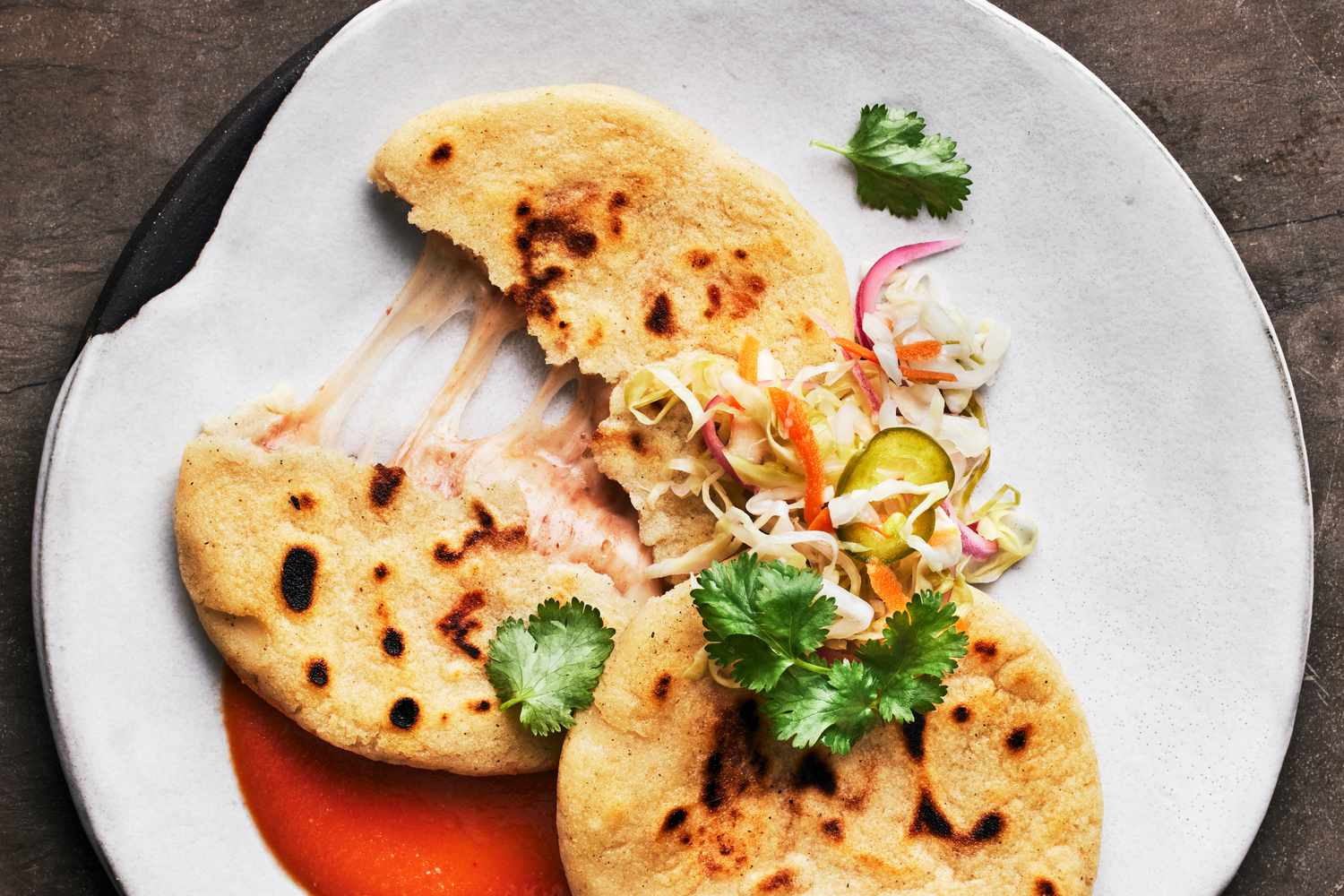
Start with Cheese-Stuffed Colombian Arepas with Butter or Pan-Fried Colombian Arepas with Queso Fresco for the Colombian shape. For the stuffed style, work through Pan-Fried Arepas with Black Beans and Queso, Pan-Fried Corn Arepas with Queso Blanco and Avocado Salsa, Venezuelan Cornmeal Arepas with Avocado and Fresh Cheese Filling, Pan-Fried Arepas with Shredded Beef and Avocado Salsa, or the grill version, Grilled Arepas Stuffed with Slow-Cooked Shredded Beef and Guasacaca. Plantain and Cheese Arepa with Avocado Crema is the best of the non-traditional variants — ripe plantain in the dough makes it sweeter and softer.
For the Venezuelan side in depth — the named arepa fillings (reina pepiada, dominó, pelúa, catira), cachapas, and the Christmas hallaca — see 20 Colombian & Venezuelan Recipes: Arepas, Bandeja Paisa, Empanadas & Hallacas.
Bandeja paisa — the national plate
Bandeja paisa is not a recipe. It is a plate-assembly problem: eight components, most of them simple, all of them wanting to be hot at once. Restaurant portions run 1,200–1,800 calories, which is honest about its origin as a full day's fuel for farm work in Antioquia.
The canonical eight: red beans cooked with pork, white rice, chicharrón, carne molida (seasoned ground beef), chorizo, a fried egg, sweet plantain, arepa, and avocado. That's nine if you count the arepa, and every household argues about the list.
Cook it across two days. The beans and the chicharrón are the only slow items, and both improve overnight.
Day one: Put the beans on. One-Pot Colombian Black Bean Stew with Smoked Pork is the closest thing in the catalog and works as your base — swap black beans for red cargamanto beans if your store carries them, and add a chunk of green plantain to the pot for body, which is the paisa trick. Then start the pork: Slow-Cooked Pork Chicharrón with Garlic and Citrus gives you the low-and-slow render, and you crisp it in a dry pan right before serving.
Day two: Rice, egg, plantain, arepa, avocado — 25 minutes total. Use Crispy Fried Plantains or Pan-Fried Plantains with Lime for the maduros. For the beef component, Slow-Braised Colombian-Style Beef with Aji Sauce is a shredded-beef variant that eats better than ground beef and can also be made on day one.
Honest catalog note: there is no single "bandeja paisa" recipe in the AislePrompt catalog as of August 2026. That's a real gap, not an oversight in this article — the plate is assembled from component recipes, which is how Colombian households make it anyway.
If the full plate is too much, the bandeja logic scales down cleanly. Beans plus rice plus a fried egg plus plantain is a legitimate weeknight dinner and it's roughly $2.20 a portion.
Sancocho de gallina & ajiaco santafereño — two soul soups
These get confused constantly. They are not variations of each other.
Sancocho is pan-Latin — Colombia, Panama, the Dominican Republic, and Puerto Rico all claim a version. The Colombian template is a big-cut stew: bone-in chicken (gallina, an older stewing hen, hence the depth), yuca, green plantain, corn on the cob cut into rounds, and a fistful of cilantro at the end. Rice is served alongside, not in it. The pieces stay large and identifiable.
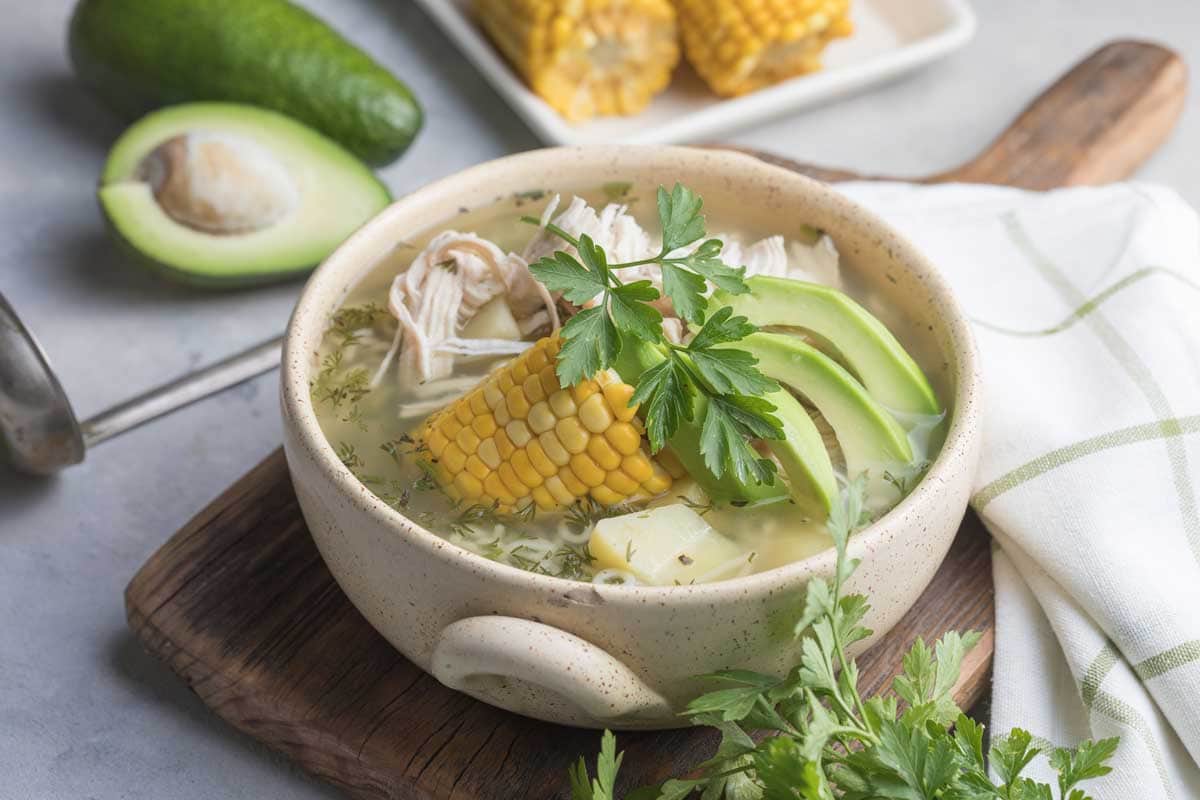
Ajiaco is specifically Bogotano and specifically about potatoes. Three varieties, each with a job: papa criolla (a small yellow Andean potato, Solanum tuberosum Group Phureja) dissolves and thickens the broth; papa pastusa holds partial shape; papa sabanera stays firm. The herb guasca — the same plant Anglophone gardeners curse as gallant soldier — gives it a grassy, artichoke-adjacent flavour with no substitute. Capers, heavy cream, and avocado go in at the table, not in the pot.
Substitutions that actually work: baby Yukon Golds for papa criolla (closest texture, though the colour is paler and the flavour milder). Russets for the dissolving potato if you want more thickening. For guascas, buy dried online — about $7–9 for a bag that lasts a year. If you skip guascas, call it chicken-and-potato soup; it's still good, it's just not ajiaco.
| Soup | Region | Protein | Starch | Added at the table |
|---|---|---|---|---|
| Ajiaco santafereño | Bogotá | Chicken breast, shredded | Three potatoes | Capers, cream, avocado |
| Sancocho de gallina | Valle / nationwide | Stewing hen, bone-in | Yuca, plantain, corn | Rice, lime, ají |
| Sancocho de res | Nationwide | Beef shank | Yuca, plantain | Rice, cilantro |
| Sancocho de pescado | Caribbean coast | Snapper, coconut milk | Yuca, plantain | Coconut rice |
Cook Bogotá-Style Ajiaco with Guascas first — it's the only recipe here that uses the real herb. Vegetarian Ajiaco Soup with Potatoes and Corn is the meat-free version and it holds up better than most vegetarian conversions because the potatoes are doing the heavy lifting anyway.
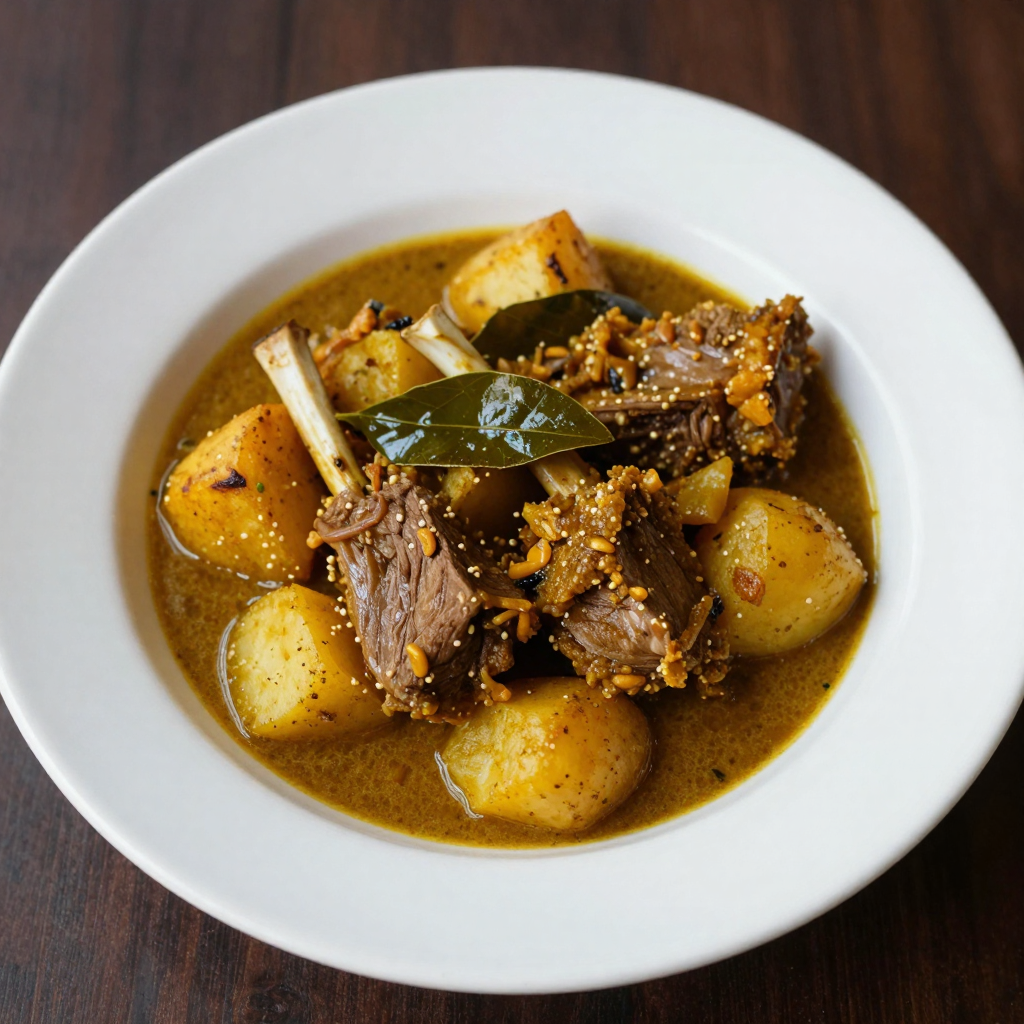
For sancocho, Sancocho de Pollo (Chicken Stew) and Sancocho de Res con Yuca are the two core templates. Dominican-Style Sancocho with Root Vegetables and Dominican-Style Sancocho with Root Vegetables and Chicken are the Dominican reading — heavier on root vegetables, often several meats in one pot. Slow-Cooked Beef Yuca Stew with Tomato and Caribbean Spices is the closest thing to a sudado de res. And if you're going down the offal road, Hearty Salvadoran Mondongo Tripe Soup with Vegetables maps closely to Colombian mondongo.
Beans, rice, plantains: the trio that anchors dinner
Almost every Colombian plate is some arrangement of these three. Get them right and the rest is garnish.
Hogao is the flavour base you're missing. It is not sofrito and it is not salsa. Dice 4 Roma tomatoes and 6 scallions (white and green), sweat them in 3 tablespoons of oil with a pinch of cumin and salt over medium-low for 18–20 minutes until the tomatoes collapse into a jammy sauce. That's it. Spoon it over beans, rice, arepas, yuca, chicharrón — it goes on everything, keeps five days refrigerated, and takes one pan. Almost no US recipe for Colombian food mentions it and it's the single biggest flavour upgrade available.
Rice is plain and that's the point. Long-grain white, rinsed, 1:1.75 rice to water, a spoon of oil, lid on, 18 minutes. The plate has enough going on. One-Pot Rice and Beans with Sofrito and Puerto Rican Sofrito-Infused Rice with Black Beans are the one-pot shortcuts. On the Caribbean coast rice goes coconut: Coconut Rice and Sofrito Chicken with Black Beans is the closest catalog match to arroz con coco.
Plantains do double duty, and ripeness decides which. Green and starchy means tostones (called patacones in Colombia): fry in rounds, smash flat, fry again, salt hot. Black and soft means maduros: slice on the bias, fry once in shallow oil until caramelized at the edges.
Patacón recipes worth cooking: Tostones with Garlic-Lime Mojo Sauce, Twice-Fried Green Plantain Tostones with Garlic-Cilantro Mojo, Tostones de Plátano con Aji, and the lighter Grilled Plantain Tostones with Garlic Cilantro Sauce. For maduros, use Crispy Fried Plantains, Pan-Fried Plantains with Lime, Pan-Fried Plantains with Queso Blanco and Cilantro, or Pan-Fried Plantains with Guatemalan Black Bean Refrito.
Yuca is the fourth starch and deserves more attention than it gets in US kitchens. Buy it frozen — fresh yuca goes off fast and the frozen product is peeled, cored, and honestly better. Crisp Fried Yuca Sticks with Spicy Huancaina Dip, Grilled Salvadoran Yuca with Mojo de Ajo Garlic Sauce, and Roasted Plantain and Yuca with Achiote Sauce — that last one leaning on achiote for colour — cover the main treatments.
Empanadas, aborrajados, and street food
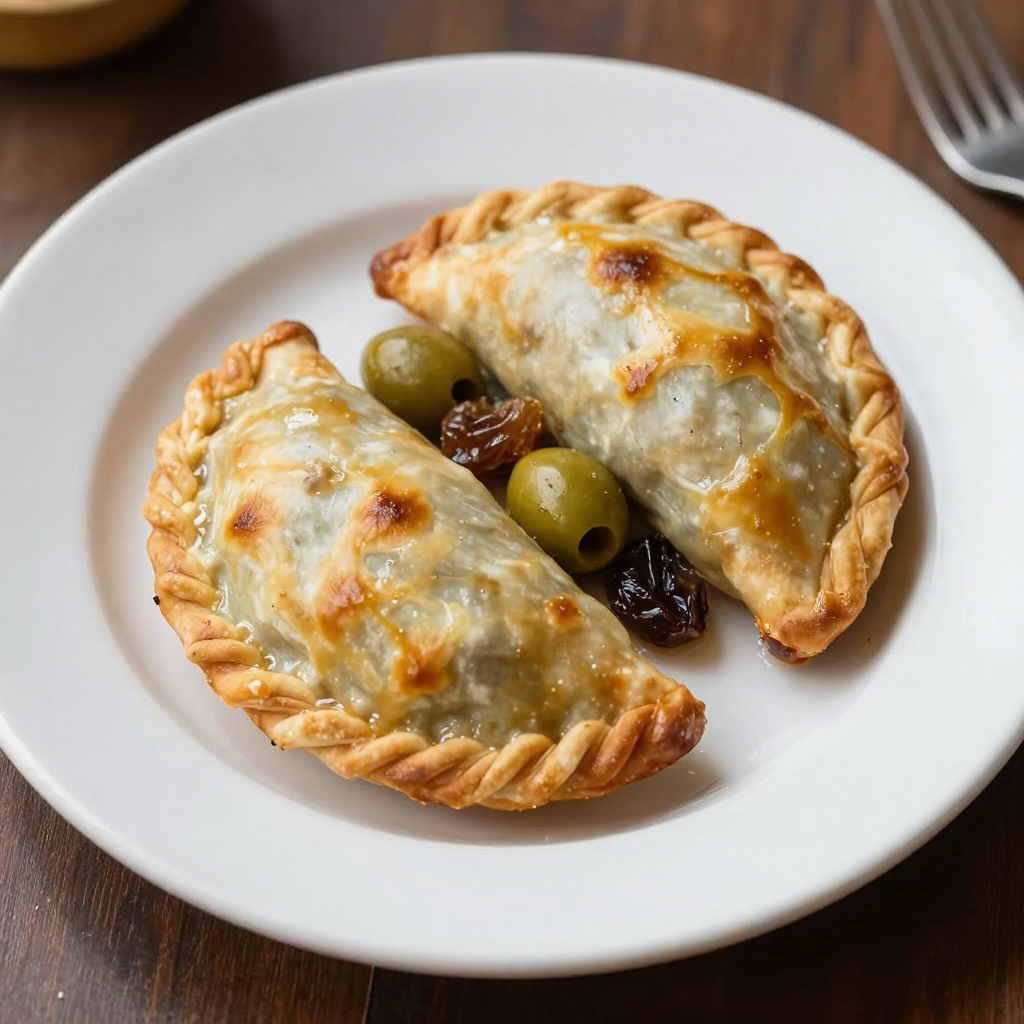
The Colombian empanada is not the Argentine one. Argentine empanadas are wheat pastry, usually baked, crimped with a repulgue. Colombian empanadas are yellow corn dough, always deep-fried, with a filling of shredded beef or pork and potato mashed together with cumin and achiote. They come out shatteringly crisp and slightly sweet from the corn, and they arrive with a wedge of lime and a bowl of ají.
Ají is mandatory. Colombian ají is a thin, vinegary chopped-herb sauce, not a thick chili paste: finely diced scallion, cilantro, tomato, a hot chili, lime juice, white vinegar, water, salt. It's closer to a chimichurri than to a hot sauce and it goes on every fried thing in the country. Make a jar at the start of the week.
Cook Pan-Fried Colombian Empanadas with Spiced Beef Filling first — it's the one explicitly Colombian empanada in the catalog. Then branch: Pan-Fried Empanadas with Spiced Beef Filling, Fried Cheese and Corn Empanadas with Spicy Aji Sauce, Cassava and Cheese Empanadas with Garlic Mojo (closest to a carimañola), Spiced Venezuelan Chicken Empanadas with Aji Sauce, Shredded Chicken Empanadas with Sofrito and Spiced Tomato Sauce, and Plantain and Sweet Potato Empanadas for a vegetarian version.
Aborrajados are the Valle del Cauca snack you'll wish you knew about sooner: a very ripe plantain, split and flattened, wrapped around a slab of fresh cheese, dipped in a loose flour-egg batter, and fried until the outside blisters. There is no aborrajado recipe in the catalog — a genuine gap — but the method above is complete, and Pan-Fried Cheese Bread Rolls with Guava Glaze hits the same sweet-cheese-fried register. Fried Plantain and Cornmeal Mandocas with Cinnamon Sugar is a Venezuelan cousin worth cooking.
The rest of the street canon: salchipapa (fries and sliced sausage under pink sauce — assemble it, no recipe needed), fritanga (a mixed platter of fried meats), and chicharrón by the bag. For the last one, Pan-Fried Mofongo with Garlic and Chicharrón borrows the crisp pork into a Puerto Rican plantain mash and is a fine weeknight target.
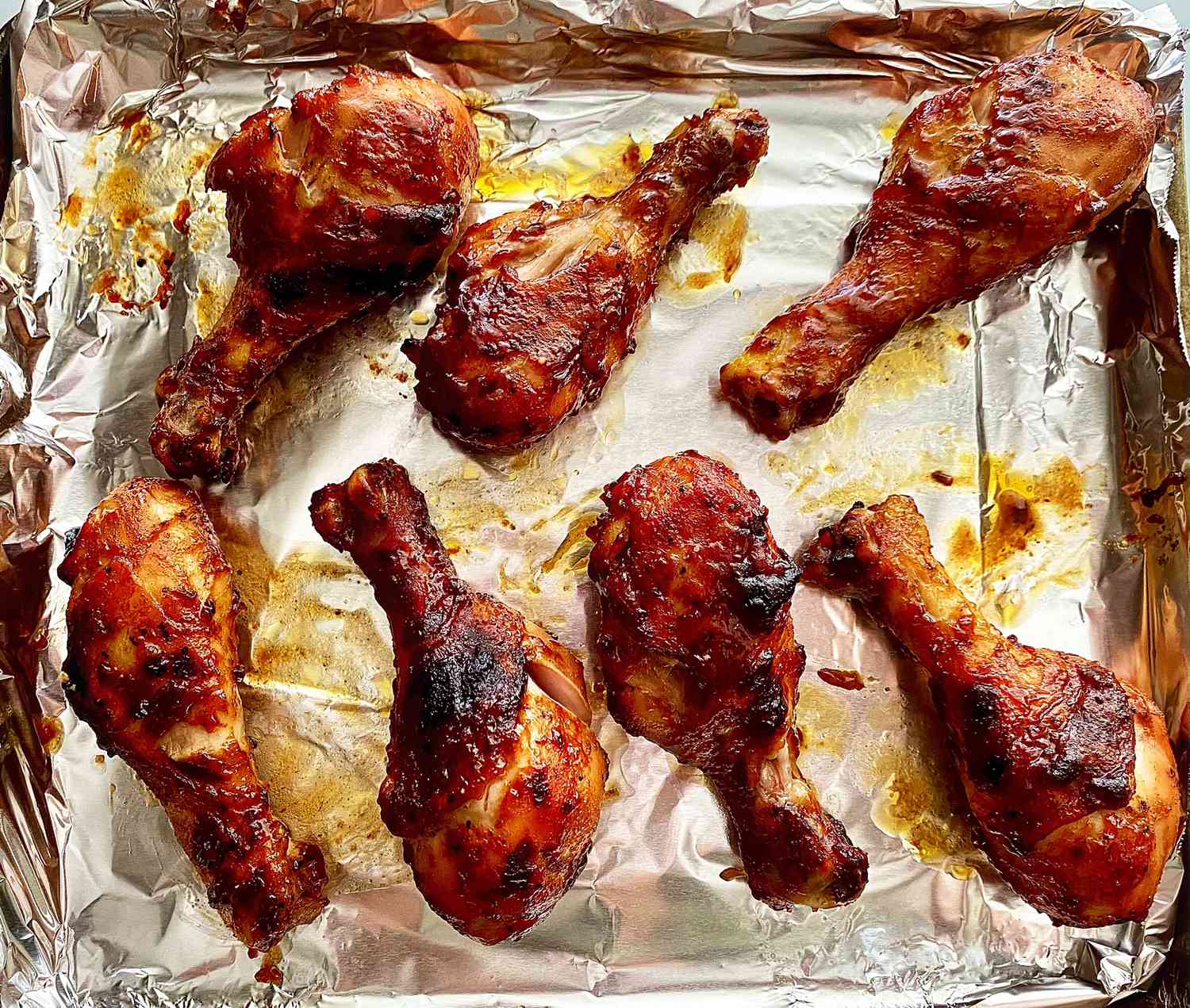
Two more genuinely Colombian mains sit slightly outside the classic canon but cook fast: Sheet Pan Colombian Coffee-Rubbed Chicken Thighs and Grilled Colombian-Inspired Citrus Pork Skewers. If you want the Andean ají-verde treatment, Seared Peruvian-Style Chicken with Aji Verde Sauce is the fastest route.
Sweets: arequipe, buñuelos, natilla
Colombian desserts run milky, sugary, and cheese-adjacent, and the December trio — buñuelos, natilla, and hojuelas — is as fixed as pumpkin pie in November.
Arequipe is Colombia's name for dulce de leche: milk and sugar cooked down for two to three hours until it caramelizes. Buy it if you're sane; a jar runs about $5. Use it in Baked Dulce de Leche Cheesecake Bars or Dulce de Leche Filled Sopapillas with Honey Drizzle.
Buñuelos need a warning. The Colombian buñuelo is a ball — cassava starch, cornstarch, and a large quantity of salty fresh costeño cheese, deep-fried at a low 320°F so the inside cooks through and the sphere puffs. It is savoury-sweet and eaten with hot chocolate. The Mexican buñuelo is a flat fried disk dusted with cinnamon sugar. Completely different pastries with the same name. The AislePrompt catalog currently carries only the Mexican style: Pan-Fried Buñuelos with Cinnamon Sugar, Cinnamon Sugar Buñuelos with Honey Drizzle, and Cinnamon Buñuelos with Orange Syrup. They're good; they are not the Colombian thing. For that, the ratio is roughly 2 cups grated queso costeño to ½ cup cassava starch, ¼ cup cornstarch, 1 egg, 1 tablespoon sugar, 1 teaspoon baking powder — and the oil must stay below 330°F or they brown before the centre sets.
Natilla is a firm, sliceable custard, closer to a set pudding than the manjar blanco family: whole milk, cornstarch, panela (unrefined cane sugar), cinnamon, and a little butter, whisked constantly for 15 minutes and poured into a tray to set. No catalog recipe yet. Classic Mexican Flan with Spiced Caramel and Leche Flan Baked Caramel Custard are the nearest custards; Traditional Tres Leches Cake with Cinnamon Whipped Cream covers the milky-cake craving.
Cheese with sweet things is normal here, not weird. Bocadillo — dense guava paste sold in little wooden boxes — is eaten with a slice of fresh cheese, and hot chocolate gets a cheese cube dropped in. Try Sweetened Guava Paste and Cheese Toast with Brazil Nut Crumble or Spiced Guava and Cheese Empanadas before you judge it.
For pandebono and almojábana, the catalog's Brazilian cheese breads are built on the same cassava-starch-plus-cheese chemistry: Baked Pão de Queijo Brazilian Cheese Bread and Oven-Baked Brazilian Cheese Bread (Pão de Queijo) with Tapioca Flour. Swap in fresh cuajada or dry curd cheese and add a spoon of masarepa and you're most of the way to pandebono.
20 Colombian recipes to cook this month
Ordered roughly from easiest to most involved.
1. Cheese-Stuffed Colombian Arepas with Butter — the 25-minute entry point. Make these first.
2. Pan-Fried Colombian Arepas with Queso Fresco — the everyday breakfast shape.
3. Crispy Fried Plantains — maduros, 10 minutes, goes with everything on this list.
4. Tostones with Garlic-Lime Mojo Sauce — patacones, the green-plantain half of the pair.
5. Pan-Fried Plantains with Queso Blanco and Cilantro — sweet, salty, five ingredients.
6. One-Pot Rice and Beans with Sofrito — the weeknight base plate.
7. Pan-Fried Arepas with Black Beans and Queso — stuffed style, vegetarian.
8. Crisp Fried Yuca Sticks with Spicy Huancaina Dip — better than fries, genuinely.
9. Sheet Pan Colombian Coffee-Rubbed Chicken Thighs — one pan, 40 minutes.
10. Grilled Colombian-Inspired Citrus Pork Skewers — best thing here for a grill.
11. Coconut Rice and Sofrito Chicken with Black Beans — the Caribbean-coast dinner.
12. Roasted Plantain and Yuca with Achiote Sauce — oven version, no frying.
13. Vegetarian Ajiaco Soup with Potatoes and Corn — meat-free and still substantial.
14. Sancocho de Pollo (Chicken Stew) — the Sunday pot.
15. Bogotá-Style Ajiaco with Guascas — the real thing; order guascas first.
16. One-Pot Colombian Black Bean Stew with Smoked Pork — your bandeja paisa beans.
17. Pan-Fried Colombian Empanadas with Spiced Beef Filling — a weekend project worth doing.
18. Slow-Cooked Pork Chicharrón with Garlic and Citrus — start it the day before.
19. Slow-Braised Colombian-Style Beef with Aji Sauce — shredded beef for arepas or the bandeja.
20. Sancocho de Res con Yuca — three hours, feeds eight, better on day two.
Four more once you're through the list: Grilled Arepas Stuffed with Slow-Cooked Shredded Beef and Guasacaca, Plantain and Cheese Arepa with Avocado Crema, Cassava and Cheese Empanadas with Garlic Mojo, and Baked Pão de Queijo Brazilian Cheese Bread.
Real-world numbers: what a week of Colombian cooking costs
Approximate US supermarket prices as of August 2026, for a household of four. Latin-market prices for the specialty items run 20–40% lower than mainstream chains.
| Item | Typical price | Yields | Cost per portion |
|---|---|---|---|
| Masarepa, 2 lb bag | $4.00 | ~30 arepas | $0.13 |
| Dried red or black beans, 1 lb | $2.20 | 8 portions | $0.28 |
| Green plantains, each | $0.79 | 2 portions | $0.40 |
| Frozen yuca, 1.5 lb | $3.50 | 6 portions | $0.58 |
| Queso fresco, 10 oz | $4.50 | 8 arepas | $0.56 |
| Dried guascas, 1 oz | $8.00 | ~12 pots of ajiaco | $0.67 |
| Chicken thighs, 3 lb | $7.50 | 6 portions | $1.25 |
| Pork belly, 2 lb | $11.00 | 8 portions | $1.38 |
Practical timings, measured on a standard gas range:
| Dish | Active time | Total time | Serves |
|---|---|---|---|
| Arepas (batch of 8) | 20 min | 25 min | 4 |
| Patacones | 15 min | 20 min | 4 |
| Hogao | 5 min | 20 min | 10+ uses |
| Ajiaco | 25 min | 75 min | 6 |
| Sancocho de res | 30 min | 3 hr | 8 |
| Empanadas (batch of 20) | 50 min | 90 min | 6 |
| Bandeja paisa (across 2 days) | 75 min | 2 days | 6 |
A full week of Colombian dinners for four — arepas, a bean plate, ajiaco, a sheet-pan chicken, and a weekend sancocho — lands around $58–$72 in 2026, or roughly $2.10–$2.60 per portion. It's one of the cheapest cuisines to cook well, because the expensive ingredient is time, not protein.
Common pitfalls
Buying masa harina instead of masarepa. The bags look similar and sit on the same shelf. Masa harina makes cracked, gritty arepas that taste of nixtamal lime. Check the bag for "pre-cooked corn meal" or harina de maíz precocida.
Cooking arepas too hot. Medium-low, dry pan, 6–8 minutes a side. If the outside is dark in three minutes, your heat is too high and the middle will be raw paste.
Skipping hogao. Beans and rice without it taste flat and people conclude Colombian food is bland. It is 20 minutes and one pan and it transforms the plate.
Using ripe plantains for patacones. Green means starchy and firm — that's what smashes and re-fries into a crisp disk. A yellow-black plantain will disintegrate in the pan and caramelize into a sticky mess. Ripeness is the recipe.
Treating ají like hot sauce. Colombian ají is watery, herb-forward, and vinegary — you spoon it on, you don't dot it. If you're reaching for a bottle of thick chili paste you've made a different condiment.
Under-salting the arepa dough. A full teaspoon per cup of masarepa. The dough is bland corn and water otherwise, and you can't fix it after cooking.
Boiling ajiaco hard. The papa criolla needs to break down gently over 40 minutes. A rolling boil emulsifies the fat and clouds the broth into something greasy rather than silky.
When Colombian food is not the right call
If you need dinner in 20 minutes flat with no shopping trip, this isn't your cuisine tonight — arepas need a specific flour, patacones need green plantains, and the soups are 90-minute-plus commitments. Reach for the 30-minute weeknight lane instead.
If you're cooking low-carb, Colombian food fights you. Corn, rice, potato, yuca, and plantain are the load-bearing ingredients, and removing them leaves grilled meat with avocado. It's fine; it isn't Colombian.
If your household is fully plant-based, the coverage is thinner than in Peruvian or Mediterranean cooking. Vegetarian ajiaco, bean plates, cheese arepas, and yuca all work, but pork is the default seasoning in Antioquia and there's no honest substitute for chicharrón.
If you want fireworks-level heat, look elsewhere. Colombian food is aromatic — cumin, cilantro, achiote, scallion — and the heat lives entirely in a side bowl of ají that everyone doses themselves.
What to buy: cast iron griddle + masarepa
You need very little. Colombian home cooking is a griddle, a heavy pot, and a fryer-safe pan.
A flat cast-iron griddle or a 12-inch skillet. This is the one purchase that matters. Arepas cook dry, so you need something that holds even heat without hot spots and doesn't need oil to release. A traditional budare gives the cross-hatch, but any well-seasoned cast iron does the job. Browse cookware for the pan.
A heavy 6–8 quart pot for sancocho and ajiaco. Enameled cast iron or a thick-bottomed stainless stockpot. Thin aluminium scorches beans on the bottom before the top is hot.
A tostonera — the little hinged wooden press for smashing plantains — costs about $9 and saves your knuckles. A flat-bottomed glass and a sheet of parchment work too. Look under kitchen gadgets.
A sturdy slotted spoon and a spider skimmer for the frying, plus a bench scraper for portioning arepa dough. Both live in utensils and tools.
A food processor makes ají in 15 seconds and grates cheese for buñuelos without effort. If you're doing masa from maíz pilado you'll want a real grain mill, but that's a later problem. See small appliances.
A good chef's knife matters more here than usual, because you'll be cutting through green plantain skin and raw yuca, both of which are genuinely hard. Dull knives slip on them. Browse knives and cutting.
For the pantry items — masarepa, panela, dried guascas, achiote, cumin, bocadillo — check grocery and pantry, and add the perishables to your shopping list before the weekend. If you've already got half these ingredients, run them through the pantry tool and let AislePrompt's chat build the week around what's in the house.
Cooking your way across South America? The Peruvian guide covers ceviche and ají amarillo, the Argentine guide handles the grill, and the Brazilian guide is where feijoada and pão de queijo live. For the smaller South American kitchens (Ecuador, Bolivia, Chile and Paraguay), 22 Latin American dinners beyond tacos picks up where this page stops. For the corn-and-chili end of Latin cooking, the Tex-Mex guide is the neighbour.
Sources
Background and dish histories were checked against these references:
- Colombian cuisine — regional overview and dish taxonomy
- Arepa — masarepa, maíz pilado, and regional arepa styles
- Bandeja paisa — component list and Antioquian origin
- Ajiaco — the Bogotano three-potato method
- Sancocho — pan-Latin variants and the Colombian template
- Empanada — corn-dough vs. wheat-pastry traditions
- Ají (sauce) — the Colombian herb-and-vinegar style
- Hogao — the tomato-and-scallion base
- Buñuelo — Colombian cheese-dough vs. Mexican fried-disk forms
- Pandebono and almojábana — Valle del Cauca cheese breads
- Aborrajados de plátano maduro — the battered plantain-and-cheese snack
- Dulce de leche and manjar blanco — arequipe and the natilla family
- Guasca / Galinsoga parviflora — the ajiaco herb
- Solanum tuberosum Group Phureja — papa criolla
- Cassava and cooking banana — yuca and plantain botany
- Tostones and carimañola — fried starch traditions
- Sopa de mondongo, changua, fritanga, salchipapa — regional and street dishes
- Panela, Bixa orellana, bocadillo, guava — pantry ingredients
- Coffee production in Colombia and Paisa people — the coffee axis and paisa culture
Frequently asked questions
What flour do I need to make arepas?
What's the difference between sancocho and ajiaco?
Can I make arepas without a special griddle?
Are Colombian recipes hard for beginners?
How do I substitute ingredients that are hard to find?
Recipes to start your week with
Save any of these to My Recipes — no account needed — and send the ingredients to Instacart in one tap.