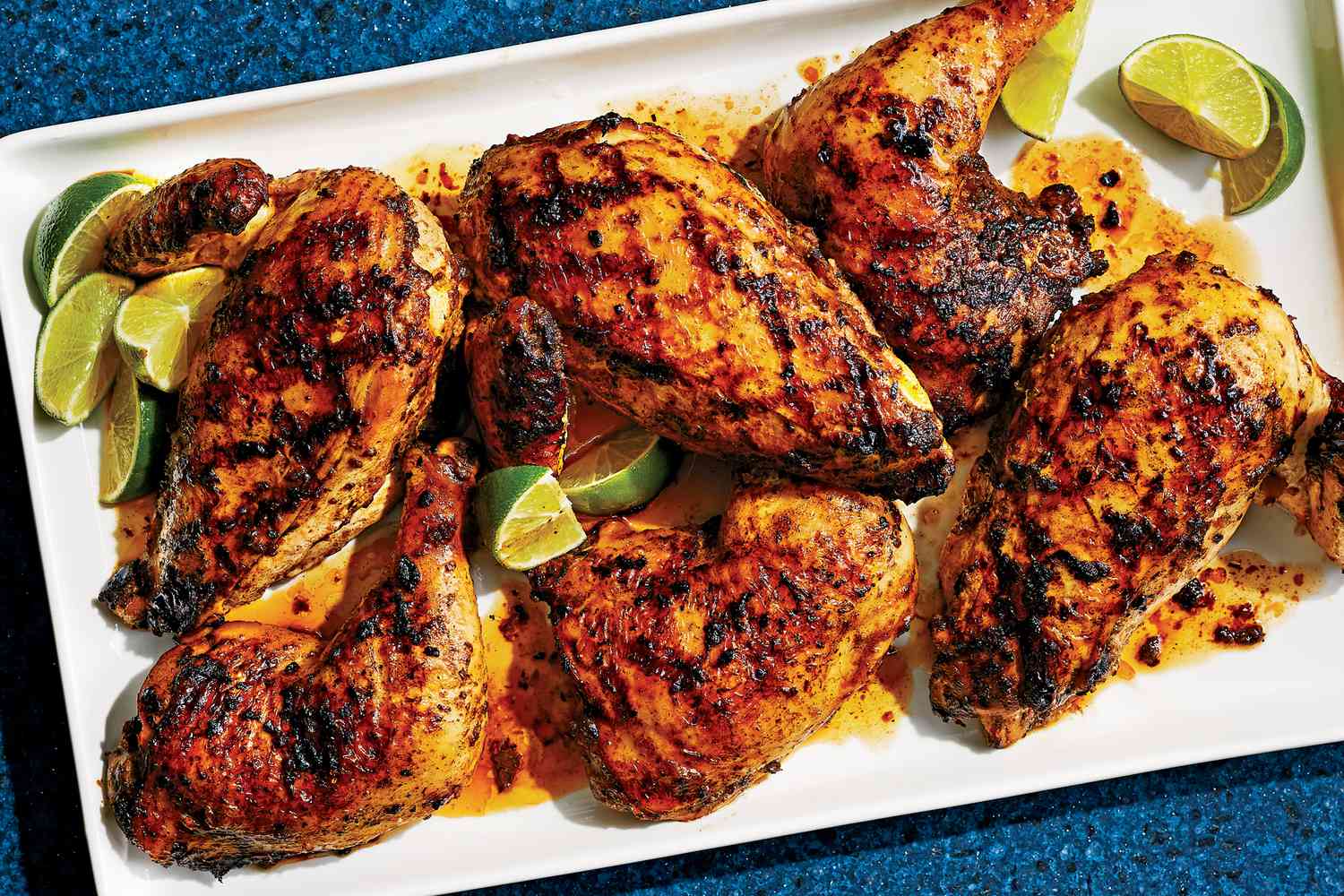
20 Caribbean Dinner Recipes: Jerk Chicken, Curry Goat & Rice and Peas
Four techniques — jerk, curry, brown stew and one-pot rice — carry twenty dinners across Jamaica, Trinidad, Haiti, Barbados and Guyana, most on the table inside an hour.
Easy Caribbean dinner recipes come down to four techniques: jerk (a scotch-bonnet-and-allspice marinade, grilled or roasted), curry (Trinidadian curry powder bloomed in oil, finished with coconut milk), brown stew (browning sauce plus a covered simmer), and one-pot rice. Master those four and the twenty recipes below are variations, not twenty separate projects. Most land on the table in 35 to 65 minutes.
Get a free week of easy dinners
Seven weeknight dinners with the shopping list already totalled, sent Sunday. No account needed, unsubscribe in one click.
No spam, unsubscribe in one click. Recipes, shopping lists and Instacart carts all work without an account either way.
Caribbean cooking is what happens when four culinary traditions get compressed onto islands within sight of each other. Indigenous Taíno and Arawak cooks contributed cassava, the barbacoa pit-smoking that became jerk, and the pepperpot. West Africans brought callaloo greens, okra, one-pot rice, and the technique of caramelizing sugar as a braising base. Indian indentured laborers arriving in Trinidad and Guyana after 1838 brought curry, roti, and channa. The Spanish, French, British, and Dutch each layered on their own pantry. The result is a set of cuisines that share a spice cabinet but argue constantly about the details — a Trinidadian pelau and a Jamaican rice-and-peas are cousins, not twins.
This roundup pulls twenty dinners from across the region, tagged by island, with real prep and cook times from the recipes themselves. For a deeper island-by-island tour, see our companion guide to Caribbean recipes by island.
The Caribbean pantry
Six ingredients unlock nearly everything below. Buy them once and the rest of the year's Caribbean cooking is a grocery run for protein.
Scotch bonnet chilies. The defining heat of the anglophone Caribbean — fruity and floral before the burn arrives. Scotch bonnets run 100,000–350,000 Scoville Heat Units against 2,500–8,000 for a jalapeño, which is a 20-to-40× jump at the midpoints (Wikipedia — Scotch bonnet). Habanero is the honest substitute; it's the same species, Capsicum chinense, with nearly the same heat and a very close flavor. Never substitute jalapeño — the register is wrong in both heat and aroma. The traditional move in stews and rice is to drop one whole, unbroken pepper into the pot and fish it out before serving: you get the perfume without the fire.
Allspice — "pimento" in Jamaica. One dried berry from Pimenta dioica that reads as clove, cinnamon, and nutmeg simultaneously (Wikipedia — Allspice). Buy whole berries, not ground; bloom them in hot oil at the start of a stew. A $3 jar lasts about 18 months. This is the single ingredient most responsible for "that tastes Jamaican."
Full-fat canned coconut milk. Not the refrigerated carton beverage — that's mostly water and won't build a sauce. Chaokoh, Aroy-D, and Native Forest all work. Budget one can per dinner.
Fresh thyme. Every Caribbean stew starts with a sprig or two, on the stem, pulled out at the end. Fresh, not dried. Two dollars a bunch, keeps two weeks wrapped in a damp paper towel.
Green seasoning. The Caribbean answer to sofrito or mirepoix: scallion, thyme, garlic, cilantro or culantro, scotch bonnet, ginger, and salt blended into a paste. Ten minutes in a food processor on Sunday yields a jar that seasons every stew you make that week. Trinidadian kitchens treat this as non-negotiable.
Caribbean curry powder. Chief, Betapac, or Blue Mountain — Trinidadian-Guyanese blends heavier on turmeric, coriander, cumin, and fenugreek, and lighter on the warming garam-masala spices. It's built to cook long without turning bitter, which is why Caribbean curries simmer for two hours where an Indian curry would be finished. Roughly $4 a jar at any Caribbean grocery.
Two more worth stocking: browning sauce (Grace or Kitchen Bouquet) for brown stew, and whole nutmeg with a Microplane, because pre-ground nutmeg is a different and worse ingredient. Most of this lives in the international aisle or a Caribbean market — our grocery and pantry guide covers the shelf-stable side of the list.
Jerk: dry rub vs. wet marinade
Jerk is Jamaica's contribution to global grilling and it descends directly from Taíno barbacoa pit-cooking, adapted by the Maroons in the island's interior (Wikipedia — Jerk (cooking)). The paste is scotch bonnet, allspice, thyme, scallion, garlic, ginger, and brown sugar, and it functions as marinade, rub, and sauce at once.
Wet vs. dry is a time decision, not a quality one. Wet jerk paste — everything blended with lime juice and soy — penetrates deeper and needs 4 hours minimum, 12–24 hours preferred. Dry jerk rub is the same spices ground without liquid; it forms a better crust and works with as little as 30 minutes. Weeknights get the rub. Weekends get the paste.
The canonical version is Grilled Jerk-Spiced Chicken with Mango Salsa — 75 minutes of prep and marinating, 15 minutes over the fire, 320 calories and 40g protein per serving. The mango salsa isn't decoration; the sweetness and acid are the structural counterweight to the capsaicin.
Real jerk is cooked over pimento wood on a steel drum pan, low and slow, and the smoke is half the flavor. Most home cooks don't have pimento wood. Two workable substitutes: throw a foil packet of soaked wood chips onto the grill's heat source, or add half a teaspoon of smoked paprika to the marinade. Neither is the real thing; both get you 80% of the way.
Oven jerk is legitimate. Jamaican home cooks roast jerk chicken constantly. Marinate, roast at 400°F for about 35 minutes, then three minutes under the broiler for char. Poultry is done at 165°F internal, measured in the thickest part of the thigh — that's the USDA figure and it's the only number that matters for safety (USDA FSIS — safe temperature chart).
Eight jerk dinners, ordered fastest to slowest:
| Recipe | Island | Prep | Cook | Total | Serves |
|---|---|---|---|---|---|
| Caribbean-Style Jerk Shrimp with Pineapple Salsa | Jamaica | 20 min | 6 min | 26 min | 4 |
| Jamaican Jerk Grilled Shrimp Skewers | Jamaica | 15 min | 8 min | 23 min | 2 |
| Dark Rum-Glazed Caribbean Jerk Chicken | Jamaica | 15 min | 15 min | 30 min | 4 |
| Sheet Pan Jamaican Jerk Pork Tenderloin | Jamaica | 10 min | 25 min | 35 min | 4 |
| One-Pot Jerk Chicken with Rice and Peas | Jamaica | 15 min | 30 min | 45 min | 4 |
| Lightly Spiced Caribbean Jerk Chicken Skewers | Jamaica | 40 min | 12 min | 52 min | 4 |
| Grilled Jerk-Spiced Chicken with Mango Salsa | Jamaica | 75 min | 15 min | 90 min | 4 |
| Spicy Jamaican Jerk Pulled Pork Sandwiches | Jamaica | 20 min | 8 hr | 8 hr 20 min | 8 |
The One-Pot Jerk Chicken with Rice and Peas is the highest-leverage recipe on that list — 45 minutes, one pot, 550 calories and 45g protein, and it collapses the main and the side into a single dish. Pork tenderloin, incidentally, is done at 145°F plus a 3-minute rest, not the 160°F many older recipes still print.
Curries and brown stews
Caribbean curry arrived with Indian indentured laborers in Trinidad and Guyana in the nineteenth century and became its own thing: milder, more turmeric-forward, heavier on coconut milk, with scotch bonnet doing the heat work instead of chili powder.
The showpiece is Curried Goat Stew with Trinidadian Spice Blend — 20 minutes of prep, 105 minutes of simmer, feeding six at 380 calories and 42g protein. The technique that matters: toast the curry powder in oil until it darkens and smells nutty before any liquid goes in. Skip that and the curry tastes raw and dusty no matter how long it cooks. A richer coconut-forward version is Spicy Kid Goat Curry with Coconut Milk and Turmeric, which runs 140 minutes total.
Goat is sold at halal butchers, Caribbean and West African groceries, and Whole Foods locations with a full meat counter. Lamb shoulder is the closest substitute.
For chicken curry, Spiced Trinidadian Curry Chicken with Roti is the full 85-minute production with the flatbread included; Slow Simmered Trinidadian Chicken Curry with Potatoes is the 70-minute weeknight version. Vegetarians get Curried Channa and Potato Trinidadian Street Food at 45 minutes and 280 calories.
Brown stew is the other pillar. Chicken is seasoned overnight with green seasoning, browned hard, then simmered covered with aromatics and a tablespoon of browning sauce. Brown Stew Chicken with Caribbean Thyme and Scotch Bonnet is 65 minutes total; Trinidadian Stewed Chicken with Caribbean Green Seasoning is the Trinidad reading of the same idea.
Oxtail is the Sunday commitment. Stewed Trinidadian Oxtail with Butter Beans needs 3 hours of simmering, and there is no shortcut — the collagen in the joints has to break down into gelatin, which is what makes the sauce glossy without any starch. Braised Oxtails with Collard Greens takes the same 200 minutes and delivers 620 calories and 55g protein per serving.
Guyana's contribution is Pepperpot Stew with Cassareep and Beef — 170 minutes, built on cassareep, a bitter-sweet reduction of cassava root that acts as both a preservative and the source of the stew's near-black color. It's the Christmas dish, and traditionally the pot gets reboiled and eaten from for days.
| Braise | Island | Total time | Serves | Protein/serving |
|---|---|---|---|---|
| Curried channa and potato | Trinidad | 45 min | 4 | 12 g |
| Brown stew chicken | Jamaica | 65 min | 4 | 40 g |
| Trinidadian chicken curry | Trinidad | 70 min | 6 | 35 g |
| Curried goat stew | Trinidad | 125 min | 6 | 42 g |
| Kid goat curry, coconut | Jamaica | 140 min | 4 | 40 g |
| Pepperpot with cassareep | Guyana | 170 min | 6 | 45 g |
| Trinidadian oxtail, butter beans | Trinidad | 200 min | 6 | 45 g |
A heavy Dutch oven is the one piece of equipment that meaningfully changes these results — enameled cast iron holds a low simmer without scorching the coconut milk. Our cookware guide covers the sub-$150 options, and the same pot handles the 22 Dutch oven dinners in our braising roundup.
Rice-and-peas, plantains, and how a Caribbean plate is built
A Caribbean dinner plate is assembled, not plated: a stewed or grilled main, a starch that's usually rice, a fried plantain, and something green. The starch is where the identity lives.
Rice-and-peas is the Jamaican Sunday side, and the "peas" are beans — kidney beans or gungo (pigeon) peas, never green peas (Wikipedia — Rice and peas). Rice cooks in coconut milk with the beans, thyme, garlic, scallion, and one whole scotch bonnet. Jamaican Rice and Peas with Scotch Bonnet and Coconut Milk runs 35 minutes; the kidney-bean variant is Coconut-Infused Jamaican Rice and Kidney Beans.
Pelau is Trinidad's answer and it works differently: sugar is melted in the pot until deep amber, then the chicken goes in and takes on that caramel before rice, pigeon peas, and coconut milk join (Wikipedia — Pelau). One-Pot Trinidadian Pelau with Chicken and Pigeon Peas is 65 minutes for six. Spiced Trinidadian Chicken Pelau with Coconut Rice is five minutes faster. Barbados weighs in with Barbadian Coconut Rice with Fried Plantains, 35 minutes.
Plantains, two ways. Ripe (peel mostly black) means maduros — sweet, fried in half an inch of oil at 350°F, about 90 seconds a side, salted hot. Crispy Fried Plantains covers it. Green means tostones — fried, smashed flat, fried again. Crisp Pan-Fried Plantain Tostones with Garlic-Lime Dip is 30 minutes and the better partner for anything saucy.
Callaloo is the green. Amaranth leaves in Jamaica, taro leaves in Trinidad, spinach as the supermarket substitute (Wikipedia — Callaloo). Stewed Trinidadian Callaloo with Coconut Milk is 45 minutes and 180 calories; Sweet Potato and Callaloo Stew with Scotch Bonnet turns it into a 40-minute vegetarian main.
Festival — the sweet fried cornmeal dumpling that traditionally rides alongside jerk — is a 15-minute mix of cornmeal, flour, sugar, and milk, rolled into cigars and fried golden. It's the sweet bridge to a very spicy plate.
The 20-recipe roundup, by island
Twenty dinners spanning six islands, with the real numbers.
A few worth calling out. Ackee and saltfish (#5) is Jamaica's national dish, and it comes with a genuine safety caveat: unripe ackee contains hypoglycin A and is toxic — the fruit must open naturally on the tree before it's harvested (Wikipedia — Ackee). Canned ackee sold in the US is already processed past that risk, which is what most home cooks should buy. Doubles (#14) is Trinidadian street breakfast — two soft fried bara flatbreads folded around curried chickpeas, sold from carts before dawn (Wikipedia — Doubles). Mofongo (#19) is mashed fried green plantain with garlic and pork crackling, pounded in a wooden pilón (Wikipedia — Mofongo); the Puerto Rican tradition gets a full treatment in our 18 Puerto Rican recipes guide.
Four more that didn't make the numbered twenty but belong in the rotation: Spiced Jamaican Beef Patties with Turmeric Dough, Cassava and Saltfish Fritters with Scotch Bonnet Aioli, Bahamas-Style Conch Salad with Citrus Vinaigrette, and Rum-Spiced Caribbean Black Bean Stew for a meatless night.
A three-recipe weekend Caribbean dinner
One main, one rice, one plantain — the classic plate, timed so everything lands together. Total active time is about 45 minutes across a 2-hour window, serving four generously.
| Time | Action | Recipe |
|---|---|---|
| Friday night | Blend green seasoning; season the chicken; refrigerate overnight | — |
| Saturday, T−120 min | Start the goat curry if you're going that route | Curried goat stew |
| T−75 min | Season and marinate the chicken in jerk paste | Dark rum-glazed jerk chicken |
| T−45 min | Rice-and-peas into the pot; whole scotch bonnet on top | Jamaican rice and peas |
| T−30 min | Chicken onto the grill or into a 400°F oven | — |
| T−15 min | Slice and fry the plantains | Crispy fried plantains |
| T−10 min | Rice off heat, covered, resting | — |
| T−3 min | Chicken under the broiler for char; fish out the scotch bonnet | — |
| T−0 | Fluff rice, plate, lime wedges on the table | — |
The order matters for one reason: rice-and-peas needs a full 10-minute covered rest off the heat before it's fluffed, and that rest is exactly the window where the chicken chars and the plantains fry. Fight that sequence and you'll serve gummy rice.
Scaling up for a crowd? The jerk-and-grill half of this menu slots directly into our Labor Day weekend cookout plan.
Common pitfalls
Skipping the scotch bonnet entirely. Heat-averse cooks leave it out and end up with a flat dish, because the pepper contributes fruit and aroma well before it contributes burn. Use the whole-pepper-in-the-pot method instead: all of the perfume, almost none of the heat.
Using Indian curry powder. Madras or a garam-masala-forward blend will taste wrong and can turn bitter over a two-hour simmer, because it isn't formulated for that. If Caribbean brands aren't available, use Madras plus an extra heavy pinch of turmeric.
Boiling the coconut milk. A rolling boil breaks the emulsion and leaves you with grainy curry and an oil slick. Gentle bubble only, and add the coconut milk in the back half of the cook.
Under-marinating jerk. Thirty minutes is a surface rub. Wet jerk paste needs 4 hours minimum and rewards 24. If you only have 30 minutes, switch to a dry rub — it's designed for that timeline.
Omitting the browning sauce. Brown stew without a tablespoon of Grace or Kitchen Bouquet is just stew. Molasses is a passable substitute; nothing is not.
Crowding the pan on the initial sear. Braises live or die on the fond, and the Maillard browning that creates it stalls out when the pan is packed and the meat steams instead (Wikipedia — Maillard reaction). Sear in two batches.
When Caribbean isn't the right call
Skip this cuisine for a strict 20-minute weeknight unless you're doing jerk shrimp. The tradeoff is real: the flavors here come from either a long marinade or a long braise, and there isn't a shortcut that preserves them. If you need speed, the 30-minute weeknight dinner plan is the honest recommendation. Likewise, if scotch bonnet is a hard no for everyone at the table, you're better served by Cuban cooking, which shares the pantry but not the heat — see our 18 Cuban recipes.
What to buy
A heavy Dutch oven, 5–7 quarts. The single highest-value purchase for this cuisine. Enameled cast iron holds a low simmer through a 3-hour oxtail braise without hot spots and moves from stovetop sear to oven without a second pan. Options in our cookware guide.
A mortar and pestle, or a small food processor. Jerk paste and green seasoning both want to be pounded or pulsed, not chopped. A wooden pilón is also what mofongo requires by definition. Our utensils and tools guide has the range.
A sharp chef's knife. You'll be mincing scotch bonnets (wear gloves, or at minimum don't touch your eyes for the next two hours) and breaking down bone-in goat and oxtail. The knives guide covers what holds an edge through that.
An instant-read thermometer. 165°F for chicken, 145°F plus a 3-minute rest for pork. Jerk's dark, heavily-spiced crust makes visual doneness cues useless, so this is the one place guessing gets punished. See the kitchen gadgets guide.
Optional: a grill or grill pan. Real jerk wants live fire. A cast-iron grill pan gets you most of the char indoors — the same pan does double duty across our 20 cast iron skillet dinners.
FAQ
How spicy is real jerk chicken?
Traditional Jamaican jerk is genuinely hot — a proper paste uses several scotch bonnets per pound of chicken, and scotch bonnets run 100,000–350,000 Scoville against 2,500–8,000 for a jalapeño. You can dial it down substantially by using one pepper with seeds and membranes removed, or by substituting a Fresno. The other defining flavors — allspice, thyme, scallion, garlic — carry the dish on their own, so a milder jerk is still recognizably jerk.
What are "peas" in rice-and-peas?
Not green peas. "Peas" in Caribbean English means beans. Jamaican rice-and-peas uses kidney beans or gungo peas, which are pigeon peas; Trinidadian versions lean almost entirely on pigeon peas. The rice cooks in coconut milk with the beans, thyme, garlic, and scallion, with one whole scotch bonnet dropped in unbroken so it perfumes the pot without releasing heat. It's the standard Sunday dinner side across the anglophone Caribbean.
Do I need a grill to cook jerk chicken?
No — oven jerk is widely eaten in Jamaican homes and is not a compromise version. Marinate 12 to 24 hours in wet jerk paste, roast at 400°F for about 35 minutes to an internal 165°F, then finish three minutes under the broiler for char. To approximate the pimento-wood smoke a real jerk pan provides, add half a teaspoon of smoked paprika to the marinade, or set a foil packet of soaked wood chips on the oven floor at 425°F.
Can I substitute lamb or beef for goat in curry goat?
Yes. Lamb shoulder is the closest match on both texture and gaminess and needs the same braise time. Beef chuck works with a longer cook — roughly three hours against two for goat. Goat itself is stocked at halal butchers, Caribbean and West African groceries, and Whole Foods locations with a real meat counter. If you use beef, add an extra tablespoon of curry powder, because the meat is milder and takes up seasoning more slowly than goat or lamb.
How is Caribbean curry powder different from Indian curry powder?
Caribbean curry powder — Chief, Betapac, or Blue Mountain — is a Trinidadian-Guyanese blend weighted toward turmeric, coriander, cumin, and fenugreek, with far less of the warming garam-masala spectrum. It's built to cook for two hours without turning bitter, which is why it produces the bright yellow, moderate-heat curries characteristic of the anglophone Caribbean. If you can't find those brands, use Madras curry powder with a heavy extra pinch of turmeric and the result will read correctly.
Sources
- Wikipedia — Caribbean cuisine — regional overview and the African, Indian, Taíno, and European influences
- Wikipedia — Jerk (cooking) — Taíno and Maroon origins of jerk, pimento wood technique
- Wikipedia — Scotch bonnet — Scoville ranges and Capsicum chinense classification
- Wikipedia — Allspice — Pimenta dioica, the Jamaican pimento
- Wikipedia — Rice and peas — kidney beans vs. gungo peas across the islands
- Wikipedia — Pelau — Trinidadian caramelized-sugar rice technique
- Wikipedia — Callaloo — amaranth vs. taro leaf by island
- Wikipedia — Ackee — hypoglycin A and safe harvesting of Jamaica's national fruit
- Wikipedia — Ackee and saltfish — Jamaica's national dish
- Wikipedia — Doubles — Trinidadian bara-and-channa street breakfast
- Wikipedia — Mofongo — the pilón and mashed green plantain
- Wikipedia — Maillard reaction — why searing in batches matters
- USDA FSIS — safe temperature chart — 165°F poultry, 145°F pork with rest
- USDA FSIS — chicken from farm to table — handling and storage
- FDA — selecting and serving fresh and frozen seafood safely — snapper, shrimp, and saltfish handling
- USDA FoodData Central — nutrition reference for the calorie and protein figures
Frequently asked questions
How spicy is real jerk chicken?
What are “peas” in rice-and-peas?
Do I need a grill to cook jerk chicken?
Can I substitute lamb or beef for goat in curry goat?
How is Caribbean curry powder different from Indian curry powder?
Sources
- en.wikipedia.org
- en.wikipedia.org
- en.wikipedia.org
- en.wikipedia.org
- en.wikipedia.org
- en.wikipedia.org
- en.wikipedia.org
- en.wikipedia.org
- en.wikipedia.org
- en.wikipedia.org
- en.wikipedia.org
- en.wikipedia.org
- fsis.usda.gov
- fsis.usda.gov
- fda.gov
- fdc.nal.usda.gov
Cook Caribbean at home this week.
Ask our AI for a week of Caribbean dinners — it writes the recipes, builds the shopping list, and sends the cart to Instacart. No account needed.
Plan my Caribbean week →