20 Cajun & Creole Recipes: Gumbo, Jambalaya & Étouffée Louisiana Classics
Roux, the holy trinity, and 20 Louisiana recipes - from a 45-minute etouffee to a gumbo worth spending a Saturday on.
Affiliate disclosure: AislePrompt may earn a commission on qualifying purchases made through Amazon and Instacart links in this article, at no additional cost to you. See our affiliate policy →
Louisiana cooking comes down to three things you can learn in a weekend: the trinity (onion, celery, bell pepper), a roux you're patient enough to stir, and enough cayenne to wake the dish up without setting it on fire. These 20 Cajun and Creole recipes cover gumbo, jambalaya, étouffée, po'boys, and the sides that make them a meal — all cooked in a home kitchen with grocery-store ingredients.
Cajun vs Creole: the trinity, the roux, and the geography
The shorthand most Louisiana cooks use is that Creole is city food and Cajun is country food. Creole cooking developed in New Orleans among Spanish, French, African, and Caribbean cooks with access to a port — tomatoes, butter, cream, and imported spice show up freely. Cajun cooking developed in the rural bayou parishes among Acadian exiles working with what the land and water gave them — pork, rice, crawfish, game — and it leans darker, smokier, and more one-pot.
The classic test case is gumbo. A Creole gumbo often carries tomato and a lighter roux; a Cajun gumbo almost never has tomato and starts from a roux cooked to the color of an old penny. Both are correct. Cajun cuisine and Louisiana Creole cuisine overlapped so heavily over 200 years that plenty of restaurants no longer bother distinguishing them on a menu.
What both share is the holy trinity: roughly 2 parts onion to 1 part celery to 1 part green bell pepper. That's it. Not mirepoix's carrot, not a soffritto's tomato. If you dice a big yellow onion, two ribs of celery, and one green bell pepper, you have the base of every dish on this page.
The dark roux: how to make one without burning it
A roux is equal parts fat and flour cooked until it hits the color you want. For gumbo, that's somewhere between peanut butter and milk chocolate — 25 to 45 minutes of near-constant stirring over medium-low heat. There is no legitimate shortcut that produces the same flavor, and the moment you walk away is the moment it scorches.
| Roux color | Time (medium-low) | Thickening power | Use it for |
|---|---|---|---|
| Blond | 5-8 min | Highest | Étouffée, cream sauces |
| Peanut butter | 15-20 min | High | Seafood gumbo, sauce piquante |
| Milk chocolate | 25-35 min | Medium | Chicken and sausage gumbo |
| Dark chocolate | 40-50 min | Lowest | Traditional Cajun gumbo |
Three rules that keep a roux alive. Use a heavy-bottomed pot — cast iron or thick stainless; thin aluminum creates hot spots that scorch flour in seconds. Keep the heat at medium-low and stay put with a flat-edged wooden spoon or a whisk. And the instant you see or smell black specks, throw it out and start over — a burnt roux tastes acrid through an entire pot of gumbo, and you cannot cover it up.
The trinity goes in at the end, straight into the hot roux, which stops the cooking and softens the vegetables at once. Expect it to hiss aggressively. Good cast-iron or heavy cookware is the one real equipment requirement for this whole cuisine.
For a weeknight-first take on the same cuisine — roux color stages, a $50 Louisiana spice cabinet, and an honest list of the Cajun dinners that actually fit a Tuesday — see 20 Cajun & Creole weeknight dinners.
Gumbos: chicken-and-sausage, seafood, and beyond
Gumbo is a stew served over rice, thickened by roux and sometimes further by okra or filé powder (ground sassafras leaf, stirred in off the heat). It is the state's signature dish and the most forgiving big-batch cooking on this list — it improves on day two and freezes for three months.
- New Orleans-style gumbo — the accessible starting point, with a medium roux.
- Creole-style Cajun shrimp and andouille gumbo — shrimp go in during the last five minutes, never earlier.
- Spicy Cajun gumbo with andouille sausage and okra — okra does the thickening here, so the roux can stay lighter.
- Slow-cooked andouille sausage and black-eyed pea gumbo — a pantry-friendly version with no seafood at all.
- Spiced vegetable gumbo with okra and andouille — vegetable-forward, still built on a real roux.
Filé versus okra is the only genuinely contentious point. Okra thickens as it cooks and adds a green, grassy note; filé is stirred in at the table and turns silky. Using both at once is considered redundant, not wrong. Gumbo's West African, French, and Choctaw roots are visible in exactly those two thickeners.
Gumbo ratios for a big pot (serves 8): 1 cup flour + 1 cup oil for the roux, the full trinity, 2 pounds protein, 8 cups stock, 1 tablespoon Cajun seasoning. Simmer 45 minutes after everything's in. Rice underneath, never mixed in.
Rice dinners: jambalaya, dirty rice, red beans
Rice is the plate for most of Louisiana cooking, and these dishes cook the rice in the pot with everything else — which is why they're weeknight-viable in a way gumbo isn't.
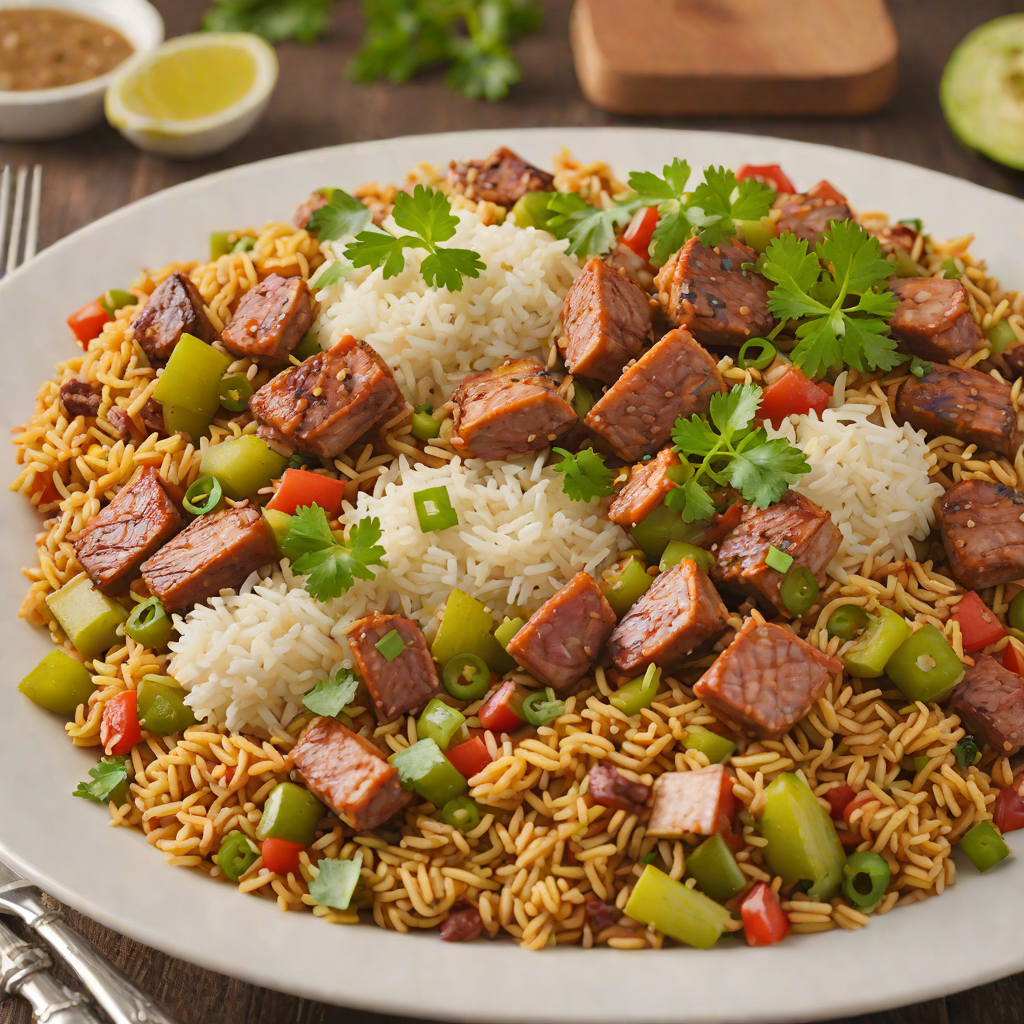
- Creole-spiced jambalaya with andouille sausage and chicken — red (Creole) jambalaya, tomato included.
- One-pot chicken and sausage jambalaya with bell peppers — brown (Cajun) jambalaya, no tomato, deeper color from browned meat.
- One-pan spicy chicken and smoked sausage jambalaya — the fastest version here, about 40 minutes.
- One-pot Cajun chicken and dirty rice — dirty rice gets its color and name from finely minced chicken livers or ground meat.
- Pan-seared catfish with Cajun-spiced dirty rice — dirty rice as a side rather than a main.
- Creole-spiced red beans and rice with andouille and smoked ham hock — the traditional Monday dish, built on wash-day leftovers.
- One-pot smoky red beans and rice with andouille sausage — a weeknight version using canned beans.
The jambalaya rule that fixes most home attempts: once the rice goes in, stop stirring. Stirring releases starch and turns jambalaya into a risotto-textured mush. Cover, drop to low, and leave it 25 minutes. Jambalaya's red-versus-brown split traces the same Creole-city / Cajun-country line as gumbo does.
Red beans want a full day of soaking or a pressure cooker. If you're using dried beans on a weeknight, soak them the night before — no soak means three hours of simmering, not one.
Étouffée and the seafood stews
Étouffée means "smothered." It is a thicker, blonder, more concentrated cousin of gumbo, served over rice, and it comes together in about 45 minutes because the roux is short.
- Cajun-spiced crawfish étouffée with steamed rice — the canonical version; frozen crawfish tails work fine year-round.
- Crawfish étouffée with butter and Creole seasoning — a butter-roux version, richer and faster.
- Cajun-spiced crawfish fettuccine with garlic butter sauce — the Louisiana pasta dish that shows up at every church supper.
- Shrimp and grits with smoked andouille — technically Lowcountry, adopted wholesale by New Orleans brunch menus.
- Spicy Cajun whiskey shrimp with garlic butter — barbecue shrimp territory; serve with bread for the sauce.
- Quick sautéed Cajun shrimp with garlic butter and lemon — 15 minutes, the weeknight fallback.
Frozen Louisiana crawfish tails are sold with their fat, and that orange fat is where the flavor lives — don't rinse it off. Imported tails are usually cleaner-tasting and blander; if that's what your store carries, add an extra tablespoon of butter.
Blackened and pan-fried
Blackening is a 1980s Paul Prudhomme invention, not a centuries-old technique, and it is brutally simple: coat fish or chicken in spice and butter, then cook it in a screaming-hot cast-iron skillet until the spices char.
- Cajun-spiced blackened catfish with lemon-dill sauce — catfish is the traditional and cheapest choice.
- Blackened catfish with spiced red pepper sauce — a saucier plate.
- Cajun-spiced blackened chicken with creamy boudin sauce — chicken breast, pounded thin so the interior finishes with the crust.
- Crispy fried catfish with Cajun remoulade — cornmeal-crusted, the Friday-fish-fry standard.
Blackening produces genuine smoke — not a wisp, a cloud. Run the vent hood on high, open a window, or do it outdoors on a side burner. A well-seasoned cast-iron pan preheated 5 minutes over high heat is the correct tool; nonstick coatings degrade at these temperatures.
Po'boys, muffulettas, and handhelds
- Creole shrimp po' boy with remoulade sauce — fried shrimp, dressed (lettuce, tomato, pickle, mayo).
- Gulf Coast shrimp po' boy with remoulade — a lighter, less-battered version.
- Pan-seared catfish po' boy with Creole remoulade — pan-seared instead of fried, weeknight-appropriate.
- Crawfish po' boy with remoulade sauce — the crawfish-season variant.
- Creole-spiced muffuletta with olive relish — the Sicilian-New Orleans sandwich; the olive salad must sit overnight.
- New Orleans-style muffuletta with olive salad — a full round loaf, cut in quarters, meant to be shared.
"Dressed" is the local term for lettuce, tomato, pickles, and mayonnaise, and ordering a po'boy any other way in Louisiana marks you instantly. The bread should be New Orleans French — light and crackly. Failing that, a soft baguette beats a chewy roll.
Sides and sweets
- Deep-fried beignets with powdered sugar — the Café du Monde standard, best eaten within four minutes of frying.
- Beignet doughnuts with cinnamon sugar — a slightly less messy variation.
- Gluten-free beignets with powdered sugar — the gluten-free version, and it holds up.
- Maple walnut bread pudding with bourbon sauce — bread pudding with a whiskey sauce is the standard New Orleans dessert.
- King cake French toast bake with Mardi Gras glaze — a Carnival-season breakfast bake.
- Cajun shrimp and andouille sausage pasta — the modern casual-restaurant staple, and a good weeknight main.
Where to buy andouille, filé, and Cajun seasoning
Real andouille is coarse-ground, heavily smoked pork sausage — not the French tripe sausage of the same name. Grocery-store "andouille" from a national brand is usually a mild smoked sausage; it works, but it won't bring the smoke. Mail-order from a Louisiana smokehouse is a genuine upgrade if you cook this food often. Kielbasa is the closest supermarket substitute.
Filé powder lives in the spice aisle at well-stocked stores or ships cheaply online; it lasts about a year before going flat. Cajun seasoning blends vary wildly in salt content — read the label, and if salt is the first ingredient, cut the added salt in the recipe by half.
Make your own blend: 2 tablespoons paprika, 1 tablespoon each garlic powder, onion powder, and dried oregano, 2 teaspoons each black pepper and cayenne, 1 teaspoon dried thyme. No salt, so you control seasoning separately.
Common pitfalls
1. Rushing the roux. High heat doesn't make it darker faster, it makes it burnt faster. Medium-low, stir, wait.
2. Adding shrimp early. Shrimp need 3-4 minutes. Anything longer and they're rubber; add them last, off-heat if the pot is very hot.
3. Stirring jambalaya. Once the rice is in, the lid stays on and the spoon stays out.
4. Confusing hot with seasoned. Louisiana food is well-seasoned first and hot second. Cayenne comes at the end, to taste.
5. Buying "andouille" without reading the label. If it isn't coarse and smoked, expect to compensate with a little smoked paprika.
Cook a Louisiana weekend
A realistic plan: make the gumbo on Saturday morning while you do something else in the kitchen — the roux needs you for 30 minutes and then it's hands-off. Sunday is red beans, which want a long low simmer and reward you with three days of leftovers. Weeknights get jambalaya or a 15-minute Cajun shrimp skillet. If you like this style of big-batch, one-pot cooking, our Dutch oven dinners collection uses the same equipment and the same logic.
Every recipe above links to a full ingredient list on AislePrompt, and the app will merge them into a single shopping list — useful here, because the trinity, andouille, and Cajun seasoning repeat across nearly every dish. A set of storage containers sized for a gallon of gumbo makes the leftovers a feature rather than a fridge problem.
Sources
- Cajun cuisine — rural Acadian traditions and staples (Wikipedia)
- Louisiana Creole cuisine — New Orleans influences (Wikipedia)
- Gumbo — thickeners, origins, and regional variation (Wikipedia)
- Jambalaya — red vs brown styles (Wikipedia)
- Holy trinity — the Louisiana aromatic base (Wikipedia)
Ingredient lists, step-by-step instructions, and one-tap shopping for every recipe above are on AislePrompt. Last reviewed August 2026.