20 Late Summer Tomato Recipes: Peak-Season Dinners, Salads & Sauces
Late August through mid-September is the only window all year when a supermarket tomato is worth cooking — here's what to make with it before it closes.
Between roughly August 20 and September 15 in most of the US, tomatoes are worth cooking. Outside that window they're a structural ingredient — something you buy in a can. Below are 20 recipes from the AislePrompt catalog built for the weeks when a tomato is the best thing in the kitchen, sorted from no-cook plates through pastas and tarts to the two preserving methods that let you carry some of it into January.
Get a free week of easy dinners
Seven weeknight dinners with the shopping list already totalled, sent Sunday. No account needed, unsubscribe in one click.
No spam, unsubscribe in one click. Recipes, shopping lists and Instacart carts all work without an account either way.
The urgency is real and it's short. Field tomatoes ripen on a hard schedule, and the first cool nights end it. If you have a garden or a CSA share, you're about to be overwhelmed for two weeks and then it will be over. Plan accordingly — this list is ordered so you can cook down a counter full of them without eating the same thing twice.
If you're also drowning in squash, the end-of-summer zucchini list covers the other half of the August problem, and the Labor Day cookout guide handles the weekend itself.
Introduction: the two weeks a year tomatoes are actually great
Here's the thing worth understanding, because it changes how you shop for the other fifty weeks.
Commercial tomatoes are picked green and gassed with ethylene to turn them red. That works — the color changes on schedule — but flavor compounds develop on the vine, not in a truck. A tomato that colored in transit is red, firm, and essentially flavorless. That's why the supermarket tomato in February is a texture ingredient.
There's a second, worse problem: refrigeration. Below about 55°F, tomatoes stop producing the volatile compounds that make them smell like tomatoes, and the damage is permanent. UC Davis postharvest research puts the chilling-injury threshold in that range and notes that it also causes mealy texture. A tomato that spent two days in your fridge cannot be recovered by bringing it back to room temperature.
So: for these three weeks, buy local, buy ugly, and leave them on the counter stem-side down.
How to buy and store peak tomatoes
Buy by weight, not by look. A good tomato is heavy for its size and gives slightly under a thumb. Shoulder cracks, green shoulders, and odd lobes are cosmetic and often mark the best-flavored fruit — those are the ones that ripened slowly on the vine.
This is not folklore: a PNAS study by Zhang et al. showed that storing tomatoes below 55°F suppresses the genes behind their volatile flavor compounds, and the loss does not fully reverse once the fruit warms back up.
Smell the stem scar. A ripe tomato smells green and sharp there. No smell means no flavor; this test is more reliable than color.
Never the fridge. Stem-side down on the counter, out of direct sun, not touching each other. They'll hold 3-5 days at peak.
Once cut, then the fridge — but bring the slices back to room temperature for 20 minutes before serving. Cold blunts acid perception and the tomato will taste flat.
Overripe is not wasted. Anything soft, split, or past slicing goes into sauce, jam, or gazpacho, all of which are at the bottom of this list.
Equipment
Peak tomatoes are fragile and the single most important tool is a knife that cuts instead of crushes. A dull blade compresses the fruit and pushes out the gel and seeds before it cuts the skin — this is the classic "why did my tomato explode" problem, and it's not the tomato. A properly sharp chef's knife or a serrated tomato knife from knives solves it in one purchase. Pair it with a board that won't slide; the flat-plate work in this article is all done on a board, so browse utensils for a board with a juice groove — you will lose a quarter cup of liquid per pound otherwise, and that liquid is flavor.
For the roasting and tart recipes, a heavy half-sheet pan from bakeware beats a thin one, which warps at 400°F and pools the juices in one corner. A wide, low cookware skillet reduces fresh tomato sauce twice as fast as a saucepan because evaporation scales with surface area. And if you're freezing sauce, flat-stacking freezer containers from storage will save you more freezer volume than anything else you do this month.
Which tomato for which job
Variety matters more in these three weeks than at any other point in the year, because you can actually get more than one. The practical differences come down to water content, wall thickness, and acid.
| Variety | Water | Best use | Avoid for | Rough $/lb |
|---|---|---|---|---|
| Beefsteak / heirloom | Very high | Slicing, BLT, caprese | Sauce, tarts | $3.50-$6.00 |
| Roma / San Marzano-type | Low | Sauce, roasting, confit | Raw slicing | $1.80-$2.50 |
| Cherry / grape | Medium | Blistering, salads, pasta | Slicing | $3.00-$4.50 |
| Cocktail / campari | Medium | Bruschetta, tarts | Long-cook sauce | $2.50-$3.50 |
| Green / underripe | Low | Frying, chutney | Anything raw | $2.00-$3.00 |
The rule of thumb: high-water tomatoes go on a plate, low-water tomatoes go in a pan. Making sauce from beefsteaks means simmering off a lot of water and concentrating the acid along with it, which is why homemade fresh sauce sometimes comes out sharp — it wasn't the recipe, it was the variety.
One more distinction people miss: heirlooms are not automatically better, they're just unstandardized. A Cherokee Purple picked yesterday is spectacular; the same variety picked five days early and trucked is worse than a good field-grown hybrid. Freshness beats pedigree every time.
No-cook tomato dinners
The point of peak season. Nothing here goes near heat.
1. Summer's Best Heirloom Tomato & Burrata Salad — thick slices, flaky salt applied 10 minutes before serving so it draws out juice, burrata torn on top, good olive oil. That's the whole dish and it's the best thing on this page.
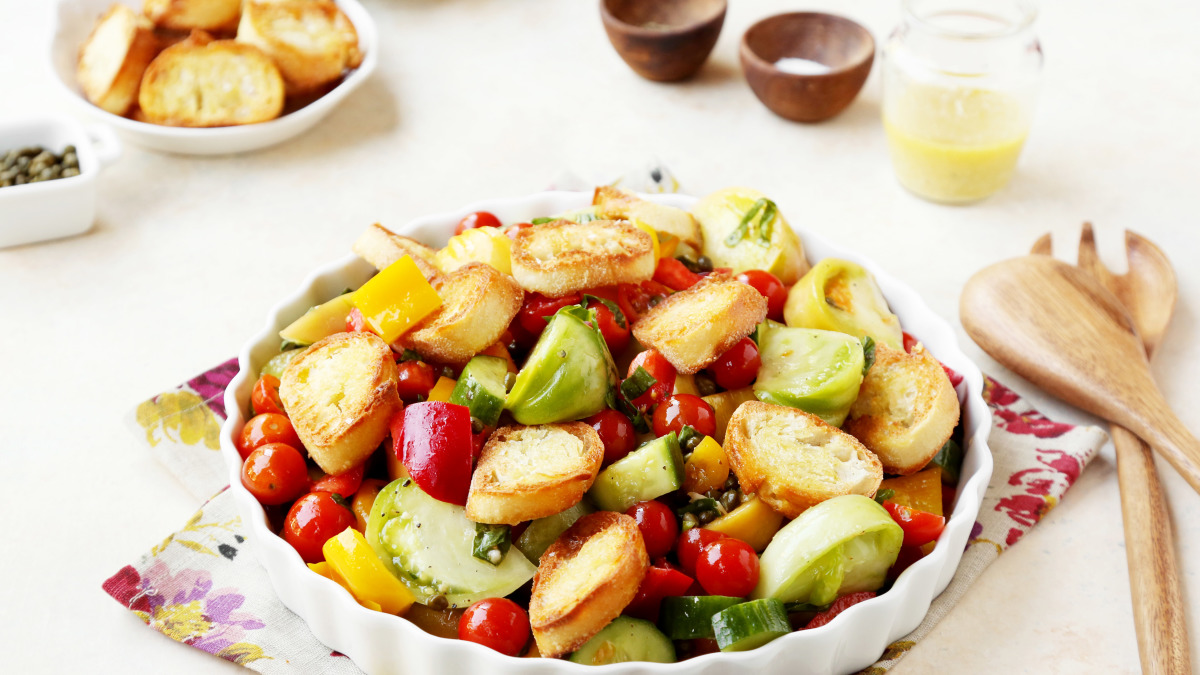
2. Heirloom Tomato Panzanella with Basil Vinaigrette — the Tuscan bread salad. Panzanella was originally a way to use stale bread and the technique still assumes it: fresh bread turns to mush in twenty minutes. Use day-old country loaf, torn not cubed, and toast the pieces if it's less than a day old.
3. Tomato and Fresh Corn Panzanella with Basil and Red Wine Vinaigrette — corn and tomato peak in the same two weeks. Cut the corn raw off the cob; cooking it here is a mistake.
4. Authentic Tuscan Panzanella Salad — the traditional version, bread soaked and squeezed rather than toasted.
5. Italian-Inspired Caprese Salad with Balsamic Reduction — three ingredients means all three have to be good. Fresh mozzarella in water, not the low-moisture block.
6. Classic Caprese Sandwich with Fresh Basil and Balsamic Glaze — lunch, and better than it has any right to be.
7. Tomato-Basil Bruschetta with Balsamic Glaze — salt the diced tomato and let it drain for 15 minutes, then use the drained juice in the dressing instead of throwing it out.
8. Sweet and Tangy Cherry Tomato Bruschetta with Basil — cherry tomatoes hold up better if you're making this an hour ahead.
9. Smashed Avocado and Tomato Sourdough Toast — breakfast during harvest weeks.
10. Sioux Falls Regional Airport-Inspired Classic BLT Sandwich — the American peak-tomato dish. Toast the bread on both sides, mayo edge to edge, salt the tomato directly.
11. Garden-Roasted Heirloom Tomato and Herb Salad — a warm-salad hybrid for when the tomatoes are slightly past prime slicing.
Under-30-minute tomato pastas
Fresh tomato pasta is a different dish from canned-tomato pasta: brighter, thinner, and much faster. It also has a shorter shelf life — eat it the night you make it.
12. Authentic Spaghetti al Pomodoro with Fresh Basil — the reference. Four ingredients, 20 minutes. Bon Appétit's version makes the same technical point this recipe does: finish the pasta in the sauce with a splash of starchy water, which emulsifies the oil and makes it cling. Draining pasta and ladling sauce on top is the single most common home mistake in Italian cooking.
13. Tomato-Basil Pasta with Charred Cherry Tomatoes — blister the cherry tomatoes hard in a dry-ish pan until they split and collapse. Fifteen minutes.
14. One-Pot Lemon Garlic Pasta with Cherry Tomatoes — pasta cooks in the sauce. One pot, 22 minutes, and the starch releases directly into the sauce so it thickens without cream.
15. Slow-Roasted Tomato and Garlic Confit Pasta — the exception to the 30-minute rule and worth it. Two hours at 275°F in olive oil concentrates everything; the oil that's left is a bonus ingredient for a week.
Tomato-forward mains and tarts
16. Herb-Garden Tomato Tart with Rosemary Crust — the technique that makes or breaks every tomato tart: salt the slices, drain them on paper towels for 30 minutes, and lay a moisture barrier (mustard, grated parmesan, or breadcrumbs) on the pastry before the tomatoes go down. Skip either step and the bottom is raw.
17. Authentic Provençal Tomato & Herb Tart — mustard on the pastry, which is the classic Provençal solution to the same problem.
18. Herbed Tomato and Goat Cheese Tart with Puff Pastry — puff pastry version, 40 minutes with store-bought dough.
Chilled tomato soups
19. No-Cook Gazpacho with Tomato, Bell Pepper, and Cucumber — blend, chill four hours minimum, season after chilling. Cold suppresses salt and acid perception; gazpacho seasoned warm always tastes flat cold.
20. Tomato and Watermelon Gazpacho with Cilantro and Lime — the late-August version, when both are peaking at once.
21. Roasted Tomato and Almond Gazpacho with Sherry Vinegar — roasting first gives depth that raw gazpacho lacks; the almonds thicken it.
22. Slow-Simmered Tomato and Basil Soup — the hot one, for the first cool evening.
23. Authentic Tuscan Pappa al Pomodoro — bread and tomato cooked into porridge. Peasant food, and one of the best uses for tomatoes that have gone soft.
Preserving the peak
Two methods, and the honest tradeoffs.
24. Gin-Infused Tomato Jam — sweet-savory, sets in about 90 minutes of simmering, keeps three weeks refrigerated. Goes on sandwiches, cheese boards, and burgers through the fall.
Quick freezer sauce is the higher-volume answer and doesn't need a recipe. Core and halve 5 lb of tomatoes, roast at 400°F with olive oil, garlic, and salt for 45 minutes, blend skins and all, cool, and freeze flat in quart bags. Roughly 5 lb yields 3 pints. No canning equipment, no acidity math, no botulism risk — freezing sidesteps the pH questions that make water-bath canning tomatoes genuinely finicky.
| Method | Yield from 5 lb | Active time | Keeps | Best for |
|---|---|---|---|---|
| Freezer roast-sauce | ~3 pints | 15 min | 6 months | Winter pasta, braises |
| Tomato jam | ~2 cups | 25 min | 3 weeks fridge | Sandwiches, cheese |
| Oven confit in oil | ~2 cups | 10 min | 2 weeks fridge | Pasta, toast, salads |
| Slow-roast + freeze | ~2 pints | 15 min | 6 months | Soup base |
Two worked examples: cooking down a real glut
Nine pounds, four days, no canner. This is the actual situation for anyone with four plants in the ground. Day one, sort by firmness. The three pounds of firm slicers go on the counter for the burrata salad, the BLT, and a panzanella — those get eaten first because they're the ones with a deadline. The four pounds of medium fruit get halved and roasted at 400°F for 45 minutes on two sheet pans, then blended and frozen flat: about two and a half pints of sauce, 15 minutes of work. The last two pounds — the split, soft, and cracked ones — go into gazpacho on day two and jam on day three. Nothing is thrown out and total active time across four days is under an hour.
A single perfect farmstand tomato, $4. Don't cook it. Slice it a half inch thick, salt it, wait ten minutes, and eat it standing over the sink with good olive oil and bread. This is not a joke; it's the highest-value use of peak fruit and it's why the season matters.
Common pitfalls
Refrigerating whole tomatoes. Permanent flavor loss below 55°F. Counter only.
Not salting in advance. Salting slices 10-15 minutes before serving draws out water and concentrates flavor. Salting at the table does neither.
A dull knife. Crushes rather than cuts; you lose the gel that carries most of the glutamate.
Fresh bread in panzanella. Turns to paste. Day-old, or toast it.
Under-seasoning cold soup. Season gazpacho after it's cold, not before.
Wet tomatoes on pastry. Salt, drain 30 minutes, and put a barrier layer down. This is the whole game with tarts.
When NOT to make these
Out of the peak window, don't. A February version of the burrata salad is a worse dish than an honest canned-tomato pasta, and there's no technique that fixes it. Canned San Marzanos are a genuinely excellent product and the right answer for nine months of the year — Serious Eats' tomato archive and the San Marzano DOP designation both point you at good canned-tomato options for the off-season.
Also skip the no-cook plates if your tomatoes came from a grocery display case that was refrigerated. Cook those instead; heat and salt cover a lot.
How AislePrompt helps you cook through a glut
Add six or eight of these to your shopping list and AislePrompt merges the overlapping ingredients — basil, good olive oil, and mozzarella appear once across the whole week instead of on eight separate lines. The meal plan tool sequences them so the no-cook plates land on the hottest nights and the roasting recipes on the cooler ones, and the AI chat will scale any of these to the actual poundage sitting on your counter. Tell it "I have 9 pounds of tomatoes and four days" and it will build the rotation, including which ones to sauce and freeze before they turn.
Related seasonal guides
If your problem is volume rather than variety, 20 Late-Summer Tomato Dinner Recipes (When You Have Too Many to Use) works through a 10-pound garden glut with a five-night menu plan. If corn is coming in alongside the tomatoes, End-of-Summer Corn & Tomato Recipes covers the pairings and a two-Sunday preserving playbook.
FAQ
See the questions below on buying, storing, freezing, and substituting out of season.
Sources
- Serious Eats — tomato recipes
- Wikipedia — San Marzano tomato
- Zhang et al., PNAS — Chilling-induced tomato flavor loss (PubMed)
- Bon Appétit — Pasta al Pomodoro
- UC Davis Postharvest — Tomato produce facts
- Wikipedia — Panzanella
Frequently asked questions
Should I ever refrigerate fresh tomatoes?
How do I pick the best tomatoes at the farmers market?
What is the best variety of tomato for cooking vs. eating raw?
How do I preserve a bumper crop of tomatoes for winter?
What is the classic ratio for a fresh tomato pasta sauce?
Sources
- seriouseats.com
- bonappetit.com
- postharvest.ucdavis.edu
- en.wikipedia.org
- en.wikipedia.org
- pubmed.ncbi.nlm.nih.gov
Plan a week of meals in two minutes.
Tell our AI what you have and what you like — it builds your plan, shopping list, and Instacart cart. No account needed.
Try free →