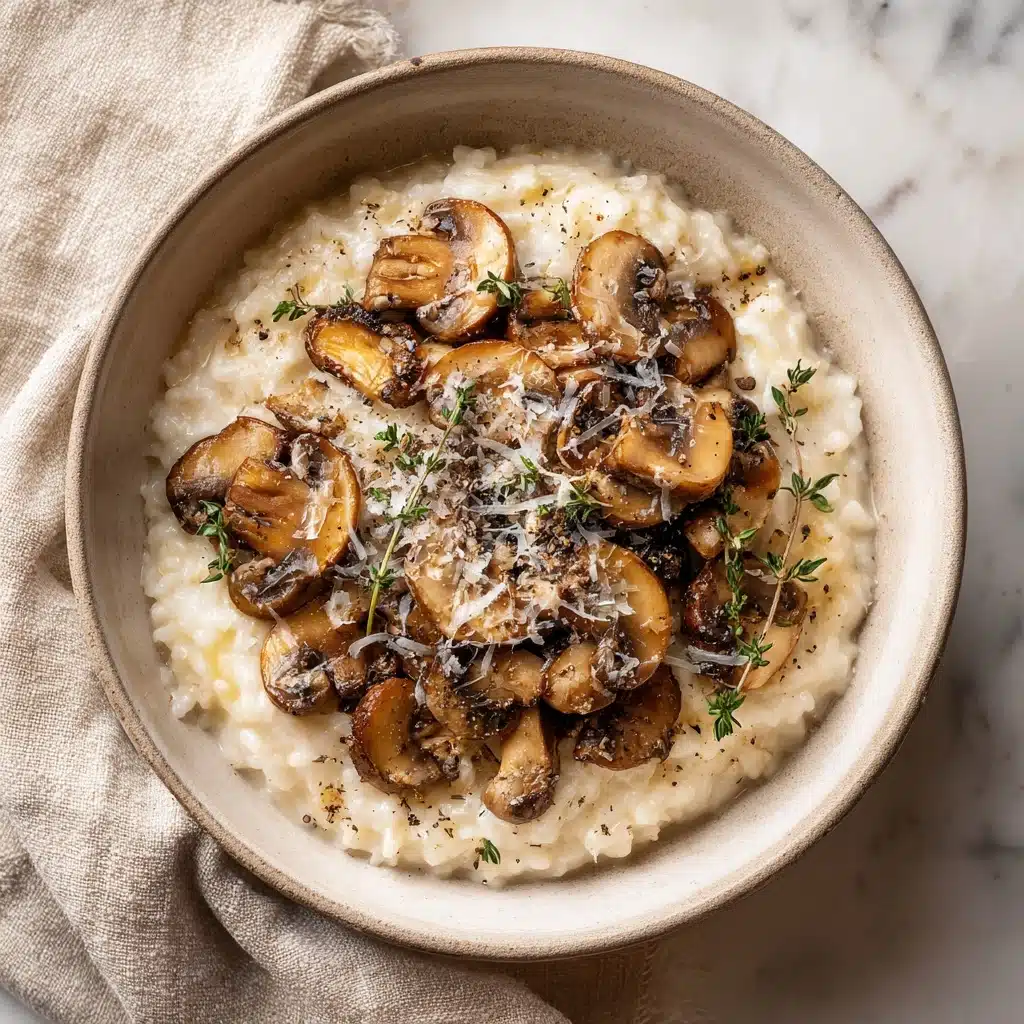
20 Risotto Recipes: Creamy Italian Rice for Weeknights and Special Occasions
The five-step framework, the constant-stirring myth debunked, and 20 catalog recipes from risotto Milanese to pressure-cooker weeknight versions.
Risotto is rice cooked in stock added a ladle at a time, agitated so the grains release starch into the liquid, and finished off-heat with cold butter and grated cheese. That's the entire technique. It takes 18-22 minutes of actual cooking, needs no special equipment beyond a wide pan and a wooden spoon, and does not require the constant stirring its reputation insists on. The 20 recipes below cover classic Italian, seafood, vegetable, meat, and the shortcut versions — baked and pressure-cooked — that make it a genuine weeknight dinner.
Get a free week of easy dinners
Seven weeknight dinners with the shopping list already totalled, sent Sunday. No account needed, unsubscribe in one click.
No spam, unsubscribe in one click. Recipes, shopping lists and Instacart carts all work without an account either way.
Introduction: why risotto is the most misunderstood weeknight dinner
Risotto has an undeserved reputation as restaurant food. The myth is that it demands twenty minutes of unbroken stirring, expensive rice, and a homemade stock you started the day before. None of that is true, and the myth costs home cooks one of the best uses of a pantry staple.
Here's what risotto actually is: a starch-emulsion dish. Italian medium-grain rices like arborio and carnaroli carry a high proportion of amylopectin, the branched starch molecule that dissolves readily in hot liquid. As the grains rub against each other and the pan, they shed that starch into the stock, and the result is a sauce made entirely of rice starch and liquid — no cream, no roux, no thickener. The physical process is starch gelatinization, and it's the same mechanism that thickens a pan sauce when you finish pasta in it.
The practical consequence: risotto is closer to 20 minutes of light attention than 20 minutes of frantic labor. Stir occasionally for the first fifteen minutes, then actively for the last five when the emulsion forms. A pound of arborio runs $4-6 as of 2026 and feeds six as a main. It's cheaper per serving than almost any pasta dinner with the same perceived polish.
The Risotto Framework: rice + fat + acid + stock, in that order
Every risotto follows the same five-step sequence regardless of what goes in it.
1. Soffritto. Sweat finely diced onion or shallot in butter or oil over medium heat until translucent, 4-6 minutes. Don't brown it — you want sweetness, not color. Garlic, if used, goes in for the last 30 seconds.
2. Tostatura (toasting the rice). Add the dry rice and stir for 60-90 seconds until the grains turn translucent at the edges with an opaque white core. This step is skippable in theory and obvious in practice: toasted rice holds its shape and keeps a firm center, untoasted rice blows out into porridge.
3. Acid. A half cup of dry white wine, stirred until fully absorbed. The alcohol cooks off in under a minute; what stays is acidity that keeps 20 minutes of starch and butter from tasting flat. No wine? Use a tablespoon of white wine vinegar plus a half cup of stock, or a squeeze of lemon at the end.
4. Stock, a ladle at a time. Keep the stock at a bare simmer in a separate pan — adding cold liquid drops the pan temperature and stalls the starch release. Add about ¾ cup, stir until the pan bottom stays clear for a moment when you drag the spoon through, then add the next ladle. Total: 4-5 cups of stock per 1½ cups of rice, over 18-22 minutes.
5. Mantecatura. Off the heat, beat in 2-3 tablespoons of cold butter and a generous handful of finely grated Parmigiano-Reggiano. Cold butter, off heat, stirred vigorously — this is what emulsifies the sauce and gives risotto its gloss. Rest 2 minutes, then serve immediately.
The doneness test: the rice should be all'onda — "in waves." Tilt the pan and the risotto should slowly flow, not hold its shape like a mound. A grain bitten in half should have a tiny firm center, no chalky white core. If it holds a dome on the plate, it's too dry; add a splash of hot stock and stir.
Classic Italian Risottos
The foundational versions are worth learning first, because every variation is one of these with something added.
Classic Italian Parmesan Risotto is risotto alla parmigiana — the base recipe with nothing in it but rice, stock, butter, and cheese. Make it once to calibrate your sense of texture and seasoning.
Risotto Milanese with Saffron and Parmesan is the Milanese classic, traditionally served alongside osso buco. Saffron is the most expensive spice by weight on earth — roughly $8-15 per gram as of 2026 — but a risotto for six needs about a large pinch (0.1-0.2g), which puts the cost at $1-3 for the dish. Bloom the threads in a few tablespoons of hot stock for 10 minutes before adding, or you get color without much flavor.
Mushroom risotto is the most-cooked version in the English-speaking world for good reason: dried porcini soaking liquid is a free flavor upgrade that makes ordinary stock taste like it simmered for hours. Classic Creamy Mushroom Risotto and Classic Italian Mushroom Risotto with Parmesan and White Wine both follow the standard framework; The Best Creamy Mushroom Risotto leans richer.
Authentic Italian Truffle Risotto is the special-occasion version. Use truffle oil sparingly and off-heat — most of it is synthetic 2,4-dithiapentane and it turns acrid when cooked.
Seafood Risottos
Seafood risotto breaks one rule: no cheese. Parmigiano and shellfish is a genuine Italian taboo, and it's not arbitrary snobbery — the cheese's savory intensity flattens the delicate sweetness of shrimp and scallops. Finish seafood risotto with butter and a squeeze of lemon instead.
The second rule is timing. Shellfish cooks in 2-4 minutes; risotto takes 20. Add shrimp, scallops, or crab in the last 3 minutes, or cook them separately and fold them in at the mantecatura. Shrimp shells simmered in the stock for 15 minutes beforehand costs nothing and doubles the seafood flavor.
Shrimp and Lemon Risotto with Parmesan is the accessible weeknight version. Seafood Risotto is the mixed-shellfish take. Spicy Lobster Risotto is the one for an anniversary — and the lobster shells make the best stock of any of them.
Vegetable and Vegetarian Risottos
Risotto is naturally vegetarian if you use vegetable stock, and it's the best argument for seasonal cooking in the whole Italian repertoire.
Fall and winter. Butternut Squash Risotto with Sage and Parmesan is the seasonal default — roast the squash separately at 425°F rather than cooking it in the rice, so it holds its shape and contributes caramelization. One-Pot Butternut Squash and Sage Risotto simplifies to a single pan. Baked Pumpkin and Sage Risotto moves the whole thing to the oven.
Spring. Spring Vegetable Risotto with Peas and Asparagus and Truffle-Infused Risotto with Asparagus and Parmesan are the March-through-May versions. Fresh Pea and Mint Risotto with Lemon Zest is the lightest risotto on this list and works as a main in warm weather.
Bold and unconventional. Red Beet and Goat Cheese Risotto is magenta and genuinely good. Wild Mushroom and Goat Cheese Risotto swaps parmigiano for something tangier. Real Italian Pesto Risotto with Roasted Cherry Tomatoes stirs pesto in at the end — never during, or the basil goes black.
Meat and Poultry Risottos
Meat in risotto works best as an accent, not a centerpiece, because anything that needs long cooking has to be cooked separately.
One-Pot Creamy Chicken Mushroom Risotto is the family weeknight version — brown the thighs first, remove, build the risotto in the fond. Sausage and Rosemary Risotto uses the rendered fat as the cooking medium, which is the cheapest flavor upgrade available. One-Pot Beef and Mushroom Risotto is the heartiest of the three and the closest thing here to a cold-weather main.
Baked Risotto and Instant Pot Shortcuts
The two shortcuts both work, with an honest tradeoff: neither produces the same starch emulsion as the stovetop method. They get you 85% of the way with 20% of the attention.
Baked risotto. Build the soffritto and tostatura on the stovetop, add all the stock at once, cover, and bake at 375°F for 20-25 minutes. Then stir hard for a minute off-heat with the butter and cheese — that final agitation is what recovers the creaminess. Baked Pumpkin and Sage Risotto is built for this.
Pressure cooker. Sauté mode for the soffritto and toast, then 5-6 minutes at high pressure with a 4:1 stock-to-rice ratio by volume, quick release, then stir in butter and cheese. Total hands-on time is about 8 minutes. Instant Pot Mushroom and Arborio Rice Risotto and Instant Pot Mushroom Risotto with Parmesan are both tuned for it. An Instant Pot Duo 6-quart handles a 1½-cup batch comfortably.
One-pot stovetop. The middle ground: add stock in two or three large additions instead of eight small ones, stirring between. One-Pot Creamy Mushroom Risotto uses this.
Real-world numbers
| Variable | Stovetop | Baked | Pressure cooker |
|---|---|---|---|
| Hands-on time | 22 min | 8 min | 8 min |
| Total time | 30 min | 40 min | 25 min |
| Stock per 1½ cups rice | 4-5 cups | 4 cups | 3½ cups |
| Texture | Best emulsion | Slightly loose | Slightly firm |
| Scales past 6 servings | Poorly | Well | Well |
Per-serving cost for a basic parmesan risotto serving six, at 2026 US prices: about $1.10 for rice, $2.50 for cheese, $1.00 for butter and aromatics, $1.50 for stock. Roughly $1.00-1.10 per person.
Pan size matters more than people expect. You want a wide, shallow pan — a 12-inch straight-sided sauté pan or a 4-6 quart braiser — not a tall stockpot. Wide means more evaporation and more grain-on-grain contact, which is the whole mechanism. A 6-quart enameled cast iron dutch oven works for stovetop and moves straight into the oven for the baked method.
Common pitfalls
Cold stock. The most common error. Adding cold or room-temperature stock drops the pan below the gelatinization range and stalls the whole process. Keep it simmering in a pan next to you.
Rinsing the rice. Never. Rinsing washes off exactly the surface starch you need. This is the opposite of what you do for pilaf or sushi rice.
Using the wrong rice. Long-grain rice, basmati, and jasmine have too much amylose and too little amylopectin — they'll cook through without ever releasing a sauce. If arborio isn't available, the closest substitutes are sushi rice or pearled barley, both of which work with adjusted liquid.
Adding cheese over heat. Parmigiano added to a hot pan breaks and goes stringy or grainy. Off heat, always, and grate it finely — a Microplane zester-grater produces the fluffy shreds that melt instantly.
Over-reducing between additions. If the pan goes dry and the rice starts to catch, you've waited too long. Add the next ladle when there's still a shimmer of liquid.
Serving it late. Risotto sets as it cools — a plate that was perfectly all'onda becomes a solid mound in six minutes. Serve it the moment it's done, in warmed shallow bowls.
When NOT to make risotto
Skip it when you need to serve more than eight people at once from one pan — beyond about 3 cups of dry rice, the pan is too crowded to stir properly and the timing collapses. Use the baked method instead.
Skip it when the meal has to hold. Risotto does not wait, does not travel, and does not reheat well as risotto. It's a bad potluck dish and a worse buffet dish.
And skip it if you want leftovers-as-leftovers. Leftover risotto is a different dish: cold, firm, and ideal for arancini or a pan-fried risotto al salto cake, but it will never be creamy again.
What to Buy: arborio vs carnaroli vs vialone nano, saffron, parmigiano
The rice. Arborio is the most widely available and most forgiving in absorption, though it turns gluey if pushed past done. Carnaroli is the chef's default — a higher amylose content means a firmer grain and a wider window between perfect and overcooked, and it's worth the extra dollar or two per pound. Vialone nano is smaller, cooks faster, and is traditional in the Veneto for looser, souper risottos. As of 2026: arborio $3-5/lb, carnaroli $6-9/lb, vialone nano $8-12/lb.
The cheese. Real Parmigiano-Reggiano, grated yourself. Pre-grated cheese is coated with cellulose to prevent caking, and that coating is precisely what stops it from emulsifying. Grana Padano is the cheaper, milder alternative and works fine.
The saffron. Buy threads, never powder — powdered saffron is routinely cut with turmeric or safflower. A one-gram tin lasts most households two years.
The pan and the spoon. Wide and shallow beats tall and narrow. A wooden spoon or flat-edged wooden spatula is the traditional tool because it scrapes the pan bottom without shredding grains — a teak wooden utensil set covers it for the price of a single silicone spatula. Browse cookware and small appliances if you're outfitting from scratch.
20 Curated Recipes
1. Classic Italian Parmesan Risotto — the base recipe
2. Risotto Milanese with Saffron and Parmesan — the Milanese classic
3. Classic Creamy Mushroom Risotto — the most-cooked version
4. Classic Italian Mushroom Risotto with Parmesan and White Wine — textbook framework
5. The Best Creamy Mushroom Risotto — richer, more butter
6. Authentic Italian Truffle Risotto — special occasion
7. Shrimp and Lemon Risotto with Parmesan — weeknight seafood
8. Seafood Risotto — mixed shellfish
9. Spicy Lobster Risotto — anniversary dish
10. Butternut Squash Risotto with Sage and Parmesan — the fall default
11. One-Pot Butternut Squash and Sage Risotto — one pan, fewer dishes
12. Spring Vegetable Risotto with Peas and Asparagus — March through May
13. Truffle-Infused Risotto with Asparagus and Parmesan — spring, dressed up
14. Fresh Pea and Mint Risotto with Lemon Zest — the lightest here
15. Red Beet and Goat Cheese Risotto — magenta, genuinely good
16. Wild Mushroom and Goat Cheese Risotto — tangier finish
17. Real Italian Pesto Risotto with Roasted Cherry Tomatoes — pesto stirred in at the end
18. One-Pot Creamy Chicken Mushroom Risotto — family weeknight
19. Sausage and Rosemary Risotto — rendered fat as the base
20. One-Pot Beef and Mushroom Risotto — cold-weather main
Shortcut versions: Instant Pot Mushroom and Arborio Rice Risotto, Instant Pot Mushroom Risotto with Parmesan, Baked Pumpkin and Sage Risotto, and One-Pot Creamy Mushroom Risotto.
FAQ
See the frequently asked questions below on stirring, rice varieties, making risotto ahead, creaminess without cream, and what to do with leftovers.
Related
- 20 One-Pot Rice Recipes: Paella, Jambalaya, Biryani & Pilaf — the rest of the rice repertoire
- 20 One-Pot Italian Dinners Under 45 Minutes — same weeknight constraint
- How to Cook Mushrooms: Complete Guide — for the mushroom risottos above
- 18 Wild Rice Recipes — the other grain worth learning
Sources & Last Verified
Last verified September 2026. Technique, regional history, and the all'onda standard per Wikipedia: Risotto. Rice variety characteristics and amylose/amylopectin differences per Wikipedia: Carnaroli. The starch mechanism behind the creaminess per Wikipedia: Starch gelatinization. Saffron grading, pricing, and adulteration per Wikipedia: Saffron. Cheese designation and aging per Wikipedia: Parmigiano Reggiano. Prices are US retail as of September 2026 and vary by region.
Frequently asked questions
Do I really need to stir risotto constantly?
What's the difference between arborio, carnaroli, and vialone nano?
Can I make risotto ahead of time?
What's the trick to a creamy risotto without cream?
Can I freeze leftover risotto?
Sources
Recipes to start your week with
Save any of these to My Recipes — no account needed — and send the ingredients to Instacart in one tap.

Cook Italian at home this week.
Ask our AI for a week of Italian dinners — it writes the recipes, builds the shopping list, and sends the cart to Instacart. No account needed.
Plan my Italian week →