20 Rosemary Recipes: Cooking with the Aromatic Woody Herb
The 3-to-1 dried conversion, the thumb-strip trick, and 20 catalog recipes from focaccia to braised short ribs.
Rosemary is the woody herb that survives everything — a hard freeze, a month of neglect, and a 425°F oven that would turn basil into black confetti. That durability is exactly why it belongs in roasts, braises, breads, and even a few desserts. This guide covers the 3-to-1 dried-to-fresh conversion, how to strip and chop needles without losing half the sprig, and 20 rosemary recipes from our catalog spanning chicken, lamb, focaccia, potatoes, and cocktails.
Get a free week of easy dinners
Seven weeknight dinners with the shopping list already totalled, sent Sunday. No account needed, unsubscribe in one click.
No spam, unsubscribe in one click. Recipes, shopping lists and Instacart carts all work without an account either way.
Rosemary (now botanically Salvia rosmarinus, reclassified out of the Rosmarinus genus in 2017) reads as pine, camphor, and citrus peel. A single 4-inch sprig carries enough aromatic oil to season a whole roasting pan. That concentration is the whole story: rosemary is not a finishing herb you scatter raw over a plate the way you would with parsley. It wants heat, fat, and time. Build a week of dinners around it with the AislePrompt recipe library or ask the AI cooking assistant to rebuild any of these around what you already have.
Fresh vs Dried Rosemary — the 3-to-1 rule, and when each wins
The standard conversion for most herbs is 3 parts fresh to 1 part dried, and rosemary follows it: 1 tablespoon of chopped fresh rosemary ≈ 1 teaspoon of dried. Dried rosemary loses water, not oil, so the flavor concentrates by roughly a factor of three by volume.
But the conversion hides a texture problem. Dried rosemary needles never fully soften. In a 20-minute pan sauce they stay as sharp brown splinters that catch in your teeth. Two fixes work:
- Grind it. A quick pass in a spice grinder or a mortar turns dried needles into a powder that dissolves into rubs, compound butters, and bread dough. This is the right move for anything under 30 minutes of cooking.
- Bloom it. Add dried rosemary to hot fat at the start — oil, butter, rendered bacon fat — and give it 30 seconds before the aromatics. Fat pulls out the oil-soluble compounds and softens the needle.
Fresh wins for anything that cooks long and wet: braises, stocks, roasts over 45 minutes, and infusions. Whole sprigs go in and come out, having handed off flavor without leaving debris. Dried wins for dry rubs, bread dough, and shelf stability — a jar holds usable flavor for about a year, while a fresh bunch turns gray-green in the crisper in ten days.
Rosemary's essential oil carries roughly 150 phytochemicals — rosmarinic acid, carnosic acid, and carnosol among them — and the carnosic-acid fraction is potent enough that rosemary extract is approved as a food preservative in several countries. That is a preservative dose, not a dinner dose. At the quantity you actually cook with, rosemary is a flavoring, not a supplement. Cook with it because it tastes good.
How to prep rosemary — stripping, chopping, and whole sprigs
Stripping needles. Hold the sprig by the tip — the woody end, not the leafy end — and run your thumb and forefinger down the stem against the direction the needles grow. They pop off in a single motion. Doing it the other way tears the needles and leaves half of them on the stem. On thick, mature sprigs, thread the stem through the hole of a box grater or a herb stripper and pull.
Chopping. Rosemary needles bounce. Pile the stripped needles, put your non-knife hand flat on the spine of the blade, and rock through them; a scatter-and-chase chop takes three times as long. Chop finer than you think — a 1/8-inch mince disappears into a roast potato, while a rough chop reads as a woody bite. A sharp blade matters more here than on almost any other herb; if yours is dull, our knives and cutting guide covers the sharpeners and boards that fix it.
Whole sprigs. For braises and roasts, do nothing. Toss two or three whole sprigs in and fish them out before serving. Tie them with the thyme and bay into a bouquet garni if you want a single thing to pull.
Skewers. Thick, stiff rosemary stems make excellent skewers for shrimp, chicken chunks, and halloumi. Strip everything but the top tuft, sharpen the base with a paring knife, and thread — the stem seasons from the inside while the tuft chars decoratively.
6 rosemary chicken and pork recipes
Rosemary and poultry fat are the base case. Chicken thigh skin renders at roughly 325–350°F, and the released fat is the solvent that carries rosemary's oils into the meat. Thighs beat breasts here every time.
- Rosemary Garlic Lemon Roasted Chicken and Veggies — 450 cal, 38 g protein. One sheet pan, one pull; the lemon acid keeps the rosemary from turning resinous.
- Rosemary and Orange Blossom Honey Roasted Chicken Thighs — 280 cal, 25 g protein. The honey caramelizes at the same temperature the rosemary blooms, so the crust does double duty.
- Sheet Pan Rosemary-Garlic Chicken Thighs with Rainbow Vegetables — 380 cal, 32 g protein, 18 g carbs. The weeknight default.
- Oven-Roasted Pork Chops with Garlic and Rosemary — 350 cal, 40 g protein, 1 g carbs. Bone-in chops, pulled at 140°F internal and rested to 145°F.
- Half-Sheet Pan Pork Tenderloin with Apples and Rosemary — 350 cal, 35 g protein. Apple and rosemary is the classic fall pairing; the fruit's pectin thickens the pan juices into a sauce with no roux.
- Rosemary-Pepper Pork and Apple Sausage Skillet — 400 cal, 25 g protein. Twenty minutes, one pan, breakfast-for-dinner energy.
4 rosemary beef and lamb recipes
Lamb and rosemary is the pairing every Mediterranean cuisine arrived at independently, and the reason is chemical: lamb fat carries branched-chain fatty acids that read as "gamy," and rosemary's pine-forward terpenes cut straight through them.
- Grilled Spanish Lamb Chops with Rosemary and Garlic — 310 cal, 28 g protein, 1 g carbs. Fifteen minutes total over direct heat.
- Slow-Cooked Lamb Shanks with Red Wine and Rosemary — 650 cal, 55 g protein. Three hours at 300°F; whole sprigs in, whole sprigs out.
- Pan-Seared Ribeye Steak with Garlic and Rosemary Butter — 650 cal, 55 g protein, 0 g carbs. The basting technique: tilt the pan, spoon foaming rosemary butter over the steak for the last 90 seconds.
- Red Wine-Braised Beef Short Ribs with Garlic and Rosemary — 520 cal, 48 g protein. Rosemary holds up across a 3-hour braise where thyme and oregano fade.
If you are cooking these in a heavy pan you are relying on thermal mass — an enameled Dutch oven or a cast-iron skillet is the difference between a braise and a boil. Our cookware picks cover both.
3 rosemary bread and focaccia recipes
Rosemary in bread is the one place where dried can beat fresh: the needles rehydrate in the dough over a long ferment, and dried distributes more evenly through flour than damp fresh needles do.
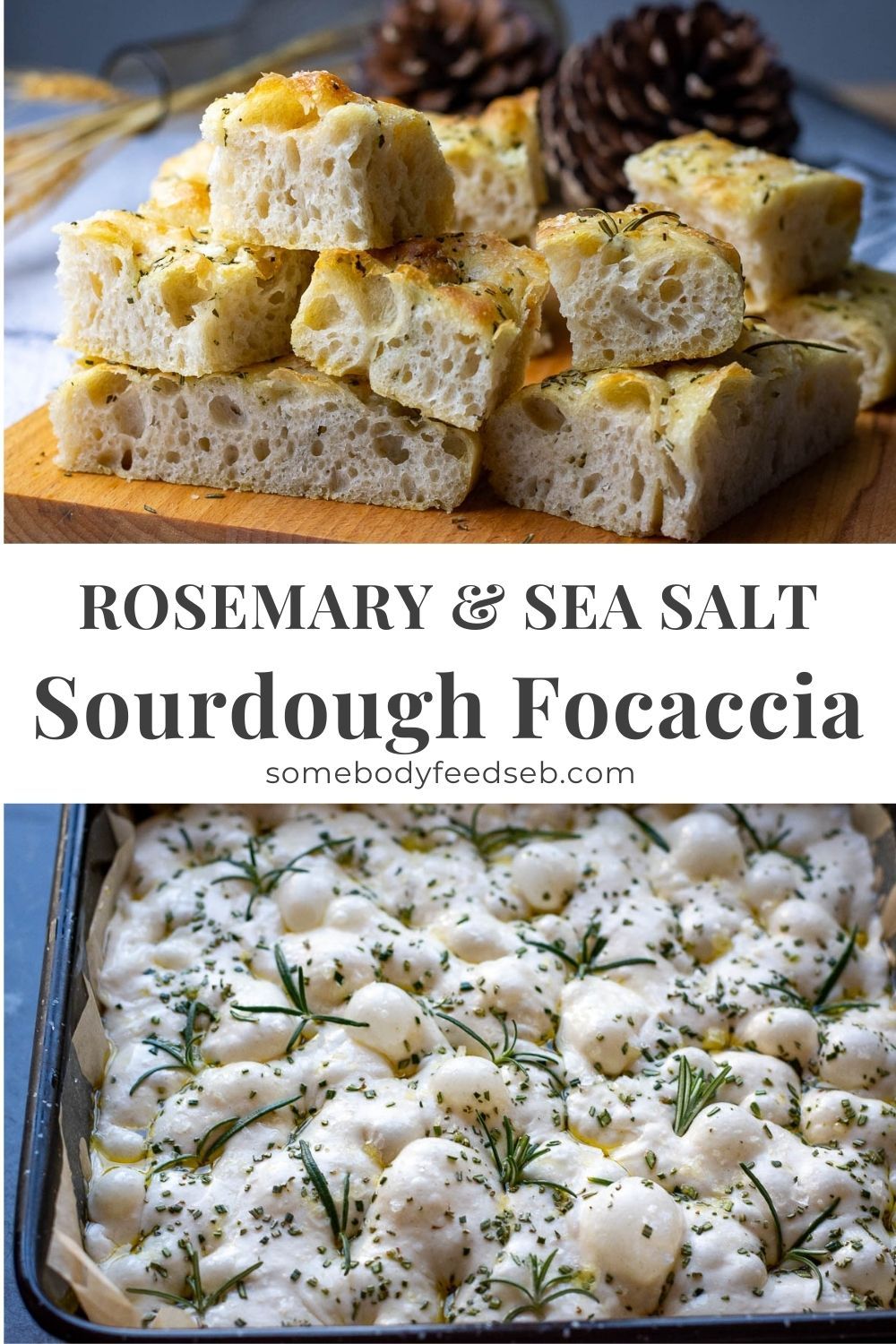
- No-Knead Sourdough Focaccia with Rosemary and Sea Salt — 250 cal, 38 g carbs per slice. The reference version: dimple, oil, sprig, flaky salt, 450°F.
- Sun-Dried Tomato and Rosemary Focaccia — 220 cal, 38 g carbs. The tomato's glutamates give the bread a savory floor that plain focaccia lacks.
- Half-Pint Honey Beer Bread with Rosemary — 180 cal, 30 g carbs. No yeast, no proof, 55 minutes start to finish.
A rimmed half-sheet pan and a bench scraper make focaccia dramatically easier to handle; both live in our bakeware roundup.
3 rosemary vegetable and potato recipes
Starch is rosemary's best friend. Potato and white bean are both flavor-neutral and fat-hungry, which means they take on whatever aromatic you give them.
- Pan-Roasted Herb Potatoes with Garlic and Rosemary — 220 cal, 35 g carbs. Parboil, then crush and roast; the crushed surface area is where the crust forms.
- Rosemary-Garlic Roasted Potatoes with Green Beans — 280 cal, 35 g carbs. A full side dish on one pan.
- One-Pot White Bean and Rosemary Stew — 320 cal, 14 g protein, 48 g carbs. Cannellini, olive oil, two sprigs, 40 minutes.
Two more worth adding to the rotation: Rustic Tuscan Bean & Rosemary Soup (320 cal, 45 g carbs) and Skillet Beef and Butternut Squash Hash with Rosemary and Onions (450 cal, 38 g protein), which is the best single use for leftover roast squash.
4 rosemary cocktails, syrups, and sweets
Rosemary crosses into sweet applications more comfortably than most savory herbs because its pine note reads adjacent to citrus zest.
- Honey-Rosemary Olive Oil Shortbread Cookies — 110 cal per cookie, 12 g carbs. Olive oil instead of butter keeps the crumb short and lets the rosemary lead.
- Strawberry-Rosemary Infused Sparkling Lemonade — 90 cal, zero alcohol. Steep the rosemary in the hot simple syrup for 10 minutes, no longer — past 15 it turns medicinal.
- Roasted Grape Crostini with Whipped Goat Cheese — 95 cal per piece. Roast the grapes with a sprig; they collapse into something between a jam and a sauce.
- Rosemary Citrus Gin Fizz Cocktail — 160 cal. Gin's own juniper is a botanical cousin, so the two stack rather than compete.
For a dessert that shows off a rosemary syrup rather than the needles themselves, Orange and Vanilla Bean Panna Cotta with Rosemary Syrup (320 cal) is the one to make for guests.
Sage makes the same move into the glass: our fresh sage recipes guide has four gin, whiskey and apple-brandy builds plus a sage simple syrup.
Rosemary infusion timing — a cheat sheet
Steep times are where most rosemary recipes go wrong. Too short and you taste nothing; too long and you taste a cough drop. These are the windows we cook to.
| Application | Medium | Time | Note |
|---|---|---|---|
| Simple syrup | 1:1 sugar water, off heat | 10–15 min | Past 20 min turns bitter |
| Infused olive oil | Oil at 180°F | 20 min | Never store fresh sprigs in oil at room temp |
| Compound butter | Softened butter, raw | 2 hr chilled | Mince finely; needles won't soften |
| Braise | Stock or wine | 2–3 hr | Whole sprigs, removed before serving |
| Dry rub | Salt and spice | Overnight | Grind dried needles first |
| Pan sauce | Butter or stock | 60–90 sec | Fresh only; dried stays sharp |
Growing and storing rosemary at home
A supermarket clamshell holds about 0.75 oz of rosemary for $3–4 and goes limp in ten days. A 4-inch nursery plant costs $5–8 and, in USDA zones 8–10, becomes a shrub you cut from for years. Even in zone 5 it works as a container plant that overwinters indoors on a bright sill. Illinois Extension puts the reliably-perennial-outdoors line at zone 8 and above, and rates 'Arp' as the cultivar that pushes furthest into the cold.
Practical notes from a decade of killing and then not killing them:
- Rosemary dies of wet feet, not cold. Use a fast-draining potting mix cut with 30% perlite or coarse sand, and a pot with a real drainage hole. Water when the top inch is dry, then water thoroughly.
- Full sun, minimum six hours. Indoors that usually means a south window plus a cheap grow light from November to March.
- Cultivars matter. 'Tuscan Blue' and 'Arp' are the two upright culinary varieties worth seeking out — 'Arp' is the cold-hardiest, reliable to about 0°F. Trailing/prostrate types are ornamental; the flavor is thinner.
- Harvest from the top. Cut the top 2–3 inches of new growth. Never take more than a third of the plant at once.
Storing cut rosemary. Wrap sprigs in a barely damp paper towel, seal in a bag, refrigerate — three weeks, easily. To dry: bundle five or six sprigs, hang stem-up somewhere dark and airy for 10–14 days, then strip into a jar. To freeze: strip needles, pack into an ice cube tray with olive oil, freeze, and drop a cube straight into a hot pan.
Common mistakes
1. Using rosemary raw as a garnish. Uncooked needles are tough and taste like resin. If you want a raw herb finish, use parsley or chives — see our fresh herb roundup.
2. Over-steeping syrups and oils. The bitter compounds extract more slowly than the aromatic ones. Taste at 10 minutes.
3. Adding fresh rosemary at the end of a braise. It needs 20+ minutes in liquid to release. Add it at the start.
4. Storing fresh sprigs in oil at room temperature. This is a real Clostridium botulinum risk with any low-acid herb in oil. Refrigerate infused oils and use them within a week.
5. Substituting 1:1 for dried. Three times too much dried rosemary is the single most common ruined-dish cause we see. Use the 3-to-1 rule.
When rosemary is the wrong herb
Rosemary overwhelms delicate proteins. Skip it on white fish, scallops, and shellfish — use thyme, dill, or tarragon. Skip it in most Southeast Asian and Mexican dishes, where its pine note fights cilantro, lemongrass, and epazote. And skip it in anything with a short, wet cook and no fat: a rosemary sprig in a quick vegetable stock contributes bitterness before it contributes aroma.
Shopping the whole list
Every recipe above links to a full ingredient list you can push into a single order. Build a rosemary-forward week — roast chicken Monday, focaccia Wednesday, short ribs Sunday — with the meal plan builder, or hand the AI assistant your dietary constraints and let it swap proteins while keeping the herb profile intact. For drying and freezing specifics beyond this guide, Illinois Extension's herb-preserving guide covers air-, oven- and dehydrator-drying and confirms the substitution math — use one-third to one-fourth as much dried as fresh — and the Mayo Clinic's rosemary overview covers the medication-interaction questions that come up around concentrated rosemary extracts.
FAQ
See the frequently asked questions below for conversions, prep, safety, and growing specifics.
Frequently asked questions
How much dried rosemary equals a tablespoon of fresh?
How do I strip rosemary needles without wasting half the sprig?
Is rosemary safe during pregnancy or for people on blood-thinning medication?
Which rosemary variety should I plant at home for cooking?
Can I get the ingredients for a rosemary-focused dinner delivered in one Instacart order?
Sources
Plan a week of meals in two minutes.
Tell our AI what you have and what you like — it builds your plan, shopping list, and Instacart cart. No account needed.
Plan my week →