25 Hidden Veggie Recipes Kids Will Eat: Sneaky Ways to Add Vegetables to Family Meals
Blend the vegetable in and serve it visibly on the same plate — the two-track method, with 25 tested recipes.
Affiliate disclosure: AislePrompt may earn a commission on qualifying purchases made through Amazon and Instacart links in this article, at no additional cost to you. See our affiliate policy →
Blend the vegetable into something your kid already loves, and serve the same vegetable visibly on the same plate. That two-track approach is what makes hidden veggie recipes for kids actually work: the purée covers today's nutrition, and the visible version keeps building the exposure that eventually gets the vegetable eaten on its own. The 25 recipes below are organized by the vehicle — sauce, meatball, breading, condiment, baked good, smoothie — because the vehicle is what decides whether the vegetable disappears.
Introduction — the great veggie battle
Fewer than one in ten American kids eats the recommended amount of vegetables. If yours is in the other ninety percent, you have probably already tried the reasonable things: cutting them small, adding dip, eating them yourself with visible enthusiasm, negotiating.
Hiding vegetables gets a bad reputation in feeding circles, and half of that reputation is deserved. Used alone, it does not teach a child to like vegetables — you can purée cauliflower into mac and cheese for two years and end up with a child who still will not eat cauliflower. Used alongside visible exposure, it is one of the most practical tools a parent has, because it decouples "getting nutrition into my kid today" from "teaching my kid to like vegetables over the next three years." Those are different problems on different timelines and they need different tactics.
Everything below is filed under the AislePrompt kids meals hub, and the recipes in this guide also have their own landing page at hidden veggie recipes for kids, where the grid is split between the dishes that conceal and the dishes that convert.
The nutritionist's take: does hiding actually work?
The honest answer is: yes for intake, no for acceptance, and that distinction is the whole ballgame.
Feeding research on vegetable purées added to familiar entrées consistently finds the same result — preschoolers eat substantially more vegetable when it is blended into a food they already accept, with no drop in how much they like the dish and no increase in refusals. Intake goes up measurably. That is a real, immediate nutritional win, and if your child's vegetable count is currently near zero it is the fastest lever you have.
What the same research does not show is a transfer effect. Kids who eat puréed zucchini in a brownie do not subsequently accept zucchini on a plate. Acceptance is driven by repeated visual and taste exposure to the food in its recognizable form — the 10-to-15-exposure rule — and a hidden vegetable provides zero exposures because the child never knows it was there.
So the protocol that works is both, at the same meal. Blend butternut into the mac and cheese and put four plain roasted butternut cubes on the side of the plate with no comment and no pressure. The American Academy of Pediatrics' 10 tips for parents of picky eaters makes the same point about repeated, low-pressure exposure being the mechanism for acceptance: it can take as many as 10 or more tastings before a toddler's taste buds accept a food, and pressuring a child to eat can make them actively dislike something they would otherwise have liked. Hiding buys you nutrition while exposure does the slow work.
One more thing worth saying plainly: reveal it afterward. Once the food has been eaten and enjoyed several times, telling a child "that sauce had a whole zucchini in it" plants a useful idea. Before the first bite, naming the vegetable triggers refusal in most kids under eight. After acceptance, it builds it.
10 vegetables that disappear in kid meals
Not every vegetable hides equally well. The good candidates are flavor-neutral, color-compatible with the host dish, and either starchy or high-moisture so they blend smooth rather than grainy.
| Vegetable | Blends into | Detectability | Prep |
|---|---|---|---|
| Cauliflower | Mac and cheese, mashed potato, alfredo | Very low | Steam, then blend hot |
| Zucchini | Muffins, brownies, meatballs, meatloaf | Very low | Grate raw, squeeze dry |
| Butternut squash | Mac and cheese, soup, cheese sauce | Very low | Roast, then purée |
| Carrot | Meat sauce, meatballs, chili, muffins | Low | Grate fine or purée |
| Sweet potato | Brownies, pancakes, mac and cheese | Low | Bake, then mash |
| Spinach | Smoothies, pancake batter, pesto | Low (color-dependent) | Blend raw with fruit |
| Beet | Chocolate cake, brownies, red sauce | Low in chocolate | Roast, then purée |
| Mushroom | Meat sauce, burgers, bolognese | Low | Pulse fine, sauté dry |
| Red pepper | Tomato sauce, quesadilla filling | Very low | Roast, peel, blend |
| Kale | Smoothies, baked chips, pesto | Medium | De-stem, blend hard |
Two techniques matter more than the vegetable choice. First, cook before blending — raw cauliflower and raw carrot leave grit and a detectable vegetal note; steamed or roasted then blended goes silky. Second, match the color. Green spinach in a red sauce turns it brown and gets rejected on sight; green spinach in a green smoothie or a mango smoothie bowl is invisible. Beet in chocolate works because chocolate is already dark; beet in a cream sauce turns it pink and blows the cover.
The four purées every parent needs
Every recipe below rests on one of four base purées. Make them once, correctly, and the rest of hidden-vegetable cooking becomes assembly. Make them badly — grainy, watery, or raw-tasting — and no amount of cheese covers it.
Butternut squash purée. The most forgiving of the four, and the one to start with. Peel and cube a 2 lb squash, toss with a tablespoon of neutral oil, roast at 400°F for 35–40 minutes until the edges caramelize. Roasting rather than boiling matters here: it drives off water and concentrates sugar, which is why butternut reads as sweet rather than vegetal in a cheese sauce. Blend hot with 2–3 tablespoons of the cooking liquid or milk. A 2 lb squash yields about 3 cups. It goes into anything orange or yellow — Butternut Squash Macaroni and Cheese is the canonical use, and Hidden Butternut Squash Mac and Cheese Bites turns the same purée into a lunchbox finger food.
Cauliflower purée. The flavor-neutral workhorse. Steam one medium head (about 2 lb of florets) for 12–15 minutes until a knife slides through with no resistance — undercooked cauliflower is the single most common cause of grit. Drain thoroughly and let it steam-dry in the colander for two minutes, then blend with 2 tablespoons of milk or the pasta water it is destined for. Yield is about 2½ cups. Garlic Cauliflower Puree is the version to make if it is going into a savory sauce; Herb-Infused Roasted Cauliflower Puree roasts instead of steams, which deepens the flavor but makes it slightly less invisible.
Spinach purée. The highest nutrient density per spoonful and the trickiest to place, because the color is non-negotiable. Wilt 10 oz of fresh spinach in a dry pan for 3–4 minutes, squeeze out the water hard in a clean towel — this step is not optional, unsqueezed spinach makes sauces weep — then blend with a tablespoon of oil. Ten ounces of raw leaf collapses to roughly ¾ cup of purée, a volume reduction of about 8:1. That compression is why spinach is the best value per cube and why it only works in dishes that are already green or already dark: pesto, Baked Cauliflower Alfredo with Parmesan and Spinach, smoothies, or anything chocolate.
Beet purée. The one that never truly hides, so stop trying. Wrap medium beets in foil and roast at 400°F for 50–60 minutes, until a skewer meets no resistance; the skins slip off under cold water. Blend with a splash of water. A pound of beets yields about 1½ cups. Beets keep their earthy sweetness and their aggressive magenta, so use them where color is a feature rather than a tell: red pasta sauce, chocolate cake, or Hidden Chocolate and Beetroot Vegan Brownies, where cocoa masks the earthiness completely.
| Purée | Cook method | Time | Yield from 2 lb | Invisible in |
|---|---|---|---|---|
| Butternut squash | Roast, 400°F | 35–40 min | ~3 cups | Cheese sauce, soup, muffins |
| Cauliflower | Steam | 12–15 min | ~2½ cups | Mac and cheese, mash, white sauce |
| Spinach | Wilt + squeeze | 3–4 min | ~1½ cups | Pesto, smoothies, chocolate |
| Beet | Roast whole in foil | 50–60 min | ~3 cups | Chocolate, red sauce (color shows) |
Start every dish at roughly a 1:4 ratio — one part purée to four parts host dish — and move up from there over a few weeks. Going straight to 1:2 changes the texture enough to get the whole plate rejected, and a rejected dish is much harder to reintroduce than one that was never noticed.
Hidden-veggie pasta sauces
Pasta sauce is the single most forgiving hiding place in the kitchen, because tomato is already red, already sweet-acidic, and already blended.
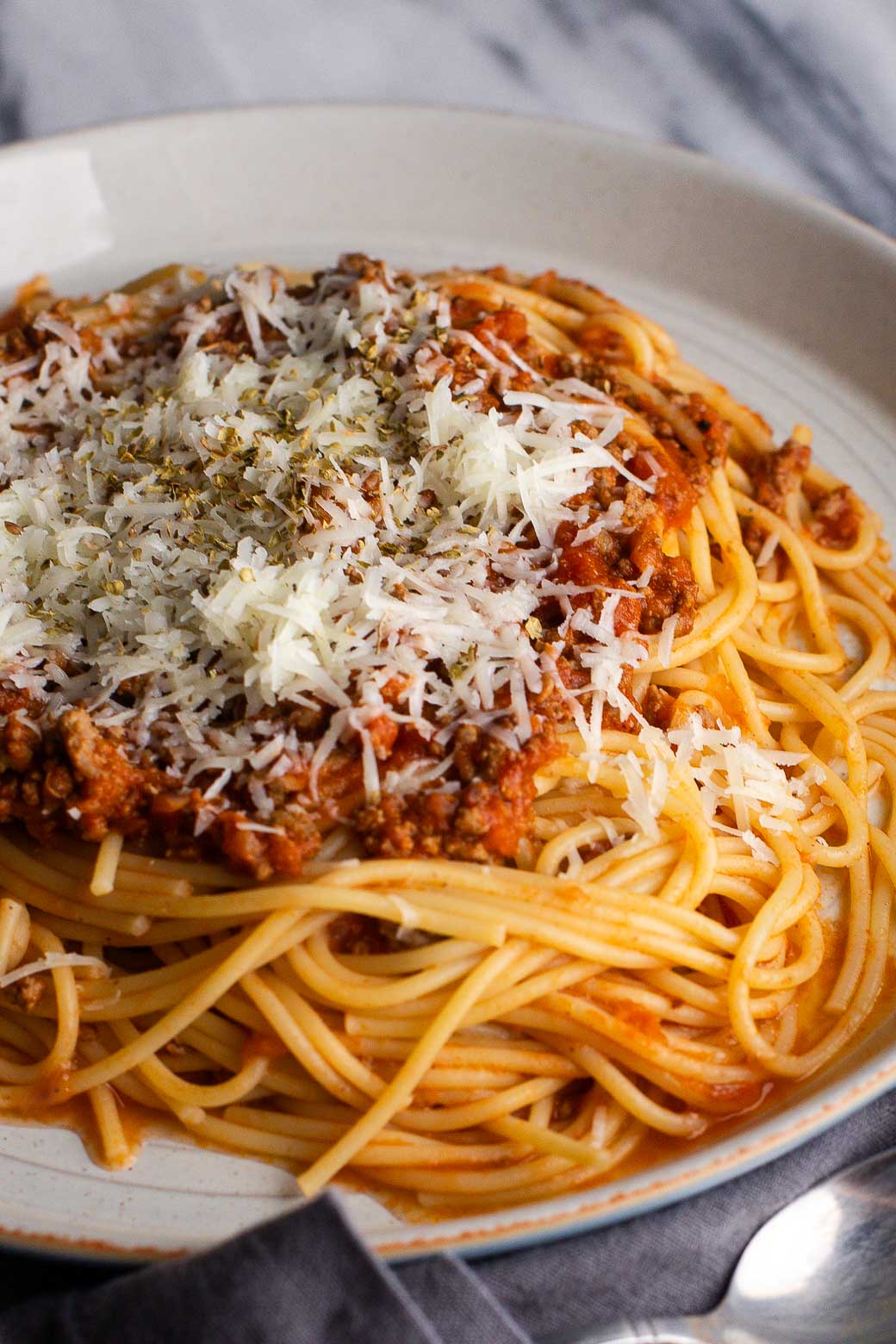
Hidden Vegetable Spaghetti Sauce is the base recipe — carrot, zucchini and onion cooked down and blended smooth into a standard marinara. It freezes in portions and becomes the default sauce for everything else in the rotation.
Hidden Veggie Spaghetti with Roasted Red Pepper Sauce swaps in roasted red pepper, which adds sweetness and makes the sauce even harder to detect. Roasting first is the key step — raw pepper is bitter and gives the game away.
Hidden Mushroom and Lentil Bolognese with Spaghetti is the meat-stretcher version. Finely pulsed mushrooms read as ground beef in texture and color, and they let you cut the meat by half without a single comment from the table.
Vegetable-Loaded Mac and Cheese with Hidden Cauliflower Sauce is the highest-success recipe in this entire guide. Steamed cauliflower blended into a cheddar sauce is genuinely undetectable — the color matches, the texture is identical, and the cauliflower adds body that lets you cut some of the cheese.
Vegetable-Infused Mac and Cheese with Cauliflower and Butternut Squash and Veggie-Loaded Mac and Cheese with Butternut Squash Purée push the ratio further — butternut's orange is a near-perfect match for cheddar, so you can go up to about a 1:1 purée-to-cheese ratio before anyone notices.
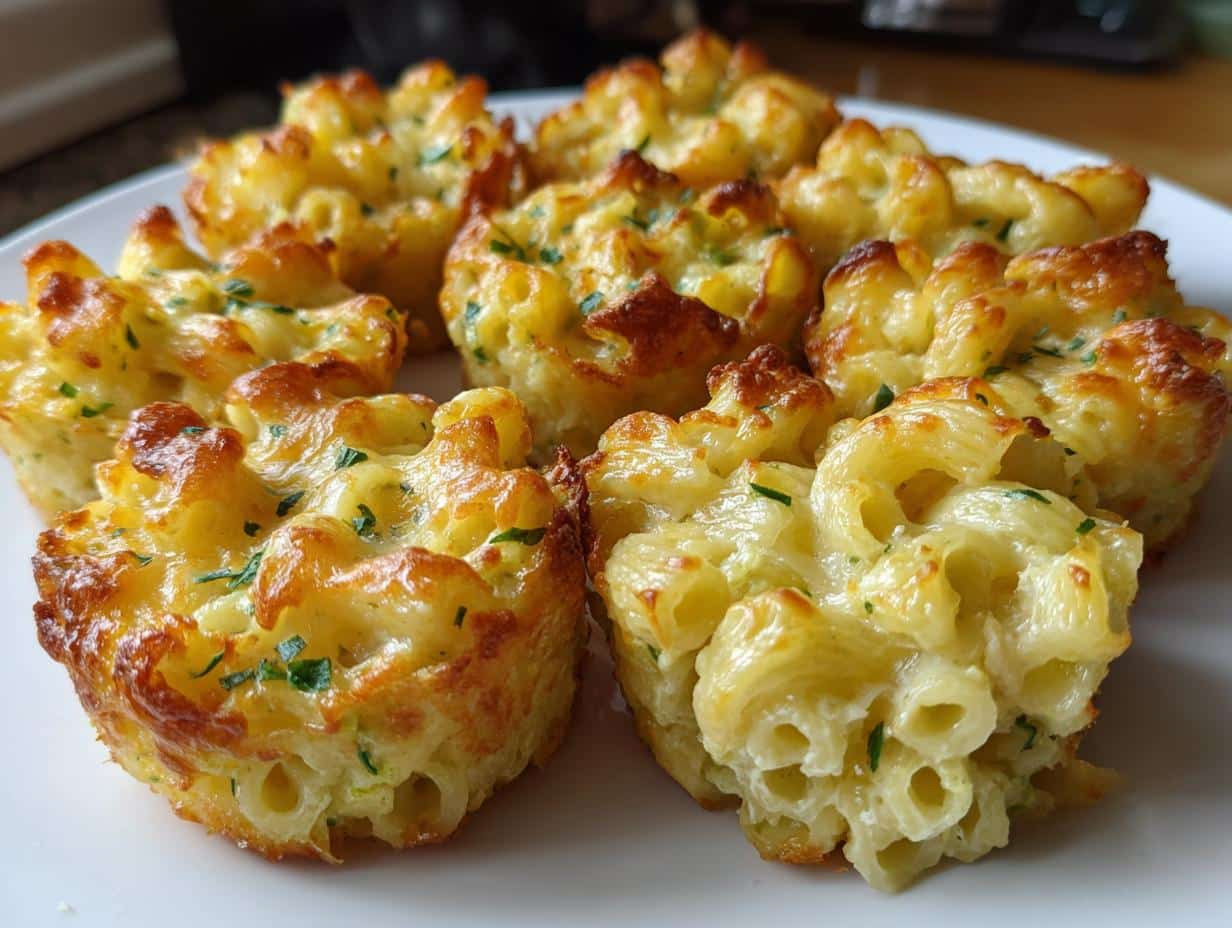
For the child who has decided pasta itself is suspicious, Crispy Herb-Crusted Hidden Veggie Mac & Cheese Bites turns the same sauce into a handheld, dippable, crunchy format — three properties that each independently raise acceptance.
Hidden-veggie meatballs, nuggets, and burgers
Ground meat is the second-best hiding place. Grated vegetable adds moisture, which actually improves the texture, and the browning masks color.
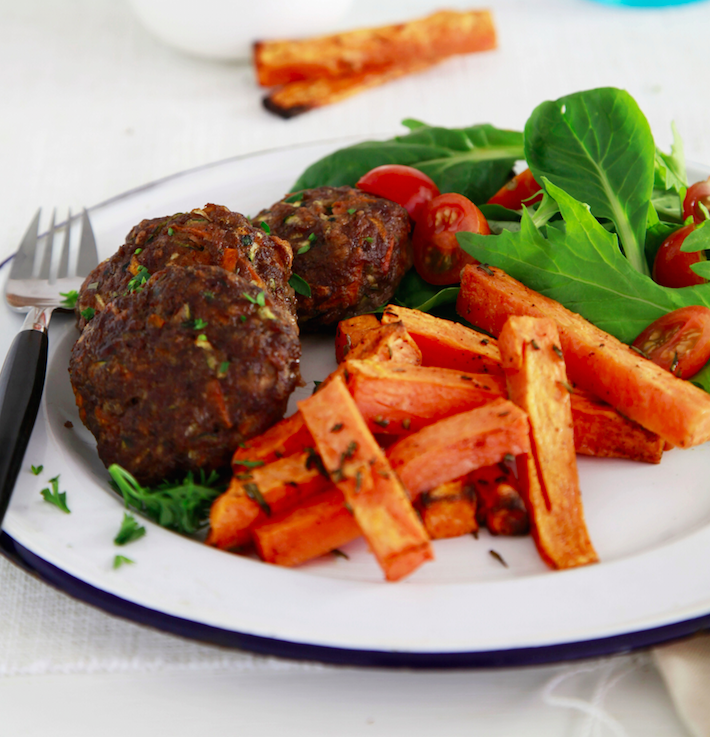
Zucchini and Carrot Veggie-Loaded Meatballs gets close to a cup of grated vegetable into a standard batch. Squeeze the grated zucchini in a clean towel first — otherwise the mix goes wet and the meatballs will not hold.
Veggie-Loaded Turkey Meatballs in Tomato Basil Sauce doubles up: vegetables in the meatball and in the sauce, which is how you get a genuinely vegetable-dense meal that reads as spaghetti and meatballs.
Kid-Friendly Mini Turkey Meatball Skewers with Hidden Veggies adds the skewer, and food on a stick is eaten at a noticeably higher rate than the same food on a plate.
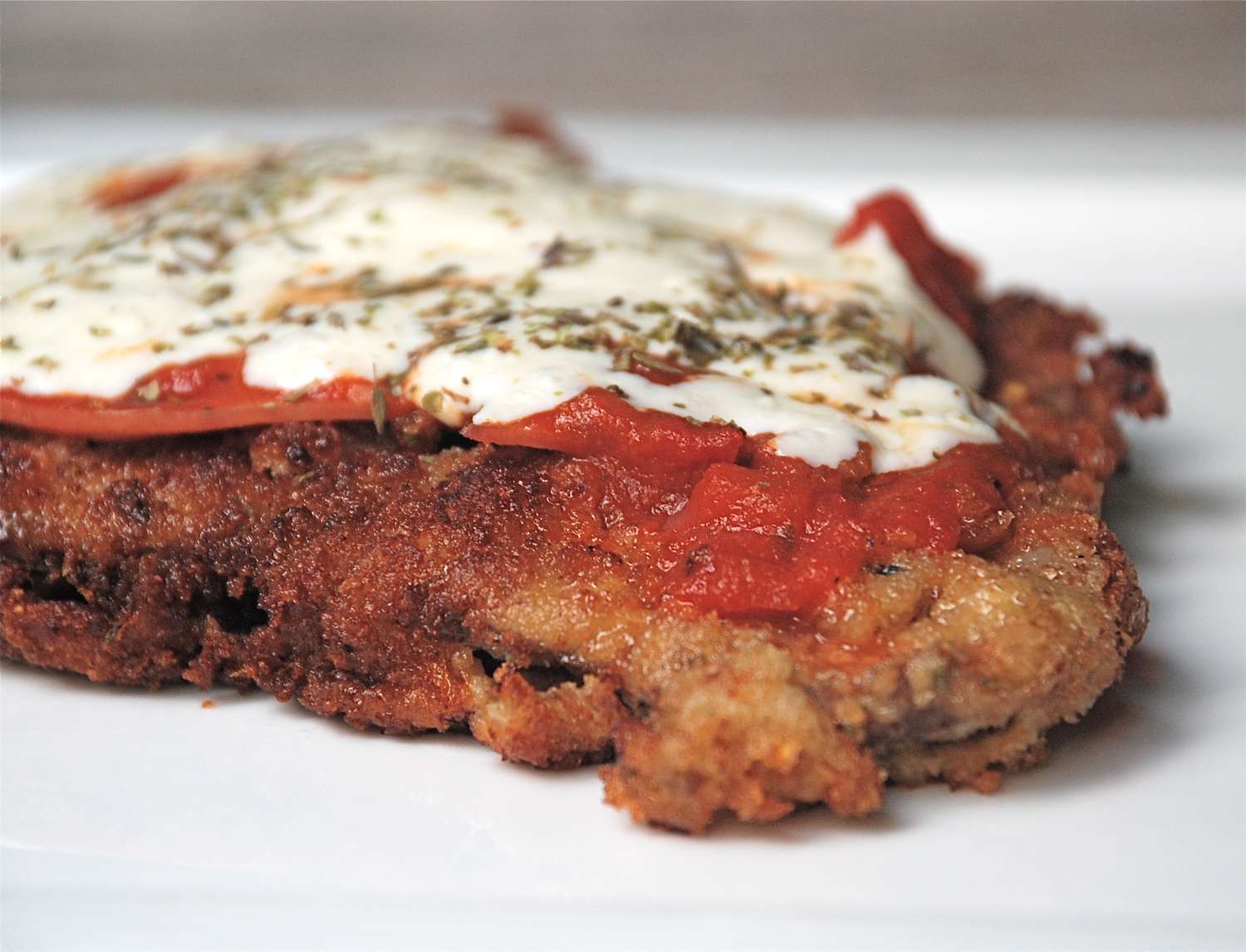
Nuggets and tenders are the format parents ask about most, and there are two different places to put the vegetable. Hidden Veggie Parmesan Chicken Tenders puts puréed carrot and zucchini into the panko-and-Parmesan crust instead of the meat — useful for the child who pulls a nugget apart to inspect the inside but never questions the breading. Oven-Baked Chicken Strips with Hidden Veggie Ketchup moves the vegetable one step further out, into the dip: a homemade ketchup carrying a whole grated carrot. Hiding in the condiment is the most underrated trick here, because the condiment is the one part of the plate a picky eater actively asks for more of.
Oven-Roasted Hidden Veggie Meatloaf with Carrot and Zucchini scales the technique to a full loaf. It slices cold for sandwiches, which quietly extends the vegetables into the next day's lunch.
Sheet Pan Mini Pepperoni Pizzas with Hidden Veggie Sauce uses the blended sauce under cheese and pepperoni — the highest-camouflage delivery system available.
For a meatless option, Hidden Veggie Vegan Chili with Black Beans and Butternut Squash and Miso-Glazed Hidden Veggie Stir-Fry both bury a lot of vegetable under strong savory flavor. Vegetable-Packed Mini Quesadillas for Children is the handheld version — finely diced red pepper, spinach and corn welded under melted cheddar and cut into triangles a small hand can hold, which is the same camouflage principle as the pizza above applied to a five-minute lunch.
Hidden-veggie smoothies and baked goods
This is where you get vegetables into breakfast and dessert, which is where most families have the most room.
Hidden Veggie Breakfast Smoothie with Spinach and Avocado is the archetype. Spinach in a fruit smoothie is completely undetectable by taste — the only risk is color, so either lean into green with mango and pineapple or add a handful of frozen berries to push it purple.
Tropical Mango and Spinach Smoothie Bowl does the same in a spoonable format, which some kids accept more readily than a drink.
Spinach and Banana Pancakes with Oat Flour and Zucchini and Spinach Pancakes with Greek Yogurt Dip both blend the greens straight into the batter. Green pancakes are an easier sell than they sound — most kids read them as a novelty rather than a vegetable.
On the baking side, Hidden Chocolate and Beetroot Vegan Brownies and Cinnamon-Spiced Sweet Potato Brownies are the two highest-payload desserts here — the beet and the sweet potato both add moisture and sweetness while the cocoa hides everything.
Carrot and Zucchini Mini Muffins for Picky Eaters is the lunchbox workhorse: bake a double batch, freeze on a tray, pull one per morning.
And Cauliflower 'Mashed' Potatoes with Chives is the side dish that gets you a 50/50 potato-cauliflower ratio without a single question.
Hidden vegetables in snacks and sides
Dinner gets all the attention, but snacks and sides are where the easy volume is. Kids eat two to three snacks a day, expectations are lower, and nobody inspects a muffin.
Spinach-Zucchini Mini Muffins are the highest-leverage item on this list — two vegetables, portable, freezer-stable, and the green flecks read as herbs. Bake a double batch and freeze; they thaw in a lunchbox by noon.
Mashed Cauliflower with Chives and Parmesan is the side that lets you cut the potato ratio without announcing it. Start at half potato, half cauliflower — most kids will not clock it — then push toward two-thirds cauliflower if it lands.
Cauliflower Rice Stir-Fry with Mushrooms and Zucchini does the same trick with rice. The riced texture is close enough to grain that the substitution passes when it is stir-fried hard and soy-seasoned; steamed and plain, it does not.
Broccoli and Ham Quiche with Gruyère and Chives works because broccoli is only invisible in a cheese-and-egg matrix — chop it fine, and the gruyère does the rest. Bake it in a muffin tin for hand-held portions.
Zucchini and Carrot Pancakes with Yogurt Dill Sauce are a savory after-school option that gets a full cup of grated vegetable into a plate of what a child perceives as pancakes. Grate on the fine side of the box grater and squeeze the zucchini, or the batter will not set.
For dessert-shaped delivery, Cinnamon-Spiced Sweet Potato Brownies and Chocolate Zucchini Carrot Muffins both hide a full vegetable under cocoa. Cocoa is the most reliable masking agent in the kitchen — it covers beet, sweet potato, zucchini, and even spinach.
Top 10 reader-favorite hidden-veggie dinners
| # | Recipe | Hidden vegetable | Detectability |
|---|---|---|---|
| 1 | Mac and Cheese with Hidden Cauliflower Sauce | Cauliflower | None |
| 2 | Hidden Vegetable Spaghetti Sauce | Carrot, zucchini, onion | None |
| 3 | Zucchini and Carrot Veggie-Loaded Meatballs | Zucchini, carrot | None |
| 4 | Sheet Pan Mini Pepperoni Pizzas | Blended sauce vegetables | None |
| 5 | Hidden Mushroom and Lentil Bolognese | Mushroom, lentil | Very low |
| 6 | Oven-Roasted Hidden Veggie Meatloaf | Carrot, zucchini | Very low |
| 7 | Veggie-Loaded Turkey Meatballs | Mixed | Very low |
| 8 | Mac and Cheese with Cauliflower + Butternut | Cauliflower, butternut | Very low |
| 9 | Hidden Veggie Vegan Chili | Butternut, pepper | Low |
| 10 | Cauliflower 'Mashed' Potatoes | Cauliflower | Low |
What to buy: blender, food processor, and the rest
Hidden-vegetable cooking is genuinely equipment-dependent — the difference between "silky and undetectable" and "grainy and rejected" is almost entirely blending power.
A blender that can purée cooked vegetables smooth. This is the one non-negotiable. Anything from about 1000 watts up will take steamed cauliflower or roasted butternut to a completely smooth purée in under a minute. Under roughly 700 watts you get texture, and texture is what gets detected. The small appliances category covers both full-size countertop blenders and the personal blenders that handle single smoothies.
A box grater or food processor with a shredding disc. Grated zucchini and carrot are the backbone of the meatball and baked-goods recipes. A grater costs almost nothing; a processor shredding disc turns a ten-minute job into a one-minute job. See the utensils and tools category.
A fine-mesh sieve and a clean kitchen towel. Squeezing water out of grated zucchini is the step people skip, and skipping it is why the meatballs fall apart.
Half-sheet pans for roasting. Roasting concentrates sugar and removes water, which makes purées denser and sweeter — and dense, sweet purées hide better than boiled ones. The bakeware category covers commercial-gauge sheet pans, and cookware covers the saucepan you will steam in.
5-day family menu
| Night | Dinner | Hidden in the dish | Served visibly alongside |
|---|---|---|---|
| Monday | Mac and Cheese with Hidden Cauliflower Sauce | Cauliflower purée | Plain steamed cauliflower florets |
| Tuesday | Zucchini and Carrot Meatballs | Grated zucchini, carrot | Raw carrot sticks + dip |
| Wednesday | Hidden Veggie Spaghetti with Red Pepper Sauce | Roasted red pepper | Sliced raw bell pepper |
| Thursday | Hidden Mushroom and Lentil Bolognese | Mushroom, lentil | Sautéed mushroom on the side |
| Friday | Sheet Pan Mini Pepperoni Pizzas | Blended sauce | Pizza toppings bar, kid-built |
Breakfasts across the week: Spinach and Banana Pancakes, Hidden Veggie Breakfast Smoothie, and Carrot and Zucchini Mini Muffins from the freezer.
Batch-prep: purée cubes in the freezer
The reason most parents try hidden-vegetable cooking and quit is that it adds a 30-minute prep step to a Tuesday. Move that step to Sunday and the whole system survives contact with a real week.
The workflow: roast or steam one vegetable per week — a full sheet pan, not a token amount — purée it, then pour the purée into silicone ice cube trays and freeze solid. Pop the cubes out into a labeled freezer bag and the tray is free for the next batch. One standard cube holds about 2 tablespoons, so 3 cups of butternut purée gives you 24 cubes. At two cubes per dinner, that is a month of hidden-vegetable meals from 25 minutes of work.
Label the bag with the vegetable and the date. Purées keep about three months at 0°F before ice crystals wreck the texture; past that they turn watery on thaw and will separate in a cheese sauce. Silicone trays matter more than they sound — rigid plastic trays crack and require running warm water over the base, which partially thaws the cubes you are not using. AislePrompt's storage and containers category stocks the trays and the freezer bags together.
For weeknight use, drop the frozen cubes straight into the pan. They melt into a simmering sauce in 90 seconds, into a pot of pasta water in about the same, and into a smoothie without thawing at all — frozen spinach cubes actually improve a smoothie by replacing some of the ice. The only case where thawing first matters is baking, where a frozen cube throws off both temperature and moisture in the batter; move those to the fridge the night before.
Keep two vegetables in rotation at once, not four. Four is where this becomes a hobby and stops being a system.
The nutrition reality check: what a tablespoon actually delivers
Here is the number that most hidden-vegetable articles skip: a tablespoon of purée is not a serving of vegetables, and treating it like one is how families end up thinking the problem is solved when it is not.
For ages 4–8, the federal vegetable target is about 1½ cups a day. A half-cup counts as one serving, and a half-cup is 8 tablespoons. So for a dense purée — butternut squash, cauliflower, sweet potato — one tablespoon is roughly one-eighth of a serving, and one standard purée cube (2 tablespoons) is about a quarter. Two cubes stirred into a pan of mac and cheese, split across two kids, is about a quarter of a serving each. Real, but not a plate of broccoli.
Leafy greens are the exception, and it is a big one. Spinach compresses roughly 8:1 from raw leaf to purée, so 2 tablespoons of spinach purée started life as most of a cup of raw spinach — close to a full serving by raw-volume equivalence. That is why spinach cubes are the highest-value thing in the freezer even though they are the hardest to place.
The micronutrients hold up better than the volume math suggests. Per USDA FoodData Central, 100 g of cooked spinach carries roughly 3.6 mg of iron and 136 mg of calcium, so a single 30 g cube contributes about 1 mg of iron — a meaningful fraction of a young child's daily need from one spoonful nobody noticed. Cooking and puréeing preserve fiber, iron, calcium, magnesium and vitamin A almost entirely; the losses are concentrated in the water-soluble vitamins, mostly vitamin C and some B vitamins, which degrade with heat and holding time. Roasted-then-puréed-then-baked spinach has meaningfully less vitamin C than the same spinach raw in a smoothie.
The practical reading, as of 2026: use purées as a floor, not a ceiling. They guarantee a baseline of iron, fiber and vitamin A on the worst nights. They do not build the tolerance for texture and bitterness that gets a child eating vegetables at twenty-five. That still only comes from the visible pile on the side of the plate.
Common pitfalls
Blending raw. Raw cauliflower and raw carrot leave grit and a green note. Cook first, always.
Colour mismatch. Spinach in red sauce turns it brown, and brown sauce gets rejected before it is tasted. Match the purée to the host dish.
Going too hard on ratio the first time. Start at about 25 percent purée and work up. One over-vegetabled batch can burn a recipe for months.
Hiding only. If you never serve the vegetable visibly, you will still be hiding it when they are fifteen. Both tracks, same meal.
Getting caught mid-blend. Purée and freeze on the weekend, out of sight. A child who watches you blend cauliflower into the cheese sauce is not going to eat the cheese sauce.
When NOT to hide vegetables
If your child already eats a reasonable range of visible vegetables, skip all of this — you do not have a problem to solve, and adding purées to everything just adds work. Hiding is a tool for the low end of the intake distribution.
Skip it too if your child has a texture-based feeding aversion severe enough that they track changes in familiar foods; for those kids, a covertly altered safe food can cost you the safe food entirely, which is a much worse outcome than a missed serving of cauliflower. And if the accepted-food list is under twenty items and shrinking, that is a feeding disorder rather than pickiness — talk to your pediatrician about a feeding therapist. The AAP's child nutrition guidance is a good orientation while you wait for the appointment, and the AAP's recommended daily food and drink amounts for children chart shows the daily food-group targets you are aiming at, by age.
Related reading
- Kids meals hub — the full kid-friendly collection
- 40 easy kid-friendly dinner recipes for picky eaters — the broader picky-eater playbook
- Kid-friendly dinner recipes for picky eaters: 25 easy meals — a 5-day no-fight menu that pairs with these hidden-veggie swaps
- Vegetarian meal plan for families — 30 kid-friendly plant-based recipes
- Meal plan or the AislePrompt chat — build a week around your child's safe foods
Sources
- American Academy of Pediatrics — Nutrition
- American Academy of Pediatrics — 10 Tips for Parents of Picky Eaters
- American Academy of Pediatrics — Energy In: Recommended Food & Drink Amounts for Children
Frequently asked questions
Does hiding vegetables actually work long-term for picky eaters?
Which vegetables blend in most invisibly?
Can I make hidden-veggie meals ahead and freeze them?
Should I tell my kids the vegetables are in there?
Are frozen and canned vegetables as nutritious as fresh for these recipes?
Does puréeing destroy the nutrients in vegetables?
How much of a vegetable serving is one purée cube?
Kid-friendly recipes from the catalog
Save any of these to My Recipes — no account needed — and send the ingredients to Instacart in one tap.