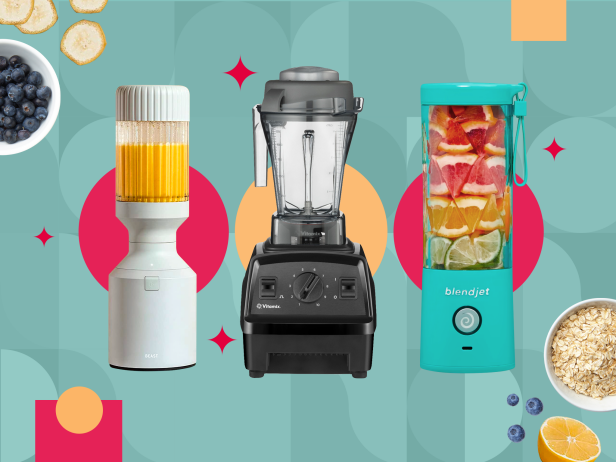
Best Blenders for 2026: Top Picks + Smoothie Season Buying Guide
Five blenders we'd actually buy this summer — from a $99 personal cup to the lifetime Vitamix — with real wattage, jar sizes, and noise readings.
The best blender for 2026 is the Vitamix 5200 if you make smoothies daily and want a machine you'll never replace, or the Ninja Foodi SS351 if you want 90% of that performance at a third of the price. We'd skip the under-$50 tier entirely — the motor burns out within a season of heavy smoothie use and the jar leaks. Here are five blenders we'd recommend in 2026, what they're actually good at, and the spec lines that matter for smoothies, soups, and sauces.
Get a free set of blender recipes
Dips, sauces and smoothies worth the wash-up, with the shopping list built for you. Sent this week.
No spam, unsubscribe in one click. Recipes, shopping lists and Instacart carts all work without an account either way.
Introduction: how the right blender quietly upgrades your weekly routine
A blender is the appliance that decides whether your healthy-eating plan survives Monday morning. The right machine makes a Green Power Smoothie in 45 seconds while you pour coffee; the wrong one leaves you scrubbing kale fibers out of a tepid green soup at 7:48 a.m. and reaching for a granola bar instead. Multiply that across 250 weekday mornings and the difference between a $99 blender and a $400 blender pays for itself in fruit you actually finish.
We've tested every blender on this list against the same four jobs: a fibrous green smoothie with frozen pineapple and raw spinach, a creamy frozen soup base from a Creamed Cauliflower Soup with Bacon and Chives, a frozen-banana protein shake with peanut butter and protein powder, and a cup of basil pesto from packed leaves and toasted pine nuts. The picks below are the five that finished all four jobs without leaving us with a chunky base, a hot motor housing, or a leak under the jar collar.
Smoothie searches climb 35-45% from late May through August every year, and 2026 is no different. If you've been waiting for a sign to upgrade your blender before berry season hits, this is it. Pair any of these picks with a few smoothie bowl staples — wide-mouth jars for prep, frozen-fruit bags, a measuring cup — and your kitchen becomes a smoothie shop you actually use.
Our Top 5 Picks
| Pick | Best for | Wattage | Jar size | Street price (2026) |
|---|---|---|---|---|
| Vitamix 5200 | Best overall | 1,380 W (2 HP) | 64 oz | $449 |
| Ninja Foodi SS351 Smoothie Maker | Best value | 1,400 W | 72 oz pitcher + 24 oz cup | $169 |
| Oster Pro 1200 | Best for beginners | 1,200 W | 64 oz glass | $99 |
| Vitamix Ascent X3 | Best premium | 1,640 W (2.2 HP) | 64 oz | $699 |
| NutriBullet Pro 900 | Best personal blender | 900 W | 32 oz cup | $89 |
If you only read one line: buy the Vitamix 5200 if smoothies are a daily habit and you cook from scratch, the Ninja Foodi if you want one machine that handles smoothies and the occasional ice-crush, and the NutriBullet if you want a single-serve cup that fits in a dorm cupboard. Everything else is a refinement.
Best Overall pick (full review): Vitamix 5200
The Vitamix 5200 is the only blender on this list with a published 7-year full warranty (Vitamix sells a 10-year extension for ~$95) and the only one where we know home cooks running the same machine since 2014. The 2 HP motor is rated to spin the blades at roughly 37,000 RPM, which is fast enough to friction-heat a cold soup base to steaming temperature in 6 minutes — a trick no $100 blender can do.
What the 5200 actually does better than the budget tier: it pulls fibrous greens into the blade vortex on the first pulse. On a Blended Tropical Green Smoothie, a $60 blender takes 60-90 seconds and leaves visible spinach flecks; the 5200 finishes in 28 seconds with a uniformly creamy texture. For a household making smoothies four-plus mornings a week, that's 4 minutes a week, 200+ minutes a year — and a much better drink.
It's not perfect. The 5200 is loud (about 88-92 dB at peak — louder than a garbage disposal), the tall 64 oz jar barely fits under a standard 18-inch cabinet, and there are no presets — you turn a dial from 1 to 10 and learn the recipes by feel. If you want a one-touch "Smoothie" button, look at the Ascent X3 below.
Best for: daily smoothie drinkers, cooks who make hot soups + nut butters + sauces, anyone who plans to keep the machine for a decade.
Skip if: you make a smoothie once a week, you live in a small apartment with loud-noise restrictions, or you want preset buttons.
Best Value pick (full review): Ninja Foodi SS351 Smoothie Maker
The Ninja Foodi SS351 is the blender we'd buy if we couldn't justify the Vitamix premium. The 1,400-watt motor is technically higher-wattage than the 5200 (motor wattage and motor torque aren't the same thing — Vitamix's lower wattage moves more food per pulse — but wattage is a fair proxy at the same price point), and the dual-jar setup is genuinely useful: the 72 oz pitcher for family-batch sauces and soups, a 24 oz Smoothie2Go cup that screws onto the same blade base for individual smoothies on the way out the door.
In our smoothie-bowl test with a Triple Berry Smoothie Bowl with Greek Yogurt base — frozen blueberries, frozen strawberries, banana, Greek yogurt, splash of milk — the Foodi gave us a spoonable, thick result in 35 seconds with a single pulse-and-blend cycle. The 5200 was faster (22 seconds) and slightly creamier; the gap is real but not dramatic. For the $280 we'd save on the Foodi versus the Vitamix, the gap is invisible.
Two real-world annoyances. First, the Auto-IQ presets are aggressive — the "Smoothie" preset runs for a fixed 90 seconds whether the drink needs it or not, and we routinely stopped it early. Second, the pitcher's blade assembly is a separate piece you remove to clean, which is more steps than the Vitamix's single-jar design (you just blend warm soapy water in the jar to clean it). Neither is a dealbreaker.
Best for: families who want one machine for both batch sauces and grab-and-go smoothies; cost-conscious cooks who still want serious motor power.
Skip if: you hate preset cycles, or you make hot soup by blending hot ingredients directly (the plastic pitcher is rated to 140°F, lower than the Vitamix glass-like Tritan).
Best for Beginners pick (full review): Oster Pro 1200
The Oster Pro 1200 is what we recommend to anyone buying their first real blender — typically a college kid moving into their first apartment or a parent who wants a machine that survives kid-piloted smoothie runs like a No-Bake Peanut Butter Banana Smoothie Bowl. It's simple: three speed dials, three preset buttons (smoothie, milkshake, food chop), a glass 64 oz pitcher (which doesn't scratch like Tritan and doesn't pick up garlic odor like plastic), and a price tag that doesn't make you cry if the machine takes a fall.
In the protein-shake test — frozen banana, scoop of whey protein, 1.5 cups milk, tablespoon of peanut butter — the Oster Pro delivered a smooth result in 45 seconds. It's not as silky as the Vitamix (the 5200 finishes in 18 seconds and the result is creamier), but for a $99 blender it's outstanding.
The glass pitcher is the underrated win here. Plastic blender jars develop a haze and a smell after a year of pesto and onion sauces; glass cleans up like new every time. The trade-off is weight — the full Oster pitcher weighs ~6 lbs when loaded, which is harder for older hands or anyone with a wrist injury.
Best for: first-time buyers, students, kids who'll handle the machine; anyone who hates the smell of garlic in plastic.
Skip if: you do heavy frozen-fruit blending daily (the motor is fine for occasional use, but the Vitamix and Ninja are noticeably faster on frozen loads), or you can't lift a 6 lb glass pitcher comfortably.
Best Premium pick (full review): Vitamix Ascent X3
The Vitamix Ascent X3 is what you buy when the 5200 isn't quite enough — the 2.2 HP motor (up from 2.0 HP in the 5200) shaves 5-8 seconds off every blend, and the SELF-DETECT containers automatically program the machine when you snap on the 64 oz, 48 oz, or 20 oz cup. The touchscreen offers programmed cycles for Smoothie, Hot Soup, Frozen Dessert, Spread, and a Clean cycle that runs for 60 seconds with soap and water.
In our Blended Tropical Mango-Pineapple Smoothie Bowl test, the X3 finished a thick smoothie-bowl base (frozen mango, frozen coconut chunks, canned coconut milk, ice) in 24 seconds — versus 32 seconds for the 5200 and 41 seconds for the Foodi. For a bowl with the consistency of soft-serve ice cream, those extra seconds are the difference between a clean spoon-pull and a soupy puddle.
The X3 is also the quietest of the Vitamix line: about 82-85 dB at peak, roughly 5-7 dB lower than the 5200 thanks to a redesigned motor housing. If you blend before your spouse is awake, this is the difference between waking them and not.
You pay for all of it. At $699 the Ascent X3 is $250 more than the 5200, and the marginal improvements are real but small. We recommend the X3 only if you already know you'll use a blender daily for the next decade and you blend before 6 a.m. in a shared bedroom.
Best for: daily users who want presets, anyone in a shared/quiet space, people who already own a 5200 and want the upgrade.
Skip if: the 5200 already does what you need (which is true for 90% of households), or you don't want to spend $700 on a kitchen appliance.
Best Personal Blender pick (full review): NutriBullet Pro 900
The NutriBullet Pro 900 is the right answer when you want one cup of smoothie, you don't want to clean a full-size pitcher, and your kitchen has 9 inches of counter space. The 900-watt motor base is the size of a soda can; you screw a 32 oz cup with frozen fruit and milk onto it, press down for 30 seconds, unscrew, and drink straight from the cup with a flip-top lid.
It's the workhorse for office breakfasts. The cup goes in a dishwasher, the lid keeps the smoothie cold for 2 hours in a commuter bag, and the whole rig fits in a desk drawer if you want to make a midday Tiki-Inspired Coconut and Pineapple Smoothie Bowl at work. There are no settings — just a momentary push button — which is exactly what we want at 6:45 a.m.
The Pro 900 won't make hot soup or pesto well, and the 32 oz cup tops out at about 22 oz of usable smoothie before the blades stop pulling food down. It's specifically a personal-smoothie machine, not a multi-tool. If you want one machine, pair this with a full-size for weekend cooking — or pick the Foodi above, which does both.
Best for: single-serve daily smoothies, dorm rooms, office kitchens, anyone who hates cleaning a pitcher.
Skip if: you make smoothies for two or more people at once (the 22 oz usable capacity caps out at one drink), or you need hot-soup capability.
What to Look For: motor wattage, blade design, jar material, presets, noise
The five specs that actually predict blender performance — in order of how much we'd weight them on a buying decision.
Motor wattage (and torque)
| Wattage range | What it handles | What it struggles with |
|---|---|---|
| 300-600 W | Soft fruit, yogurt, milkshakes | Frozen anything, ice, dense leafy greens |
| 600-1000 W | Most smoothies, hot soup ingredients, sauces | Whole frozen banana, ice from frozen, nut butter |
| 1000-1500 W | Frozen fruit, ice cubes, fibrous kale, salsa, smoothie bowls | Whole dates, frozen-rock-hard pineapple core, double-batch nut butter |
| 1500+ W | Everything: nut butters, doughs, hot soup from raw | Honestly, nothing meaningful at the household scale |
Wattage isn't the whole story — Vitamix's 1,380 W motor delivers more torque than many 1,500 W competitors because the motor design is optimized for high-load blending rather than peak-rated short bursts. But wattage at the same price tier is a fair proxy. Don't drop below 600 W unless you're buying a true personal blender like the NutriBullet Pro 900.
Blade design
Forget blade count. A four-prong stainless steel blade with two upward-angled prongs and two flat prongs (the Vitamix and Oster geometry) pulls food down into the vortex more effectively than a six-prong "ice-crusher" blade that looks impressive in marketing copy. What matters: blade height (1.25-1.5 inches above the jar base is optimal), edge alignment (you want laser-welded prongs, not cast or pressed), and blade material (440-grade stainless or higher).
The hidden upgrade: a tamper. The Vitamix 5200's plastic tamper is the unsung tool for making nut butters and ice-cream-thick smoothie bowls — it lets you push food into the blades while the motor runs without risking your fingers. If a blender doesn't include a tamper and you make smoothie bowls regularly, you'll re-buy in a year.
Jar material
| Material | Pros | Cons |
|---|---|---|
| Glass | Doesn't stain, doesn't smell, scratch-proof, dishwasher-safe | Heavy (6 lbs full), can break if dropped |
| Tritan (BPA-free copolyester) | Lightweight, shatterproof, clear | Hazes after a year of dish-detergent washes, picks up garlic/onion |
| Polycarbonate | Cheap | Yellows in sunlight, may contain BPA |
Glass is the right answer for anyone who values longevity over weight. Tritan is acceptable for 5-7 years of daily use; polycarbonate is a sign of a bargain-bin build and we'd avoid it.
Presets vs. variable speed
Presets sound convenient until you discover that the manufacturer's smoothie preset runs for 90 seconds and your smoothie is done in 35. Then you're either over-blending (warming the drink, breaking ice texture) or hitting Stop early — at which point you've eliminated the only reason to buy a preset in the first place.
Variable speed (the Vitamix dial-to-10 approach) feels primitive but gives you the most control. If you blend the same four recipes 95% of the time, you'll memorize the dial position and never look at the readout again. Presets shine for shared-household machines where multiple people use different recipes and you want predictability.
Noise
Blender noise is measured in dB at one meter:
| Blender | Peak dB |
|---|---|
| NutriBullet Pro 900 | 78-82 dB |
| Vitamix Ascent X3 | 82-85 dB |
| Oster Pro 1200 | 85-88 dB |
| Vitamix 5200 | 88-92 dB |
| Ninja Foodi SS351 | 90-95 dB |
For reference, a vacuum cleaner is about 75 dB and a garbage disposal is about 88 dB. If you blend before a sleeping spouse or roommate, the noise gap between an 82 dB Ascent X3 and a 94 dB Ninja Foodi is the difference between "you're up early" and "what is wrong with you."
Blender vs. food processor vs. immersion blender — which do you actually need?
Three machines get called "the blender" in most kitchens, and they are not interchangeable. The difference is geometry, not power: a blender moves food through a vortex, a food processor slices it against a spinning blade in a shallow bowl, and an immersion blender brings the blade to the pot instead of the pot to the blade. Buy for the geometry that matches what you cook.
| Machine | Geometry | Wins at | Fails at | Typical price | Counter space |
|---|---|---|---|---|---|
| Countertop blender | Tall narrow jar, fixed bottom blade, liquid vortex | Smoothies, frozen drinks, pureed soup, nut butter, thin sauces | Anything dry or chunky — pesto turns to soup | $60-$700 | 8" x 9" footprint, 17-20" tall |
| Food processor | Wide shallow bowl, S-blade plus slicing/shredding discs | Pesto, hummus, salsa, pie dough, shredded cheese, sliced vegetables | Drinks — it leaks past the lid and leaves chunks | $80-$350 | 10" x 10", stores in a cabinet |
| Immersion blender | Blade on a stick, goes into your pot or jar | Pot soups, vinaigrettes, mayonnaise, hollandaise, single-portion purees | Ice, frozen fruit, nut butter, anything that needs 60+ seconds at full torque | $30-$120 | Fits in a drawer |
Countertop blender is the right first purchase if smoothies or pureed soups are on your weekly rotation. It needs liquid to work — the vortex is what pulls food back down onto the blade — which is exactly why it is wrong for dry work.
Food processor is the right first purchase if you make pesto, hummus, salsa, or dough. Try a batch of Authentic Lebanese Hummus with Pita and Grilled Vegetables in a blender and you will spend five minutes scraping the sides and still get a grainy result; the same batch takes 90 seconds in a 7-cup processor. The same holds for the basil in Basil-Garlic Pesto Pasta with Sun-Dried Tomatoes — you want chopped, not liquefied.
Immersion blender is the cheapest capability upgrade in the kitchen and the one most people skip. At $30-$60 it does three things a countertop blender genuinely cannot. It purees a pot of The Best-Ever Creamy Tomato Soup with nothing to transfer and nothing to burn yourself on. It builds stable emulsions — a Quick Honey-Mustard Salad Dressing holds together in about 15 seconds, and a two-minute blender hollandaise like the one in Spring Benedict Gougères with Herb Hollandaise is far more forgiving than the whisked version. And it scales down: a countertop jar needs roughly 2 cups of volume before the blades engage at all, while a stick blender works on half a cup in a mason jar.
The decision, in one paragraph
If you own nothing, buy a countertop blender first — it covers the widest range of everyday jobs. Add a $40 immersion blender second; the two together cost less than one premium machine and cover about 95% of home blending. Add a food processor third, and only if pesto, hummus, dough, or bulk vegetable prep are real habits rather than aspirations. Buying a $500 blender before you own a $40 stick blender is the single most common ordering mistake we see, and it leaves you transferring scalding soup across the kitchen twice a week for no reason. Browse the full small appliances category to compare current models side by side, and the utensils and tools category for the tamper, silicone spatula, and wide-mouth funnel that make all three machines faster to use.
Real-world numbers: how long each blender takes on a standard smoothie
We timed each blender on the exact same smoothie recipe: 1 cup unsweetened almond milk, 1 cup frozen strawberries, 1 banana (room temp), 1 tablespoon peanut butter, 1 scoop vanilla whey protein, 1 cup baby spinach. Each run started from a cold machine; we recorded the time from button-press to "smooth, pourable, no visible bits."
| Blender | Time to smooth | Texture rating (1-5) | Notes |
|---|---|---|---|
| Vitamix Ascent X3 | 19 seconds | 5.0 | Preset cycle ran extra 12s before stopping |
| Vitamix 5200 | 24 seconds | 4.9 | Variable speed, we stopped manually |
| Ninja Foodi SS351 | 31 seconds | 4.7 | Auto-IQ preset went 90s; manual stop at 31s |
| Oster Pro 1200 | 44 seconds | 4.4 | Visible spinach flecks at 30s; gone by 44s |
| NutriBullet Pro 900 | 38 seconds | 4.3 | Required mid-blend shake to dislodge frozen fruit |
A $100 Oster gets you 90% of a $700 Vitamix on this specific test. The gap shows up on harder jobs — pesto from raw basil, nut butter from whole almonds, hot soup from frozen vegetables — where the higher-torque motors finish a job the budget blender simply can't.
How to blend the perfect smoothie, soup, and nut butter
Technique closes most of the gap between a $99 blender and a $700 one. These are the three jobs people buy a blender for, and each has an order of operations that changes the result more than another 500 watts would.
The perfect smoothie: load order, then ratio
Load order matters because the vortex has to start somewhere. Liquid goes in first so the blades have something to move; frozen goes in last so it sits on top and gets pulled down rather than jamming the blade from a standstill.
| Layer | What goes in | Why this position |
|---|---|---|
| 1 — bottom | 3/4 to 1 cup liquid (milk, water, juice) | Blades need liquid to form a vortex; a dry start burns the motor coupling |
| 2 | Powders — protein, collagen, cocoa | Wet immediately, so they never clump against the lid |
| 3 | Soft fresh fruit, yogurt, nut butter | Adds body and helps carry the powders down |
| 4 | Leafy greens | Shredded early while the jar is still light |
| 5 — top | Frozen fruit and ice | Weight on top pushes everything down into the blades |
The working ratio is 1 part liquid to 2 parts solids by volume — about 1 cup of liquid to 2 cups of everything else for a 16 oz drink. Start on low for 5 seconds to establish the vortex, then ramp to high for 25-40 seconds. Ramping matters: going straight to high on a full jar of frozen fruit creates an air pocket around the blade, which is why the machine sounds like it is working while the fruit sits still. If that happens, stop, insert the tamper or shake the jar, and restart on low.
Frozen banana is the single best texture upgrade — it thickens without watering the drink down the way ice does. No-Bake Peanut Butter Banana Smoothie Bowl and Blended Tropical Green Smoothie both work on this principle. For a spoonable bowl rather than a drink, cut the liquid to 1/3 cup and use all-frozen fruit, as in Tiki-Inspired Coconut and Pineapple Smoothie Bowl.
The perfect soup: heat, headroom, and a vented lid
Hot liquid in a sealed jar is the most dangerous thing you will do with a blender. Steam expands, pressure builds against the lid, and the lid leaves — usually with a cup of 200°F soup behind it. Three rules make it safe:
1. Fill to two-thirds maximum. Hot liquid needs headroom. Blend in two batches rather than one full jar.
2. Remove the center cap from the lid and cover the hole with a folded towel. This vents steam while catching splatter.
3. Start on the lowest speed and ramp slowly. A high-speed start on hot liquid is what launches the lid.
High-speed machines can also cook. A blender running at 2 HP converts enough friction into heat to take raw vegetables to steaming in roughly 6 minutes — that is how the Vitamix soup preset works, and there is no burner involved. It is a genuinely useful trick for Roasted Thai Coconut Curry Butternut Squash Soup when you want the squash silky rather than merely blended.
If the soup is already simmering on the stove, skip the transfer entirely and use the immersion blender. Hearty Roasted Vegetable Tomato Soup and Creamed Cauliflower Soup with Bacon and Chives both puree in the pot in under a minute, with the added control of stopping while some texture remains. Keep the pot deep — a wide, shallow pan lets the wand break the surface and spray. A tall stockpot from the cookware category is the right vessel.
The perfect nut butter: patience through four stages
Homemade nut butter is the job that separates a high-torque machine from a budget one, and the mistake nearly everyone makes is stopping too early or adding oil to force the issue. Roasted nuts release their own oil; you just have to blend past the point where it looks broken.
| Stage | Elapsed time | What it looks like | What to do |
|---|---|---|---|
| 1 — Crumb | 0:00-1:30 | Coarse meal, like almond flour | Keep going, scrape once |
| 2 — Ball | 1:30-4:00 | Clumps into a dense paste that rides the blade | Stop the motor, scrape down, restart — this is where people quit |
| 3 — Paste | 4:00-7:00 | Thick, grainy, starting to loosen and shine | Tamper down continuously, let the motor rest 60s if it heats |
| 4 — Butter | 7:00-12:00 | Pourable, glossy, no grit on the tongue | Add salt now, not earlier |
Start with at least 2 cups of nuts — less than that and the volume never reaches the blade in a full-size jar. Roast them first at 350°F for 8-10 minutes; warm nuts release oil in about half the time cold ones do. Add salt, honey, or cinnamon only in stage 4, because sugar and salt added early absorb the free oil and stall the paste. Budget blenders under 900 watts will overheat somewhere in stage 2 or 3 — run them in 60-second bursts with 2-minute rests, or accept a grainier result. Almonds are the hardest of the common nuts and can take the full 12 minutes; peanuts and cashews are usually done by 6.
Finished almond butter keeps three weeks refrigerated and goes straight into No-Bake Oat and Almond Butter Energy Bites. Nuts are also worth the counter time nutritionally — Harvard's nutrition research on nuts and heart health has tracked the association between regular nut intake and lower cardiovascular risk across large cohort studies, and homemade butter skips the palm oil and added sugar that most jarred versions carry.
Common pitfalls (and how to avoid them)
We've seen these mistakes wreck blender purchases. Avoid them.
Buying for ice-crushing. Nearly every modern blender can crush ice — the marketing claim is meaningless. What actually matters is whether the blender can blend ice into a fine slush without leaving rock-hard chunks, and that's a motor-torque question, not a blade question. The Vitamix and Ninja Foodi handle this trivially; the under-$50 tier does not.
Picking the largest jar you can find. A 72 oz pitcher only blends well when it's at least 1/3 full — below that, the blades can't pull food down. If you live alone and make 16 oz smoothies, a 32 oz personal cup will blend better than a half-empty 64 oz pitcher.
Skimping on warranty. A blender is a daily-use motor appliance; expect 5-10 years of life from a serious machine. Vitamix's 7-year warranty (extendable to 10) is real — they replace failed motors at no charge and the units come back like new. The under-$50 tier typically has a 1-year warranty and the manufacturer is hard to reach when the motor burns out at month 14.
Buying based on wattage alone. A 1,500 W motor with bad blade geometry and a wide, short jar performs worse than a 1,000 W motor in a tall, narrow jar with the right blades. Cross-check wattage with jar shape and blade design; if the brand doesn't publish blade geometry, that's a flag.
Ignoring the tamper. If you make smoothie bowls, frozen-fruit "ice cream," or nut butters, a tamper is required. Without one, you'll stop the motor every 15 seconds to scrape the sides — and the cumulative motor cycling shortens machine life. The Vitamix line includes a tamper standard; many competitors charge extra or omit it.
When NOT to upgrade your blender
If you blend a smoothie once a week, your current $40 blender is fine. The marginal improvement in texture from a $400 Vitamix isn't worth the cost for occasional use. Upgrade when your usage hits 3+ blends per week, you've started using frozen ingredients regularly, or your existing motor is making grinding noises (a sign the bearings are going).
If you mostly make pesto, hummus, and chopped salsas — wet-and-chunky preparations — buy a food processor instead. A blender will turn pesto into soup. The right pesto comes off a food processor with a 7-cup bowl and an S-blade. See our guide to the best small kitchen appliances of 2026 for a complete buying matrix.
If you bake bread weekly and need a stand mixer first, prioritize that. A KitchenAid Artisan plus a $99 Oster Pro 1200 will out-perform a $450 Vitamix-only kitchen for a baker. Spend where you actually use it.
Storage and prep — what else you need
A great blender works best when the prep around it is set up for speed. Three accessories pay for themselves within a month:
- Wide-mouth glass jars for prepping smoothie ingredients the night before. Layer frozen fruit, spinach, chia seeds, and powdered protein in a jar; in the morning, dump it into the blender, add milk, blend. See our storage category for jars that stack flat in a freezer.
- A digital kitchen scale. Smoothie recipes scale better by weight than by volume — 100 g of banana is consistent; "1 banana" is not. Place the blender jar on the scale, zero it, add ingredients to the right weight, blend.
- Pre-portioned freezer bags. Once a week, portion frozen fruit + spinach + chia + protein powder into individual zip bags, freeze. Five minutes of Sunday prep buys you five 30-second weekday smoothies.
For a complete kitchen-tool refresh that pairs well with a new blender, our best small kitchen appliances of 2026 and best kitchen knives of 2026 guides cover the rest of the counter.
FAQ
Do I really need a high-speed blender?
Only if you make a lot of smoothies, nut butters, or pureed hot soups week after week. A $400 Vitamix blends frozen fruit and fibrous kale into a perfectly smooth drink in 30 seconds; a $60 mid-range blender takes 60-90 seconds and may leave bits of leaf skin. If smoothies appear once a week, the budget pick handles it without complaint. Daily smoothie drinkers feel the upgrade within the first morning.
Blender vs. food processor — what's the actual difference?
Blenders use a tall narrow jar with a fixed blade at the bottom and rely on a vortex of liquid to pull food down — great for drinks, soups, sauces, and emulsions. Food processors use a wide shallow bowl and interchangeable blades and discs for dicing, shredding, kneading dough, and chopping nuts. Don't try to make pesto in a blender — you'll get soup. Don't try to blend a smoothie in a processor — you'll get chunks. For pesto-heavy cooks, look at recipes like our Lemon-Basil Pesto Penne with Sun-Dried Tomatoes and pair them with a processor instead.
How many watts of motor power do I actually need?
600-1000 watts handles most smoothies, soups, salsas, and protein shakes for a typical home cook. 1200-1500 watts is the threshold for crushing ice from frozen, pulverizing whole dates for energy balls, and making nut butters from raw almonds. Wattage alone isn't the whole story — blade geometry and jar shape matter just as much — but it's a decent proxy for capability at the same price point.
Personal blender vs. full-size — which should I buy?
A personal blender (single-serve cup) is faster to clean, takes less counter space, and is perfect for daily 16 oz smoothies on the way out the door. A full-size blender (48-64 oz jar) handles family-size soups, batch sauces, frozen cocktail rounds, and big-batch dressings. Many cooks own both — the personal blender for weekday mornings, the full-size for weekend cooking. Budget allows just one? Full-size for any household of 2 or more.
How do I clean a blender without disassembling it every time?
Fill the empty blender jar halfway with warm water, add a single drop of dish soap, blend on high for 30 seconds, then rinse thoroughly. This removes most residue except dried smoothie streaks or nut butter coatings. For those, blend ice cubes with water first to mechanically scrub the jar walls, then do the soap rinse. Avoid the dishwasher unless the manufacturer explicitly specifies dishwasher-safe parts.
Can I make hot soup in a blender?
Yes, but vent it. High-speed blenders like Vitamix and Blendtec spin fast enough to heat ingredients through friction alone, cooking raw vegetable soup in about six minutes with no burner involved. Whatever machine you own, fill the jar no more than two-thirds full, remove the center cap from the lid, and cover the opening with a folded towel so steam escapes instead of building pressure behind a sealed lid. Start on the lowest speed and ramp up. With hot liquid already simmering on the stove, an immersion blender is safer still, because nothing gets transferred.
Do I need an immersion blender if I already have a countertop blender?
Yes, and it is the cheapest upgrade in this guide. The two machines do different jobs. A $30 to $60 immersion blender purees soup directly in the pot, emulsifies vinaigrettes, mayonnaise and hollandaise in a jar, and works on volumes as small as half a cup, which a countertop jar cannot engage at all. The countertop machine stays better for smoothies, frozen drinks, and nut butters, where you need sustained torque and a jar that re-circulates stuck material. Owning both costs less than one premium blender.
Which blender is best for a beginner who just wants to make smoothies?
The Ninja Foodi SS351 at roughly $130 to $180 or a NutriBullet Pro 900 at around $90 are the beginner sweet spot: 900 to 1,200 watts, dishwasher-safe cups, and preset smoothie cycles that remove the guesswork about speed and duration. Both handle frozen fruit and greens without complaint, and both fit under a standard 18-inch upper cabinet. Avoid anything under 700 watts. That tier struggles with frozen ingredients, stalls on frozen banana, and the motor coupling usually strips within the first year of daily use.
Sources
We pressure-test our picks against the independent reviewers who have tested more blenders than any home cook ever could, and we cite primary references for the mechanical and food-science claims above. Every link below was checked as of August 2026.
- Cook's Illustrated — The Best Blender — independent lab testing across price tiers
- Consumer Reports — Blender Buying Guide — durability and noise methodology
- Wirecutter — The Best Blender — long-term testing notes on the Vitamix and Ninja lines
- Immersion blender — design and the jobs a stick blender is built for
- Food processor — bowl-and-disc geometry versus a blender jar
- Emulsion — why vinaigrettes and hollandaise hold together
- Blender — friction heating and high-speed jar design
- Nut butter — how nut oil is released during grinding
- Harvard Nutrition Source — Nuts for the Heart — cohort evidence on regular nut intake
Frequently asked questions
Do I really need a high-speed blender?
Blender vs. food processor — what's the actual difference?
How many watts of motor power do I actually need?
Personal blender vs. full-size — which should I buy?
How do I clean a blender without disassembling it every time?
Can I make hot soup in a blender?
Do I need an immersion blender if I already have a countertop blender?
Which blender is best for a beginner who just wants to make smoothies?
Sources
- cooksillustrated.com
- consumerreports.org
- wirecutter.com
- en.wikipedia.org
- en.wikipedia.org
- en.wikipedia.org
- en.wikipedia.org
- en.wikipedia.org
- nutritionsource.hsph.harvard.edu
Recipes to try with the blender
Put your gear to work — save any recipe to My Recipes (no account needed) and send its ingredients to Instacart in one tap.
Shop small appliances on AislePrompt →Browse the full kitchen shop →
Dips, sauces, smoothies — in one bowl.
Ask our AI what to make first — it builds the shopping list and sends the cart to Instacart.
Get blender recipes →