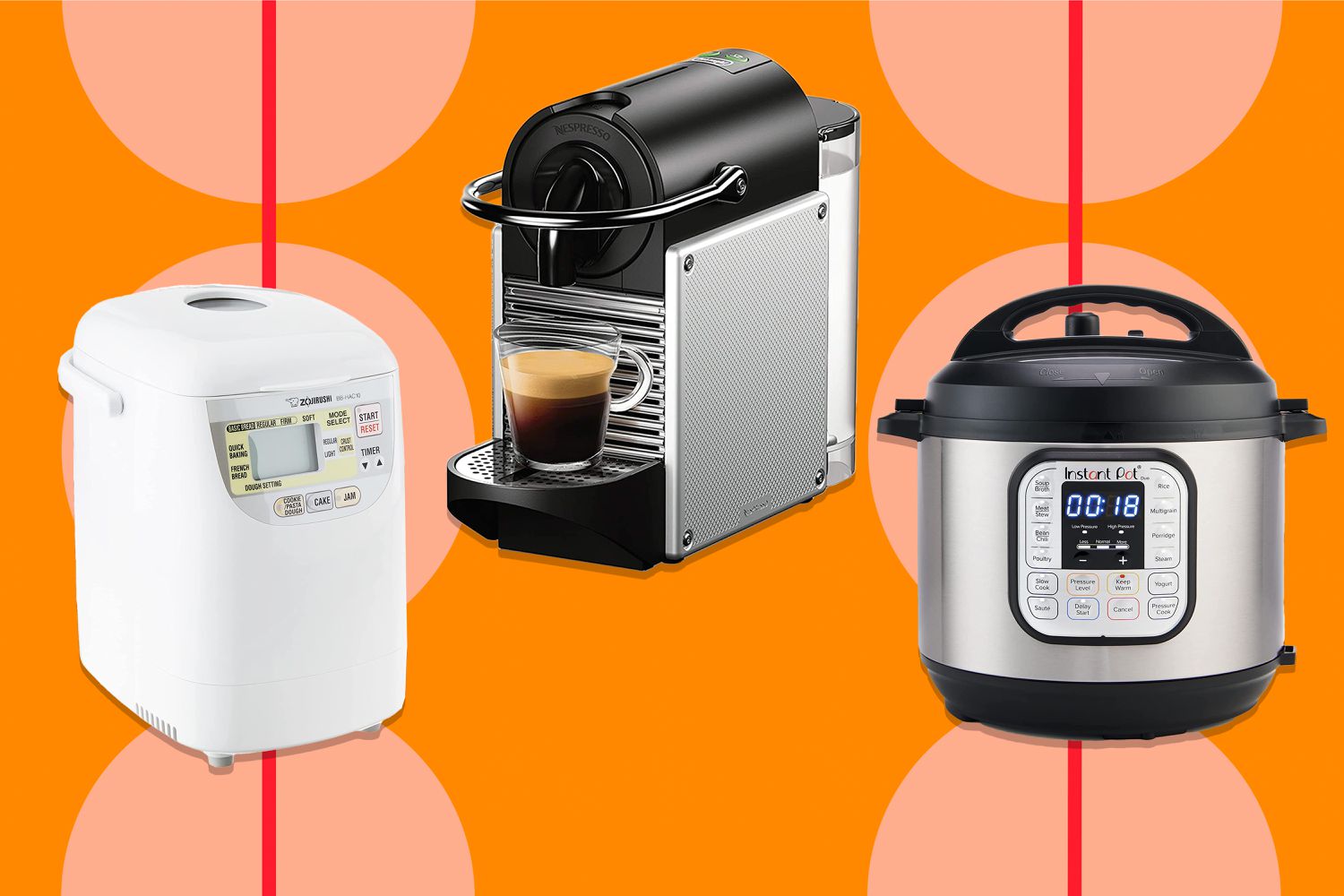
Best Small Kitchen Appliances in 2026: Top Picks + Buying Guide
Our no-nonsense roundup of the countertop machines that actually earn their space in 2026.
The best small kitchen appliance for most home cooks in 2026 is the COSORI Dual Air Fryer 9Qt, a dual-basket air fryer with sync-cook and sync-finish that cooks a main and a side at once and finishes both together.
Where to buy these picks
Affiliate links: we may earn a commission on qualifying Amazon purchases. Policy. Prices show only when checked in the last 24 hours.
- Best Overall: COSORI Dual Air Fryer 9Qt $169.99 at Amazon, Check price on Amazon →
- Best Value: Ninja BL770 Kitchen System $149.99 at Amazon, Check price on Amazon →
- Best for Beginners: Instant Pot Duo 7-in-1 6-Quart $79.00 at Amazon, Check price on Amazon →
- Best for Bakers: KitchenAid Artisan 5-Quart Tilt-Head $499.95 at Amazon, Check price on Amazon →
- Budget Pick: COSORI Gooseneck Electric Kettle $69.99 at Amazon, Check price on Amazon →
Quick answer
Which small kitchen appliances fit a different budget or need?
The best value is the Ninja BL770 Kitchen System, a 1,500-watt blender with a 72-ounce pitcher, two 16-ounce to-go cups and an 8-cup food-processor bowl. For beginners, buy the Instant Pot Duo 7-in-1 6-Quart: it pressure-cooks, slow-cooks, sautés, and makes rice. For bakers, the pick is the KitchenAid Artisan 5-Quart Tilt-Head stand mixer, the mainstream default for anyone who bakes more than once a month, and the budget pick is the COSORI Gooseneck Electric Kettle, a variable-temperature kettle with 5 presets.
Introduction: Which Small Appliances Actually Earn Their Counter Space?
We picked these five on four criteria: capacity for a household of two to four, wattage, counter footprint, and which older appliances each one replaces. The picks compare published manufacturer specs and verified-owner reviews; we did not test them hands-on. Below are the rankings, what to check before you buy, a head-to-head of the three most-debated countertop machines, and the questions readers ask most.
What you'll use with it
A roast, braise or pressure-cooked chicken is done at a temperature you can’t see from the outside. The thermometer guide has five picks under $100 and safe temps by protein. Read the instant-read thermometer guide →
Instant-read thermometer guide’s top pick: ThermoMaven Professional Digital Meat Thermometer $19.99 at Amazon, Check price on Amazon →
Our Top 5 Small Kitchen Appliance Picks for 2026: Best Overall / Best Value / Best for Beginners / Best for Bakers / Budget Pick
Each pick below has one clear job and a price tier that matches what it does. The reasons come from manufacturer specs and published owner reviews.
Best Overall: COSORI Dual Air Fryer 9Qt
A mid-size dual-basket air fryer. The dual-basket design has become the format to beat, and for good reason. You can roast salmon in one drawer while the other crisps potatoes, with independent timers that finish both at the same moment. Look for a 9 to 10 quart total capacity, a non-stick coating rated for high heat, and a sync-finish button. The COSORI Dual Air Fryer 9Qt checks those boxes: two baskets, 9 quarts total, sync-cook and sync-finish. The dual-basket format is the most versatile of the five, and it is the engine behind crowd favorites like our air fryer chicken wings.
Best Value: Ninja BL770 Kitchen System
A 1500-watt personal-to-family blender. A blender with a large main jar plus a single-serve cup attachment covers most everyday blending, from frozen smoothies to silky soups. The 1500-watt Ninja BL770 Kitchen System pairs a full-size pitcher with two 16-ounce to-go cups and adds a food-processor bowl. SharkNinja's BL770 spec page lists 1,500 watts, a 72-ounce pitcher and an 8-cup processor bowl. That is where the value is: one motor base runs the 72-ounce pitcher, the two 16-ounce to-go cups and the 8-cup processor bowl, so it does the work of a separate full-size blender, personal blender and small food processor. Test it against ice and frozen fruit, the way you would actually use it for a blender smoothie bowl on a Tuesday morning.
Best for Beginners: Instant Pot Duo 7-in-1 6-Quart
A 6-quart multi-cooker. A modern multi-cooker like the Instant Pot Duo 7-in-1 (6 quart) handles pressure cooking, slow cooking, sauteing, and rice with a learning curve that levels out fast. New cooks gain confidence quickly because the appliance forgives timing mistakes that would ruin a stovetop braise. It is also the fastest path to weeknight comfort food like instant pot lentil soup.
Best for Bakers: KitchenAid Artisan 5-Quart Tilt-Head
A direct-drive stand mixer. If you bake more than once a month, a stand mixer pays for itself in saved forearms alone. The KitchenAid Artisan 5-Quart Tilt-Head is the mainstream default, and our stand mixer guide names it Best Overall: a 5-quart bowl, a 325-watt direct-drive motor, and an attachment hub that turns the mixer into a pasta roller, meat grinder, or ice cream maker. At 325W it sits at the lighter end for heavy bread dough, so if you knead big, stiff batches, that guide's Best Premium pick, the bowl-lift KitchenAid Commercial 8-Quart KSM8990, is the upgrade.
Budget Pick: COSORI Gooseneck Electric Kettle
A variable-temperature electric kettle. Under one hundred dollars, a gooseneck kettle with preset temperatures, such as the COSORI Gooseneck Electric Kettle with 5 presets, upgrades coffee, tea, instant oats, and any recipe that calls for boiling water faster than a stovetop pot can deliver it. It is the unsung hero of an efficient kitchen.
What to Look For When Buying Small Appliances (footprint, wattage, versatility, ease of cleaning)
The four variables that separate a great purchase from a future garage-sale item are footprint, wattage, versatility, and ease of cleaning. Get those right and you will rarely regret a buy.
Footprint is the first thing to measure, literally. Pull out a tape measure, write down the depth of your countertop minus a two-inch backsplash buffer, and refuse to consider any appliance that exceeds it. Account for clearance above for steam vents, lids that hinge upward, and the cabinet doors that need to swing open. A machine that lives in a closet because it does not fit will not get used.
Wattage is the proxy for how hard the appliance can work. A 1500-watt blender pulverizes ice and turns whole almonds into nut butter, while a 600-watt blender stalls on the first frozen banana. For air fryers, look for 1500 to 1800 watts to get oven-quality browning. Multi-cookers should be at least 1000 watts so they reach pressure quickly. The catch is that higher wattage often demands a dedicated outlet, so plan accordingly.
Versatility sounds great on a feature list but only matters when the extra modes are ones you will actually use. Be honest. If you have never made yogurt at home, an Instant Pot yogurt button will not change your life. Instead, pick the two functions you will rely on weekly and choose the appliance that performs those two best. Bonus modes that work well are gravy.
Ease of cleaning is the silent killer of appliance enthusiasm. Removable, dishwasher-safe parts are non-negotiable. Avoid models with proprietary plastic baskets that warp in the top rack, gaskets that trap odors, and crevices that demand a toothbrush. Read recent reviews specifically for the words sticky, stained, and rusted. They tell you what the marketing copy will not.
A final tip: noise levels and warranty terms are tiebreakers worth checking. So is standby power on anything with a clock or a keep-warm mode, since each watt drawn around the clock adds up to about 9 kWh a year. A blender that runs at 95 decibels is unusable before 7 a.m., and a two-year warranty signals a manufacturer that expects the machine to last.
Air Fryer vs. Instant Pot vs. Blender: Which Do You Need First?
Walk into any small-kitchen forum and you will find the same debate. If you can only buy one of the big three this year, which earns the spot? The honest answer is that it depends on how you cook, but the framework below makes the choice easy.
Choose the air fryer first if you eat a lot of roasted vegetables, frozen foods, chicken pieces, or fish fillets. The air fryer wins on the time-to-table metric: most weeknight proteins finish in 12 to 18 minutes with no preheat. It also reduces oil dramatically, which matters if you are watching calories or simply tired of cleaning a greasy stove. The downside is single-task cooking. An air fryer cannot braise, simmer, or blend.
Choose the Instant Pot first if you cook dried beans, tough cuts of meat, soups, stews, or rice. Pressure cooking delivers what a stovetop cannot, namely 90-minute braises in under 30 minutes and dried-bean dishes without overnight soaking. Steam under pressure cooks in a half to a quarter of the time of conventional boiling. The Instant Pot also doubles as a slow cooker for the days you want dinner waiting when you walk in. The trade-off is that crisping and browning happen on the saute function before pressure cooking, which adds a step.
Choose the blender first if smoothies, soups, sauces, dressings, and ground spices are weekly habits. A high-powered blender is the only appliance that can puree a soup smooth enough to skip a strainer, emulsify a vinaigrette in seconds, and crush ice into a frozen drink without bogging down. It is also the easiest of the three to clean because soap and warm water do most of the work.
Our pick in each: air fryer, the COSORI Dual Air Fryer 9Qt; pressure cooker, the Instant Pot Duo 7-in-1 (6 quart); blender, the Ninja BL770 Kitchen System. If you bake more than once a month, add the KitchenAid Artisan 5-Quart; if coffee, tea or oats are daily habits, the COSORI Gooseneck Electric Kettle is the cheapest upgrade on the list.
If we had to pick one across the average household, the dual-basket air fryer takes the top spot for sheer frequency of use. The blender is a close second because it scales from breakfast to dinner with no learning curve. The multi-cooker rounds out the top three and shines once you commit to using it twice a week or more. Buy in that order and you will get the most return on counter space and budget.
Single-Tool Picks: Buy the One Piece You Need
A set is not always the answer. If you are replacing one worn-out piece or filling one gap, these single-tool guides pick the best of that one thing:
- Best rice cookers: fuzzy logic vs basic, sized for your household.
- Best griddles: electric and stovetop picks for pancakes and smash burgers.
- Best immersion blenders: a blender that goes into the pot instead of taking up the counter.
- Best slow cookers: set-and-forget braises and chili.
- Best electric kettles: gooseneck and variable-temperature picks.
- Best instant-read thermometers: the cheapest upgrade to every piece of meat you cook.
Goes With It: Cheap Add-Ons for Small Appliances
Small, inexpensive tools that make the appliances above easier to live with:
- ThermoPro instant-read thermometer: air fryers, multi-cookers and griddles all cook meat faster than their charts say.
- U-Taste silicone spatula set: heat-rated to 600°F and safe on the nonstick baskets and inner pots most appliances use.
- GTJ silicone mat roll: cut to size as a reusable air-fryer or baking liner.
See our best instant-read thermometers and best silicone spatula sets.
Sources
- SharkNinja — Ninja Mega Kitchen System (BL770) specifications
- Wikipedia — Pressure cooker: cooking time and energy use
- Wikipedia — Convection oven: countertop air fryers
- Wikipedia — Standby power
Frequently asked questions
What small kitchen appliances are actually worth buying?
Air fryer vs. convection oven: which should I buy?
How long should a small appliance last?
Do I need smart-app connectivity?
What is the best appliance to gift a new cook?
How we picked
This guide is researched, not bench-tested. We shortlisted products from the AislePrompt kitchen catalog and compared them on published manufacturer specifications (such as materials, size and capacity), on what owners report in published reviews, and on any third-party sources linked in this guide. The guide was drafted with AI assistance. We did not run lab or hands-on tests of these products, so any measurement quoted here comes from the manufacturer or a cited source. Prices change often: use the “Check price on Amazon” buttons for today’s price.
Recipes to try with your small appliances
Put your gear to work — save any recipe to My Recipes (no account needed) and send its ingredients to Instacart in one tap.
Shop small appliances on AislePrompt →Browse the full kitchen shop →