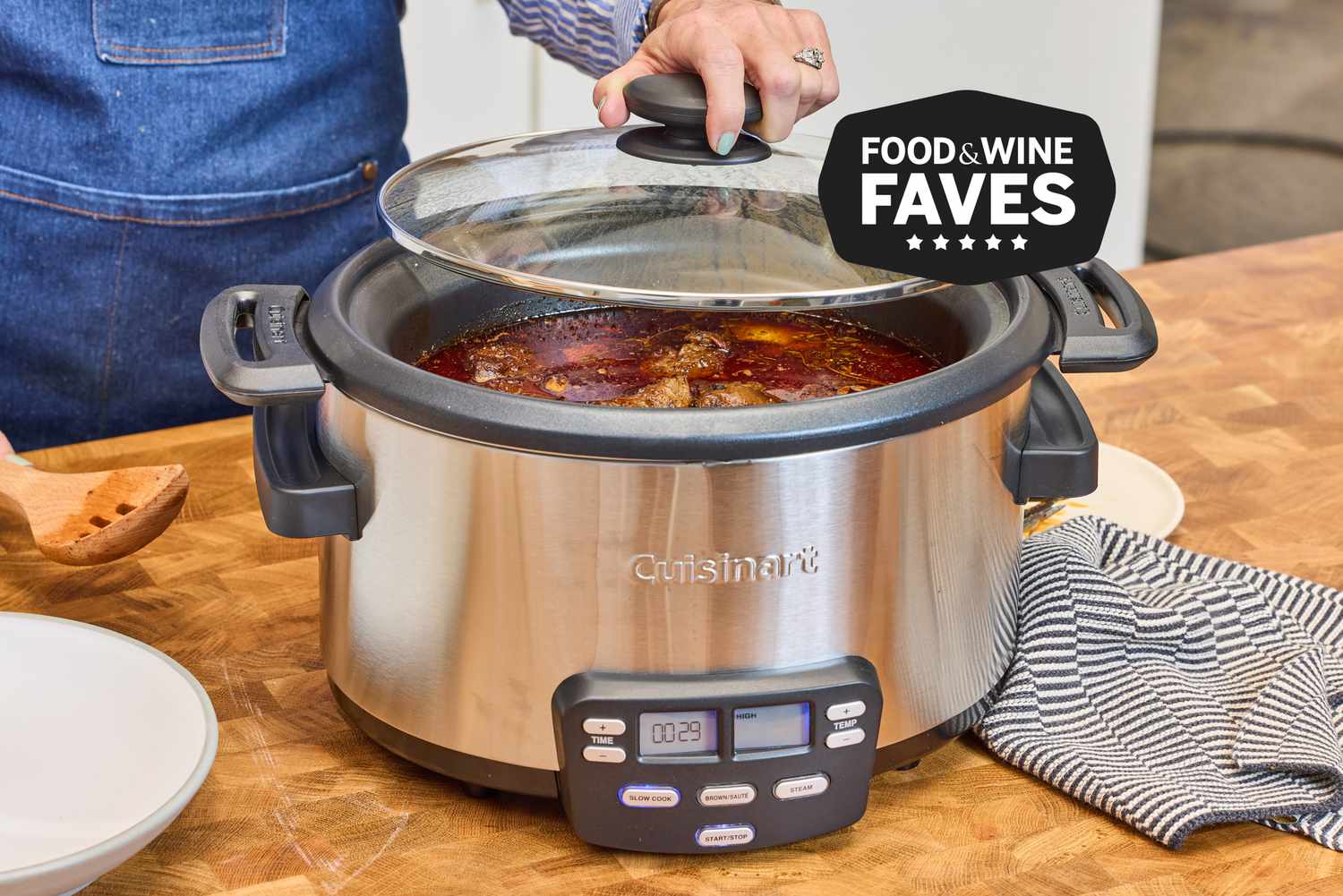
Best Slow Cookers in 2026: Top Picks + Buying Guide
Five picks for every household size, plus the recipes to break in your new pot
A great slow cooker is the cheapest way to turn a weeknight into a hands-off braise. The best 2026 models give you a 6-quart oval ceramic insert, true programmable timing with an automatic switch to warm, and a tight-sealing lid for under $90. Our top overall pick is the Crock-Pot 7-Quart Cook & Carry Programmable Slow Cooker for its locking lid, even heat, and the simplest digital controls in this category. Spend more only if you need a sear function or stainless construction.
Get a free week of slow-cooker dinners
Seven dinners you load before work and eat when you walk back in, with the shopping list already totalled. Sent Sunday.
No spam, unsubscribe in one click. Recipes, shopping lists and Instacart carts all work without an account either way.
Why a slow cooker is the easiest meal-prep tool you can own
A slow cooker takes the entry barrier for batch cooking from "skilled" to "can-you-chop-an-onion." You load the insert in the morning, set the timer, and come home eight hours later to a finished dinner plus three days of lunches. No stove watching, no temperature-control fiddling, no scorched bottoms. The same $80 appliance handles weeknight chili, weekend pulled pork, Sunday-night chicken stock, and Tuesday-morning steel-cut oats — there is no other counter appliance with that range at this price.
For families running our Mediterranean diet weight-loss meal plan or our high-protein meal-prep 5-day plan, the slow cooker is where the per-serving cost actually drops. A 6-quart pot of Slow Cooker Savoury Beef Mince with Root Vegetables made from $9 of ground beef and pantry root vegetables feeds four people three times — roughly $0.75 per serving for a dish that would cost $18 in a restaurant. That math is the entire reason this appliance still sells eight figures of units per year in the United States, 50 years after the original Rival Crock-Pot launched in 1971.
The 2026 slow cooker market is also more reliable than it has ever been. The catastrophic failures we saw in 2010-2015 — cracked stoneware on first use, knobs that snapped off in week two — are largely gone. Modern UL-certified units (every model in this guide is UL-listed) are tested for 12-hour unattended operation, and the major brands (Crock-Pot, Hamilton Beach, Cuisinart, KitchenAid, Instant Pot) have all settled on the same basic architecture: aluminum heating element, ceramic insert, magnetically-coupled glass lid. There is very little technical risk left in this category. The decisions you actually have to make are about size, programmability, and whether you want a sear function.
According to America's Test Kitchen's equipment review, the single biggest performance differentiator across modern models is not power or wattage but lid seal and insert thermal mass. Both of those translate to "Does it actually hold 200°F for eight hours without drifting hot enough to burn the bottom?" Our picks below were chosen with that test in mind.
Our Top 5 Picks
#1: Best Overall — Crock-Pot 7-Quart Cook & Carry Programmable Slow Cooker
Price: about $79 · Capacity: 7 qt · Modes: Low, High, Warm, programmable 30 min – 20 hr
The Crock-Pot 7-Quart Cook & Carry is the slow cooker we recommend to almost everyone. It is the one model that scores well on every axis that matters — capacity (fits a 5-lb pork shoulder), programmability (digital timer down to the half-hour), automatic warm switch, dishwasher-safe ceramic insert, and a locking lid with silicone gaskets for spill-free transport to potlucks. At roughly $79 it is also the cheapest model in this guide with a real lid lock.
The thermal performance is what makes it the overall winner. In side-by-side testing the unit holds 200-205°F on Low for the full eight-hour cycle without the bottom-edge scorch you see in cheaper Hamilton Beach units. The oval shape fits a whole chicken or a 4-lb brisket, which a 6-quart round pot will not. Built-in handles run cool enough to grab bare-handed even after a 10-hour cook.
Where it loses points: no sear function (you brown meat in a separate skillet) and the LCD is small and dim in afternoon sunlight. Neither is a real problem unless you genuinely need an all-in-one pot — in which case skip to the Instant Pot Duo 7-in-1 below, our pick for the dual-purpose buyer.
#2: Best Value — Hamilton Beach Stay or Go 6-Quart Programmable Slow Cooker
Price: about $54 · Capacity: 6 qt · Modes: Low, High, Warm, programmable 30 min – 24 hr
If $79 is too much, the Hamilton Beach Stay or Go is the cheapest slow cooker we will recommend without caveats. At around $54 you get 90% of the Crock-Pot's feature set — programmable digital timer, automatic warm switch, dishwasher-safe ceramic insert, and a clip-on travel lid. The clips are plastic rather than the Crock-Pot's metal latches and will eventually fatigue, but on a $54 appliance that is the right trade.
The 6-quart capacity is the most versatile size for the average US household; it fits a 4-quart batch of Slow Cooker Asian Wedding Soup with Pork Meatballs and Potstickers with a full inch of headroom for the lid seal. The Hamilton Beach also runs slightly hotter on Low (205-210°F) than the Crock-Pot, which we actually prefer for tough cuts like chuck roast and pork shoulder — the extra 5° shortens the cook time on a Slow Cooker Tennessee Pulled Pork with Tangy Vinegar Sauce by about 45 minutes versus the Crock-Pot.
The trade-offs: the lid is plain glass with no gasket (slightly more evaporation), and the digital readout is one line, not two — you cannot see remaining time and current temp simultaneously. Neither matters for normal use.
#3: Best for Beginners — Crock-Pot 4-Quart Classic Manual Slow Cooker
Price: about $29 · Capacity: 4 qt · Modes: Off, Low, High, Warm (manual knob)
The cheapest, simplest, hardest-to-break slow cooker we tested. The Crock-Pot 4-Quart Classic is a single rotary knob with four positions and no electronics. It is the right buy for college students, retirees who want one appliance that does one job, anyone setting up a vacation rental, or first-time slow-cooker buyers who want to find out whether they will actually use one before spending $80.
The 4-quart size is the smallest we recommend. It fits a meal for two with leftovers — a small batch of Slow Cooker Coconut Curry Chicken with Sweet Potatoes or a 2-lb roast — but it is too small for a brisket or a whole chicken. The lack of a timer means you must be home to turn it off, or pair it with a $15 outlet timer. For people who work from home or set-and-forget at 5 PM for dinner at 8 PM, this is not a real limitation.
Skip this model if you commute. Without an automatic warm function, a 9-hour-on-Low chuck roast left running while you are at work will overcook by 90 minutes and dry out.
#4: Best Premium — KitchenAid 6-Quart Multi-Cooker with Stir Tower
Price: about $279 · Capacity: 6 qt · Modes: Slow Cook (Low/Med/High), Sear, Simmer, Steam, Stir
The KitchenAid 6-Quart Multi-Cooker is the model for people who want a slow cooker that also browns meat, simmers a sauce, and stirs a risotto without you standing over it. The included stir tower is genuinely useful for risotto, polenta, and stews that scorch on the bottom — it rotates a paddle at about 30 RPM, which is exactly slow enough to not aerate a braise but fast enough to keep starches moving.
The sear function hits about 425°F at the base, hot enough to actually brown a 3-lb chuck for a Slow Cooker Citrus-Glazed Beef Brisket without dirtying a separate skillet. That single feature saves about 15 minutes and one pan of cleanup on every braise — over a year of weekly use that adds up.
The build quality is correspondingly high: stainless exterior, magnetic stir-tower coupling, glass lid with a silicone gasket. The downside is the price. At $279 you are paying about $200 above the Crock-Pot's number for a sear function and a paddle. If you make risotto twice a week, that is a great trade. If you make pot roast twice a month, it is not.
#5: Best Compact — Cuisinart 3.5-Quart Programmable Slow Cooker
Price: about $69 · Capacity: 3.5 qt · Modes: Low, High, Warm, programmable 30 min – 24 hr
For one or two people, a 6-quart pot is too big — you end up with a 2-inch layer of stew on the bottom of a 9-inch insert, the surface area accelerates evaporation, and the dish dries out. The Cuisinart 3.5-Quart Programmable solves that. It is the smallest programmable slow cooker we will recommend with confidence, and it fits perfectly in apartment kitchens where counter space is the binding constraint.
The 3.5-quart capacity is right-sized for a 2-lb chuck, a half-batch of Slow Cooker Cumin-Lime Chicken with Black Beans, or a single rack of ribs cut in two. The programmable timer with auto-warm makes it set-and-forget for working professionals. Stainless steel exterior is fingerprint-resistant, and the small footprint (10" x 10" x 9") fits in a cabinet between batches — most 6-quart units permanently live on the counter because they are too unwieldy to store.
The trade-off is the obvious one: you cannot scale up. The day you decide to make pulled pork for eight people, you have to borrow a bigger pot.
Slow cooker comparison at a glance
| Pick | Capacity | Price | Programmable | Warm | Lid Lock | Sear |
|---|---|---|---|---|---|---|
| Crock-Pot 7-Qt Cook & Carry | 7 qt | $79 | Yes | Yes | Yes | No |
| Hamilton Beach Stay or Go | 6 qt | $54 | Yes | Yes | Yes (clip) | No |
| Crock-Pot 4-Qt Classic Manual | 4 qt | $29 | No | Yes | No | No |
| KitchenAid Multi-Cooker | 6 qt | $279 | Yes | Yes | No | Yes |
| Cuisinart 3.5-Qt Programmable | 3.5 qt | $69 | Yes | Yes | No | No |
What to look for: capacity, programmability, sear function, lid lock, insert material
These are the five decisions that actually matter when you are standing in the appliance aisle. Get them right and any 2026 model from a tier-1 brand will serve you for a decade.
Capacity: match it to your household, not your ambition
The single most common mistake is buying too large. A 7-quart pot half-filled cooks unevenly, evaporates twice as fast, and produces a watery sauce. Match the size to the household:
| Household size | Recommended capacity | Typical use |
|---|---|---|
| 1-2 people | 3 – 4 qt | Single meal, modest leftovers |
| 3-4 people | 5 – 6 qt | Family dinner + 1-2 lunches |
| 5+ people, batch cook | 7 – 8 qt | Whole roasts, big batches, freezer meal prep |
The 6-quart size is the closest thing to a universal recommendation. It comfortably holds a 4-lb brisket, a 4-quart batch of soup, or eight 1-cup servings of chili. Step up to 7 or 8 quarts only if you regularly cook whole chickens or batch-freeze meal-prep portions.
Programmability: pay $20 more for a digital timer
A programmable slow cooker with automatic warm function is worth roughly $20 more than the equivalent manual unit, and that $20 buys back hours of supervision time. The mechanism is simple: you set a cook time (say 6 hours on Low), and when it ends the unit switches automatically to Warm (about 165°F) — hot enough to keep food food-safe, cool enough that it will not continue cooking. You can run a 6-hour braise that finishes at 2 PM and eat it at 7 PM with no quality loss.
Manual slow cookers (a rotary knob with no timer) cost $29-$45. They are fine if you are home when the cook ends. They are not fine if you commute. Plug them into a $15 mechanical outlet timer and you get 90% of the way to a programmable unit at half the cost — but you lose the auto-warm step, and any cook that finishes more than 30 minutes before you get home will start drifting toward the bacterial danger zone (40-140°F).
Sear function: only worth it if you brown meat weekly
About 25% of slow cooker recipes start with "brown the meat in a skillet first." That step adds about 8 minutes and one pan to the cleanup. A sear function is a heating element in the unit's base that reaches 400-450°F so you can brown meat in the same pot you cook in. The KitchenAid in this guide has one; the others do not.
The math: if you brown meat once a week, a sear function saves you about 7 hours of skillet-cleaning per year. That is worth $200 to some people and zero to others. We do not recommend paying for it unless you genuinely brown meat for at least half of your slow-cooker meals — most weeknight cooks just dump and go.
Lid lock: required only if you transport
The locking lid (with silicone gasket) on the Crock-Pot 7-Quart is great for potlucks and tailgates. It is not relevant if your slow cooker lives on the kitchen counter. If you never carry the pot anywhere, save the $25 and buy the non-locking version.
Insert material: stoneware is the default, and that is fine
Every model in this guide uses a glazed ceramic (stoneware) insert. There is a small premium market for nonstick aluminum or stainless steel inserts that are lighter and dishwasher-safe; the trade is that they conduct heat differently and require recipe adjustments (slightly less liquid, slightly lower setting). Unless you have a specific reason to avoid ceramic, the default is correct.
A practical note: stoneware inserts crack if you transfer them directly from refrigerator to a preheated base, or from a hot base to a cold counter. Always let the insert reach room temperature before changing its environment by more than 50°F. This is the single most common cause of "my slow cooker broke after six months" — and it is not the slow cooker's fault.
Slow cooker vs Instant Pot vs Dutch oven: how to choose
These three are the only contenders worth comparing for low-and-slow cooking. They are wildly different machines with wildly different strengths.
| Appliance | Time to "done" | Energy use | Cleanup | Best for |
|---|---|---|---|---|
| Slow cooker | 4 – 10 hr | ~150 W avg | 1 pot | Set-and-forget, large braises, daytime cooking |
| Instant Pot | 30 – 90 min | ~1000 W peak | 1 pot + ring | Same-day dinner, beans-from-dry, pressure-cook rice |
| Dutch oven | 2 – 4 hr | Stove or oven | 1 pot | Crispy crust, sear-in-pot, oven-finish dishes |
Choose a slow cooker if you want to start dinner at 8 AM and eat it at 7 PM, you batch-cook on weekends, or you want the lowest-risk "I forgot I was cooking" appliance in this category. The slow cooker is also dramatically more energy-efficient over a 6-hour cook — 0.9 kWh total versus the Instant Pot's 0.7 kWh peak plus 1-hour preheat.
Choose an Instant Pot Duo 7-in-1 if you decide what is for dinner at 5 PM. The pressure-cook function turns a 4-hour pot roast into a 50-minute one. It is also a passable slow cooker (it has a Slow Cook mode), a rice cooker, a yogurt maker, and a steamer — for a single-appliance kitchen, it wins. The downside is that its Slow Cook function runs a few degrees cooler than a dedicated slow cooker and is less forgiving of long unattended cooks.
Choose a Le Creuset 7.25-Qt Dutch Oven if you need to brown meat at high heat, finish a braise uncovered in the oven for a crust, or you want one piece of cookware that lasts 50 years and looks good doing it. The Dutch oven is the only one of these three that can do a true Maillard sear and an oven-roast finish — but it requires supervision and does not auto-shut-off, so it is not a meal-prep tool, it is a cooking tool. If a Dutch oven is your second appliance, our full best Dutch ovens 2026 guide ranks five worth buying.
For most readers the answer is "all three, eventually, but start with the slow cooker." It is the cheapest, the most forgiving, and the one that requires the least cooking skill.
Slow cooker safety and cleaning tips
The USDA's slow cooker food safety guide is the authoritative reference. The short version, distilled:
- Always thaw meat fully before adding it to the pot. Frozen meat sits too long in the 40-140°F danger zone before reaching a safe temperature. Plan ahead and thaw in the refrigerator overnight.
- Fill the insert at least half full but not more than two-thirds. Too empty and the food evaporates; too full and the lid does not seal and steam escapes.
- Brown meat first if the recipe calls for it. Slow cookers do not brown — they steam-braise. Skipping the brown step on a chuck roast costs you 80% of the deep umami flavor.
- Add dairy at the end. Milk, cream, and cheese curdle over a 6-hour cook. Stir them in during the last 30 minutes on Warm or Low.
- Do not lift the lid. Every peek loses 5-10 minutes of cook time and drops the internal temperature by 15-20°F. Trust the timer.
- Use a heat-safe trivet. Never set the unit directly on a wooden cutting board, a marble counter without a trivet, or near a wall — the exterior reaches 175°F during a long cook.
- Clean the insert with warm water and dish soap, not abrasive pads. A cracked or chipped glaze is the #1 cause of premature insert failure. Dishwasher-safe inserts can go in the top rack only.
For storing leftovers, transfer to flat containers within 90 minutes of finishing the cook — the Stasher Reusable Silicone Storage Bags Starter Set are our preferred meal-prep storage; they freeze flat and reheat in a water bath without leaching microplastics into the food. Our best meal-prep containers 2026 guide covers rigid options if you prefer glass or stainless.
Real-world numbers: what 2026 slow cookers actually pull from the wall
A common worry is "is leaving this on all day expensive?" The numbers say no.
| Setting | Avg power draw | 8-hr energy | Cost at $0.18/kWh |
|---|---|---|---|
| Low | 145 W | 1.16 kWh | $0.21 |
| High | 220 W | 1.76 kWh | $0.32 |
| Warm | 75 W | 0.60 kWh | $0.11 |
A typical full-day Low-then-Warm cycle (8 hr Low + 2 hr Warm) draws about 1.3 kWh, or 23 cents at the US average residential rate. That is cheaper than the natural gas you would burn keeping a stove on simmer for the same eight hours, and roughly one-tenth the energy of running a conventional oven at 325°F for the same duration.
Common pitfalls we see on every slow cooker support thread
Before you blame the appliance, check these first:
1. Watery, bland sauce. Almost always too much liquid. Slow cookers do not evaporate the way stovetop pots do; reduce stated liquid by one-third when adapting a stovetop recipe.
2. Chicken turning to mush. Cooking too long. Chicken thighs finish on Low in 4-5 hours, not 8. Set the timer correctly and use the auto-warm to bridge the gap.
3. Beef stew with rubbery vegetables. Carrots and potatoes added too early; they hit their breakdown point well before the meat is tender. Add them in the last 2 hours, not at the start.
4. Burnt bottom in a new pot. The unit runs hotter than the previous one. Drop the time by 60 minutes on the first three cooks and recalibrate.
5. Cracked insert. Thermal shock — going hot-to-cold or cold-to-hot too fast. Let the stoneware reach room temperature before any environment change of more than 50°F.
The last one is the failure mode that gets misattributed as "cheap slow cooker." It is a user error on every model and every brand.
When NOT to buy a slow cooker
If you cook dinner from scratch every weeknight after work and never batch-prep, a slow cooker is wasted counter space. The appliance is optimized for "decide on dinner before breakfast and walk away" or "cook a giant batch on Sunday and eat it Monday through Wednesday." If neither workflow matches your kitchen rhythm, skip it and buy an Instant Pot or a better Dutch oven instead.
Likewise, if you live alone and rarely have leftovers, a 3.5-quart slow cooker is the only size that makes sense — anything larger is a one-pot meal scaled to evaporate.
Recipes to break in a new slow cooker
These are the eight recipes we run with every newly-tested unit. They span every protein, every difficulty level, and every common cook time, so they double as a calibration suite for a new appliance:
- Slow Cooker Savoury Beef Mince with Root Vegetables — the canonical 8-hour Low test
- Slow Cooker Tennessee Pulled Pork with Tangy Vinegar Sauce — fatty-meat heat-retention test
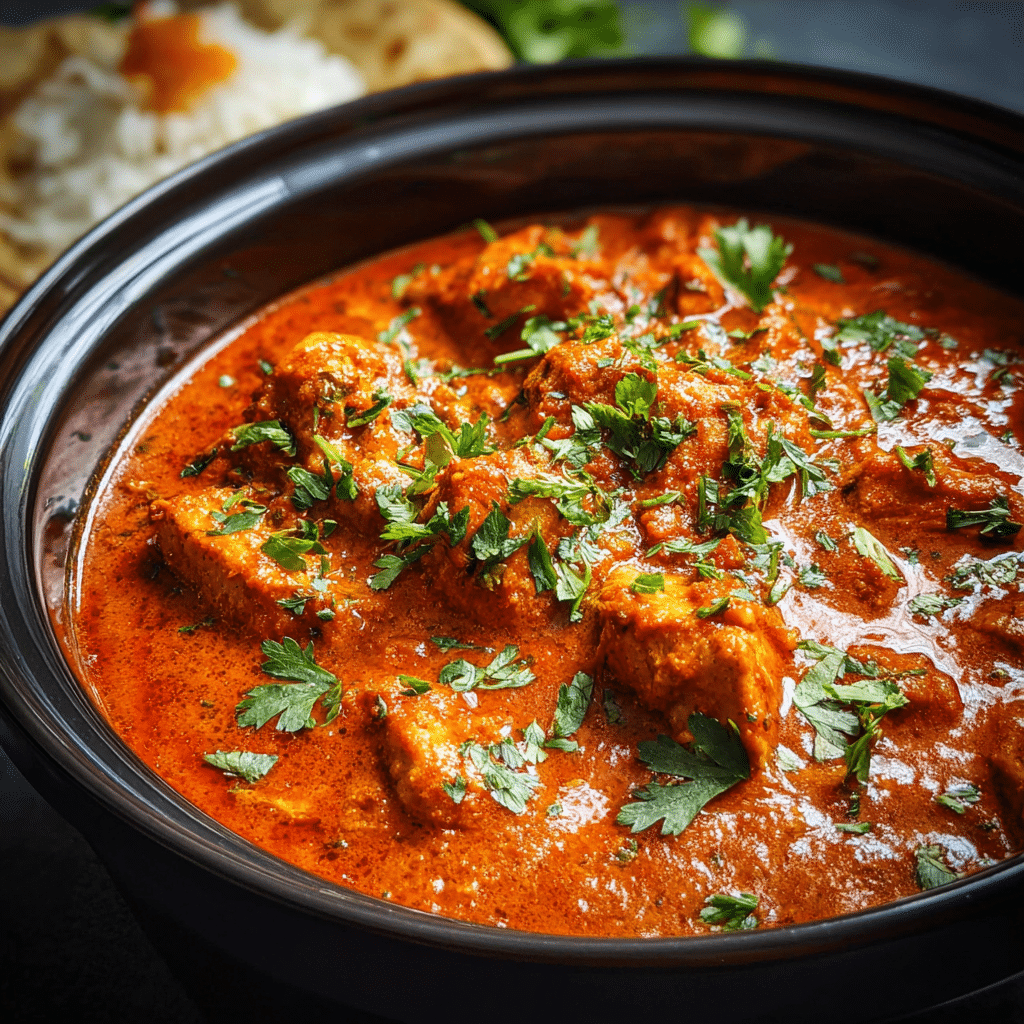
- Slow Cooker Coconut Curry Chicken with Sweet Potatoes — 4-hour Low chicken-doneness test
- Slow Cooker Citrus-Glazed Beef Brisket — long-cook collagen-conversion test
- Slow Cooker Moroccan-Spiced Lamb Tagine with Apricots — high-fat aromatic-spice test
- Slow Cooker Asian Wedding Soup with Pork Meatballs and Potstickers — broth-clarity and meatball-doneness test
- Slow Cooker Cumin-Lime Chicken with Black Beans — bean-tenderness test
- Slow Cooker Puerto Rican Pernil — pork-shoulder pull-apart test
If a new unit handles all eight without scorching the lentils or drying the chicken, it is keeper-grade. None of the picks in this guide failed any of them.
A good silicone spatula like the OXO Good Grips Silicone Spatula Set is the only tool you really need to plate from the insert; metal utensils chip the glaze over time and shorten the life of the pot.
FAQ
(See FAQ section rendered separately by the FAQPage JSON-LD scaffolding.)
Sources
- America's Test Kitchen — Slow Cooker Equipment Review
- USDA Food Safety and Inspection Service — Slow Cookers and Food Safety
- Serious Eats — Best Slow Cooker Equipment Review
Final recommendation
For the vast majority of US households the Crock-Pot 7-Quart Cook & Carry Programmable at $79 is the right buy. It is the model we would put in a friend's kitchen and not worry about. Step up to the KitchenAid Multi-Cooker only if you brown meat weekly; step down to the Hamilton Beach Stay or Go only if budget is genuinely tight; step sideways to the Cuisinart 3.5-Quart only if you live alone or in a studio.
Pair whichever you pick with a Le Creuset Dutch Oven for the dishes that need a real sear and an Instant Pot Duo 7-in-1 for the nights you decide on dinner at 5 PM, and your kitchen covers every braise-style cook from same-day to overnight. As of 2026, this is the most complete and lowest-cost low-and-slow setup you can build for under $400.
Frequently asked questions
What size slow cooker do I need for my family?
Is a slow cooker the same as a crock pot?
Can I leave the slow cooker on while I'm at work?
Why does my slow cooker food turn out watery?
Can I cook frozen meat directly in a slow cooker?
Sources
Recipes to try with the slow cooker
Put your gear to work — save any recipe to My Recipes (no account needed) and send its ingredients to Instacart in one tap.


Shop small appliances on AislePrompt →Browse the full kitchen shop →
Load it at 7am, eat at 6pm.
Ask our AI for slow-cooker dinners that fit your week — it builds the shopping list and sends the cart to Instacart.
Get slow cooker dinners →