The Complete Keto Meal Plan: 30+ Recipes + Shopping List for 2026
A no-fluff, dietitian-grade keto playbook with a 5-day plan, 30+ recipes from our catalog, an aisle-by-aisle shopping list, and the kitchen tools that make low-carb cooking sustainable.
A working keto meal plan keeps net carbs under 30 grams per day, anchors every meal in 30 grams of protein or more, and lets fat fill the rest. The plan below is built from 30+ keto recipes already in the AislePrompt catalog, includes a 5-day menu with macros, and ships with an aisle-by-aisle shopping list so a week of low-carb cooking takes a single 45-minute store run.
Introduction: who keto fits and who should skip it
Keto works for adults who want predictable appetite control, steady afternoon energy, and tight glycemic control. It is genuinely good at three things: reducing snacking by 40-60% in week two, flattening the post-lunch crash that drives most office vending-machine runs, and shrinking visceral fat faster than calorie-matched low-fat plans over a 12-week window. If you have ever finished a "healthy" pasta lunch and been hungry by 3 p.m., the macro shift is the single biggest quality-of-life change you'll feel.
It is not a fit for everyone. Skip keto, or talk to a doctor first, if you are pregnant or breastfeeding, are training for an endurance event longer than 90 minutes (your top-end glycogen system will suffer for the first 4-6 weeks of adaptation), take SGLT2 inhibitors for type 2 diabetes (a known DKA risk), or have a history of gallbladder issues that flare on high-fat meals. Teenagers and people with active eating disorders should not use any restrictive macro plan without clinical supervision. The Harvard School of Public Health overview of keto and the Mayo Clinic's clinical summary are the two best starting points if you want the medical view before you commit a week of groceries.
If you already eat a low-carb meal plan but want to push deeper into ketosis, this guide is the next step. If you want a less strict alternative for cardiovascular reasons, the Mediterranean diet meal plan is the more evidence-supported long-term framework.
Keto in one minute: macros, ketosis, electrolyte basics
The whole diet reduces to four numbers. You want roughly 70-75% of calories from fat, 20-25% from protein, and 5-10% from carbs. On a 2,000-calorie day that means about 155 g fat, 110 g protein, and 25 g net carbs. Net carbs means total carbs minus fiber and minus any sugar alcohols labeled erythritol or allulose; do not subtract maltitol — it spikes blood sugar like sugar does.
Ketosis is the metabolic state where your liver runs out of stored glucose and starts converting fat into ketone bodies (β-hydroxybutyrate, acetoacetate, acetone) to fuel the brain and muscles. The transition takes 3-7 days in most adults; the NIH summary of ketogenic metabolism is the clearest plain-English walk-through if you want the biochemistry. You'll know it's working when morning hunger drops, urine ketone sticks light up, and you stop reaching for an afternoon coffee.
The single most common failure mode in week one is the "keto flu" — headache, brain fog, leg cramps, and crushing fatigue. It is not a carb-withdrawal symptom. It is an electrolyte deficit. As insulin falls, your kidneys dump sodium, and water and potassium follow. The fix is non-negotiable: 3-4 grams of sodium, 1,000 mg of potassium, and 300 mg of magnesium per day for the first 10 days. A cup of bone broth, a salted avocado, a handful of spinach, and a single magnesium glycinate capsule cover it. People who do this never get the keto flu. People who skip it almost always do.
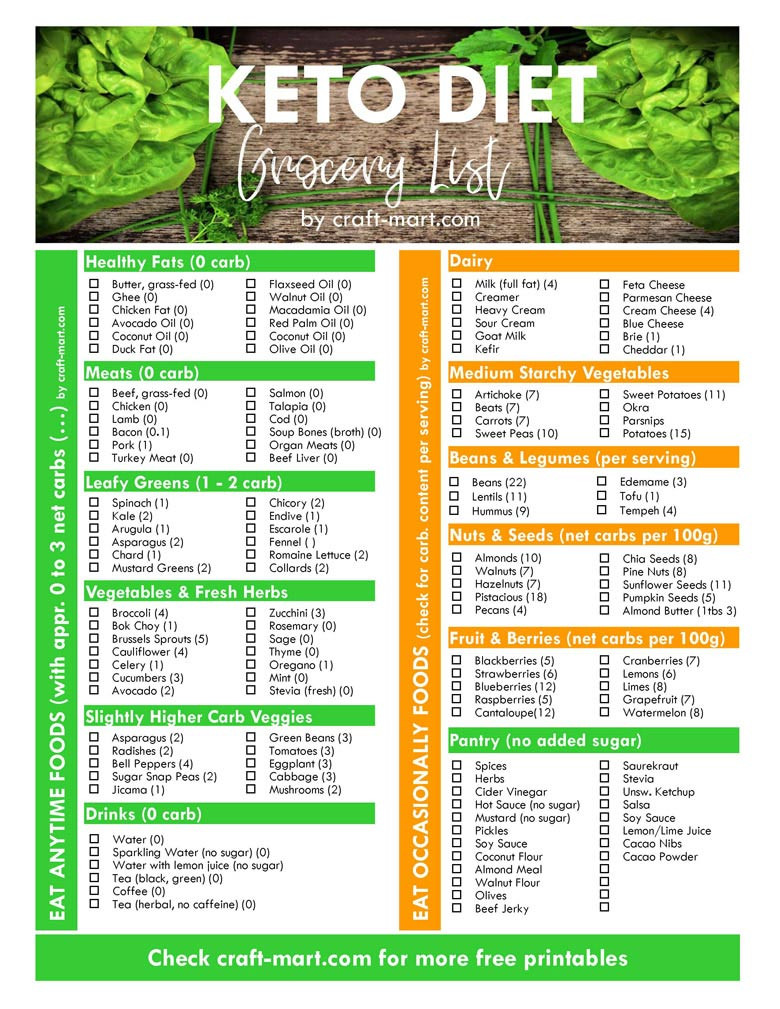
What to eat and what to avoid (with food list table)
Keto food choices come down to a short whitelist and a short blacklist. The middle ground — "limit" foods — is where most beginners go wrong, because portion size matters more than the food itself.
| Eat freely | Eat with portion control | Avoid |
|---|---|---|
| Eggs, fatty fish, chicken thighs, ground beef, pork | Greek yogurt (½ cup), tomatoes (1 medium), onions (¼ cup) | Bread, pasta, rice, oats, tortillas |
| Avocado, olives, coconut, macadamia nuts | Berries (½ cup raspberries / blackberries) | Sugar, honey, agave, maple syrup |
| Spinach, kale, broccoli, cauliflower, zucchini, bell peppers | Almonds, pecans, walnuts (1 oz / 28 g) | Potatoes, corn, peas, beans (incl. black beans) |
| Olive oil, butter, ghee, coconut oil, lard, tallow | Dark chocolate ≥85% cacao (1 oz) | Bananas, grapes, mangoes, pineapple, dried fruit |
| Hard cheeses, cream cheese, heavy cream | Cottage cheese (½ cup) | Beer, sweet wine, sugary cocktails, juice |
| Salt, herbs, vinegar, mustard, hot sauce | Cashews (rarely — high carb for a nut) | Vegetable oils labeled "low-fat" or "fat-free" |
A pragmatic rule of thumb: if the food has a Nutrition Facts label and the ingredient list runs longer than five lines, it's probably not keto. Stick to the perimeter of the grocery store — produce, butcher counter, dairy, eggs — and you'll fill 90% of the cart before you ever hit a packaged-foods aisle.
5-day sample keto meal plan with macros per meal
The plan below averages 1,850 calories, 130 g protein, 140 g fat, and 22 g net carbs per day. Scale portions up 20% if you're over 200 lb or doing two-a-day workouts; scale down 15% if you're sedentary or under 130 lb.
| Day | Breakfast | Lunch | Dinner | Daily totals |
|---|---|---|---|---|
| Mon | Sausage and Egg Keto Hash — 480 kcal, 32 g protein, 5 g net carbs | Keto Egg Salad Lettuce Wraps — 520 kcal, 28 g protein, 4 g net carbs | Pan-Roasted Chicken Thighs with Cauliflower Mash — 720 kcal, 48 g protein, 7 g net carbs | 1,720 kcal, 108P / 130F / 16C |
| Tue | Cream Cheese Pancakes with Blueberry Compote — 410 kcal, 22 g protein, 6 g net carbs | Spiced Keto Avocado and Bacon Salad — 560 kcal, 26 g protein, 5 g net carbs | Keto-Spiced Cauliflower Rice with Ground Beef — 690 kcal, 44 g protein, 8 g net carbs | 1,660 kcal, 92P / 130F / 19C |
| Wed | 3-egg omelet w/ cheddar + spinach — 420 kcal, 28 g protein, 3 g net carbs | Keto Buffalo Chicken Dip with veggies — 540 kcal, 34 g protein, 4 g net carbs | Keto Sheet Pan Salmon with Asparagus and Lemon — 670 kcal, 46 g protein, 6 g net carbs | 1,630 kcal, 108P / 122F / 13C |
| Thu | Cinnamon-Spiced Keto Pancakes with Whipped Cream — 430 kcal, 18 g protein, 7 g net carbs | Tuna salad w/ olive oil mayo on cucumber — 470 kcal, 30 g protein, 3 g net carbs | Cheese-Stuffed Keto Meatballs with Zucchini Noodles — 730 kcal, 50 g protein, 9 g net carbs | 1,630 kcal, 98P / 124F / 19C |
| Fri | Coffee + 2 boiled eggs + 1 oz cheddar — 360 kcal, 22 g protein, 1 g net carbs | Keto Lemon-Dill Grilled Chicken Thighs over greens — 580 kcal, 42 g protein, 4 g net carbs | Crispy Keto Cauliflower Pizza — 710 kcal, 38 g protein, 11 g net carbs | 1,650 kcal, 102P / 122F / 16C |
Snacks (use one per day if hungry): a hard-boiled egg, an oz of macadamia nuts, 2 tbsp almond butter, a No-Bake Keto Chocolate Macadamia Nut Fat Bomb, or 1 oz of 85% dark chocolate. Dessert once or twice a week: a Velvet Keto Chocolate Mousse (4 g net carbs).
30 curated keto recipes from the AislePrompt catalog
The 5-day plan only scratches the surface. Below is a rotation of 30 keto recipes from our catalog, grouped by role. Each recipe page shows the macros, the full ingredient list, and an "Add to AislePrompt shopping list" button that bundles missing items into your next store run.
Breakfasts. Sausage and Egg Keto Hash, Cream Cheese Pancakes with Blueberry Compote, Cinnamon-Spiced Keto Pancakes with Whipped Cream, a 4-egg omelet with sharp cheddar and wilted spinach, 5-minute Greek yogurt bowls with macadamia nuts and chia, sheet-pan bacon with soft-scrambled eggs, and avocado boats stuffed with smoked salmon and dill cream cheese.
Lunches and salads. Keto Egg Salad Lettuce Wraps with Dijon Mustard, Spiced Keto Avocado and Bacon Salad with Lemon Dressing, tuna salad with olive-oil mayo over cucumber rounds, a Cobb salad with crumbled blue cheese and ranch, a chicken Caesar with parmesan crisps instead of croutons, and shredded rotisserie chicken with avocado-mayo over butter lettuce.
Dinners. Pan-Roasted Chicken Thighs with Garlic-Parmesan Cauliflower Mash, Keto Sheet Pan Salmon with Asparagus and Lemon, Keto Lemon-Dill Grilled Chicken Thighs, Cheese-Stuffed Keto Meatballs with Zucchini Noodles, Keto-Spiced Cauliflower Rice with Ground Beef and Spinach, Crispy Keto Cauliflower Pizza with Herbed Tomato Sauce, Keto Cheeseburger Bake with Smoked Paprika, Baked Spicy Keto Chicken and Cheese Casserole, and Cheese-Stuffed Chicken Thighs with Garlic Cream Sauce.
Snacks and dips. Keto Buffalo Chicken Dip with Cheddar Cheese, pepperoni-and-cream-cheese roll-ups, prosciutto-wrapped melon (in moderation, 6 net carbs), olive-oil-roasted almonds with rosemary, and salami chips with whipped goat cheese.
Desserts. Velvet Keto Chocolate Mousse, No-Bake Keto Chocolate Macadamia Nut Fat Bombs, almond-flour brownies sweetened with allulose, and lemon-curd cheesecake bites in silicone muffin cups.
You can pull any of these into a weekly plan from the AislePrompt meal planner — pick a vertical (keto), drag recipes to days, and the planner auto-builds the shopping list for whichever store you set as your default.
Keto shopping list grouped by store aisle
The 5-day plan above runs about $95-$110 for one adult at a mid-tier US grocery store (2026 prices, no specialty stores). Print this and you walk the store one time.
Produce. 2 avocados, 1 head romaine, 5 oz baby spinach, 1 bunch asparagus, 1 lemon, 1 lime, 2 zucchini, 1 head cauliflower, 1 small head broccoli, 1 cucumber, 1 small bunch fresh dill, 1 small bunch fresh basil, 1 small red bell pepper, 1 small yellow onion, 1 head garlic, 1 jalapeño, and a 6 oz container of blueberries (optional, for the pancake compote).
Meat and seafood. 2 lb boneless skinless chicken thighs, 1 lb ground beef (85/15), 1 lb pork breakfast sausage, 12 oz salmon fillet (Atlantic or sockeye), 1 lb deli rotisserie chicken (Costco's three-pounder works if you'll repeat the plan), 1 package thick-cut bacon, and 2 oz prosciutto.
Dairy and eggs. 18 large eggs, 1 lb sharp cheddar block, 8 oz cream cheese, 8 oz mozzarella shreds, 8 oz parmesan wedge, 1 pint heavy cream, 1 stick salted butter, 6 oz plain full-fat Greek yogurt, and 4 oz crumbled blue cheese.
Pantry and oils. Extra-virgin olive oil, avocado oil (for high-heat searing), Diamond Crystal kosher salt, freshly ground black pepper, garlic powder, smoked paprika, dried oregano, dried thyme, almond flour (1 lb bag), erythritol or allulose (1 lb bag), unsweetened cocoa powder, 85% dark chocolate bar, sugar-free Frank's-style hot sauce, Dijon mustard, apple cider vinegar, white wine vinegar, olive-oil mayo (Primal Kitchen or Chosen Foods), and unsweetened almond milk.
Snack-shelf and supplements. Macadamia nuts (8 oz), pepperoni slices, low-sodium chicken broth (1 quart) for cooking and electrolytes, and a magnesium glycinate supplement.
What to buy: kitchen tools that make keto easier
Keto is gear-light. You can run the plan with a knife, a skillet, and a sheet pan. But three or four tools cut the weekly cooking time by 35-50% and remove most of the points where beginners give up. Browse our full kitchen catalog for category-level breakdowns: cookware, knives, small appliances, and food storage.
Sheet pan, half-size, rimmed. Keto cooks like to roast a tray of chicken thighs and asparagus together because it's one pan to wash and the rendered fat bastes the vegetables for free. A heavy-gauge aluminized-steel half-sheet ($25-$35) outlasts the warpy thin pans you'll find in clearance bins. See our cookware buying picks for vetted options.
12-inch cast-iron skillet, pre-seasoned. This is the workhorse. Sear a steak to a 130 °F medium-rare crust, scramble eggs in the same pan thirty seconds later, or oven-finish a pork chop after the stovetop sear. A Lodge or Field Company skillet runs $30-$80 and lasts a generation. See our cookware shop for current options.
8-inch chef's knife. Half the keto pantry is vegetables to dice or chiffonade. A sharp 8-inch German or Japanese chef's knife — Wüsthof Classic, MAC Pro, or Misen — eliminates the moment where prep feels like a chore. Browse knives and cutting tools for picks under $100. If you've never had a knife sharpened, send it out twice a year ($5-$10 each time).
Immersion blender or mini food processor. Keto cooking leans on emulsified sauces (hollandaise, garlic aioli, lemon-dill cream) and pureed cauliflower mash. A $35 immersion blender does both in under 90 seconds. See our small-appliances picks for a budget option and a step-up. A larger 7-cup food processor pays for itself the first time you "rice" a whole head of cauliflower in 12 seconds.
Air fryer (optional but high-value). A 5-quart air fryer cooks chicken thighs crispier than the oven in 18 minutes, reheats pizza crust without sogginess, and saves you the sheet-pan wash on weeknights when the goal is "dinner in 25 minutes, then a walk." Stick with a basket-style model in the 5-6 quart range.
Glass storage containers with snap lids, 6-pack. Keto leans on batch cooking. A six-pack of OXO or Pyrex 3-cup glass containers ($30-$45) holds five days of prepped lunches, microwaves safely, and won't stain like plastic does. See our storage and containers picks for the sizes that match the meal plan.
Digital food scale. This is the cheapest tool with the largest impact. A $15 scale removes the eyeballing that pushes carbs from 25 g to 45 g per day. Weigh almond flour (1 cup is 96 g, not 100 g), berries (½ cup raspberries = 62 g), and any cheese you eat as a "snack." The scale pays for itself the first week you stop stalling.
Common keto mistakes and how to fix them
Five mistakes account for almost every "I tried keto and it didn't work" story. Each has a one-paragraph fix.
Too much protein, too early. New keto cooks often double their chicken portion because "keto is high protein, right?" Excess protein gluconeogenizes — your liver converts the surplus to glucose — and a glycemic spike kicks you out of ketosis. Cap protein at 1.0 g per pound of lean body mass per day for week one. After two weeks of stable ketosis, you can push it to 1.2 g.
Hidden carbs in sauces, dressings, and "keto" packaged foods. A "low-carb" salad dressing often hides 4 g of sugar per tablespoon. Most barbecue sauce is 15 g per tablespoon. Maltitol-sweetened "keto" candy spikes blood sugar nearly as hard as table sugar. Read every label; the only marketing claim that matters is the gram count of total carbs minus fiber and minus erythritol/allulose.
Skipping electrolytes. This is the keto flu in a sentence. If you don't salt aggressively, supplement potassium and magnesium, and drink an extra liter of water per day in week one, your week-one experience will be miserable and you'll quit. People who do the electrolytes never quit in week one.
No fiber. Cutting bread, oats, and most fruit accidentally cuts most of the fiber you used to eat. The fix is leafy greens at every meal (2 cups raw spinach blended into eggs, or a side salad with dinner), chia or flax in your morning yogurt (2 tbsp), and avocado at least every other day. Without it, constipation hits day 4 and never resolves.
Treating keto as a "one-week diet." Adaptation takes 3-6 weeks. Most of the fat-loss curve, mental-clarity gains, and appetite stabilization show up in weeks 3-8, not week 1. People who quit at day 5 because "I don't feel different yet" never see the curve. Lock in a 6-week commitment, then evaluate.
Real-world numbers: what to expect week-by-week
| Week | Weight | Energy | Hunger | What to monitor |
|---|---|---|---|---|
| 1 | -2 to -5 lb (mostly glycogen + water) | Below baseline (keto flu risk) | High | Sodium, potassium, magnesium intake daily |
| 2 | -1 to -2 lb | Returning to baseline by day 10-12 | Falling | Ketone sticks (light pink is fine), morning hunger |
| 3-4 | -1 to -2 lb per week | Above baseline; afternoon crash gone | Low | Strength-training output (don't lose lifts) |
| 5-6 | -0.5 to -1.5 lb per week | Stable and high | Low to moderate | Cholesterol panel if you have a history |
| 8+ | -0.5 to -1 lb per week | Stable | Low | Periodic refeed if you're an athlete |
A monthly DEXA scan or bioimpedance reading separates fat loss from water loss; the tape measure around the waist is the cheap version (-1 inch per month is a healthy pace).
When NOT to use this plan
Don't run this plan if you are training for an endurance event with sessions over 90 minutes during your build phase — your top-end performance will drop for the first 4-6 weeks of adaptation and you won't recover in time. Don't run it during the first trimester of pregnancy, the third trimester, or while breastfeeding without an OB or registered dietitian. Don't run it if you've been hospitalized for an eating disorder; the macro restriction can replay the same psychological patterns. And don't run it if your weekly social calendar is built around shared carb-heavy meals you can't realistically swap — a year of "no thanks, I'm keto" at family dinners wears down everyone at the table.
FAQ
How many carbs can I actually eat on keto? Most people enter ketosis at 20-30 g of net carbs per day, though active adults sometimes tolerate up to 50 g and still see results. Net carbs equal total carbs minus fiber and most sugar alcohols. Track for two weeks with a kitchen scale to dial in your personal threshold — guesswork is the single most common reason people stall on keto in month one.
Will I lose muscle on a keto meal plan? Not if you anchor every meal around 30-40 g of protein and lift weights twice a week. The fear of muscle loss on keto comes from poorly designed plans that go too low in calories or protein. The 5-day plan in this guide averages 130 g of protein per day, which preserves lean mass for most adults under 200 lb. Add a third strength session if you're cutting aggressively.
Do I need to buy expensive specialty keto ingredients? No — eggs, chicken thighs, ground beef, salmon, spinach, broccoli, avocado, olive oil, and full-fat dairy form 80% of a working keto kitchen and are all standard grocery items. Almond flour and erythritol show up only when you bake. The AislePrompt shopping list groups everything by aisle and flags the two or three specialty items per week so you walk the store once.
How do I avoid the 'keto flu' in week one? The keto flu is almost always an electrolyte problem, not a carb-withdrawal problem. Drink 3-4 g of sodium, 300 mg of magnesium, and 1,000 mg of potassium per day for the first 10 days — broth, salted avocado, leafy greens, and a magnesium supplement cover it. Most people who say "keto made me feel awful" simply skipped the salt. Energy returns within 5-7 days once electrolytes stabilize.
Can I follow this plan if I'm cooking for a non-keto family? Yes — every dinner in the 5-day plan is built around a shared protein (sheet-pan salmon, roasted chicken thighs, taco-seasoned beef) plus a keto side for you and a starch side (rice, tortillas, potatoes) for them. Cook the protein once, split the carb side. The AislePrompt meal planner at /meal-plan rebuilds any plan with mixed dietary needs in one tap.
Sources
- Harvard T.H. Chan School of Public Health — Should You Try the Keto Diet?
- Mayo Clinic — Ketogenic diet: Is the ultimate low-carb diet good for you?
- NIH Research Matters — Ketogenic diet affects energy metabolism