20 Filipino Recipes: Adobo, Sinigang, Lumpia and Pancit for the Family Table
Sour, salty, sweet — the three-note flavor triangle behind adobo, sinigang and pancit, plus the party platters and regional dishes that rarely make the weeknight lists.
Easy Filipino dinner recipes start with adobo — chicken or pork simmered in soy sauce, cane vinegar, garlic, bay and whole peppercorns, no measuring required. From there the weeknight rotation is sinigang (sour tamarind soup), pancit (stir-fried noodles), and tinola (ginger chicken soup). Four dishes, one pantry, about 40 minutes each.
Get a free week of easy dinners
Seven weeknight dinners with the shopping list already totalled, sent Sunday. No account needed, unsubscribe in one click.
No spam, unsubscribe in one click. Recipes, shopping lists and Instacart carts all work without an account either way.
Introduction — the flavor triangle: sour, salty, sweet
Most cuisines balance salt and fat. Filipino cooking balances sour, salty and sweet, and it does it aggressively — vinegar you can smell across the room, fish sauce in places other cuisines would use salt, and a spoon of brown sugar that ties the two together. Once you hear that triangle, every dish in this guide becomes legible.
Adobo is soy (salt) plus vinegar (sour) plus a little sugar. Sinigang is tamarind (sour) plus patis (salt). Pancit is soy plus calamansi. Kare-kare breaks the pattern with peanut, and then hands the sour and salt duties to a side of bagoong (fermented shrimp paste) you stir in yourself.
The practical consequence: Filipino food is very hard to under-season and very easy to cook. There is almost no knife skill required, no sauce to emulsify, no temperature you have to nail. Adobo is a braise you can walk away from. Sinigang is a pot of boiling water. Pancit is the one dish that wants your attention, and it wants it for eight minutes.
This guide covers the full spread — the party platters, the slow-braised occasion dishes, the regional specialties and the desserts. If you want the tighter weeknight-only version, we have that at 20 Filipino Dinner Recipes: Adobo, Sinigang & Pancit for Weeknights.
The Filipino pantry: soy sauce, cane vinegar, patis, calamansi, bay leaves, whole peppercorns
Six items. All shelf-stable, all under $6, all available at any Asian grocery and most of them now at mainstream supermarkets as of 2026.
| Pantry item | What to buy | Typical US price | Substitute if stuck |
|---|---|---|---|
| Filipino soy sauce | Silver Swan or Datu Puti, 1 L | $3–$5 | Any light soy (not dark/thick) |
| Cane vinegar | Datu Puti sukang maasim, 1 L | $3–$4 | Rice vinegar + a pinch of sugar |
| Patis (fish sauce) | Rufina or Three Crabs | $4–$6 | Thai nam pla, 1:1 |
| Calamansi | Frozen concentrate or fresh | $5–$8 | 2 parts lime + 1 part mandarin |
| Dried bay leaves | Any | $3 | None — buy the bay |
| Whole black peppercorns | Any | $4 | Coarse-cracked, never fine-ground |
Two notes that matter more than they look.
Filipino soy sauce is thinner and saltier than Japanese shoyu and noticeably less sweet than Chinese light soy. Kikkoman works but you will need ~15% more of it and a touch less sugar. Do not use dark/thick soy — it is molasses-heavy and will make adobo taste like teriyaki.
Whole peppercorns, not ground. Adobo wants peppercorns that soften over 40 minutes of braising and release slowly. Ground pepper turns the sauce gritty and muddy-tasting within ten minutes. This is the single most common substitution mistake with the dish.
Cane vinegar is milder and rounder than distilled white vinegar — about 4.5% acidity versus 5% — and it is the reason Filipino adobo tastes different from the vinegar-braises of other cuisines. A liter costs about $3.50 and lasts a year.
Adobo Every Way — chicken, pork, sitaw, spicy, dry-style, coconut adobo
Adobo is not a recipe. It is a ratio and a method, and every Filipino family runs a slightly different one. The baseline most people start from:
- 1/2 cup soy sauce
- 1/2 cup cane vinegar
- 1 head garlic, smashed
- 3 bay leaves
- 1 tablespoon whole peppercorns
- 2 lb protein
- optional: 1 tablespoon brown sugar, 1 cup water
The one rule everyone agrees on: do not stir the vinegar in the first ten minutes. Adding vinegar and immediately stirring gives you a raw, harsh acidity that never cooks off. Let it come to a boil undisturbed for 8–10 minutes so the sharp edge volatilizes, then stir and simmer.
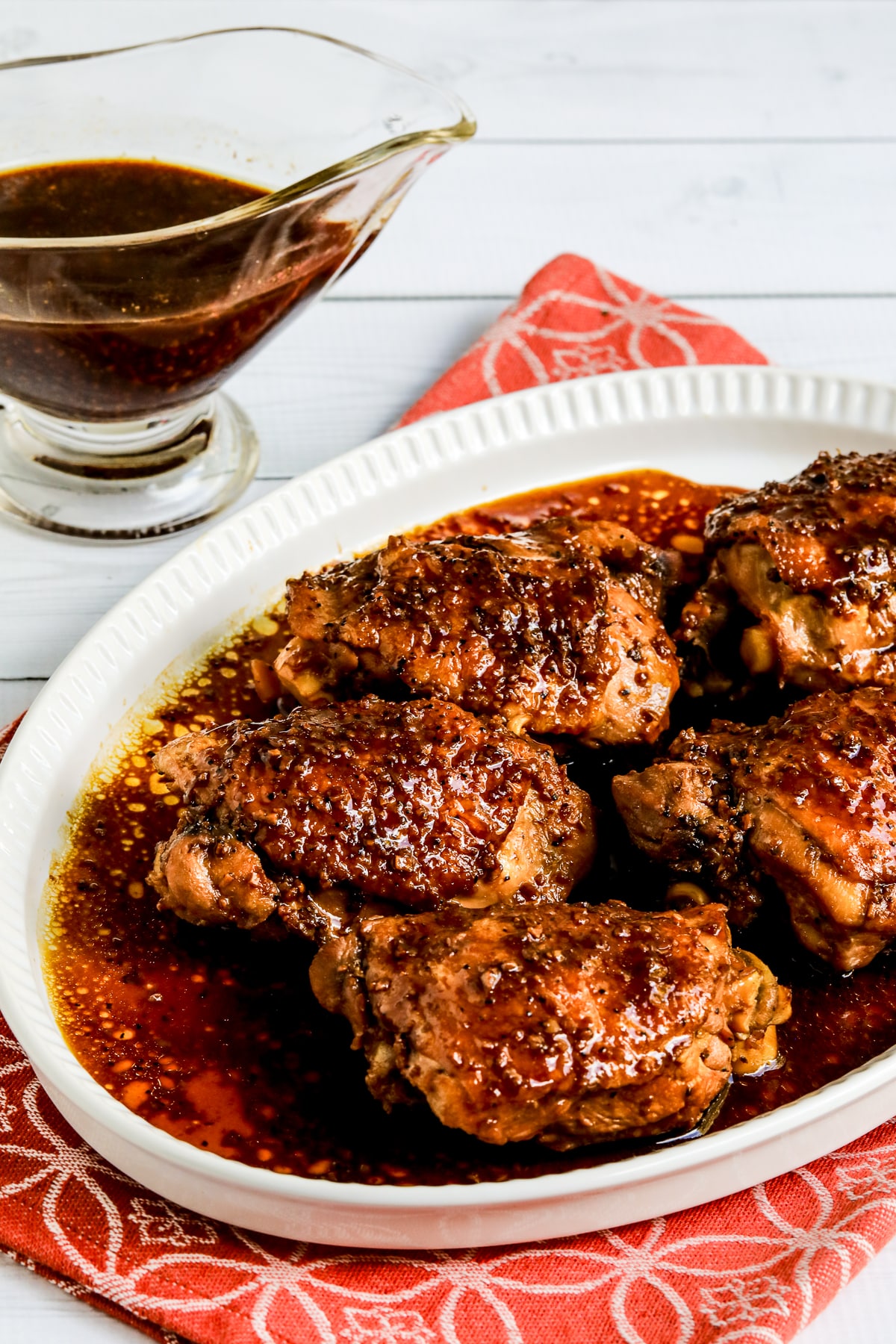
Chicken adobo is the fastest — 35 minutes with bone-in thighs. Spiced Filipino Chicken Adobo Braised in Vinegar and Soy Sauce is the canonical version and the one to learn first.
Pork adobo takes longer but rewards it — pork shoulder at 60–75 minutes goes silky in a way chicken cannot. Sautéed Filipino Pork Adobo with Vinegar and Soy is a weeknight-scale version; Adobo-Spiced Filipino Pork Belly Stew is the richer Sunday one.
Dry-style adobo (adobong tuyo) is the move most American home cooks have never tried and immediately adopt: braise as normal, then pull the meat out, reduce the sauce to a glaze, and crisp the meat in it. You lose the sauce for rice but you gain crackly, lacquered edges.
Coconut adobo (adobo sa gata) adds a cup of coconut milk in the last ten minutes. It rounds the acid off dramatically and is the version to make for anyone who finds standard adobo too sharp.
Spicy adobo just means adding 2–3 bird's-eye chiles at the start. Adobong sitaw swaps meat for long beans and is a legitimately good 15-minute vegetarian dinner.
Real numbers: the adobo cost-and-time table
| Version | Protein | Active time | Total time | Cost per serving (2026) |
|---|---|---|---|---|
| Chicken adobo | Bone-in thighs | 10 min | 35 min | $2.15 |
| Pork adobo | Pork shoulder | 12 min | 75 min | $2.60 |
| Pork belly adobo | Pork belly | 15 min | 90 min | $3.90 |
| Adobo sa gata | Chicken + coconut milk | 12 min | 45 min | $2.80 |
| Adobong sitaw | Long beans | 8 min | 15 min | $1.30 |
Sour & Savory Soups — sinigang na baboy, tinola, bulalo, sinigang na hipon
Sinigang is the dish Filipinos abroad miss most, and it is the easiest thing in this guide. Water, pork, tomato, onion, tamarind, and whatever vegetables are in the crisper. It is done in 45 minutes and it is a complete meal over rice.
The sourness comes from tamarind — either fresh pods simmered and mashed, or a 40-gram packet of sinigang mix that costs about $0.90 and is what most Filipino households actually use. There is no shame in the packet. Sinigang Pork Soup with Tamarind and Vegetables is the standard build; Tamarind-Sour Sinigang with Pork and Vegetables pushes the acidity harder, which is closer to how it is eaten in Manila.
Vegetables go in by cook time, not by preference: radish and taro first (12 min), long beans and eggplant next (6 min), water spinach or bok choy in the final 60 seconds. Overcooked greens are the one way to ruin sinigang.
Tinola is the gentle counterpoint — chicken, ginger, green papaya, chili leaves, no sourness at all. It is what gets cooked when someone is sick. Tinola Chicken Soup with Ginger and Green Papaya is the classic; Vinegar-Infused Chicken Tinola with Ginger and Green Papaya splits the difference toward sinigang. Chayote substitutes for green papaya one-for-one and is easier to find.
Bulalo is beef shank simmered three hours until the marrow gives up. It is a weekend project, not a weeknight one, but the payoff is a clear beef broth with more body than any stock you can buy.
Sinigang na hipon (shrimp) cooks in 15 minutes flat because the shrimp go in at the end. It is the fastest complete dinner in this entire guide.
Noodles & Rice — pancit canton, pancit bihon, arroz caldo, sinangag
Pancit is the birthday dish — long noodles for long life — and it is also the best use of half a cabbage and a leftover protein.
Pancit canton uses wheat flour noodles (the thick, springy kind). Stir-Fried Pancit Canton with Cabbage and Pork is the everyday version; Pancit Canton Stir-Fry with Vegetables and Shrimp is the one for a party platter.
Pancit bihon uses thin rice vermicelli and is naturally gluten-free if you use tamari instead of soy. Pancit Bihon Stir-Fried Rice Noodles with Vegetables and Pork is the template, and Stir-Fried Tofu Vegetable Pancit with Bihon Noodles is a fully vegetarian build that still hits the sour-salty triangle.
The pancit technique note that changes everything: soak the noodles in warm water until pliable but still firm — 5 minutes for bihon, 3 for canton — then finish them in the broth in the pan, not in boiling water. Boiled-then-stir-fried noodles go gummy. Noodles that absorb seasoned broth stay separate and taste like something.
Arroz caldo is Filipino congee: rice, chicken, a lot of ginger, saffron or safflower for color, finished with fried garlic, scallion and calamansi. Ginger Chicken Arroz Caldo with Coconut Milk is a richer coconut version. It is a one-pot dish that costs under $1.50 a serving.
Sinangag — garlic fried rice — is the base of Filipino breakfast and takes six minutes with day-old rice. Pair it with anything from the adobo section and a fried egg and you have "silog," the most-eaten meal in the country.
Party Platters — lumpiang shanghai, lumpiang sariwa, empanadas, palabok
Lumpiang Shanghai are the thin, cigar-shaped pork-and-carrot spring rolls that disappear first at every gathering. The critical detail is size: roll them thin — about the diameter of your index finger — so the wrapper crisps before the filling overcooks. Pan-Fried Lumpiang Shanghai with Ground Pork and Vegetables and Pan-Fried Lumpia Shanghai with Ground Pork and Carrots are both pan-fry versions that skip the deep-fryer.
They freeze beautifully raw. Roll a triple batch, freeze on a sheet pan, bag them, and fry from frozen with 2 extra minutes. That is roughly 90 minutes of work for four parties' worth of appetizer.
Lumpiang sariwa is the fresh, unfried cousin — a soft crepe wrapped around braised vegetables and heart of palm, sauced with a sweet peanut-garlic sauce. It is the vegetarian option that no one treats as the vegetarian option.
Palabok is rice noodles under a thick annatto-shrimp gravy, topped with chicharrón, egg, and smoked fish flakes. It is assembly, not cooking — the toppings do the work.
Slow-Braised & Special-Occasion — kare-kare, lechon kawali, dinuguan, mechado
Kare-kare is oxtail (or beef shank) braised until it falls apart, then finished in a thick peanut sauce colored with annatto. The sauce is deliberately under-seasoned because it is served with bagoong on the side — each person stirs in as much fermented shrimp paste as they want. Skipping the bagoong makes kare-kare taste bland, and that is not the recipe's fault. Kare-Kare Oxtail Stew with Peanut Sauce is the traditional build; Peanut-Infused Kare-Kare Oxtail Stew leans the peanut heavier.
Lechon kawali is pork belly boiled until tender, dried thoroughly, then deep-fried or air-fried until the skin blisters. The drying step is not optional — belly that goes into oil wet will spit violently and never crisp. Refrigerate uncovered overnight for the best result. Grilled Lechon Kawali-Inspired Crispy Pork Belly with Spiced Vinegar Dip is a lower-risk grilled adaptation.
Mechado is the tomato-and-soy beef braise that reads most familiar to Western palates — closest to a pot roast. Slow-Simmered Beef Mechado with Tomato and Soy Sauce is a good gateway dish for a skeptical table.
Bistek Tagalog is the fast one in this section: thin-sliced beef marinated in soy and calamansi, seared hard, and buried under soft onion rings. Bistek Tagalog Beef Slices Braised in Soy and Citrus takes 30 minutes.
Dinuguan — pork braised in its own blood with vinegar and chili — is the dish that scares outsiders and shouldn't. It tastes like a rich, tangy, deeply savory stew. Serve it with puto (steamed rice cakes) as it is traditionally eaten.
Regional Notes — Ilocos, Bicol, Visayas, Mindanao specialties in brief
The Philippines has 7,600 islands and the food changes noticeably across them.
Ilocos (north Luzon) is the vegetable-and-bagoong region: pinakbet (mixed vegetables with shrimp paste), bagnet (their own crispy pork belly), and empanadas with orange annatto dough.
Bicol (southeast Luzon) is coconut milk and chili — the only genuinely spicy region. Bicol Express-Style Spicy Pork Stew with Coconut Milk is the signature dish, and Ginataang Laing with Coconut and Taro Leaves is the vegetable one — dried taro leaves slowly collapsed into coconut milk.
Visayas (central) is grilled and vinegar-forward. Vinegar-Marinated Grilled Chicken Inasal is Bacolod's famous version — annatto oil, calamansi, lemongrass, basted throughout the grill. Sautéed Pork Sisig with Onion and Chili comes from Pampanga on Luzon but is now national, served sizzling on a cast-iron plate.
Mindanao (south) carries Malay and Indonesian influence — turmeric, lemongrass, more chili, and dishes like piyanggang manok (chicken with burnt coconut).
Kitchen gear that helps (a wok, a rice cooker, a Dutch oven, a fine mesh strainer)
You need less than you think, but four items carry most of the load.
A rice cooker. $30–$90. Filipino food is a rice cuisine — every dish here is served over it, and a cooker removes the one thing you can actually get wrong on a weeknight. A 5.5-cup model feeds a family of four with leftovers for sinangag. See the small appliances category for models with a keep-warm cycle, which matters when dinner arrives in shifts.
A 14-inch carbon-steel wok. $35–$60. Pancit needs a surface big enough to toss a pound of noodles without them steaming. A flat-bottomed wok works on an electric coil or induction hob; a round-bottomed one needs a gas ring. The cookware category covers both, plus the heavy Dutch oven you want for adobo and kare-kare.
A Dutch oven or heavy 5-quart pot. $50–$120. Adobo, mechado and kare-kare all want even, low heat over 60–90 minutes. Thin stockpots scorch the sugar in the braise.
A fine mesh strainer and a good spider. $12–$25 together. The spider is for lumpia and lechon kawali; the strainer is for rinsing rice and for straining tamarind pulp if you make sinigang from scratch. Both live in the utensils and tools category, along with the long tongs you want for grilling inasal.
A sharp cleaver or heavy chef's knife rounds it out — you will be cutting through chicken joints and pork belly, not filleting fish. The knives and cutting category has both, and a heavier blade genuinely makes bone-in adobo prep faster and safer.
Common pitfalls — five ways Filipino dishes go wrong
1. Stirring the vinegar in too early. Adobo will taste raw and harsh. Boil undisturbed 8–10 minutes first.
2. Ground pepper instead of whole peppercorns. Gritty, muddy adobo sauce. Whole only.
3. Boiling pancit noodles before stir-frying. They turn to paste. Soak until pliable, finish in the pan broth.
4. Serving kare-kare without bagoong. The sauce is intentionally under-salted; the shrimp paste is not a garnish, it is the seasoning.
5. Frying wet pork belly for lechon kawali. Dangerous and it never crisps. Dry it uncovered in the fridge overnight.
When NOT to cook Filipino food
If your table dislikes vinegar, this is the wrong cuisine to start with. The acidity in adobo and sinigang is not background — it is the point, and dialing it down produces a dish that is neither Filipino nor good. Cook adobo sa gata (coconut) or mechado (tomato) instead, both of which round the sharpness off substantially.
Also skip it on a night that needs to be under 20 minutes with no rice cooked ahead. Adobo is 35 minutes minimum, sinigang 45, and everything wants rice underneath it. The one exception is sinigang na hipon with shrimp, which is genuinely 15 minutes if you use a tamarind packet.
Desserts worth the detour
Filipino desserts run sweeter and more texture-forward than most Western ones. Halo-Halo Inspired Shaved Ice with Ube and Sweetened Beans is the national summer dessert — shaved ice over a dozen sweetened components, stirred into deliberate chaos. Halo-Halo Icy Dessert with Ube, Sweet Beans, and Leche Flan adds the flan layer.
Pan-Fried Turon with Brown Sugar and Banana — saba banana and jackfruit in a lumpia wrapper, fried in caramelizing sugar — is a ten-minute dessert from pantry staples. Ginataang Bilo-Bilo Sweet Coconut Rice Cake with Taro and Jackfruit is the warm, chewy, coconut-milk one for a cold night.
Sourcing and further reading
The three big US recipe desks all have Filipino collections, but their landing pages move
around and several are paywalled or geo-blocked, so the references below point at stable
encyclopedic entries you can actually open in 2026.
The cuisine and its history. Filipino cuisine
is the best single overview of how Austronesian, Chinese, Spanish and American cooking
stacked into one repertoire over 400 years, and Ilocano cuisine
covers the bagoong-forward northern style referenced in the regional section above.
The core dishes. Philippine adobo
documents the pre-colonial vinegar-braising technique and the regional splits — white
adobo, coconut adobo, dry-style — that this guide treats as house variables rather than
errors. Sinigang catalogs the full souring-agent
list beyond tamarind, and Tamarind explains why
the paste and the fresh pod behave so differently in a pot. See also
Bicol Express and
Pinakbet for the dish-by-dish background.
Noodles, rice and party food. Pancit is the
clearest breakdown of the canton/bihon/palabok family and their Hokkien roots;
Lumpia covers the shanghai-versus-sariwa split;
Arroz caldo traces the congee-to-Spanish-name
lineage; and Lechon explains why the kawali
stovetop version exists at all.
Pantry ingredients. Coconut vinegar
and Fish sauce are the two purchases that
most change your results, Bagoong is the
fermented shrimp paste kare-kare is incomplete without, and
Calamansi is worth reading before you
substitute lime for it. The browning step every braise opens with is the
Maillard reaction, and the one piece
of gear that pays for itself is the rice cooker.
Dessert and merienda. Halo-halo,
Ube and Longganisa
round out the sweet and breakfast end of the table.
FAQ
Why does every Filipino family's adobo taste different?
Because adobo is a ratio, not a recipe. The soy-to-vinegar ratio ranges from 1:1 to 3:1 across households; some add coconut milk, some add sugar, some brown the meat first, some skip water entirely. Northern versions lean saltier, southern versions creamier with gata. Start at 1:1 soy to cane vinegar with a head of garlic, three bay leaves and whole peppercorns, then adjust to your own taste over a few cooks.
What can I substitute for calamansi?
A 2:1 mix of lime juice and mandarin orange juice is the closest widely available match — calamansi is floral and less sharply acidic than lime alone. Frozen calamansi concentrate is sold at most Asian groceries for $5–$8 and keeps six months in the freezer, which is worth buying if you plan to cook Filipino food regularly. Plain lime works in a pinch for pancit and grilled dishes but reads noticeably harsher in dipping sauces.
Is Filipino food spicy?
Mostly no. Unlike Thai or Sichuan cooking, the dominant Filipino flavors are sour and salty rather than hot. The major exception is Bicol regional cuisine — Bicol Express and laing are built on chili and coconut milk. Elsewhere, heat is added at the table via siling labuyo (bird's-eye chiles) in a vinegar dipping sauce, so each person controls their own. This makes Filipino food unusually good for feeding mixed-tolerance tables.
Can I make Filipino food gluten-free?
Largely yes, with one swap. Soy sauce is the only common gluten source, and tamari replaces it one-for-one in adobo, bistek and pancit bihon. Sinigang, tinola, kare-kare, inasal and all the ginataan coconut dishes are naturally gluten-free. Pancit canton uses wheat noodles and needs bihon rice noodles instead; lumpia wrappers are wheat-based, so use rice paper or spring roll wrappers labeled gluten-free.
What do I cook first if I have never made Filipino food?
Chicken adobo, then pancit bihon, then sinigang. Adobo teaches the soy-vinegar balance with almost no technique risk and uses six pantry items. Pancit teaches the noodle-in-broth method and uses up leftovers. Sinigang teaches the sour profile and needs nothing but a pot of water and a tamarind packet. Cook those three over two weeks and the rest of this guide becomes variations rather than new dishes.
Related reading
- 20 Filipino Dinner Recipes: Adobo, Sinigang & Pancit for Weeknights — the weeknight-only companion
- 18 Vietnamese Dinners: Pho, Banh Mi & Lemongrass Chicken for Weeknights
- 24 Chinese Takeout Recipes You Can Make Better at Home in 30 Minutes
- 22 Easy Thai Dinner Recipes: Pad Thai, Curries & Stir-Fries Under 30 Minutes
- 25 Easy Japanese Dinners: Ramen, Teriyaki, Donburi & Katsu for Home Cooks
Frequently asked questions
What makes adobo the national dish of the Philippines, and are there rules?
What's the difference between sinigang and other Asian sour soups?
Can I make Filipino food without a wok or specialty equipment?
Is Filipino food gluten-free?
What's the easiest Filipino recipe for someone who's never cooked it before?
Sources
- en.wikipedia.org
- en.wikipedia.org
- en.wikipedia.org
- en.wikipedia.org
- en.wikipedia.org
- en.wikipedia.org
- en.wikipedia.org
- en.wikipedia.org
- en.wikipedia.org
- en.wikipedia.org
- en.wikipedia.org
- en.wikipedia.org
- en.wikipedia.org
- en.wikipedia.org
- en.wikipedia.org
- en.wikipedia.org
- en.wikipedia.org
- en.wikipedia.org
- en.wikipedia.org
- en.wikipedia.org
- en.wikipedia.org
- en.wikipedia.org
- en.wikipedia.org
- en.wikipedia.org
- en.wikipedia.org
- en.wikipedia.org
- en.wikipedia.org
- en.wikipedia.org
Plan a week of meals in two minutes.
Tell our AI what you have and what you like — it builds your plan, shopping list, and Instacart cart. No account needed.
Try free →