Kid Lunchbox Meal Prep: 20 Bento-Style Ideas for the School Year
Batch the components on Sunday, and packing five-well boxes takes five minutes a morning.
Affiliate disclosure: AislePrompt may earn a commission on qualifying purchases made through Amazon and Instacart links in this article, at no additional cost to you. See our affiliate policy →
Kid lunchbox meal prep works when you batch components on Sunday instead of assembling five separate lunches on five separate mornings. Roast one tray of protein, cook one pot of pasta, portion fruit into cups, and cut vegetables once. Monday through Friday, packing a bento-style box takes about five minutes per kid, because every compartment is a grab-and-drop from a labeled container.
Why bento-style beats the daily sandwich rush
A sandwich is one decision that has to be right five days a week. A bento box is five small decisions that can each be wrong without ruining lunch. That is the whole argument, and it holds up in practice: when the turkey sandwich comes home untouched, your kid ate nothing. When the pretzels-and-hummus compartment comes home untouched, they still ate the fruit, the cheese, and the pinwheels.
The bento format — a partitioned box with separate wells for rice, protein, pickles, and vegetables — has been the default Japanese packed lunch for centuries precisely because compartmentalization survives a commute. Nothing gets soggy, nothing touches, and the visual variety does more for a seven-year-old's appetite than any amount of persuasion at 7:20 a.m.
Three practical wins over the sandwich:
- Waste drops. Parents who track it typically find whole-sandwich rejection running 20-30% of days; component rejection is closer to 10% per compartment, and only one compartment fails at a time.
- Nutrition gets legible. The MyPlate framework asks for a fruit, a vegetable, a grain, and a protein at every meal. A five-well box makes that a layout problem rather than a nagging problem.
- Mornings get shorter. Assembly is a transfer operation, not a cooking operation. Five minutes, no stove, no knife.
The cost of entry is one Sunday session and one decent box. That is it.
The Sunday 45-minute lunchbox prep session
Here is the actual clock. Set a timer; the whole point is that this does not eat your afternoon.
| Minutes | Task | Output for the week |
|---|---|---|
| 0-5 | Oven to 400°F. Sheet pan of nuggets or meatloaf muffins in. | 20 protein pieces |
| 5-12 | Pot of pasta on. Wash and dry all fruit. | 10 pasta portions, 10 fruit cups |
| 12-22 | Cut carrots, cucumbers, peppers, celery into sticks. | 15 veg portions |
| 22-30 | Assemble wraps or pinwheels; slice into rounds; wrap tightly. | 10 pinwheel portions |
| 30-38 | Portion dips, yogurt, and dressings into 2 oz cups. | 15 dip cups |
| 38-45 | Label, stack by category, load the fridge front shelf. | Week staged |
Two rules make the 45 minutes real. First, cook exactly two hot things, not five — one sheet-pan protein and one starch. Everything else on the list is washing, cutting, and portioning, which parallelizes while the oven runs. Second, portion into the final container at prep time. A tub of cut carrots in the fridge still needs a decision on Wednesday morning; fifteen 1-cup snack containers of carrots do not.
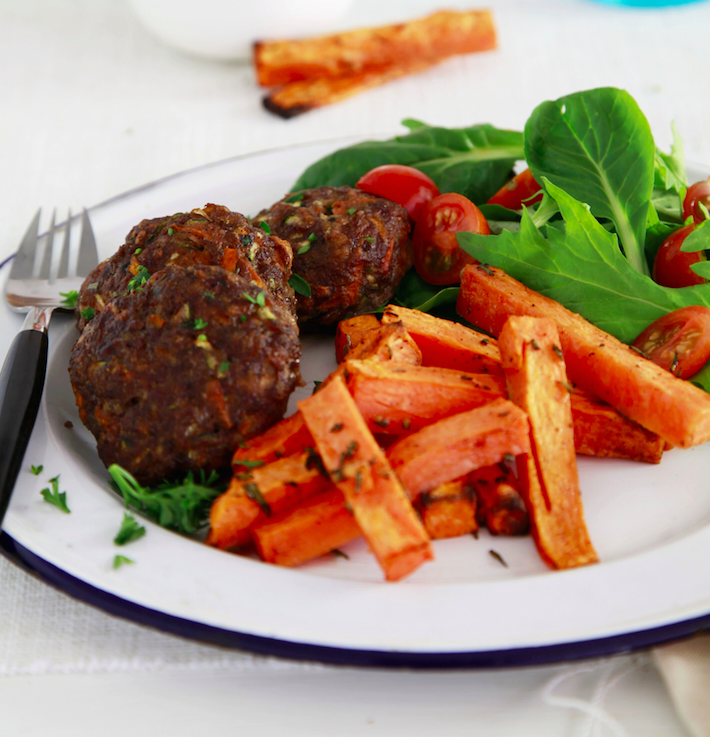
The batch protein is where most of the actual cooking happens. Kid-Friendly Baked Chicken Nuggets with Honey Mustard Dip bakes 24 pieces on one half sheet in about 20 minutes and eats fine cold. PBS Kids-Inspired Mini Turkey Meatloaf Muffins give you 12 single-serve proteins from one muffin pan and freeze better than nuggets do. Savory Cheesy Egg Muffins are the vegetarian equivalent, and they cost roughly $0.30 each.
Building a balanced bento: 1 protein + 1 fruit + 1 veg + 1 crunch + 1 treat
The formula is deliberately rigid, because rigidity is what lets you stop thinking. Five wells, five roles, no exceptions:
| Well | Role | Target portion | Examples |
|---|---|---|---|
| 1 | Protein | 2-3 oz | Nuggets, meatloaf muffins, pinwheels, egg muffins, cheese cubes |
| 2 | Fruit | 1/2 cup | Grapes, apple slices, berries, mandarin segments, melon cubes |
| 3 | Vegetable | 1/2 cup | Carrot sticks, cucumber rounds, pepper strips, snap peas, cherry tomatoes |
| 4 | Crunch | 1 oz | Pretzels, pita chips, crackers, popcorn, roasted chickpeas |
| 5 | Treat | small | Two cookies, a fruit leather, a square of chocolate, energy bites |
That fifth well is not a concession — it is load-bearing. A lunch with no treat gets traded away at the table, and then you have no idea what your kid actually ate. A predictable small treat keeps the rest of the box intact.
The vegetable well is where most boxes fail, and dip is the fix. Funny Face Veggie Sticks with Hummus & Ranch Dip and Superhero Veggie Sticks with Rainbow Dip both work on the same principle: the vegetables are unchanged, the dip is the entire intervention. Portion dip into a 2 oz lidded cup rather than a well, or the carrots arrive swimming.
For the treat well, Chocolate Almond Energy Bites roll 20 at a time and hold two weeks refrigerated — swap the almond butter for sunflower seed butter if the school is nut-free.
20 kid-approved lunchbox combos (with real recipe links)
Each combo below is a full five-well box. Assembly time assumes the components are already prepped and portioned.
Sandwich-adjacent (no bread fatigue)
1. Turkey-and-Swiss pinwheels — slice a Herbed Turkey Sandwich with Swiss Cheese and Grainy Mustard filling into a tortilla, roll, chill, cut into six rounds. Grapes, cucumber, pretzels, two cookies.
2. Rainbow hummus wraps — No-Bake Rainbow Veggie Wraps with Creamy Hummus, cut into pinwheels. Apple slices, snap peas, pita chips, fruit leather.
3. Ham-and-cheese roll-ups with mustard in a dip cup. Mandarin segments, carrots, crackers, dark chocolate square.
4. Cream-cheese-and-cucumber tea sandwiches, crusts off, quartered. Blueberries, pepper strips, popcorn, energy bite.
Quesadilla week
5. Kid-Friendly Mini Chicken Quesadillas with Cheddar — four wedges, salsa in a dip cup. Grapes, carrots, tortilla chips, cookie.
6. Cheesy Vegetable Quesadillas with Corn and Black Beans — vegetarian, freezes and reheats cleanly. Apple, cucumber, pretzels, fruit leather.
7. Bean-and-cheese quesadilla with a guacamole cup. Melon, cherry tomatoes, pita chips, two cookies.
Protein-first boxes
8. Kid-Friendly Baked Chicken Nuggets with Honey Mustard Dip — five nuggets, dip cup. Strawberries, carrots, crackers, chocolate square.
9. PBS Kids-Inspired Mini Turkey Meatloaf Muffins — two muffins, ketchup cup. Grapes, snap peas, pretzels, energy bite.
10. Savory Cheesy Egg Muffins — two muffins. Blueberries, pepper strips, crackers, cookie.
11. Mini Vegetable Frittatas with Spinach and Cherry Tomatoes — two frittatas, one of the few hot-or-cold-both-fine options. Apple, cucumber, popcorn, fruit leather.
Pasta and grain boxes
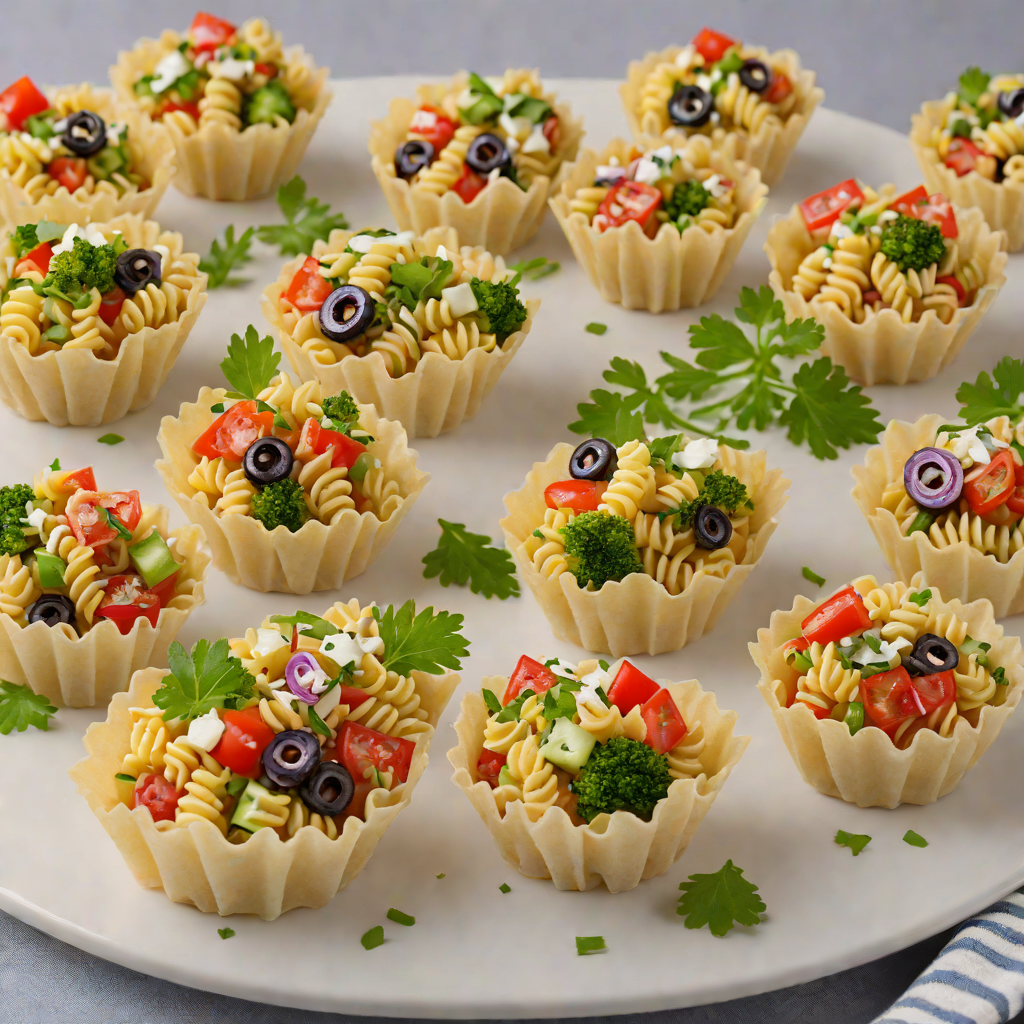
12. Mini Veggie-Packed Pasta Salad Cups — one cup, plus a cheese stick for the protein well. Mandarins, carrots, pita chips, cookie.
13. Buttered orzo with peas and parmesan, packed cold. Grapes, cherry tomatoes, pretzels, energy bite.
14. Vegetable Stir-Fry Rice Bowls with Teriyaki Sauce in a preheated thermos, with edamame on the side. Apple, crackers, chocolate square.
15. Cold soba noodles with sesame dressing in a dip cup. Melon, cucumber, popcorn, cookie.
Snack-plate boxes (the "no cooking left" days)
16. Cheese cubes, salami rounds, and crackers — a build-your-own board. Grapes, pepper strips, two cookies.
17. Hard-boiled eggs with a salt-and-pepper packet. Berries, carrots, pretzels, fruit leather.
18. Yogurt-and-granola parfait — No-Bake Rainbow Fruit & Yogurt Parfait Cups, granola packed separately so it stays crisp. Cucumber, crackers, energy bite.
19. Tuna or chickpea salad with crackers to scoop. Apple, snap peas, chocolate square.
20. Sweet-leaning box: No-Bake Chocolate Banana Roll-Ups with Peanut Butter Drizzle as the treat, cheese stick as protein. Berries, carrots, pretzels.
Rotate one block per week — quesadilla week, then protein-first week, then pasta week — and you get four weeks of variety out of four decisions instead of twenty.
What to buy: bento boxes, ice packs, silicone dividers, thermoses
Equipment for this is cheap, and the cheap version is genuinely fine. The list below is the full kit; you do not need more.
| Item | What matters | Rough cost |
|---|---|---|
| Bento box | 3-5 wells, snap-lock lid, leakproof gasket | $15-30 |
| Insulated tote | Fits box plus one ice pack flat | $12-20 |
| Ice packs | Two per kid so one is always frozen | $8-15 |
| Silicone dividers | Reconfigure wells; also muffin liners | $8-12 |
| 2 oz dip cups | Screw or snap lids, dishwasher safe | $10-15 |
| Thermos food jar | 10-12 oz, wide mouth for a spoon | $20-30 |
A few specifics worth naming. Snap-lock beats screw-top for anyone under about seven — screw threads defeat small hands and cold fingers, and a lunch a kid cannot open is a lunch a kid does not eat. Reusable silicone cupcake liners double as bento dividers at about $0.28 each, which is the cheapest way to turn a plain rectangular container into a compartment box. For portioning the week's components, a glass set like the Pyrex Simply Store 12-pack in 1-, 2-, and 3-cup sizes covers dips, fruit, and full portions in one buy. Stasher reusable silicone bags handle the crunch well without a daily zip-bag.
Browse the full storage and containers category for sets, and kitchen utensils for the crinkle cutter and small cookie cutters that do more for lunchbox compliance than they have any right to. The kitchen gadgets category covers apple slicers and portion scoops.
Freezer-friendly components that thaw by lunchtime
This is the highest-leverage trick in the whole system: freeze the protein in single portions, pack it frozen, and let it thaw in the box. It doubles as the ice pack.
| Component | Freezes well | Thaws by lunch | Notes |
|---|---|---|---|
| Meatloaf muffins | Yes | Yes, ~3 h | Wrap individually |
| Baked nuggets | Yes | Yes, ~2 h | Slightly softer texture |
| Quesadillas | Yes | Yes, ~3 h | Freeze flat, parchment between |
| Egg muffins | Yes | Yes, ~2 h | Best texture if slightly warm |
| Pinwheels | No | — | Tortilla goes gummy |
| Cut fruit | Grapes only | Frozen grapes are the point | Pack frozen as a treat |
| Yogurt tubes | Yes | Yes, ~3 h | Doubles as an ice pack |
| Bread/sandwiches | Yes | Yes, ~4 h | Condiments last, day-of |
Build a freezer bank over two Sundays and you stop cooking for lunches almost entirely — you are drawing down inventory instead. Label every bag with contents and date, and rotate oldest-first. Six weeks is a reasonable quality ceiling for these items; past that, texture, not safety, is what degrades.
One caution: frozen components thaw at room temperature, which means they pass through the temperature range where bacteria multiply fastest. A frozen item plus one ice pack in an insulated tote keeps the whole box cold enough through a normal school day. A frozen item alone in a paper sack does not.
Handling picky eaters, allergies, and no-nuts school policies
Picky eaters. Do not negotiate at the box. Negotiate at the prep session, on Sunday, when nobody is late. Let each kid veto exactly one component per category for the week — one fruit, one vegetable, one crunch. A veto they own is worth more than a compromise you impose, and capping it at one per category stops the list from collapsing to crackers.
The second lever is presentation, which sounds trivial and is not. Cutting carrots into coins instead of sticks, or using a crinkle cutter, moves acceptance measurably in most households. So does a cookie-cutter shape stamped into cheese. It is the same food.
Nut-free schools. Peanut and tree-nut bans are common and usually cover the whole building, not just the allergic child's classroom. The two substitutions that cover almost everything: sunflower seed butter for peanut butter (nearly identical in sandwiches and roll-ups), and roasted chickpeas or pretzels for nuts in the crunch well. The FDA's food allergen labeling rules require the nine major allergens to be declared in plain language on packaged foods, so the crunch well and the treat well — the two most likely to be store-bought — are the easy ones to audit. Granola bars and "may contain" advisory statements are where most accidental violations come from.
Other allergies. Dairy is the other frequent one. Swap cheese cubes for hummus or bean dip in the protein well, and use coconut or oat yogurt in parfaits. Gluten-free means corn tortillas instead of flour for every quesadilla and roll-up, rice or corn crackers in the crunch well, and reading labels on the treat.
If you want the whole week rebuilt around a constraint rather than patched item by item, AislePrompt's AI chat will regenerate the plan nut-free, dairy-free, or gluten-free and update the shopping list to match.
The Monday-morning 5-minute assembly system
Stage the fridge on Sunday night so assembly is spatial, not cognitive. Front shelf, left to right, in box order: proteins, fruit, vegetables, crunch, treats. You are walking a line, not making decisions.
The five minutes, for two kids:
1. 0:00-0:30 — Boxes out, lids off, on the counter side by side.
2. 0:30-1:30 — Protein well first, from the freezer bank or the fridge tray.
3. 1:30-2:30 — Fruit and vegetable wells, straight from portioned cups.
4. 2:30-3:30 — Crunch and treat wells.
5. 3:30-4:30 — Dip cup on top, lid on, box into the tote with a frozen ice pack behind it.
6. 4:30-5:00 — Water bottle, tote zipped, by the door.
Three habits keep it at five minutes. Pack the tote the night before with everything shelf-stable — crunch, treat, napkin, utensil — so the morning pass only touches refrigerated wells. Keep a permanent marker and masking tape in the utensil drawer for labeling. And keep two ice packs per kid in rotation, because the single most common failure is a warm ice pack that came home in a bag at 4 p.m. and never made it back to the freezer.
Real-world numbers: what a week actually costs
Prices below reflect typical US supermarket costs as of 2026, per portion, for a five-well box.
| Well | Typical item | Cost per portion |
|---|---|---|
| Protein | Homemade nuggets (3 lb chicken breast batch) | $0.85 |
| Protein | Meatloaf muffins (2 lb ground turkey batch) | $0.70 |
| Fruit | Grapes, in season | $0.55 |
| Vegetable | Carrots, whole, cut at home | $0.18 |
| Crunch | Pretzels, bulk bag | $0.22 |
| Treat | Homemade energy bites | $0.30 |
| Total | Five-well box | ~$2.10-2.60 |
A comparable US school lunch runs roughly $3.00-3.75 where meals are not universally free, and a store-bought pre-packaged lunch kit runs $3.50-5.00. Homemade bento lands under both, and the gap widens for a second child because the Sunday session scales at close to zero marginal time — you are cutting the same carrots.
Common pitfalls
- Soggy crunch. Anything crisp goes in a dedicated dry well or a separate bag, never adjacent to fruit or dip. Granola in a parfait is the classic offender.
- The un-openable container. Test every new box by handing it to your kid cold, once, at home. Screw tops and stiff gaskets are the usual culprits.
- Ice pack attrition. Two per kid, minimum, or you will eventually pack a warm lunch. Keep the spares in the freezer door where they are visible.
- Over-prepping produce. Cut cucumber and apple degrade by Thursday. Prep those two mid-week, or use whole fruit late in the week.
- Silent rejection. If a compartment comes back full three days running, it is a veto, not a phase. Replace it at the next Sunday session rather than repacking it.
- Thermos not preheated. A cold thermos filled with hot food is lukewarm by 11:30. Fill it with boiling water, let it sit five minutes, dump, then fill.
When bento-style is the wrong call
Skip it if your child's school has a hot-lunch program they actually like and eat — participation beats optimization, and free or reduced-price meals are a real budget line. Skip it for kids under about four, where compartments are more choking-hazard surface than benefit and a single soft item is safer. And skip it during any week where the Sunday session will not happen; a hastily assembled bento at 7 a.m. is slower and worse than a sandwich. The system is worth having, not worth forcing.
Where to go next
Once the five-well rhythm is automatic, the same Sunday session extends naturally: freezer-friendly school lunch prep builds the component bank deeper, and 20 after-school snacks covers the 3:30 p.m. gap that otherwise wrecks dinner appetite. If mornings are the real bottleneck, quick school-morning breakfasts uses the same batch-and-portion logic before school rather than after.
Frequently asked questions
How long do bento-style lunches stay safe without refrigeration?
What if my kid's school is nut-free?
Can I actually prep an entire week of kid lunches in 45 minutes?
What lunchbox and containers actually work for elementary kids?
How do I stop lunchbox burnout by October?
Do I need a separate thermos, or can everything be packed cold?
Sources
- en.wikipedia.org
- myplate.gov
- fda.gov: refrigerator thermometers cold facts about food safety
- fda.gov: food allergies
Kid-friendly recipes from the catalog
Save any of these to My Recipes — no account needed — and send the ingredients to Instacart in one tap.