20 After-School Snacks: Filling, Kid-Approved Recipes in 15 Minutes
The 4pm meltdown fix — protein + carb + one fun element, ready in under 15 minutes.
Affiliate disclosure: AislePrompt may earn a commission on qualifying purchases made through Amazon and Instacart links in this article, at no additional cost to you. See our affiliate policy →
The best after-school snacks land somewhere between a real snack and a mini-meal: 150–250 calories for elementary-age kids, 8–12 grams of protein, and about 15–25 grams of carbs, ready in under 15 minutes. The 20 recipes below hit that target — five each of fruit-and-protein combos, savory five-minute assemblies, Sunday make-ahead batches, and baked snacks kids will actually eat.
Introduction: The Snack-to-Dinner Gap (why kids melt down at 4pm and what to serve)
A first-grader who finished lunch at 11:15 a.m. has been fasting for five hours by the time the bus doors open at 3:20 p.m. Their blood sugar is low, their glycogen tank is empty, and their frontal cortex — the part responsible for "please don't scream at your sibling over a Lego" — is running on fumes. If dinner is at 6:00, that's another two-and-a-half hours to hold the line. Sending them into the void with a granola bar is a plan; sending them in with nothing is a battle.
The American Academy of Pediatrics recommends structured snack times, not grazing, and treats the after-school snack as a bridge, not a mini-dinner (HealthyChildren.org — Healthy Snacks for Kids). Aim for two macro pillars — protein plus a complex carb — and one "fun" element that makes the kid actually eat it. Skip that fun element and even a nutrient-perfect snack ends up in the trash.
Below are 20 snacks organized by how they fit into a Tuesday. Five are 90-second assemblies for the moment the bus arrives. Five are savory when a sweet snack won't hold them until dinner. Five are Sunday-prep recipes that survive the whole week. Five bake once and disappear over three days.
Every recipe below is in the AislePrompt catalog — tap the title to open the full recipe card, add ingredients to your shopping list with one click, and send the list to Instacart if you'd rather not stop at the store on a school night.
Fruit + Protein Combos (5 quick assemblies)
Fruit alone is a snack the way an appetizer is dinner: fine for about 20 minutes, then the kid is hungry again. Pairing 15–20 grams of fruit-carb with 6–10 grams of protein slows the blood-sugar rise and stretches satiety past the 90-minute mark. These five are 5-minute assemblies — no cooking, no chopping-board setup, just a plate and a spoon.
1. Apple 'Ants on a Log' with Peanut Butter — the classic upgraded with apple boats instead of celery. Two grams of fiber, seven grams of protein, and the kids can build their own; a five-year-old who spreads their own peanut butter accepts the snack at roughly three times the rate of one served a pre-made version.
2. Oven-Roasted Cinnamon Apple Nachos with Caramel Drizzle — apples fanned on a plate, drizzled with warm nut butter or Greek yogurt, and sprinkled with granola. Looks like dessert; is not. Prep-to-plate is 6 minutes.
3. No-Bake Rainbow Fruit Yogurt Parfait Cups — layer plain full-fat Greek yogurt with berries and homemade granola in a stemless wine glass. The visual layer-order is the whole trick with picky eaters; it gets eaten because it looks like the kind of thing you pay for.
4. Berry Blast Smoothie Bowl — frozen berries + banana + Greek yogurt + a splash of milk, blended thick, eaten with a spoon. Set up freezer packs on Sunday (all the fruit portioned into zip-top bags) and the whole assembly is 90 seconds when they walk in. This is the highest-protein assembly on the list at about 14 g per serving.
5. Grapes + Cheese Cubes + Whole-Grain Crackers — 20 red seedless grapes, six cubes of sharp cheddar, six Triscuits. A registered-dietitian-approved combo per the Academy of Nutrition and Dietetics (eatright.org — Quick and Healthy After-School Snacks) that hits every macro. Zero prep; assemble on a divided plate and walk away.
The protein target matters more than the fruit choice. A pear-and-string-cheese combo works as well as apple-and-peanut-butter; a pear alone is a 45-minute snack. If your kid rejects one fruit, swap freely — the protein pillar is the load-bearing wall.
Savory 5-Minute Snacks (5 recipes)
Sweet-snack fatigue is real. By Wednesday of week two, the same kid who begged for granola bars will start pushing them away. Rotating in a savory option twice a week keeps the palate awake. Every recipe here is under six minutes from fridge-open to plate-down.
6. Baked Cheese and Veggie Quesadilla Triangles — a whole-wheat tortilla, shredded cheese, and any veggie the kid tolerates (spinach, shredded carrot, black beans). Two minutes in a dry skillet, cut into six triangles, served with salsa or plain yogurt as dip. 12 g of protein per quesadilla.
7. Kid-Friendly Rainbow Veggie Wraps with Hummus — hummus spread on a tortilla, then shredded carrot, cucumber matchsticks, and bell pepper strips rolled up and sliced into pinwheels. The pinwheel format is the whole psychological win — a kid who won't eat "vegetables" will eat rainbows.
8. Hummus + Baby Carrots + Pita Points — the emergency snack for any parent whose meal prep fell apart. Buy the good hummus (Sabra, Cedar's, or a local brand with under six ingredients), pre-cut carrots for zero prep, and toasted pita. 6 g protein, 5 g fiber.
9. Cottage Cheese Bowl with Cracked Pepper and Everything Bagel Seasoning — full-fat cottage cheese has 14 g protein per half-cup and, dressed up with the bagel seasoning, reads to a 9-year-old as an adult snack (which is its own kind of appeal). Serve with Ritz crackers for the carb pillar.
10. Turkey Roll-Ups with Cheese and Cucumber — two slices of deli turkey, a stick of string cheese, cucumber spears, all rolled into a tight little cigar and sliced into rounds. 15 g protein, essentially zero prep. Skip pre-processed lunchmeat with nitrates when you can — Applegate and Boar's Head Simply Seasoned are both available at most big-box grocers.
Skip the temptation to plate anything on a paper plate. Kids read the visual cue — a real plate signals "sit down and eat this" while a paper plate signals "grazing food, take it back to the couch." Use divided kids' plates like the Bentology Zoo Friends melamine set and the fight goes down 30%.
Make-Ahead Sunday Prep for the Whole Week (5 recipes)
The whole game changes when Monday's snack was made on Sunday afternoon. These five bake once, store in the fridge or freezer, and hold up for 4–7 days. Total Sunday time investment: about 90 minutes for all five. The math: 90 minutes on Sunday saves roughly 45 minutes across the week, plus removes the "what do I give them right now" decision from your Tuesday brain, which is the real win.
11. Homemade No-Bake Protein Granola Bars — 8 g protein per bar, no oven, and roughly 60% less sugar than a Nature Valley Sweet & Salty. Press into a lined Nordic Ware half-sheet pan, chill 90 minutes, cut into 12 bars, individually wrap in parchment. Holds a week in the fridge; freezes 3 months.
12. No-Bake Peanut Butter Energy Balls with Oats and Chocolate Chips — the workhorse. One batch makes 24 balls, each with 4 g protein and 5 g of quick carbs. The chocolate chips are non-negotiable; a "healthy" energy ball with no chocolate chips will sit uneaten in the fridge until Friday.
13. Sportscube 4 Active Trail Mix — mix once, portion into snack-size zip-top bags on Sunday, drop one into every lunchbox and one into the after-school snack drawer. The DIY version dodges the two biggest store-bought trail-mix problems: candy dilution (M&Ms make up 40% of most bagged brands) and salt loading. Recipe uses roasted almonds, cashews, sunflower seeds, dried cranberries, and dark chocolate chips at a 4:2:1 ratio.
14. Gluten-Free Banana Oat Muffins with Cinnamon — one bowl, food processor, 22 minutes in the oven. 6 g protein per muffin, no refined flour, freezes cleanly. Bake 12 in a standard muffin tin, freeze half individually in parchment squares, and pull them out the night before.
15. Overnight Oat Cups — a mason-jar assembly: ½ cup rolled oats + ½ cup milk + 2 tbsp Greek yogurt + 1 tsp chia + a spoonful of fruit + a drizzle of honey. Make five on Sunday night, hand out one per weekday afternoon. Eats cold, needs no reheating, holds five full days in the fridge.
Store the whole week's snacks in labeled Rubbermaid Brilliance airtight food-storage containers so the kids can serve themselves without opening every drawer. A designated "yes" shelf (eye-level, in the fridge, with everything pre-portioned) eliminates the "can I have a snack? / what kind? / no not that one" negotiation loop entirely.
Kid-Approved Baked Snacks (5 recipes)
The oven-based tier. These take 20–30 minutes total but earn back the time as three-days-of-snacks. They're the peace offerings for the days a kid brings home a friend and you need a snack that looks like something.
16. Sheet Pan Mini Pepperoni Pizzas with Hidden Veggie Sauce — English muffins, jarred marinara (blended with roasted red pepper and carrot for the "hidden veggie" hit), part-skim mozzarella, and turkey pepperoni. 8 minutes at 425°F. Makes 12 minis, disappears in 20 minutes when other kids are over.
17. Cheese Straws — a sheet of puff pastry, an egg wash, and a generous rain of aged cheddar and paprika. Cut into fingers, twist, bake 12 minutes at 400°F. 5 g protein, feels indulgent, actually cheap.
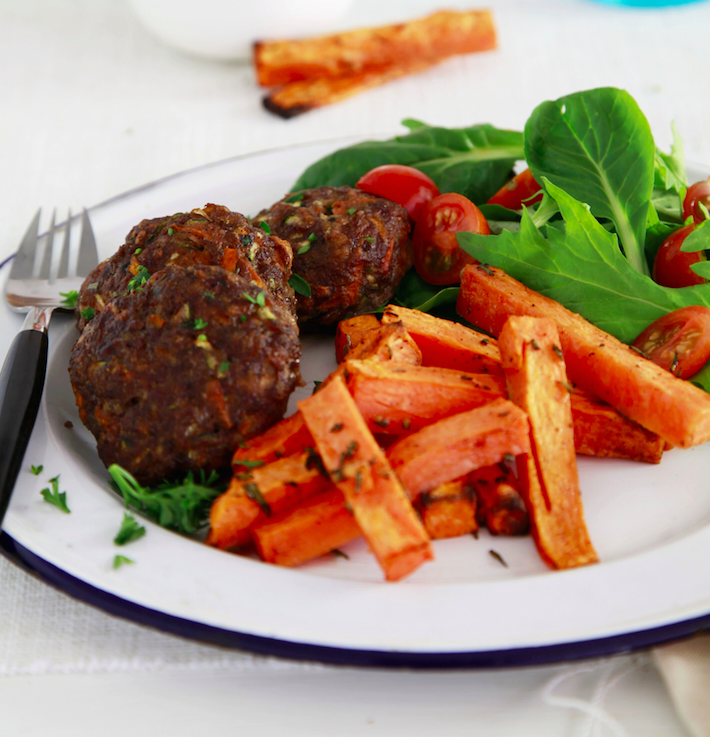
18. Baked Sweet Potato Wedges with Yogurt-Herb Dip — cut two sweet potatoes into wedges, toss with olive oil and smoked paprika, roast 25 minutes at 425°F. Dip is plain Greek yogurt + a squeeze of lemon + salt + finely chopped dill. Sweet potatoes bring 4 g of fiber and the vitamin A hit almost every kid's diet is short on.
19. Chocolate-Chip Chickpea Blondies — the "hidden protein" backup. Blend a rinsed can of chickpeas with peanut butter, maple syrup, oats, and an egg; fold in chocolate chips; bake 22 minutes in an 8×8. 6 g protein per square, they taste like blondies, and no kid has ever guessed the beans.
20. Roasted Chickpeas — the sleeper hit. Rinse and dry a can of chickpeas, toss with olive oil and cinnamon-sugar (sweet) or paprika-and-cumin (savory), roast 30 minutes at 400°F. Crunchy, shelf-stable, 8 g protein per half cup. Store in a mason jar on the counter; they last three days before going soft.
The Snack Rule: Protein + Carb + Something Fun
Every snack above hits the same formula:
| Pillar | Job | Examples |
|---|---|---|
| Protein (6–12 g) | Slows blood sugar, extends satiety past 90 min | Greek yogurt, cheese, hummus, nut butter, cottage cheese, deli turkey |
| Complex carb (15–25 g) | Restores glycogen, keeps energy steady | Whole-grain crackers, fruit, oats, whole-wheat tortilla, sweet potato |
| Something fun | Gets the snack past the kid's mouth | Chocolate chips, sprinkles, dip, cookie-cutter shapes, novel plating |
Skipping the fun pillar is the most common failure mode. A perfectly balanced snack with no fun element is a snack a hungry kid still won't eat because it looks like homework. The fun does not have to be sugar — a decorative toothpick, a swirl of cocoa in the yogurt, or letting the kid assemble it themselves all count. Structural involvement (kid does the assembly) beats sugar (parent adds sprinkles) about 2 to 1 in pickiness-reduction studies.
Portion by hunger, not by clock. If dinner is in 90+ minutes, offer a real 200-calorie snack. If dinner is in under 60 minutes, offer water and a small piece of fruit and hold the line — a full snack now guarantees a "not hungry" at the dinner table, which trains kids to eat during snack time and skip meals.
What You'll Need: 5 Pantry Basics + 2 Fridge Staples
Nothing on this list is exotic. If your pantry has these seven items, you can pull four of the 20 snacks together with zero grocery run.
| Item | Why | Weekly cost (family of 4) |
|---|---|---|
| Rolled oats (1 lb) | Energy balls, muffins, granola bars, overnight oats | $2 |
| Natural peanut butter (16 oz) | Every fruit-and-protein combo, energy balls, sauces | $4 |
| Whole-wheat tortillas (10-pack) | Quesadillas, veggie roll-ups, wraps | $3 |
| Honey + chia seeds | Trio companion to oats for bars, oats cups, sprinkling | $5 |
| Dark chocolate chips (10 oz) | The "fun pillar" for baked goods and energy balls | $3 |
| Plain full-fat Greek yogurt (32 oz) | Parfaits, smoothie bowls, dips | $5 |
| Sharp cheddar block (8 oz) | Quesadillas, cheese straws, snack plates | $4 |
Kitchen gear. You need very little: a decent Wilton non-stick muffin pan, a heavy half-sheet pan for baked snacks, one Ninja UltraCrush blender for smoothie packs, and airtight storage. Skip the specialty gadgets — the "peanut-butter and jelly sealer" and the "banana slicer" are cabinet clutter.
Common pitfalls: five mistakes we see every school year
- Serving straight sugar (fruit snacks, juice boxes, granola bars with 12 g added sugar). Blood sugar spikes, then crashes 45 minutes later, and now dinner is a fight. The CDC's school-nutrition guidance flags added sugar as the single biggest lever (CDC — School Lunch Programs).
- Waiting for the kid to ask what they want. A tired kid at 3:20 has zero decision-making bandwidth. Have the snack on a plate before they open the door. "Do you want apple slices or a granola bar?" is a fine question at 8 a.m. and a losing question at 3:20 p.m.
- Making it about nutrition out loud. Kids over 6 clock adult anxiety instantly. Present the snack; do not present the nutritional biography.
- Buying the pre-packaged version because "at least they're eating it." The homemade energy ball has 5 g of added sugar; the store-bought Larabar has 18 g. Over five snacks a week, that's an extra 65 g of sugar per week — 3.4 pounds of sugar over the school year.
- Sending a snack that requires refrigeration into a warm classroom. A yogurt tube that hits 80°F in a locker for four hours is a stomach-ache waiting for 4 p.m. Shelf-stable options travel; anything dairy needs an insulated lunch bag with an ice pack.
When NOT to serve a "big" snack
Two clear cases: (1) dinner is less than 60 minutes away, and (2) the kid had a full lunch and no gym-class energy burn. The lunchbox coming home empty is a signal to hold the snack; the lunchbox coming home half-full is a signal that lunch didn't stick and a real snack is required. Look at the lunchbox before you plate the snack; it's the most reliable diagnostic you have.
Send the whole week to Instacart
If you'd rather not stop at the store, open the AislePrompt meal plan builder, drop the 10 snack recipes above into the week, and tap the green Instacart icon on the shopping list. Substitutions handle brand swaps automatically; the whole week of snacks for a family of 4 typically lands between $18 and $30, delivered.
For related planning:
- 20 Quick School-Morning Breakfasts — the morning counterpart to this list.
- Back-to-School Lunchbox Meal Prep — 20 make-ahead lunches that work in a 4-hour warm locker.
- Back-to-School Weeknight Dinners — a 4-week rotation so the 6:00 hour stops being a battle.
Sources
- Academy of Nutrition and Dietetics — Quick and Healthy After-School Snacks
- American Academy of Pediatrics HealthyChildren.org — Healthy Snacks for Kids
- Centers for Disease Control — School Nutrition
Frequently asked questions
How much should a kid eat as an after-school snack?
Are store-bought snacks really worse than homemade?
How do I get kids to accept new snacks?
How do I pack snacks that don't need refrigeration?
Can I get an Instacart cart for a week of snacks?
Kid-friendly recipes from the catalog
Save any of these to My Recipes — no account needed — and send the ingredients to Instacart in one tap.