20 Quick School-Morning Breakfasts: 15-Minute Weekday Recipes Kids Actually Eat
The 30-minute Sunday prep session that covers all 5 school-day breakfasts, plus 20 kid-tested recipes across overnight, grab-and-go, hot-in-10, and lunchbox-swap categories.
Affiliate disclosure: AislePrompt may earn a commission on qualifying purchases made through Amazon links in this article, at no additional cost to you. See our affiliate policy →
You have 15 minutes between the first alarm and the first bell, three lunchboxes to pack, one kid who won't eat eggs today, and a coffee that's still brewing. The 15-minute school-morning breakfast rule: nothing gets cooked from raw ingredients on a school morning. Everything on the table this week either came out of the fridge, out of a jar, or into a toaster or microwave for under 3 minutes. Do the 30-minute Sunday prep session below and you'll spend 5 active minutes per weekday morning — not 25.
The 15-minute school-morning breakfast rule
Breakfast on a school morning is a logistics problem, not a cooking problem. The trap is treating it like a cooking session: eggs from raw, pancakes on the griddle, oatmeal on the stove. Every one of those adds heat, dishes, and — worst of all — parent attention. On a Tuesday at 6:45 AM, parent attention is the single scarcest resource in the house.
So we invert the workflow. Cook once (Sunday, 30 minutes). Portion into single-serving containers. Assemble on the counter at bedtime. Grab-and-go at 7:15 AM. As of 2026, this is the same pattern used by every meal-prep dietitian, every school-lunch program that actually gets kids fed, and every parent who's stopped arguing about breakfast by the second week of the school year.
Three rules cover almost every scenario:
1. Never cook to order on a school morning. If it involves a pan, a knife, or more than one appliance running at once, it belongs on the weekend.
2. Every breakfast hits ≥12g of protein. The CDC's school breakfast program guidance and the AAP's Healthy Children breakfast advice both flag the mid-morning crash caused by low-protein, high-sugar breakfasts — it manifests as classroom fidgeting, "I'm hungry" complaints by 10 AM, and worse focus in the first two class periods.
3. The Sunday prep session is the whole game. 30 minutes on Sunday afternoon covers all 5 school-day breakfasts. Skip it and you'll wing it — badly — Monday through Friday.
The Sunday prep session (30 minutes for 5 mornings)
Set a timer for 30 minutes. Load the dishwasher-safe meal prep containers on the counter. Then work in parallel:
- 0-5 min: Start a batch of No-Bake Peanut Butter Banana Overnight Oats in 5 mason jars — this is 8 minutes of active work stretched over the 30. Stack them in the back of the fridge.
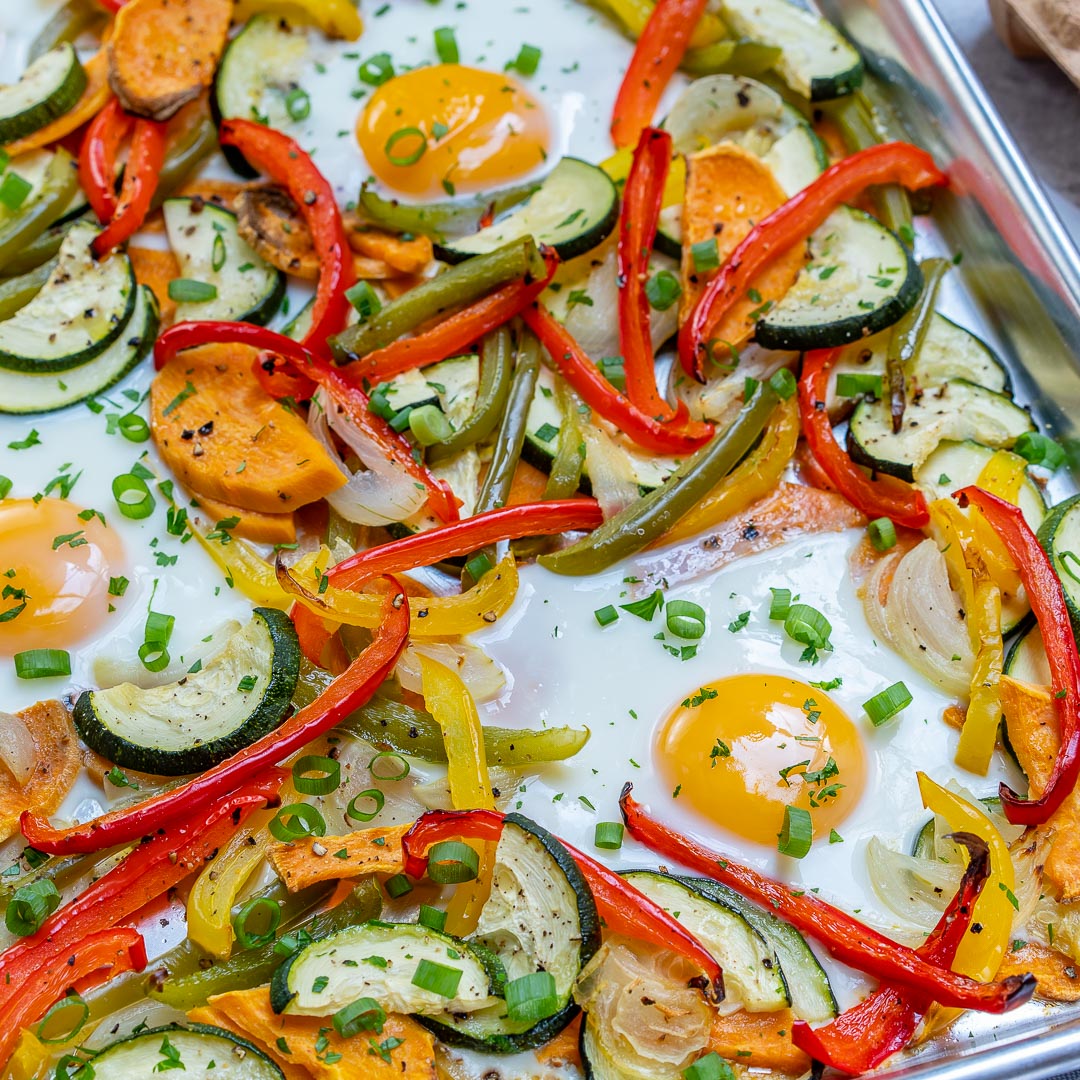
- 5-15 min: While the oven preheats to 350°F, mix and pour a tray of Quick Egg & Veggie Sheet Pan Bites — one bowl, one whisk, one half sheet pan. 15 minutes in the oven while you do the next thing.
- 15-25 min: Bake a batch of Smooth Banana Oat Breakfast Cookies or Wholesome Oat and Banana Breakfast Muffins with Maple — this is your grab-and-go for the days someone bolts.
- 25-30 min: Cut and portion 5 servings of fruit into containers, refill the yogurt bin, and put a labeled note on Wednesday's Cheesy Breakfast Quesadilla so a spouse knows what they're microwaving Wednesday morning.
Total: about 30 minutes of active work, mostly parallel. Yield: 5 breakfasts × 3 kids = 15 servings, plus 4-5 grab-and-go extras for the days a plan breaks. Your Monday morning is now 5 minutes of "grab, warm, out the door."
If Sunday prep doesn't fit your rhythm, batch-cook Wednesday night to bridge the second half of the week. The system is the point, not the day.
5 make-ahead overnight breakfasts (fridge → table in 30 seconds)
These sit in the fridge for 3-5 days and require zero morning cooking. Portion each into single-serving mason jars or airtight containers — the container is the plate, kids grab and eat straight from it.
1. No-Bake Peanut Butter Banana Overnight Oats — 18g protein per jar with a scoop of nut butter and a splash of milk. The single most kid-tested variant we've found: sweet enough that they don't argue, dense enough that they're not hungry at 10 AM.
2. Vanilla Chia Overnight Oats with Fresh Berries — the chia bumps fiber to 10g, which slows the sugar release from the fruit. Berries also make the jar look purple, which is a real selling point for a 6-year-old.
3. Simple No-Bake Mango Coconut Chia Pudding — no dairy, tropical flavor, works for kids with milk sensitivity. Pack in the small jars; it's rich.
4. Quick Egg & Veggie Sheet Pan Bites — cut the sheet into 12 squares, wrap each in foil, freeze half. 45 seconds in the microwave from cold, 90 seconds from frozen. 12g protein per square with cheese.
5. Broccoli and Cheddar Egg Muffins — bake in a standard 12-cup muffin pan, pop out, refrigerate. 8g protein each, 2 per kid = 16g on the table without touching a stove.
The overnight-oats jars in particular are the most hands-off school-morning breakfast on this list. Two jars in the fridge, one on the table, one in the backpack. Zero decisions before 8 AM.
5 grab-and-go breakfasts (for the days a plan breaks)
For the mornings someone oversleeps, misses the bus timing, or refuses the plate on the counter. Baked ahead, shelf-stable for 3 days on the counter or 7 in the fridge.
6. Smooth Banana Oat Breakfast Cookies — 3 ingredients, whole oats, no added sugar beyond the banana. Kids don't know they're eating a "healthy" cookie. Two per breakfast + a glass of milk = 15g protein.
7. Wholesome Oat and Banana Breakfast Muffins with Maple — muffins that are actually breakfast, not dessert. Whole oats, less sugar than the coffee-shop version.
8. Half-Sized Chocolate Chip Banana Muffins — the compromise for the child who wants "the chocolate one." Made with whole wheat and Greek yogurt.
9. Five-Ingredient Honey Almond Granola Bars — homemade beats the store-bought bars on protein, sugar, and cost per serving. Cut into 12 bars, wrap in parchment, stack in a jar on the counter.
10. Smoothie freezer cubes — blend a big batch of Greek yogurt + frozen berries + banana + spinach + a splash of milk, pour into an ice cube tray, freeze. Drop 6-8 cubes into a bottle with a splash of milk in the morning; shake and go. Works with a Ninja UltraCrush blender for the big Sunday batch, then a portable personal blender for the morning re-blend if the cubes are stubborn.
The Green Power template — Green Power Smoothie — freezes especially well as cubes because the spinach and banana hold their texture. Kids who won't eat spinach on a plate will drink 2 cups of it in a green smoothie without noticing.
5 hot-in-10-minutes breakfasts (weekend workflow, weekday reheat)
Sunday cook, weekday reheat. All of these portion into individual containers, then reheat in 60-90 seconds.
11. Make-Ahead Breakfast Burritos with Scrambled Eggs and Veggies — our top school-morning pick for older kids and teenagers. 22g protein each, wraps in foil, reheats from frozen in 90 seconds. Assemble 8 on Sunday, freeze 5, refrigerate 3.
12. Cheesy Breakfast Quesadilla with Scrambled Eggs and Spinach — pre-assemble, wrap in foil, reheat in the toaster oven at 375°F for 4 minutes. Kids can do this themselves by age 8.
13. Smoked Gouda Scrambled Eggs with Chives — batch-cook 8 eggs' worth on Sunday, portion into 3 containers, reheat 45 seconds. Eggs reheat surprisingly well when they're a little underdone from the initial cook.
14. Honey-Cinnamon French Toast with Berries — cook on Sunday, layer with parchment in an airtight container. Reheats in the toaster (yes, the toaster) to crispy in 90 seconds.
15. Mini Veggie-Packed Pancake Muffins — pancake batter baked in a mini-muffin pan with grated zucchini or carrot folded in. 24 muffins on one sheet, 3 minutes reheat in the microwave for 4.
The reheat rule: nothing takes more than 90 seconds in the microwave or 4 minutes in the toaster oven. If a "hot" breakfast requires the stove on a school morning, it fails the rule.
5 lunchbox-swap breakfasts (yes, breakfast for lunch)
The most under-used school-morning breakfast strategy: send the leftover lunchbox items as breakfast on the counter. Kids don't care about breakfast/lunch distinctions; they care about "is this good and can I eat it fast?" Every one of these works both ways.
16. No-Bake Lemon Yogurt Parfait with Honey Almond Granola — layered in a mason jar with a spoon in the lid. Breakfast on Monday, lunchbox on Tuesday, no difference.
17. Honey Almond Granola Bars — homemade, cut into 16, live in a jar on the counter. Kids grab one for breakfast, one goes in the lunchbox.
18. Baked Oatmeal Squares with Mixed Berries and Walnuts — a full pan on Sunday, 12 squares, half breakfast, half lunchbox dessert.
19. Baked Cinnamon-Spiced Pear and Walnut Oatmeal — the same batter, different fruit, more fiber. Kids call it "oatmeal cake."
20. Single-Ingredient Reintroduction Avocado Toast — toast the bread, add mashed avocado, salt. Works for a kid re-introducing foods after a picky-eating stretch; also works for a 12-year-old who thinks avocado toast is grown-up.
The full lunchbox-swap playbook is in our back-to-school lunchbox meal prep guide — the two articles are meant to be read together. Anything you're already packing for lunch is also a legitimate breakfast on the day you didn't get to Sunday prep.
What to buy: the school-morning grocery list
Buy for the system, not for individual recipes. Six categories, restocked weekly:
| Category | Buy weekly | Notes |
|---|---|---|
| Eggs | 2 dozen | Half go to Sunday sheet-pan bites, half for weekday scrambles |
| Greek yogurt (plain) | 32 oz tub | Twice the protein of regular; sweeten with honey/fruit at home |
| Rolled oats | 42 oz canister | Overnight oats, muffins, granola bars, oatmeal — one bin does everything |
| Frozen fruit | 2 lb bag berries + 2 bananas | Smoothie cubes, oatmeal topping, muffin mix-ins |
| Whole milk | 1 gallon | For cereal, smoothies, and post-breakfast glass to hit protein target |
| Whole-wheat tortillas | 12-count pack | Breakfast burritos, quesadillas, roll-ups |
Add to that a rotating "swap slot": one week peanut butter + bananas, next week cottage cheese + berries, next week hard-boiled eggs + fruit. Kids get bored fast; the rotation prevents the "I hate breakfast" negotiation on a Wednesday.
For prep tools, three things earn their counter space:
- A 12-cup muffin pan and a half sheet pan do 80% of the Sunday prep bake. The Nordic Ware sheet pan won't warp at 425°F; cheap pans will and dump the egg mixture.
- Stackable meal prep containers that fit in the fridge and the lunchbox. The airtight seal matters — chia pudding leaking sideways in a lunchbox is a Monday-morning disaster.
- A set of magnetic measuring spoons or Pyrex measuring cups so the Sunday-prep math is trivial. Every recipe here is portioned per-child; getting the scoop right on Sunday is what makes Monday work.
Nutrition targets: protein and fiber that gets kids to lunch
The nutritional job of a school breakfast is to keep a child steady from the first bell to the lunch bell — about 4 hours. The Academy of Nutrition and Dietetics guidance for healthy breakfasts for kids recommends pairing carbohydrates with protein and a fat source specifically to slow gastric emptying and prevent the mid-morning crash. Concrete targets we plan against:
| Age range | Protein | Fiber | Added sugar cap |
|---|---|---|---|
| 5-8 | 12-16g | 5g+ | ≤6g |
| 9-12 | 15-20g | 6g+ | ≤8g |
| 13-18 | 20-30g | 8g+ | ≤10g |
Easy protein-forward swaps that hit these numbers without changing what the kid actually eats:
- Greek yogurt over regular yogurt. Double the protein per serving (17g vs 8g in a 6oz cup) for identical taste.
- Whole eggs over egg whites. The yolk carries the choline (important for developing brains) and adds 3g of quality fat per egg to slow the sugar curve.
- Add nut butter or hemp seeds to any oatmeal or smoothie. A tablespoon of peanut butter adds 4g of protein and 8g of good fat; hemp seeds add 3g of protein per tablespoon with a mild flavor kids don't reject.
- Choose whole-wheat or oat-based bread over white bread. The fiber alone changes the blood-sugar response of the whole breakfast.
Skip the "kids' cereal" aisle where possible. Most kid-marketed cereals hit 10-14g of added sugar per serving with 1-2g of protein — the exact opposite ratio we're trying to build. If you're using them, treat them as a weekend indulgence and always pair with 20g of protein (a hard-boiled egg, Greek yogurt, or milk) plus fruit. The 5-day-a-week option should be one of the 20 recipes above.
Common school-morning pitfalls (and the fixes)
Five failure modes we've watched trip up otherwise-organized parents, with the specific fix that works:
- "My kid doesn't want to eat first thing in the morning." Solution: skip solid breakfast entirely, hand them a smoothie in a spill-proof cup on the way to the car. Kids who refuse eggs at 6:45 AM will happily drink a 20g-protein Greek yogurt + berry smoothie because it doesn't feel like breakfast. Ship the Green Power Smoothie cubes for the morning re-blend.
- "Sunday prep sounds great but Sunday doesn't happen." Switch to Wednesday night. Half the week's breakfasts on Sunday, the other half prepped Wednesday after dinner. The Sunday meal prep timeline has a mid-week bridge variant.
- "They ate it Monday but refused it Tuesday." Rotate. Two breakfast options in the fridge at all times, never the same thing two days in a row. This is why we recommend a mixed batch (oats + egg bites + burritos) instead of 5 identical jars.
- "Sheet-pan egg bites came out rubbery." Under-bake by 2-3 minutes. They finish cooking from residual heat and are much better the next day than fresh out of the oven. Also: don't reheat past 45 seconds — every extra 15 seconds toughens the egg.
- "Overnight oats look gross by day 3." Layer the wet ingredients on the bottom, dry (oats, chia) in the middle, and add fresh fruit only in the morning. The berries lose color and bleed if they sit for 3 days. Alternatively, use frozen berries — they hold up better than fresh.
When NOT to use this system
The 20-breakfast rotation isn't the right tool for every situation:
- Weekend mornings. Save the pancake breakfast for Saturday. Kids should learn what a leisurely, cooked-from-scratch breakfast tastes like — that's what our 20 Best American Breakfast Recipes for Lazy Weekend Mornings is for.
- Food allergies that limit the base ingredients (eggs, dairy, nuts, wheat). The system still works but you'll need to swap in allergen-free variants; the Whole30 breakfast roundup has 22 alternatives that skip all four allergens.
- Very young kids (under 4). Overnight oats and chia puddings can be a choking-hazard texture for toddlers who haven't mastered spoon-eating; stick with soft, hand-portionable foods and skip the mason jars.
Related content
- Back-to-School Lunchbox Meal Prep — the companion piece; the same 30-minute Sunday session covers both breakfasts and lunches.
- Back-to-School Lunchbox Ideas: 4 Weeks of Kid-Approved Lunches — 20 specific lunches with the same reheat/no-cook constraint.
- Back-to-School Weeknight Dinners: 4-Week Meal Plan for Busy Families — the dinner half of the day.
- Sunday Meal Prep: 20 Make-Ahead Recipes + Timeline — the 30-minute-Sunday methodology in more detail, for the whole week's meals.
- Best Meal Prep Containers: 2026 Top Picks + Buying Guide — the container is the plate and the lunchbox; the wrong one leaks.
Sources
- CDC — School Breakfast Programs — federal guidance on nutrition standards and the impact of school breakfast on classroom performance.
- Healthy Children (AAP) — Making Sure Your Child is Eating Enough — American Academy of Pediatrics breakfast recommendations for school-age kids.
- Academy of Nutrition and Dietetics — 12 Healthy Breakfast Ideas for Kids — the registered-dietitian playbook we cross-check our protein and fiber targets against.
Frequently asked questions
How much protein should a school breakfast have?
Can I make school breakfasts the night before?
What if my child doesn't eat breakfast?
How do I keep breakfast from taking over my morning?
Are cereal and toaster pastries really that bad?
Kid-friendly recipes from the catalog
Save any of these to My Recipes — no account needed — and send the ingredients to Instacart in one tap.