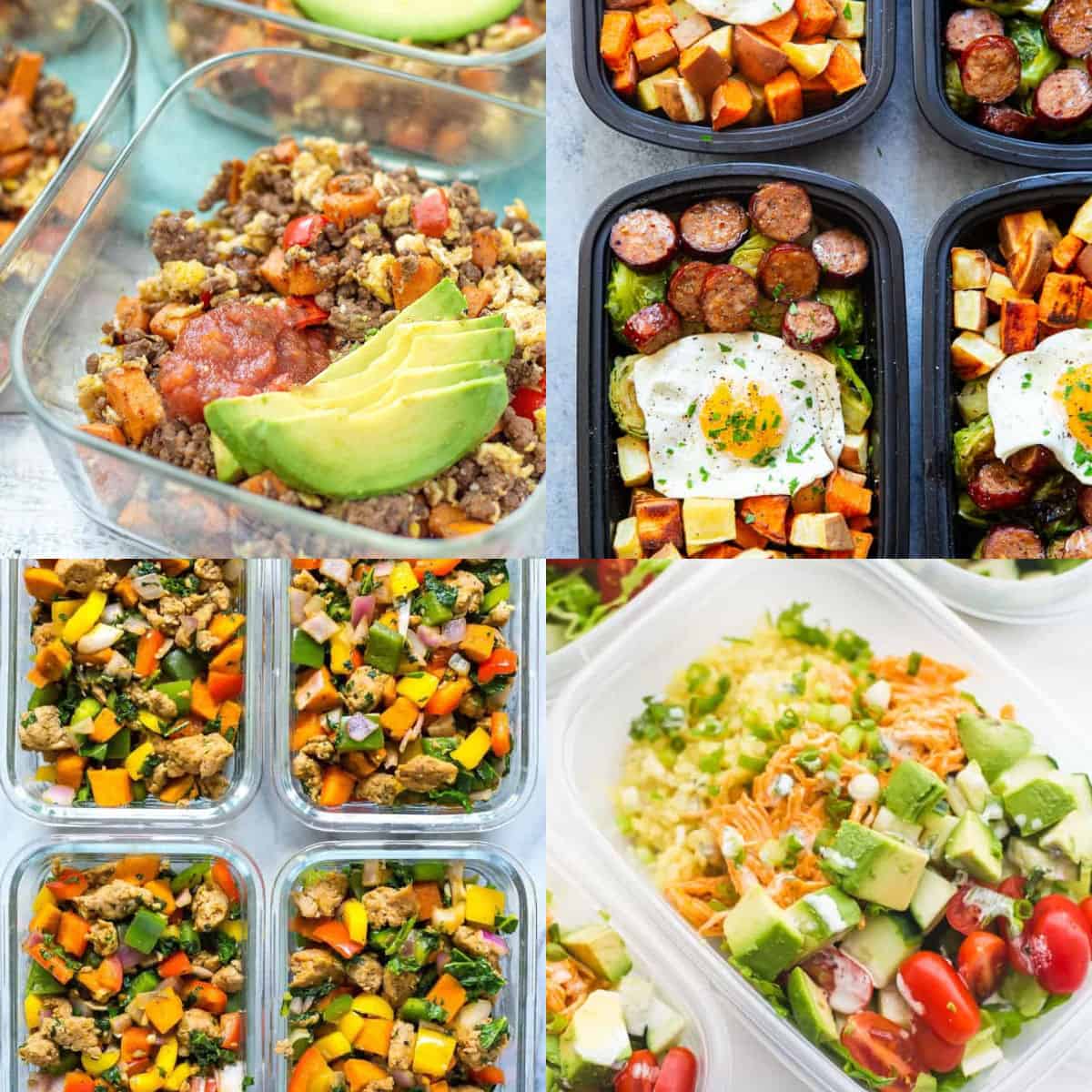
Whole30 Meal Prep Guide: 30 Batch Recipes for Your Elimination Round
The three-hour Sunday batch-cooking system that decides whether you finish your elimination round.
Whole30 meal prep is three hours on Sunday that decides whether you make it to Day 30. The program has no convenience escape hatch — no compliant drive-through, no compliant protein bar in the checkout aisle — so the only thing standing between you and a Day 9 slip is whether there is compliant food already cooked in your fridge. This guide is the batch-cooking system: what to cook, in what order, how long it keeps, and the 30 recipes that survive to Friday.
Get a free 7-day Whole30 meal plan
Seven compliant dinners delivered Sunday — no sugar, grains, dairy or legumes, and one cart instead of thirty label checks.
No spam, unsubscribe in one click. Recipes, shopping lists and Instacart carts all work without an account either way.
Introduction — why meal prep is the make-or-break Whole30 skill
Most Whole30 restarts do not happen because someone decided the program was wrong. They happen at 6:40pm on a Wednesday, when dinner is not started, the kitchen is cold, and there is a perfectly good takeaway menu in the drawer.
That is a logistics failure, not a willpower failure, and logistics failures are fixable. If you have shredded chicken, roasted vegetables, a compliant sauce and a container of cooked potatoes already in the fridge, Wednesday's dinner is a five-minute assembly job. If you have raw ingredients and a recipe, it is a forty-minute cook after a full workday, and that is where the program breaks.
This guide assumes you already know the rules — if you do not, start with the Whole30 hub and the Whole30 for beginners rulebook, then come back. What follows is purely the prep system: the Sunday sequence, the components worth batching, how long each one actually keeps, and the recipes that reheat without turning sad.
The 3-hour Whole30 Sunday reset
The mistake most people make is batching by recipe — cook recipe one start to finish, then recipe two. That serializes everything and turns three hours into five. Batch by heat method instead, and run all three zones at once.
Hour 1 — oven loaded, stove started. Two half-sheet pans of vegetables go in at 425°F (root vegetables on one, quicker vegetables like broccoli and peppers on the other). Simultaneously: chicken thighs or a pork shoulder start on the stovetop or in the slow cooker. Nothing needs your attention for the first twenty minutes, which is when you do the next step.
Hour 2 — proteins and eggs. Hard-boil a dozen eggs. Brown two pounds of ground beef or turkey with taco or Italian seasoning. Bake a tray of egg muffins in whatever oven space the vegetables freed up. Rotate the sheet pans.
Hour 3 — sauces, portioning, cleanup. Sauces are where a Whole30 week lives or dies — the same shredded chicken becomes four different meals depending on what you pour on it. Make two: one creamy (compliant mayo-based ranch or a tahini-lemon), one bright (chimichurri, salsa verde, or a citrus vinaigrette). Then portion, label with the cook date, and wash up.
Total hands-on time is closer to ninety minutes; the rest is oven time you spend doing something else.
| Hour | Oven (425°F) | Stove / slow cooker | Counter |
|---|---|---|---|
| 1 | 2 sheet pans of vegetables | Chicken thighs or pulled pork on | Chop remaining produce |
| 2 | Egg muffins, rotate vegetable pans | Ground meat, hard-boiled eggs | Wash and dry greens |
| 3 | Potatoes or sweet potatoes | Reduce sauce base | Blend 2 sauces, portion, label |
Compliant proteins to batch: 3 chickens, 1 beef, 1 fish
Batch proteins in a ratio of roughly 3:1:1 — chicken, red meat, seafood. Chicken is the most versatile and the most reheat-tolerant; seafood is the least, so cook less of it and eat it early in the week.
Seared Whole30 Chicken Thighs with Roasted Garlic and Herb Vegetables is the anchor. Thighs beat breasts for prep by a wide margin — the extra fat means they reheat on day four without turning to cardboard.
Whole30 Marry Me Chicken Thighs with Capers & Dill and Roasted Spiced Whole30 Chicken Thighs with Garlic and Rosemary give you two more flavor directions from the same cut, which is how you stop the week tasting identical.
For red meat, Whole30-Style Beef & Vegetable Stir-Fry with Ginger and Paleo Ground Beef and Cauliflower Rice Skillet both batch and reheat well. Plain seasoned ground beef is the single most flexible thing in the fridge — it becomes taco bowls, breakfast hash, stuffed peppers or chili with no additional cooking.
Pork is the best value per hour of attention. Hawaiian-Inspired Whole30 Pulled Pork and Whole30 Crockpot Pork with Saurkraut and Apples are both slow-cooker recipes — eight hours of zero attention producing five pounds of protein.
For fish, Whole30 Salmon with Roasted Root Vegetables is the one to make, and eat it Monday and Tuesday. Cooked salmon is genuinely good for two days and genuinely unpleasant on day four.
Compliant sauces and dressings that keep 7 days
This is the highest-leverage part of the whole prep. Whole30 food gets boring fast because the compliant flavor toolkit is small, and sauces are how you fix that without cooking anything new.
Two rules. First, check every label — the added-sugar suspects (cane sugar, honey, maple syrup, agave, coconut sugar, corn syrup, dextrose, molasses) show up in nearly every commercial dressing, and soybean oil is in almost all the rest. The official Whole30 program rules list the full elimination set. Second, make your own base mayo with avocado oil and build from there; homemade compliant mayo keeps 5 to 7 days and turns into ranch, chipotle aioli or dill sauce with one addition.
Three that reliably keep a week: a lemon-tahini (tahini, lemon, garlic, water, salt), a citrus vinaigrette like the one in Whole30 Shrimp and Avocado Salad with Citrus Vinaigrette, and a compliant ranch built on homemade mayo. Whole30 Sesame Potato Salad with Citrus Dressing doubles as both a side dish and a dressing template.
Coconut aminos are the other thing to keep on hand — they are the compliant soy-sauce stand-in and they carry Quick Whole30 Beef and Vegetable Stir-Fry with Coconut Aminos and Coconut Aminos Chicken & Veggie Stir-Fry (Whole30 Reboot).
Whole30 breakfast prep: egg cups, breakfast hash, sweet potato scramble
Breakfast is where Whole30 usually fails first, because the entire American convenience-breakfast category — cereal, toast, yogurt, granola, oat anything — is out.
Whole30 Breakfast Egg Muffins with Spinach and Bell Peppers is the highest-value single item on the prep list. One tray is twelve breakfasts, they keep four days in the fridge and two months in the freezer, and they reheat in ninety seconds.
Whole30 Veggie Frittata with Chive Cream is the same idea in slab form — cut into squares and it portions the same way with less pan-washing.
For a hot breakfast, sweet potato hash is the backbone. Sautéed Chicken Thighs with Spiced Sweet Potato Hash and Spiced Appalachian Apple and Sweet Potato Hash both hold five days and crisp back up in a hot skillet.
Paleo Breakfast Taco Bowl with Ground Turkey and Avocado uses the batched ground meat directly — assemble in two minutes, add the avocado fresh.
Hard-boiled eggs deserve a specific mention: 7 days in the shell, 4 days peeled. Boil twelve every Sunday whether or not you have a plan for them.
Whole30 lunch containers: bowls that survive to Friday
The bowl formula is protein plus roasted vegetable plus a starchy anchor plus sauce on the side. Keeping the sauce separate is what makes a Thursday bowl taste like a Monday bowl.
Quick Whole30 Reset Bowl is the template. Whole30 Spiced Roasted Carrot and Cauliflower Bowl is the vegetable-forward version, and Mason Jar Quinoa and Roasted Veggie Salads shows the layering technique — dressing at the bottom, hardy vegetables next, greens on top, shaken out at lunchtime — although you will swap the quinoa for potato or extra vegetables to stay compliant, since all grains including quinoa are out.
Whole30 Spicy Shrimp and Vegetable Skillet and Baked Whole30 Chicken and Broccoli Casserole with Cauliflower Rice both portion straight into containers from the pan.
For soups and stews, which are the most reheat-tolerant category of all, Spicy Whole30 Turkey and Vegetable Stew and Whole30 Curried Cauliflower and Apple Soup both keep five days and freeze for three months.
Storage times — the numbers that matter
The USDA's leftovers guidance is the reference here, and the practical version for a Whole30 prep looks like this:
| Item | Fridge | Freezer | Note |
|---|---|---|---|
| Cooked chicken, beef, pork | 3–4 days | 2–3 months | Thighs reheat better than breast |
| Cooked fish and shrimp | 2 days | 1 month | Eat early in the week |
| Roasted vegetables | 4–5 days | Not recommended | Texture collapses on thaw |
| Roasted root vegetables | 5 days | 2 months | Freeze better than soft vegetables |
| Hard-boiled eggs | 7 days in shell / 4 peeled | Do not freeze | — |
| Egg muffins | 4 days | 2 months | Reheat from frozen, 90 sec |
| Homemade mayo and dressings | 5–7 days | Do not freeze | Emulsion breaks |
| Soups, stews, chili | 4 days | 3 months | Best freezer candidates |
| Cauliflower rice | 4 days | 2 months | Reheat dry, in a hot pan |
Two rules that come straight from the USDA's leftovers and food safety guidance: get cooked food into the fridge within two hours of cooking, and thaw frozen meals in the refrigerator overnight, never on the counter. Label every container with the cook date — by Wednesday all Whole30 hash looks identical.
How much to prep
| If you… | Batch | Sunday time |
|---|---|---|
| Eat all three meals from prep | 15 meals + 8 snacks | ~3 hours |
| Cook dinner fresh nightly | 10 meals (breakfast + lunch) | ~2 hours |
| Only need lunches | 5 meals + 5 snacks | ~1 hour |
Snacks are worth batching even though Whole30 nudges you toward three meals: hard-boiled eggs, compliant jerky, apple with a compliant nut butter, and vegetable sticks with the ranch you already made. Day 9 is when the temptation spikes, and a snack in the fridge is what gets you past it.
Common pitfalls
Batching by recipe instead of by heat method. This is the single biggest time sink. Run oven, stove and counter in parallel.
Prepping seven identical lunches. By Thursday you will not eat it. Two proteins, two sauces, two vegetables gives you eight combinations from the same amount of cooking.
Forgetting sauces. Plain protein and plain vegetables for 30 days is how people quit. Sauces are not optional.
Reaching for chickpeas or quinoa. Both are out — chickpeas are a legume, quinoa is treated as a grain. This trips up people coming from paleo or Mediterranean eating, where both are staples.
Dressing the salad on Sunday. Greens are mush by Tuesday. Dressing goes in a separate 4-oz container, always.
Freezing the wrong things. Mayo-based salads, avocado, potato salad, cut raw vegetables and hard-boiled eggs all break down. Cooked ground meat, shredded chicken, stews and egg muffins are the freezer wins.
Top 10 reader-favorite Whole30 prep recipes
If you only batch ten things, batch these. The ranking is by prep value, not by taste: how well each one reheats on day four, whether it survives the freezer, and how many different meals it turns into once it is in a container.
| # | Recipe | Why it batches | Keeps |
|---|---|---|---|
| 1 | Whole30 Breakfast Egg Muffins with Spinach and Bell Peppers | One tray is 12 breakfasts, 90 seconds to reheat | 4 days / 2 months frozen |
| 2 | Seared Whole30 Chicken Thighs with Roasted Garlic and Herb Vegetables | Thigh fat means day-four reheats still taste cooked | 4 days / 3 months |
| 3 | Hawaiian-Inspired Whole30 Pulled Pork | 8 hours of zero attention, ~5 lb of protein, 4 different meals | 4 days / 3 months |
| 4 | Whole30 Reset Sheet-Pan Chicken & Veggies | Protein and vegetables done on one pan in ~40 minutes | 4 days |
| 5 | Spicy Whole30 Turkey and Vegetable Stew | Stews are the most reheat-tolerant category there is | 4 days / 3 months |
| 6 | Hearty Whole30 Beef Stew with Root Vegetables | Root vegetables hold their texture where soft ones collapse | 4 days / 3 months |
| 7 | Whole30 Slow Cooker Chicken Tortilla Soup (Tortilla-Less) | Slow cooker in the morning, six portions at dinner | 4 days / 3 months |
| 8 | Whole30 Breakfast Hash with Sausage and Veggies | Crisps back up in a hot dry skillet instead of going soggy | 5 days |
| 9 | Quick Whole30 Reset Bowl | The assembly template — swap the sauce, get a new lunch | 4 days, sauce separate |
| 10 | One-Pot Whole30 Shrimp and Cauliflower Rice Bowl | The one seafood prep worth doing; cook Sunday, eat Monday | 2 days |
Two patterns fall out of that list. Seven of the ten are protein-plus-vegetable in a single vessel, because anything that portions straight from the pan into a container saves you the second round of dishes that makes people quit prepping by week three. And the two soups and one stew are there because they are the only things on the list that genuinely improve by Wednesday — if your Sunday runs long, cut a sheet pan and keep the stew.
Together with the proteins, sauces, breakfasts and bowls above, that is 30 batch recipes from the AislePrompt catalog that hold their texture through a full Whole30 week.
What to buy: the Whole30 meal-prep kit
Glass containers with silicone-gasket lids. This is the purchase that matters most. Glass survives the dishwasher and the microwave, does not warp, and — critically — does not stain from turmeric, tomato or curry, which are three of the most common Whole30 sauce bases. Get 32-oz three-compartment containers for full meals and a set of 4-oz cups for sauces. The storage and containers category has the tested sets.
Two or three half-sheet pans. Roasting is the dominant Whole30 cooking method and one pan bottlenecks the entire Sunday. Commercial-gauge 18-gauge aluminum will not warp at 425°F. See bakeware.
A 12-inch skillet and a slow cooker or pressure cooker. The skillet handles ground meat, hash and stir-fries; the slow cooker turns a $12 pork shoulder into five pounds of protein with zero attention. Both are in cookware.
A sharp 8-inch chef's knife. You will chop more vegetables in 30 days than you normally do in six months. A dull knife is the reason prep day feels like four hours. See knives and cutting.
A blender or food processor for sauces. Mayo, tahini dressing and chimichurri all need one. The small appliances category covers it.
5-day sample prep menu
| Day | Breakfast | Lunch | Dinner |
|---|---|---|---|
| Mon | Whole30 Egg Muffins | Quick Whole30 Reset Bowl | Whole30 Salmon with Roasted Root Vegetables |
| Tue | Sweet Potato Hash | Shredded pork + roasted vegetables + citrus vinaigrette | Whole30-Style Beef & Vegetable Stir-Fry |
| Wed | Egg muffins + fruit | Whole30 Spiced Roasted Carrot and Cauliflower Bowl | Spicy Whole30 Turkey and Vegetable Stew |
| Thu | Paleo Breakfast Taco Bowl | Stew leftovers | Seared Whole30 Chicken Thighs |
| Fri | Whole30 Veggie Frittata | Whole30 Sesame Potato Salad + chicken | Cauliflower Rice Stir-Fry, Whole30 Style |
Shopping notes from the Academy of Nutrition and Dietetics' meal-prep guidance: shop the list, not the aisles, and buy the frozen vegetables. Plain frozen cauliflower rice, broccoli and green beans are fully compliant, nutritionally equivalent to fresh, and remove the produce-spoilage failure mode entirely.
FAQ
The questions below cover fridge and freezer times, which containers to use, what freezes and what does not, how many meals to batch for a full week, and whether frozen vegetables are compliant.
Related reading
- Whole30 hub — rules, shopping lists and the full recipe collection
- Whole30 for beginners: 30-day rulebook
- The complete Whole30 meal plan: 30 days of recipes
- 22 Whole30 dinner recipes for beginners
- 22 Whole30 breakfast recipes
Sources
- Whole30 — Official Program Rules
- USDA FSIS — Leftovers and Food Safety
- Academy of Nutrition and Dietetics — Meal Prep
Frequently asked questions
How long does Whole30 meal prep last safely in the fridge?
What containers work best for Whole30 meal prep?
Can I freeze Whole30 meals?
How many meals should I actually prep for a full Whole30 week?
Are frozen vegetables Whole30 compliant?
Sources
A compliant week, in one cart.
Ask our AI to plan your Whole30 week — seven dinners, one consolidated shopping list, no label roulette.
Plan my Whole30 week →