20 Glazed Recipes: Sweet-Savory Sauces for Salmon, Chicken & Pork
One four-part formula — sweetener, acid, salt, aromatic — covers every recipe here. Plus the timing rule that stops a glaze burning before the protein is cooked.
A glaze is a reduction of sugar, acid, and fat brushed onto protein in the last few minutes of cooking so it clings instead of burns. Get the four-part formula and the timing right — sweetener, acid, salt, aromatic; brush at the end, never at the start — and you can improvise a glaze for salmon, chicken, or pork from whatever's in the door of your fridge. Twenty recipes below, grouped by protein.
Get a free week of easy dinners
Seven weeknight dinners with the shopping list already totalled, sent Sunday. No account needed, unsubscribe in one click.
No spam, unsubscribe in one click. Recipes, shopping lists and Instacart carts all work without an account either way.
Introduction: what a glaze actually is
A glaze is not a marinade and not a sauce. A marinade works before cooking, mostly on the surface, and its job is seasoning. A sauce is served alongside and stays liquid. A glaze is applied during cooking, reduces on the food itself, and its job is a lacquered, slightly sticky surface with concentrated flavor.
Mechanically, a glaze is a sugar solution that thickens as water evaporates. As it does, two things happen: caramelization of the sugars, and the Maillard reaction between those sugars and the amino acids on the protein's surface. That second reaction is where the brown color and most of the savory depth come from — and it's why a glaze on protein tastes fundamentally different from the same syrup on a pancake.
The temperature window matters. Maillard browning accelerates around 300°F. Sucrose starts to caramelize around 320°F and turns bitter and black by about 375°F. That 55-degree gap is the entire skill of glazing: get in it, stay in it, get out.
The four-part glaze formula you can memorize and improvise from
Every glaze on this page is some version of:
Sweetener + acid + salt + aromatic, reduced by about a third.
| Component | Ratio | Options |
|---|---|---|
| Sweetener | 4 parts | Honey, maple syrup, brown sugar, apricot jam, mirin, agave |
| Acid | 2 parts | Rice vinegar, cider vinegar, balsamic, citrus juice, mustard |
| Salt | 1–2 parts | Soy sauce, tamari, miso, fish sauce, plain salt |
| Aromatic | to taste | Garlic, ginger, chile, gochujang, bourbon, thyme, five-spice |
A worked example: 4 tbsp honey + 2 tbsp rice vinegar + 1 tbsp soy sauce + 2 grated garlic cloves, simmered 4 minutes. That's a honey-garlic glaze, and it's enough for four salmon fillets or six chicken thighs.
Swap the honey for maple and the rice vinegar for cider vinegar and you have the pork-chop glaze. Swap soy for miso and add mirin and you have the Japanese version. The formula does not change.
Consistency test. Drag a spoon through the simmering glaze. If the line holds for a full second before closing, it's reduced enough. Any thicker and it will set into candy on the plate; any thinner and it runs off the protein and burns on the pan.
When to brush (last 5 minutes) vs when to simmer (side sauce)
This is the rule that separates glazed food from burnt food.
- Oven or grill, direct heat: brush in the last 5 minutes. On a 425°F sheet pan, sugar at the surface hits caramelization temperature almost immediately.
- Oven, moderate heat (350–375°F): brush at the last 8–10 minutes, and again 3 minutes before pulling for a second coat with real gloss.
- Pan sear: cook the protein through, remove it, then build the glaze in the same pan off the heat and return the protein for 60 seconds to coat. The fond in the pan makes this the best-tasting version.
- Smoker or low-and-slow: last 15 minutes only, and never over direct flame.
- Too thick or too sweet to survive heat? Don't glaze — reduce it separately and spoon it over as a sauce at the table. Anything with dairy, or with more than about 50% sugar by volume, belongs in this category.
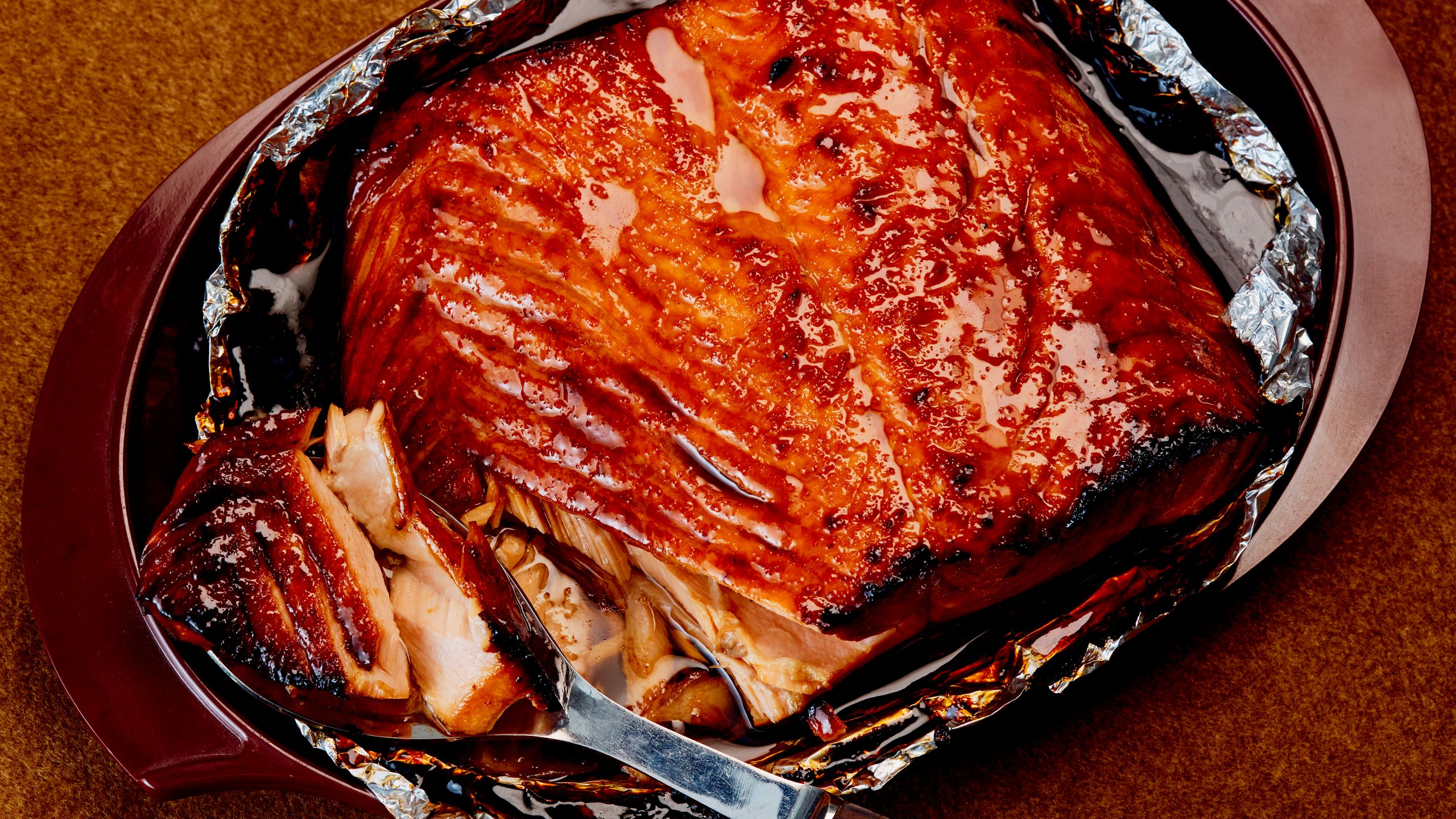
5 Glazed Salmon Recipes: miso-honey, maple-mustard, teriyaki, honey-soy, gochujang
Salmon is the ideal glaze substrate: its fat keeps the flesh moist while the surface takes high heat, and it cooks in 10–12 minutes so there's little risk of the glaze sitting too long.
1. Honey-Soy Glazed Salmon with Sesame Seeds — 310 cal, 4.40 stars. The reference build: sweetener, salt, done.
2. Sheet Pan Maple-Mustard Glazed Salmon with Roasted Brussels Sprouts — 350 cal. Mustard is both the acid and the emulsifier here, which is why maple-mustard glazes cling so well.
3. Miso-Glazed Salmon with Miso-Butter Rice — 450 cal. Miso brings glutamates; this is the most savory glaze on the page.
4. Gochujang Glazed Salmon with Sesame Vegetables — fermented chile paste as both aromatic and thickener.
5. Honey Glazed Salmon — the two-ingredient version, for the night you have nothing.
Also excellent: Oven-Roasted Salmon with Honey-Dijon Glaze at 350 calories, Pan-Seared Salmon with Miso-Maple Glaze and Sesame Green Beans at 420, and Miso-Glazed Teriyaki Salmon with Sesame Veggies at 320.
5 Glazed Chicken Recipes: honey garlic, orange, apricot, chipotle, balsamic
Chicken thighs glaze better than breasts. More fat means more forgiveness, and the skin gives the glaze something to grip.
1. Honey-Glazed Chicken Thighs with Garlic and Thyme — 450 cal, 4.77 stars, the highest-rated recipe in this entire roundup.
2. Honey Garlic Chicken — the formula in its plainest form.
3. Apricot-Glazed Chicken Thighs with Sweet Potatoes — 450 cal. Jam-based glazes need no reduction; the pectin is already doing the work.
4. Chipotle Glazed Chicken Thighs with Lime and Cilantro — 420 cal. Smoke and heat against the sugar.
5. Baked Lemon-Honey Glazed Chicken Thighs — 320 cal, the leanest chicken build here.
Worth adding to the rotation: Whiskey-Glazed Grilled Chicken with Burnt Orange Sauce at 320 calories, One-Pan Honey Garlic Chicken with Roasted Broccoli at 350, and Soy-Glazed Chicken Stir-Fry with Broccoli and Snow Peas at 380 — the stir-fry proving a glaze works in a wok as well as an oven.
5 Glazed Pork Recipes: chops, tenderloin, ham, ribs, belly
Pork and sweetness is the oldest pairing in this article. Pork fat is comparatively neutral, so it carries a sweet glaze without fighting it the way beef does.
1. Maple-Glazed Pork Tenderloin — the weeknight benchmark. Tenderloin cooks in 20 minutes; pull it at 145°F.
2. Smoky Bourbon-Maple Glazed Pork Chops — 350 cal. Bourbon's residual sugar plus maple; reduce it hard so the alcohol cooks off.
3. Balsamic-Glazed Pork Tenderloin with Rosemary — 380 cal. Balsamic already contains concentrated sugar, so this is the fastest glaze on the page.
4. Honey-Glazed Ham with Apple and Mustard — 220 cal. The holiday build, and the leanest pork dish here.
5. Slow-Smoked Maple-Glazed Ribs with Applewood Smoke — 450 cal. Glaze in the last 15 minutes only; see the smoked chicken guide for why sugar and long smokes fight each other.
Also: Grilled Mustard and Brown Sugar Glazed Pork Chops, Bourbon-Maple Glazed Pork Tenderloin with Roasted Root Vegetables at 420 calories, and Illinois-Style Maple Glazed Pork Chops with Apple-Onion Saute at 420.
5 Bonus Glazed Vegetable & Tofu Recipes
Vegetables glaze beautifully and almost nobody does it. The sugar caramelizes on a surface that already contains sugar, and the result is closer to candy than to a side dish — in a good way.
1. Miso-Glazed Eggplant Stir Fry with Sesame and Scallions — 180 cal. Eggplant's spongy structure absorbs glaze better than any other vegetable.
2. Miso-Glazed Eggplant & Sesame Rice Bowls — 310 cal. The dinner-sized version.
3. Springfield Honey-Glazed Carrot and Beet Salad — 220 cal. Root vegetables have the natural sugar to meet a glaze halfway.
4. Miso-Teriyaki Tofu and Vegetable Stir-Fry — 380 cal. Press the tofu, or the glaze slides off wet surfaces.
5. Vegetable Stir-Fry with Honey Garlic Sauce — 120 cal. The lowest-calorie recipe in this roundup, and a good demonstration that a glaze is mostly flavor, not calories, when you use two tablespoons across four servings.
Five glazes worth memorizing
Each of these makes about 5 tablespoons — one dinner for four. Simmer 3–5 minutes until a spoon leaves a line that holds for a second.
Honey-garlic (all-purpose). 4 tbsp honey, 2 tbsp rice vinegar, 1 tbsp soy sauce, 2 grated garlic cloves. The default. Works on chicken, salmon, pork, tofu, and roasted carrots.
Maple-mustard (pork and salmon). 4 tbsp maple syrup, 2 tbsp Dijon, 1 tbsp cider vinegar, pinch of salt. The mustard emulsifies, so this one clings to vertical surfaces better than any other glaze here.
Miso-honey (salmon and eggplant). 3 tbsp white miso, 2 tbsp honey, 2 tbsp mirin, 1 tbsp rice vinegar. Miso is already salty — no soy sauce. Broil the last 90 seconds for the char that makes this dish.
Gochujang-sesame (chicken wings and salmon). 3 tbsp gochujang, 2 tbsp honey, 1 tbsp rice vinegar, 1 tbsp toasted sesame oil, 1 grated garlic clove. Add the sesame oil off the heat — it goes bitter if you simmer it.
Bourbon-brown-sugar (pork chops and ribs). 4 tbsp brown sugar, 3 tbsp bourbon, 1 tbsp cider vinegar, 1 tsp Dijon, pinch of cayenne. Simmer 6 minutes rather than 4 — the extra time cooks off the alcohol, which otherwise reads harsh.
Storage. All five keep two weeks refrigerated in a sealed jar. Honey- and maple-based glazes will thicken cold; 15 seconds in the microwave brings them back. Miso-based glazes separate slightly — whisk before using. Don't freeze any of them; the sugar crystallizes on thaw and the texture never fully recovers.
The mistake beginners make: glazing too early
Sugar burns at roughly 375°F. A chicken thigh needs 35–40 minutes at 400°F to reach 175°F internal. Glaze it at minute one and the sugar spends 35 minutes above its burn point — you get a black, bitter crust over undercooked meat, and the pan is ruined.
The fix, in order of preference:
1. Cook naked, glaze last. Roast, grill, or sear to within 5–8 minutes of done, then brush, then finish. Two thin coats beat one thick one.
2. If it's already burning: move to indirect heat or drop the oven 50°F, tent loosely with foil, and finish with the rest of the glaze off the heat.
3. If the glaze is scorching in the pan and not on the food: your glaze is too thin. Reduce it further before it goes near the protein.
4. If it won't stick: the protein surface is wet. Pat it dry with paper towels before the first coat, every time.
Real-world numbers: temperatures, timing, and yield
| Protein | Pull temp | Total cook | Glaze applied at | Glaze yield needed (4 servings) |
|---|---|---|---|---|
| Salmon fillet | 125–130°F | 10–12 min @ 425°F | last 4 min | 3 tbsp |
| Chicken thigh (bone-in) | 175°F | 35–40 min @ 400°F | last 8 min, 2 coats | 5 tbsp |
| Chicken breast | 160°F, rest to 165 | 20–25 min @ 400°F | last 5 min | 4 tbsp |
| Pork tenderloin | 145°F | 20–25 min @ 425°F | last 6 min, 2 coats | 4 tbsp |
| Pork chops (1 in.) | 145°F | 12–15 min | last 4 min | 4 tbsp |
| Eggplant / root veg | tender | 25–30 min @ 425°F | last 10 min | 3 tbsp |
A batch of glaze — 4 tbsp sweetener, 2 tbsp acid, 1 tbsp salt component — yields about 5 tablespoons after reduction, which is one dinner for four. Doubling is fine; the glaze keeps in the fridge for two weeks in a sealed jar and re-liquefies with 15 seconds in the microwave or 30 in a small saucepan.
What proteins fight a glaze
Lean fish other than salmon — cod, halibut, sole — go rubbery in the time it takes a glaze to set, unless you glaze in the last 90 seconds under a broiler. Beef steak is the other bad fit: the sugar interferes with the crust you spent the sear building, and beef's own flavor doesn't need sweetening. If you want sweetness with beef, put it in a sauce alongside.
Shrimp is borderline. It cooks in three minutes, which is less time than most glazes need to set, so glaze the pan first and toss the shrimp through it at the end.
What you'll need: small saucepan, silicone brush, sheet pan, thermometer
- A 2-quart saucepan. The Cuisinart Chef's Classic 2-quart saucepan at $39.75 (4.6 stars, 10,835 ratings) is the right size — a glaze reduces faster in a narrow pan with a small surface area than in a skillet.
- A silicone brush. The NileHome 6-piece silicone utensil set at $5.99 includes the brush and the spatula you'll want for scraping the pan. Silicone over natural bristle: it doesn't shed, and it survives the dishwasher.
- Sheet pans. The GoodCook 3-pack at $17.99 — line them with foil when glazing or you'll be scrubbing caramel.
- An instant-read thermometer. The Alpha Grillers digital instant-read at $13.97 (4.8 stars, 87,712 ratings). Glazing is a timing game and the thermometer is how you know when the timer starts.
- Browse Cookware, Bakeware, and Utensils & Tools.
Building the shopping list
Most of these twenty recipes share the same four pantry items: honey, maple syrup, soy sauce, and a vinegar. Buy those once and the marginal cost of any recipe on this page is the protein plus one aromatic. Add three or four recipes to your AislePrompt shopping list and it consolidates the overlap automatically instead of putting honey on the list four times.
For more weeknight builds in the same 30-minute range, see the quick weeknight dinners roundup.
FAQ
See the frequently asked questions below on glaze vs marinade vs sauce, burning, make-ahead storage, and which proteins take glaze best.
Sources
Frequently asked questions
What's the difference between a glaze, a marinade, and a sauce?
Why does my glaze burn before the protein is cooked through?
Can I make glaze ahead and reheat it?
What proteins take glaze best and which fight it?
Can AislePrompt suggest which glaze to use for what I already have?
Sources
Plan a week of meals in two minutes.
Tell our AI what you have and what you like — it builds your plan, shopping list, and Instacart cart. No account needed.
Plan my week →