33 Sheet-Pan Dinners: Chicken, Salmon, Sausage & Veggie Traybakes
Thirty-three weeknight sheet-pan dinners — chicken, salmon, pork and sausage, vegetarian, and breakfast-for-dinner — that fit a half-sheet in under 45 minutes.
Affiliate disclosure: AislePrompt may earn a commission on qualifying purchases made through Amazon and Instacart links in this article, at no additional cost to you. See our affiliate policy →
Sheet-pan dinners work on weeknights because they collapse the whole plate — protein, vegetables, and a starch — into one preheated pan, one 425°F oven, and one twenty-five-minute timer. You slide the tray in, set the table, and dinner is done with a single pan to wash. Thirty-three of ours below cover chicken, salmon and seafood, pork and sausage, vegetarian, and breakfast-for-dinner, all built to fit a half-sheet at 4 servings or two half-sheets at 8.
Introduction — why the sheet pan is the busiest tool in the modern kitchen
Walk into a working home cook's kitchen at 6:15 p.m. in 2026 and count the tools on the counter. The knife, a cutting board, one bowl, one sheet pan. That's it. The Dutch oven is beautiful, the wok is expressive, the cast-iron skillet is loyal — but the sheet pan is the one that ends up in the oven four nights a week because it is the only vessel wide enough to cook a full meal at once and thin enough to hit temperature in five minutes.
The math is straightforward. A rimmed half-sheet is about 234 square inches of surface area. That is enough room for 1.5 pounds of chicken thighs plus two pounds of vegetables plus a lemon-and-garlic-oil situation and still leave the quarter-inch of breathing room between pieces that separates roasted from steamed. The same pan handles a family of four for a real dinner and a family of six if you double the vegetables. Two half-sheets stacked in a 425°F oven feed eight, and if you rotate them at the fifteen-minute mark, everything comes out at the same doneness.
The other reason: the sheet pan is the fastest path from grocery bag to fork. Every recipe on this list has a 10-to-15 minute prep window before the oven does the rest, which is why the format keeps beating the skillet on a Tuesday: the oven is doing the work during the twenty minutes you'd otherwise spend standing over a burner. What you're buying with that 425°F is the Maillard reaction — the browning chemistry that only starts in earnest above about 285°F and stalls out completely on a wet, crowded pan. It also aligns with what USDA's healthy plate framework asks of a weeknight meal — protein, half a plate of vegetables, some carbs — without a single measuring cup or scale (USDA — food and nutrition topics).
If you build the AislePrompt shopping list right, three sheet-pan dinners a week de-duplicate onto roughly $42 of groceries and produce twelve servings. That's a $3.50 per-plate weeknight dinner, before you count leftovers. In 2026 that number stays steady across most of the country; sheet-pan dinners are the most inflation-resistant format in the American kitchen because their protein-to-vegetable ratio slants toward chicken thighs, sweet potatoes, and roasting vegetables — items whose prices barely moved from 2024 to 2026.
The sheet-pan rules that keep dinner from steaming
There are five rules. Break any of them and you get a wet, pale, sad pan.
1. Preheat the empty pan. Slide the sheet in with the oven when you set it to 425°F. Five minutes in, the pan is at temperature. When you dump on cold vegetables and oil-coated protein, the pan sears the underside instead of drawing water out of the surface. Skip this and everything below the food steams for the first eight minutes.
2. Do not crowd. Every piece needs a quarter-inch to a half-inch of visible pan around it. If your tray looks full, move a third of it to a second sheet. This is the single most common failure: the moment two pieces touch, they trap the water leaving each of them, the surface never gets above 212°F, and roasting quietly becomes braising.
3. Cut vegetables by density, not by looks. Carrots take 30 minutes, broccoli takes 18, cherry tomatoes take 10. Cut the slower ones smaller than the faster ones so they finish together. A ½-inch dice of sweet potato and a whole cherry tomato hit the plate at the same doneness at minute 25.
4. Pat proteins bone-dry. Chicken thighs straight from the package are covered in surface moisture. That moisture cools the pan and evaporates before the skin can crisp. Paper towels, hard press, thirty seconds — this alone raises the browning quality of your protein by roughly one grade.
5. Use a heavy aluminum pan with a rolled rim. Thin nonstick sheet pans warp above 400°F. The warp puts one corner an inch off the rack, oil pools on the low side, and food burns on the high side. A heavy 18-gauge aluminum half-sheet costs about $18 and lasts a decade. Ours are stocked in the bakeware category alongside the racks and liners that let a single pan cook two textures.
If your oven has convection mode, use it. Convection drops effective cooking time by about 15% and produces noticeably crispier edges. If it doesn't, rotate the pan 180 degrees at the halfway mark — most home ovens have a hot corner.
Real-world numbers — what a half-sheet actually cooks
A weeknight sheet-pan dinner has three variables: capacity, time, and temperature. Here's a general guide to what fits on a rimmed 18-by-13-inch half-sheet, with typical times and temperatures — ovens vary, so use an instant-read thermometer as the final word.
| Protein | Serves | Weight | Oven °F | Time (min) | Notes |
|---|---|---|---|---|---|
| Chicken thighs, bone-in skin-on | 4 | 1.75 lb | 425 | 32–36 | Skin crisps at 30, pull at 165°F internal |
| Chicken thighs, boneless | 4 | 1.25 lb | 425 | 22–26 | Pat dry; sear side down first 10 min |
| Salmon fillets (6 oz each) | 4 | 1.5 lb | 425 | 10–13 | Add veg first, salmon at minute 15 |
| Shrimp (16/20 count) | 4 | 1.25 lb | 425 | 8–10 | Roast whole; do not marinate over 20 min |
| Chickpeas, canned drained | 4 | 30 oz | 425 | 25–28 | Pat dry; toss with oil + spice at start |
| Halloumi, ½-inch slabs | 4 | 12 oz | 425 | 18–22 | Adds ~9g protein per plate |
| Pancake batter, ½-inch layer | 6 | 4 cups | 425 | 16–20 | Grease pan heavily; cut in squares |
The vegetables assumed alongside: ~2 pounds of hardy roots or crucifers, tossed with 2 tablespoons of oil and 1 teaspoon of kosher salt. That is the working ratio. Under-oiling is the number-two failure mode after overcrowding — the vegetables come out dry and pale.
8 sheet-pan chicken dinners
If chicken is the protein you cook most, the sheet pan is one technique among several — How to Cook Chicken Breast: 12 Recipes and the Complete Guide to Juicy, Never-Dry covers the rest.
Chicken is the dominant protein of the sheet-pan world for one reason: bone-in thighs render fat into the pan while the skin crisps, which self-bastes the vegetables underneath. Every recipe below uses that architecture.
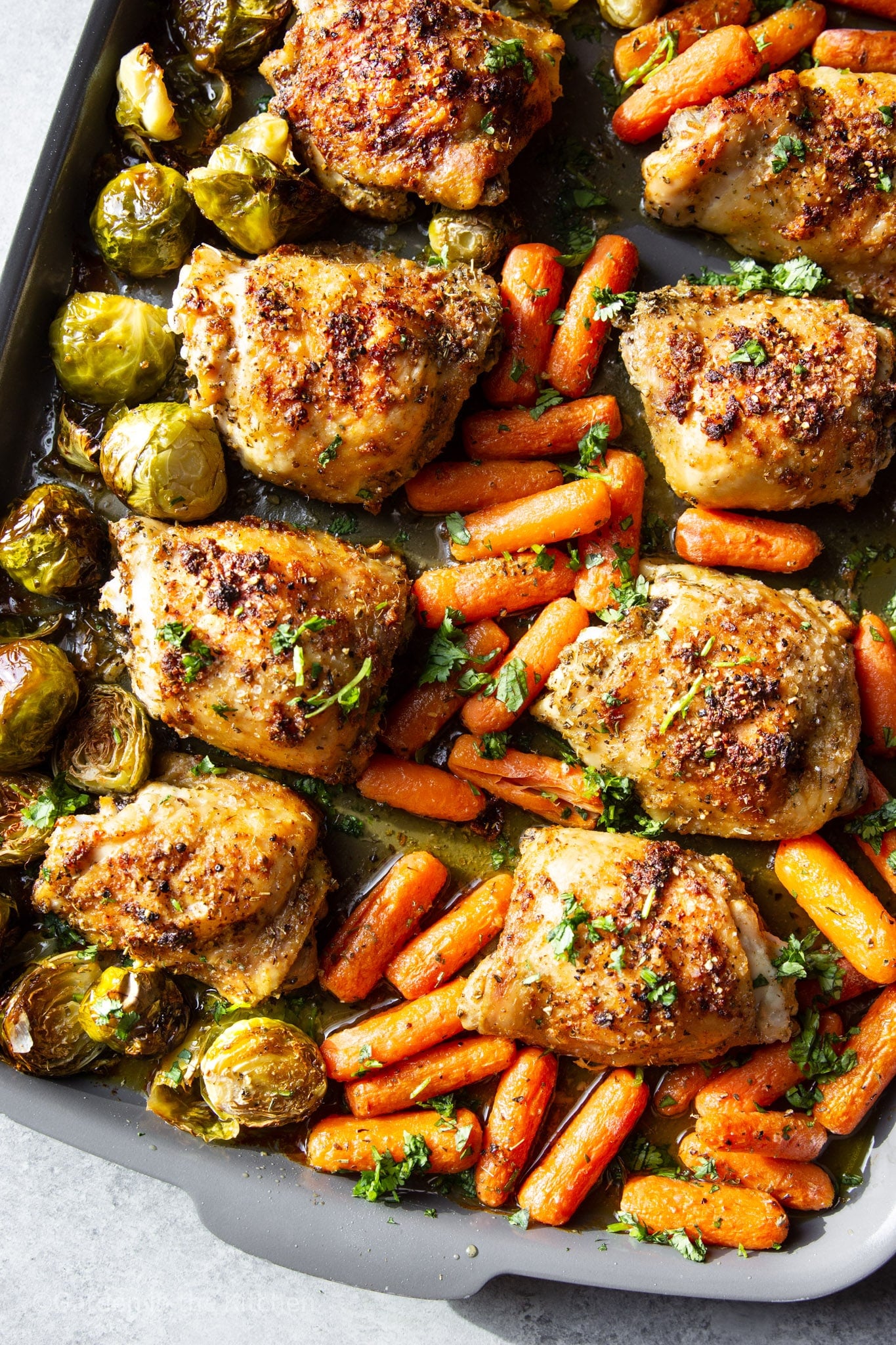
- Half-Sheet Pan Harissa Chicken with Chickpeas and Carrots. The house workhorse. Two tablespoons of harissa paste, a can of chickpeas, a bag of baby carrots, and eight bone-in thighs. 35 minutes at 425°F. Feeds four with lunch leftovers.
- Greek Lemon-Oregano Chicken with Potatoes. The lemon juice hitting the hot pan at minute 20 releases a glaze that clings to the potatoes. Uses one large lemon, four garlic cloves, a tablespoon of dried oregano. Sunday-night quality on a Tuesday.
- Cilantro-Lime Shrimp and Vegetable Sheet Pan Fajitas. Sub in chicken thighs cut into strips if you don't have shrimp — same 425°F, same 22 minutes. Serve in warm tortillas straight from the tray.
- Honey mustard chicken. Whisk ¼ cup Dijon, 3 tablespoons honey, 2 tablespoons oil, salt, and cracked pepper. Toss with 1.75 pounds of thighs and 1.5 pounds of quartered small potatoes. 425°F for 35 minutes. Add halved Brussels sprouts at the 15-minute mark.
- Teriyaki chicken bowls. Whisk ¼ cup soy, 2 tablespoons rice vinegar, 2 tablespoons honey, 1 tablespoon grated ginger, 2 cloves grated garlic, 1 teaspoon sesame oil. Toss with 1.5 pounds of boneless thighs and a pound of broccoli florets. 425°F for 24 minutes. Serve over rice with scallions.
- Fig & Chicken Sausage Sheet Pan Dinner with Rosemary Potatoes. Chicken sausage is criminally underused on the sheet pan — it renders enough fat to crisp everything around it, and it needs no marinade.
- Sun-Dried Tomato & Herb Chicken Sheet Pan Feast. Italian in the loosest sense — sun-dried tomatoes, olives, rosemary, chicken thighs, roasted peppers. Comes together in one bowl before it hits the sheet pan.
- Sheet Pan Rosemary-Garlic Chicken Thighs with Rainbow Vegetables. The default. If nothing else on this list appeals, cook this. Fresh rosemary, six smashed garlic cloves, a bag of pre-cut rainbow vegetables from the produce section, four chicken thighs. 35 minutes. Zero decisions.
Also worth cycling in for variety on the same architecture: Sheet Pan Maple-Balsamic Chicken with Roasted Vegetables and Sheet Pan Citrus-Glazed Caribbean Chicken Thighs — the Caribbean glaze produces the darkest, most lacquered skin of any recipe in this file.
6 sheet-pan salmon and seafood
Salmon on a sheet pan takes 12 minutes. If you want the full range — baked, grilled, pan-seared, and how to tell doneness without a thermometer — start with How to Cook Salmon: 15 Recipes and the Complete Guide, then come back for the tray versions. For shrimp, scallops and white fish specifically, 20 One-Pan Seafood Dinners Ready in 30 Minutes or Less has more of them. Everything else on the pan needs longer, so the operational rule is: start the vegetables first, add the salmon at minute 15.
- Sheet Pan Miso-Glazed Salmon with Roasted Asparagus. Two tablespoons of white miso, a tablespoon of mirin, a teaspoon of honey. Brush on the fillets. Asparagus goes on the pan first at minute 0, salmon at minute 15, everything comes out at 25.
- Baked Cajun-Spiced Salmon with Citrus Butter Sauce. Rub is smoked paprika, cayenne, oregano, garlic powder. Serve with the citrus butter warmed and drizzled on top the moment the pan comes out.
- Garlic butter shrimp. 1.25 pounds of 16/20 shrimp tossed with 4 tablespoons melted butter, 5 garlic cloves grated, zest of one lemon, ¼ teaspoon red pepper flakes. Spread single-layer on a preheated pan. 425°F for 8 minutes. Do not go past 10.
- Baked Pesto Salmon with Roasted Cherry Tomatoes and Asparagus. Store-bought pesto is fine — the roasting concentrates it. The cherry tomatoes burst and their juice glazes the salmon.
- Baked Lemon-Rosemary Cod with Garlic and Olive Oil. Cod cooks even faster than salmon — 10 to 12 minutes. Serve with roasted grape tomatoes and a slice of good bread to catch the pan juices.
- Sheet Pan Cajun-Spiced Shrimp with Zesty Lime and Garlic. Toss straight from the freezer bag if the shrimp are already peeled — the extra moisture actually helps with the Cajun rub. Serve over rice, over grits, or in tacos.
Runner-up: Sheet Pan Cajun-Spiced Catfish with Roasted Sweet Corn and Bell Peppers and Sheet Pan Moroccan-Spiced Salmon with Cauliflower Rice — both cook full meals in under 22 minutes total time in the kitchen.
8 sheet-pan pork, sausage and beef dinners
Pork and sausage are the most under-used proteins on a sheet pan, and they are the cheapest per gram of protein in the store. A pork tenderloin runs about $6 a pound in mid-2026 and feeds four; smoked sausage runs about $5 a pound and needs no seasoning at all. Both roast in the same 425°F window the vegetables need, which makes them easier to time than chicken thighs.
The one rule that changes for red meat: pull pork tenderloin at 145°F internal and let it rest 5 minutes. Ground beef goes to 160°F. Sausage is already cooked in most supermarket cases, so it's on the pan to brown, not to cook through — which means it goes in for the final 15 minutes, not the first.
- Sheet Pan Maple-Glazed Pork Tenderloin with Sweet Potatoes. 10 minutes prep, 25 in the oven, 480 calories and 35g protein a serving. Sweet potatoes go on first at minute 0, the tenderloin joins at minute 10, and the maple glaze goes on for the last 5 minutes only — brush it early and the sugar burns black.
- Sheet Pan Gochujang Pork with Roasted Vegetables. Two tablespoons of gochujang, a tablespoon of soy, a teaspoon of sesame oil, one grated garlic clove. 30 minutes, 40g protein. The fermented chili paste caramelizes into a lacquer that nothing else in the pantry duplicates.
- Sheet Pan Maple-Glazed Pork Chops with Apples and Carrots. Bone-in chops, ¾-inch minimum — anything thinner dries out before the carrots are done. 25 minutes total. The apples half-collapse into a sauce you'll want on the second night's leftovers.
- Sausage and Pepper Sheet Pan Dinner. The 10-minute-prep default. Italian sausage, three bell peppers, one onion, olive oil, salt. 25 minutes at 425°F. 380 calories a serving. This is the recipe to memorize.
- Sheet Pan Fennel and Sausage with Cherry Tomatoes and Rosemary. Fennel roasts sweet and loses its licorice edge entirely at 425°F. The cherry tomatoes burst around minute 18 and glaze the sausage on the way out.
- Sheet Pan German-Style Sausages with Sauerkraut and Potatoes. Drain the kraut hard — a wet kraut steams the pan and you lose the browning. Potatoes 15 minutes ahead, sausages and kraut for the final 20.
- Sheet Pan Spiced Ground Beef with Sweet Potatoes. Ground beef on a sheet pan works if you break it into loose ¾-inch clumps instead of spreading it flat — flat means gray and steamed. 25 minutes, 420 calories, 28g protein. Doubles as taco filling on night two.
- Sheet Pan Korean BBQ Beef with Sesame and Scallions. Thin-sliced sirloin, 10 minutes under a hot oven — this one is closer to broiling than roasting. Marinate 30 minutes ahead in the morning and it's a 12-minute dinner.
Runners-up worth the tray: Sheet Pan Cajun-Spiced Smoked Sausage and Vegetables (25 minutes, no knife work beyond a pepper), Sheet Pan Herb-Crusted Pork Tenderloin with Roasted Vegetables, Grilled Italian Sausage and Peppers Sheet Pan Dinner, Sheet Pan Harissa Pork with Sweet Potatoes and Kale, and Sheet Pan Beef and Broccoli with Sesame — a takeout swap that lands in 25 minutes for 280 calories.
If ground beef is your default weeknight protein, the sheet pan is only one of the formats worth knowing — the rest are in 20 Ground Beef Dinners: Cheap, Fast and Beyond Tacos.
6 sheet-pan vegetarian and vegan
Vegetables are the one ingredient class the sheet pan improves rather than merely cooks — 25 Roasted Vegetable Dinner Recipes: Hearty One-Pan Meals goes deeper on the produce-forward end.
The trick with vegetarian sheet-pan dinners is protein density. A pan of roasted vegetables alone is a side. Add chickpeas, halloumi, tofu, or gnocchi and it becomes dinner.
- Harissa-Spiced Chickpea and Corn Sheet Pan Hash. Two cans of chickpeas drained and very well dried, plus a bag of frozen corn, harissa paste, and cumin. 28 minutes. Serve with a fried egg on top for the second protein hit.
- Eggplant and Halloumi Sheet Pan with Za'atar and Lemon. Halloumi is the vegetarian bacon of the sheet pan — squeaky, salty, browns hard. Adds about 12 grams of protein per serving.
- Crispy Gnocchi Sheet Pan with Roasted Peppers & Tomatoes. Straight from the vacuum pack, tossed with oil, roasted 22 minutes. The exterior gets shatter-crisp. Add a splash of balsamic when it comes out.
- Tofu shawarma. Press a 14-ounce block for 15 minutes; cube it. Toss with a tablespoon of shawarma spice, olive oil, and salt. Roast alongside cauliflower florets and red onion at 425°F for 28 minutes. Serve in pita with tzatziki.
- Roasted Vegetable Enchiladas. Two-step sheet-pan hybrid: roast the vegetables on a pan for 20 minutes, roll into tortillas, sauce and cheese, return to the same pan for 12 more.
- Sheet-pan quesadillas. Butter one flour tortilla per person, place butter-down on a preheated pan, top with cheese and roasted vegetables, cap with another tortilla. 425°F, 6 minutes per side. Cut in wedges.
5 breakfast-for-dinner sheet-pans
Breakfast-for-dinner is the most under-appreciated sheet-pan trick in the American home kitchen. Kids eat it, adults eat it, and the cook does not have to think.
- Sheet Pan High-Protein Pancakes with Berries. Pour the batter as a half-inch even layer onto a well-greased sheet, scatter berries, bake 425°F for 18 minutes. Cut into squares. Feeds six from one pan.
- Sheet-pan hash. 1.5 pounds of diced potatoes, half a diced onion, half a diced bell pepper, three strips of bacon cut into lardons, salt, pepper. 425°F for 32 minutes, stirring twice. Crack four eggs into wells at the 25-minute mark.
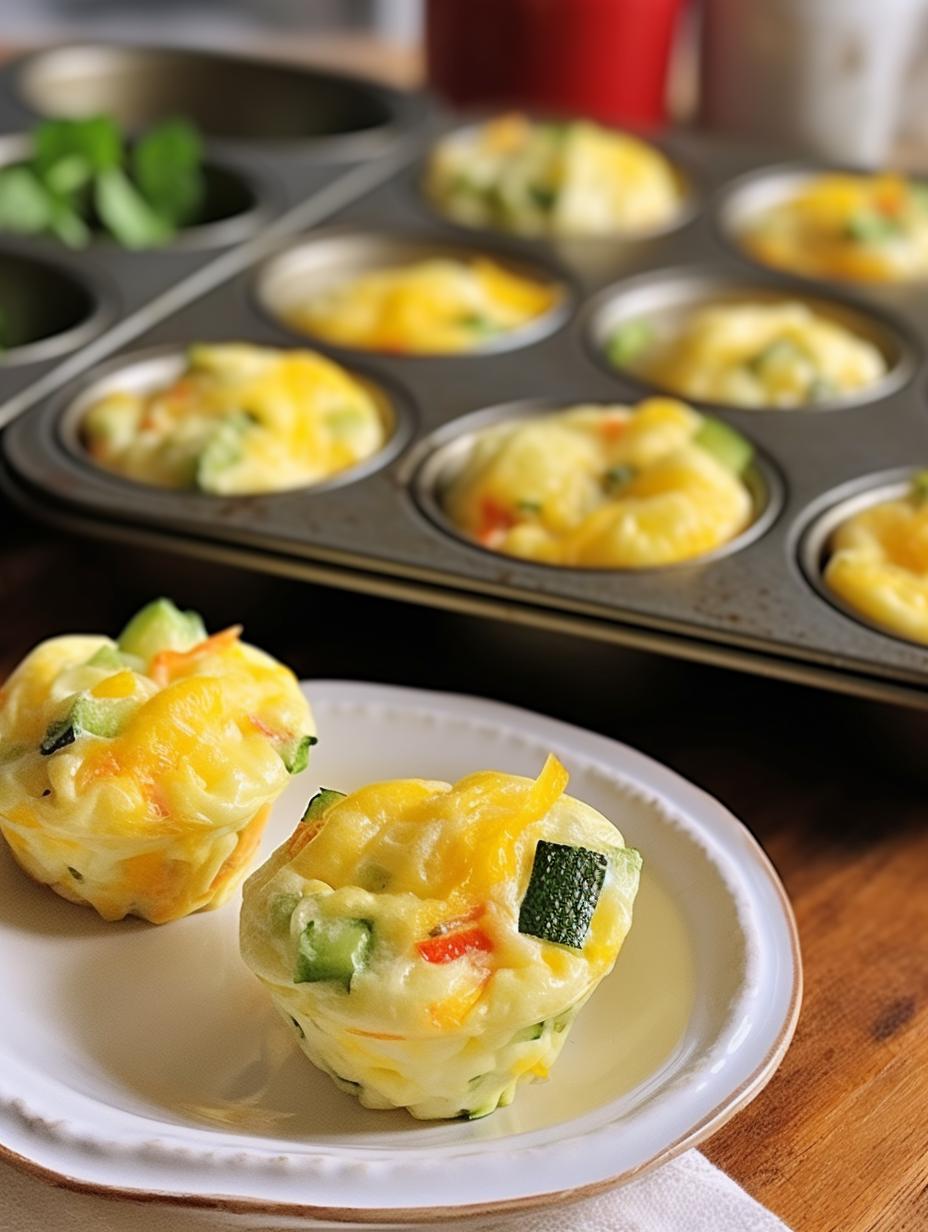
- Whole30 Veggie Frittata with Chive Cream. Whisked in a bowl, poured over pre-roasted vegetables on the pan, baked another 15 minutes. Perfectly portionable — cut in squares.
- Tex-Mex Breakfast Tacos with Scrambled Eggs and Chorizo. Roast the chorizo on the pan for 12 minutes, add whisked eggs directly to the pan for the final 6, fold into warm tortillas.
- Sheet-pan eggs Benedict. Bake English muffin halves cut-side-up with a slice of Canadian bacon for 8 minutes at 425°F, crack an egg on each, bake another 8 to 10 until whites are set. Warm hollandaise from a jar or pouch. Serve immediately.
Also worth building into the rotation: Sheet Pan Smoky Sausage and Pepper Medley for a savory breakfast-for-dinner, or One-Pan Chicken Sausage and Zucchini when you want less prep than a hash.
How to buy a sheet pan that lasts a decade
Most sheet pans sold on the internet in 2026 are cosmetic. Nonstick pans warp above 400°F, oven-safe silicone-coated pans peel by year two, and dark-colored pans over-brown the underside of everything. Here is what to buy.
Material. Heavy aluminum, 18-gauge minimum. Nordic Ware's Naturals half-sheet is the reference — commercial spec, made in the U.S., about $20. Any pan with a rolled rim of steel wire inside the edge resists warp; anything without warps at 425°F on the third use.
Size. Half-sheet (18 x 13 x 1 inch, the standard restaurant dimension) is the workhorse. Two of them fit one on each rack of a standard 30-inch oven, and either one handles a family of four. Quarter-sheets are for cookies. Full-sheets do not fit in a home oven.
Finish. Plain aluminum, no coating. Season it once by baking a thin coat of neutral oil at 400°F for an hour; from then on it releases like cast iron. Nonstick and ceramic coatings are all more delicate than the food you're cooking on them.
Rack + liner. Buy one metal cooling rack that fits inside the pan (about $12) — for anything you want to crisp on both sides simultaneously. Buy a stack of parchment sheets pre-cut to half-sheet dimensions ($8 for 50) — for anything sticky or high-sugar that would otherwise weld to the pan. Both live in the kitchen utensils and tools drawer, and the pans themselves are in bakeware — our current ranked picks are in Best Sheet Pans in 2026 and Best Baking Sheets in 2026.
One knife, one board, one bowl. The other side of a good sheet-pan setup is a knife that halves an onion in two cuts. Any 8-inch chef's knife under $80 will do — the ones we recommend are stocked in knives and cutting, and a mid-priced Victorinox or Mercer will handle everything on this list for years without a sharpening service.
Common pitfalls we still see
Even good cooks trip these five wires on the sheet pan. Watch for them.
1. Cold pan. Skipping the 5-minute preheat is the number-one reason a sheet-pan dinner comes out pale. The pan needs to hiss when the food hits it.
2. Wet vegetables. A bag of pre-washed broccoli is holding a tablespoon of water per cup. Spin it in a salad spinner. Never toss dripping-wet vegetables in oil — the oil beads and rolls off.
3. Too much protein. Four servings on one pan max. Push it and the meat steams, the vegetables underneath drown, and the whole tray takes 20 extra minutes.
4. Marinating shrimp too long. Acid denatures shrimp — 20 minutes maximum in any citrus or vinegar marinade before the texture turns to rubber.
5. Salting cherry tomatoes at the start. They release water and burst before browning. Salt them at the halfway mark and they burst after concentrating.
When NOT to reach for the sheet pan
Sheet-pan cooking has a real ceiling. Skip it when:
- You want a saucy dish (curry, braise, chili). Sheet pans are dry-heat vessels. Wet dishes need a Dutch oven — 20 Dutch Oven Dinners: One-Pot Braises, Stews and Roasts is the companion list.
- Your protein is more than 2.5 pounds. The pan crowds, everything steams. Split across two pans or use a roasting rack in a proper roasting pan.
- You need to sear something hard. A cast-iron skillet on a burner produces more surface heat than any oven at 425°F, and searing is a job for the burner.
- You are cooking a whole roast (chicken, prime rib). Roasting pans have higher sides for pan drippings and are structurally more rigid; a sheet pan bows.
- You are baking anything delicate (cakes, tarts). Sheet pans conduct heat too fast and crack thin layers.
Everything else on a weeknight — chicken, salmon, roasted vegetables, chickpeas, tofu, tempeh, halloumi, sausages, breakfast — the sheet pan wins.
Sheet-Pan Sunday — three pans, a week of lunches
Sheet-pan dinners are the fastest meal-prep template that exists, because the format already assumes protein and vegetables cook together on one surface. Two hours on a Sunday afternoon — about 45 minutes of which is actual work — covers Monday through Friday.
The Sunday sequence, staggered so the oven is never empty:
| Slot | Pan | Oven window | Yields |
|---|---|---|---|
| 1 | Chicken thighs + baby potatoes + carrots | 0:00–0:35 | 4 lunches |
| 2 | Salmon + broccoli + lemon | 0:35–0:57 | 3 lunches |
| 3 | Smoked sausage + peppers + onion | 0:57–1:22 | 3 lunches |
| 4 | Sheet of rice or quinoa (stovetop, in parallel) | 0:00–0:25 | all week |
That is ten portioned meals from three pans and one pot of grain. Cool everything on the pan for 20 minutes before it goes into containers — sealing hot food traps steam, and steam turns roasted vegetables soft by Tuesday. Divide into single-serve containers with the grain on the bottom, protein and vegetables on top, and a lemon wedge or sauce cup packed separately. Our current picks are in Best Meal Prep Containers in 2026, and the whole food-storage category is worth 20 minutes of browsing if you're still using takeout tubs.
Reheating rules that keep prep food from tasting like prep food. Roasted vegetables reheat badly in a microwave — 90 seconds turns them limp. Use the toaster oven or air fryer at 375°F for 4 minutes and they come back crisp. Salmon is the exception: reheat it at 275°F for 8 minutes or eat it cold over greens, because anything hotter drives out the fat and dries the fillet. Cooked sheet-pan food keeps 3 to 4 days refrigerated; past that, freeze it. The freezer strategy is its own playbook — see Freezer-Friendly Meal Prep: 20 Recipes to Batch Cook and Freeze.
The shopping side. Pick three sheet-pan dinners that share a base of six ingredients: chicken thighs, small potatoes, olive oil, garlic, kosher salt, one lemon. From that base you can spin off three completely different meals — the harissa chicken, the lemon-oregano chicken with potatoes, and the rosemary-garlic chicken with rainbow vegetables all share five of those six items.
Tap "Add to shopping list" on each of the three recipe pages and AislePrompt de-duplicates the shared items automatically. Instead of buying three lemons you buy one; instead of three heads of garlic, one. The Instacart handoff carries the same de-duplication, and delivery is typically 1–2 hours in most U.S. metros, so a Saturday-morning tap sets up a whole week of Sunday-through-Thursday sheet-pan dinners.
The cost math (as of mid-2026): $42 in groceries → 12 servings → $3.50 per plate. That number is remarkably stable — sheet-pan dinners lean on the least inflation-prone corner of the grocery store, and swapping the chicken for smoked sausage or a pork tenderloin pulls it under $3.
Sources
- Maillard reaction — the browning chemistry behind a 425°F pan
- Nordic Ware — Naturals half-sheet (18 x 13 in commercial spec)
- Harvard T.H. Chan School of Public Health — olive oil
- Sheet pan — standard half-sheet and quarter-sheet dimensions
- Roasting — dry-heat cooking and why crowding defeats it
- USDA — food and nutrition topics
Frequently asked questions
Why do my sheet-pan vegetables come out soggy?
What size sheet pan should I use for a family of four?
Can I prep sheet-pan dinners ahead?
How do I hit the AislePrompt shopping list without over-buying?
Are sheet-pan dinners actually healthy?
How do I keep the protein and the vegetables from finishing at different times?
Can I meal prep from sheet-pan dinners?
Should I line the sheet pan with foil or parchment?
Meal-prep recipes from the catalog
Save any of these to My Recipes — no account needed — and send the ingredients to Instacart in one tap.