22 Nashville Hot Chicken & Southern Fried Heat Recipes: Real Spice, Not Sriracha
The cayenne-oil paste, five heat levels, and 22 recipes that use the real technique — tenders, catfish, cauliflower and the sides that cool it down.
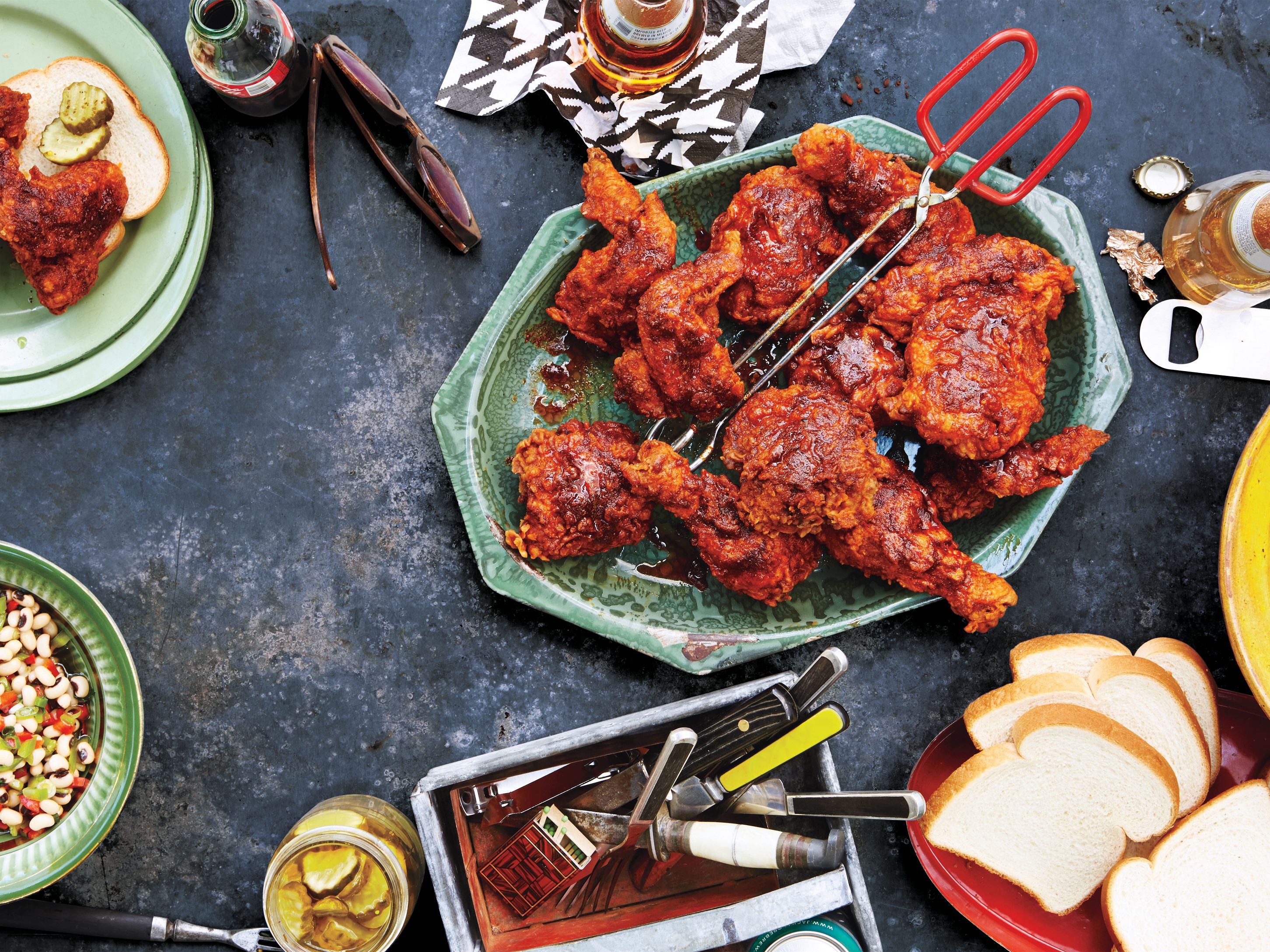
Nashville hot chicken is fried chicken brushed, immediately after frying, with a paste of cayenne, brown sugar, garlic powder and a ladle of the still-screaming 325°F frying oil. That oil-based paste is the whole trick: it carries capsaicin into the crust without water, so the coating stays shatteringly crisp instead of going soggy the way a Buffalo-style butter sauce does. Served on white bread with dill pickle chips.
Get a free week of easy dinners
Seven weeknight dinners with the shopping list already totalled, sent Sunday. No account needed, unsubscribe in one click.
No spam, unsubscribe in one click. Recipes, shopping lists and Instacart carts all work without an account either way.
Below are 22 recipes that use that technique — six chicken builds, four non-chicken versions, four sides, four drinks and desserts — plus the heat-level math to dial it from "my kid will eat this" to "sign a waiver."
Introduction: The difference between Nashville hot and generic 'spicy' fried chicken
Most "spicy fried chicken" on the internet is fried chicken with hot sauce somewhere in the process — in the brine, in the batter, or drizzled on at the end. Nashville hot is a specific, 90-year-old technique with a specific chemistry, and the difference is not marketing.
The paste is fat-based, not water-based. Capsaicin is lipophilic — it dissolves in oil and barely dissolves in water. When you whisk cayenne into hot frying oil, you are extracting the capsaicin into a carrier that then clings to a fried crust without wetting it. A vinegar-and-butter Buffalo sauce is roughly 60% water by weight; the moment it hits a fried crust, capillary action pulls that water into the crumb and the crunch is gone within four minutes. The oil paste adds essentially zero water, which is why a properly-sauced Nashville hot thigh is still audibly crisp twenty minutes later on the plate.
The origin story is Nashville's Prince's Hot Chicken Shack, which has been serving the dish since the 1930s and is the acknowledged source of the style — the family's account is that it started as a revenge dish, over-peppered by a scorned partner, that the recipient liked enough to put on a menu. The technique spread from there into a regional style with a documented history and canonical form: dark-meat-friendly, cayenne-forward, served over white bread with pickles.
Start with James' Authentic Nashville Hot Chicken if you want the baseline version before you start modifying anything, or Crispy Nashville Hot Chicken Thighs if you want the easiest entry point — thighs are far more forgiving of a 15°F oil-temperature miss than breast.
Three things separate a good home version from a mediocre one, and none of them are the pepper:
1. A buttermilk brine of at least 4 hours. The lactic acid tenderizes and the salt penetrates. Nashville-Style Spicy Chicken Thighs with Buttermilk Marinade runs the brine long enough to matter.
2. Oil at 325°F, held there. Not 375°F — Nashville hot is fried lower and longer than standard fried chicken because the crust needs to survive a second hot-oil application.
3. Paste applied within 60 seconds of the chicken leaving the fryer. The crust is still porous and hot; wait five minutes and the paste sits on top instead of soaking in.
The Nashville hot oil — 5 heat levels from Mild to Shut The Cluck Up
The paste is a ratio, not a recipe. For every 1/2 cup of hot frying oil, you whisk in 2 tablespoons brown sugar, 1 teaspoon garlic powder, 1 teaspoon paprika (for color, not heat), 1/2 teaspoon kosher salt, and then cayenne — and cayenne is the only variable.
Heat is measured on the Scoville scale, which quantifies capsaicin concentration. Here is the ladder, with the cayenne quantity per 1/2 cup of oil and roughly where the finished chicken lands:
| Level | Cayenne per 1/2 cup oil | Added pepper | Finished heat (SHU) | Who it's for |
|---|---|---|---|---|
| Mild | 1 tbsp | none | ~1,500 | Kids, first-timers, anyone who calls black pepper spicy |
| Medium | 2.5 tbsp | none | ~8,000 | The default. Jalapeño-adjacent, sweat on the forehead |
| Hot | 4 tbsp | 1 tsp ground árbol | ~25,000 | Noticeable pain that fades in 90 seconds |
| Extra Hot | 5 tbsp | 1 tbsp habanero powder | ~90,000 | You will stop talking mid-sentence |
| Shut The Cluck Up | 5 tbsp | 1 tsp ghost pepper powder | ~400,000+ | Gloves, ventilation, a signed waiver at restaurants |
A few notes that will save you a ruined batch:
- Brown sugar is structural, not decorative. It raises the paste's viscosity so it clings, and it caramelizes slightly against the hot crust. Skip it and the paste runs off onto the plate.
- Paprika is for color. The signature orange-red is mostly paprika. Cayenne alone reads brownish and looks under-seasoned.
- Above "Hot," wear nitrile gloves. Capsaicin binds to the TRPV1 receptor and it does not wash off skin with soap and water — it needs oil or alcohol. Touch your eye four hours later and you will remember this paragraph.
- Ventilate at Extra Hot and above. Aerosolized capsaicin from hot oil is, chemically, what pepper spray is. Open a window and run the hood on high.
Use a good instant-read thermometer for the oil and the chicken both — a 0.5-second read means you check the oil between every batch instead of guessing, which is the single biggest quality difference between home and restaurant fried chicken.
6 Fried Chicken Builds: sandwich, tenders, wings, whole bird, thighs, boneless breast
Six different cuts, six different oil temperatures and times. The pattern: the more bone and the thicker the piece, the lower the oil and the longer the fry.
| Build | Oil temp | Fry time | Internal target | Notes |
|---|---|---|---|---|
| Sandwich (boneless thigh) | 335°F | 6–7 min | 175°F | Thigh beats breast here — stays juicy at temp |
| Tenders | 340°F | 4–5 min | 165°F | Fastest weeknight version |
| Wings | 350°F | 8–10 min | 185°F | Higher temp renders the skin fat |
| Whole bird (8 pieces) | 300–315°F | 14–18 min | 165°F breast / 175°F thigh | Fry dark meat first, then white |
| Bone-in thighs | 325°F | 12–14 min | 175°F | The most forgiving cut in this list |
| Boneless breast (pounded) | 350°F | 5–6 min | 160°F, rest to 165°F | Pound to even 3/4" or the tips overcook |
1. The sandwich. Nashville-Style Hot Chicken Sandwich with Pickles is the canonical build. For a slaw-forward version, Spiced Nashville Hot Chicken Sandwich with Pickled Slaw adds acidity that does real work against the heat, and Spicy Nashville Hot Chicken Sandwich with Blue Cheese Slaw leans on dairy fat for the same purpose. If you want the technique without the deep fryer, Grilled Nashville Hot Chicken Sandwich with Pickled Slaw applies the paste to grilled chicken — less crust, still the flavor.
2. Tenders. The 20-minute weeknight version. Nashville Hot Chicken Tenders with Buttermilk Ranch Dip pairs the heat with a cooling dip, and Nashville-Style Hot Chicken Tenders with Spicy Garlic Sauce pushes garlic instead. For an Alabama-white-sauce variation on the same format, Spicy Alabama Hot Chicken Tenders with Buttermilk Ranch Dip swaps regional styles.
3. Wings. Nashville paste on wings is the best party application of this technique — the surface-area-to-meat ratio is high, so every bite carries paste. The double-fry method in Double-Fried Soy Garlic Korean Chicken Wings transfers directly: fry at 300°F for 8 minutes, rest 10, fry again at 375°F for 3, then paste.
4. Whole bird. Best Southern Fried Chicken is the base; brush it with hot paste instead of serving plain and you have an eight-piece Nashville platter. Honey-Glazed Southern Fried Chicken with Buttermilk Biscuits is the sweeter cousin — use it as a template and replace the honey glaze with the cayenne paste.
5. Bone-in thighs. Already covered above, and the cut I'd recommend to anyone frying chicken for the first time. Also see Sweet Tea-Brined Fried Chicken Thighs with Hot Honey Drizzle, where the sweet-tea brine adds sugar that browns hard and fast.
6. Boneless breast. The hardest one to do well. Pound it even, fry hot and short. Buttermilk-Fried Chicken Sandwich with Quick-Pickled Cabbage and Spicy Mayo is a solid breast-based build.
Two hot-honey builds worth knowing, because hot honey is the gateway drug to Nashville hot for people who think they don't like spicy food: Buttermilk-Brined Fried Chicken with Hot Honey Drizzle and Buttermilk-Fried Chicken with Hot Honey Glaze. For a chicken-and-waffles angle, Cast Iron Fried Chicken with Waffle and Hot Honey Drizzle and Waffle Sandwich with Fried Chicken and Maple Hot Sauce both work.
If you'd rather not stand over a pot of oil, Sheet Pan Nashville Hot Chicken with Pickled Slaw gets you 80% of the way there in the oven.
4 Non-Chicken Nashville Hot: shrimp, catfish, tofu, cauliflower
The paste does not care what is under it. Anything with a fried crust takes it.
Shrimp. Fry at 375°F for 90 seconds — shrimp overcook fast, so the window is narrow. Crispy Harissa Shrimp Tacos with Avocado Slaw already runs a North-African chile paste; swap in the Nashville paste and you have hot shrimp with slaw doing the cooling.
Catfish. The most Southern-native pairing on this list. Omaha-Style Crispy Fried Catfish with Cajun Remoulade gives you the cornmeal crust that holds paste beautifully. Pan-Fried Catfish with Buttermilk Cornbread and Fried Green Tomatoes is a full plate, and Pan-Fried Catfish with Cajun-Spiced Grits and Sautéed Greens puts it over grits. For lighter versions, Pan-Seared Cajun Catfish with Jazzed-Up Corn Salsa and Grilled Cajun-Spiced Catfish with Cornbread and Tomato Salad skip the deep fry.
Tofu. Press extra-firm tofu for 30 minutes, cornstarch-dredge, fry at 350°F for 5 minutes. It holds paste as well as chicken does. Spicy Korean-Style Stir-Fried Tofu with Gochujang Glaze and Spicy Tofu Stir-Fry with Garlic and Szechuan Peppercorns are both good starting points for the frying technique, as is Stir-Fried Tofu with Spicy Garlic-Sesame Sauce and Broccoli.
Cauliflower. The best vegetarian substrate — florets have crevices that hold paste. Crispy Baked Buffalo Cauliflower Bites with Blue Cheese Dip is the template; brush Nashville paste instead of Buffalo sauce and the crust survives. Keto Buffalo Cauliflower Bites with Blue Cheese Dip and Honey-Mustard Glazed Buffalo Cauliflower Bites work the same way.
4 Southern spicy sides: pickles, coleslaw, hot honey cornbread, spicy mac
Every side on a hot chicken plate exists to manage heat. Pick at least two.
Pickles. Non-negotiable. Homemade Sour Dill Pickles with Garlic and Mustard Seed takes ten minutes of active work and the acidity resets your palate between bites.
Coleslaw. Spicy Avocado Lime Coleslaw brings fat and acid at once — the avocado's lipids actually help dissolve capsaicin off your tongue.
Cornbread. Southern-Style Pecan and Cornbread Salad with Buttermilk Dressing uses cornbread as a vehicle for buttermilk dressing, which is the cooling agent you want. Drizzle hot honey over plain cornbread for the classic version. Biscuits work too — SugarJam Southern Kitchen-style Buttermilk Biscuits are a 15-minute bake.
Spicy mac. Rebooted Mac & Cheese with Crispy Panko adds textural contrast, Wellesley-Inspired Baked Macaroni and Cheese with Smoked Cheddar brings smoke, and Gouda & Parmesan Macaroni & Cheese is the richest of the three. The casein in all that cheese is doing the same job as a glass of milk.
Rounding out a full Southern plate: Sautéed Collard Greens with Garlic and Bacon in 15 minutes, Slow-Simmered Collard Greens with Smoked Turkey if you have 75, Smoky Jalapeño Bacon Baked Beans for more heat, and Spiced German-Style Potato Salad with Bacon and Mustard Vinaigrette for a vinegar-based potato salad that cuts better than a mayo one.
4 Cooling drinks + dessert: sweet tea, buttermilk lemonade, banana pudding
The physics here is straightforward: sugar and fat help, carbonation and alcohol do not.
Sweet tea. The traditional pairing. Honey-Lemon Ginger Iced Tea and Honey-Peach Iced Tea Punch are both sweet enough to blunt the burn; Honey-Lime Mint Iced Tea adds menthol, which triggers the cold receptor (TRPM8) and gives genuine relief.
Lemonade. Citrus-Mint Infused Sparkling Lemonade and Icy Mint Lemonade Sparkler both work. Buttermilk lemonade — 2 parts lemonade to 1 part buttermilk — is the regional move and the casein makes it measurably more effective than either alone.
Dessert. Banana pudding is the canonical ending, but peach cobbler is just as traditional and better represented in the catalog: Spiced Southern Peach Cobbler with Buttery Biscuit Topping, Baked Peach and Pecan Cobbler with Brown Sugar Glaze, Cinnamon-Spiced Peach Cobbler with Brown Sugar Crumble, and the shortcut Peach Cobbler Dump Cake with Vanilla Ice Cream. Serve any of them with ice cream — the milk fat is the point.
How to build heat tolerance and dial spice up over weeks
Capsaicin tolerance is real and it is physiological, not psychological. Repeated exposure depletes substance P in the sensory neurons and desensitizes the TRPV1 receptor. It takes about six weeks of regular exposure to move one full level on the ladder above.
A schedule that works:
| Week | Level | Cayenne per 1/2 cup | Frequency |
|---|---|---|---|
| 1–2 | Mild | 1 tbsp | Twice a week |
| 3–4 | Medium | 2.5 tbsp | Twice a week |
| 5–6 | Medium+ | 3 tbsp | Twice a week |
| 7–8 | Hot | 4 tbsp | Once a week |
| 9+ | Extra Hot | 5 tbsp + habanero | As desired |
Two things to know. Tolerance decays — take a month off and you drop most of a level. And tolerance is capsaicin-specific; building up on cayenne does not make you ready for Szechuan peppercorn, which acts on a completely different receptor (it's a tingling numbness, not heat). If you want to broaden rather than deepen, Sichuan-Style Stir-Fried Chicken with Chili and Peanuts is a different axis of "spicy" entirely.
Common pitfalls
1. Oil too hot. At 375°F the crust is dark before the thigh hits 175°F. You get a burnt shell around raw meat. Hold 325°F.
2. Pasting cold chicken. Wait five minutes and the crust cools, closes, and the paste sits on the surface as a greasy layer instead of soaking in.
3. Draining on paper towels. Steam gets trapped underneath and the bottom crust goes soft. Drain on a wire rack so air circulates on all sides.
4. Wrong oil. Butter and olive oil have smoke points around 300–375°F and will break down and taste acrid. Peanut oil smokes at ~450°F and is the traditional choice.
5. Crowding the pot. Six pieces in a 12-inch skillet drops the oil 40°F instantly. Fry three at a time and use a thermometer to bring the oil back to temp between batches.
When NOT to make this
Skip Nashville hot chicken if you're cooking for a crowd with unknown heat tolerance and only making one batch — the dish has no middle ground, and a Medium that's too hot for a third of the table is a failed dinner. Make the chicken plain, then serve the paste in a bowl with a brush and let people apply their own. Also skip it if you're cooking in a small apartment without a working range hood; at Hot and above you will genuinely make the room uncomfortable to be in.
Equipment that actually matters
You do not need a dedicated fryer. A 12-inch cast iron skillet with 1.5 inches of oil handles a family-of-four batch; cast iron's thermal mass is what keeps the oil from crashing when cold chicken hits it. A lidded cast iron chicken fryer is the deeper version if you fry often.
Beyond that: long tongs rated to 600°F, a set of graduated mixing bowls for the buttermilk-and-dredge station, and a grease container with a strainer so you can filter and reuse the oil three or four times. For the lower-fat route, a 6.5-quart air fryer at 400°F for 18–22 minutes gets you a drier but genuinely close result.
One safety note that has nothing to do with heat: fried chicken is still poultry, and the FDA's safe food handling guidance applies — separate the raw-chicken dredge station from anything you'll eat uncooked, and don't reuse the buttermilk brine.
White bread + pickle chip — why the pairing matters
The two slices of plain white bread under the chicken are not a garnish and not a bun. They are functional, and the reasons are worth understanding because they tell you what to substitute if you don't have them.
The bread absorbs oil-borne capsaicin. The paste drips. White bread's open, soft crumb wicks it up, which does two things: it stops the plate from pooling grease, and it creates a second course — the oil-soaked bread at the end is, for a lot of people, the best bite on the plate. A dense artisan sourdough will not do this; the tight crumb repels rather than wicks. This is the rare case where cheap sandwich bread is genuinely the correct ingredient.
The pickle chip resets your palate. Acid at roughly pH 3.2 stimulates salivation, and saliva physically dilutes and carries away capsaicin. It also distracts the trigeminal nerve with a competing signal. One chip between every two or three bites is the traditional rhythm and it measurably extends how much heat you can enjoy before you tap out.
What the crust is doing. The deep browning on a properly fried piece comes from the Maillard reaction between the buttermilk's proteins and the flour's sugars — that's where the savory, roasted depth under the heat comes from. Fry too cool and you get pale, floury crust with no Maillard development, and no amount of cayenne fixes a bland base.
If you want more of this style, our 25 Southern Soul Food Recipes and 24 Southern Comfort Food Recipes cover the wider plate, 22 Spicy Dinner Recipes covers weeknight heat beyond fried chicken, 18 Homemade BBQ Sauce Recipes covers the other great Southern sauce tradition, and 20 Korean Weeknight Dinners has the double-fry technique that makes the best wings.
Sources
- Nashville hot chicken — history and canonical form
- Prince's Hot Chicken Shack — the originating restaurant
- Scoville scale — how pepper heat is measured
- Capsaicin — chemistry, TRPV1 binding, and why dairy works
- Smoke point — choosing a frying oil
- Maillard reaction — where the crust flavor comes from
- FDA — Safe Food Handling
Frequently asked questions
What actually makes Nashville hot chicken different from Buffalo?
How hot is 'Shut The Cluck Up' hot?
Do I need to buy a deep fryer for these recipes?
Can I make Nashville hot chicken in an air fryer?
How do I cool my mouth if I go too hot?
Sources
- en.wikipedia.org
- en.wikipedia.org
- en.wikipedia.org
- en.wikipedia.org
- en.wikipedia.org
- en.wikipedia.org
- fda.gov
Cook Southern at home this week.
Ask our AI for a week of Southern dinners — it writes the recipes, builds the shopping list, and sends the cart to Instacart. No account needed.
Plan my Southern week →