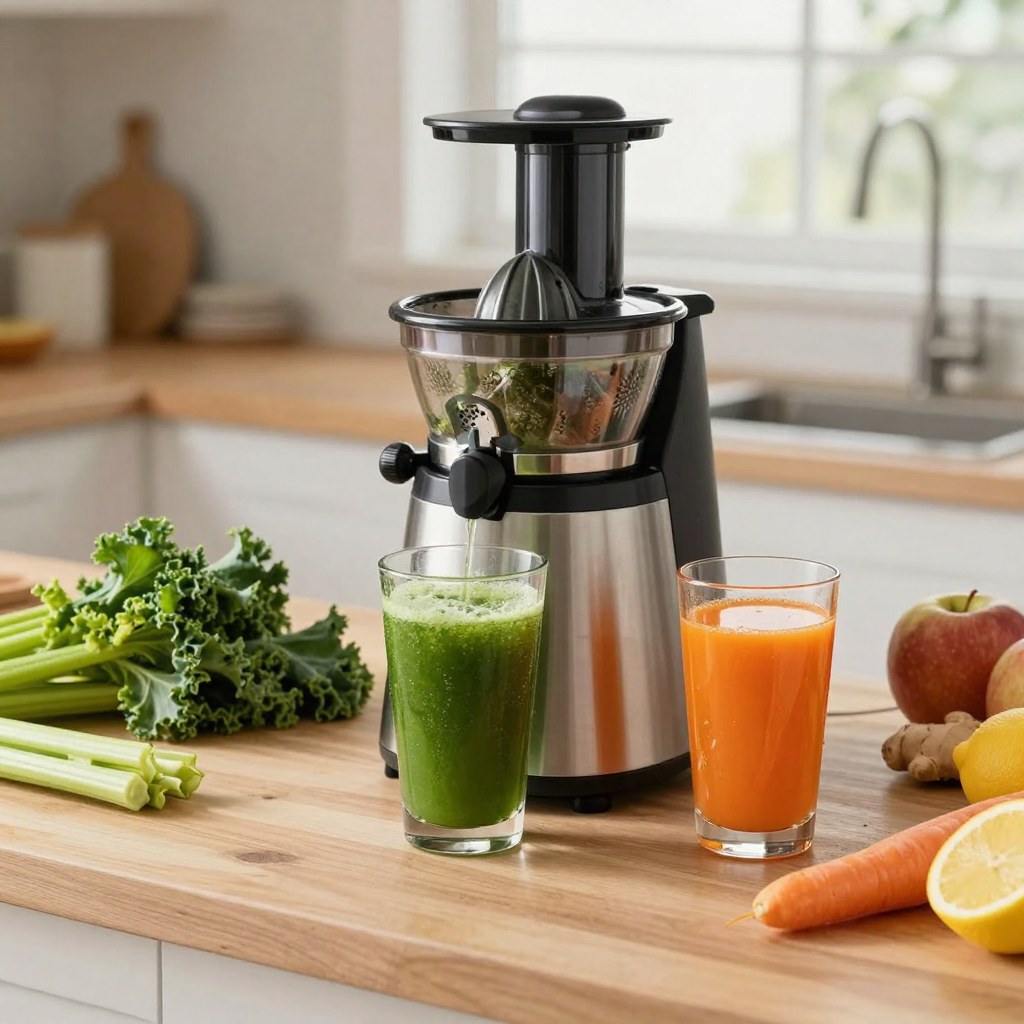
Best Juicers for 2026: Masticating vs Centrifugal Picks + Buying Guide
Five juicers, from a compact countertop-saver to a hands-free cold press, plus how to pick between masticating and centrifugal.
Where to buy these picks
Affiliate links: we may earn a commission on qualifying Amazon purchases. Policy. Prices show only when checked in the last 24 hours.
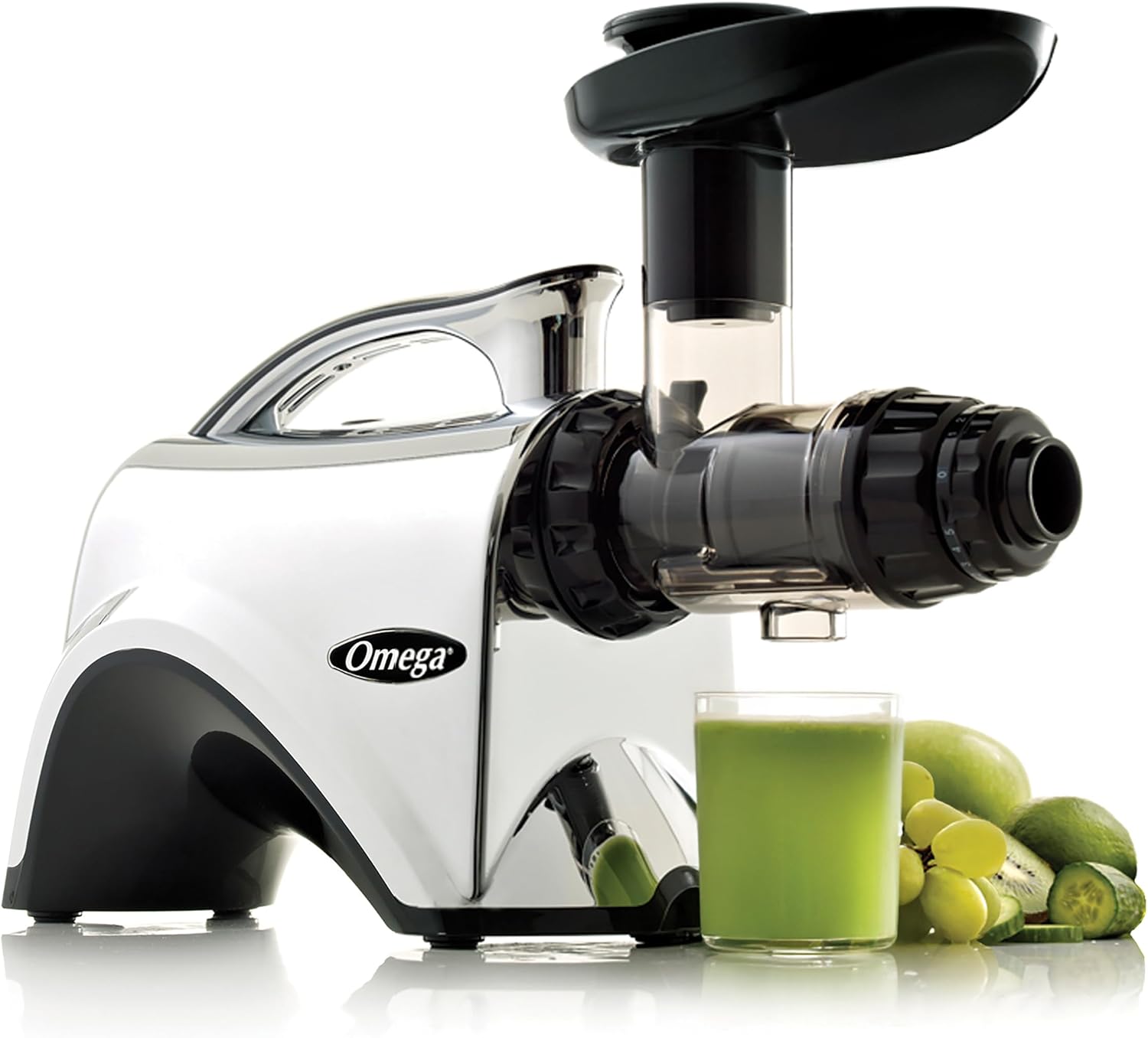
- Best Overall: Omega NC900HDC MasticatingCheck price on Amazon →
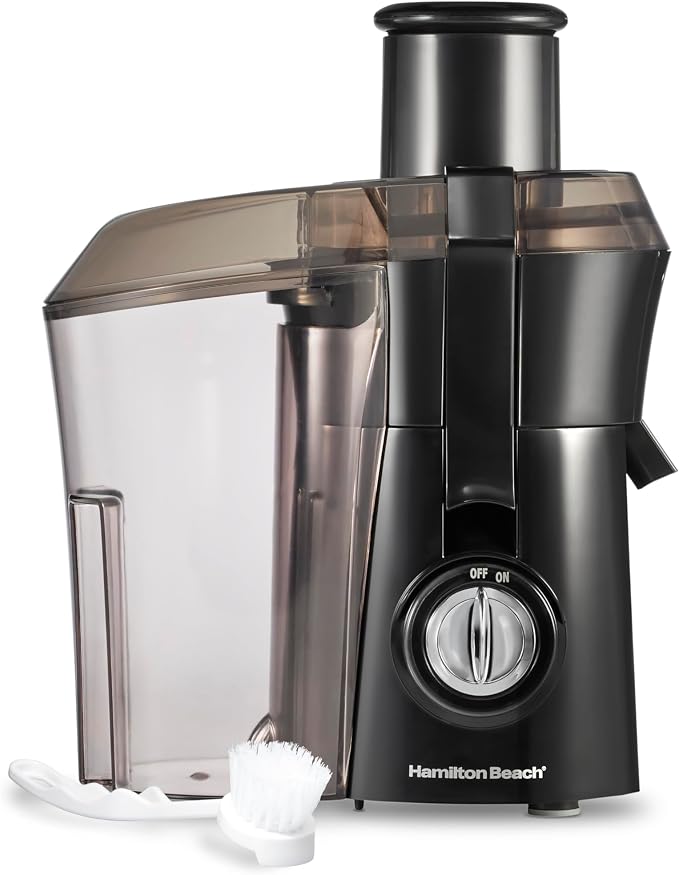
- Best Value: Hamilton Beach Big Mouth (Centrifugal)Check price on Amazon →
- Best for Beginners: Ninja NeverClog Cold Press JC151 (Masticating)Check price on Amazon →
- Best Premium: Nama J2 Cold PressCheck price on Amazon →
- Best Compact: Breville Juice Fountain Compact BJE200XLCheck price on Amazon →
Direct answer: What is the best juicer for 2026 — masticating or centrifugal?
Get a free week of easy dinners
Seven weeknight dinners with the shopping list already totalled, sent Sunday. No account needed, unsubscribe in one click.
No spam, unsubscribe in one click. Recipes, shopping lists and Instacart carts all work without an account either way.
The best juicer for most people in 2026 is a masticating (cold-press) model, and our top pick is the Omega NC900HDC. It turns at 80 RPM, handles kale and wheatgrass, and has a 10-year warranty. If you mostly juice apples, carrots and citrus and want a glass in under a minute, a centrifugal juicer is the better tool. The Hamilton Beach Big Mouth is the best value there.
Here are all five picks at a glance. Prices are list prices from our catalog as of September 2026.
| Pick | Type | Price | Motor / speed | Warranty | Best for |
|---|---|---|---|---|---|
| Omega NC900HDC | Horizontal masticating | Check current price | 150 W, 80 RPM | 10 years | Greens, wheatgrass, daily juicers |
| Hamilton Beach Big Mouth | Centrifugal | Check current price | 800 W | 1 year (listing) | Fruit, carrots, speed on a budget |
| Ninja NeverClog JC151 | Vertical masticating | Check current price | 150 W | 1 year | First-time cold-press owners |
| Nama J2 | Vertical masticating, self-feeding | Check current price | 200 W, 50 RPM | 15 years | Big batches, hands-free prep |
| Breville Juice Fountain Compact BJE200XL | Centrifugal | Check current price | 700 W | 1 year | Small kitchens, fruit juice |
Where to buy the picks in this guide
Prices are shown only when checked in the last 24 hours; otherwise check the current price on Amazon.
The one-question decision: how often will you juice greens versus fruit?
Skip the specs for a minute. The one question that picks the right machine is how much of your juice is leafy greens?
- Mostly greens, or any wheatgrass: buy masticating. A slow auger crushes kale, spinach, chard and herbs against a screen and gets real liquid out of them. A centrifugal basket spinning at thousands of RPM tends to throw leaves around instead of shredding them, so they leave as damp pulp.
- Mostly hard fruit and roots (apples, carrots, beets, pineapple, citrus): buy centrifugal. Hard produce shreds cleanly against a spinning blade, and you'll have 16 ounces in the glass in under a minute. Most centrifugal models also take a whole apple through a 3-inch chute, so prep time drops to almost nothing.
- A mix, several times a week: buy masticating anyway. It handles fruit fine, just slower. It also runs quieter, makes less foam, and the juice holds up better in the fridge.
The other honest question is how much cleanup will you put up with? Skip this and you'll end up with a $200 juicer in the cabinet by February. The best juicer is the one you rinse right after using it. Every pick below is chosen partly for how painless that rinse is.
How we picked (yield %, foam and oxidation, noise, cleanup time, chute size, warranty)
We screened the 145 active juicers in the AislePrompt small appliances catalog and dropped manual citrus presses and reamers, which are a different tool.
1. Yield on greens and hard produce. Slow augers consistently get more out of leafy greens. Centrifugal machines hold their own on apples and carrots. We favored machines whose makers publish RPM and whose owner reviews back up the yield claims.
2. Foam and oxidation. High-speed spinning whips air into the juice. More foam means faster browning and a thinner mouthfeel. Masticating juicers make noticeably less.
3. Noise. An 800 W centrifugal motor at full speed is about as loud as a blender. A 150 W auger motor is closer to a dishwasher.
4. Cleanup time. We counted dishwasher-safe parts from each manufacturer's listing. We treated a mesh screen that needs a brush as the real cost.
5. Feed chute size. A 3-inch chute takes a whole small apple. A narrow horizontal-auger chute means cutting produce into strips first.
6. Warranty length. Warranties run from 1 year (Ninja, Breville, Hamilton Beach) to 10 years (Omega) and 15 years (Nama). Juicer motors work hard, so warranty length is a real signal of how long the maker expects the motor to last.
We also looked at review volume and average rating as a sanity check.
Best Overall: Omega NC900HDC Masticating
The NC900HDC is a horizontal, single-auger "nutrition center" juicer. It's the design most serious green-juice drinkers settle on. It turns at 80 RPM on a 150 W motor. Omega points out that conventional extractors run at 1,650 to 15,000 RPM. Its dual-stage auger crushes the produce first, then presses the pulp again against the screen. That second press is where leafy greens give up the last of their juice.
Why it wins:
- It does greens and wheatgrass properly. This is the job centrifugal machines fail at, and it's why most people upgrade.
- Adjustable end cap. You can dial the pressure on the pulp outlet. Use tighter for soft greens and looser for fibrous celery and hard roots.
- It does more than juice. The box includes a homogenizing cone and four nozzles, so the same base makes nut butter, sorbet from frozen fruit, baby food and fresh pasta.
- 10-year warranty. That's ten times Ninja's or Breville's coverage for the same kind of job.
Trade-offs to know: the feed chute is narrow, so plan on cutting apples into eighths and carrots lengthwise. The listing marks the parts hand wash only. The juice is thick and foam-free but slower to make, at about 3–4 minutes for a 16-ounce glass of mixed greens and apple.
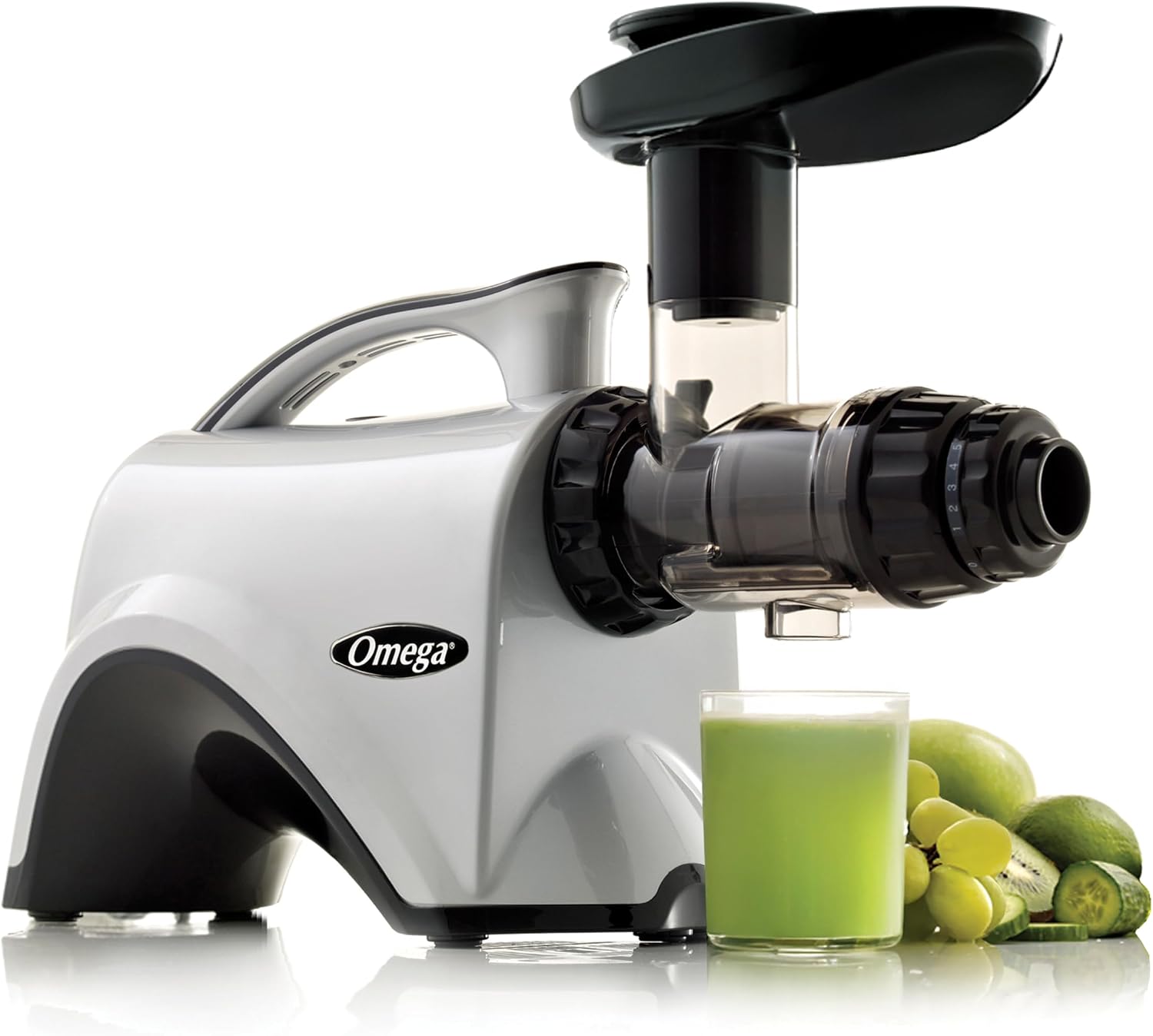
Alternative: the Omega NC800HDS is the same 80 RPM, 150 W platform with a 10-year warranty. Its listing marks the parts dishwasher safe. Buy it only if the dishwasher is a deal-breaker, because it costs about $135 more.
Best Value: Hamilton Beach Big Mouth (Centrifugal)
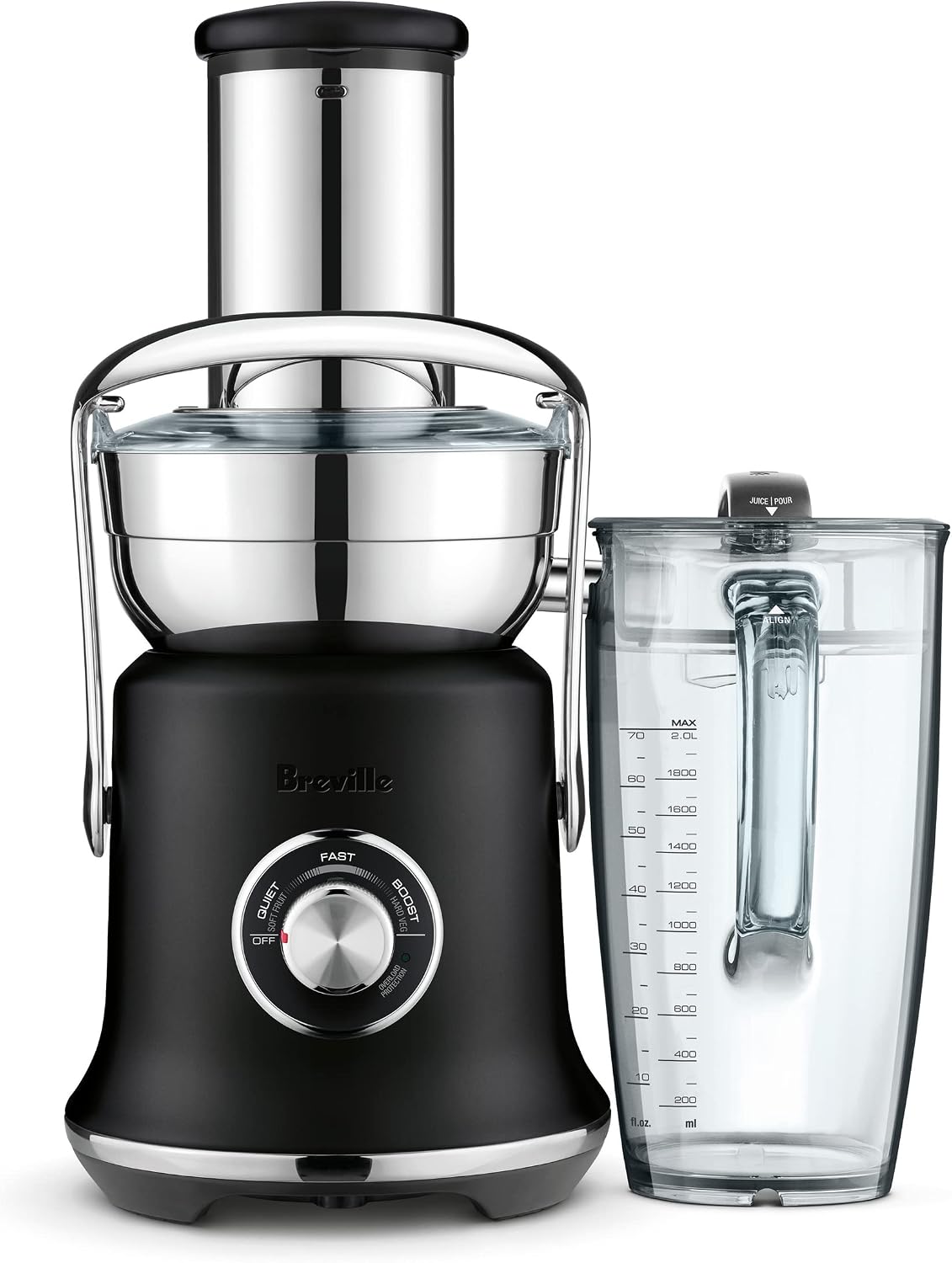
Hamilton Beach Big Mouth — $74.95. Step-up: Breville Juice Fountain Cold XL — $399.95.
The Breville Juice Fountain Cold XL is the centrifugal juicer most reviewers crown. At $399.95, though, it isn't a value buy. The value pick is the Hamilton Beach Big Mouth. It has an 800 W motor and a 3-inch feed chute that takes whole apples. For a household that makes apple-carrot-ginger juice on weekends, it does 90% of what a $400 machine does for under $75. The weak spots are the usual centrifugal ones: foamy juice, a loud motor, and poor yield on kale.
The step-up is the Breville Juice Fountain Cold XL. It's the best centrifugal machine you can buy if you want speed without the usual downsides. Per Breville's product page, it has a 3.5-inch feed chute and a 70 fl oz jug, and its "Cold Spin" design keeps juice from heating up as it's extracted. Breville claims it's up to 5x faster than a cold-press machine. The listing puts the motor at 1,200 W. If your household drinks a liter of juice a day and hates prep, the Cold XL earns its price.
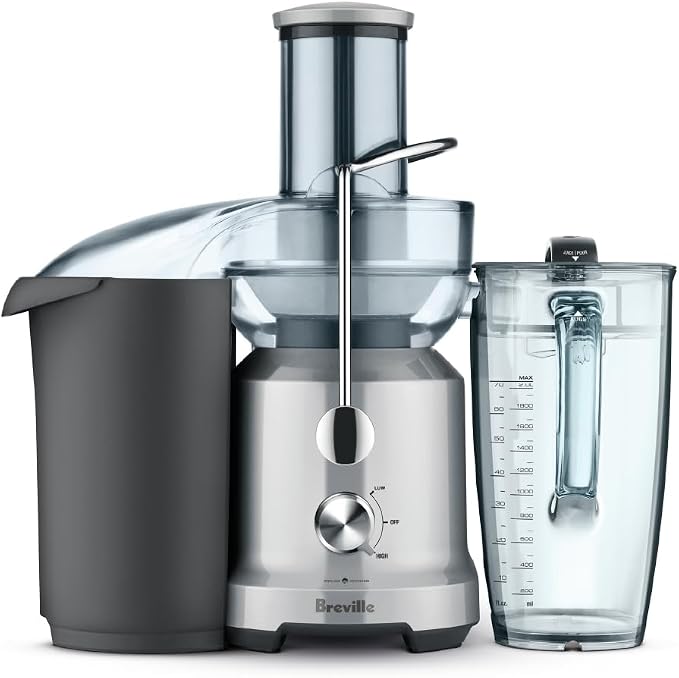
In between sits the Breville Juice Fountain Cold. It has the same 70 fl oz jug and cold-spin approach, and costs half as much as the XL.
Best for Beginners: Ninja NeverClog Cold Press JC151 (Masticating)
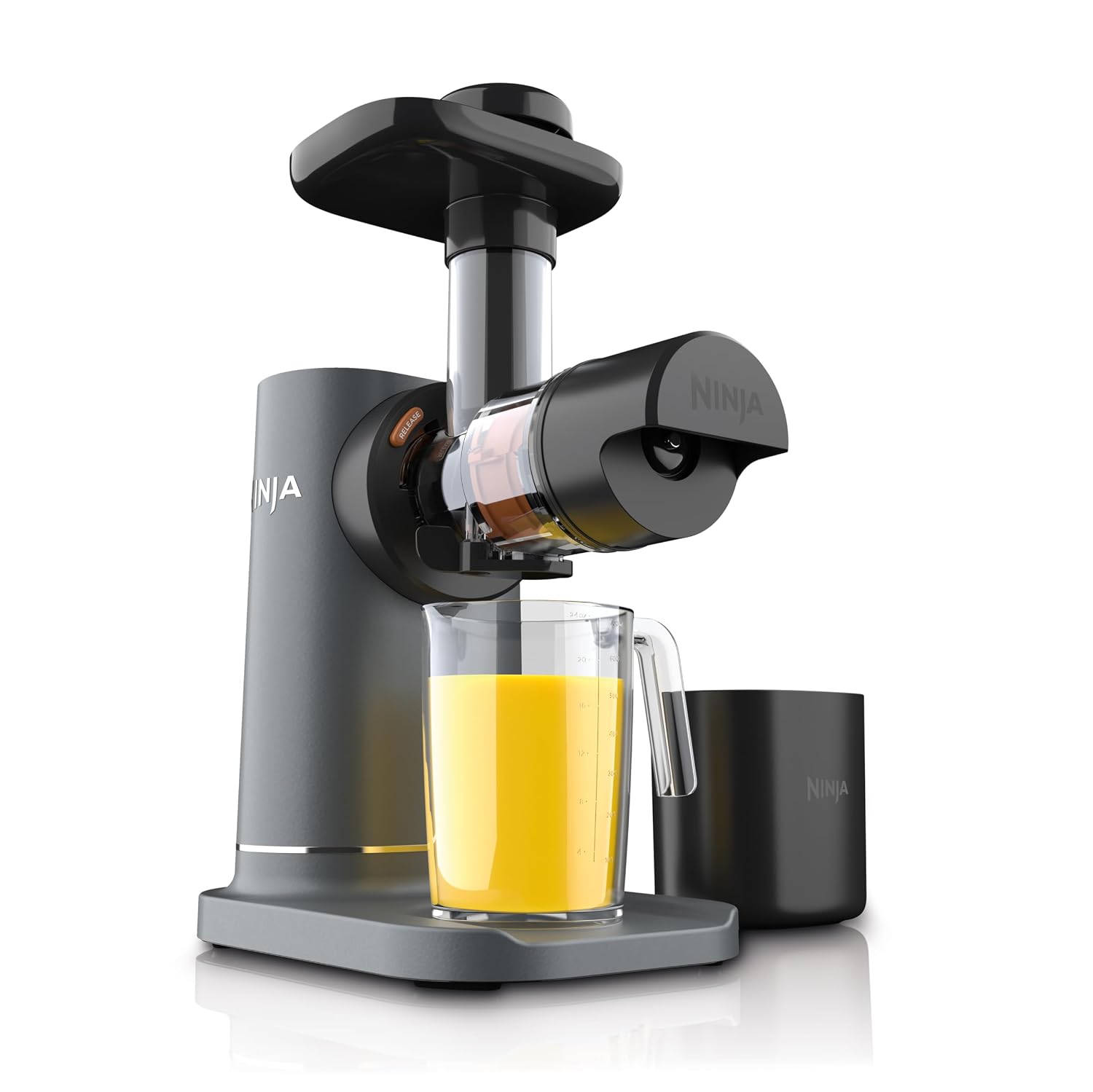
Ninja NeverClog Cold Press Juicer JC151
Hurom's compact vertical slow juicers are often recommended to beginners, but none is in our catalog as of September 2026. The Ninja NeverClog fills the same role (a vertical auger that's easy to learn) for less money, and it's the one we'd hand a first-time juicer.
What makes it beginner-proof:
- Everything that touches food is dishwasher safe, per Ninja's spec sheet. Cleanup is the #1 reason people quit juicing, so this matters more than yield.
- Two interchangeable pulp filters. One gives smooth "less pulp" juice and the other gives thicker, fiber-rich juice. You can find out which you like without buying a second machine.
- Anti-drip lever and big containers. A 24 oz juice jug and a 36 oz pulp bin mean you don't have to stop mid-batch.
- A 150 W high-torque auger built to push through celery, ginger and beets without jamming. That's the "NeverClog" in the name.
Trade-offs: the warranty is 1 year, versus 10 for the Omega. Leafy-green yield is good but a notch below a horizontal dual-stage auger. If you're still juicing daily a year from now, you'll know whether to step up.
Best Premium: Nama J2 Cold Press
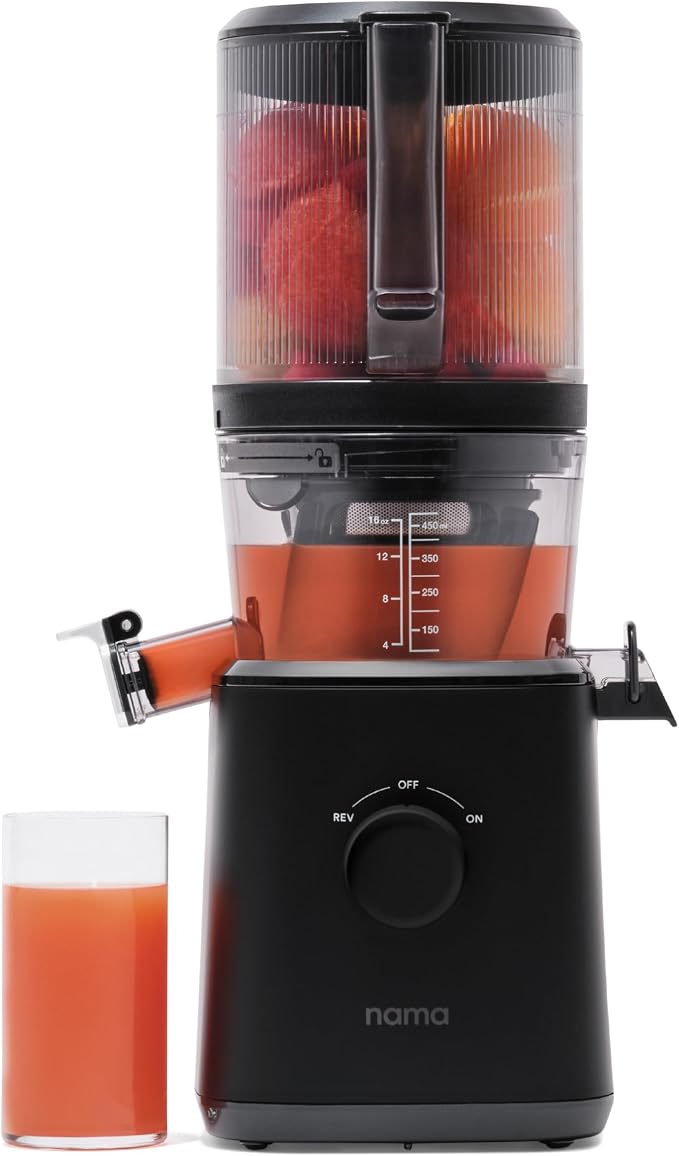
Nama's older Vitality 5800 is still sold in places. The company's current flagship is the J2, though, and it's the one to buy in 2026. Its trick is a self-feeding hopper. You load a whole recipe's worth of chopped produce, close the lid, and walk away while the auger pulls it through. According to Nama's product page, the J2 runs at 50 RPM on a 200 W motor, yields 16–32 ounces of juice per hopper load, and carries a 15-year warranty. That's the longest in this guide.
Who should spend $599:
- Batch juicers who make three or four days of juice at once. Hands-free loading turns a 20-minute feeding session into 2 minutes of loading and doing something else.
- Households juicing for more than one person, where the time saved every day adds up fast.
- Anyone replacing a store-bought cold-press habit. At $8–$12 a bottle, a daily juice drinker buys the J2 back in two to three months of produce-only costs.
Trade-offs: it's three times the price of our best overall pick. Juice quality from a slow vertical auger isn't three times better, so you're paying for convenience and warranty.
Best Compact: Breville Juice Fountain Compact BJE200XL
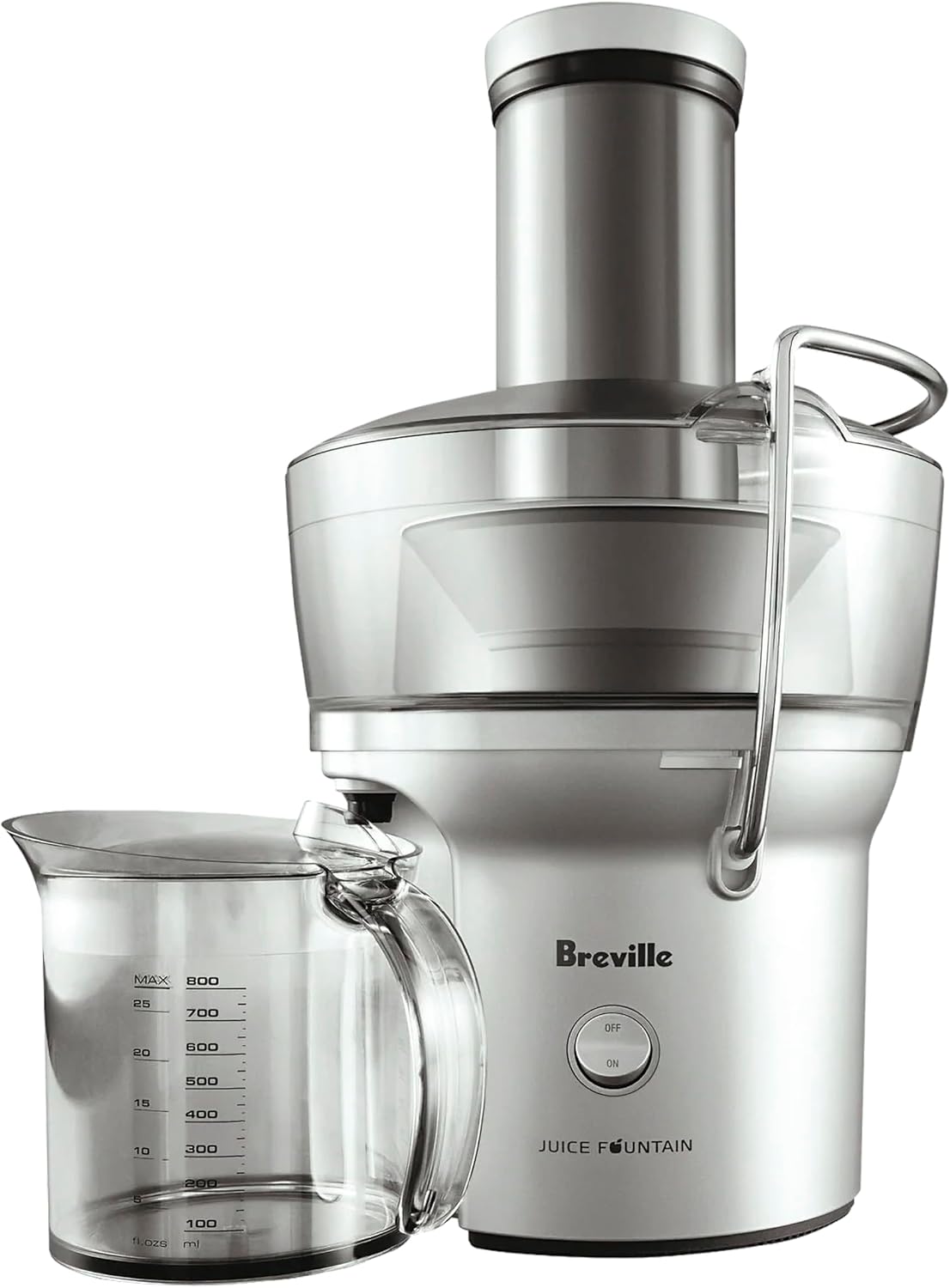
Breville Juice Fountain Compact BJE200XL
The small-footprint juicer that earns this slot is Breville's Juice Fountain Compact. It measures 9.84 × 9.06 × 15.75 inches, runs on a 700 W motor, and has a 3-inch wide chute, per Breville's BJE200XL page. The juice jug holds 25 oz and has a built-in froth separator. The parts are dishwasher safe.
It suits apartments, dorms and anyone who juices fruit a couple of times a week and wants the machine to fit under a cabinet. At under $60 it's also the cheapest way to find out whether you'll actually juice.
Compact but slow: if you want cold-press juice in a small footprint, the Nama J3 Compact is a smaller, self-feeding version of the J2. It's expensive for its size, but nothing else in the catalog gives you hands-free slow juicing on half the counter space.
What to Look For (masticating vs centrifugal by use case, feed chute size, pulp control, dishwasher-safe parts, warranty length)
Masticating vs centrifugal by use case
| You mostly juice… | Buy | Why |
|---|---|---|
| Kale, spinach, chard, herbs, wheatgrass | Masticating (horizontal auger ideal) | Slow crushing gets liquid out of leaves; centrifugal can't |
| Apples, carrots, beets, pineapple | Centrifugal | Fast, whole-fruit chutes, fine yields on hard produce |
| Citrus only | A citrus press, not a juicer | Reamers beat both designs for oranges and lemons |
| Big batches for the week | Masticating, ideally self-feeding | Less foam, juice holds up longer in the fridge |
| A little of everything, daily | Vertical masticating | Handles fruit and greens; bigger chute than horizontal |
Feed chute size. A 3-inch chute takes whole small apples. Horizontal augers like the Omega have narrow chutes, so plan on 2–3 minutes of cutting per batch. Vertical slow juicers sit in between. Self-feeding hoppers like Nama's move the prep to the start, so there's no feeding once the machine is running.
Pulp control. Interchangeable filters (Ninja) or an adjustable end cap (Omega) let you trade smoothness for fiber. If anyone in the house dislikes pulpy juice, this matters more than yield.
Dishwasher-safe parts. Check the listing for each part. Most brands put the juice jug and pulp bin in the dishwasher and say to hand-wash the mesh screen. Keep a stiff bottle or cleaning brush from the utensils aisle next to the juicer. A 90-second scrub right after juicing is easy. Dried pulp means a 15-minute soak.
Warranty length. Juicer motors do hard work. One year is the norm for centrifugal machines and entry-level cold presses. Ten to fifteen years (Omega, Nama) usually signals a gear-reduction motor built for daily use.
Noise. Centrifugal machines are loud for about 45 seconds. Masticating machines are quiet for about 4 minutes. If you juice at 6 a.m. in an apartment, choose quiet.
Juicer vs blender: what each does best
A juicer and a blender make two different drinks, so owning one doesn't make the other redundant.
- A juicer separates liquid from fiber. You get a thin, concentrated drink, and 2 pounds of produce fits in one glass. You also give up most of the insoluble fiber, which ends up in the pulp bin.
- A blender keeps everything. A smoothie keeps all the fiber, is more filling, and works as a meal replacement. You can also add yogurt, nut butter, oats or protein powder, which you can't do in a juicer.
If you're choosing one, our best blenders of 2026 guide covers the smoothie side. A smoothie is the better daily habit for most people because the fiber stays in. Try a Berry & Spinach Smoothie or the Sugar-Free 'Reset' Green Smoothie to see what a blender does with the same produce. If you only need to blend in a pot or a jar, a stick blender is cheaper still.
Buy a juicer when you specifically want strained juice: green juice, ginger shots, fresh carrot juice, or a drink you can take on an empty stomach before a workout. Many kitchens end up with both. For more options, see our roundup of the best small kitchen appliances of 2026.
How to get the most juice from fresh produce (prep, order of loading, storage)
Prep
- Wash and dry everything. Fresh-pressed juice is unpasteurized, so any bacteria on the produce skin goes into the glass. The FDA's juice-safety guidance is explicit about this for untreated juice. A salad spinner gets greens clean and dry quickly.
- Cut to the chute. Cut produce into strips for a horizontal auger. For a 3-inch centrifugal chute, quarter only the biggest apples.
- Peel selectively. Peel citrus, because the pith is bitter. Leave the skin on apples, carrots, cucumbers and ginger. Always remove mango pits and stone-fruit pits.
Order of loading
1. Leafy greens first, rolled into tight bundles. Leaves feed better when they're compressed.
2. Soft produce next (cucumber, pineapple, citrus). The extra liquid flushes the screen.
3. Hard produce last (carrots, apples, beets). They push the leftover green pulp through the auger.
4. Alternate greens and hard produce if a horizontal auger starts to clog.
A worked example. A 16-ounce green juice might be 2 cups of kale, 2 celery stalks, 1 cucumber, 1 green apple, half a lemon and an inch of ginger. In a slow juicer, feed it in the order above and it takes about 4 minutes. In a centrifugal machine it takes about 45 seconds, but expect a thinner glass with a head of foam and a wetter pulp bin. For inspiration beyond green juice, the flavors in our Honey-Ginger Lemonade Cooler, Cucumber Mint Limeade Punch and Watermelon Agua Fresca with Fresh Lime and Mint all work as fresh-pressed bases. The Carrot and Ginger Smoothie with Probiotic Yogurt and Citrus-Spiced Ginger Turmeric Smoothie show the same flavors in blended form.
Use the pulp. Carrot and apple pulp can go into muffins or broth. Vegetable pulp, especially from beets, celery and ginger, adds body to a pot of Beet and Ginger Broth. Celery and apple pulp can be stirred into a chilled soup like Celery-Apple Gazpacho with Radish.
Storage
- Centrifugal juice: drink it the same day, ideally right away. It oxidizes and separates quickly.
- Masticating juice: keeps better. Fill an airtight glass jar to the brim so there's no air gap, and refrigerate at 40 °F or below. Most people drink it within 48 hours. Mason jars work perfectly; see our canning supplies and mason jars guide.
- Freeze extras in silicone trays and thaw overnight in the fridge.
- Throw out any juice that smells sour, fizzes, or tastes off. It's raw, unpasteurized produce.
Common pitfalls
1. Buying centrifugal for green juice. It's the most common regret. Expect a foamy, watery glass and a bin of wet kale.
2. Letting the screen dry. Dried pulp in the mesh takes a soak and a brush to remove. Rinse within 5 minutes of juicing.
3. Overfeeding a slow auger. Pushing hard stalls the motor and can jam the auger. Let it pull the produce in at its own pace.
4. Juicing only fruit. A glass of all-fruit juice is a lot of sugar with the fiber removed. Keep vegetables at half or more of each batch.
5. Skipping the warranty math. A $150 juicer with a 1-year warranty can cost more over five years than a $200 juicer with a 10-year warranty.
When NOT to buy a juicer
- You want the fiber. Buy a blender instead. Whole-fruit smoothies keep everything a juicer throws away.
- You only juice citrus. A citrus press or a kitchen gadget reamer does it better, costs $15–$50, and cleans up in seconds.
- You won't clean it within 5 minutes. If that's you, buy bottled cold-press juice and skip the appliance.
FAQ
What is the difference between a masticating and centrifugal juicer?
A centrifugal juicer spins produce against a sharp mesh basket at thousands of RPM. It's fast (under a minute per glass) and loud, it does poorly with leafy greens, and it whips air into the juice so it browns faster. A masticating (cold-press) juicer crushes produce slowly with an auger at roughly 50–80 RPM. It's quieter, gets much more out of greens, and makes juice that holds up better in the fridge. Pick centrifugal for speed and hard fruit, and masticating for greens and storage.
Can I juice greens (kale, spinach) in a centrifugal juicer?
You can, but yield is poor. The spinning basket tends to throw light leaves around instead of shredding them, so much of the liquid leaves with the wet pulp, and wheatgrass barely juices at all. Rolling greens tightly and sandwiching them between apples helps a little. If green juice is your main goal, spend the extra $75–$125 on a masticating juicer like the Ninja NeverClog or Omega NC900HDC. You'll save that in wasted produce within months of regular juicing.
Is a juicer worth buying if I already have a high-powered blender?
Only if you want strained juice specifically. A blender makes smoothies with all the pulp and fiber intact. For most people that's the better everyday drink, and it's more filling. Juice is thinner and easier on the stomach first thing in the morning, and it packs more produce into one glass. Juice when you want a light, produce-forward drink or a ginger shot, and blend for meal replacement. Our best blenders of 2026 guide covers the smoothie side.
How do I clean a juicer without hating my life?
Take it apart and rinse it immediately after each use. Dried pulp on a mesh screen needs a 15-minute soak plus a stiff brush, while fresh pulp rinses off in about 90 seconds. Check each listing: the Ninja NeverClog and Breville Juice Fountain Compact have dishwasher-safe parts, but the Omega NC900HDC's listing says hand wash only. Keep a dedicated brush next to the juicer, and line the pulp bin with a compostable bag so emptying it takes no scrubbing.
How long does fresh juice last after juicing?
Drink centrifugal juice the same day, ideally right away, because the air whipped in by the spinning basket speeds up browning and separation. Juice from a masticating machine keeps better. Fill an airtight glass jar to the brim, refrigerate at 40 °F or below, and most people finish it within 48 hours. Fresh juice is unpasteurized, so FDA guidance applies: wash produce first and discard anything that smells sour, fizzes, or separates oddly. Freeze extras in silicone trays.
Which juicer has the longest warranty?
Among our picks, the Nama J2 has the longest warranty at 15 years, per Nama. The Omega NC900HDC and NC800HDS follow at 10 years. The Ninja NeverClog, the Breville Juice Fountain line and the Hamilton Beach Big Mouth carry about 1 year. A long warranty on a juicer usually means a slow, gear-reduction motor built for daily use. If you plan to juice every day for years, count the warranty as part of the price.
Sources
- Wikipedia — Juicer: how centrifugal, masticating (single-auger) and twin-gear juicers work, and what attachments horizontal machines support.
- U.S. FDA — What You Need to Know About Juice Safety: why untreated fresh-squeezed juice needs washed produce and careful storage.
- Nama — J2 Cold Press Juicer: 200 W motor, 50 RPM, 16–32 oz per hopper load, 15-year warranty.
- Breville — Juice Fountain Cold XL (BJE830): 3.5-inch feed chute, 70 fl oz capacity, "up to 5x faster than a cold press" claim.
- Breville — Juice Fountain Compact (BJE200XL): 3-inch chute, froth separator, stainless cutting disc.
- SharkNinja — Ninja NeverClog Cold Press Juicer JC151: 150 W, dishwasher-safe parts, two pulp filters, 1-year limited warranty.
Shopping for the rest of your kitchen? Browse small appliances, kitchen gadgets and utensils, or compare juicers with the best food processors of 2026.
Frequently asked questions
What is the difference between a masticating and centrifugal juicer?
Can I juice greens (kale, spinach) in a centrifugal juicer?
Is a juicer worth buying if I already have a high-powered blender?
How do I clean a juicer without hating my life?
How long does fresh juice last after juicing?
Which juicer has the longest warranty?
How we picked
This guide is researched, not bench-tested. We shortlisted products from the AislePrompt kitchen catalog and compared them on published manufacturer specifications (materials, size, capacity, warranty), on what owners report in published reviews, and on any third-party sources linked in this guide. The guide was drafted with AI assistance. We did not run lab or hands-on tests of these products, so any measurement quoted here comes from the manufacturer or a cited source. Prices change often: use the “Check price on Amazon” buttons for today’s price.
Sources
Recipes to try with your small appliances
Put your gear to work — save any recipe to My Recipes (no account needed) and send its ingredients to Instacart in one tap.

Shop small appliances on AislePrompt →Browse the full kitchen shop →
Plan a week of meals in two minutes.
Tell our AI what you have and what you like — it builds your plan, shopping list, and Instacart cart. No account needed.
Plan my week →