Roasting Pan or Foil Pan for Turkey? When Disposable Is Enough, and What to Carve On
Foil is fine for one bird a year on a sheet pan; a stainless pan with a rack pays off if you roast often or want gravy on the stovetop.
Where to buy these picks
Affiliate links: we may earn a commission on qualifying Amazon purchases. Policy. Prices show only when checked in the last 24 hours.
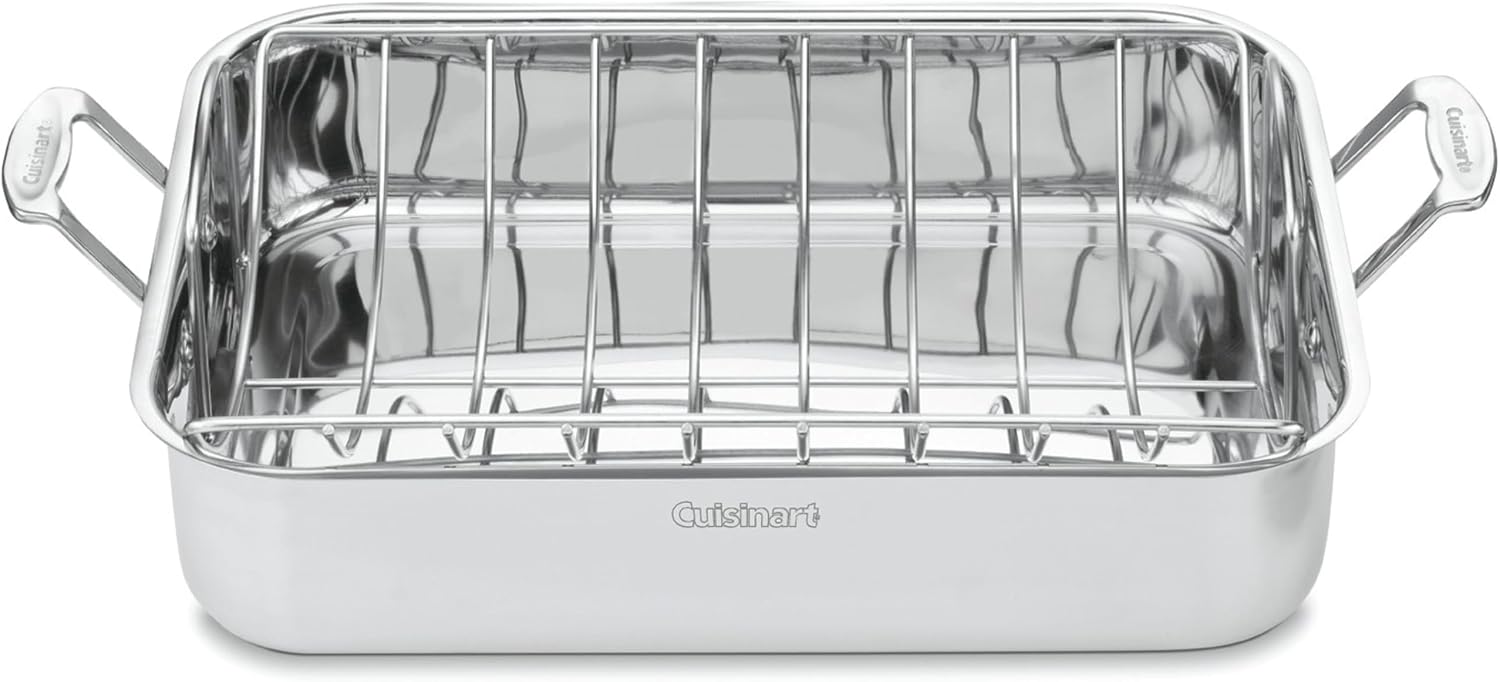
- Cuisinart 16-Inch Roasting Pan with Rack $79.95 at Amazon, Check price on Amazon →
- All-Clad Specialty Stainless Roaster with Nonstick Rack $149.95 at Amazon, Check price on Amazon →
A disposable foil pan is enough if you roast one turkey a year, set it on a rimmed sheet pan for support, and make gravy in a saucepan. Buy a real roasting pan with a rack, like the Cuisinart 16-Inch Roasting Pan with Rack, if you roast more than once a year, want pan gravy on the stovetop, or are lifting a bird over 16 pounds.
That is the whole decision. The rest of this page explains where the line sits, what each option does badly, and what to carve on once the bird comes out. Thanksgiving 2026 falls on Thursday, November 26, so you still have time to order a pan if you need one.
If you have already decided you want a roasting pan and need to choose a model, the full comparison of sizes, materials and handles is in our Best Roasting Pans for 2026 guide. For everything else the day needs, from the thermometer to the potato ricer, work through the Thanksgiving Kitchen Gear Checklist.
Roasting pan vs foil pan at a glance
Every row below is a fact you can check on the maker's listing or the product page. The foil column describes a typical heavy-duty disposable turkey roaster, the oval or rectangular kind sold in grocery stores in November.
|
| Disposable foil pan | Stainless roasting pan with rack | |
|---|---|---|
| Largest bird | Varies by pan; read the label, and assume it needs a sheet pan underneath at any size | The All-Clad 16 x 13-inch roaster is listed for up to a 25-lb turkey |
| Rack included | No | Yes, on both picks below |
| Stovetop use | No | Yes; the Cuisinart is sold as induction compatible, the All-Clad works on every cooktop except induction |
| Rigidity when full | Flexes when lifted by its rims | Rigid, with riveted handles |
| Reuse | Usually one roast | Decades with basic care |
| Price tier | A few dollars per pan | Mid-range (Cuisinart) to premium (All-Clad) |
| Storage | Recycle it or stack it flat | Needs a cabinet roughly 21 x 13 inches with handles |
The table makes the trade obvious. Foil wins on cost and storage, and it loses on the two things that matter when the oven door opens: lifting the bird safely, and turning the drippings into gravy in the same vessel.
Other gear this guide links
Prices are shown only when checked in the last 24 hours; otherwise check the current price on Amazon.

When a foil pan is enough
Foil is a reasonable choice when three things are true at once.
You roast one bird a year. A roasting pan that lives in a cabinet for 364 days is a poor use of space if Thanksgiving is the only time it comes out. If the rest of your year runs on sheet-pan dinners and skillet chicken, you will not miss it.
You put a rimmed sheet pan under it. This is the non-negotiable part. A foil pan holding a 14-pound turkey plus a cup or two of hot fat bends in the middle when you grab it by the rims, and a buckle is how a turkey ends up on the oven door. Set the foil pan on a half-sheet pan (18 x 13 inches) before the bird goes in, and lift the sheet pan, never the foil. Check that the foil roaster's footprint actually fits on your sheet pan before Thursday; many oval roasters overhang a half sheet. If you need a sturdy sheet pan, look in bakeware.
You make gravy somewhere else. You cannot put foil on a burner. Instead, pour the drippings into a saucepan or fat separator, add a splash of stock or water to the empty foil pan, scrape the browned bits loose with a silicone spatula, and pour that into the saucepan too. It is one more pot to wash, and it works.
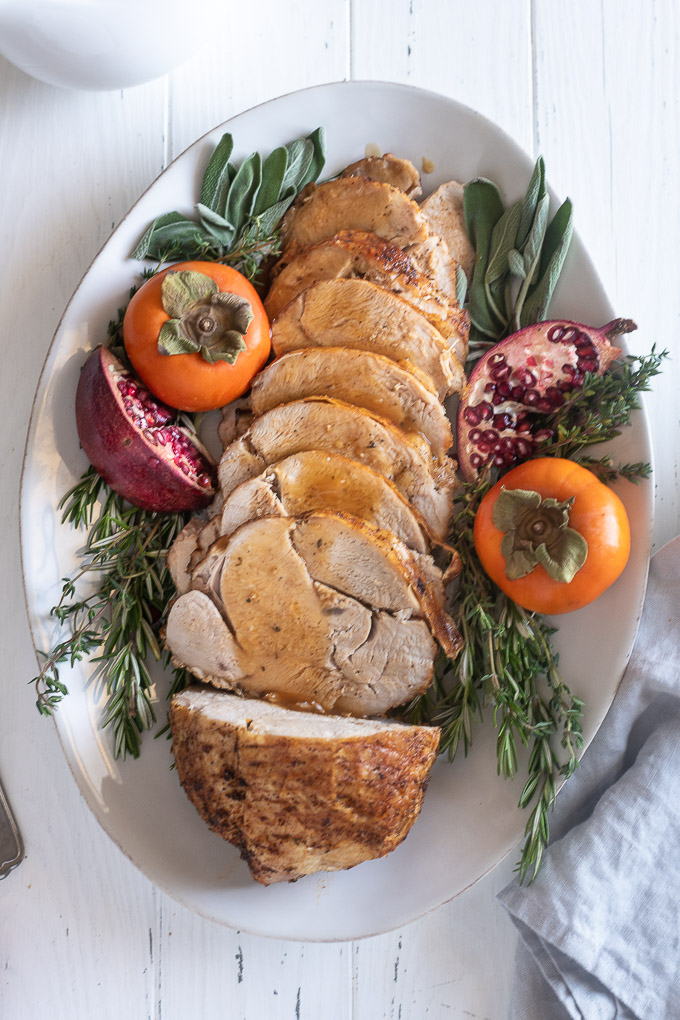
A bed of thick-cut onions, carrots and celery under the bird stands in for a rack. It keeps the skin off the pan floor and flavors the drippings. The Oven-Roasted Turkey with Herb-Butter and Classic Stuffing and the Oven-Roasted Turkey with Sage and Citrus Butter both work this way in foil, as long as the sheet pan is underneath.
The counter-case: heavy birds
Above roughly 16 pounds, foil gets risky even with a sheet pan. The weight of the bird and the volume of liquid both rise, and you are lifting 20-plus pounds out of a 325°F oven at an awkward reach. A rigid pan with upright handles you can grip in thick oven mitts is a safety feature at that size, not a luxury. If you are feeding 14 or more people from one bird, buy the pan.
When a roasting pan earns its cabinet space
A real roasting pan does four things foil cannot.
It makes gravy on the stovetop. When a turkey roasts, its juices drip into the pan and brown into a sticky layer on the bottom. That layer is the fond, and it holds most of the flavor in your gravy. Deglazing means pouring a liquid (stock, wine or water) into the hot pan and scraping the fond loose so it dissolves into the liquid (Wikipedia: Deglazing). In a stainless roasting pan you do this right on the burners. Set the pan across two burners on medium-low, add warm stock, scrape, whisk in a flour slurry, and simmer. The Pan-Roasted Turkey Breast with Herb-Infused Gravy is built around exactly this step.
It comes with a rack. USDA's Food Safety and Inspection Service tells home cooks to place the turkey "on a rack in a shallow roasting pan" and to set the oven no lower than 325°F (USDA FSIS: Let's Talk Turkey Roasting). The rack lifts the bird out of its drippings so hot air reaches the underside, and the bottom skin browns instead of stewing.
It has handles you can trust. Both picks below have riveted stainless handles. Rigid sides mean the pan does not shift its load when you lift, which is the moment foil fails.
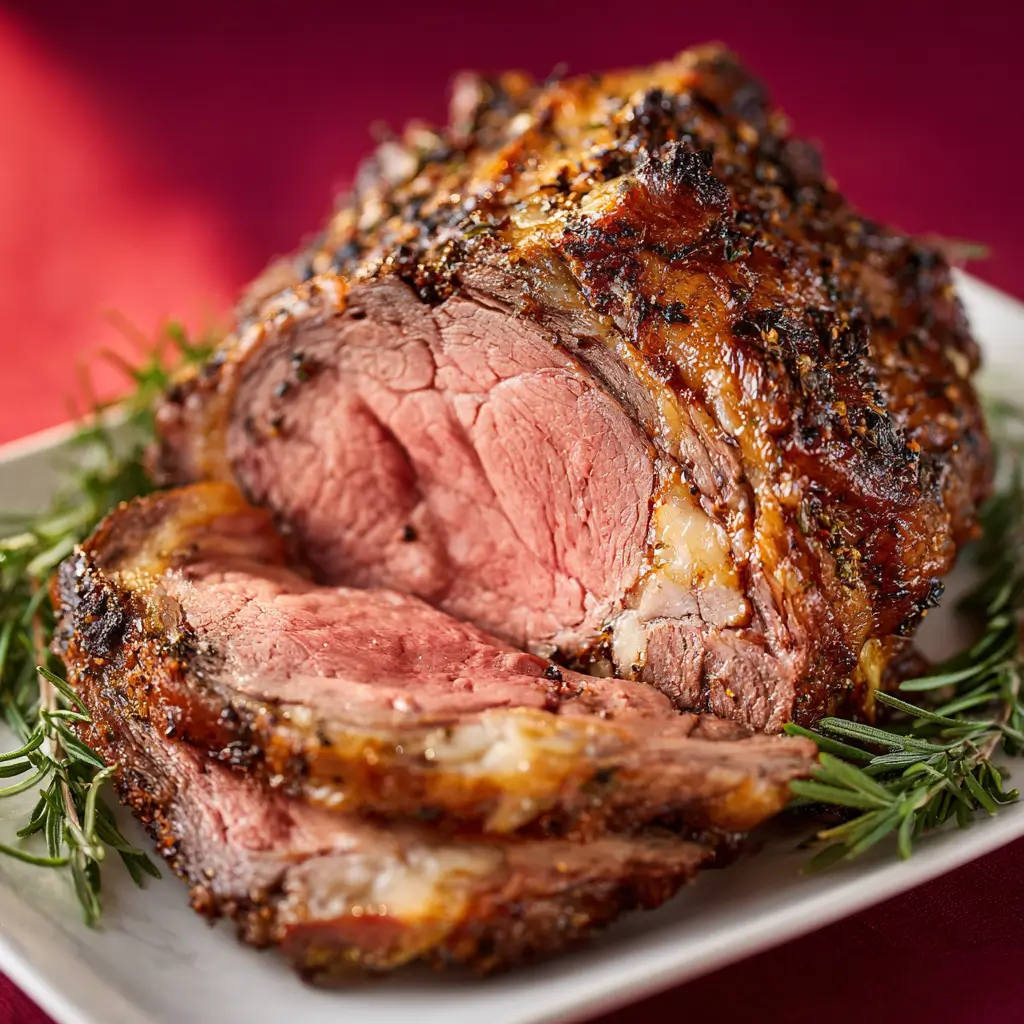
It works the other 51 weeks. A roasting pan is the right vessel for a Slow-Roasted Prime Rib with Rosemary and Garlic in December, a Herb-Crusted Roast Chicken with Garlic Mashed Potatoes on a Sunday, or a tray of root vegetables under a pork loin. If you cook any of those more than a couple of times a year, the pan pays for its shelf space.
The two roasting picks
Both pans come straight from the shortlist in our roasting pan guide. There are no new products here. For other shapes and materials, browse cookware.
#1: Cuisinart 16-Inch Roasting Pan with Rack
Verdict: The roasting pan most households should buy. Stainless, rack included, and sized for a standard 30-inch oven.
The Cuisinart 16-inch roaster (model 7117-16UR) is the parent guide's #1. Cuisinart lists the pan at 16.8 x 12.8 inches and 3.4 inches deep, and 21.1 inches long with the handles and rack. That shallow depth matters: lower sides let oven air reach the thighs, which is why USDA specifies a shallow pan. It ships with a stainless rack, is listed as dishwasher safe and induction compatible, and carries a lifetime warranty.
The trade-off is gauge. It is lighter than the All-Clad, so on a strong gas burner keep it moving while you deglaze rather than parking one spot over the flame.
Check price on the Cuisinart 16-inch
#2: All-Clad Specialty Stainless Roaster with Nonstick Rack
Verdict: The buy-once pan. Heavier stainless, a V-shaped rack, and the highest heat rating of the two.
The All-Clad Specialty Stainless Roaster measures 16 x 13 x 5 inches and is listed for birds up to 25 pounds. All-Clad rates the pan (model E752C264) oven and broiler safe to 600°F and says it works on any stovetop except induction (All-Clad roaster product page). The nonstick V-rack carries a lower limit of 375°F, so keep a high-heat start at or below that, or take the rack out for any broiler finish. Upright handles stay easy to grab in oven mitts.
The 5-inch sides are taller than the Cuisinart's. That shields the lower thighs a little more, so give the bird a few extra minutes and check the thigh temperature rather than the breast.
Check price on the All-Clad roaster
Which of the two?
|
| Cuisinart 16-inch | All-Clad Specialty | |
|---|---|---|
| Pan size | 16.8 x 12.8 x 3.4 in | 16 x 13 x 5 in |
| Rack | Stainless, included | Nonstick V-rack, included (rated to 375°F) |
| Maker heat rating | Oven safe | Oven and broiler safe to 600°F |
| Stovetop | Yes, induction compatible | Yes, except induction |
| Dishwasher | Listed as dishwasher safe | Listed as dishwasher safe |
| Price tier | Mid-range | Premium |
| Best for | Most households, a 30-inch oven | Cooks who roast monthly and want a heavier pan |
What to carve on
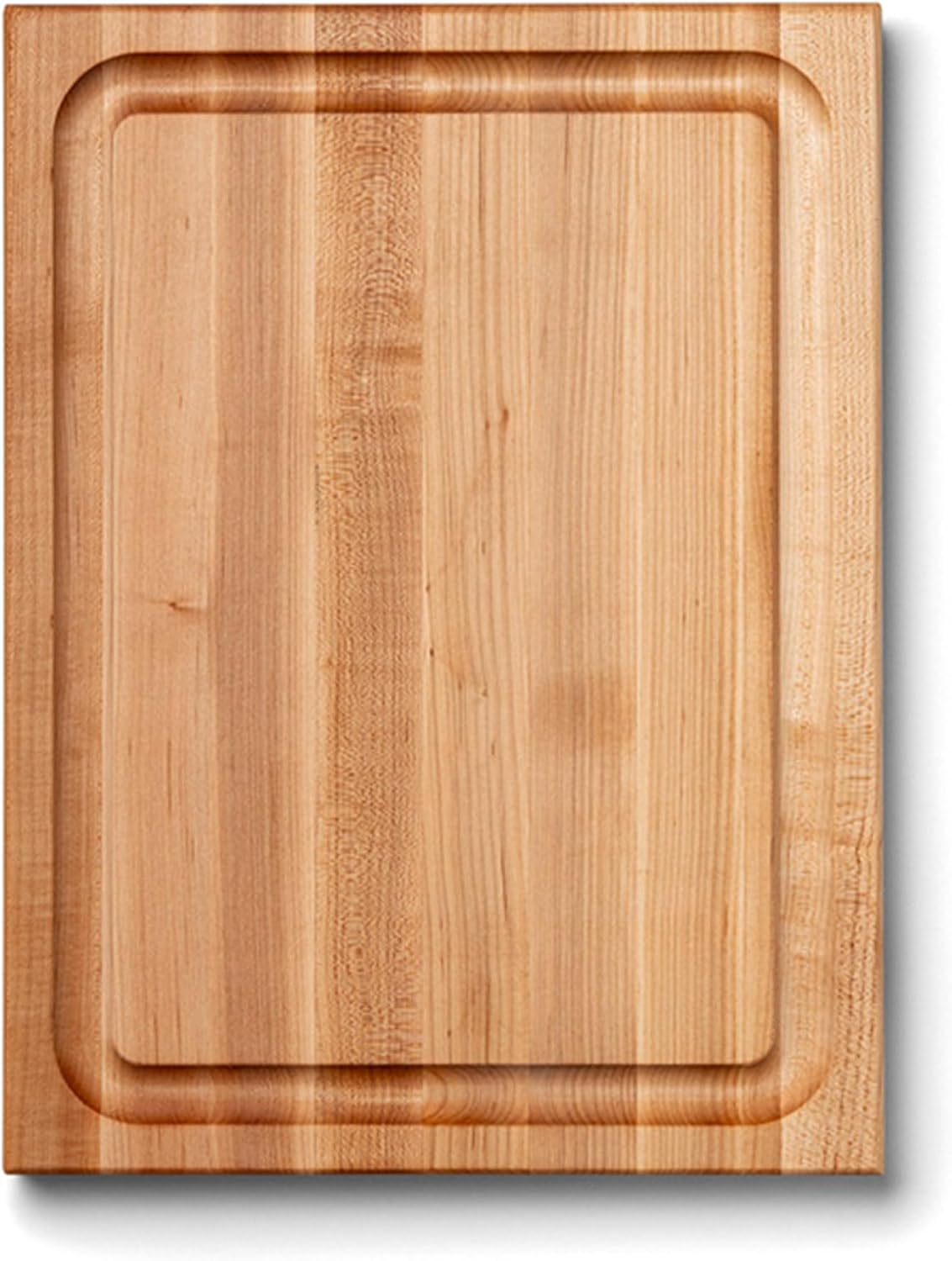
The rested turkey keeps releasing juice the moment the knife goes in. On a flat board that juice runs off the edge, across the counter and down the cabinet fronts. A board with a juice groove, a channel routed around the edge, holds it so you can spoon it into the gravy. Size matters too: a whole turkey plus the pieces you have carved needs a board of at least 18 inches long.
Both boards below come from our Best Cutting Boards in 2026 guide. For knives and more boards, browse knives and cutting.
John Boos CB Series Maple Board, 20 x 15 inches (Best Overall)
The John Boos CB maple board is 20 x 15 inches and 1.5 inches thick, edge-grain hard maple, with a juice groove on one side and a flat face on the other. That makes it reversible. You carve on the grooved side, then flip it for everyday prep. Recessed finger grips make it easier to move with a bird on it. It is hand-wash only. Oil it with food-grade mineral oil, and a board like this lasts decades.
Check price on the John Boos board
Greener Chef Bamboo 3-Piece Set (Best for Beginners)
The Greener Chef bamboo set includes three boards: 18 x 12.5, 14.5 x 11.5 and 12 x 9 inches. All three have juice grooves. The 18-inch board handles a 12- to 14-pound turkey. The smaller two cover herbs and the cranberry garnish. Bamboo is hard on the Janka scale, so a fine Japanese edge dulls a little faster on it than on maple. A German carving knife will not notice. It is hand-wash only and carries a lifetime warranty.
Check price on the Greener Chef set
A tip for either board: put a damp kitchen towel or a silicone mat underneath before you start. A 20-pound bird on a board that slides is how knife accidents happen. For the knife itself, see our best carving knives guide. A 9- to 10-inch slicing blade makes long, clean cuts through the breast that a chef's knife saws through in short strokes.
Doneness: the number that matters
The pan does not decide when the turkey is done. The thermometer does. USDA's safe minimum internal temperature for all poultry, whole or ground, is 165°F (USDA FSIS Safe Minimum Internal Temperature Chart). FSIS says to check the innermost part of the thigh and wing and the thickest part of the breast, then let the bird stand for 20 minutes before carving so the juices set and the meat carves more easily.
FSIS's approximate roasting times at 325°F for an unstuffed bird:
| Turkey weight (unstuffed) | Approximate time at 325°F |
|---|---|
| 8–12 lb | 2¾–3 hr |
| 12–14 lb | 3–3¾ hr |
| 14–18 lb | 3¾–4¼ hr |
| 18–20 lb | 4¼–4½ hr |
| 20–24 lb | 4½–5 hr |
These are starting points, not finish lines. Pan choice shifts them a little, because a taller-sided pan shields the thighs from oven air. Rely on the probe, not the clock. A leave-in probe lets you watch the thigh temperature climb without opening the oven door, and every opening costs heat. Our best leave-in probe thermometers guide covers wired and wireless options. Use an instant-read thermometer from the best instant-read thermometers guide to double-check the breast and wing before you pull the bird.
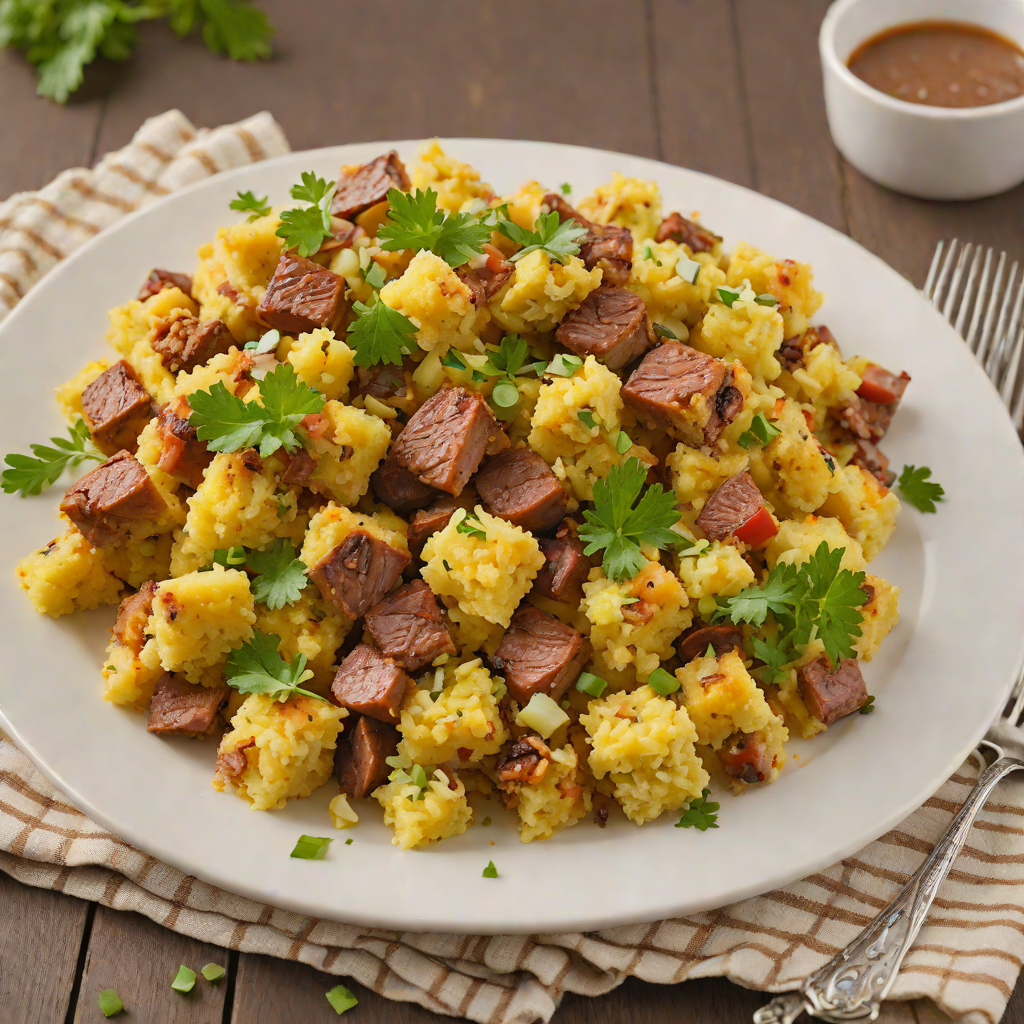
FSIS also recommends cooking stuffing in a separate dish rather than in the bird. A casserole of Midwestern Cornbread and Sausage Stuffing still needs to reach 165°F, but it gets there without overcooking the breast while you wait for the center of the cavity.
Three kitchens, three answers
A couple hosting six, first Thanksgiving, small apartment. Buy a 12- to 14-pound turkey and a foil roaster that fits on the half-sheet pan you already own. Make gravy in a saucepan. Spend the saved money and cabinet space on a good probe thermometer. Or skip the whole bird and roast two bone-in breasts in a 9 x 13 baking dish, as in this Herb-Roasted Turkey Breast with Garlic and Lemon.
A family of ten that hosts every year and roasts chickens monthly. Buy the Cuisinart. A 16- to 18-pound bird fits with room for air, gravy happens on the stovetop, and the pan earns its keep in March roasting chickens and potatoes.
The cook doing a 22-pound bird for sixteen. Buy the All-Clad and confirm the handles clear your oven walls before Thursday. At that weight you want the heaviest pan and the most secure handles you can get. Pair it with the John Boos board, because 22 pounds of turkey needs the full 20 x 15 inches to carve on. A Roasted Herb-Crusted Turkey with Citrus Glaze scales well to a bird this size.
Common pitfalls
Lifting a foil pan by its rims. It bends, and hot fat goes everywhere. Always lift the sheet pan underneath.
Putting foil on a burner. It can split or scorch the drippings. Deglaze foil by scraping the fond into a saucepan instead.
Buying a pan that does not fit the oven. Measure the width between your oven's rack supports, then compare it with the pan's length including the handles. The Cuisinart is 21.1 inches with handles. Some larger roasters run wider than a 30-inch range can take.
Skipping the rack, or the vegetables standing in for it. The bottom of the bird sits in its own fat and turns pale and soggy.
Trusting a pop-up timer. Check 165°F in the thigh, breast and wing with a real thermometer, as FSIS directs.
Carving on a board without a groove. The juice you wanted for gravy ends up on the floor.
When NOT to buy a roasting pan
If you cook for four or fewer, or you are willing to spatchcock (cut out the backbone and flatten the bird), skip the roasting pan entirely. A flattened 12-pound turkey on a wire rack set in a rimmed sheet pan cooks faster and more evenly than an upright bird in any roaster, and the sheet pan stores flat. Likewise, if you are roasting only a turkey breast, a 9 x 13 baking dish is the right size and a 16-inch roaster is too big. Buy a dedicated roasting pan when you regularly cook whole birds or big roasts and want stovetop gravy in one pan.
How we picked
We did not run roasting or drip tests for this article. Every pick comes from shortlists in two existing AislePrompt guides: the roasting pan guide (its #1 and #2) and the cutting boards guide (its Best Overall and Best for Beginners). Dimensions, heat ratings, rack details and care instructions come from the makers' listings and product pages. Doneness temperatures, rack guidance and roasting times come from USDA FSIS. The foil-pan advice describes how thin disposable aluminum behaves under load. Read your foil roaster's label for its stated capacity. Prices change daily, so we describe tiers here and leave the current figure to the live price button.
Sources
- USDA FSIS: Let's Talk Turkey Roasting
- USDA FSIS: Safe Minimum Internal Temperature Chart
- All-Clad: Specialty Stainless Steel Large Roaster with Rack, 13 x 16 inch
- Wikipedia: Deglazing (cooking)
- Wikipedia: Roasting pan
Frequently asked questions
Can a disposable foil pan hold a 20-pound turkey?
Can I make gravy in a foil roasting pan?
Do I need a rack in my roasting pan?
What temperature should turkey reach before carving?
Why does a carving board need a juice groove?
Recipes to try with your bakeware
Put your gear to work — save any recipe to My Recipes (no account needed) and send its ingredients to Instacart in one tap.
Shop bakeware on AislePrompt →Browse the full kitchen shop →