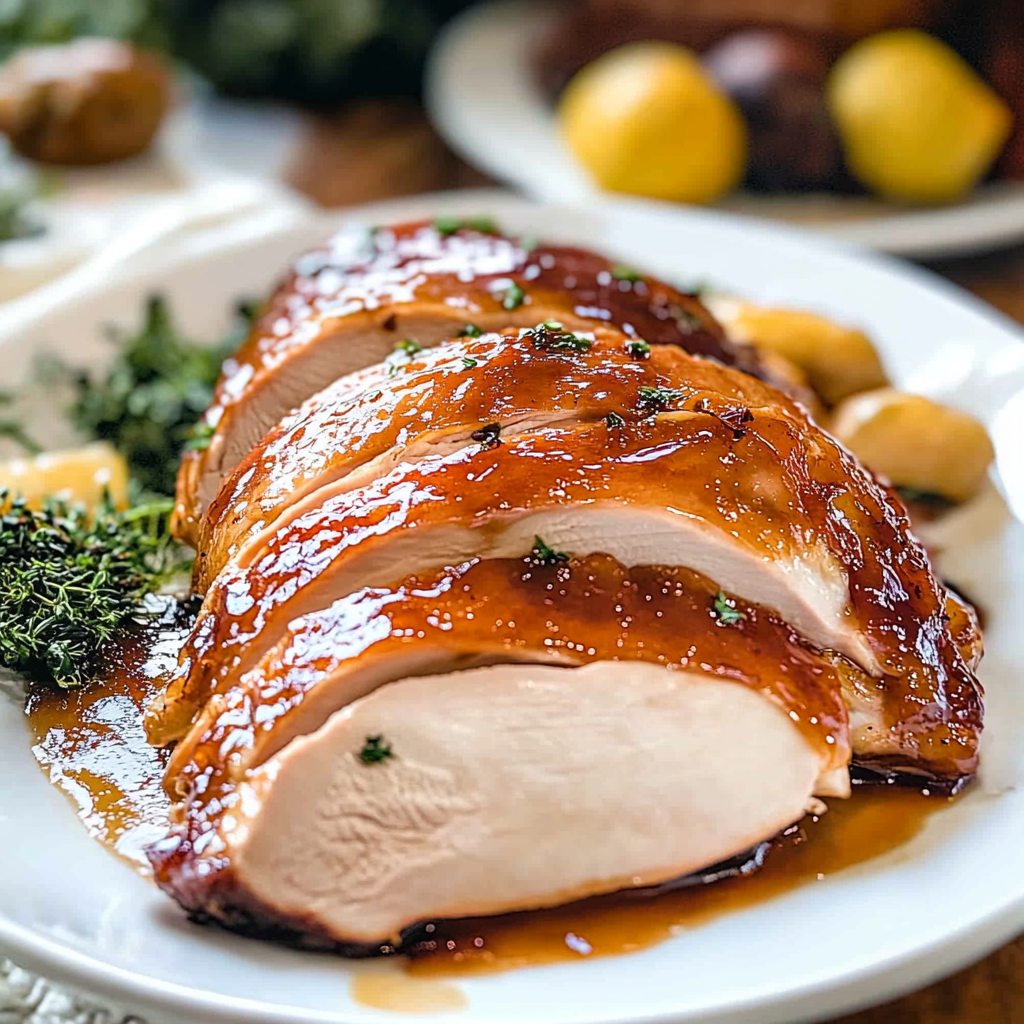
Thanksgiving Kitchen Gear Checklist: The Tools for Turkey, Sides and Pie
The five jobs every Thanksgiving host has to cover, the one tool for each, and the timing that keeps the turkey safe and the sides hot.
Affiliate disclosure: AislePrompt may earn a commission on qualifying purchases made through Amazon and Instacart links in this article, at no additional cost to you. See our affiliate policy →
To host Thanksgiving you need one tool for each of five jobs. A roasting pan with a rack holds the bird. An instant-read thermometer confirms 165°F in the thickest part of the thigh, the wing and the breast, as USDA's turkey roasting guide directs. A carving knife slices it. A 9-inch pie dish holds dessert, and a large stockpot or saucepan handles potatoes and gravy. Of the five, the thermometer is the one hosts most often don't have.
Everything else on a Thanksgiving gear list either makes one of those five jobs easier or is a nice-to-have. This checklist, current as of the 2026 season, gives you the minimum kit for each job and the mistakes that trip up first-time hosts. Each section links to the guide that picks the specific tool. It closes with a curated Thanksgiving menu you can turn into one shopping list.
Your Thanksgiving gear checklist at a glance
Start here if you only have five minutes. One row per job, one tool per row, and the guide that compares your options.
| Job | The one tool | Why it matters | Guide that picks it |
|---|---|---|---|
| Thaw and roast | Roasting pan with a rack and handles | Lifts the bird off its drippings, holds the weight without flexing, and keeps juices in one place for gravy | Best roasting pans |
| Check doneness | Instant-read thermometer | The only reliable way to confirm 165°F in the thigh, wing and breast | Best instant-read thermometers |
| Rest and carve | Carving knife, fork and grooved board | Clean slices without shredding the breast or flooding the counter | Best carving knives |
| Sides | Large stockpot plus a 2–3 qt saucepan | Potatoes need room to boil; gravy and cranberry sauce need a heavy base | Cookware |
| Pie | 9-inch pie dish and a rolling pin | The standard size nearly every pie recipe is written for | Best bakeware |
| Drinks | Pitcher, jigger and shaker | One batch cocktail and one mocktail cover the whole table | Thanksgiving cocktails |
If you already own everything in the "one tool" column, you can host. The rest of this guide covers sizing, timing and the backup tools that make the day calmer.
Roast the bird: a pan that fits the turkey and the oven
The roasting pan does three jobs at once. It carries a heavy, hot, sloshing bird in and out of the oven. The rack lifts the turkey so hot air reaches the underside instead of steaming it in its own juices. And it collects the drippings that become your gravy. A rimmed sheet pan can manage a turkey breast, but a whole bird puts out more fat and liquid than a shallow rim holds, and thin sheet metal can twist under the load.
What to look for:
- Upright handles, big enough for oven mitts. You will lift this pan with a 15-plus-pound bird in it. Riveted handles that stick up beat fold-down wires you have to fish for.
- A rack that sits firmly. A V-rack cradles the bird; a flat rack is more versatile for roasts the rest of the year. Either works if it doesn't slide.
- Stovetop-safe material. If the pan can go over a burner, you can make gravy right in it. You lose fewer browned bits that way, and you dirty one less pot.
- Size for the bird you actually buy. The pan should leave an inch or two of clearance on each side of the turkey. Too large and the drippings spread thin and scorch. Too small and the bird hangs over the edge.
Our roasting pan guide compares sizes, racks and materials if you need to buy one.
Plan the thaw before you plan the menu
A frozen turkey is the longest lead-time item on the whole list. USDA's safe-thawing guidance says to allow about 24 hours in the refrigerator for every 4 to 5 pounds. A 20-pound bird therefore needs four to five days in the fridge. Count back from Thursday and write the day on the calendar. Thaw the turkey on a tray, or right in the roasting pan, on the bottom shelf so it can't drip onto anything below. If you run out of time, USDA also describes a cold-water method. It needs more hands-on attention because you change the water regularly and cook the bird as soon as it's thawed.
The common mistake: buying the bird before measuring
The most avoidable Thanksgiving problem is a turkey that doesn't fit. Before you order a bird, measure the inside of your oven with the racks where you'll use them, and measure your roasting pan. A big turkey on a rack in a tall pan can run into the top element or the oven ceiling. Drop the oven rack to its lowest position and check the height with the empty pan and rack in place. If the numbers are tight, buy two smaller birds, or a whole turkey plus a breast. Two smaller birds also cook faster.
Check doneness: the instant-read thermometer comes first
If you buy one tool this year, buy this one. Pop-up timers and cooking times per pound are both estimates. Ovens run hot or cold, birds differ in shape, and a stuffed turkey cooks differently from an empty one. The USDA safe minimum internal temperature chart lists 165°F for all poultry. USDA's turkey guide says to check it in three places: the thickest part of the thigh, the wing and the thickest part of the breast. If any one reads low, the bird goes back in.
How to take the reading well:
1. Probe from the side, into the center of the thickest part. Don't let the tip touch bone, because bone conducts heat and reads high.
2. Check all three spots, every time. The breast usually finishes before the thighs. That's why a single reading can fool you.
3. Start checking early. Take your first reading well before the recipe's end time, then every 15 to 20 minutes. You can't un-overcook a breast.
4. If you stuff the bird, check the stuffing too. USDA says stuffing cooked inside the turkey must also reach 165°F at its center. Many hosts bake it in a separate dish to take that variable off the table.
Our instant-read thermometer guide compares read speed, display and probe design. It's the single most-used tool in this checklist, and you'll use it all year on chicken, pork and steak.
The hands-off option: a leave-in probe
If you're also juggling four sides, a leave-in probe thermometer saves you from opening the oven again and again. You insert the probe into the thickest part of the breast or thigh before roasting. A cable or wireless link runs to a display outside the oven, and an alarm sounds at your target. You still confirm the final temperature in all three USDA spots with an instant-read before the bird comes out. The probe tells you when to check, so you don't keep losing oven heat. See our leave-in probe thermometer guide for wired versus wireless trade-offs.
Rest and carve: the 20 minutes that make or break the platter
USDA recommends letting the turkey stand for about 20 minutes after it leaves the oven. The juices settle into the meat, the bird firms up, and carving gets far easier. That window is also when everything else happens. You make gravy from the pan drippings, reheat the sides, and move the pie into the warm oven.
The carving kit:
- A long, narrow carving knife. A blade of roughly 8 to 10 inches slices across a whole breast in long strokes without sawing. A chef's knife works in a pinch, but its wider blade drags through soft breast meat.
- A carving fork to steady the bird without squeezing out the juices.
- A large board with a juice groove. A resting turkey keeps releasing liquid, and a flat board sends it off the edge and onto the counter. The groove catches it for the gravy.
Hone or sharpen the knife before guests arrive, not while they watch. Our carving knife guide covers blade length, edge style and boards, and the knives category has the full range if you also want a new chef's or paring knife.
Carving order that works: take off the legs and thighs first, then the wings. Next, cut each breast half off the bone in one piece and slice it crosswise on the board. Breast slices cut across the grain stay juicier than slices shaved off the frame.
Sides: one big pot, one heavy saucepan, two sheet pans
Sides are where Thanksgiving's oven and stovetop traffic jam happens. You don't need a lot of special cookware, but you need the right sizes.
- A large stockpot (8 quarts or bigger) for mashed potatoes. Potatoes need room to tumble in plenty of water, and you can mash right in the pot. The same pot handles turkey stock from the carcass on Friday.
- A heavy 2- to 3-quart saucepan for gravy and cranberry sauce. A thick base keeps a flour-thickened gravy from scorching while you whisk, and cranberries spatter less in a deeper pan.
- Two rimmed sheet pans for roasted vegetables. Crowded Brussels sprouts steam instead of browning, so split them across two pans.
- A 9x13 casserole dish for green bean casserole or a separate pan of stuffing.
- A potato masher or ricer, a flat whisk and a big serving spoon. Browse the utensils and tools category for these, and the cookware category for pots and pans.
Small helpers in the kitchen gadgets category also earn their place this one day a year: a fat separator for gravy, a baster, and kitchen twine for trussing.
Make-ahead lowers the stakes
Plan your sides around one rule: the oven belongs to the turkey until it comes out to rest. Cranberry sauce keeps for days in the fridge. Make it on Monday or Tuesday. Mashed potatoes hold well over low heat or in a slow cooker. The green bean casserole and the stuffing can be assembled the day before and baked during the turkey's rest, while the oven is free.
Pie: a 9-inch dish, a rolling pin and a cooling rack
Nearly every pie recipe, from pumpkin to apple to pecan, is written for a standard 9-inch pie dish. A deep-dish version holds more filling, which changes the baking time, so use whichever size your recipe specifies. Glass lets you see whether the bottom crust has browned. Ceramic holds heat evenly and goes from oven to table. Metal browns fastest.
Round out the pie kit with:
- A rolling pin and a bench scraper if you make your own crust.
- A wire cooling rack. Pumpkin and custard pies set as they cool, and a rack keeps the bottom crust from going soggy.
- Pie weights or dried beans for blind-baking a crust before you add a wet filling.
Pies are the best make-ahead dessert on the menu. Bake them the day before so Thanksgiving morning is all about the bird. Our bakeware guide covers pie dishes, sheet pans and casserole dishes in one place. The bakeware category lists everything if you're filling gaps.
Drinks: one batch cocktail, one mocktail, three tools
Hosts who mix drinks to order end up stuck behind the bar instead of at the table. Pick one batch cocktail and one non-alcoholic option. Mix both before the turkey goes in, and let guests serve themselves.
The kit is small:
- A large pitcher (2 quarts or more) for the batch drink.
- A jigger so the batch tastes the same as the test glass you mixed.
- A shaker for anything with citrus or egg white, plus a strainer.
Our Thanksgiving cocktails guide has 20 autumn drinks and mocktails built for batching. The barware category covers pitchers, jiggers and shakers.
Common Thanksgiving gear mistakes
These are the failure modes hosts run into most, along with the fix for each.
1. Trusting the pop-up timer. It fires at a fixed temperature in one spot and tells you nothing about the thighs. Use an instant-read thermometer in all three USDA locations.
2. A turkey that doesn't fit the oven or pan. Measure both before ordering, with the oven rack in its lowest position.
3. Starting the thaw too late. At 24 hours per 4 to 5 pounds, a large bird needs most of a week in the fridge.
4. One pot for everything. Gravy waits while the potatoes finish, and both go cold. A dedicated heavy saucepan for gravy fixes this.
5. A dull knife at the table. A dull blade shreds a perfectly roasted breast. Hone before guests arrive.
6. Leftovers sitting out all afternoon. USDA guidance is to refrigerate leftovers within two hours. Have shallow food-storage containers clean and ready before dinner starts.
When you don't need a full roasting setup
Not every Thanksgiving needs the whole kit. Skip the big roasting pan if:
- You're cooking for two to four. A turkey breast or a few thighs roast fine on a rack set in a rimmed sheet pan or a large oven-safe skillet. You still need the thermometer.
- You're spatchcocking. A flattened bird roasts on a sheet pan with a rack and cooks noticeably faster. The trade-off is a sturdy pair of kitchen shears and some knife work.
- Someone else is roasting the turkey. If you're bringing sides or dessert, your list shrinks to the pot, the saucepan, the casserole dish and the pie dish.
The one tool on this list that never goes away, whatever the menu size, is the thermometer.
Three hosting scenarios, three gear lists
First-time host, eight guests, one oven. Buy a roasting pan with a rack, an instant-read thermometer and a carving knife, and borrow everything else. Make the cranberry sauce and pies the day before. Roast a 12- to 14-pound bird, then bake the stuffing and green bean casserole during its 20-minute rest.
Experienced host, fourteen guests, tight on oven space. Add a leave-in probe so you can stop opening the oven door. Buy a second sheet pan and a slow cooker for mashed potatoes so the stovetop stays clear. Think about two smaller birds instead of one giant one. They fit the oven better and finish sooner.
Friendsgiving potluck. The host handles the turkey, so the host needs the pan, thermometer and carving kit. Guests bring finished sides in their own casserole dishes. The host's job is a clear counter, a cleared fridge shelf for arrivals, and the batch-cocktail pitcher.
Gifting the host
If you're a guest, the checklist above doubles as a gift list. An instant-read thermometer, a good carving set or a grooved board is something a host will reach for every year. Our kitchen gifts guide picks thoughtful options at a gift-friendly budget. If you're shopping for yourself, check our Black Friday kitchen deals guide for timing. Thanksgiving falls right before the biggest sale week of the year. Buy anything you need for Thanksgiving ahead of time, and save upgrades for the sales.
A curated Thanksgiving menu to cook with this gear
Here's a full menu from the AislePrompt catalog, matched to the tools above:
- The bird: Classic Roast Turkey with Herb-Butter and Pan Gravy is the centerpiece for the roasting pan and thermometer. For a smaller table, the Herb-Roasted Turkey Breast with Classic Sage Stuffing works on a sheet pan.
- Potatoes and gravy: Classic Creamy Garlic Mashed Potatoes for the stockpot, or Browned Butter Mashed Potatoes with Pan Gravy if you want the gravy built in.
- Stuffing: Sage and Sausage Classic Thanksgiving Stuffing, baked in its own dish during the rest.
- Green beans: Béchamel-Enriched Green Bean Casserole with Crispy Shallots for the 9x13.
- Cranberry sauce: Sweet and Tangy Cranberry Sauce with Sea Salt, made in the saucepan days ahead.
- Roasted vegetable: Maple-Bourbon Glazed Roasted Brussels Sprouts, split across two sheet pans.
- Pies: Classic Pumpkin Pie with Spiced Whipped Cream and The Best Classic Apple Pie, both baked the day before.
Browse more holiday sides and desserts in the recipe catalog.
Turn the menu into one shopping list
Add these recipes to a meal plan and AislePrompt merges every ingredient into one shopping list, grouped by aisle. Duplicates combine, so the butter for the turkey, the potatoes and the pie crust shows up as one line. Tap the green Instacart icon to send every unchecked item to a local store for delivery or pickup. Do it early in the week, while fresh cranberries and fresh turkeys are easy to find.
Keep reading
- Best roasting pans for the holiday bird
- Best instant-read thermometers
- Best leave-in probe meat thermometers for turkey and roasts
- Best carving knives for turkey, brisket and roasts
- 20 Thanksgiving cocktails and mocktails