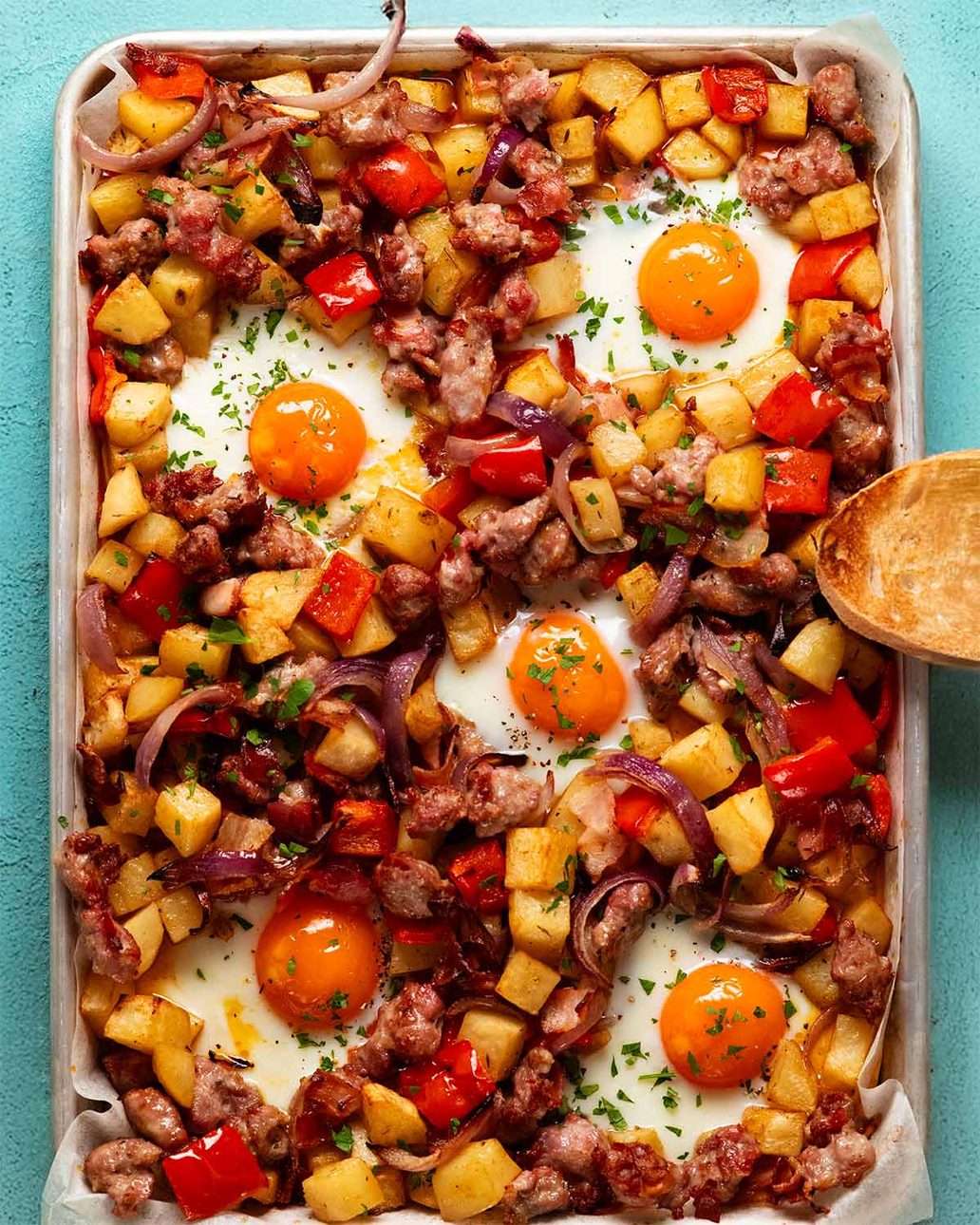
Whole30 for Beginners: 30-Day Rulebook, Family Recipes and What to Actually Buy
Thirty days of elimination is the setup — the ten-day reintroduction is the experiment. Here's the rulebook, the week-by-week playbook and the recipes that keep a family on board.
Whole30 is a 30-day elimination protocol: no grains, dairy, legumes, added sugar, alcohol or processed additives, followed by a structured 10-day reintroduction. You eat meat, seafood, eggs, vegetables, fruit, nuts and healthy fats. It is not a weight-loss diet and there is no calorie counting — the point is to find out which foods are actually affecting you.
Get a free 7-day Whole30 meal plan
Seven compliant dinners delivered Sunday — no sugar, grains, dairy or legumes, and one cart instead of thirty label checks.
No spam, unsubscribe in one click. Recipes, shopping lists and Instacart carts all work without an account either way.
Introduction — what Whole30 is (and isn't) — an elimination reset, not a diet
Whole30 gets described as a diet, and that framing causes most of the failures. It is a diagnostic. You remove the categories of food most commonly implicated in inflammation, digestive trouble, energy crashes and cravings for 30 days, then add them back one at a time and observe what happens. The 30 days is the setup; the reintroduction is the experiment.
That distinction has practical consequences:
- There is no cheat day. Not because of willpower theater, but because a single exposure resets the elimination window. If you have dairy on day 18, the useful data from days 1–18 is compromised.
- There is no calorie target, no macro target, no weighing. Eat enough. Under-eating is the single most common day-4 mistake.
- The scale stays in the closet. The official program asks you not to weigh yourself for 30 days, because weight noise masks the signals — sleep, energy, digestion, skin, joint pain — that the protocol is actually measuring.
- Thirty days is not the end. Skipping reintroduction means you did a month of restriction and collected no data.
The official Whole30 program rules are the authoritative source for what is and is not allowed, and they are more specific than most summaries — including a "no recreating baked goods" rule that trips people up.
What the evidence says. Whole30 itself has not been tested in randomized controlled trials, and nothing in the published literature supports the idea that 30 days "resets" your metabolism. Reviewing the broader family of paleo-style elimination diets, Harvard's Nutrition Source concludes that more high-quality trials running longer than a year are needed before anyone can claim a direct health benefit, and warns that omitting whole grains, dairy and legumes "could lead to suboptimal intake of important nutrients" — calcium, vitamin D, B vitamins and fiber in particular. Cleveland Clinic's dietitians raise the same objection, questioning whether it is necessary to cut foods that fit comfortably into a healthy diet, while acknowledging the real upside: 30 days of cooking whole foods and reading labels is a genuinely useful habit reset, whatever you conclude about the individual food groups. Treat it as a structured self-experiment, not a medical protocol.
If you want the fixed-menu, shopping-list version, that lives at The Complete Whole30 Meal Plan. This guide is the rulebook, the week-by-week playbook, and the reintroduction phase most people skip.
The 30-Day Rules — what's out (grains, dairy, legumes, added sugar, alcohol) and what's in
| Out for 30 days | Includes | Common hiding place |
|---|---|---|
| Added sugar | Cane sugar, honey, maple, agave, stevia, monk fruit | Bacon, sausage, broth, almond milk, dressings |
| Grains | Wheat, rice, corn, oats, quinoa, rye, barley | Breading, thickeners, "gluten-free" products |
| Legumes | Beans, lentils, chickpeas, peanuts, soy | Soy sauce, tofu, peanut butter, hummus |
| Dairy | Milk, cheese, yogurt, butter, cream | Sauces, mashes, dressings (ghee IS allowed) |
| Alcohol | All forms, including cooking wine | Marinades, deglazing, vanilla extract is exempt |
| Additives | Carrageenan, MSG, sulfites | Deli meat, canned coconut milk, dried fruit |
| Baked-good recreations | Paleo pancakes, muffins, "nice cream" | The rule people argue about most |
In: meat, poultry, seafood, eggs, all vegetables (including white potatoes), fruit, nuts and seeds (except peanuts), ghee and clarified butter, coconut aminos, olive/coconut/avocado oil, vinegars, coffee, herbs and spices, and fruit juice as a sweetener in cooking.
Three exceptions worth memorizing because they surprise people: green beans and snow/snap peas are allowed despite being legumes; ghee is allowed despite being dairy-derived (the milk solids are removed); and vanilla extract is allowed despite being alcohol-based.
The rule that causes the most arguments is the pancake rule. Whole30 prohibits "recreating" baked goods, chips or desserts from compliant ingredients — almond-flour pancakes are technically compliant on ingredients but violate the spirit rule. The reasoning: the program is trying to break the psychological pattern, not just the ingredient list. Whether you follow it strictly is your call, but it is in the official rules.
The Whole30 Pantry — ghee, coconut aminos, canned coconut milk, compliant sauces
Sugar is in almost everything processed, which makes label-reading the actual daily work of Whole30. As of 2026, these are the pantry items that make the month workable.
| Item | Why | 2026 US price | Watch for |
|---|---|---|---|
| Ghee | The butter replacement; high smoke point | $10–$16 per 13 oz | Nothing — it is simple |
| Coconut aminos | Replaces soy sauce 1:1 | $5–$8 per bottle | Slightly sweeter than soy; use less |
| Canned coconut milk | Cream replacement in soups and curries | $2–$4 per can | Guar gum OK, carrageenan is not |
| Compliant mayo | Avocado-oil based, no sugar | $8–$12 | Most supermarket mayo has sugar |
| Nutritional yeast | Savory, cheese-adjacent | $6–$9 | Some brands add synthetic folate |
| Compliant bacon | Sugar-free cure | $8–$14 per lb | Nearly all standard bacon has sugar |
| Bone broth or compliant stock | Base for everything | $4–$8 per quart | "Natural flavors" and sugar |
| Almond or cashew butter | Nut butter (peanut is out) | $9–$14 | Added sugar and palm oil |
| Date paste / apple juice concentrate | Cooking sweetness | $6–$9 | Only as an ingredient, not a sweetener |
Make your own mayo. One egg, one cup of light olive or avocado oil, a tablespoon of lemon juice, salt — immersion-blended in a jar, 45 seconds. It costs about $1.80 versus $10 for a jar of compliant mayo, and mayo is the base for ranch, chipotle sauce, aioli and tuna salad. This one skill removes most of the "everything tastes plain" problem people hit around day 12.
Read the bacon label twice. Nearly every conventional bacon is cured with sugar. Compliant brands exist (Pederson's, Applegate No Sugar) but are not stocked everywhere; check the ingredient list, not the front of the pack.
Week-by-Week Playbook — days 1–7 (hardest), 8–14 (energy shift), 15–30 (routine)
Days 1–3: the logistics shock. Nothing physiological has happened yet — you are just discovering how much of your food came from a package. Prep before day 1: hard-boil a dozen eggs, roast two sheet pans of vegetables, cook 2 lb of ground meat, make a jar of mayo. Without that, day 2 is a crisis.
Days 4–7: the hard part. This is where headaches, fatigue and irritability peak, and it is largely sugar and caffeine-timing withdrawal plus under-eating. The fix is almost always eat more fat and more food. People instinctively cut portions when they cut carbs and end up at 1,200 calories without realizing it. Add half an avocado, a handful of olives, more oil on the vegetables.
Days 8–14: the shift. Energy stabilizes, afternoon crashes stop, sleep usually improves noticeably around day 10–12. This is also when the cravings become psychological rather than physical — you will want bread specifically at 8pm on the couch, which is a habit signal, not hunger.
Days 15–21: the boredom trough. The most common failure window. Nothing is hard anymore, but nothing is interesting either. This is the week to introduce new cuisines rather than new willpower — Thai coconut soups, shawarma spice, sheet-pan fish. Cooking a genuinely new dish is a more reliable fix than doubling down.
Days 22–30: routine. By now the shopping is fast and the label-reading is automatic. Use this week to plan reintroduction — decide the order before day 31, because deciding in the moment means eating pizza on day 31 and learning nothing.
5-Day Sample Family Meal Plan (breakfast, lunch, dinner, snacks)
Built so that each dinner produces a next-day lunch. Family-scale, no separate "kid food."
| Day | Breakfast | Lunch | Dinner | Snack |
|---|---|---|---|---|
| Monday | Whole30 breakfast hash | Shrimp + avocado salad | One-pot chicken and vegetable skillet | Apple + almond butter |
| Tuesday | Eggs + roasted potatoes | Leftover chicken skillet | Thai coconut chicken soup | Olives + macadamias |
| Wednesday | Garlic-spinach sweet potato hash | Leftover soup | Spaghetti squash bolognese | Carrots + compliant ranch |
| Thursday | Eggs + avocado | Leftover bolognese | Garlic salmon + asparagus (ghee) | Coconut flakes + berries |
| Friday | Breakfast hash, second batch | Tuna salad, compliant mayo | Chicken shawarma lettuce wraps | Guacamole + cucumber |
Two cooking sessions — Sunday and Wednesday — cover all fifteen meals.
Top 10 Whole30-Compliant Recipes from the AislePrompt Catalog
A handful of these are compliant as written; the rest need one clearly-marked swap. The swaps are listed so you are not guessing at the stove.
| # | Recipe | Compliant as written? | Swap needed |
|---|---|---|---|
| 1 | Whole30 breakfast hash | Yes | — |
| 2 | Whole30 shrimp + avocado salad | Yes | — |
| 3 | Whole30 potato salad | Yes | — |
| 4 | Paleo one-pot chicken skillet | Yes | — |
| 5 | Thai coconut chicken soup | Nearly | Compliant fish sauce, no sugar |
| 6 | Spaghetti squash bolognese | Nearly | No-sugar-added tomatoes, skip cheese |
| 7 | Garlic butter salmon | No | Ghee for butter |
| 8 | Cauliflower rice stir-fry | No | Coconut aminos for soy |
| 9 | Chicken shawarma lettuce wraps | No | Coconut-cream sauce for yogurt |
| 10 | Curried chicken salad wraps | No | Compliant mayo |
The recipes:
1. Whole30 Breakfast Hash with Sausage and Veggies — the anchor breakfast. Double it Sunday and it covers three mornings.
2. Whole30 Shrimp and Avocado Salad with Citrus Vinaigrette — 15 minutes, no cooking beyond the shrimp.
3. Roasted Sesame Potato Salad with Whole30 Dressing — white potatoes are allowed, and this is the side that makes a plate feel like a meal.
4. Paleo One-Pot Chicken and Vegetable Skillet — the weeknight default, one pan, 35 minutes.
5. Coconut and Lime Thai Chicken Soup and Coconut-Lemongrass Thai Chicken Soup with Mushrooms — the day-15 boredom cure. Use a fish sauce without added sugar.
6. Spaghetti Squash Bolognese with Ground Beef and Mushrooms — the pasta-shaped dinner that keeps a family on board.
7. Half-Baked Garlic Butter Salmon with Roasted Asparagus — swap ghee for the butter and it is compliant and 20 minutes.
8. Cauliflower Rice Stir-Fry with Spicy Sesame Chicken — coconut aminos instead of soy; use about 20% less since aminos are sweeter.
9. Keto Chicken Shawarma Lettuce Wraps — swap the yogurt sauce for whipped coconut cream with lemon and garlic.
10. Chilled Curried Chicken Salad Lettuce Wraps — with homemade compliant mayo, this is the best packed lunch of the month.
More for the rotation: Sautéed Garlic-Spinach Breakfast Hash with Sweet Potatoes, Pan-Fried Chicken Thighs with Roasted Seasonal Vegetables, Sweet Potato & Salmon Bowl, Instant Pot Chicken Curry with Coconut and Spinach, Spiced Turkey Sweet Potato Chili (omit any beans), Macadamia-Crusted Chicken with Wattleseed Aioli and Garden Salad, Skillet Keto Eggroll Bowl with Ground Pork and Cabbage and Stir-Fried Keto Eggroll Bowl with Ground Pork and Cabbage (aminos for soy), Instant Pot Creamy Mushroom Chicken (coconut cream for dairy cream), Snow Tuna Sashimi Salad with Citrus Soy Dressing (aminos for soy), Hot Shot Zucchini Noodles with Pesto (pesto without parmesan), Shepherd's Pie with Garlic Mashed Cauliflower (ghee and coconut cream in the mash) and Memorial City Tex-Mex Chicken Fajita Bowls (cauliflower rice, no beans or cheese).
Eating Out on Whole30 — restaurant scripts, safe cuisines, what to skip
Restaurant food is where Whole30 breaks, and it breaks on invisible sugar and seed oils rather than on obvious bread.
The order that works nearly everywhere: a plain grilled protein, steamed or roasted vegetables, and olive oil plus lemon or vinegar on the side. Say "no sauce, no marinade, no butter — I have a dietary restriction." Ask specifically whether the protein is marinated before cooking, because that is where the sugar and soy live.
Easiest cuisines: steakhouses (the whole menu is compliant à la carte), Brazilian churrascaria, Greek and Mediterranean grills, sushi restaurants ordering sashimi, Mexican with fajita meat and guacamole and no tortilla, rice or beans.
Hardest: Chinese-American and most other American-Asian takeout (soy, cornstarch and sugar in every sauce), Italian, anything fried, breakfast diners, and salad bars where the dressing is the point.
Two things to check that people forget: eggs at brunch are frequently cooked in butter or a pancake-batter-adjacent oil blend, and restaurant "grilled chicken" is nearly always brined or marinated in something with sugar.
The Reintroduction Phase — the 10 days after Day 30 that actually deliver the results
This is the part that produces the answer, and most people skip it. The structure is one food group at a time, one day of exposure, then two to three days back on Whole30 while you observe. Symptoms often appear 24–48 hours later, which is exactly why you cannot reintroduce two groups at once.
| Day | Reintroduce | Then | Watch for |
|---|---|---|---|
| 31 | Legumes (peanuts, soy, beans) | 2 days back on Whole30 | Bloating, gas, skin |
| 34 | Non-gluten grains (rice, corn, oats) | 2 days back on Whole30 | Energy, cravings, sleep |
| 37 | Dairy | 2 days back on Whole30 | Congestion, skin, digestion |
| 40 | Gluten grains (wheat, rye, barley) | 2 days back on Whole30 | Joints, mood, fatigue, bloating |
Gluten goes last deliberately — it is the most commonly reactive category, and putting it at the end means the preceding results are not contaminated by a lingering response.
How to eat the reintroduction day. Include the group at two or three meals in the same day, in reasonably normal amounts — a slice of toast at breakfast and pasta at dinner, not a single cracker. A trivial exposure produces a null result you cannot trust.
Keep a two-line log for each day: energy and digestion, plus anything unusual. Memory is not reliable across a 10-day window, and the whole point of the month was to generate this data.
What to buy (kitchen gear that survives after Day 30 too)
Whole30 is a vegetable-and-protein cooking program, so the gear that matters is the gear that makes roasting and batch-cooking fast.
Two half-sheet pans. $25–$35 for a pair. Whole30 is fundamentally a roasted-vegetable diet, and two pans means one protein and one vegetable tray in the same oven. Rimmed aluminum, 18×13 inches. The bakeware category carries them along with the wire racks that keep bacon and chicken skin crisp.
A 12-inch cast-iron or carbon-steel skillet. $35–$60. Most of the one-pan dinners in this guide live in it, and unlike nonstick it takes the 450°F sears that make plain protein taste like something. See cookware for skillets and the heavy Dutch oven for the soups and chilis.
An immersion blender. $30–$50. This is the compliant-mayo machine and it pays for itself in the first week — mayo, ranch, chipotle sauce, and blended soups. The small appliances category also covers the electric pressure cooker that makes the Instant Pot recipes above a 20-minute proposition.
Glass containers with locking lids. $30–$45 for a set. Whole30 runs on leftovers; the plan above assumes every dinner becomes a lunch. Glass reheats without absorbing curry and coconut smells the way plastic does. The storage and containers category has both round soup sets and flat rectangular ones for salads.
All four items are useful long after day 30 — none of this is single-purpose Whole30 equipment.
Common pitfalls — six ways Whole30 goes sideways
1. Under-eating. Cutting grains, dairy and legumes removes a lot of calories. If day 5 is miserable, eat more fat before you blame the program.
2. Skipping the prep day. Whole30 without a Sunday cook is 30 days of scrambling. Two hours on day 0 is the highest-leverage time you will spend.
3. Not reading the bacon, broth and sausage labels. Sugar is in all three by default.
4. Reintroducing everything on day 31. You get a stomachache and zero information.
5. Weighing yourself. It reintroduces exactly the framing the protocol is trying to suspend, and 30-day water-weight noise tells you nothing.
6. Treating compliant treats as free. Date-and-nut bars are compliant and still a sugar habit in a different wrapper.
When NOT to do Whole30
Skip it, or do it only with clinical supervision, if you have a history of disordered eating — the rigid all-or-nothing framing and the restart-on-any-slip rule are a poor fit and can be actively harmful. Skip it if you are pregnant or breastfeeding without talking to your OB, if you have chronic kidney disease (the protein load matters), or if you are on medication that requires consistent carbohydrate intake, including most insulin regimens.
It is also the wrong tool if what you want is weight loss. There is no calorie structure, no maintenance phase, and a documented pattern of regain after day 30 for people who treated it as a diet. Use it to find out which foods affect you; use something with a maintenance plan if the goal is body composition.
Finally, if you cannot commit to the reintroduction, do not do the 30 days. The elimination without the reintroduction is a month of restriction that answers nothing.
FAQ
What exactly can't I eat on Whole30?
No added sugar of any kind (including honey, maple syrup and all artificial and natural zero-calorie sweeteners), no alcohol, no grains, no legumes, no dairy, and no carrageenan, MSG or sulfites. You also cannot recreate baked goods, chips or desserts from compliant ingredients. Exceptions that surprise people: ghee is allowed, green beans and snap peas are allowed, vanilla extract is allowed, and white potatoes are allowed.
Will I lose weight on Whole30?
Many people do, but it is not the goal and the program explicitly asks you not to weigh yourself for 30 days. Weight loss during the month is a mix of reduced water retention, lower total calorie intake from cutting processed food, and higher satiety from protein and fat. There is no maintenance phase built in, so regain after day 31 is common if you treat it as a diet rather than as an elimination experiment.
Why can't I have a cheat day?
Because the 30 days is an elimination window, not a willpower test. A single exposure to dairy or gluten can produce inflammatory or digestive effects lasting several days, which contaminates the baseline you are building. Without a clean baseline, the reintroduction phase cannot tell you whether a symptom came from the food you just added or the one you slipped on earlier. The official program asks you to restart for exactly this reason.
How do I do Whole30 when I'm cooking for a family that isn't?
Cook one compliant base meal and add the non-compliant elements at the table rather than in the pan. Roast the chicken and vegetables for everyone, then put rice, cheese, bread or beans on the table as sides for the rest of the household. Nearly every recipe in this guide works that way. It removes the two-dinner problem entirely and it is the single biggest predictor of whether people finish the month.
What happens after Day 30?
You start a structured 10-day reintroduction: one food group per day with two to three compliant days between each, in the order legumes, non-gluten grains, dairy, then gluten. Log energy, digestion, sleep and skin for each. The output is a personal list of what you tolerate well and what you do not — which is the actual deliverable of the program. Skipping this step means the 30 days produced no usable information.
Related reading
- The Complete Whole30 Meal Plan: 30+ Approved Recipes + Shopping List for 2026 — the fixed-menu companion
- 22 Whole30 Dinner Recipes for Beginners (2026 Guide)
- 22 Whole30 Breakfast Recipes That Beat Another Egg Scramble
- 25 Low Carb Dinner Recipes for Busy Weeknights (2026 Roundup)
- Freezer-Friendly Meal Prep: 20 Recipes You Can Batch-Cook and Freeze for a Month
Frequently asked questions
What's the actual point of Whole30 — is it a weight-loss diet?
Can I do Whole30 as a vegetarian or with a picky family?
What's the hardest part of the 30 days, and how do I get through it?
How much does 30 days of Whole30 cost compared to regular eating?
What kitchen equipment is genuinely worth buying before starting Whole30?
Sources
A compliant week, in one cart.
Ask our AI to plan your Whole30 week — seven dinners, one consolidated shopping list, no label roulette.
Plan my Whole30 week →