20 Mocktail Recipes: Zero-Proof Cocktails for Every Occasion
Twenty non-alcoholic drinks built like real cocktails — acid, sweetener, bitterness and aromatics, most in under five minutes.
A mocktail is a non-alcoholic drink built like a cocktail: acid, sweetener, and a bitter or aromatic base in deliberate ratio. The 20 recipes below cover citrus, herb, spice, bitter, and creamy styles, most in under five minutes with pantry ingredients. No zero-proof spirits required for 15 of them.
Get a free bar-cart shopping list
Six drinks that share a bottle list, so one cart covers the whole night. Sent before the weekend.
No spam, unsubscribe in one click. Recipes, shopping lists and Instacart carts all work without an account either way.
Introduction: The sober-curious moment and why mocktails finally taste like something
For roughly thirty years, ordering a non-alcoholic drink at a bar got you a Shirley Temple or a glass of cranberry juice. That is no longer true, and the reason is not moral — it is technical. Bartenders figured out that what your palate reads as "a cocktail" is not ethanol. It is astringency, bitterness, viscosity, and a long finish. All four can be built without alcohol.
The demand caught up too. Gallup's long-running drinking survey put the share of US adults who drink alcohol at 54% in its August 2025 read — a record low in a trend line that goes back to 1939 — with a majority now saying moderate drinking is bad for your health. Sober October, three weeks out from this writing, has grown into the second-largest zero-proof moment on the calendar after Dry January. That is not a fad curve; that is a category, and if you want the health framing rather than the drinks framing, the NIAAA's data on US drinking patterns is the primary source worth reading.
Here is what changed in the glass. A drink like the Sparkling Grapefruit and Basil Mocktail works because grapefruit brings genuine bitterness — naringin, the same compound that makes a Paloma taste like an adult drink — and basil brings volatile aromatics that hit your nose before the liquid hits your tongue. Neither needs gin. Compare that to a Fermented Spiced Honey Shrub Mocktail, where the acid is vinegar rather than citrus: sharper, rounder, and it lingers for eight or nine seconds instead of two.
We already cover the booze side thoroughly — see our 20 easy cocktail recipes and 25 fall cocktails guides. This is the other half of the bar cart.
How to build a mocktail that actually tastes complex: acid + sweet + bitter + aromatic
Every good mocktail hits four axes. Miss one and you get juice.
Acid is the backbone. Fresh citrus is the default — lime for anything tropical or herbal, lemon for anything tea-based, grapefruit when you want built-in bitterness. Vinegar shrubs are the upgrade: 1:1 fruit to sugar, macerate 48 hours, strain, add an equal volume of apple cider vinegar. A shrub gives you acid with body, which juice cannot do. The Ginger-Spiced Apple Shrub Cooler is the clearest demonstration.
Sweet is not sugar for its own sake — it is texture. Simple syrup (1:1 sugar and water, warmed until clear) adds viscosity that makes a drink coat the glass. Rich syrup (2:1) does it more aggressively and is what you want in anything served over crushed ice, because dilution is coming. Honey syrup (3:2 honey to hot water, so it pours) brings floral notes; agave brings almost none, which makes it the right pick when you don't want the sweetener to talk.
Bitter is the axis most home mocktails skip, and it is the one that separates a drink from a soda. Options that need no alcohol: strongly steeped black or green tea (tannin), hibiscus, grapefruit pith, chicory, Angostura-style bitters, or a zero-proof aperitif. Steep your tea longer than you would to drink it — four to five minutes for black, aiming for astringency, not flavor.
Aromatic is free complexity. Slap a mint sprig between your palms before it goes in the glass; you rupture the oil glands and the drink smells like mint before the first sip. Same for basil, rosemary, and lemon verbena. Citrus peel expressed over the surface — squeezed skin-side down so the oil sprays across the liquid — costs nothing and changes the drink.
| Axis | Cheapest option | Upgrade | What it fixes |
|---|---|---|---|
| Acid | Fresh lime juice | Vinegar shrub | Flat, cloying finish |
| Sweet | 1:1 simple syrup | Honey or rich syrup | Thin, watery body |
| Bitter | Over-steeped black tea | Zero-proof aperitif | "Tastes like juice" |
| Aromatic | Slapped mint sprig | Expressed citrus peel | No nose, no first impression |
| Dilution | Crushed ice | Stirred with cubes | Harsh, unintegrated edges |
A working starting ratio: 2 parts base (tea, juice, zero-proof spirit), 0.75 parts acid, 0.5 parts syrup, 2 dashes bitters, topped with 2 parts sparkling water. Adjust from there. If it tastes flabby, add acid. If it tastes sharp, add syrup. If it tastes boring, add bitterness — that is almost always the answer.
The 20-drink roundup, grouped by base: citrus-forward, herb-forward, spice-forward, bitter-forward, creamy
Citrus-forward
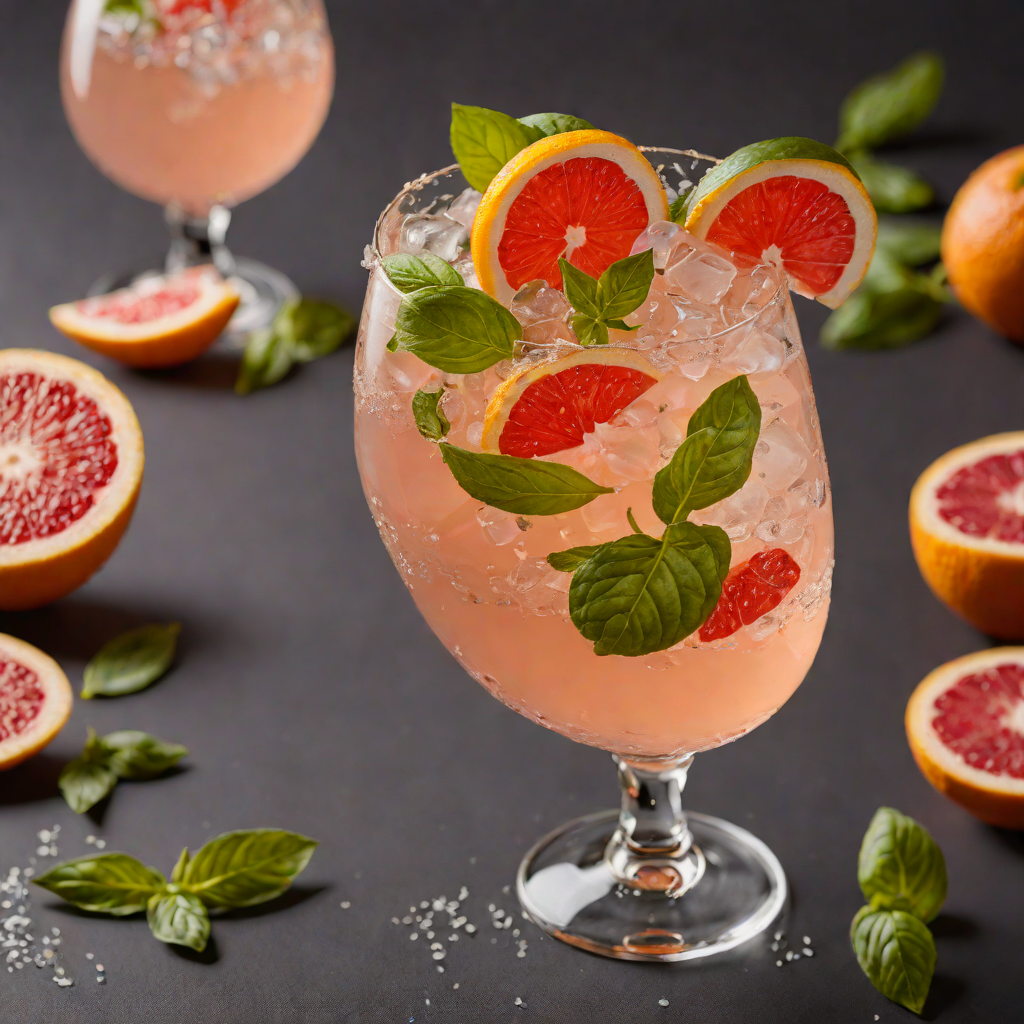
1. Sparkling Grapefruit and Basil Mocktail — The best single entry point in this list. Grapefruit's natural bitterness does the work an amaro would do, and basil gives it a savory top note. Serve in a stemmed glass over crushed ice; the pink-and-green color is the reason people photograph it.
2. Frozen Cherry Limeade Slurpee — Blended, not shaken. Tart cherry juice has enough tannin to stand up to the sugar, which is why this doesn't read as a slushie. Freeze the limeade into cubes first and blend those instead of adding water ice; you lose zero concentration.
3. Citrus-Mint Agua Fresca with Lime and Cucumber — The lowest-sugar drink here and the one most likely to disappear at an afternoon party. Cucumber contributes almost no flavor but a lot of perceived freshness and a clean, slightly vegetal finish.
4. Berry-Infused Sparkling Lemonade — Muddle the berries, don't blend them; blending releases seed tannin and turns the color muddy within an hour. Strain through a fine sieve and the drink stays jewel-clear all evening.
Herb-forward
5. Sparkling Ginger-Lime Mocktail with Mint and Cucumber — Effectively a zero-proof Mojito with a ginger backbone instead of rum. The ginger provides the heat that alcohol normally supplies, which is why this satisfies people who say mocktails taste like nothing.
6. Citrus Mint Rooftop Cooler — Built for volume: a tall glass, lots of ice, and a mint quantity that looks like a mistake until you taste it. Use twelve to fifteen leaves per drink, not three.
7. Lemonade with Mint and Cucumber — The simplest drink in the roundup and a good template. Once you can make this well, every other herb-forward mocktail is a substitution exercise.
8. Sparkling Berry-Lime Cooler with Fresh Basil — Basil and berry is an underused pair; the basil keeps blackberry or raspberry from sliding into candy territory. Add the sparkling water last and stir exactly once.
Spice-forward
9. Sparkling Ginger-Lime Mocktail — Two ingredients doing all the work. Make your own ginger syrup (equal parts sugar, water, and grated fresh ginger, steeped 20 minutes off heat) rather than buying ginger beer; the store version is typically 30g of sugar per serving and half the heat.
10. Ginger-Spiced Apple Shrub Cooler — The shrub entry, and the drink that will most convince a skeptic. Vinegar acid has a longer finish than citrus acid, so this keeps developing for several seconds after you swallow — the single most cocktail-like quality on this list.
11. Autumn Switchel with Apple Cider and Ginger — Switchel predates the cocktail entirely — vinegar, ginger, and a sweetener, popular across the American Colonies by the late 1600s and later nicknamed "haymaker's punch" for the farmhands who drank it through hay harvest. Cider vinegar, ginger, maple. Genuinely restorative, and a strong option for Sober October when you want something warming rather than crisp.
12. Berry-Ginger Sparkling Mocktail — Ginger heat against berry sweetness, with enough color to serve as the party's default. Scales well; see the batch section below.
Bitter-forward
13. Spiced Hibiscus Lemon Iced Tea — Hibiscus is the most useful bitter ingredient in a zero-proof kitchen: deep red, genuinely tart, tannic, and about $8 a pound. Steep it strong and treat it as a base spirit, not a tea.
14. Citrus-Hibiscus Sparkler with Agave — The same hibiscus base, lengthened and lightly sweetened with agave so the tartness stays forward. This is the closest thing here to a zero-proof Negroni in structure.
15. Indigo Butterfly Pea Flower Iced Tea with Citrus — Butterfly pea flower is pH-reactive: deep blue in the glass, shifting to violet and then pink as you add citrus. It is a party trick, but it is also legitimately tannic, and pouring the lemon at the table is worth doing once.
16. Ginger-Honey Kombucha Refresher with Citrus Zest — Kombucha brings acid, carbonation, and a faint funk that reads as fermentation, which is a large part of what your palate is looking for in a real drink. Note that kombucha carries trace alcohol (typically under 0.5% ABV), so it is not appropriate for strict abstinence.
Creamy
17. Cinnamon-Spiced Horchata with Toasted Rice — Toast the rice before soaking. It is a five-minute step that adds a nutty depth most horchata recipes skip, and it is the difference between "rice water" and something you'd order.
18. Teh Tarik-Inspired Creamy Milk Tea with Frothy Top — Malaysian pulled tea. You pour it between two vessels from height, repeatedly, which aerates it into a stable inch of foam. Strong black tea plus condensed milk: bitter, sweet, and rich at once.
19. Lavender Honey Matcha Latte with Almond Milk — Matcha supplies real bitterness and about 70mg of caffeine, which makes this the right choice for a zero-proof drink that still feels like an occasion at 3pm. Use culinary grade; ceremonial is wasted under honey and lavender.
20. Winter Spiced Hot Chocolate — The cold-weather anchor, and worth having in the rotation by late October. Made with real chopped chocolate rather than cocoa powder, the viscosity alone makes it feel like a nightcap.
Building a zero-proof home bar: 8 non-alcoholic bottles that punch above their weight
You do not need any of these to make 15 of the 20 drinks above. Buy them when you want the ritual — the familiar shape of a gin and tonic — rather than better flavor.
| Bottle | Category | ~Price | What it replaces | Worth it? |
|---|---|---|---|---|
| Seedlip Garden 108 | Botanical | $32 | Gin | Yes — the most versatile single bottle |
| Ghia | Bitter aperitif | $38 | Amaro / Campari | Yes — nothing else adds this bitterness |
| Lyre's Dark Cane | Spirit-mimic | $28 | Dark rum | Only for tiki-style drinks |
| Ritual Tequila Alternative | Spirit-mimic | $27 | Tequila | Skip — grapefruit does it better |
| Wilfred's Bitter Aperitif | Bitter aperitif | $30 | Aperol | If you make spritzes weekly |
| Fee Brothers bitters | Bitters (0% ABV) | $9 | Angostura | Yes — cheapest complexity available |
| Verjus (Fusion or Wölffer) | Acid | $18 | Wine acidity | Underrated; a bright, non-citrus acid |
| Fever-Tree tonic / soda | Mixer | $7 | — | Buy small bottles; big ones go flat |
Start with two: one botanical and one bitter. Seedlip Garden plus Ghia covers most of the territory, and the total spend is around $70. Bitters at $9 are the highest-leverage purchase on the entire list.
The hardware matters more than the bottles, honestly. A jigger (accurate 0.75oz pours are the whole game), a Boston shaker, a Hawthorne strainer, and a fine mesh strainer will run about $45 total from our barware category and will improve every drink here immediately. A muddler and citrus press cover the rest. If you're batching, decent airtight pitchers and bottles keep a base fresh for a full 24 hours, and a countertop soda maker or ice crusher is the one appliance that genuinely changes mocktail texture — crushed ice dilutes fast and cold, which is exactly what a low-alcohol drink needs.
Batch mocktails for parties: 3 pitcher recipes that scale to 12
The rule for every batched mocktail: hold back the bubbles. Combine the base — juice, syrup, tea, shrub, bitters, and any zero-proof spirit — in a pitcher up to 24 hours ahead and refrigerate. Top with sparkling water and ice only as guests arrive. A pre-mixed sparkling pitcher is flat within 40 minutes.
| Pitcher | Base prep-ahead | Add at serving | Scales to |
|---|---|---|---|
| Tropical Hibiscus & Pineapple Punch | 24 hours | Soda water, ice ring | 12 |
| Citrus Mint Party Punch | 12 hours (mint bruises) | Sparkling water, fresh mint | 12–14 |
| Pineapple & Spiced Ginger Punch | 24 hours | Ginger beer, crushed ice | 12 |
Tropical Hibiscus and Pineapple Non-Alcoholic Punch is the one to make if you make only one. The hibiscus keeps the pineapple from being cloying at volume, which is the failure mode of nearly every party punch. To build a whole menu around that flavor, 18 tropical recipes with mango, pineapple and coconut has the dinners and desserts that sit next to these punches.
Citrus Mint Non-Alcoholic Party Punch wants a shorter lead time — bruised mint turns grassy and slightly bitter in the wrong way after about 12 hours. Batch the citrus and syrup a day ahead, add mint the morning of.
Pineapple and Spiced Ginger Punch is the heat option, and it holds its own next to alcoholic drinks on the same table, which matters at a mixed party.
Scaling math for a 12-serving pitcher, using the ratio from the build section: 24oz base, 9oz acid, 6oz syrup, 24 dashes bitters, topped with roughly 24oz sparkling at serving. Freeze a portion of the base into an ice ring — it chills without diluting, and it is the single best trick for a punch bowl that has to survive three hours.
Garnish and glassware: why the vessel matters when there's no booze
This sounds like styling advice. It is not. Alcohol delivers weight, warmth, and a slow ethanol burn — sensory information your brain uses to classify a drink as "adult." Remove it and you have a deficit to fill. Glassware and garnish fill part of it, and the effect is measurable in whether guests take a second one.
Three rules:
Use stemware for anything served up. A Nick & Nora or coupe keeps your hand off the bowl, so the drink stays at temperature, and the narrow opening concentrates aromatics at your nose. A mocktail in a tumbler reads as juice; the same liquid in a coupe reads as a cocktail. This is not subtle.
Match your ice to your dilution budget. Crushed ice for anything citrus- or herb-forward that you want cold and diluting fast. A single large cube for anything bitter or creamy, where dilution ruins the texture. Standard freezer-tray ice is the worst of both — small enough to melt fast, cold enough to over-chill and mute flavor.
Garnish for the nose, not the camera. Expressed citrus peel, a slapped herb sprig, a dehydrated citrus wheel on the rim. Skip anything you can't smell. A cocktail umbrella adds nothing; a grapefruit peel expressed over the surface adds the entire first impression.
Serving vessel by style:
| Style | Glass | Ice | Garnish |
|---|---|---|---|
| Citrus-forward | Collins / highball | Crushed | Citrus wheel + expressed peel |
| Herb-forward | Collins | Crushed | Slapped mint or basil sprig |
| Spice-forward | Rocks | One large cube | Candied ginger, cinnamon stick |
| Bitter-forward | Nick & Nora / coupe | None (up) | Expressed grapefruit peel |
| Creamy | Mug or footed glass | None | Grated nutmeg or cinnamon |
Our dining and serving category carries the coupes and Collins glasses; a set of six coupes runs about $30 and will do more for your zero-proof drinks than any bottle you can buy.
Common pitfalls
Five failure modes, in rough order of how often they happen:
Under-acidifying. Home cooks reliably use half the citrus a bar would. A single drink wants 0.75oz — about three-quarters of a medium lime. If your mocktail tastes flat and sweet, this is why, and it is the fix nine times out of ten.
Skipping the bitter axis entirely. Juice plus soda water is not a mocktail. Add over-steeped tea, hibiscus, grapefruit, or bitters. Any of them. This is the single biggest quality gap between a home mocktail and a bar one.
Pre-mixing the sparkling element. Covered above, but it bears repeating because it ruins parties. Bubbles go in last, always.
Blending fruit instead of muddling it. Blending pulverizes seeds and pith, releasing bitter tannin and turning the drink cloudy and brown within the hour. Muddle gently — you are bruising, not pureeing — and strain.
Sweetening with plain sugar rather than syrup. Granulated sugar does not dissolve in cold liquid. You get a gritty bottom and an under-sweet drink. Make syrup; it takes four minutes and keeps a month refrigerated.
When NOT to reach for a mocktail
Honesty helps here. If you're in a recovery program that treats the ritual of a cocktail glass as a trigger, an elaborate zero-proof drink in a coupe may be exactly the wrong move — plain sparkling water with lime is a better answer, and there is no failure in that. Kombucha and traditional bitters both carry trace alcohol and are off the table for strict abstinence, pregnancy in some clinicians' guidance, and anyone taking medication with an alcohol interaction; check with your own clinician rather than a recipe site.
And if you simply want something cold and refreshing at 2pm on a Tuesday, iced tea or herb-infused lemonade is faster, cheaper, and better than a five-ingredient mocktail. The elaborate version earns its keep when you want the occasion, not just the beverage.
Real-world numbers
What these actually cost and contain, per serving, at 2026 US grocery prices:
| Drink | Cost/serving | Calories | Sugar (g) | Active time |
|---|---|---|---|---|
| Sparkling Grapefruit & Basil Mocktail | $1.40 | 95 | 18 | 3 min |
| Citrus-Mint Agua Fresca | $0.85 | 60 | 12 | 5 min |
| Ginger-Spiced Apple Shrub Cooler | $1.10 | 80 | 15 | 3 min (+48h shrub) |
| Spiced Hibiscus Lemon Iced Tea | $0.55 | 45 | 9 | 4 min (+steep) |
| Cinnamon Horchata | $0.90 | 180 | 22 | 10 min (+soak) |
| Seedlip & tonic | $3.20 | 40 | 8 | 1 min |
| Commercial mocktail at a bar | $12–16 | ~150 | ~28 | — |
The economics are the quiet argument for making these at home: a bar charges $12 to $16 for a zero-proof drink that costs about a dollar in ingredients, and a $70 two-bottle starter kit pays for itself in roughly six drinks. For more ginger technique, see our fresh ginger recipes guide; for mint, the fresh mint recipes roundup. If you're planning a party around these, our Halloween party recipes menu pairs directly with the batch pitchers above.
Ready to shop? Send any of these to your shopping list and AislePrompt groups the citrus, herbs, and mixers into one cart.
FAQ
What's the difference between a mocktail and just juice with soda water?
A real mocktail uses the same three-part balance as a cocktail — acid (citrus, vinegar shrub), sweetener (syrup, honey, agave), and a complex non-alcoholic base (tea, shrub, bitters, verjus, or a zero-proof spirit like Seedlip). Juice with seltzer is one-dimensional; a mocktail with tannic tea and a dash of Angostura hits the same complexity signals your palate reads as "cocktail."
Do I need to buy expensive zero-proof spirits to make these?
No — 15 of the 20 recipes here use only pantry ingredients (citrus, herbs, tea, sparkling water, honey, and bitters). Zero-proof spirits like Seedlip, Ritual, and Lyre's are optional upgrades that mimic gin, whiskey, or tequila for guests who want the ritual of a familiar drink. Two bottles are plenty to start — a botanical (Seedlip Garden) and a bitter (Ghia or Wilfred's Bitter Aperitif).
Are alcohol bitters actually zero-proof?
Technically no — Angostura is around 44% ABV — but a dash contains roughly 0.02 mL of alcohol, less than what's in a ripe banana. Most sober-curious drinkers include them; strict sobriety programs and pregnant drinkers usually skip them. Fee Brothers makes fully non-alcoholic bitters if you need a true zero-proof option, and the flavor difference is minor once diluted.
Can I batch these mocktails for a party?
Yes — the guide includes three pitcher recipes that scale cleanly to 12 servings. The trick is to hold back the sparkling element (soda water, tonic, prosecco) until serving so nothing goes flat. Batch the mocktail base (juice + syrup + zero-proof spirit + bitters) in a pitcher up to 24 hours ahead, refrigerate, and top with sparkling water and ice as guests arrive.
Where can I get everything for a mocktail bar in one shop?
AislePrompt's Instacart integration groups the fresh citrus, herbs, and mixers with any bottled zero-proof spirits into a single cart at /shopping-list, then routes them to the retailer with best availability in your zip code. The /k/barware category also carries the shaker, jigger, and Nick & Nora glasses that make even a Tuesday night mocktail feel like a bar order.
Sources
- Gallup — U.S. Alcohol Drinking Rates — the 54% record-low figure cited in the introduction.
- NIAAA — Alcohol Use in the United States — primary-source data on US drinking patterns and demographics.
- Bon Appétit — Best Mocktail Recipes — a well-tested editorial roundup for cross-reference.
- Switchel — history and composition — background on haymaker's punch, the ancestor of the modern vinegar cooler.
Frequently asked questions
What's the difference between a mocktail and just juice with soda water?
Do I need to buy expensive zero-proof spirits to make these?
Are alcohol bitters actually zero-proof?
Can I batch these mocktails for a party?
Where can I get everything for a mocktail bar in one shop?
Sources
Building a bar cart for tonight?
Tell our AI who is coming and what you like — it writes the shopping list and sends the cart to Instacart. No signup.
Build my drinks list →