25 Sheet Pan Dinners: One-Tray Weeknight Meals in Under 45 Minutes
One tray, one cleanup, and 20 to 35 minutes of hands-off oven time — here is the setup that separates a crisp sheet pan dinner from a soggy one.
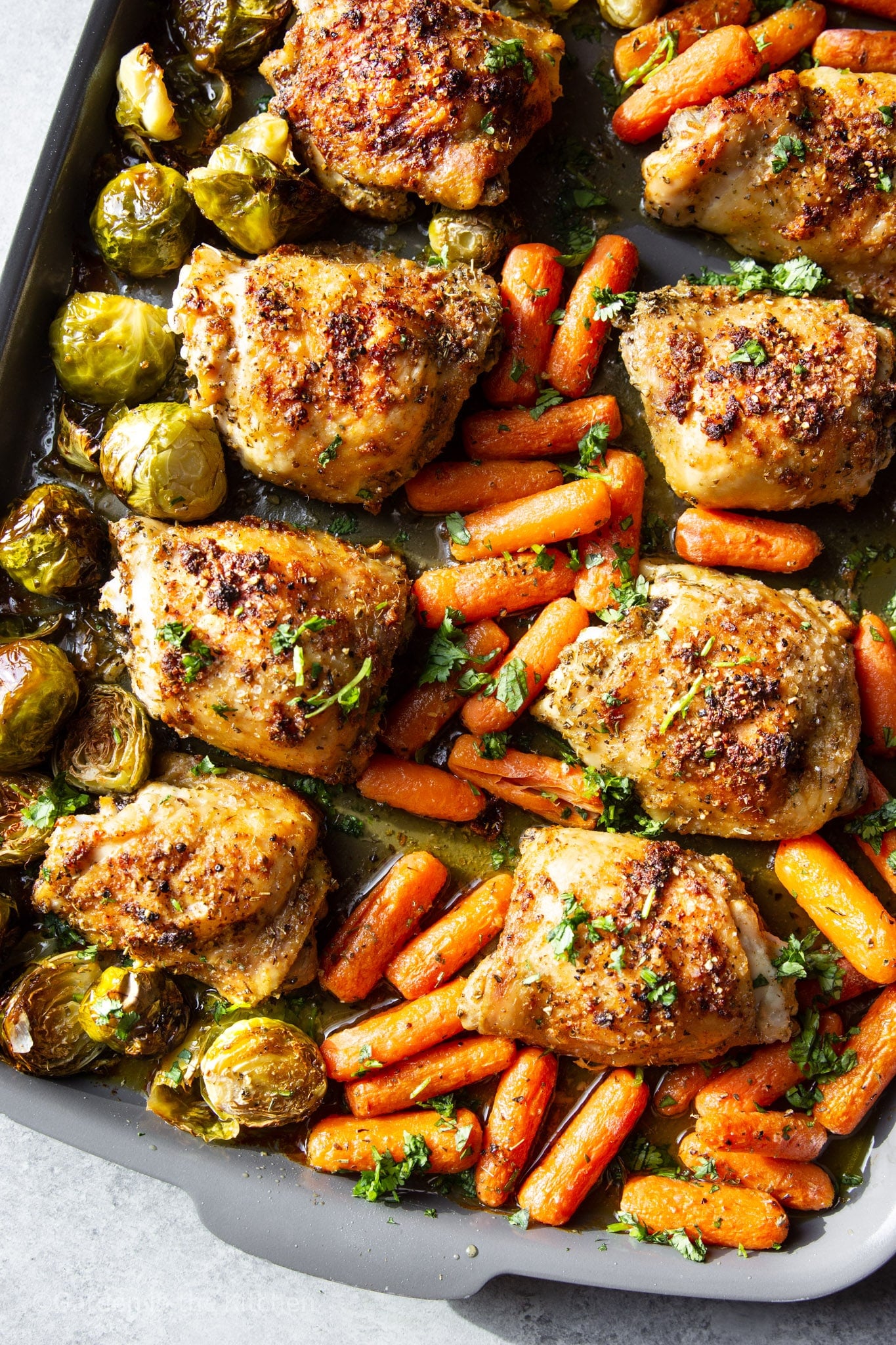
Easy sheet pan dinners are complete meals — protein and vegetables — roasted together on one rimmed tray at 400–425°F, usually in 20 to 45 minutes with under 15 minutes of hands-on work. You season, you spread everything in a single layer, you slide the pan into the oven, and the oven does the rest. One pan in, one pan washed.
Get a free week of one-pan dinners
Seven one-pan and sheet-pan dinners, one shopping list, one Instacart cart. Sent Sunday, no account needed.
No spam, unsubscribe in one click. Recipes, shopping lists and Instacart carts all work without an account either way.
Introduction: why the sheet pan wins on weeknights (one pan, one cleanup, hands-off oven time)
A weeknight dinner has three costs: attention, time, and cleanup. A skillet dinner charges you all three — you stand at the stove stirring, then you wash the skillet, the spatula, and whatever you cooked the starch in. A sheet pan charges you almost none of them.
Here is the honest math on a typical tray. Roughly 10–15 minutes of chopping and tossing, then 20–35 minutes of oven time during which you are not in the kitchen. Homework, laundry, a shower, a phone call — all of it fits inside the roast window. Total elapsed time lands between 25 and 45 minutes, and the cleanup is one rimmed pan, one bowl, and one knife.
The other thing the oven buys you is dry heat. A crowded skillet steams. A 425°F oven with air moving around each piece browns. That browning — the Maillard reaction on chicken skin, the caramelized edges on a carrot, the blistered skin on a cherry tomato — is the entire flavor advantage of roasting, and it is why a sheet pan dinner tastes like it took more effort than it did.
Sheet pans also scale in a way skillets do not. A 12-inch skillet feeds two comfortably and four badly. Two half-sheet pans on two oven racks feed six to eight with no additional work beyond a second tray of vegetables. That makes the format equally good for a Tuesday for two and a Sunday cook-ahead for a family of five.
Every recipe below is drawn from our recipe catalog, with real prep and cook times pulled from each card. The twenty-five in the curated list all come in at 45 minutes or less, start to finish.
Sheet pan setup: pan size, parchment vs foil, single-layer rule
Three decisions determine whether your tray comes out crisp or soggy. None of them are about the recipe.
Pan size. The half-sheet pan — 18 × 13 inches, rimmed, aluminum — is the standard. It fits every standard 30-inch home oven with room for air on all sides, and it holds enough for four servings in a single layer. A quarter-sheet (13 × 9) is the two-person size and the "second tray for the fast vegetables" size. A full sheet (26 × 18) is commercial equipment and will not fit a residential oven. Buy two half-sheets. The second one is what turns a one-tray dinner into a six-person dinner.
Rimmed matters. A flat cookie sheet lets rendered fat and vegetable juice run onto the oven floor. The 1-inch rim on a jelly-roll pan keeps it where it belongs.
Parchment vs foil vs bare pan. Use this table as the decision rule.
| Liner | Use it for | Avoid it for | Notes |
|---|---|---|---|
| Parchment | Glazes, honey, BBQ sauce, teriyaki, anything sticky | Maximum-browning vegetable roasts | Most brands are rated to about 425°F; above that the edges scorch |
| Foil | Shrimp boils, juicy proteins, sausage, anything greasy | Delicate fish that will stick | Dull side up or down makes no measurable difference |
| Bare, oiled pan | Potatoes, Brussels sprouts, broccoli, cauliflower | Sugary glazes you do not want welded on | Best browning of the three — direct metal contact |
The practical compromise on a mixed tray: parchment under the glazed protein, bare pan under the vegetables, if you can keep them separated. If you cannot, choose based on which side you would rather scrub.
The single-layer rule. This is the one that people break. Every piece needs contact with the pan and air on at least one side. Leave roughly half an inch between pieces. When food touches, the moisture it releases has nowhere to go, the surface temperature stalls at 212°F, and you have steamed dinner instead of roasted dinner. If it does not fit in one layer, use two pans. A second pan costs $18 and thirty seconds of washing; a soggy tray costs you the meal.
Temperature and staggering. 425°F is the default. It is hot enough to brown before the interior overcooks, and low enough that a 30-minute roast does not burn. Where ingredients have very different cooking times, stagger them:
| Ingredient | Add at | Approximate roast time at 425°F |
|---|---|---|
| Potatoes, carrots, winter squash, whole beets | Start | 30–40 min |
| Bone-in chicken thighs, pork tenderloin, sausage | Start | 25–35 min |
| Broccoli, cauliflower, Brussels sprouts, bell peppers | Start or +10 min | 20–25 min |
| Zucchini, asparagus, cherry tomatoes, green beans | +15 min | 12–15 min |
| Salmon fillets | +15 to +20 min | 10–14 min |
| Shrimp | Last 8 minutes | 6–8 min |
Chicken sheet pan dinners: honey mustard, greek, fajita, teriyaki
Chicken is the workhorse of this format, and thighs beat breasts on a sheet pan almost every time. Thighs carry enough fat to survive 35 minutes at 425°F without drying, and the skin crisps against the hot metal. Pull breasts at 165°F; thighs are better at 175°F, where the connective tissue has fully rendered.
Honey mustard is the gateway recipe. The glaze is three ingredients — Dijon, honey, olive oil — and it caramelizes into a lacquer on the skin. Sheet Pan Honey Mustard Chicken with Sweet Potatoes pairs it with sweet potato, which is a genuinely good match because the potato's sugars caramelize on the same clock as the glaze. If you want a green vegetable instead, Sheet Pan Honey-Mustard Chicken Thighs with Broccoli runs 40 minutes total and gets you charred broccoli florets. Use parchment for both — honey welds itself to bare aluminum.
Greek means lemon, oregano, olive oil, and usually olives or feta at the end. Sheet Pan Greek Chicken with Olives and Tomatoes is the fullest version — it needs 50 minutes rather than 45, and it is worth the extra ten. The tomatoes collapse into a jammy sauce that seasons everything else on the tray. For a faster Mediterranean tray, Sheet Pan Rosemary-Garlic Chicken Thighs with Rainbow Vegetables covers similar territory in 40.
Fajita is the highest-yield format for families, because everyone assembles their own. Chicken, bell peppers, onions, cumin, chili powder, lime. Tex-Mex Sheet Pan Chicken Fajitas with Bell Peppers and Sheet Pan Fajita Chicken with Bell Peppers and Onions are the two versions worth keeping. Slice the chicken into strips rather than leaving it whole — strips finish in 25 minutes alongside the peppers and there is nothing to carve at the table.
Teriyaki is glaze-management. Sauce applied at the start burns; sauce applied at the end sits wet on the surface. The fix is to brush half at the start and half in the final five minutes. Sheet Pan Teriyaki Chicken with Broccoli does exactly that, and 40 minutes gets you glazed chicken with broccoli that has taken on char at the tips.
Two more chicken trays worth having in rotation: Sheet Pan Pesto Chicken with Roasted Cherry Tomatoes at 35 minutes, and Sheet Pan Chicken Bacon Ranch Bake, which is the one that reliably clears kids' plates. If you want the underlying technique rather than a specific recipe, our guide on how to cook chicken breast covers the temperature targets in detail.
Salmon and shrimp sheet pans: garlic butter salmon, sheet pan shrimp boil, harissa salmon
Seafood is where the sheet pan turns genuinely fast. Salmon fillets need 10–14 minutes at 425°F; shrimp need 6–8. The whole game is putting them in late.
Garlic butter salmon is the 25-minute weeknight default. Sheet Pan Garlic Herb Salmon with Asparagus is the version to memorize: asparagus and fillets go on the same tray, garlic butter over both, 15 minutes. Sheet Pan Citrus-Garlic Salmon with Roasted Asparagus is the brighter variant with orange and lemon. Pull salmon at 125–130°F internal for medium — it will climb a few degrees resting on the hot pan. Sheet Pan Herb-Glazed Salmon with Asparagus is the fastest of the three at 24 minutes total.
Harissa salmon trades butter for North African chili paste, and it works because harissa's fat content lets it act as both a glaze and a cooking medium. Half-Hour Sheet Pan Harissa Salmon with Chickpeas roasts canned chickpeas alongside the fish until they crisp — 30 minutes, and the chickpeas do the work of a starch. For a sweeter finish, Sheet Pan Maple-Mustard Glazed Salmon with Roasted Brussels Sprouts gives the sprouts a 15-minute head start before the fish goes on.
Sheet pan shrimp boil is the one seafood tray that takes real time, because the potatoes and corn have to roast before the shrimp arrive. Sheet Pan Shrimp Boil with Sweet Potatoes and Veggies runs 50 minutes total — outside our 45-minute list, and the single best use of a sheet pan for a crowd. Line it with foil, dump the finished pan onto newspaper, and there is no cleanup at all.
For fast shrimp, the rule is that they go in during the last eight minutes and not one minute earlier. Sheet Pan Chili-Lime Shrimp with Bell Peppers is done in 20 minutes total, High-Protein Sheet Pan Shrimp Fajitas with Bell Peppers and Onions in 22, and Sheet Pan Harissa-Spiced Shrimp with Roasted Chickpeas and Vegetables in 45 when you want the chickpeas fully crisped. Our complete salmon guide covers doneness in more depth if you keep overshooting.
Sausage and pork sheet pans: kielbasa and peppers, sausage and gnocchi, italian sausage bake
Smoked sausage is the cheat code of this category. It is already cooked, so the only job the oven has is browning it and cooking whatever is next to it — which means the sausage never dries out and the timing is forgiving.
Kielbasa and peppers is the archetype: sliced smoked sausage, bell peppers, onions, a hot oven. Sheet Pan Smoky Sausage and Pepper Medley runs 40 minutes and feeds four for under $12 of ingredients. Sheet Pan Cajun-Spiced Sausage and Peppers is the same tray with more heat, at 35 minutes. Cut the sausage on a bias into half-inch coins — more cut surface means more browned edges.
Sausage and gnocchi is the trick worth learning: shelf-stable potato gnocchi roasted straight from the package, no boiling. They puff and crisp on the outside and stay pillowy inside, and they behave like a roasted potato that cooks in 25 minutes instead of 40. Sheet Pan Gnocchi with Cherry Tomatoes and Basil is the vegetarian base — add browned Italian sausage to the tray at the start and it becomes a meat dinner without changing the timing.
Italian sausage bake covers the heartier end. Sweet Potato and Italian Sausage Sheet Pan Bake and Savory Italian Sausage and Spinach Sheet Pan Orzo Bake both land at 45 minutes; the orzo version cooks the pasta directly on the pan in the rendered fat and stock. For something closer to a beer-hall plate, Sheet Pan German-Style Beer Bratwurst with Sauerkraut and Mustard runs 40 minutes.
Pork tenderloin deserves a mention because it is the most under-used sheet pan protein. A whole tenderloin roasts in 25–30 minutes at 425°F and should come off at 145°F. Sheet Pan Honey-Mustard Glazed Pork Tenderloin with Roasted Vegetables and Half-Sheet Pan Pork Tenderloin with Apples and Rosemary are the two to start with; Sheet Pan Lemon-Garlic Pork Tenderloin with Roasted Vegetables is the simplest of the three. Rest the tenderloin five minutes before slicing or the juice ends up on the board.
Vegetarian sheet pans: gnocchi with vegetables, halloumi and vegetables, roasted chickpea bowls
Vegetarian sheet pans fail for one reason: nothing on the tray browns, so the plate tastes flat. The fix is to make sure at least one component develops a hard, caramelized surface — gnocchi, halloumi, chickpeas, or tofu.
Gnocchi with vegetables is the highest-reward version. Sheet Pan Gnocchi with Cherry Tomatoes and Basil at 35 minutes and Crispy Gnocchi Sheet Pan with Roasted Peppers & Tomatoes at 38 both rely on the same mechanic — the tomatoes burst and coat the gnocchi in a sauce that forms on the pan itself. Toss the gnocchi in oil before spreading them, and do not stir for the first 15 minutes; the crust needs undisturbed contact.
Halloumi and vegetables works because halloumi does not melt. It browns. Sheet Pan Herb-Roasted Mediterranean Vegetables with Halloumi at 45 minutes is the full Mediterranean tray; Herb-Roasted Vegetable & Halloumi Sheet Pan is the 40-minute version. Cut the cheese into half-inch slabs — thinner and it dries out, thicker and the center stays squeaky.
Roasted chickpea bowls are the cheapest dinner in this article. A drained, dried, oiled can of chickpeas roasts to a crisp shell in about 30 minutes and carries whatever spice you put on it. Harissa-Spiced Chickpea and Vegetable Sheet Pan Roast and Sheet Pan Chickpea Shawarma with Roasted Vegetables are the two to rotate; Sheet Pan Harissa-Spiced Cauliflower with Chickpeas and Tahini Drizzle adds cauliflower and a tahini finish. Dry the chickpeas thoroughly on a towel first — surface water is the difference between crisp and chewy.
For tofu, press it, cube it, and toss it in cornstarch before oiling. Crisp Sheet Pan Tofu with Broccoli and Spicy Peanut Sauce at 35 minutes and Sheet Pan Crispy Tofu with Maple Dijon Glaze at 45 both use that technique. If you want a pure vegetable tray, Sheet Pan Mediterranean Herb-Roasted Vegetables and Crispy Rosemary Parmesan Sheet Pan Veggies are the two we come back to, and our roasted vegetable dinner roundup goes deeper on the vegetable-only format.
Curated recipes: 25 cards with prep times and links
Every recipe below finishes in 45 minutes or less, prep included. Times come from the recipe cards.
Chicken
| Recipe | Prep | Cook | Total | Serves |
|---|---|---|---|---|
| Sheet Pan Honey Mustard Chicken with Sweet Potatoes | 15 min | 30 min | 45 min | 4 |
| Sheet Pan Honey-Mustard Chicken Thighs with Broccoli | 15 min | 25 min | 40 min | 4 |
| Tex-Mex Sheet Pan Chicken Fajitas with Bell Peppers | 15 min | 25 min | 40 min | 4 |
| Sheet Pan Fajita Chicken with Bell Peppers and Onions | 10 min | 25 min | 35 min | 4 |
| Sheet Pan Teriyaki Chicken with Broccoli | 15 min | 25 min | 40 min | 4 |
| Sheet Pan Pesto Chicken with Roasted Cherry Tomatoes | 10 min | 25 min | 35 min | 4 |
| Sheet Pan Chicken Bacon Ranch Bake | 10 min | 25 min | 35 min | 4 |
Salmon and shrimp
| Recipe | Prep | Cook | Total | Serves |
|---|---|---|---|---|
| Sheet Pan Garlic Herb Salmon with Asparagus | 10 min | 15 min | 25 min | 4 |
| Sheet Pan Citrus-Garlic Salmon with Roasted Asparagus | 10 min | 15 min | 25 min | 4 |
| Half-Hour Sheet Pan Harissa Salmon with Chickpeas | 10 min | 20 min | 30 min | 2 |
| Sheet Pan Maple-Mustard Glazed Salmon with Roasted Brussels Sprouts | 10 min | 30 min | 40 min | 4 |
| High-Protein Sheet Pan Shrimp Fajitas with Bell Peppers and Onions | 10 min | 12 min | 22 min | 4 |
| Sheet Pan Chili-Lime Shrimp with Bell Peppers | 10 min | 10 min | 20 min | 4 |
Sausage and pork
| Recipe | Prep | Cook | Total | Serves |
|---|---|---|---|---|
| Sheet Pan Smoky Sausage and Pepper Medley | 15 min | 25 min | 40 min | 4 |
| Sheet Pan Cajun-Spiced Sausage and Peppers | 10 min | 25 min | 35 min | 4 |
| Sweet Potato and Italian Sausage Sheet Pan Bake | 15 min | 30 min | 45 min | 4 |
| Savory Italian Sausage and Spinach Sheet Pan Orzo Bake | 15 min | 30 min | 45 min | 4 |
| Sheet Pan Honey-Mustard Glazed Pork Tenderloin with Roasted Vegetables | 15 min | 30 min | 45 min | 4 |
| Half-Sheet Pan Pork Tenderloin with Apples and Rosemary | 10 min | 30 min | 40 min | 3 |
Vegetarian
| Recipe | Prep | Cook | Total | Serves |
|---|---|---|---|---|
| Sheet Pan Gnocchi with Cherry Tomatoes and Basil | 10 min | 25 min | 35 min | 4 |
| Crispy Gnocchi Sheet Pan with Roasted Peppers & Tomatoes | 10 min | 28 min | 38 min | 4 |
| Sheet Pan Herb-Roasted Mediterranean Vegetables with Halloumi | 15 min | 30 min | 45 min | 4 |
| Harissa-Spiced Chickpea and Vegetable Sheet Pan Roast | 15 min | 30 min | 45 min | 4 |
| Sheet Pan Chickpea Shawarma with Roasted Vegetables | 10 min | 30 min | 40 min | 4 |
| Crisp Sheet Pan Tofu with Broccoli and Spicy Peanut Sauce | 10 min | 25 min | 35 min | 3 |
Worth the extra ten minutes, if you have them: Sheet Pan Greek Chicken with Olives and Tomatoes at 50 minutes and Sheet Pan Shrimp Boil with Sweet Potatoes and Veggies at 50.
Sunday sheet pan prep — three trays that make five dinners
The format that makes a sheet pan more than a weeknight tool is batch roasting. One oven session, three trays, five dinners. Here is the schedule we actually run.
Tray 1 — protein, 425°F, 30 minutes. Two pounds of chicken thighs, seasoned simply with salt, pepper, garlic powder and paprika. Nothing sauced, because sauce commits the protein to one cuisine. Plain roasted chicken becomes fajitas Monday, a grain bowl Wednesday, and a salad topper Friday.
Tray 2 — hard vegetables, 425°F, 35 minutes. Sweet potato cubes, carrots, red onion wedges, and a head of broccoli in florets, all tossed in olive oil. Roast the sweet potato and carrots for the first 15 minutes alone, then push them to one side and add the broccoli.
Tray 3 — chickpeas and gnocchi, 425°F, 25 minutes. Two drained, thoroughly dried cans of chickpeas on one half and a package of shelf-stable gnocchi on the other. This is your starch and your crunch for the week.
The assembly math from three trays:
| Night | Assembly | Extra work |
|---|---|---|
| Monday | Chicken + peppers + tortillas | Warm tortillas, 2 min |
| Tuesday | Gnocchi + roasted vegetables + parmesan | Reheat at 375°F, 8 min |
| Wednesday | Grain bowl: chicken + chickpeas + vegetables + tahini | Cook grain, 20 min hands-off |
| Thursday | Chopped salad: chickpeas + vegetables + feta | Chop lettuce, 5 min |
| Friday | Chicken + whatever remains, over rice | None |
Two rules make this hold up. First, reheat in the oven at 375°F for 8 minutes, not the microwave — the microwave turns every roasted vegetable back into a steamed one. Second, store components separately, not pre-mixed; roasted vegetables leach moisture into protein and the whole container goes soft by Wednesday. Cooked sheet pan components hold three to four days refrigerated. If you want a fuller system around this, our 5-day family dinner rotation and the back-to-school meal prep plan both build on the same three-tray idea.
Best sheet pans and rack (linked buying guide)
You need less equipment than you think. The full list is one pan, one liner, one rack, one knife, one board.
| Item | What to buy | Rough price | Why |
|---|---|---|---|
| Half-sheet pan (×2) | Heavy-gauge aluminum, rimmed, 18 × 13 in | $15–25 each | Aluminum conducts evenly and will not warp at 425°F if the gauge is heavy enough |
| Wire cooling rack | Nests inside the half-sheet | $10–15 | Elevates bacon, wings and anything you want crisp on all sides |
| Parchment | Pre-cut half-sheets, not a roll | $10–18 | Pre-cut sheets lie flat; roll parchment curls and lifts your food |
| Chef's knife | 8-inch | $40–90 | Every one of these recipes is 80% knife work |
| Cutting board | Large enough to hold a full tray's worth | $25–50 | Undersized boards are why prep takes 25 minutes instead of 12 |
Browse the bakeware category for pans and racks, utensils for tongs and spatulas, knives for the chef's knife, cookware for the rest of the kitchen, and storage for the containers that hold the Sunday prep. If you are setting up leftovers storage specifically, our meal prep container guide covers the sizes that actually stack.
Two things not to buy. Non-stick sheet pans, because the coating degrades above 400°F and you roast at 425°F. And dark-coated pans, which absorb more radiant heat and burn the bottoms of vegetables before the tops brown.
Common pitfalls
Crowding the pan. The single most common failure. If pieces touch, you get steam. Two pans, always, when in doubt.
Wet ingredients. Pat chicken dry. Dry chickpeas on a towel. Drain thawed shrimp and blot them. Surface water has to evaporate before browning starts, and every gram of it is time your food spends at 212°F instead of 400°F.
Oven too cool. Below 400°F, vegetables release moisture faster than the oven can drive it off. 425°F is the floor for most of these recipes, and a fully preheated oven — 15 minutes after the beep, not at the beep — matters more than people expect.
Everything added at once. Asparagus roasted for 35 minutes alongside potatoes is not asparagus anymore. Use the staggering table above.
Sauce applied too early. Any glaze with sugar — honey, maple, teriyaki, BBQ — burns over a 30-minute roast. Brush half at the start, half in the last five minutes.
Mixing wet and dry vegetables. Mushrooms and zucchini shed enough water to sabotage a tray of potatoes. Give them their own pan or their own half.
When a sheet pan is not the right tool
Sheet pans are bad at three things, and knowing which saves you a ruined dinner.
Anything that needs braising liquid. Short ribs, pot roast, curry, chili. A sheet pan has 1 inch of rim; you need a covered pot. Use a Dutch oven for that whole category.
Thin cuts that need a hard sear. A steak or a pork chop under an inch thick will overcook before the oven browns it. Use a screaming-hot skillet.
Delicate, fast fish. Sole, tilapia, and flounder go from raw to dry in a two-minute window. Poach or pan-fry those.
Single servings. Heating a full oven for one portion is a poor energy trade. An air fryer dinner does the same job in a fraction of the space, and a one-pot pasta is faster still.
FAQ
What size sheet pan works best for family dinners? A half-sheet pan (18 × 13 inches) is the workhorse for a family of four — big enough that protein and vegetables sit in a single layer without crowding. Quarter-sheets (13 × 9) work for two, and full-sheets (26 × 18) rarely fit a home oven. Buy two half-sheets so you can double-tray when needed.
Should I use parchment paper, foil or nothing? Parchment for anything with a glaze, honey or barbecue sauce — it prevents burnt-on cleanup and slides right off. Foil for shrimp boils and juicy proteins. Bare pan (well-oiled) when you want maximum browning on vegetables like Brussels sprouts, broccoli or potatoes. Most parchment is rated to about 425°F, so keep it off the hotter roasts.
Why does my sheet pan chicken come out soggy? Two causes: pan overcrowding, which steam-cooks instead of roasting, or an oven under 400°F. Fix both. Leave half an inch of space between pieces, pat the chicken dry before seasoning, and set the oven to 425°F. Vegetables that shed a lot of water — mushrooms, zucchini — go on their own pan or a wire rack.
Can I meal prep sheet pan dinners in advance? Yes. Assemble the pan the night before — chicken, vegetables, oil, seasoning — and cover it in the fridge; it goes straight from fridge to oven the next evening. Fully cooked sheet pan dinners hold three to four days for lunches. Reheat at 375°F for 8 minutes rather than microwaving, to keep the vegetables crisp.
What kitchen gear do I need for sheet pan cooking? One good rimmed half-sheet pan, parchment paper, a wire cooling rack that doubles for roasting, a chef's knife and a cutting board. The pan is the only real investment — a warp-free aluminum half-sheet runs $15–25 and lasts a decade. Skip non-stick and dark-coated pans; both fail at the 425°F you actually roast at.
Sources
Three references we check when we are working out timing and technique for this format:
- Serious Eats — Sheet Pan Recipes for the underlying roasting science and staggering logic.
- Bon Appétit — Sheet Pan Dinners for flavor combinations outside the standard chicken-and-vegetable template.
- NYT Cooking — Sheet Pan Recipes for the widest catalog of tested versions across proteins.
Where to go next
If this format works for you, the adjacent roundups are 25 roasted vegetable dinners for the vegetable-forward version, 22 weeknight casseroles for the covered-dish version, and 22 one-pot pasta dinners for the stovetop equivalent. All three run on the same principle: one vessel, one cleanup, most of the cooking time unattended.
Frequently asked questions
What size sheet pan works best for family dinners?
Should I use parchment paper, foil or nothing?
Why does my sheet pan chicken come out soggy?
Can I meal prep sheet pan dinners in advance?
What kitchen gear do I need for sheet pan cooking?
Sources
One pan, one shopping list, one tap.
Ask our AI for one-pan weeknight dinners — it totals the ingredients and sends the cart to Instacart.
Get one-pan dinners →