Carving Knife or Chef's Knife for Turkey? When the Knife You Own Will Do
A sharp 8-inch chef's knife carves one bird a year just fine; a narrow carving knife pays off once ham, prime rib or brisket join the menu.
Where to buy these picks
Affiliate links: we may earn a commission on qualifying Amazon purchases. Policy. Prices show only when checked in the last 24 hours.
You don't need a carving knife for one turkey a year. A freshly sharpened 8-inch chef's knife, like the Victorinox Fibrox Pro 8-Inch, carves a whole bird well if you take each breast off the bone first. Buy a carving knife, such as the Cangshan TS 9-Inch, when you carve birds, roasts or brisket several times a year.
Do you need a carving knife for turkey, or will a chef's knife do?
Thanksgiving is Thursday, November 26 this year, and the question comes up in every kitchen about two weeks out: is the chef's knife in the block good enough, or does the turkey deserve its own blade?
The honest answer turns on two things, and neither is the price tag:
1. How sharp your knife is on the day. A dull carving knife does a worse job than a sharp chef's knife. A dull edge crushes the meat fibers before it cuts them, and that is what turns breast slices ragged and pushes juice out onto the board.
2. How often you carve big cuts. A carving knife is a specialist. It does one family of jobs (turkey, ham, prime rib, leg of lamb, brisket) better than anything else in the drawer, and almost nothing else.
If turkey is the only large roast you cook all year, spend the money on a sharpener and keep using your chef's knife. If your calendar also includes a Christmas ham, a standing rib roast and a few smoked briskets, a carving knife earns its spot.
The verdict up top
A sharp 8-inch chef's knife handles one bird a year. Its 8-inch blade is long enough to slice a turkey breast that has been removed from the carcass and laid flat on the board. Its broad, stiff blade also makes short work of the joints: thighs, drumsticks and wings come off cleanly when you cut through the joint, not the bone.
A carving knife (8–12 inches, narrow blade) earns its place if you carve whole birds, roasts or brisket several times a year. The narrower, longer blade drags less through the meat and finishes a wide slice in one stroke, which is what keeps slices even and intact.
For the full shortlists, start with our parent guides: the best carving knives for turkey, brisket and roasts compares five slicers, and the best chef's knives for 2026 compares five everyday blades. Every pick in this article comes from one of those two guides.
Side-by-side: carving knife vs chef's knife
The table uses facts from the parent guides and maker listings only. Price tiers are dollar bands. The live price button on each product page carries the current figure, which moves a lot between now and Black Friday.
| Feature | Carving knife | Chef's knife |
|---|---|---|
| Typical blade length | 8–12 in (8–9 in for poultry, 12 in and up for brisket) | 8 in is standard; models run 6–14 in |
| Blade width | Narrow, usually well under the chef's knife | Broad, about 1.5 in at the heel |
| Profile | Long, straight edge built for drawing slices | Curved belly built for rocking and chopping |
| Tip | Pointed (for working around bone) or rounded (for slicing) | Pointed |
| Granton / hollow edge | Common, e.g. the Cangshan TS 9-Inch | Rare on Western chef's knives |
| Fork or sheath included | Sometimes: the Cangshan TS ships with a wood sheath; some sets add a fork | Usually knife only |
| Other jobs it does | Ham, prime rib, leg of lamb, brisket, smoked salmon | Nearly every daily prep job: onions, herbs, squash, breaking down a chicken |
| Price tier (picks below) | $25–$50 to $50–$100 | $25–$50 to over $150 |
The chef's knife dimensions are the typical European pattern described in the Wikipedia entry on the chef's knife, which puts the standard blade at 20 cm (8 in) long and about 4 cm (1.5 in) wide.
Width matters more than most people expect. A broad blade has more steel touching the meat on every stroke, so it drags. On a dense, moist cut like brisket or ham, that drag is what makes a thin slice stick and tear. On turkey breast, which is drier and less dense, the difference is small.
Other gear this guide links
Prices are shown only when checked in the last 24 hours; otherwise check the current price on Amazon.

When the chef's knife is enough
Your chef's knife is all you need when:
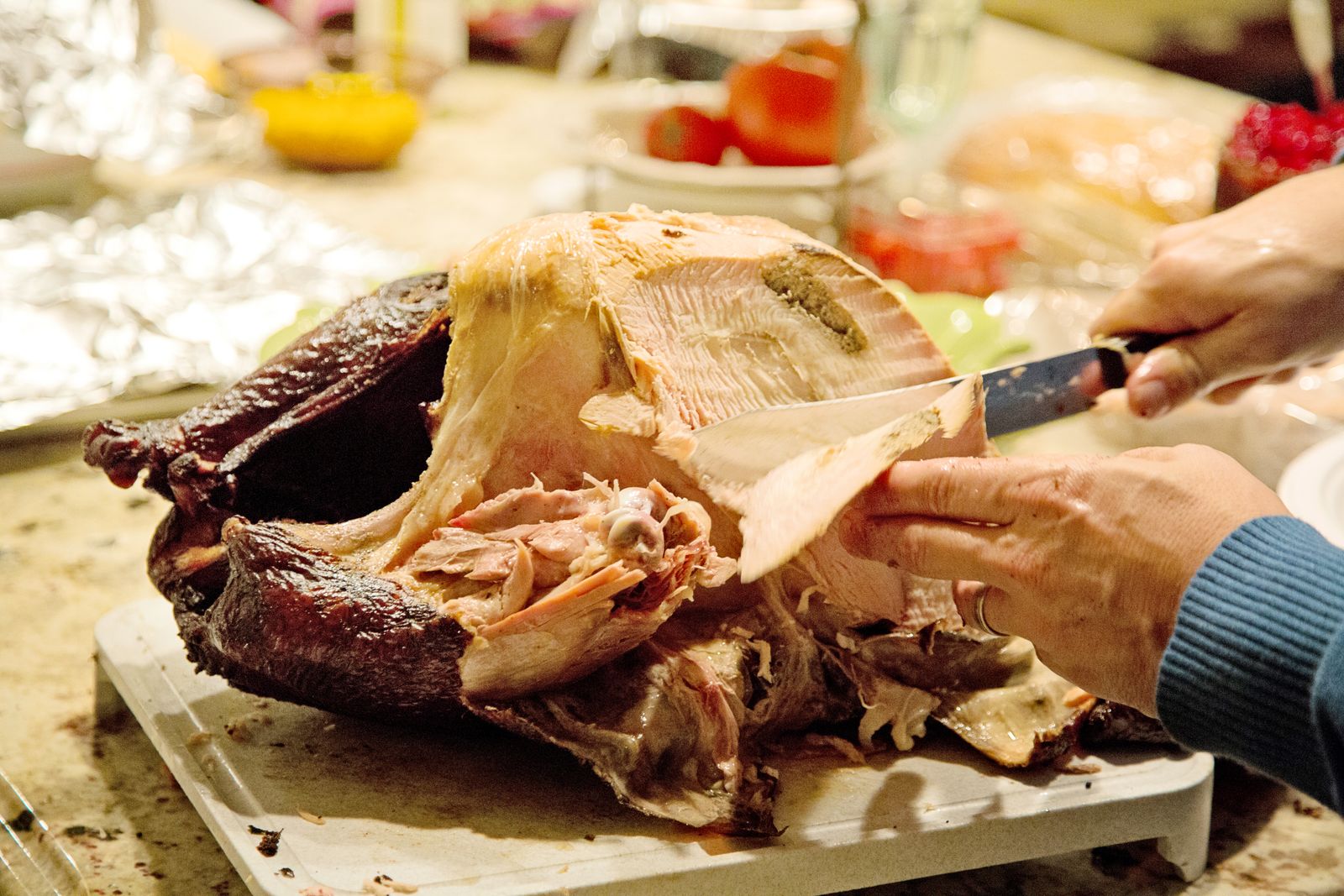
- You carve in the kitchen, not at the table. Take each breast half off the carcass in one piece, lay it skin-side up on the board, and slice crosswise into half-inch slices. The breast is only a few inches across that way, well inside an 8-inch blade's reach.
- It's one bird a year. A carving knife that comes out of the drawer once a year is a poor use of drawer space and money.
- The knife is genuinely sharp. Sharpen it a few days before and hone it the morning of (see the next section).
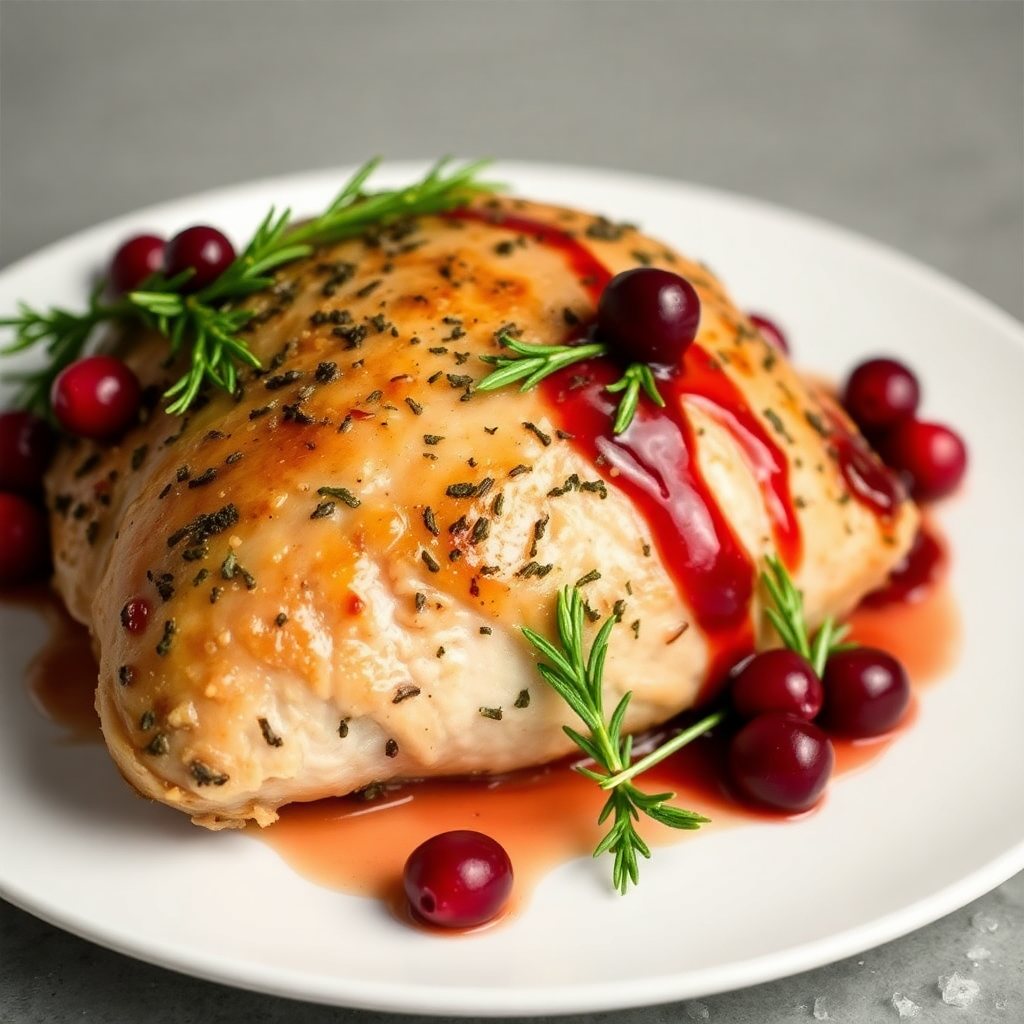
- You're cooking a breast, not a whole bird. A roast like this Pan-Roasted Turkey Breast with Sage and Cranberry Glaze is narrow enough that a carving knife's extra length adds nothing.
The chef's knife is also the better tool for the parts of the job that aren't slicing. Popping a thigh joint, splitting a wing from the drumette, or cutting through the cartilage at the breastbone all reward a stiff, broad blade.
When it isn't
The chef's knife starts to struggle when:
- You carve the breast on the bird. Slicing a breast in place means long, angled strokes across a wide, curved surface. An 8-inch blade with a curved belly runs out of straight edge before it finishes the cut, so you saw, and sawing tears.
- The roast is wide. A boneless prime rib, a glazed ham or a brisket flat can be 10–12 inches across. You want a blade 2–3 inches longer than the cut so every slice finishes in one draw. That points to a 10- to 12-inch slicer.
- You want thin, even slices. For ham and brisket, a narrow blade with a Granton edge releases each slice instead of letting it cling.
- You carve at the table. A carving knife and fork look the part and keep the job tidy in front of guests.
Here's a quick way to decide: count the large roasts you cooked in the past twelve months. One or two, keep the chef's knife. Four or more, buy a carving knife.
Sharpen first
A dull knife is the usual reason carving tears the meat, and it matters more than which knife you choose. Sharpen a few days before Thanksgiving, then hone on a steel or ceramic rod right before you carve. Our knife sharpener guide compares whetstones, pull-through and electric sharpeners if you don't own one yet.
Softer stainless steels like the X50CrMoV15 used in most German-style and Swiss knives take an edge quickly on any sharpener, but they lose it faster too. A quick hone on the day is cheap insurance.
Picks from the parent guides
No new products here. These four come straight from the shortlists in our carving knife guide and chef's knife guide, and every one sits in the Knives & Cutting category.
Carving: Cangshan TS Series 9-Inch Carving Knife
Verdict: the one carving knife to buy if you'll use it for turkey, ham and the occasional brisket. Price tier: $50–$100.
The Cangshan TS Series 9-Inch Carving Knife is the Best Overall pick in our carving guide. Per Cangshan, it's forged from Swedish Sandvik 14C28N stainless, and the parent guide lists a hardness of HRC 59 ±2. That is harder than most German-style carvers, so the edge lasts longer between sharpenings. The 9-inch blade carries a Granton edge and a pointed tip for working around the thigh joint and breastbone, and the knife comes with a fitted wood sheath that protects the edge in a drawer for the eleven months you aren't carving.
Choose it if: you want one knife that covers Thanksgiving, a Christmas ham and a rib roast.
Skip it if: you smoke a full packer brisket every month. Get a 12-inch slicer instead.
Carving: Mercer Culinary Genesis 8-Inch Carving Knife
Verdict: the easiest first carving knife, and the closest to a chef's knife in feel. Price tier: $25–$50.
The Mercer Culinary Genesis 8-Inch Carving Knife is the Best for Beginners pick in our carving guide. Mercer Culinary forges the Genesis line from high-carbon German stainless (X50CrMoV15), with a full tang, a bolster and a soft Santoprene handle that stays secure when your hands are greasy. The 8-inch plain edge is taper-ground, so it sharpens easily on any home sharpener.
Choose it if: this is your first carving knife and you mostly roast poultry.
Skip it if: brisket or ham is on the menu more than once a year. The plain edge lets thin, wet slices cling, and 8 inches is short for a brisket flat.
Chef's: Wüsthof Classic 8-Inch Chef's Knife
Verdict: the chef's knife that carves a turkey well and does everything else the other 364 days. Price tier: over $150.
The Wüsthof Classic 8-Inch is the Best Overall pick in our chef's knife guide. Per Wüsthof and the parent guide, it's forged full-tang from X50CrMoV15 high-carbon stainless at 56–58 HRC, with a triple-riveted synthetic handle. Its weight is the point. On carving day it powers through a thigh joint and crisp skin. The rest of the year it splits butternut squash and breaks down whole chickens. If you already own one, you probably don't need a carving knife at all.
Choose it if: you want one premium knife instead of two specialists.
Skip it if: you mainly want thin brisket or ham slices. Its broad blade drags on dense, wet meat.
Chef's: Victorinox Fibrox Pro 8-Inch Chef's Knife
Verdict: the budget chef's knife that handles one turkey a year with no complaints. Price tier: $25–$50.
The Victorinox Fibrox Pro 8-Inch Chef's Knife is the Best for Beginners pick in our chef's knife guide. Victorinox stamps the blade from X50CrMoV15 stainless, and the parent guide lists it at 55–56 HRC. That steel is softer than the forged picks, so it dulls sooner but sharpens in a few strokes. The textured Fibrox handle is NSF-certified and grips well when wet. It's lighter and thinner than the Wüsthof, which helps when you slice a breast crosswise into even pieces.
Choose it if: you want a capable everyday knife and plan to carve one bird a year.
Skip it if: you carve big roasts often. Pair it with a carving knife rather than asking it to do both.
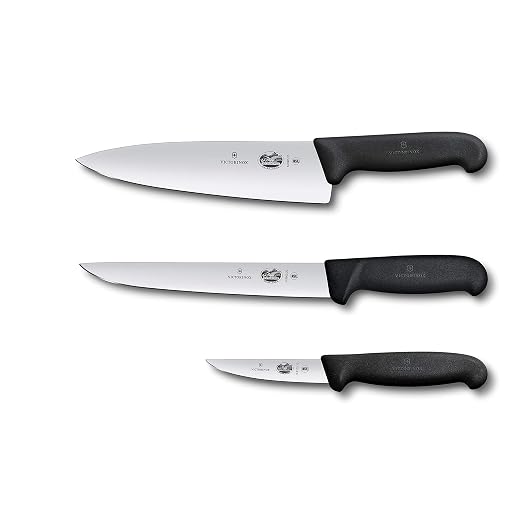
Want both in one box? The Victorinox Fibrox 3 Piece Chef's Set bundles a chef's knife, a carving knife and a paring knife. For a premium hollow-edge carver that matches a Wüsthof block, see the WÜSTHOF Classic 9" Hollow Edge Carving Knife in the carving guide.
Three worked examples
The once-a-year host. You roast one 14-pound bird for eight people and cook chicken the rest of the year. You own a Victorinox chef's knife. Keep it. Sharpen it the weekend before, take each breast off whole, and slice crosswise on the board. Spend the money you saved on a roasting pan with a rack or a thermometer.
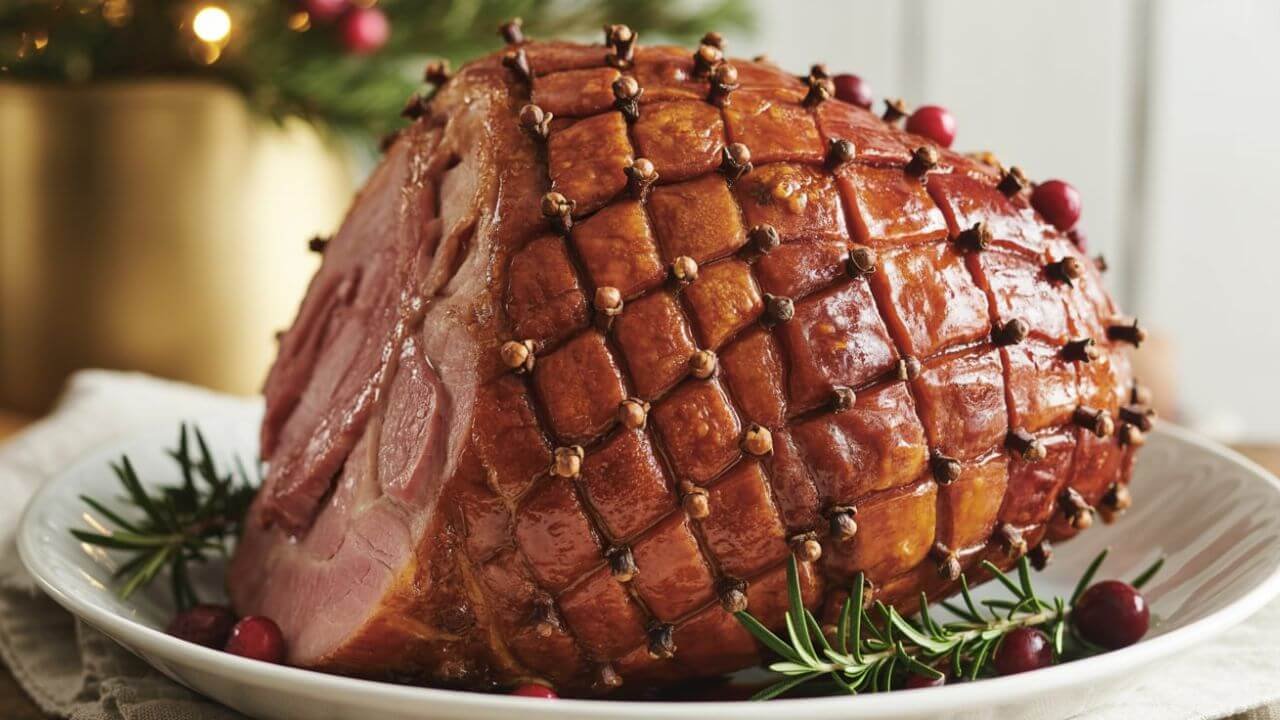
The holiday-season carver. You do turkey in November, a Baked Maple-Glazed Ham with Clove and Brown Sugar Crust in December, and a Slow-Roasted Prime Rib with Rosemary and Dijon Crust for New Year's. That's three wide, dense roasts in six weeks. Buy the Cangshan TS 9-Inch. Its Granton edge helps with the ham, and its length covers the rib roast once the bones are off.
The backyard pitmaster. You smoke a Slow-Smoked Texas Brisket with Dry Rub and Mop Sauce every few weeks and do a smoked turkey at Thanksgiving. Neither the 8-inch chef's knife nor a 9-inch carver is ideal for a brisket flat. Look at the 12-inch Granton slicers in the carving knife guide, and use that same slicer on the turkey breast.
Common carving pitfalls
- Carving straight out of the oven. USDA FSIS recommends letting the bird stand about 20 minutes before carving so the juices settle. Use that window to hone your knife.
- Sawing. Back-and-forth sawing tears meat. Use long, smooth strokes, and if you can't finish a slice in one or two strokes, the blade is too short or too dull.
- Slicing with the grain. Take the breast off whole and cut across the grain, so each slice has short fibers and stays tender.
- A board with no juice groove. The juice you wanted for gravy runs onto the counter. Set a towel under the board so it doesn't slide.
- Cutting through bone. Neither a chef's knife nor a carving knife is a cleaver. Find the joint with your fingertip and cut through the joint.
When NOT to buy a carving knife
Skip the carving knife if you cook one turkey a year, you're short on drawer or block space, or your chef's knife is dull. In that last case a sharpener does more for your Thanksgiving than a new blade, because a new knife will be dull by next year too. Also skip a cheap carving "set" whose fork and honing steel don't match the knife's quality. Tongs and a clean towel steady a bird just as well.
How we picked
We did not run cutting tests for this article. Every pick comes from the shortlists in two existing AislePrompt guides: Best Overall and Best for Beginners from the carving knife guide, and Best Overall and Best for Beginners from the chef's knife guide. Steel grades, hardness figures, blade lengths and included accessories come from those guides and the makers' listings. The Granton edge explanation follows the Wikipedia entry on kitchen knives, which describes the hollows as air pockets that cut down how much food sticks to the blade. Resting and doneness guidance comes from USDA FSIS. Prices change daily, so we describe tiers and leave the current figure to the live price button.
Carve-day links
Before the big day, check the rest of your setup. The roasting pan vs foil pan guide covers what to roast the bird in and which board to carve it on, and the Thanksgiving kitchen gear checklist runs through everything else, from thermometers to gravy separators.
Turkey and roast recipes to carve:
- Oven-Roasted Turkey with Herb-Butter and Classic Stuffing: a classic whole bird; take the breasts off whole and slice crosswise
- Roasted Herb-Crusted Turkey with Citrus Glaze: the glaze makes the skin sticky, so a sharp edge matters
- Pan-Roasted Turkey Breast with Sage and Cranberry Glaze: a chef's-knife job
- Slow-Smoked Texas Brisket with Dry Rub and Mop Sauce: long slicer territory
- Slow-Roasted Prime Rib with Rosemary and Dijon Crust: 10–12 inches once the bones are off
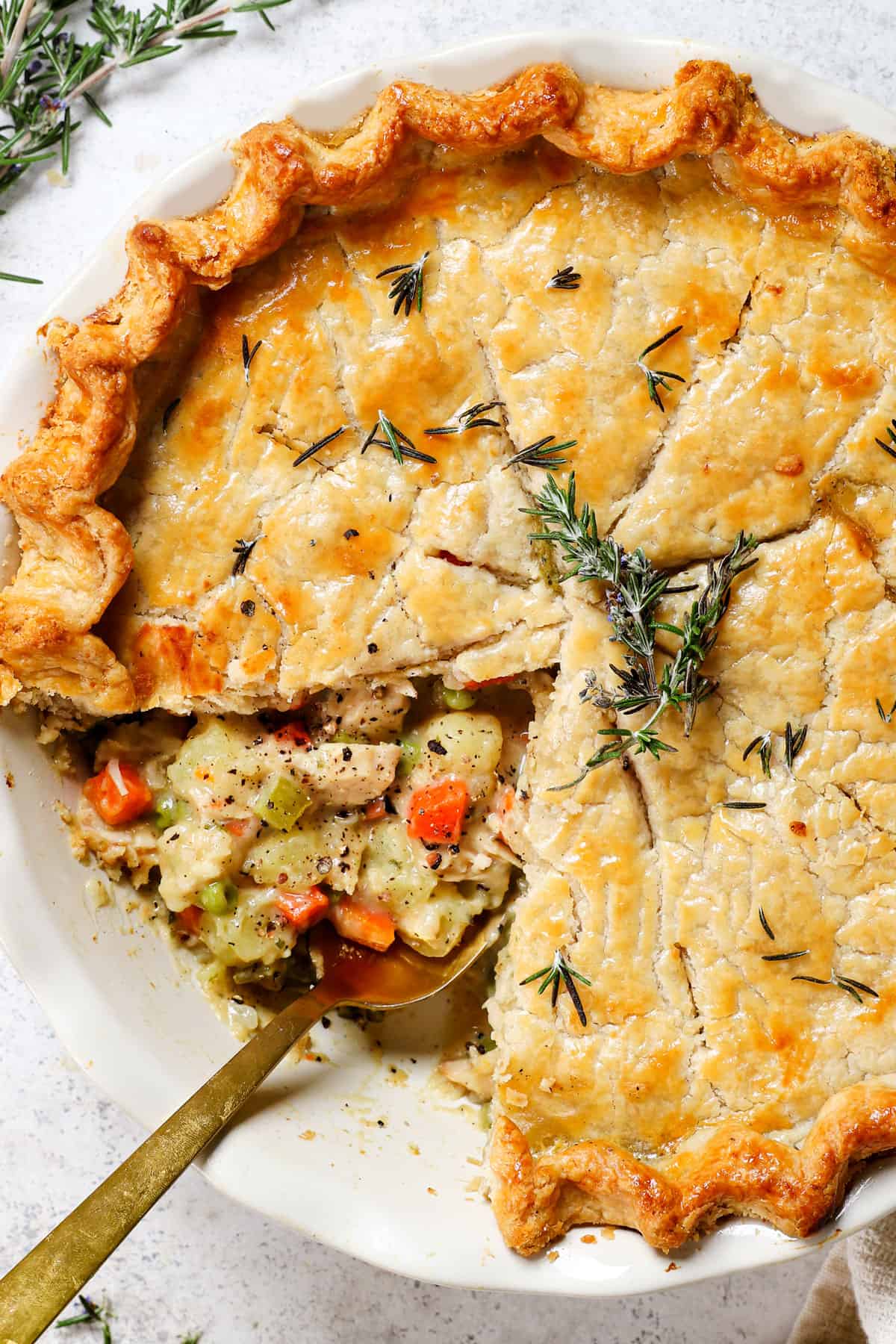
- Thanksgiving Turkey Pot Pie with Herb-Infused Gravy: for Friday's leftovers
Add any of them to an AislePrompt meal plan and the ingredients merge into one shopping list.
Sources
- USDA FSIS: Let's Talk Turkey Roasting
- Wikipedia: Chef's knife
- Wikipedia: Kitchen knife
- Cangshan Cutlery
- Mercer Culinary
- Wüsthof
- Victorinox
Frequently asked questions
Can I carve a Thanksgiving turkey with an 8-inch chef's knife?
How long should a carving knife be for a turkey?
Is a granton (hollow) edge worth it on a carving knife?
Do I need a carving fork too?
Should I sharpen my knife before Thanksgiving?
Recipes to try with sharp knives
Put your gear to work — save any recipe to My Recipes (no account needed) and send its ingredients to Instacart in one tap.
Shop knives & cutting on AislePrompt →Browse the full kitchen shop →