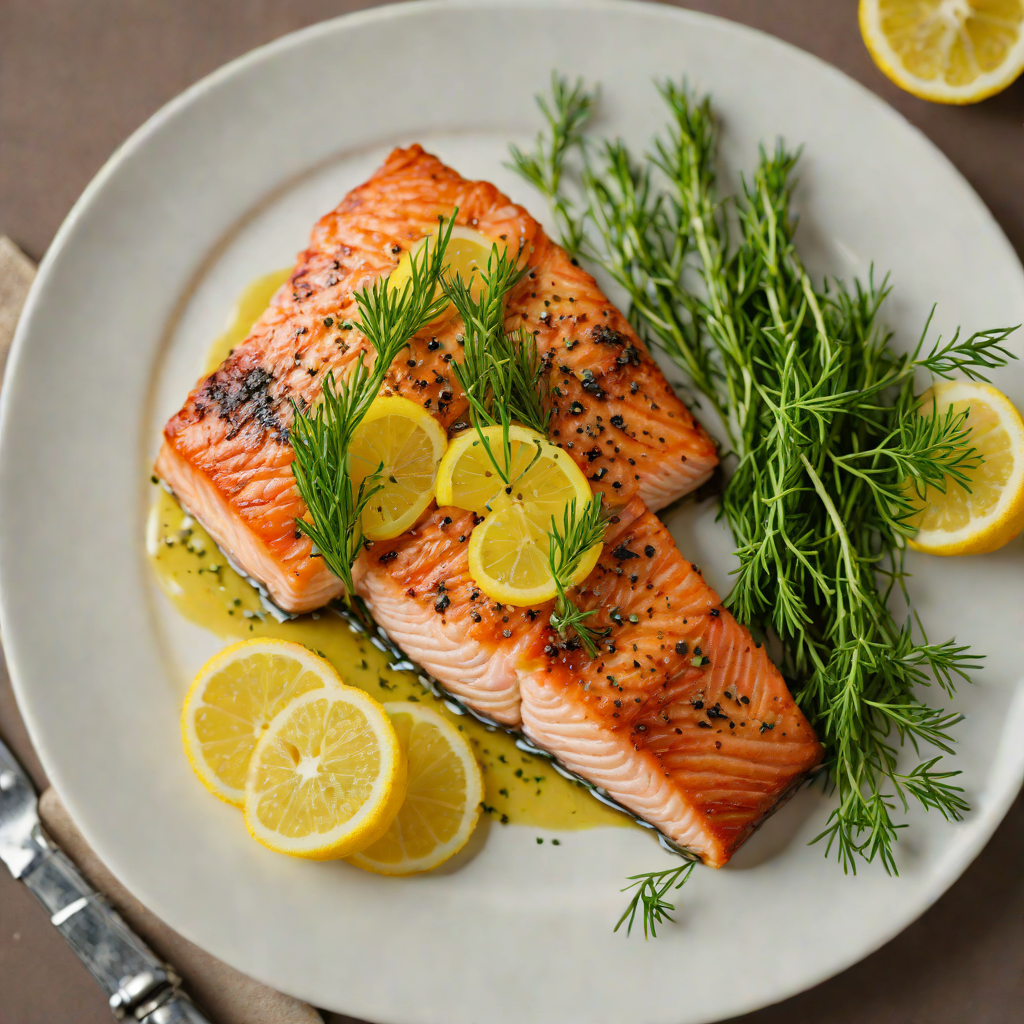
How to Cook Salmon: 20 Recipes + Complete Guide to Buying, Storing & Preparing
Four minutes skin-side down, pull it at 125°F, and the rest is picking the technique that fits your Tuesday.
To cook salmon at home: pat a 6-ounce fillet completely dry, salt it, and cook it skin-side down in a hot, oiled pan for 4–5 minutes without moving it, then flip for 60–90 seconds. Pull at 125–130°F internal for medium — it climbs another 5°F resting. That single technique, plus a 400°F oven for hands-off nights, covers most of what you'll ever need.
Get a free week of easy dinners
Seven weeknight dinners with the shopping list already totalled, sent Sunday. No account needed, unsubscribe in one click.
No spam, unsubscribe in one click. Recipes, shopping lists and Instacart carts all work without an account either way.
Salmon is the weeknight protein that punches above its weight: about 34 grams of protein and 1,500–2,200 mg of omega-3 fatty acids per 6-ounce fillet, ready in under 20 minutes, and forgiving enough that a 30-second timing error doesn't ruin dinner. This guide covers buying, storing, prepping, the five core techniques, and 20 recipes sorted by how much time you have.
How to buy salmon
The buying decision has three axes, and only one of them really moves the eating experience.
Wild vs farmed. Wild Pacific salmon (sockeye, king/chinook, coho, pink, chum) is leaner, deeper in color, and more assertive in flavor. Farmed Atlantic salmon is fattier, milder, and much more forgiving — the extra fat is a buffer against overcooking. Wild sockeye runs $18–28/lb at 2026 US retail; farmed Atlantic runs $9–14/lb. Both are excellent omega-3 sources per the Harvard T.H. Chan School of Public Health's fish guidance. If you're learning to cook fish, start with farmed Atlantic — the margin for error is wider.
Species, if you're buying wild.
| Species | Fat | Flavor | Price/lb (2026) | Best technique |
|---|---|---|---|---|
| King / chinook | Highest | Rich, buttery | $28–40 | Sear, grill, raw |
| Sockeye | Medium | Deep, pronounced | $18–28 | Roast, grill, cure |
| Coho | Medium-low | Mild, clean | $14–22 | Roast, poach |
| Pink / chum | Low | Very mild | $6–10 | Cakes, canned, chowder |
| Farmed Atlantic | High | Mild, buttery | $9–14 | Any — most forgiving |
Fresh vs frozen. Frozen is often the better buy. Most "fresh" salmon at an inland counter was previously frozen and thawed anyway; buying it still frozen means it was flash-frozen at sea within hours of harvest and you control the thaw. Look for vacuum-sealed portions with no visible ice crystals inside the bag, which indicate a thaw-refreeze cycle.
What to look at, at the counter. The flesh should be moist and translucent, not chalky or gaping between the muscle flakes. Press it — it should spring back. It should smell like clean seawater and nothing else; any ammonia note means walk away. Gray-brown streaks along the skin side are normal fat, not spoilage.
On sustainability and sourcing. The Monterey Bay Aquarium's Seafood Watch consumer guides rate specific fisheries and farms rather than species as a whole, which is the right granularity. For context on the wild Atlantic population — which is protected and effectively never what you're buying at retail — see NOAA Fisheries on Atlantic salmon. Background on the commercial species and their nutrition is at Wikipedia — Salmon as food.
How to store salmon
- Fridge, raw: 1–2 days maximum, on ice if you can. Set the fillet on a rack over a plate of ice in the coldest part of the fridge (the back of the bottom shelf, ~34°F). Standard fridge shelves run 38–40°F, and salmon degrades noticeably faster there.
- Freezer: 3 months vacuum-sealed, 1–2 months in regular wrap. Wrap tightly in plastic, then foil, then a bag — freezer burn on fish shows up fast.
- Thawing: overnight in the fridge is the only method that doesn't cost texture. If you're in a hurry, seal the fillet and submerge it in cold water for 30 minutes. Never thaw on the counter (the surface enters the 40–140°F danger zone hours before the center thaws) and never in hot water.
- Cooked leftovers: 3–4 days refrigerated. Cooked salmon reheats badly in the microwave; flake it cold into salads and bowls instead.
Airtight glass storage matters more for fish than for almost anything else — see Storage & Containers.
How to prep salmon
Pin bones. Run a fingertip down the centerline of the fillet from the thick end; you'll feel a row of 12–20 thin bones. Grip each with fish tweezers or needle-nose pliers and pull at the angle it lies, not straight up, or you'll tear the flesh. Two minutes of work.
Skin on or off. Leave it on for pan-searing, grilling, and roasting — it's a heat shield that keeps the bottom from overcooking, and crisped skin is the best part. Remove it for poaching and curing, where it never crisps and turns rubbery. To remove: lay the fillet skin-down, start a cut at the tail end, grip the skin flap, and run a long flexible knife between skin and flesh at a shallow angle. A properly sharp knife is the difference between a clean job and a mangled one — see Knives & Cutting.
Portioning. Cut 6-ounce portions from the thick center for even cooking; save the thin tail end for salmon cakes or gravlax. Aim for pieces of the same thickness rather than the same weight — thickness, not weight, drives the timing.
Salting. Salt 15–40 minutes ahead. The surface draws moisture out, then reabsorbs it as brine, which seasons the interior and helps the skin dry for crisping. Longer than an hour and the texture starts to firm toward cured.
The five core techniques
1. Pan-sear (best crust, 8 minutes)
Dry the skin bone-dry with paper towels. Medium-high heat, 1 tablespoon of oil, and lay the fillet in skin-side down, away from you. Press it flat with a spatula for the first 20 seconds so the skin doesn't curl. Do not move it for 4–5 minutes. The skin releases on its own when it's crisp — if it sticks, it isn't ready. Flip, 60–90 seconds, done.
Recipes: Crispy Skin Pan-Seared Salmon with Lemon-Dill Butter and Crispy Skin Salmon with Lemon-Dill Avocado Mash. Stainless or cast iron only — nonstick can't build the same crust. See Cookware.
2. Roast (most forgiving, 12–15 minutes)
400°F, skin-side down on a lined sheet pan or in a baking dish, 12–15 minutes for a 1-inch fillet. This is the technique to use when you're also cooking two other things. A slower 275°F roast for 25–30 minutes produces an almost silky, uniformly translucent texture and is nearly impossible to overcook.
Recipes: Crispy Skin Baked Salmon with Lemon-Dill Sauce and Lemon-Dill Baked Salmon with Lemon-Butter Sauce. Sheet pans and dishes: Bakeware.
3. Broil (fastest glaze, 6–8 minutes)
Rack 6 inches from the element, broiler on high, 6–8 minutes with no flip. This is the right move for anything with sugar in the glaze — miso, teriyaki, maple, honey — because the direct heat caramelizes it without overcooking the interior. Watch it continuously; the window between caramelized and burnt is about 45 seconds.
Recipes: Miso-Glazed Broiled Salmon with Sesame-Ginger Greens and Broiled Citrus Salmon with Spiced Cauliflower Rice.
4. Poach (silkiest, 10–12 minutes)
Bring court bouillon — water, white wine, lemon, herbs, a bay leaf — to 160–180°F, never a boil. Slide in skinless fillets and hold for 10–12 minutes. The result is delicate, unbrowned, and excellent cold the next day. Butter-poaching at the same temperature is the restaurant version.
Recipes: Lemon-Thyme Poached Salmon with Caper Sauce and Low-Temperature Poached Salmon with Lemon-Dill Sauce.
5. Grill (best flavor, 8–10 minutes)
Clean grates, oil them, high heat. Skin-side down for 6–7 minutes, flip carefully, 2–3 more. Or skip the flip entirely with a cedar plank: soak it 2 hours, set the fillet on top, close the lid, 15–20 minutes over indirect heat.
Recipe: Lemon-Herb Grilled Salmon with Asparagus.
Doneness, in numbers
| Internal temp | Result | Who it's for |
|---|---|---|
| 110–115°F | Rare, translucent center | Sashimi-grade king, seared rare |
| 120–125°F | Medium-rare, silky | The chef default |
| 125–130°F | Medium, just-flaking | The best all-purpose target |
| 135–140°F | Medium-well, firm | Meal-prep, kids, cold flaking |
| 145°F | USDA safe minimum, fully opaque | Pregnancy, immunocompromised diners |
The FDA's advice about eating fish sets 145°F as the safe target and covers serving guidance for pregnancy and children. Most cooks pull earlier by choice; carryover adds 5°F while it rests. An instant-read thermometer removes the guesswork entirely — see Kitchen Gadgets.
Quick weeknight salmon (5)
Dinner on the table in 25 minutes or less.
1. Sheet Pan Salmon with Herbs — the baseline. One pan, 15 minutes.
2. Lemon-Dill Sheet Pan Salmon with Asparagus — asparagus goes in 5 minutes ahead of the fish.
3. Crispy Garlic-Herb Air Fryer Salmon — 390°F, 10–12 minutes, and the best crust you'll get without a skillet. See Small Appliances.
4. Air Fryer Teriyaki Salmon with Steamed Broccoli — glaze in the last 3 minutes so the sugar doesn't scorch.
5. Luminous Lemon Butter Salmon — 12 minutes in one skillet.
Restaurant-quality weekend salmon (5)
1. Crispy Skin Pan-Seared Salmon with Lemon-Dill Butter — the technique showpiece.
2. Japanese-Style Miso Glazed Salmon — marinate 24–48 hours in miso, mirin, and sake. The miso cures the surface as much as it flavors it.
3. Sheet Pan Maple-Glazed Salmon with Asparagus and Sweet Potatoes — a full dinner on one tray.
4. Gin-Cured Citrus Gravlax with Dill — 48 hours under salt, sugar, and weight. Almost no active work, and it makes an $80 appetizer for $18.
5. Honey-Glazed Salmon with Garlic Butter and Asparagus.
Global salmon (5)
1. True Japanese Teriyaki Salmon — a real teriyaki is soy, mirin, sake, and sugar reduced in the pan, not bottled sauce.
2. Mediterranean Lemon-Dill Salmon — olive oil, lemon, oregano, capers.
3. Cajun Spiced Blackened Salmon with Mango Salsa — blackening needs a smoking-hot cast iron pan and, ideally, an open window.
4. Spicy Coconut Salmon with Asparagus and Cherry Tomatoes — the Thai-leaning entry; poach the fillets right in the curry for 8 minutes.
5. Blackened Cajun Salmon with Mango Avocado Salsa — a milder variation on the same idea.
Salmon meal-prep bowls (5)
Cook once on Sunday, eat cold or barely-warmed through Thursday. Meal-prep salmon should go to 135–140°F rather than 125°F — a slightly firmer fillet flakes cleanly and holds four days without turning mushy.
1. One-Pan Salmon and Quinoa Bowl
3. Best Citrus Herb Salmon Salad
4. Glacier Creek Wild Greens & Smoked Salmon Salad
5. Pan-Fried Australian Hash Browns with Smoked Salmon and Avocado — the breakfast entry.
Real-world numbers
Per 6-ounce (170 g) cooked fillet, approximate:
| Type | Calories | Protein (g) | Fat (g) | Omega-3 EPA+DHA (mg) |
|---|---|---|---|---|
| Farmed Atlantic | 350 | 34 | 22 | 2,200 |
| Wild sockeye | 285 | 39 | 13 | 1,500 |
| Wild coho | 245 | 37 | 10 | 1,200 |
| Wild king | 400 | 36 | 27 | 3,000 |
| Wild pink | 210 | 36 | 6 | 1,100 |
Cost per serving at 2026 US retail runs about $3.40 for farmed Atlantic and $8–10 for wild king. Against chicken breast at roughly $1.20 per serving, salmon is the expensive weeknight protein — but it's the only one delivering a full week's omega-3 target in two dinners.
Timing reference by thickness
Thickness, not weight, sets the clock. Measure the fillet at its thickest point.
| Thickness | Pan-sear (med-high) | Roast 400°F | Broil (6 in) | Poach 170°F | Air fryer 390°F |
|---|---|---|---|---|---|
| ½ inch | 2 min + 45 sec | 8–9 min | 4–5 min | 6–7 min | 7–8 min |
| ¾ inch | 3 min + 60 sec | 10–12 min | 5–6 min | 8–9 min | 9–10 min |
| 1 inch | 4–5 min + 90 sec | 12–15 min | 6–8 min | 10–12 min | 10–12 min |
| 1¼ inch | 5–6 min + 2 min | 16–18 min | 8–9 min | 13–14 min | 13–14 min |
| Whole side (2–3 lb) | Not suitable | 20–25 min | 10–12 min | Not suitable | Not suitable |
Add 4–6 minutes to the roast column if you're cooking from frozen, and skip the sear and poach columns entirely for frozen fillets.
Sauces and pairings that work with any technique
Once the fish is cooked, five sauces cover every mood, and each takes under five minutes in the pan you just used.
- Lemon-dill butter. Off heat, swirl 2 tablespoons of cold butter into the pan with lemon juice and chopped dill until it emulsifies. The default for a reason.
- Miso-maple glaze. 2 tablespoons white miso, 1 tablespoon maple syrup, 1 teaspoon rice vinegar. Brush on in the last 3 minutes under the broiler.
- Herb salsa verde. Parsley, capers, garlic, lemon zest, and olive oil, chopped rough. Cuts through the fat of farmed Atlantic better than anything else here.
- Yogurt-cucumber. Greek yogurt, grated cucumber squeezed dry, lemon, garlic, mint. The best cold-leftover partner.
- Soy-ginger-scallion. Soy, rice vinegar, grated ginger, sliced scallion, a few drops of sesame oil, no cooking at all.
For sides, the rule is one starch and one green: rice, farro, or crushed potatoes plus asparagus, green beans, broccolini, or a sharp salad. Salmon is rich enough that a heavy cream-based side makes the plate cloying.
Salmon for specific diets
- High-protein / muscle-building: 34–39 g per 6-oz fillet, which is 40–45% of a 180-lb lifter's daily target in one meal. Cook to 140°F for meal-prep firmness.
- Low-carb and keto: naturally zero-carb and high-fat; farmed Atlantic at 22 g of fat per fillet fits a keto macro split with almost no adjustment.
- Mediterranean pattern: salmon two to three times a week is the canonical oily-fish component. Pair with olive oil, legumes, and vegetables rather than butter-heavy sauces.
- Pregnancy: salmon is a low-mercury choice and is on the FDA's "best choices" list, but cook it fully to 145°F and skip gravlax, lox, and any raw or cold-smoked preparation.
- Kids: the mildest options are farmed Atlantic and coho, cooked to 135–140°F so the texture is firm and flaky rather than silky. A honey or teriyaki glaze converts skeptics faster than any lecture about omega-3s.
Common salmon mistakes
1. Cooking it wet. Any surface moisture steams instead of searing. Paper towels, then salt, then the pan.
2. A pan that isn't hot enough. The oil should shimmer and just start to wisp before the fillet lands. A lukewarm pan glues the skin down.
3. Moving it too early. Four minutes, untouched. Every poke breaks the crust that's forming.
4. Cooking to 145°F by default. Unless there's a safety reason, 125–130°F is the target. Past 140°F the muscle proteins squeeze out moisture and albumin — that white curd on the surface — and the texture turns chalky.
5. Skin-side up in the pan. The skin is the heat shield. It goes down first, always, and for the majority of the cook time.
6. Pan-searing straight from frozen. Roasting and air-frying from frozen work fine; searing doesn't, because the released water steams the fillet. Thaw first for anything skillet-based.
7. Microwaving leftovers. It overcooks unevenly and drives off the smell everyone in the office objects to. Flake it cold instead.
When to skip salmon
If you're feeding a crowd on a budget, salmon is the wrong call — at $3.40+ per serving it's 3x chicken thighs for the same protein. Skip it too if the only option at your store looks gray, gapes between the flakes, or smells of anything but clean water; a bad fillet cannot be rescued by technique. And if you're eating fish more than three or four times a week, rotate in sardines, mackerel, or trout: you get the same omega-3 profile, more variety, and less pressure on a single supply chain.
Keep going
For more ingredient pillars in this series, see How to Cook Quinoa and How to Cook Cube Steak. To build salmon into a week of meals, 5-Day Mediterranean Meal Prep and High-Protein Batch Cooking both lean on it heavily — or let our AI meal planner build the rotation and shopping list for you.
Frequently asked questions
How do I know when salmon is done cooking?
Is wild or farmed salmon better?
Can I cook frozen salmon without thawing?
How do I get crispy salmon skin every time?
How often can I safely eat salmon?
Sources
Plan a week of meals in two minutes.
Tell our AI what you have and what you like — it builds your plan, shopping list, and Instacart cart. No account needed.
Try free →