Instant Pot or Slow Cooker? Which to Buy, by What You Cook and When You Cook It
One question decides it: do you plan dinner in the morning or at 5 pm? Here's how to pick the right appliance for your week.
Where to buy these picks
Affiliate links: we may earn a commission on qualifying Amazon purchases. Policy. Prices show only when checked in the last 24 hours.
- Instant Pot Duo 7-in-1 Electric Pressure Cooker 6 Qt $109.99 at Amazon, Check price on Amazon →
- ThermoPro Digital Instant Read Meat Thermometer for Grilling Waterproof Kitchen Cooking… $14.99 at Amazon, Check price on Amazon →
- Instant Pot 6QT RIO 7-in-1 Multi-Cooker $109.99 at Amazon, Check price on Amazon →
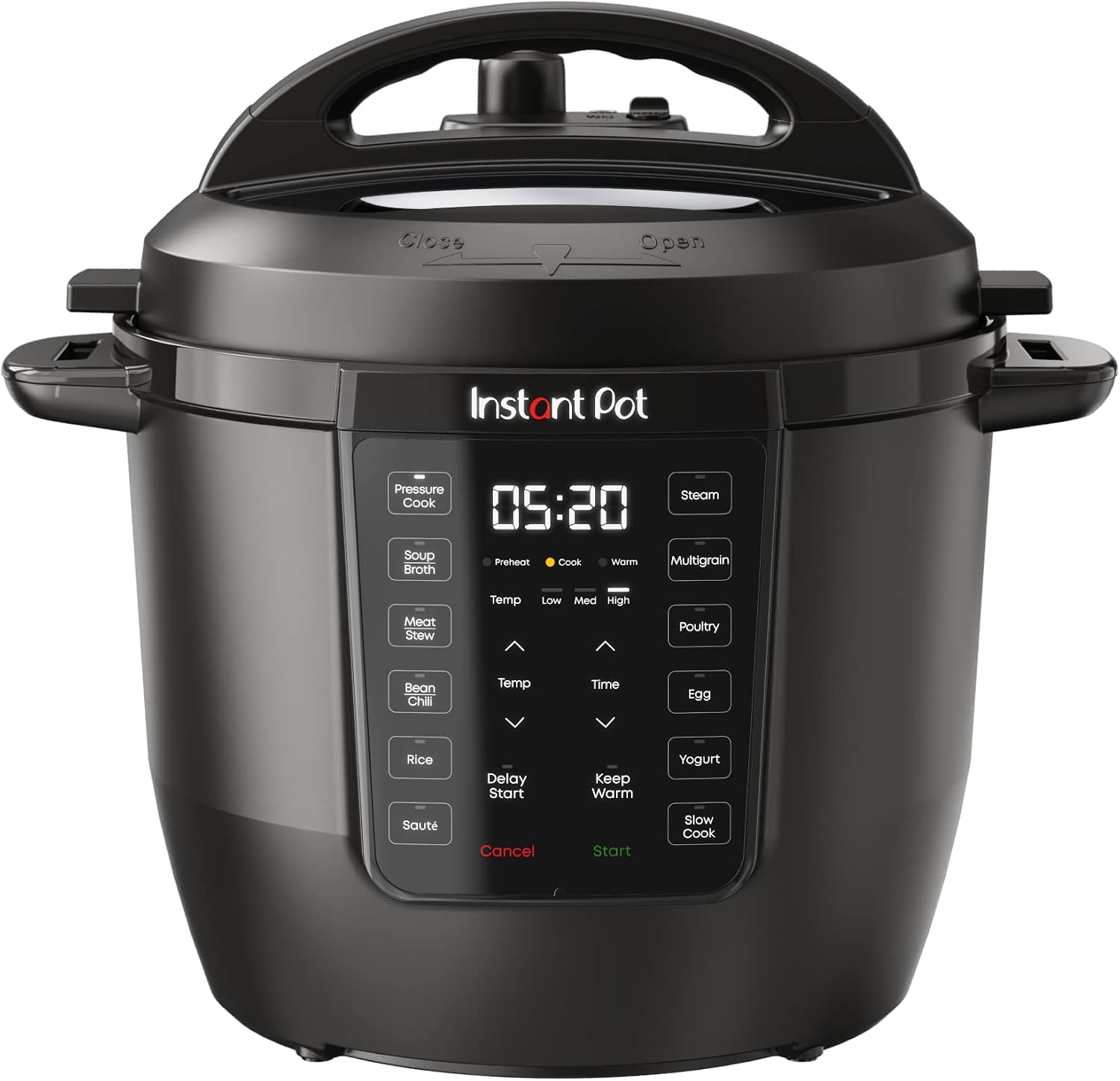
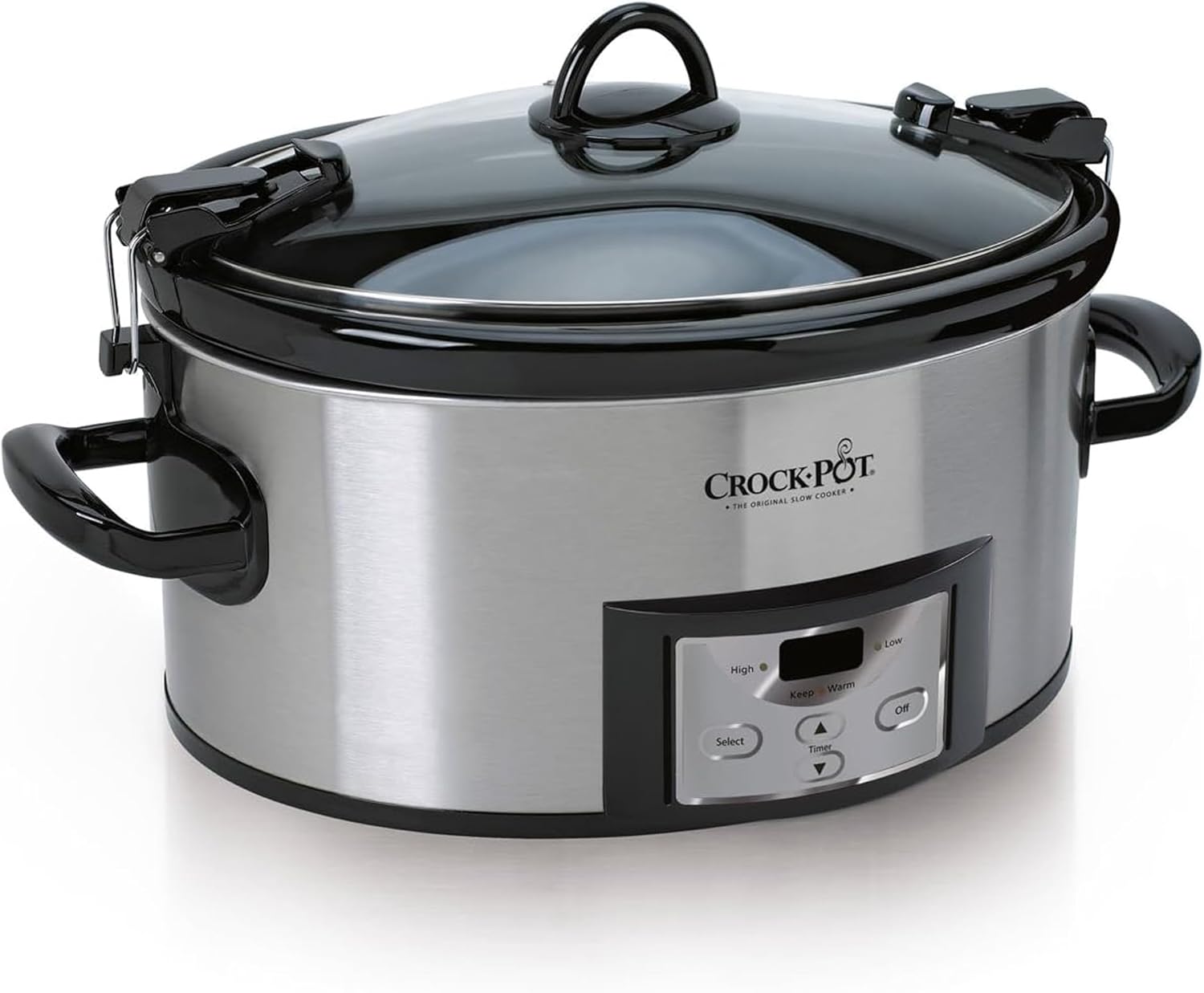
Short answer: buy an Instant Pot if you decide what's for dinner at 5 pm. Pressure cooking gets most braises, beans and stews to the table in about an hour, and nearly every Instant Pot also has a slow-cook mode. Buy a slow cooker if you decide at 8 am and want dinner waiting when you walk in the door. You'll pay a lower price tier and get a bigger pot for the money. If you can only fit one on the counter and you don't plan meals ahead, buy the Instant Pot. Our beginner picks are the 6-quart Instant Pot Duo 7-in-1 on one side and a Crock-Pot Cook & Carry programmable slow cooker on the other.
That's the verdict. The rest of this page helps you work out which kind of cook you are. It covers the trade-offs the spec sheets don't spell out, and the one food-safety rule that settles the question for anyone who cooks dried kidney beans.
Already know which appliance you want and need help choosing a model? Our two full buying guides rank five of each: the best Instant Pots and electric pressure cookers for 2026 and the best slow cookers for 2026. This page sits above both. It answers the question you have to settle before either one is useful. Both appliances live in our small appliances section if you'd rather browse.
Which one fits your week
The appliance isn't really the decision. The decision is when you make dinner decisions, how many people you feed, how much counter you have, and what you actually cook. Work through these four questions in order. Most people have their answer by the second one.
1. When do you decide what's for dinner?
This question matters more than the other three combined.
- You decide in the morning, or the night before. A slow cooker fits that rhythm. You load it before work, set it to Low, and it holds the food at a safe simmer for 8 to 10 hours with nothing for you to do. A programmable model switches itself to Warm when the timer runs out, so dinner waits for you rather than overcooking.
- You decide at 5 pm. A slow cooker can't help you. A pot roast that needs 8 hours on Low is a weekend project at that point. A pressure cooker gets the same cut tender in roughly an hour, start to finish (see the timing table below), so the Instant Pot is the only one of the two that rescues a weeknight you didn't plan.
- It depends on the day. Buy the Instant Pot. It covers both cases, because it has a slow-cook mode and a delay-start timer. A slow cooker can't do the reverse.
2. How many people are you feeding?
- One or two people: either works. A 3-quart Instant Pot or a 3- to 4-quart slow cooker is plenty. If you're leaning toward the Instant Pot, our guide to 3-quart mini Instant Pots covers the small end.
- A family of four: a 6-quart Instant Pot or a 6- to 7-quart slow cooker. The 6-quart Instant Pot is the size most online pressure-cooker recipes are written for.
- Crowds, potlucks and freezer batches: a 7-quart oval slow cooker. A pressure cooker can't be filled past its max-fill line (about two-thirds full, and half full for beans and grains, per Instant Brands' manuals). So a 6-quart Instant Pot holds less usable food than the number suggests. An oval 7-quart slow cooker takes a whole chicken or a 5-lb pork shoulder without a fight.
3. How much counter and cabinet space do you have?
A 6-quart Instant Pot replaces a slow cooker, a rice cooker and a steamer, and on most models a yogurt maker too. In a small kitchen, consolidating several appliances into one is often the deciding factor. A 7-quart oval slow cooker is a big, single-purpose object to store. It also only earns its space if you use it every week or two.
4. What do you cook most?
| If you mostly cook… | Better fit | Why |
|---|---|---|
| Dried beans, chickpeas, lentils | Instant Pot | Unsoaked beans in under an hour; safe for kidney beans (see the safety section) |
| Pot roast, pulled pork, short ribs | Either | Slow cooker if you're out all day; Instant Pot if you start at 5 pm |
| Big-batch chili for a crowd | Slow cooker | Larger usable capacity at a lower price tier |
| Rice, steel-cut oats, hard-boiled eggs | Instant Pot | Dedicated programs; a slow cooker isn't built for these |
| Stock and bone broth | Instant Pot | Hours shorter than the stovetop under pressure |
| Dips and party food kept warm for hours | Slow cooker | Glass lid, Warm setting, a crock you can carry to the table |
| Long Sunday braises you want to check on | Slow cooker | You can see the food through the lid and taste as you go |
Other gear this guide links
Prices are shown only when checked in the last 24 hours; otherwise check the current price on Amazon.
The counter-cases
Each appliance has a clear no-fit case. Make sure you aren't in it.
- Skip the slow cooker if you rarely plan before noon. It's the right tool for people who prep ahead. If you don't, it ends up in a cabinet next to the bread machine.
- Skip the Instant Pot if what you really want is a 7-quart pot for crowd chili at the lowest price tier. A 7-quart programmable slow cooker sits in a lower price band than a 6-quart Instant Pot, and it holds more finished food. If you never need dinner fast, the pressure function is money spent on a feature you won't use.
Instant Pot vs slow cooker: the specs side by side
Every figure below comes from the makers' listings and manuals or from our two parent guides. The cook times are the hands-off figures those sources give for the same kind of dish. Prices are dollar bands, not point prices, because both categories swing a lot around deal events. The live price buttons further down show today's number.
| Spec | 6-quart Instant Pot (Duo / Rio) | 6- to 7-quart programmable slow cooker (Crock-Pot Cook & Carry) |
|---|---|---|
| Pot roast or pulled pork, hands-off | About 60 min at high pressure + 15 min natural release + 10–12 min to come up to pressure (roughly 1.5 hr total) | 8–10 hr on Low or 4–6 hr on High |
| Beef stew | About 35 min at pressure + 15 min release (about 1 hr total) | 7–9 hr on Low |
| Capacity range in the line | 3, 6 and 8 quarts | 2 to 7 quarts (Cook & Carry: 6 and 7) |
| Cooking programs | 7 functions (pressure cook, slow cook, sauté, steam, rice, yogurt, keep warm); the Rio adds 13 one-touch Smart Programs | Low, High, Warm, plus a digital countdown timer |
| Sear / sauté in the pot | Yes, built-in sauté | No; brown meat in a skillet first |
| Keep-warm | Automatic after cooking | Automatic switch to Warm when the timer ends |
| Delay start | Yes | No (the timer counts down cooking time; it doesn't delay the start) |
| Lid | Sealed pressure lid with a steam valve; an optional glass lid is sold separately | Glass lid with a locking clip system for transport |
| Rated power | 1,000 W (per the Rio listing) | 240 W (per the 6-quart Cook & Carry listing) |
| Price tier | $75–$150 | Under $100; basic 7-quart manual models under $60 |
The pressure-cooker times come from the timing table in our Instant Pot buying guide, which assumes a 6-quart pot at high pressure with natural release. The slow-cooker times are the standard Low/High ranges from our slow cooker guide, and they match Crock-Pot's own rule of thumb of roughly two hours on Low for every hour on High.
Read the power row with care. The slow cooker draws about a quarter of the wattage but runs eight times as long. Neither appliance will noticeably change your electric bill, so don't choose on energy.
What the slow-cook button on an Instant Pot does and doesn't replace
Every Duo and Rio has a Slow Cook function. Owners are right to ask whether it makes a dedicated slow cooker redundant. Mostly it does, with three caveats.
How the settings map. On the classic Duo, the Slow Cook temperature levels are labeled Less, Normal and More. Instant Brands' manual maps them to a conventional slow cooker's Low, Medium and High. Newer models label them Low, Medium and High directly. Owner forums say the same thing again and again: the Instant Pot's lowest setting runs cooler than a Crock-Pot's Low. Many cooks use the Instant Pot's More/High setting when a recipe calls for "Low, 8 hours," and add time if the meat isn't tender. Our slow cooker guide makes the same point. The Instant Pot's slow-cook mode "runs a few degrees cooler than a dedicated slow cooker and is less forgiving of long unattended cooks."
The heat comes from the bottom only. A slow cooker's stoneware crock is heated from the bottom and up the sides. An Instant Pot heats from a single element under a thin steel pot. For a soup or a stew that's full of liquid, it makes little difference. For a thick braise that sits for 10 hours, the bottom-only heat makes scorching or uneven cooking more likely.
The lid is the real difference. In slow-cook mode you use the pressure lid with the valve set to Venting, or buy the separate glass lid. Either way, the standard setup doesn't let you watch the food. A glass-lid slow cooker lets you see whether the sauce is reducing and whether the short ribs are falling apart. You can lift the lid to taste without breaking a seal. For the long Sunday braise you check on three times, a real slow cooker is still the easier tool.
So, when is one appliance enough? If you slow-cook once a month, the Instant Pot's mode is plenty. If slow cooking is how you get through the week, buy a dedicated slow cooker. You'll get a bigger pot, more even heat and a lid you can see through. Plenty of households end up with both, because the two machines aren't really competitors. One is for planned meals and the other is for last-minute ones.
Food safety: thawing, the danger zone and the kidney-bean rule
Both appliances are designed to run unattended. The safety rules are different for each, though, and one of them decides the matter for bean cooks.
Thaw meat before it goes in the slow cooker. The USDA Food Safety and Inspection Service is explicit on this. Its Slow Cookers and Food Safety guidance tells you to always defrost meat or poultry before slow cooking it. A frozen roast spends too long climbing through the temperature range where bacteria multiply. FSIS also advises the following:
- Fill the cooker between half and two-thirds full.
- Keep the lid on except to stir or check doneness, because every lift costs heat.
- Where possible, start on High for the first hour.
An Instant Pot is different. It can cook meat from frozen under pressure, because it heats up so quickly. Add time per the manual.
Know the danger zone and the finish temperatures. Bacteria grow fastest between 40°F and 140°F, which is why the slow cooker's job is to get food above that range promptly. The USDA's safe minimum internal temperature chart lists these finish temperatures:
- 165°F for poultry.
- 160°F for ground meat.
- 145°F for whole cuts of beef and pork, plus a 3-minute rest.
Whichever appliance you buy, check doneness with a probe rather than the clock. Our guide to the best instant-read thermometers has picks starting in the under-$25 tier, including the ThermoPro TempPro instant-read thermometer.
Never cook dried kidney beans in a slow cooker. This is the rule that settles it. Raw red kidney beans contain phytohaemagglutinin, a lectin that causes severe vomiting within hours. The FDA's Bad Bug Book says as few as four or five raw beans can trigger symptoms. It is specific about slow cookers. It says they "don't get hot enough to destroy the toxin," and it notes that slow-cooked casseroles in studies often reached only 75°C (167°F) internally. FDA's advice has three steps:
1. Soak the beans for at least 5 hours.
2. Pour away the soaking water.
3. Boil the beans in fresh water for at least 30 minutes.
Slow cookers should not be used for these beans, or for dishes that contain them, at all.
A pressure cooker at high pressure runs above the boiling point of water, so it handles kidney beans safely when you use the manual's bean times. Canned kidney beans are already cooked and are fine in either appliance. If your household cooks beans from dry every week, buy the Instant Pot.
One beginner pick for each
These come straight from our two parent guides. There are no new products here, and nothing we picked just for this page. The buttons go to the live listing, which shows today's price.
Instant Pot: Instant Pot Duo 7-in-1 or Rio, 6-quart
The Instant Pot Duo 7-in-1 (6-quart) is the Best Overall pick in our Instant Pot guide. It's the model most online pressure-cooker recipes are written against. You get a stainless steel inner pot with no non-stick coating to flake and a three-ply bottom for sautéing. Instant Brands lists 10 built-in safety mechanisms.
The Instant Pot Rio (6-quart) is that guide's Best for Beginners pick. It's the same seven functions and the same 6-quart 18/8 stainless pot. It adds an Easy-Release steam switch and 13 one-touch Smart Programs, so letting the pressure out is less nerve-racking the first few times. Duo recipes work on the Rio unchanged.
The Duo and the Rio often trade places on price, so buy whichever is cheaper on the day. If you've never used a pressure cooker, the Rio's easier venting is worth a small premium. Price tier: $75–$150.
Check price: Instant Pot Duo 6-qt · Check price: Instant Pot Rio 6-qt
Slow cooker: Crock-Pot 7-Quart Cook & Carry Programmable
The #1 pick in our slow cooker guide is the Crock-Pot 7-Quart Cook & Carry Programmable. Its oval 7-quart crock fits a whole chicken or a 5-lb pork shoulder. It has a digital timer you can set in half-hour steps from 30 minutes to 20 hours, and it switches to Warm automatically. The ceramic insert is dishwasher-safe, and the locking lid with gaskets lets you carry it to a potluck without spilling.
What it gives up is a sear function. You brown meat in a separate skillet, which is the honest trade for a lower price tier.
If you don't need the seventh quart, that guide's #2 pick is the Crock-Pot 6-Quart Cook & Carry Programmable. It's the same design one size down, with the same timer, auto-warm and locking lid. Price tier: under $100.
Check price: Crock-Pot 6-Quart Cook & Carry
How we picked
This is a comparison built from documents, not a cook-off. Here is where every claim on this page comes from:
- Specs and functions: the makers' product listings and manuals. That covers the Instant Pot's capacity, programs, max-fill lines and slow-cook settings, and the Crock-Pot's capacity, timer range and lid. Wattage figures are the ones printed on the product listings.
- Cook times: the pressure-cook timing table in our Instant Pot guide and the Low/High ranges in our slow cooker guide, both drawn from maker guidance and widely published recipe times.
- The picks: the existing selections in our two parent guides. We didn't add or rank any new products for this page.
- Food safety: the USDA FSIS slow-cooker and safe-temperature pages and the FDA's Bad Bug Book, quoted and linked inline.
- Owner experience: where we say owners report something, such as the Instant Pot's slow-cook mode running cool, it comes from recurring owner feedback, not from a test of ours.
We didn't run side-by-side cook tests for this article. Where a number would need one, we've said where the figure comes from instead.
Common mistakes with each appliance
Instant Pot:
- Forgetting the come-up time. "15 minutes at pressure" isn't 15 minutes. Add 10–12 minutes to reach pressure and often 10–15 minutes of natural release.
- Overfilling. Respect the max-fill line, and the half-full line for beans and grains, which foam.
- Getting the burn notice. Too little thin liquid, or thick sauces like tomato paste stirred into the bottom, trigger it. Layer thick ingredients on top and don't stir them in.
- Using slow-cook mode with recipe times written for a Crock-Pot. Expect to add time.
Slow cooker:
- Lifting the lid to check. Each peek costs heat and can add a lot of cooking time.
- Starting with frozen meat. USDA advises against it (see above).
- Underfilling. A 7-quart crock with a 2-lb roast in it cooks fast and dries out. Stay between half and two-thirds full.
- Cooking dairy and delicate vegetables for the full time. Add cream, cheese, peas and fresh herbs in the last 30 minutes.
Three households, three answers
- Two working parents, two kids, home at 6 pm, no meal plan: Instant Pot. Dinner gets decided in the car, and the pressure cooker is the only one of the two that can respond to that.
- A retiree who batch-cooks chili and soup on Sundays and freezes portions: slow cooker, specifically a 7-quart. They get more usable volume for less money, a glass lid to watch the pot, and no deadline to beat.
- A plant-based cook who goes through a pound of dried beans a week: Instant Pot, without question. Unsoaked beans are done in under an hour, and FDA's kidney-bean warning rules the slow cooker out for the beans they cook most.
What to cook first in each
The quickest way to find out whether you bought the right appliance is to cook something you'd make anyway.
First Instant Pot dinners:
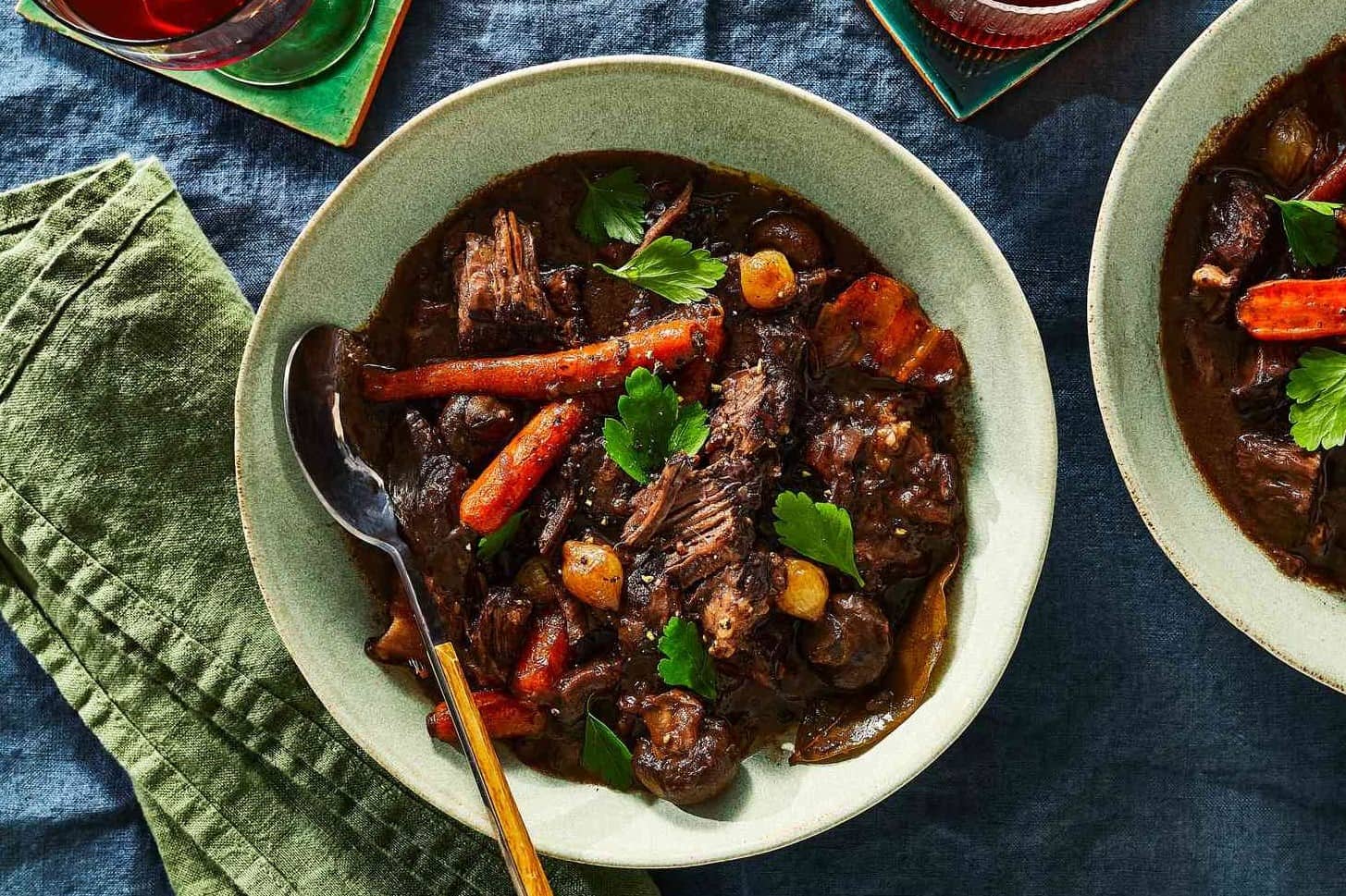
- Instant Pot Beef and Vegetable Stew with Red Wine is the classic "this used to take all afternoon" test.
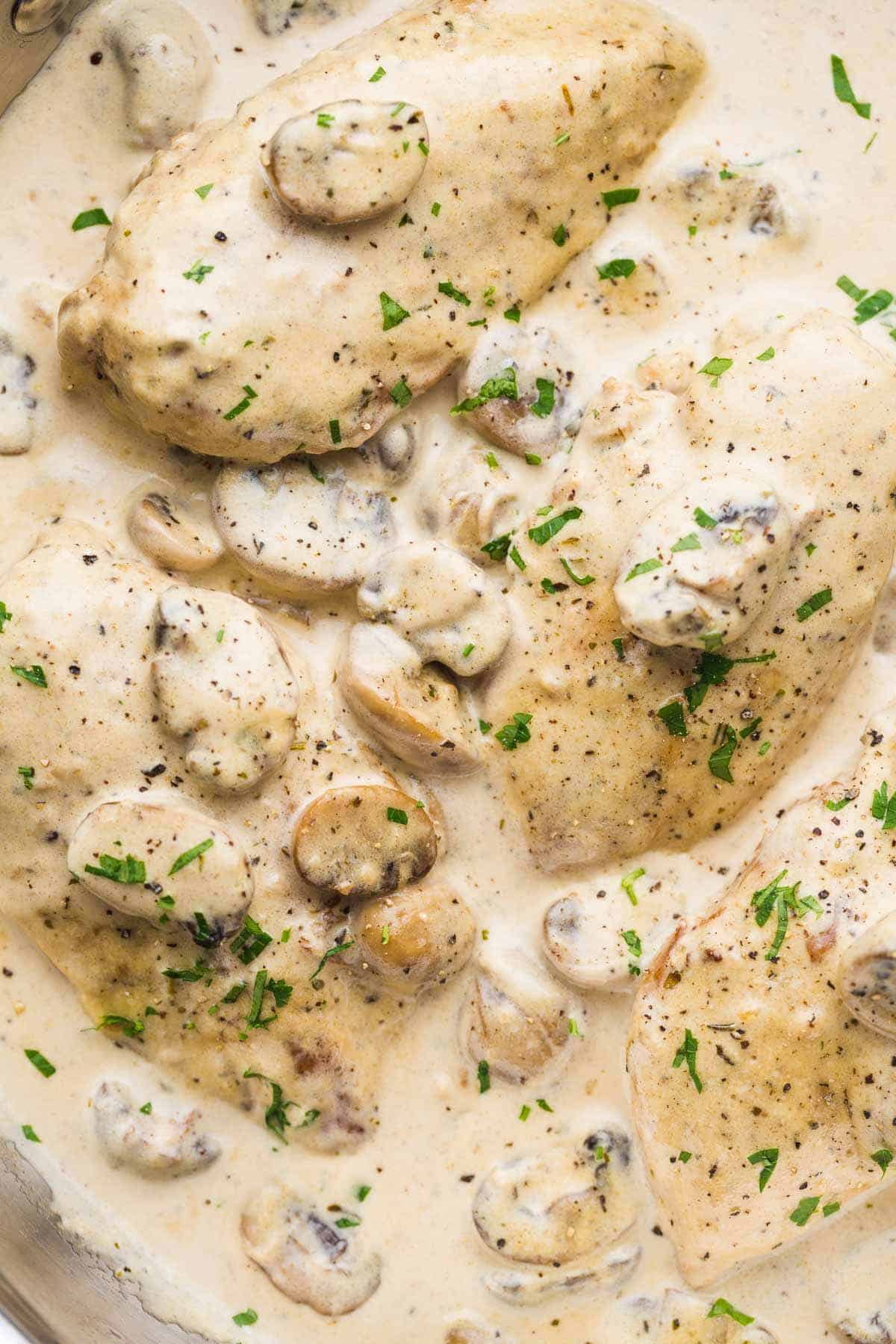
- Instant Pot Creamy Mushroom Chicken is a weeknight dinner that uses the sauté function before pressure.
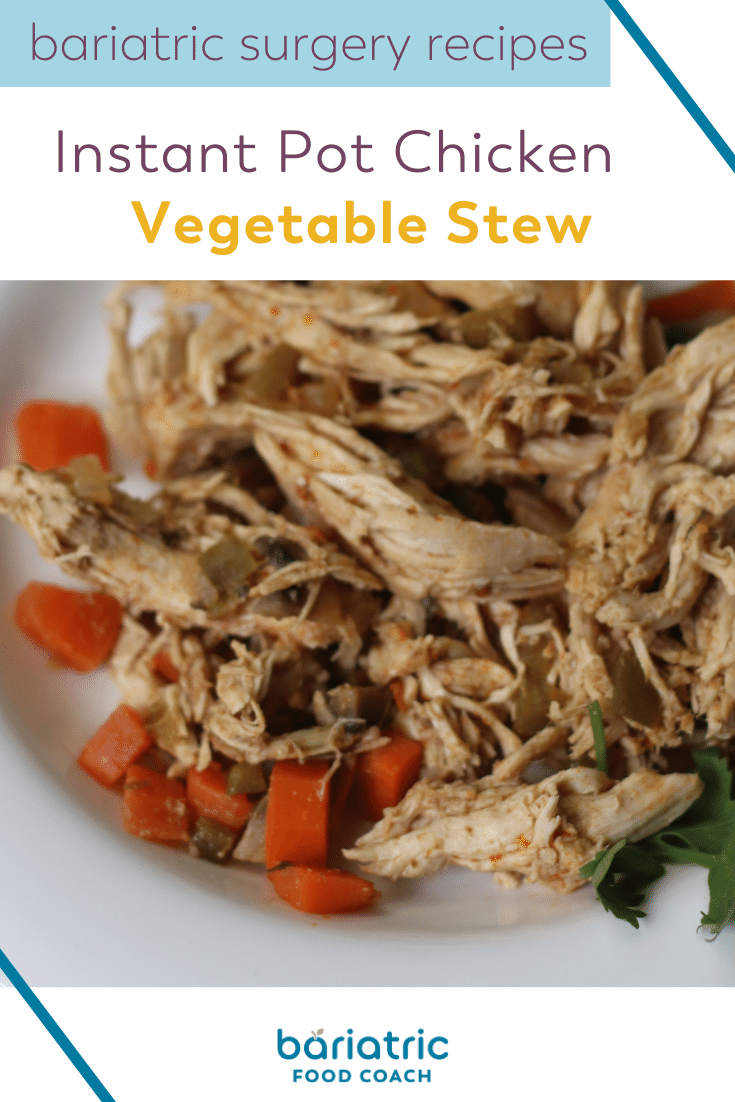
- Instant Pot Chicken and Root Vegetable Stew is forgiving on timing and good for a first run.
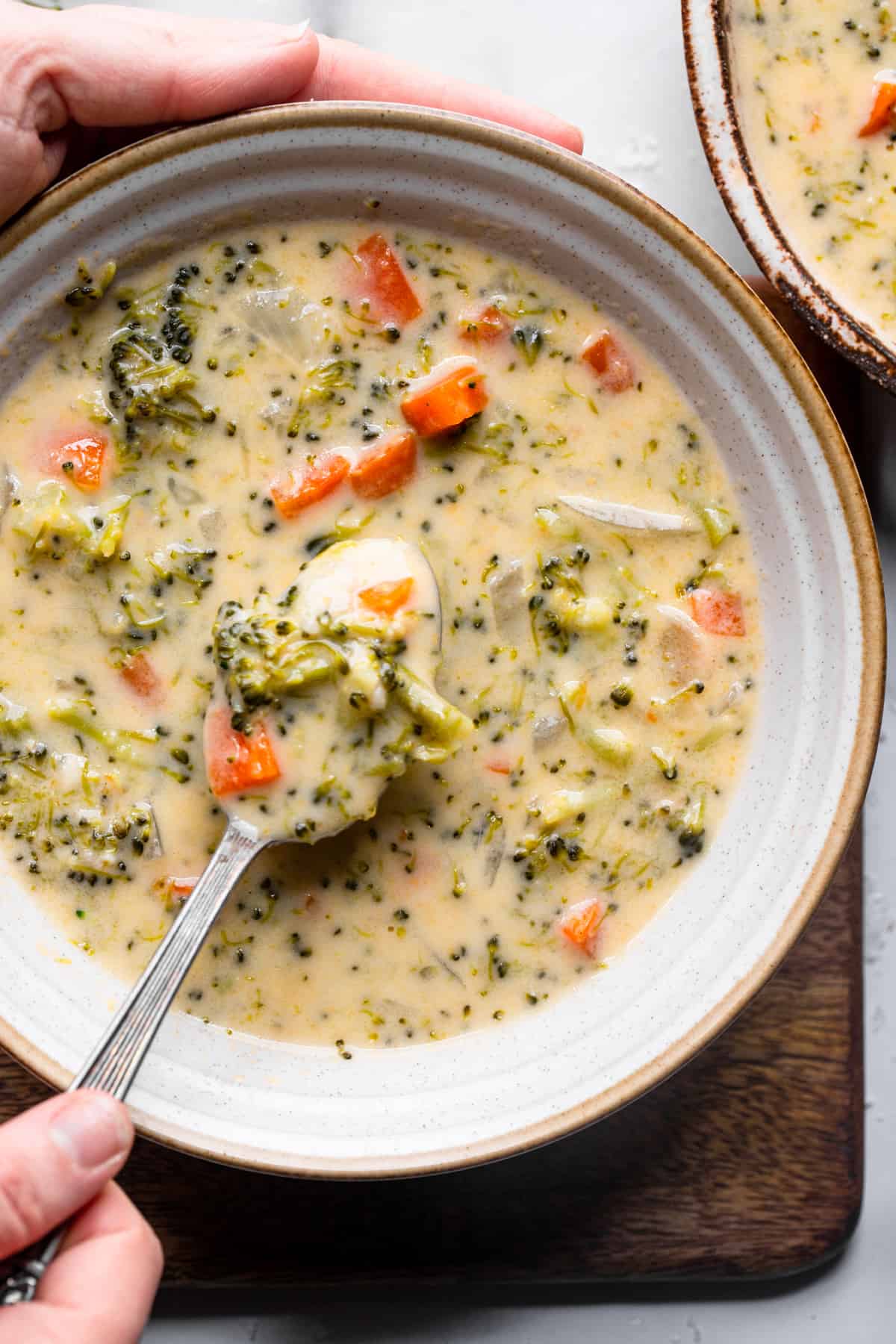
- Instant Pot Broccoli and Cheddar Cheese Soup adds the cheese after the pressure comes down.
For a month of ideas, see our 20 Instant Pot dinners for beginners.
First slow cooker dinners:
- Slow Cooker Tennessee Pulled Pork with Tangy Vinegar Sauce is the dish the appliance was born for.
- Slow Cooker Citrus-Glazed Beef Brisket shows off the oval crock.
- Slow Cooker Cumin-Lime Chicken with Black Beans uses canned black beans, so it's safe in the slow cooker.
- Slow Cooker Coconut Curry Chicken with Sweet Potatoes is a dump-and-go recipe that waits for you on Warm.
More set-and-forget ideas are in 20 slow cooker dinners with 15 minutes of prep and our Whole30 crockpot recipes.
Either appliance: our one-pot weeknight dinners and fall soups and stews roundup adapt to both. Use the Instant Pot for the same-day version and the slow cooker for the all-day one. Add any recipe to your meal plan and AislePrompt rolls the ingredients into one shopping list.
Sources
- USDA FSIS: Slow Cookers and Food Safety: thawing, fill level, lid and first-hour guidance.
- USDA FSIS: Safe Minimum Internal Temperature Chart: finish temperatures for poultry, ground meat and whole cuts.
- FDA: Bad Bug Book, 2nd edition: the phytohaemagglutinin (kidney bean lectin) chapter, including the slow-cooker warning.
- Instant Brands: Instant Pot Duo 6-quart product page: functions and safety features.
- Our parent guides: best Instant Pots and electric pressure cookers and best slow cookers, for the picks and the timing data.
Frequently asked questions
Can an Instant Pot replace a slow cooker completely?
Is a slow cooker or an Instant Pot better for dried beans?
Which is safer to leave running while I'm at work?
What size should I buy for a family of four?
Which one is cheaper to buy?
Recipes to try with the slow cooker
Put your gear to work — save any recipe to My Recipes (no account needed) and send its ingredients to Instacart in one tap.
Shop small appliances on AislePrompt →Browse the full kitchen shop →