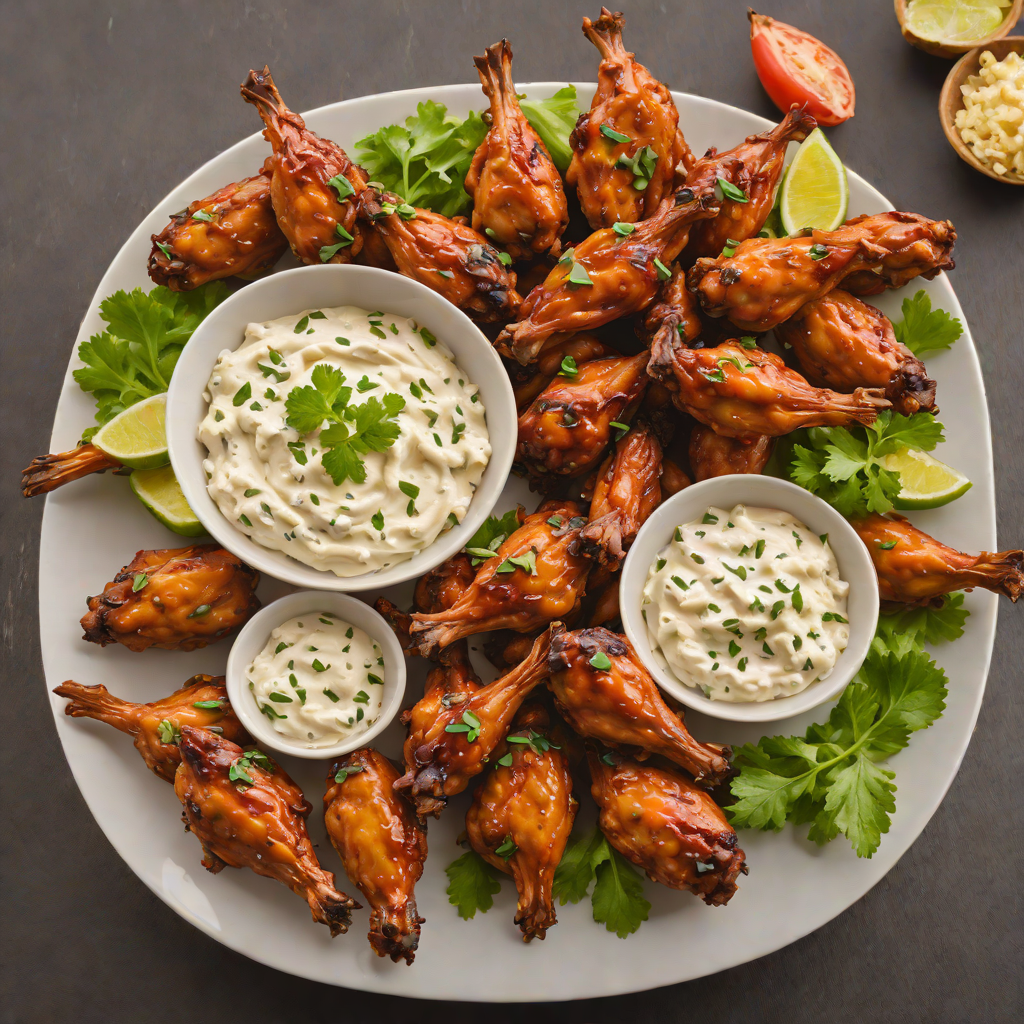
20 Football Tailgate Recipes: Chili, Wings & Game-Day Snacks for a Crowd
One hot thing you made yesterday, two handhelds, three dips, one sweet — and nothing that has to be cooked to order in a parking lot.
Feeding 12 to 20 people at a tailgate comes down to one hot thing you made yesterday, two handhelds that survive room temperature, three dips, and a sweet — total, about four hours of cooking spread across Friday and Saturday morning. College football kicks off the weekend of August 29 and NFL Week 1 starts September 4, so this is the weekend to lock in the rotation you will run through January.
Get a free week of easy dinners
Seven weeknight dinners with the shopping list already totalled, sent Sunday. No account needed, unsubscribe in one click.
No spam, unsubscribe in one click. Recipes, shopping lists and Instacart carts all work without an account either way.
Introduction: what actually feeds a football crowd of 12-20 without stress
The mistake almost everyone makes at their first tailgate is cooking to order in a parking lot. Grilling burgers for eighteen people out of a cooler, on a folding table, in the wind, with one propane burner, is a punishment. The people who do this well cook 80% of the food at home the day before and treat the tailgate itself as a reheat-and-assemble operation.
The second mistake is under-scaling. A tailgate crowd grazes for three to four hours, drinks the entire time, and eats substantially more than they would at a dinner party. Plan on 1.5 pounds of total food per adult across the whole spread, and roughly one pound of protein for every three people if there is also a chili and multiple dips.
The third mistake is a menu where four items all need to be hot at once. You get one heat source. Build the spread so exactly one thing is hot and everything else is deliberately room-temperature.
Here is the template that works, tested across a full season:
| Component | Count | Why |
|---|---|---|
| Chili or braise | 1 | The hot anchor; holds in a slow cooker for 6 hours |
| Handhelds | 2 | Sliders, wings, or subs — eat standing, no plate |
| Dips | 3 | Cheap, made ahead, cover the whole grazing window |
| Side | 1 | Baked beans, mac salad, or slaw — stretches the protein |
| Sweet | 1 | Bar-format only; nothing that needs a fork |
The tailgate framework: 1 chili + 2 handhelds + 3 dips + 1 sweet
The reason this ratio works is that it maps to how people actually eat at a tailgate: heavy grazing for the first hour, a real plate at the two-hour mark, then picking until kickoff.
Quantities for 16 people:
| Item | Amount | Cost |
|---|---|---|
| Chili | 8 quarts (2 gallons) | $32 |
| Wings | 8 lbs raw (about 80 wings) | $28 |
| Sliders | 24 (1.5 per person) | $30 |
| Dip #1 (hot) | 3 quarts | $14 |
| Dip #2 (cold, layered) | 9×13 pan | $16 |
| Dip #3 (fresh) | 6 cups | $12 |
| Baked beans | 6 quarts | $12 |
| Chips, crackers, buns | — | $22 |
| Sweet (bar format) | 1 half-sheet | $10 |
| Total | ||
| ~$176, about $11 a head |
That is dramatically cheaper than the $18–25 per person you would spend on catered barbecue, and about a third of what the same crowd would spend inside the stadium.
The three-dip rule. One hot dip that lives in a slow cooker, one cold layered dip that improves overnight, and one fresh dip that you make the morning of. Three dips of the same temperature and texture read as one dip served three ways.
Chili done right: red, white, and green + a Cincinnati wildcard
Chili is the tailgate anchor because it improves for 48 hours, holds indefinitely on low heat, scales linearly, and feeds people who arrived hungry and people who arrived four hours late equally well.
Red chili — the default. Make it Thursday or Friday. The two things that separate a good pot from a great one: brown the meat in batches in a genuinely hot pan (crowding gives you gray, steamed beef and no fond), and bloom the chili powder and cumin in the fat for 60 seconds before any liquid goes in. Use chuck cut into ½-inch cubes rather than ground beef if you have the knife time — the texture is meaningfully better. Spiced Texas-style chili with smoked beef and black beans is a strong starting point, and slow cooker Riverside beef chili with craft beer is the set-and-forget version. Low-heat slow cooker beef chili with smoked paprika is the one to make when kids are coming.
White chili — the second pot. Chicken, white beans, green chilies, cumin, and a finish of sour cream or masa slurry. It exists because 20% of any crowd will not eat a heavy red chili, and because the two pots look great next to each other. Woodbridge white chicken chili and spiced chicken and white bean chili both scale cleanly to a gallon.
Cincinnati chili — the wildcard. Thinner, spiced with cinnamon, allspice, and cocoa, served over spaghetti with a mound of shredded cheddar. It divides a room and the people who love it will talk about it all season. Sweet and spicy Cincinnati-style chili con carne is the version to bring.
Transport and holding. A 6-quart slow cooker holds at 160–175°F on Low, which is above the 140°F food-safety floor with margin. Transport the chili hot in the insert wrapped in a towel inside a cooler — it will still be over 150°F three hours later. Bring a 400W inverter or a tailgate generator if you want it on power at the lot. Never transport chili warm and then let it sit unpowered for more than two hours; that is the classic tailgate food-safety failure.
Toppings bar, in order of importance: shredded sharp cheddar, diced raw onion, sour cream, sliced jalapeño, Fritos, cilantro, hot sauce. Put them in a muffin tin — one topping per cup, no separate bowls to lose.
Wings 5 ways: buffalo, honey garlic, dry rub, Korean, lemon pepper
Wings are the highest-value tailgate protein: about $3.50 per pound raw, four wings per person as a component of a bigger spread, and they are the one hot item people will happily eat at 130°F.
The technique that fixes soggy wings: pat them bone dry, toss with 1 teaspoon of baking powder (not soda) and ½ teaspoon salt per pound, and rest uncovered on a rack in the refrigerator for 4–24 hours. The baking powder raises the skin's pH, which accelerates browning and blistering. Then roast at 250°F for 30 minutes to render, and 425°F for 40–50 minutes to crisp. This produces genuinely fried-quality skin from an oven.
Sauce them at the venue, not at home. Sauced wings go soft in 20 minutes. Transport them naked in a foil pan, bring the sauces in squeeze bottles, and toss in a disposable aluminum pan on site.
The five to rotate through a season:
1. Buffalo — Frank's RedHot and butter at 2:1, nothing else. Grilled buffalo-style chicken wings with blue cheese dip and buffalo wing-style smoked chicken wings with blue cheese dip.
2. Honey garlic — sweet, sticky, the one kids finish. Oven-roasted BBQ chicken wings with honey and garlic glaze.
3. Dry rub — no sauce at all, so it survives transport best of the five. Maple-glazed smoked chicken wings with dry rub.
4. Korean — gochujang, soy, garlic, rice vinegar; double-fried for the crackle. Crispy Korean-style chicken wings with gochujang garlic glaze and double-fried Korean chicken wings with sweet soy glaze.
5. Lemon pepper — the Atlanta standard, dry-seasoned and bright. Grilled lemon-pepper chicken with roasted garlic aioli uses the same seasoning profile on a larger cut if wings run out.
Math: 8 pounds of raw wings is roughly 80 pieces and feeds 16 people as one of several items. Two half-sheet pans with racks, cooked in two oven cycles Saturday morning.
Sliders, subs, and handhelds that hold at room temp
The second protein should require zero equipment at the lot. Sliders and subs are built at home, wrapped, and eaten cold or barely warm.
Slider architecture. A tray of 12 slider buns, sliced horizontally as one sheet, filled, topped, and baked in the pan is faster and holds far better than 12 individually assembled sandwiches. The one structural rule: a moisture barrier between the meat and the bottom bun — a layer of cheese, a smear of butter, or a leaf of lettuce. Without it the bottom is wet paste by kickoff.
Best options: Game Day smoked brisket sliders with spicy pickled onions and smoked brisket sliders with pickled onions — the pickled onion does double duty as acid and moisture control. For pork, Springfield-style pulled pork sandwiches with tangy slaw and slow-smoked pulled pork sandwiches with tangy coleslaw both hold well if you keep the slaw in a separate container until serving.
Subs. An East Coast Italian sub with Genoa salami and provolone built on a full loaf, wrapped tight in butcher paper, and pressed under a weight for two hours is arguably the best tailgate food there is: it improves with pressure and time, needs no heat, and cuts into portions with a knife.
For a hot handheld that survives a foil pan: Nashville hot chicken tenders with buttermilk ranch dip hold heat well and get better with the ranch alongside. And for a spicy sandwich, spiced Nashville hot chicken sandwich with pickled slaw.
Dips that don't require a chafing dish
Three dips, three temperatures, zero equipment.
The hot one lives in a small slow cooker or gets reheated on the grill in a foil pan. Baked buffalo chicken dip with rotisserie chicken and cream cheese is the consensus winner — rotisserie chicken, cream cheese, Frank's, ranch, and cheddar. Pan-fried queso fundido with chorizo and Oaxacan cheese is the more ambitious pick and needs to be eaten within 30 minutes of coming off heat, so time it for right before kickoff. Baked artichoke and spinach dip with garlic bread is the safe crowd-pleaser.
The cold layered one is made Friday and is better for it. Seven-layer taco dip with black beans and avocado in a 9×13 pan, and four-layer Mexican street corn dip, which is the sleeper of the category — corn, cotija, lime, chili powder, mayo. One trick: press plastic wrap directly onto the avocado layer to stop it browning, and add the tomato and scallion layers the morning of.
The fresh one is made Saturday morning. Garcia's classic guacamole — hold the pits in it, cover tight, keep it in the cooler. Or go with something you can eat by hand: cheesy jalapeño poppers with tangy BBQ dipping sauce.
For the beer drinkers, baked soft pretzel bites with beer cheese dip and Game Day soft pretzel bites with beer cheese dip are the highest-return item per dollar on this entire list.
20 tailgate recipes to build a game-day spread
Chili and the hot anchor
1. Spiced Texas-style chili with smoked beef and black beans
2. Slow cooker Riverside beef chili with craft beer
3. Low-heat slow cooker beef chili with smoked paprika
4. Woodbridge white chicken chili
5. Sweet and spicy Cincinnati-style chili con carne
Wings
6. Grilled buffalo-style chicken wings with blue cheese dip
7. Buffalo wing-style smoked chicken wings with blue cheese dip
8. Crispy Korean-style chicken wings with gochujang garlic glaze
9. Maple-glazed smoked chicken wings with dry rub
10. Oven-roasted BBQ chicken wings with honey and garlic glaze
Handhelds
11. Game Day smoked brisket sliders with spicy pickled onions
12. Springfield-style pulled pork sandwiches with tangy slaw
13. East Coast Italian sub with Genoa salami and provolone
14. Nashville hot chicken tenders with buttermilk ranch dip
Dips and snacks
15. Baked buffalo chicken dip with rotisserie chicken and cream cheese
16. Seven-layer taco dip with black beans and avocado
17. Four-layer Mexican street corn dip
18. Game Day soft pretzel bites with beer cheese dip
Sides and sweet
19. Smoky barbecue baked beans with bacon and brown sugar
20. Fudgy chocolate peanut butter brownies
Also strong in rotation: layered macaroni salad with tangy mustard dressing, Old Chicago loaded potato salad, smoked country ham and cheddar deviled eggs, and sheet pan white Texas cake with chocolate frosting for a dessert that cuts into 24 squares.
Timing the cook: what to make Friday, Saturday morning, and at the stadium
Friday evening (2 hours active). Chili — make it, cool it fast in a shallow pan, refrigerate. Layered dip assembled through the bean and sour-cream layers. Wings dry-brined with baking powder and racked uncovered in the fridge. Brisket or pork smoked or braised, cooled, sliced or pulled, packed with a little of its liquid. Brownies or sheet cake baked and left whole.
Saturday morning (2 hours active, 3 hours elapsed). Wings roasted in two oven cycles, cooled on racks, packed naked in foil pans. Sliders assembled and wrapped. Beans into the second slow cooker. Guacamole made. Layered dip topped with tomato and scallion. Chili back into the slow-cooker insert, brought to 165°F on the stove, then wrapped in towels inside a cooler. Everything cut, wrapped, and labeled.
At the lot (30 minutes of setup). Slow cookers on the inverter or the generator. Wings tossed with sauce in disposable pans. Buns and toppings set out. Sub sliced. Everything else opened.
Food safety, briefly but seriously. Hot food must stay above 140°F, cold food below 40°F. The window between is two hours in mild weather and one hour above 90°F. Bring a $12 instant-read thermometer and actually check the chili once. Keep raw and cooked proteins in separate coolers. Pack the drink cooler separately from the food cooler — the drink cooler gets opened 200 times and loses its cold within an hour.
Cooler math. Plan 1 quart of ice per 2 quarts of cooler volume, and pre-chill the cooler with sacrificial ice the night before. A cooler loaded warm loses half its ice in the first three hours.
Coolers, chafing dishes, and portable serveware
Two slow cookers, minimum. One for the chili, one for the beans or the hot dip. Look for models with latching lids and a locking gasket — the difference between arriving with chili in the cooker and chili in your trunk. A 6-quart holds enough for 16 as one item among several. Browse small appliances; a pair of basic 6-quart cookers runs about $60 total.
Disposable aluminum half-pans and a roll of heavy foil. This is the actual workhorse of tailgating. Wings get tossed in them, sliders get baked and transported in them, and they go straight in the trash. Buy them in packs of 30 from bakeware and never think about it again.
Two coolers, hard-sided. One for drinks, one for food, and never mix them. A 45–55 quart food cooler holds a spread for 16 with ice. Check storage for cooler options and for the stackable containers that make packing a car actually work.
Serveware that survives wind. Deep-sided platters and bowls, not flat trays — a flat tray of chips in a 15 mph parking-lot breeze is a losing proposition. Weighted or lidded containers, tongs rather than spoons, and a stack of sturdy 9-inch paper plates rather than 7-inch ones. See dining.
The small things that matter more than they should: a cutting board and a real knife (parking lots are where sad plastic knives go), a roll of paper towels per 8 people, a trash bag taped to the tailgate, nitrile gloves for handling raw and cooked, wet wipes, and a $12 instant-read thermometer from gadgets. Also two 400-watt inverters or a small generator if your lot allows them — check the rules, because many campuses ban generators outright.
Common pitfalls
- Cooking to order at the lot. You get one burner and no counter. Cook at home.
- Letting the chili coast between 140°F and 40°F for three hours. This is the one genuine food-safety risk of the day. Powered, or in a towel-wrapped cooler that you check.
- Saucing wings before transport. Twenty minutes and the skin is gone. Sauce on site.
- Under-buying buns and plates. Everyone under-buys both. Add 30% to whatever you think.
- One cooler for food and drinks. The drink cooler is opened constantly and will be at ambient temperature by halftime.
- A dessert that needs a fork. Bars, brownies, and cut cake only. Nobody is managing a plate, a fork, and a beer standing up.
- Forgetting a trash plan. Two bags minimum, one taped where people can reach it.
FAQ
How much food do I actually need for 16 people at a tailgate?
Plan roughly 1.5 pounds of total food per adult across a three-to-four-hour grazing window, which is meaningfully more than a sit-down dinner because people snack continuously and drink throughout. For a 16-person spread that means about 8 quarts of chili, 8 pounds of raw wings, 24 sliders, three dips, one large side, and one sheet-pan dessert. Total ingredient cost lands around $175, or about $11 per person.
How do I keep chili hot for four hours without power?
Bring the chili to 165F on the stove, transfer it hot into the slow-cooker insert, wrap the insert in two bath towels, and set it inside an empty hard-sided cooler with the lid closed. That combination holds above 150F for four to five hours in mild weather. If your lot allows power, a 400-watt inverter running a 6-quart cooker on Low is simpler. Check the temperature with an instant-read thermometer once on arrival; below 140F, reheat or discard.
What is the trick to crispy wings from an oven?
Pat them completely dry, toss each pound with 1 teaspoon of baking powder and half a teaspoon of salt, and rest them uncovered on a rack in the refrigerator for at least four hours. The baking powder raises the skin's pH so it browns faster and blisters. Then roast at 250F for 30 minutes to render the fat, and 425F for another 40 to 50 minutes to crisp. Sauce them at the tailgate, never before transport.
Which tailgate foods travel best and which ones should I skip?
Travel well: chili, baked beans, layered cold dips, pulled pork, pressed subs, dry-rub wings, brownies and bars. Travel badly: anything fried that needs to stay crisp, green salads, sauced wings, mayonnaise-heavy dishes in hot weather, and anything requiring a knife and fork to eat. As a rule, if it is good at room temperature or good hot from one slow cooker, bring it; if it has a narrow serving window, leave it home.
Do I need a grill at the tailgate?
No, and most experienced tailgaters do not use one for the main food. A grill becomes a bottleneck: one small cooking surface, eighteen hungry people, and wind. It is useful for one thing — reheating or finishing something in a foil pan, or searing a handful of sausages as a bonus item. Build the menu so the grill is optional, and you will never be the person still cooking at kickoff.
Sources
- Bon Appétit — Tailgate Recipes on spread composition and make-ahead scheduling.
- Serious Eats — Tailgate Food on the baking-powder wing technique and transport strategy.
- NYT Cooking — Tailgating on scaling chili and holding temperatures for a crowd.
Related reading: 25 Southern soul food recipes, 20 homemade pizza night recipes, and 25 ground beef dinners.
Frequently asked questions
How much food do I actually need for 16 people at a tailgate?
How do I keep chili hot for four hours without power?
What is the trick to crispy wings from an oven?
Which tailgate foods travel best and which ones should I skip?
Do I need a grill at the tailgate?
Sources
Plan a week of meals in two minutes.
Tell our AI what you have and what you like — it builds your plan, shopping list, and Instacart cart. No account needed.
Try free →