20 Fresh Herb Recipes: Basil, Cilantro & Parsley Dinners That Use the Whole Bunch
Stop treating herbs as garnish. Twenty recipes organized by bunch, plus the storage and freezing methods that get parsley to two weeks and basil to ten days.
The fastest way to use up a bunch of fresh herbs is to stop treating them as a garnish and start treating them as a bulk ingredient. A single $3 bunch of basil makes a full batch of pesto. A bunch of parsley makes enough salsa verde for four dinners. A bunch of cilantro becomes chimichurri that keeps a week. Below are 20 recipes organized by herb, plus the storage method that gets a bunch to two weeks instead of two days.
Get a free week of easy dinners
Seven weeknight dinners with the shopping list already totalled, sent Sunday. No account needed, unsubscribe in one click.
No spam, unsubscribe in one click. Recipes, shopping lists and Instacart carts all work without an account either way.
Americans throw away roughly a third of the fresh herbs they buy. That's not carelessness — it's a mismatch between how herbs are sold (in bunches sized for restaurants) and how most recipes use them (a tablespoon, chopped). The fix is to have two or three herb-forward recipes per bunch ready to go.
Introduction: the $4 herb bunch that always dies in the fridge
Here's the arithmetic. A supermarket bunch of parsley weighs 60-80 g and costs $2-4. A typical recipe calls for 2 tablespoons chopped, about 8 g. So one recipe uses roughly 10% of the bunch, and the other 90% sits in the crisper drawer wilting.
Three ways out:
1. Buy the bunch and plan two dishes. One that uses a tablespoon, one that uses a cup. That's what this article is organized around.
2. Store it properly. Correct storage roughly triples usable life. Details below.
3. Convert the remainder before it turns. Pesto, salsa verde, chimichurri, and compound butter all freeze. Herbs that would have been compost in three days become a month of flavor.
The third one is the highest-leverage habit in this whole article. If a bunch is starting to look tired on day five, don't throw it out and don't try to save it — blitz it into a sauce and freeze it.
How to store fresh herbs so they last two weeks, not two days
There are two categories, and they want opposite treatment.
| Herb | Type | Storage method | Expected life |
|---|---|---|---|
| Parsley, cilantro, mint, dill | Soft-stemmed | Stems in a jar of water, loose bag over the top, in the fridge | 10-14 days |
| Basil | Soft-stemmed, cold-sensitive | Stems in water, on the counter, NOT refrigerated | 7-10 days |
| Thyme, rosemary, oregano, sage | Woody | Wrapped in a barely damp paper towel, in a sealed container in the fridge | 2-3 weeks |
| Chives | Soft-stemmed | Damp towel, sealed container, fridge | 7-10 days |
| Tarragon | Soft-stemmed | Damp towel, sealed container, fridge | 5-7 days |
The single biggest mistake is refrigerating basil. Below about 10°C basil cells rupture and the leaves go black within 48 hours. Basil is a tropical plant; treat it like cut flowers on the counter.
Second biggest mistake: washing herbs when you get home. Wet herbs rot. Wash them when you're about to use them, and spin them properly dry — water on the leaves dilutes any sauce you make and stops pesto from emulsifying. Airtight storage containers with a paper-towel liner do most of the work here for about $15.
Basil
Basil is the most perishable herb in the fridge and the most rewarding to use in volume.
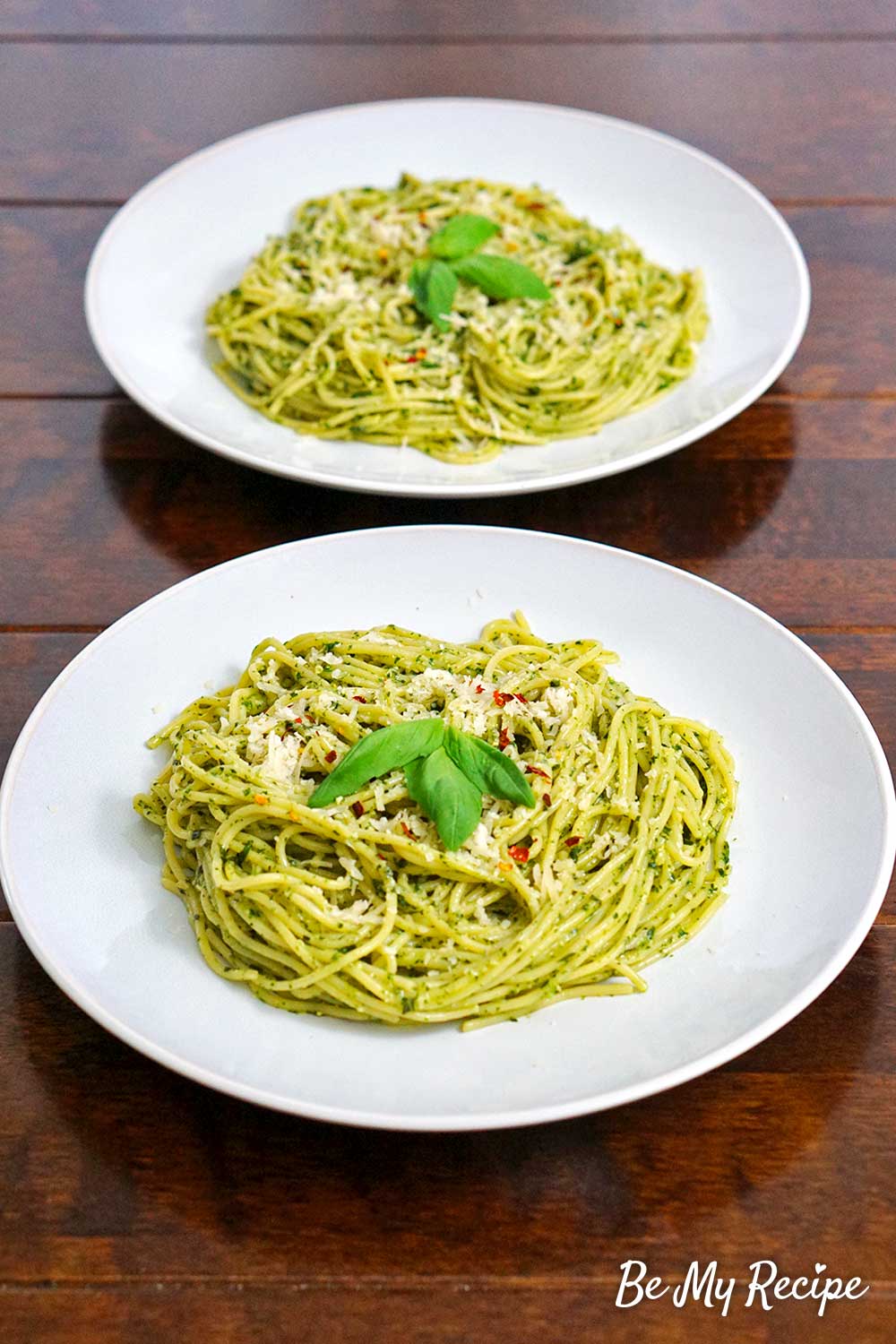
- Gin Basil Pesto Pasta — the whole-bunch play. A standard pesto uses 60-80 g of basil leaves, which is exactly one supermarket bunch.
- Light and Lemony Chicken Parmesan with Basil Pesto — where yesterday's pesto goes.
- Authentic Caprese Salad with Sun-Ripened Tomatoes — three ingredients, so each one has to be good. Tear the basil; cutting it with a knife bruises the leaf and turns the edges black.
- Tomato-Basil Caprese Salad with Balsamic Glaze — the sweeter version.
- Caprese Pasta with Fresh Basil — a full dinner from the same three ingredients.
- Creamy Tomato Basil Soup — the classic, and it takes a full cup of basil without complaining.
- One-Pot Creamy Tomato Basil Soup with Pasta — the one-pot version for a weeknight.
- Watermelon-Feta Salad with Basil and Balsamic — basil against fruit is the pairing most people never try.
- Stir-Fried Thai Basil Chicken — Thai basil is a different plant (anise-forward, sturdier), but Italian basil works if you add it off the heat.
Cilantro
Cilantro divides people genetically — roughly 10-15% of the population carries an OR6A2 variant that makes it taste like soap. For everyone else, it's the most useful herb here because the stems are as good as the leaves.
- Cilantro-Lime Chimichurri for Grilled Veggies — uses stems and all. Makes about a cup, keeps 7 days refrigerated.
- Authentic Argentine Chimichurri Steak — the parsley-forward original, and the best use of a chimichurri you made two days ago.
- Half-Salt Cilantro Lime Rice — 10 minutes, uses half a bunch, goes with everything.
- Mango-Cilantro Lime Quinoa Bowl — lunch for the rest of the week.
- Mint-Lime Chicken Salad with Cucumber Tzatziki — swaps in cilantro cleanly if that's what you have.
Don't discard cilantro stems. They carry more of the aromatic compounds than the leaves and they hold up to heat, which the leaves don't. Chop them fine and add them early; save the leaves for the last 30 seconds.
Parsley
Flat-leaf parsley is the workhorse. It has enough structure to be a salad green in its own right, which is what tabbouleh actually is.
- Classic Tabbouleh with Fresh Herbs — proper tabbouleh is 80% parsley and 20% bulgur, not the other way around. One recipe uses two full bunches.
- Bulgur Wheat Tabbouleh with Mint and Parsley — the version that also clears out your mint.
- Lemon Herb Tabbouleh Salad — lighter on the grain.
- Pan-Seared Salmon with Rustic Herb Salsa Verde — Italian salsa verde: parsley, capers, anchovy, lemon, olive oil. Freezes in ice cube trays.
- Herb-Infused Grilled Chicken with Chermoula — the North African cousin, with cumin and paprika.
- Chermoula-Spiced Salmon with Lemon-Dill Sauce — two herb sauces on one plate.
- Chermoula-Spiced Grilled Vegetable Skewers with Lemon — the vegetarian route to the same flavor.
- Pan-Roasted Salmon with Herb and Garlic Gremolata — gremolata is the cheapest flavor upgrade in cooking: parsley, lemon zest, raw garlic, nothing else.
- Sautéed Shrimp with Garlic Butter and Herb Gremolata — 15 minutes start to finish.
- Herb-Roasted Chicken with Lemon Herb Butter — compound butter under the skin, which is where a tired half-bunch of parsley should go.
Dill, mint, tarragon and chives
The second tier, each with one thing it does better than anything else. Dill and mint each have a full collection of their own — 20 fresh dill recipes and 18 fresh mint recipes — so this list sticks to the dishes that justify buying the bunch.
- Lemon-Dill Cucumber Salad with Herb Vinaigrette — dill's home turf.
- Tomato-Cucumber Salad with Dill — 8 minutes, no cooking.
- Most Refreshing Cucumber Mint Salad — mint against cucumber is one of the oldest pairings in Middle Eastern cooking for a reason.
- Pan-Roasted Lamb Chops with Mint Gremolata and Roasted Garlic Potatoes — mint and lamb, done properly instead of as jelly.
- Pan-Seared Salmon with Dill-Tarragon Sauce — tarragon's anise note is the one herb flavor nothing else replaces.
- Chive-Dill Herb Crusted Chicken Breast — chives are alliums, so they behave more like a mild onion than a herb.
- Chive Butter Cauliflower Mash — the side dish that uses the last of the bunch.
Freezing herbs: which ones freeze and which don't
| Herb | Freezes well? | Best method |
|---|---|---|
| Parsley | Yes | Chopped, in oil, in ice cube trays |
| Cilantro | Yes | Chopped, in oil, or blitzed into chimichurri |
| Chives | Yes | Chopped, dry, in a bag |
| Dill | Acceptably | Chopped, in oil; loses some brightness |
| Basil | No — as leaves | Only as pesto, with the surface oiled |
| Mint | No | Turns black and slimy; make syrup instead |
| Tarragon | Poorly | Vinegar-infuse it instead |
| Thyme, rosemary, sage | Yes, easily | Whole sprigs, in a bag, straight from frozen |
The oil-and-ice-cube-tray method is the one to learn: pack chopped herbs into the wells, top with olive oil, freeze, then decant the cubes into a bag. Each cube is about a tablespoon of herbs plus a teaspoon of oil, and it goes straight into a hot pan with no thawing. Cubes keep about six months before the flavor flattens. Sage gets the full treatment (whole-leaf, oil-cube and compound-butter methods) in our fresh sage recipes guide. For the other woody herb, see our rosemary recipes guide.
Real-world numbers: yield per bunch
| Herb bunch | Typical weight | Chopped yield | Recipes it covers |
|---|---|---|---|
| Basil | 60-70 g | ~1.5 cups leaves | 1 batch pesto, or 2 salads |
| Parsley | 70-90 g | ~2 cups chopped | 1 tabbouleh, or 3 gremolatas |
| Cilantro | 60-80 g | ~1.75 cups chopped | 1 chimichurri + 1 rice |
| Dill | 30-50 g | ~1 cup chopped | 2 salads + 1 fish |
| Mint | 40-60 g | ~1.25 cups leaves | 1 salad + 1 pitcher of tea |
A useful rule: one bunch is one sauce plus one dish. Plan that way and waste goes to near zero.
Three sauces that turn any bunch into four dinners
Pesto (basil). One bunch of basil leaves, 50 g pine nuts or walnuts, 50 g parmesan, two garlic cloves, 120 ml olive oil, salt. Blitz the nuts and garlic first, then add the leaves in two batches so the machine doesn't heat them — hot basil goes bitter. Yield is about 250 ml, which dresses a pound of pasta with some left for sandwiches. It keeps five days in the fridge under a film of oil, or three months frozen. If the top darkens, that's oxidation, not spoilage; stir it in.
Salsa verde (parsley). One bunch of flat-leaf parsley, two tablespoons capers, three anchovy fillets, a garlic clove, the zest and juice of a lemon, 150 ml olive oil. Chop by hand rather than blending — a food processor turns it into a purée and you lose the texture that makes it worth eating. It goes on fish, steak, roast potatoes, boiled eggs, and grilled bread, which is four dinners from one $3 bunch.
Chimichurri (cilantro or parsley). One bunch, chopped fine, plus half a red onion, two garlic cloves, a teaspoon of dried oregano, a teaspoon of chile flakes, 60 ml red wine vinegar, 150 ml olive oil, salt. Let it sit an hour before serving; the vinegar needs time to take the raw edge off the garlic and onion. This is the most forgiving of the three and the one that keeps longest — a full week refrigerated, and it improves for the first two days.
Compound butter (any herb). 115 g soft butter, a packed half-cup of chopped herbs, a squeeze of lemon, salt. Roll it in parchment into a log and freeze. Slice coins off it onto steak, fish, corn, or a baked potato. This is where the last third of any bunch should go on day six, and it holds three months in the freezer without losing much.
Common pitfalls
- Chopping herbs with a dull knife. A dull blade crushes rather than cuts, which releases enzymes and turns the pile black in minutes. Sharp knife, single decisive pass. Our knife sharpener guide covers what actually works.
- Adding soft herbs early. Basil, cilantro, parsley, and dill all lose their aromatics above about 70°C. They go in at the end, off the heat.
- Adding woody herbs late. The opposite: rosemary and thyme need time in fat to release anything. In at the start.
- Storing basil in the fridge. Covered above, and it's worth repeating.
- Buying pre-chopped herbs in tubes or jars. They're preserved with acid and taste like it. Fresh or frozen-in-oil, nothing in between.
Building an herb-forward weekly plan
The pattern that eliminates herb waste completely: buy two bunches a week, make one sauce on Sunday, use it three ways.
- Sunday: one bunch of parsley becomes salsa verde or gremolata. Store in a jar with a film of oil on top.
- Monday: spoon it over roasted vegetables or a piece of fish.
- Wednesday: stir it into rice or grains.
- Friday: thin it with more oil and lemon, and it's a salad dressing.
The other bunch — basil or cilantro — becomes pesto or chimichurri, follows the same three-use arc, and any leftover gets frozen on Saturday before it turns. Build the shopping list once with the meal plan tool and both bunches get fully spent. A sharp knife and a salad spinner from utensils are the only equipment this requires.
When NOT to bother with fresh
Dried oregano genuinely beats fresh in long-simmered tomato sauces — drying concentrates its carvacrol content. Dried bay leaves are standard. Dried thyme in a braise is fine. But there is no acceptable dried substitute for basil, cilantro, parsley, mint, dill, or chives; the volatile compounds that make them worth eating evaporate during drying. If a recipe's herbs go in at the end, buy them fresh or leave them out.
Sources
The jar-of-water storage method follows Penn State Extension — Enhance the Flavor of Food with Herbs: trim the stems, stand them in an inch of water, cover loosely with a bag, and change the water daily. The OR6A2 soap-taste genetics come from Wikipedia — Coriander, and Wikipedia — Basil covers why basil goes in last: heat quickly destroys its flavor.
Frequently asked questions
How do I store fresh herbs so they last more than a few days?
Can I substitute dried herbs for fresh in these recipes?
Which fresh herbs freeze well?
What is the difference between Italian parsley and curly parsley?
Are fresh herbs actually good for you, or just a flavor add?
Sources
Plan a week of meals in two minutes.
Tell our AI what you have and what you like — it builds your plan, shopping list, and Instacart cart. No account needed.
Plan my week →