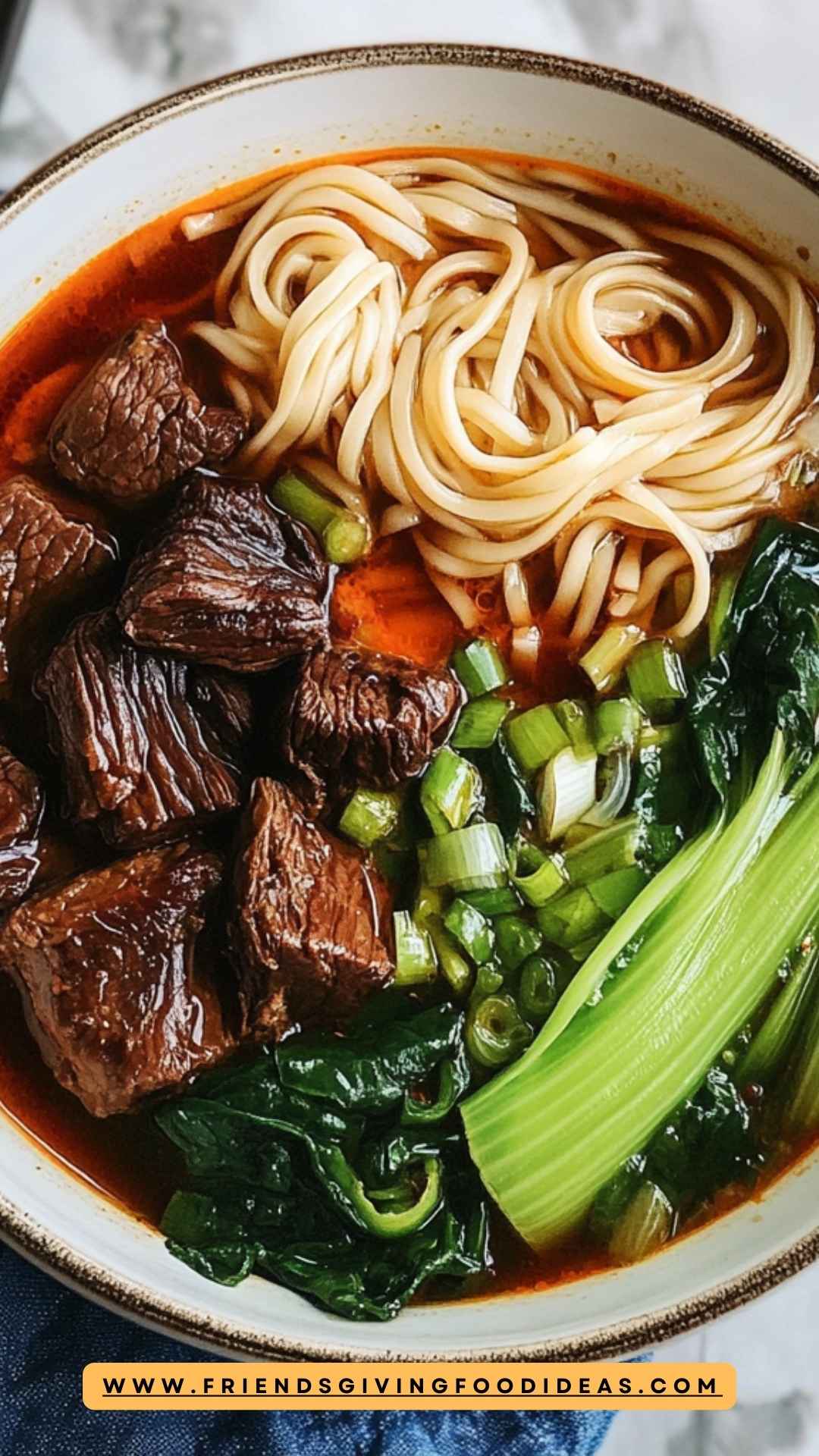
20 Taiwanese Recipes: Beef Noodle Soup, Three-Cup Chicken & Gua Bao
Soy paste, rice wine, white pepper and fried shallots carry every dish here — from a 15-minute noodle plate to a two-hour beef shank braise.
Taiwanese cooking is its own cuisine, not a regional branch of Chinese food. It layers Fujianese and Hakka technique with 50 years of Japanese influence, indigenous Formosan ingredients, and a night-market street-food tradition that has no mainland equivalent. The signature flavors are soy paste, rice wine, white pepper, five-spice, fried shallots and Taiwanese basil — sweet-savory and aromatic rather than numbing or fiery. Here are 20 recipes that cover it, from a 15-minute noodle plate to a Sunday braise.
Get a free week of easy dinners
Seven weeknight dinners with the shopping list already totalled, sent Sunday. No account needed, unsubscribe in one click.
No spam, unsubscribe in one click. Recipes, shopping lists and Instacart carts all work without an account either way.
Introduction: Taiwan's Distinct Kitchen (Not Just Chinese Food)
If you have cooked Sichuan or Cantonese food, Taiwanese cooking will feel familiar in structure and completely different in flavor. The wok technique is shared. The pantry is not.
Three historical layers explain the difference. The base is Fujianese and Hakka: the waves of migration across the strait brought braising in soy and rice wine, preserved mustard greens, and a taste for pork belly. On top of that sits half a century of Japanese colonial rule, which is why Taiwanese kitchens use dashi-adjacent broths, bento culture, mirin-style sweetness, and raw-fish preparations that would be foreign in Chengdu. The third layer is the island itself — tropical fruit, sweet potato, taro, mullet roe, and an oyster industry along the west coast that produced the night-market oyster omelet.
The practical consequence for a home cook is that Taiwanese dishes are milder, sweeter, and more umami-forward than most Chinese regional cooking. As Wikipedia's survey of Taiwanese cuisine notes, chili is a table condiment rather than a cooking ingredient in most dishes. Background heat comes from white pepper. Depth comes from soy paste, rock sugar and rice wine reduced together, not from doubanjiang or fermented chili.
That makes it an unusually good cuisine for weeknight cooking with kids at the table, and an unusually forgiving one to learn — most of these dishes are one pan, one sauce, and 25 minutes. Compare it side by side with our 20 Sichuan Recipes roundup and the contrast is immediate: same wok, opposite spice logic.
The Taiwanese Pantry: Soy Paste, Rice Wine, White Pepper, Fried Shallots
You can cook every recipe below with seven pantry items. Buy these once and the marginal cost of a Taiwanese dinner drops to the protein.
| Ingredient | What it does | Typical price (2026) | Substitution |
|---|---|---|---|
| Soy paste (jiang you gao) | Thick, sweet, glossy braising soy — the backbone of lu rou fan | $5–7 / 20 oz | Dark soy + 1 tsp sugar per Tbsp |
| Shaoxing rice wine | Deglazes, removes pork funk, adds the "restaurant" note | $4–8 / 750 ml | Dry sherry (not cooking sherry) |
| White pepper | Background heat without chili; floral, slightly musty | $4 / 2 oz | Black pepper at half quantity |
| Fried shallots | Crunch and allium sweetness scattered at the end | $4 / 4 oz canister | Fry your own in 1/2 cup neutral oil |
| Five-spice powder | Star anise, fennel, clove, cinnamon, Sichuan pepper | $3–5 / 2 oz | Whole star anise + cinnamon stick |
| Taiwanese/Thai basil | The finish on three-cup dishes; anise-scented, not Italian | $2 / bunch | Thai basil; Italian basil is a poor sub |
| Rock sugar | Rounds a braise without the sharpness of white sugar | $4 / lb | Granulated sugar at 80% by weight |
Two notes on sourcing. Soy paste is the item people skip and shouldn't — regular soy sauce is thin and salty where soy paste is viscous and sweet, and it is the reason a proper braised-pork-rice sauce clings to the grain instead of pooling at the bottom of the bowl. Kimlan is the default brand at H-Mart, 99 Ranch and Weee. Second, Taiwanese basil is not Italian basil. It is the same species as Thai basil (Ocimum basilicum, the anise-scented cultivars), and swapping in Genovese basil turns three-cup chicken into something that tastes like a bad pesto.
Equipment is modest. A 12–14 inch carbon steel wok or a wide skillet from Cookware covers 16 of the 20 dishes. A 10-inch bamboo or metal steamer from Kitchen Gadgets covers the buns and dumplings. A rice cooker or pressure cooker from Small Appliances makes the rice-bowl section trivially fast, and a decent spider strainer and long chopsticks from Utensils & Tools will save you from fishing noodles out with tongs.
5 Iconic Dishes Every Home Cook Should Learn: Beef Noodle Soup, Lu Rou Fan, Three-Cup Chicken, Gua Bao, Scallion Pancakes
These five are the canon. Learn them and you have a working command of the cuisine — every other dish here is a variation on their techniques.
1. Taiwanese beef noodle soup (niu rou mian)
Braised Taiwanese Beef Noodle Soup with Star Anise and Ginger — 145 minutes total, 480 calories, serves 4. This is the national dish, and beef noodle soup as Taiwan makes it is distinct from every mainland version: beef shank simmered with star anise, ginger, soy and rock sugar until the connective tissue turns to gel, poured over wheat noodles with pickled mustard greens.
The 145 minutes is almost entirely unattended. Twenty minutes of active knife and searing work, then two hours of low simmer while you do something else. Do not shortcut the braise — under 90 minutes and the shank is still chewy; the collagen conversion that gives the broth its body happens between 90 and 150 minutes at a bare simmer. If you want the richer, longer version with soy-marinated eggs, use Taiwanese Beef Noodle Soup with Braised Eggs (155 minutes). For a weeknight, Instant Pot Taiwanese Spiced Beef Stew with Star Anise gets you to the same place in 75 minutes with a pressure cooker doing the collagen work.
2. Lu rou fan (braised pork over rice)
Braised Taiwanese Pork Belly with Five-Spice Sauce — 75 minutes, 450 calories, serves 4. Braised pork rice is the dish Taiwanese people eat most often and tourists notice least: finely diced (not ground) pork belly braised in soy paste, rice wine, five-spice and fried shallots, spooned over hot rice with a soy egg and a few pickles.
The technique detail that matters is the dice. Grinding the pork makes a bolognese; hand-dicing to roughly 1/4 inch keeps the fat and lean separate so the fat renders into the sauce while the lean stays in identifiable pieces. Budget 15 of the 75 minutes for knife work — a sharp blade from Knives & Cutting makes this bearable, and partially freezing the belly for 20 minutes first makes it easy. A leaner variant is Pan-Fried Taiwanese Pork Belly with Five-Spice Glaze at 50 minutes.
3. Three-cup chicken (san bei ji)
Stir-Fried Three-Cup Chicken with Basil and Sesame — 25 minutes, 320 calories, serves 3. The fastest complete Taiwanese meal in this roundup and the one to cook first. The name is the recipe: one cup each of soy sauce, sesame oil and rice wine, reduced hard around bone-in chicken with a head of garlic and a mountain of basil thrown in off-heat at the end.
Three things separate a good san bei ji from a flat one. Use toasted sesame oil but cut it with neutral oil for the initial fry or it scorches and turns bitter above 350°F. Reduce until the sauce coats the back of a spoon — a thin sauce means you pulled it 3–4 minutes early. And add the basil after the heat is off, with the lid on for 60 seconds; basil cooked in the sauce goes black and loses the anise note entirely. For a slower, saucier version try Braised Taiwanese Three-Cup Chicken with Basil (40 minutes) or the classic Stir-Fried Taiwanese Three-Cup Chicken with Basil.
4. Gua bao (steamed pork belly buns)
Tamarind-Glazed Pork Belly Bao Buns with Pickled Cucumber — 75 minutes, 520 calories, serves 4. Gua bao is the folded lotus-leaf bun stuffed with braised pork belly, pickled mustard greens, crushed peanuts and cilantro — Taiwan's contribution to global street food and the dish most Western restaurants know it by.
You do not need a bamboo steamer. A metal steamer basket, a wok with a plate on a ring, or a stockpot with a heatproof plate over an inch of simmering water all work. What you cannot skip is a parchment square under each bun; skip it and you tear the bottom off every bun when you lift it. Store-bought frozen lotus-leaf buns are genuinely good and cut this to 30 minutes. If you want to make the dough yourself, Pork and Cabbage Steamed Bao Buns walks the full 82-minute version.
5. Scallion pancakes (cong you bing)
Pan-Fried Taiwanese Scallion Pancakes with Spicy Soy Dipping Sauce — 60 minutes, 280 calories, serves 4. Cong you bing is a laminated flatbread, not a batter pancake: hot-water dough rolled thin, brushed with oil and scallions, coiled into a spiral, then flattened and fried so the layers separate into flakes.
The hot-water dough is the whole trick — boiling water denatures enough gluten that the dough rolls out to translucent without springing back. Rest it 30 minutes covered or you will fight it. Two variants worth knowing: Taipei-Style Scallion Pancakes with Five-Spice Dipping Sauce (65 minutes) and Cold Taiwanese Scallion Pancakes with Spicy Soy Dipping Sauce, which are served at room temperature as a night-market snack. A plain, technique-focused version is Pan-Fried Scallion Pancakes with Crispy Edges.
4 Rice Bowl Dinners Under 40 Minutes
Every dish here is one pan over rice, on the table in half an hour. This is the section to cook from on a Tuesday.
| Dish | Total time | Calories | Serves | Protein |
|---|---|---|---|---|
| Basil chicken with garlic and chili | 20 min | 320 | 3 | Chicken thigh |
| Pork with garlic and soy glaze | 25 min | 320 | 3 | Pork shoulder |
| Steamed fish with ginger and soy | 25 min | 230 | 2 | White fish |
| Beef with scallions and garlic | 28 min | 320 | 3 | Flank or sirloin |
6. Stir-Fried Taiwanese Basil Chicken with Garlic and Chili — 20 minutes, 320 calories. The three-cup flavor profile stripped down to a weeknight stir-fry. Thigh meat only; breast dries out in the reduction.
7. Stir-Fried Taiwanese Pork with Garlic and Soy Glaze — 25 minutes, 320 calories. Sliced pork shoulder velveted in cornstarch and rice wine before it hits the pan, which is what keeps stir-fried pork from turning to leather. A near-identical version with more allium is Stir-Fried Taiwanese Pork with Garlic and Scallions.
8. Steamed Taiwanese Fish with Ginger and Soy — 25 minutes, 230 calories, the lightest dinner in this roundup. Steam 8–10 minutes for a 1-inch fillet, pour the hot oil over the scallions at the end so they sizzle. Overcooking by 2 minutes is the only way to ruin it. If you would rather sear than steam, Pan-Seared Salmon with Ginger and Scallion Sauce hits the same flavor in 25 minutes.
9. Stir-Fried Taiwanese Beef with Scallions and Garlic — 28 minutes, 320 calories. Slice against the grain at a 45° bias, no thicker than 1/8 inch, and get the pan genuinely ripping before the beef goes in. Crowding the pan drops the surface below the Maillard threshold and you steam the beef gray instead of browning it — cook in two batches if your burner is weak.
Two more that fit the under-40 rule: Pan-Seared Taiwanese Chicken with Five-Spice and Scallions (25 minutes) and Pan-Seared Taiwanese Five-Spice Pork Chops with Soy-Garlic Glaze (25 minutes).
4 Street-Food Classics You Can Make at Home
Taiwan's night markets — Shilin, Raohe, Fengjia — are where most of the country's best-known dishes come from. Four of them translate cleanly to a home kitchen.
10. Stir-Fried Oyster Omelet with Scallions and Chili — 30 minutes, 450 calories, serves 2. The oyster omelette (o-a-tsian) is the signature night-market dish and the one people assume they can't make. They can. The only unusual step is the sweet potato starch slurry that goes in with the egg — it produces the gluey, translucent, slightly chewy texture that defines the dish. Cornstarch is not a substitute; it sets firm and you get a normal omelet. Small oysters, drained hard, added last.
11. Ginger Scallion Stir-Fried Rice Noodles — 15 minutes, 280 calories, serves 3. The fastest dish in the roundup. Thin rice vermicelli soaked, not boiled — 6 minutes in hot tap water, drained, then tossed in the wok for 90 seconds. Boiling them turns the whole thing to porridge.
12. Steamed Taiwanese Scallion and Shrimp Dumplings — 35 minutes, 220 calories, serves 4. Store-bought wrappers are fine and save 40 minutes. Keep the stack under a damp towel; wrappers dry out in about 4 minutes exposed and then crack at the fold.
13. Steamed Taiwanese Pork Meatballs with Shiitake Mushrooms — 50 minutes, 280 calories, serves 4. The home version of ba wan, the fist-sized steamed meatball from Changhua. Rehydrated shiitake and its soaking liquid do most of the flavor work here — do not discard the water.
Also worth cooking from this tradition: Pan-Fried Taiwanese Preserved Radish Omelette (cai pu dan, 12 minutes and the single fastest thing here), Steamed Taiwanese Rice Cake with Mushroom and Soy Glaze, Grilled Pork Belly with Black Vinegar and Charred Scallions, and the coastal Hualien-Style Grilled Mullet Roe with Spiced Soy Glaze.
4 Vegetable & Tofu Sides
Taiwanese vegetable cooking is fast and aggressively seasoned. A stir-fried green takes under 10 minutes; a braised tofu takes 30 and reheats better than it started.
14. Taiwanese Braised Tofu with Pickled Mustard Greens — 30 minutes, 220 calories, serves 3. Firm tofu, pressed and pan-fried before it goes in the braise. Pickled mustard greens (suan cai) bring the sourness that keeps a soy braise from reading flat.
15. Braised Taiwanese Tofu with Mushrooms and Bamboo Shoots — 50 minutes, 180 calories, serves 4. The most vegetable-forward main here and a genuinely good vegetarian centerpiece. If you have never gotten tofu to hold together in a braise, our complete tofu guide covers pressing and pre-frying in detail.
16. Sweet Soy Braised Eggplant — 30 minutes, 160 calories, serves 4. Chinese eggplant, not globe: thinner skin, fewer seeds, less bitterness, and it collapses to silk in the braise instead of turning spongy.
17. Stir-Fried Tianjin Cabbage with Garlic and Dried Chili — 18 minutes, 80 calories, serves 3. The default Taiwanese table vegetable. Eight minutes in the pan, high heat, don't stir constantly — you want a little char on the cut faces. Also excellent alongside anything: Stir-Fried Tofu and Bok Choy with Ginger (30 minutes).
3 Sweet Endings (Bubble Tea, Pineapple Cake, Tofu Pudding)
18. Bubble Tea Pearls with Honey Jasmine Milk Tea — 60 minutes, 180 calories, serves 4. Bubble tea was invented in Taichung in the 1980s and is the country's most successful culinary export. Making the pearls from scratch is the hard part and the reason this is rated hard: tapioca starch has to be mixed with genuinely boiling water and kneaded while it's uncomfortably hot, and the pearls must be cooked and used within about 4 hours before they harden. Do not refrigerate cooked pearls — they go to concrete.
19. Taiwanese Pineapple Cake with Butter Shortbread Crust — 65 minutes, 180 calories, makes 12. The classic Taipei gift box. Real pineapple cake uses a filling cut with winter melon for texture and to tame the acidity; all-pineapple fillings are sharper and wetter, which is why the cheap airport versions weep through the pastry.
20. Taiwanese Shaved Ice with Mango and Condensed Milk — 10 minutes, 280 calories, serves 2. Xue hua bing — snow-ice — is what summer tastes like in Taipei. This is the only 10-minute dessert in the roundup and the best return on effort of anything here.
One honest gap: our catalog does not yet have a douhua (tofu pudding) recipe, so the third sweet slot goes to shaved ice instead. Douhua is worth knowing anyway — silken soy curd set with gypsum, served warm in ginger syrup with peanuts or tapioca. If you want the closest thing in the catalog today, the shaved ice with condensed milk hits the same cold-sweet-soft register.
Weeknight Meal Plan: 5 Taiwanese Dinners That Share Aromatics
The economics of this cuisine work in your favor. Ginger, scallions, garlic, soy paste, rice wine and white pepper appear in nearly every dish, so one shopping trip covers a full week and nothing rots in the drawer.
| Night | Main | Side | Active time | Total |
|---|---|---|---|---|
| Monday | Basil chicken with garlic and chili | Steamed rice | 20 min | 20 min |
| Tuesday | Ginger scallion rice noodles | Stir-fried cabbage | 15 min | 25 min |
| Wednesday | Steamed fish with ginger and soy | Braised eggplant | 25 min | 30 min |
| Thursday | Three-cup chicken | Stir-fried cabbage | 25 min | 25 min |
| Sunday | Braised pork belly (lu rou fan) | Braised tofu | 25 min | 75 min |
Shop once for the week: 2 lb chicken thigh, 1 lb pork belly, 2 white fish fillets, 1 head napa or Tianjin cabbage, 2 Chinese eggplant, 1 block firm tofu, 1 package rice vermicelli, 1 large bunch scallions, 1 hand of ginger, 2 heads garlic, 2 bunches Thai basil. Everything else is pantry.
The Sunday braise is the load-bearing item. Make a double batch of the braised pork belly and you have Monday lunch over rice, Wednesday filling for gua bao, and a jar of sauce that makes any vegetable interesting. Store it in the fridge for 4 days or freeze in portions — glass containers from Storage & Containers hold up better than plastic against the turmeric-free but deeply staining soy braise.
If you want the same one-shopping-trip logic applied across cuisines, our 30-Minute Weeknight Dinner Plan runs four weeks of it.
Common Pitfalls
Five failure modes account for nearly every disappointing Taiwanese dinner.
Using Italian basil in three-cup dishes. Genovese basil has no anise note and wilts to slime in a hot reduction. Thai or Taiwanese basil is the only acceptable substitute. If your store has neither, leave it out entirely and call it a soy-garlic chicken — that is more honest than a pesto-flavored san bei ji.
Substituting regular soy sauce for soy paste. Soy sauce is thin and salty; soy paste is viscous and sweet. A lu rou fan made with plain soy sauce is a salt bomb with a watery sauce that runs off the rice. If you truly can't source soy paste, use dark soy sauce plus 1 teaspoon of sugar per tablespoon and reduce the sauce 30% further than the recipe says.
Boiling rice vermicelli. Thin rice noodles need a hot-water soak, not a boil. Six to eight minutes off the heat, drained, is correct. Boiled vermicelli disintegrates in the wok and you end up with rice porridge with scallions in it.
Rushing the beef shank. Under 90 minutes at a simmer, the collagen in shank has not converted and the meat is tough; the broth is thin because nothing has dissolved into it. This is the one dish here where the clock is not negotiable. Use a pressure cooker if you don't have the time.
Cooking the basil into the sauce. Basil goes in off the heat, lid on, 60 seconds. Cooked into a simmering reduction it turns black and bitter within two minutes and takes the aroma with it.
When NOT to Cook Taiwanese Tonight
Two cases where you should pick a different cuisine.
You want heat. Taiwanese cooking is not spicy by design — chili is a table condiment, and even the "spicy" dishes here read mild next to Sichuan or Thai. If you are cooking for someone who wants their food to hurt, go to our 20 Sichuan Recipes or 25 Thai Recipes instead. Adding chili oil to three-cup chicken doesn't make it Sichuan; it makes it worse three-cup chicken.
You have no Asian grocer and won't order online. Four of the seven pantry items — soy paste, Shaoxing wine, fried shallots, Thai basil — are hard to find in a standard American supermarket. You can improvise all four, but you will be cooking a reasonable approximation rather than the real thing. If you're in that situation, 25 Easy Japanese Dinners needs a shorter specialty list, since soy sauce, mirin and miso are now mainstream.
Where to Go Next
Taiwanese cooking sits at a crossroads, and the neighbors are worth exploring in a specific order.
Start with 22 Cantonese Recipes — the closest sibling, sharing the sweet-savory braise and the steaming technique. Then 25 Easy Japanese Dinners, which explains where the dashi-like broths and bento habits in Taiwanese cooking come from. From there, 20 Sichuan Recipes for the maximum contrast in the same wok, and 22 Vietnamese Recipes for the other great Southeast Asian noodle-soup tradition.
For breakfast specifically, Taiwan has one of the world's best morning food cultures — soy milk, fried crullers, and rice congee. Start with Sweet Potato Congee with Preserved Radish and Scallion Oil (70 minutes, mostly unattended) and the 12-minute preserved radish omelette. Two more noodle bowls worth your time when you have the beef braise going: Star Anise-Braised Beef Noodles and the lighter, vegetarian-friendly Taiwan Mushroom Noodle Soup with Fresh Herbs. And for a cold-weather Sunday, Taro and Pork Belly Stew is the most distinctly Taiwanese braise in the catalog — taro dissolves into the sauce and thickens it the way potato never does.
If you're feeding a crowd from one pot, Stir-Fried Taiwanese Beef Noodles with Pickled Mustard Greens is 20 minutes and scales cleanly. Build the shopping list for any of these in the app and it will route substitutions from whatever your local store actually stocks — including the Grocery & Pantry staples above.
FAQ
How is Taiwanese food different from Chinese food?
Taiwanese cooking draws heavily from Fujianese and Hakka Chinese traditions but layers in Japanese influence (from 50 years of colonial rule), Southeast Asian aromatics, and indigenous Formosan ingredients. The result is milder, sweeter, and more umami-driven than most mainland Chinese regional cuisines — think soy-paste braises, five-spice, fried shallots, and Taiwanese basil rather than the fermented chilies of Sichuan or the sweet-and-sour of Cantonese.
Where do I buy Taiwanese soy paste and fried shallots?
Look for Kimlan brand soy paste (thicker and sweeter than regular soy sauce) at any H-Mart, 99 Ranch, or well-stocked Asian grocer; it also ships from Weee and Yamibuy. Fried shallots (any brand, usually in a green plastic canister) live in the same aisle. AislePrompt's Instacart cart integration will surface substitutions from your local store if the exact brand isn't stocked.
Can I make gua bao (steamed pork buns) without a bamboo steamer?
Yes — a metal steamer basket, a wok with a plate elevated on a ring, or even a pot with a heatproof plate over an inch of simmering water all work. What you can't skip is lining the surface with parchment squares so the buns don't stick. A 10-inch bamboo steamer is inexpensive and stacks two levels at once, so it's worth buying if you plan to cook Taiwanese food more than a few times a year.
Is Taiwanese food spicy?
Not by default. Taiwanese cooking leans sweet, savory, and aromatic rather than hot — most dishes here use white pepper for background heat rather than chilies. The exceptions are stinky tofu variants and some night-market street snacks that get chili sauce at the table. Every recipe in this roundup is comfortable at zero-spice out of the pan; add hot sauce individually if you want it.
What's the shortest weeknight Taiwanese dinner in this roundup?
Three-cup chicken (san bei ji) is the fastest complete meal — 25 minutes from cold pan to plate, using one cup each of soy sauce, sesame oil, and rice wine plus a mountain of Thai basil at the end. Serve over rice with a quick cabbage stir-fry (7 minutes) and you have a full Taiwanese dinner on the table in 30 minutes, entirely from pantry staples.
Sources
- Taiwanese cuisine — Wikipedia — historical layers, regional variation, and the Japanese-era influence on the modern pantry.
- Beef noodle soup — Wikipedia — how the Taiwanese version diverges from mainland preparations.
- Braised pork rice (lu rou fan) — Wikipedia — regional naming, the north/south dice-versus-mince split.
- Gua bao — Wikipedia — origins of the folded lotus-leaf bun and its standard fillings.
- Cong you bing (scallion pancake) — Wikipedia — the lamination technique and hot-water dough.
- Night markets in Taiwan — Wikipedia — where the street-food canon in this roundup comes from.
- Oyster omelette — Wikipedia — the sweet-potato-starch technique that defines the texture.
- Bubble tea — Wikipedia — Taichung origins and the tapioca-pearl method.
- Pineapple cake — Wikipedia — winter-melon filling and why all-pineapple versions weep.
- Taiwanese recipes — NYT Cooking — a professionally tested collection for cross-referencing technique.
Frequently asked questions
How is Taiwanese food different from Chinese food?
Where do I buy Taiwanese soy paste and fried shallots?
Can I make gua bao (steamed pork buns) without a bamboo steamer?
Is Taiwanese food spicy?
What's the shortest weeknight Taiwanese dinner in this roundup?
Sources
- en.wikipedia.org
- en.wikipedia.org
- en.wikipedia.org
- en.wikipedia.org
- en.wikipedia.org
- en.wikipedia.org
- en.wikipedia.org
- en.wikipedia.org
- en.wikipedia.org
- cooking.nytimes.com
Plan a week of meals in two minutes.
Tell our AI what you have and what you like — it builds your plan, shopping list, and Instacart cart. No account needed.
Try free →