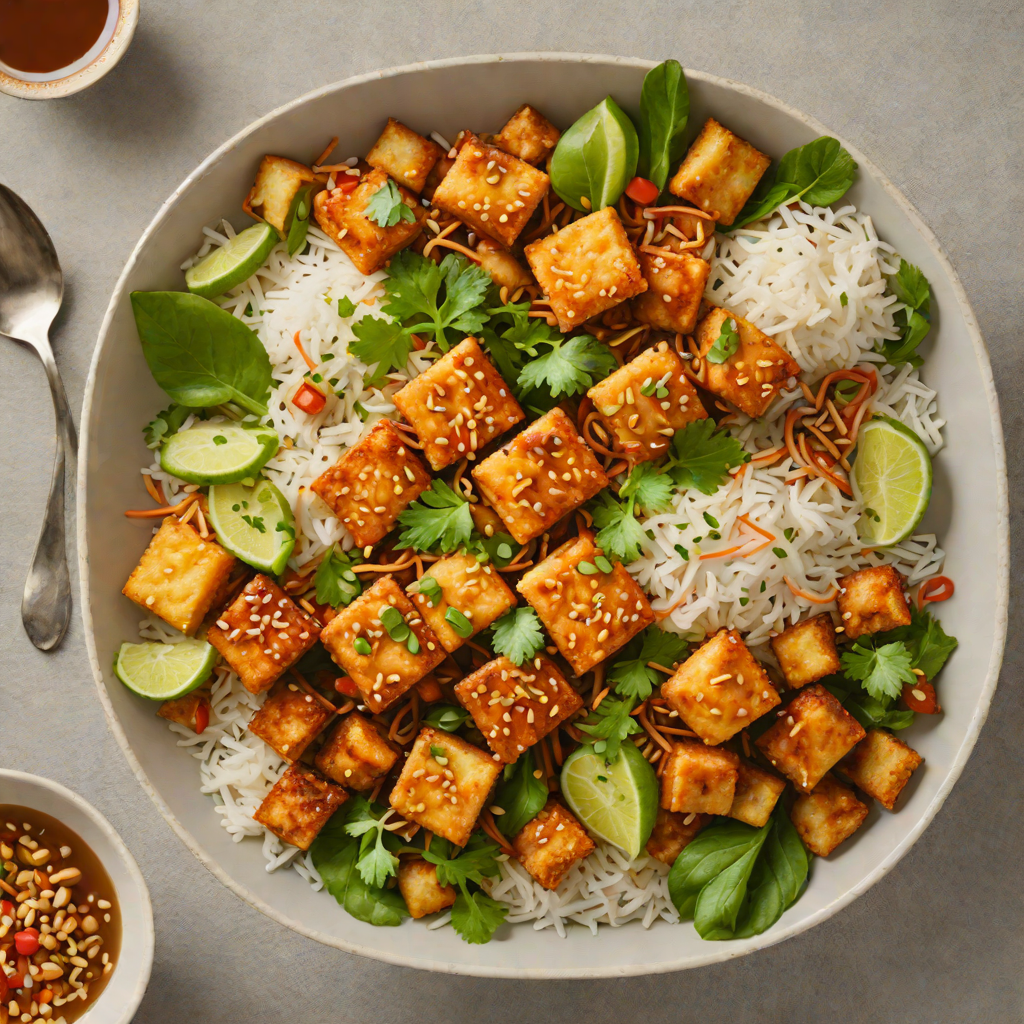
How to Cook Tofu: 22 Recipes + Complete Buying, Pressing & Crispy-Frying Guide
Extra-firm, pressed 15 minutes, tossed in cornstarch, cooked hot and uncrowded. That is the whole method — here is the detail, plus 33 recipes.
To cook tofu well, buy extra-firm, press it 15 minutes, toss the cubes in cornstarch, and cook hot — 425°F in the oven, medium-high in a skillet, or 400°F in an air fryer — in a single uncrowded layer. That sequence is the difference between the crispy, browned tofu you get at a restaurant and the pale wet cubes most people give up on.
Get a free week of easy dinners
Seven weeknight dinners with the shopping list already totalled, sent Sunday. No account needed, unsubscribe in one click.
No spam, unsubscribe in one click. Recipes, shopping lists and Instacart carts all work without an account either way.
Everything else in this guide is detail on those four steps, plus 30-plus recipes from the AislePrompt catalog organized by cuisine so you can go straight from technique to dinner.
Why Tofu Deserves a Permanent Spot in Your Rotation
Three practical reasons, none of them ideological.
Cost. A 14-ounce block runs $2–$3.50 and delivers about 40g of protein. That is roughly $0.07 per gram of protein, against $0.12–$0.20 for chicken breast and $0.25+ for beef. For a household cooking five dinners a week, swapping two of them to tofu is a real line-item change.
Speed. Tofu is already cooked. Everything you do to it is about texture and flavor, not doneness, so there is no food-safety clock and no resting time. A pressed block goes from fridge to plate in 20 minutes.
It keeps. Unopened, a block lasts weeks past purchase in the fridge. That makes it the protein you fall back on when the fresh stuff is gone.
Nutritionally, tofu is a complete plant protein — about 10g per 3.5 ounces, plus calcium and iron, per USDA FoodData Central. On the soy-and-hormones question that follows tofu around, Harvard's Nutrition Source is the level-headed summary: moderate soy intake of one to two servings a day is not associated with harm in the research, and the isoflavone content is far below what the scare headlines imply.
The Tofu Spectrum: Silken to Extra-Firm
Tofu firmness is a function of how much whey is pressed out during production. Tofu is made by coagulating soy milk — traditionally with nigari, a magnesium chloride salt left over from seawater — then pressing the curds. More pressing, firmer block, less water.
| Type | Water content | Behavior | Use it for | Press it? |
|---|---|---|---|---|
| Silken | Highest | Custard-like, falls apart | Smoothies, chilled hiyayakko, blended sauces, desserts | Never |
| Soft | Very high | Spoonable, holds a wobble | Mapo tofu, Chinese braises, miso soup | No |
| Medium | Moderate | Holds a cube but bruises | Soups, gentle stir-fries, scrambles | Optional |
| Firm | Low | Holds shape, browns adequately | Most stir-fries, curries, skewers | 10 min |
| Extra-firm | Lowest | Dense, browns hard, resists breaking | Pan-fry, bake, air-fry, deep-fry | 15 min |
If a recipe just says "tofu" with no qualifier, assume extra-firm. If it says silken and you use extra-firm, you get chewy cubes where you wanted custard — and the substitution does not work in reverse at all.
Super-firm / high-protein tofu is worth knowing about: sold vacuum-packed rather than in water, roughly 14–16g protein per 3 ounces, and it needs no pressing whatsoever. It costs about 40% more and saves you 15 minutes.
How to Buy: Water-Packed vs Vacuum-Packed
Water-packed is the block floating in liquid in a plastic tub. It is the standard, the cheapest, and it needs draining and pressing. Check the date; check that the water is clear rather than cloudy.
Vacuum-packed (super-firm, sometimes labeled "high-protein" or "sprouted") is shrink-wrapped with no water. Denser, pricier, no press required. If you cook tofu more than once a week, the time saved is worth the premium.
Organic vs conventional: the meaningful difference is that organic soy is non-GMO by definition. Nutritionally they are equivalent. Most US tofu brands use non-GMO soy regardless — read the label rather than paying up reflexively.
Shelf-stable aseptic boxes (usually silken) sit in the pantry for months. Excellent to keep on hand for soups and blended sauces; useless for crispy tofu.
The Press: Three Ways in Under 15 Minutes
Pressing removes 15–20% of the block's weight in water. That water is what stands between you and a browned surface — a wet cube spends its first three minutes in the pan boiling off moisture instead of browning, and by the time it dries out it has gone rubbery.
1. The plate-and-weight method (free, 15–30 min). Wrap the block in two layers of paper towel or a clean kitchen towel, set it on a plate, put a second plate on top, and weight it with a heavy skillet or a few cans. Drain the plate halfway through.
2. A dedicated press (10–15 min, best results). A tofu press applies even pressure with springs and drains into a reservoir, so you can leave it on the counter and forget it. It presses harder than plates without cracking the block. At around $22 it pays for itself in avoided mediocre dinners.
3. The freeze-thaw method (overnight, transforms texture). Freeze the drained block, thaw it in the fridge, then squeeze it like a sponge. Ice crystals restructure the protein into an open, chewy, genuinely meaty texture that soaks up marinade. This is the single biggest upgrade available to a tofu skeptic — it does not taste like the tofu they refused.
Do not press: silken tofu (it will disintegrate), or any tofu headed into soup, stew, or a scramble where water content is irrelevant.
The 4 Foundational Techniques
Pan-fry (medium-high, 8–10 min). The fastest route to crisp. Cube pressed extra-firm tofu, toss in cornstarch, and cook in 2–3 tablespoons of neutral oil in a hot pan. Leave each side alone for 2–3 minutes before turning; poking it early tears the crust you are trying to form. Cast iron holds heat better than thin nonstick when you drop in a pound of cold cubes — a 10-inch enameled cast iron skillet recovers temperature fast enough to keep browning instead of steaming.
Oven-bake (425°F, 25–30 min). The hands-off route, and the best one for batch cooking. Cornstarch-tossed cubes in a single layer on a parchment-lined half sheet pan, flipped once at the 15-minute mark. Two pans beat one crowded pan every time.
Air-fry (400°F, 12–15 min). The best crisp-to-effort ratio, and it uses about a tablespoon of oil for a whole block. Shake the basket twice. A dual-basket air fryer lets you run a full block without crowding, which is the whole game.
Deep-fry (350°F, 4–5 min). The restaurant method, and genuinely the best texture — a shattering shell over a custardy interior. It is also two quarts of oil and a cleanup, so save it for agedashi tofu or a batch of General Tso's on a weekend.
A sharp knife matters more than it sounds: tofu tears under a dull blade, and torn faces fry unevenly. An 8-inch chef's knife cuts a clean block into even cubes in about thirty seconds.
The Cornstarch Trick
This is the step most home cooks skip and the one that changes the outcome most.
Toss pressed, cubed tofu with 1–2 tablespoons of cornstarch per 14-ounce block — enough for a thin, even, slightly chalky coating with no dry pockets in the bowl. The starch gelatinizes on contact with hot oil and dehydrates into a brittle shell, and because it is a dry surface it browns via the Maillard reaction instead of steaming.
Refinements worth knowing:
- Potato starch crisps harder than cornstarch and stays crisp longer under sauce. It is what most Korean fried preparations use.
- Cornstarch + 1 tsp baking powder raises surface pH and accelerates browning — the same trick that works on chicken wings.
- Season the starch, not the tofu. Salt drawn into the cornstarch seasons the crust. Salt on wet tofu draws out more water.
- Toss it last. Coated tofu left sitting goes gummy. Coat it, then it goes straight into the heat.
Marinades That Actually Penetrate
Tofu is roughly 85% water, and water-saturated food does not absorb marinade — there is nowhere for it to go. Three approaches that work:
1. Marinate after pressing, not before. A pressed block has space to take liquid back in. Thirty minutes is enough; overnight does not do much more.
2. Marinate after cooking. Crisp the tofu first, then toss the hot cubes in sauce off the heat. The surface soaks it in and stays crisp for about ten minutes, which is exactly how a stir-fry should be timed.
3. Use the freeze-thaw block. Its open sponge structure takes marinade the way nothing else does.
Marinades that hold up: soy + rice vinegar + maple + garlic; miso + mirin + sesame; gochujang + soy + honey; peanut butter + lime + soy + chili. Keep the sugar moderate if you are cooking above 400°F — it burns before the tofu finishes.
22+ Tofu Recipes by Cuisine
Chinese
1. Authentic Sichuan Spicy Mapo Tofu — 20 min prep, 15 min cook, 420 cal, 24g protein. Soft tofu, not firm. Mapo tofu is the dish that proves tofu does not need to be crispy to be great.
2. Authentic Szechuan Mapo Tofu — 20/25 min, 320 cal, 18g protein.
3. Genuine Sichuan Mapo Tofu with Hand-Pulled Noodles — 20/25 min, 580 cal, 28g protein.
4. Hoisin-Tofu Stir-Fry with Bok Choy — 20/15 min, 320 cal, 16g protein.
5. Crispy Tofu Stir-Fry with Cashew Sauce — 20/15 min, 300 cal, 18g protein.
Thai
6. Thai Peanut and Tofu Stir Fry with Jasmine Rice and Cilantro — 15/20 min, 400 cal, 25g protein.
7. Thai Green Curry with Tofu and Jasmine Rice — 15/30 min, 400 cal.
8. Thai Lemongrass and Tofu Coconut Curry with Rice Noodles — 15/25 min, 450 cal, 20g protein.
9. Thai Tamarind and Tofu Noodle Stir-Fry with Peanuts — 15/20 min, 350 cal, 15g protein.
10. Thai Tofu and Eggplant Green Curry — 15/25 min, 310 cal.
Korean
11. Korean BBQ Tofu Stir-Fry — 15/20 min, 320 cal, 25g protein.
12. Spicy Tofu Kimchi Bowl — 20/15 min, 380 cal, 22g protein.
13. Kimchi-Tofu Fried Rice with Crispy Scallion Topping — 20/15 min, 420 cal, 18g protein.
14. Hot and Sour Korean Tofu Stew with Kimchi — 10/15 min, 180 cal, 12g protein.
15. Spicy Korean Ramen with Vegan Kimchi and Tofu — 20/10 min, 420 cal, 22g protein.
Japanese
16. Japanese Tofu and Vegetable Donburi with Sesame Seeds — 20/25 min, 380 cal, 16g protein.
17. Japanese Miso-Glazed Tofu and Vegetable Stir-Fry — 15/20 min, 290 cal, 16g protein.
18. Japanese Tofu and Miso Soup with Mushrooms and Wakame Seaweed — 10/15 min, 220 cal, 15g protein. Silken or soft here.
19. Miso-Glazed Tofu and Rainbow Noodle Bowl — 20/20 min, 410 cal, 18g protein.
Mediterranean & Bowls
20. Crispy Lemon-Herb Baked Tofu with Herbed Quinoa — 20/30 min, 310 cal, 18g protein. Proof tofu is not only an East Asian ingredient.
21. TBC Tofu Buddha Bowl — 25/35 min, 420 cal, 22g protein.
22. Authentic Tofu Buddha Bowl with Quinoa — 30/35 min, 320 cal, 22g protein.
Mexican & American
23. Spicy Coconut Lime Tofu Tacos — 20/15 min, 310 cal, 25g protein.
24. Mexican Spicy Tofu Tacos with Cilantro Lime — 30/20 min, 320 cal, 20g protein.
25. Tofu Scramble with Spinach and Avocado — 10/10 min, 280 cal, 25g protein. Twenty minutes, no pressing.
26. Smoky Nutritional Yeast Tofu Scramble — 10/10 min, 280 cal, 22g protein.
Technique Showcases
27. Spicy Air Fryer Tofu Stir-Fry — 15/15 min, 220 cal, 18g protein. The air-fry method, start to finish.
28. Air Fryer Spicy Tofu Stir-Fry with Rice Noodles — 15/20 min, 300 cal.
29. Marinated Tofu with Mango Relish — 20/30 min, 290 cal, 25g protein. Marinate-after-pressing in practice.
30. Sweet & Smoky Marinated Tofu Skewers with Pineapple — 30/8 min, 280 cal.
31. Sesame-Glazed Tofu Skewers with Roasted Seasonal Veggies — 20/25 min, 285 cal.
32. Sunbeam Crispy Tofu with Lemon-Ginger Glaze — 25/23 min, 280 cal, 18g protein.
33. Crispy Ginger-Scallion Tofu Stir-Fry — 20/25 min, 285 cal, 14g protein.
Storage & Leftover Tofu
| State | Where | How long | Notes |
|---|---|---|---|
| Unopened water-packed | Fridge | To the printed date, often past it | Check for cloudy water or sour smell |
| Opened, uncooked | Fridge, submerged in fresh water | 3–5 days | Change the water daily |
| Vacuum-packed super-firm, opened | Fridge, airtight | 3–4 days | No water needed |
| Cooked crispy tofu | Fridge, airtight | 3–4 days | Re-crisp 5 min in a 400°F air fryer |
| Frozen, drained block | Freezer | 3 months | Texture changes to spongy and chewy — often an upgrade |
| Silken, opened | Fridge, covered in water | 2–3 days | Does not freeze well |
Cooked tofu goes soft in the fridge, which is normal and reversible. Five minutes in an air fryer or a hot dry skillet brings the crust back; the microwave will not.
Common Pitfalls
Buying silken by accident. The packaging looks nearly identical across firmness levels. Silken in a stir-fry disintegrates into the sauce. Read the front of the box every time.
Skipping the press. You can cook unpressed tofu, but you cannot brown it. If you have no time to press, pick a recipe that does not need crisp — soup, mapo, scramble.
Crowding the pan. Same rule as roasting vegetables. Cubes need airspace or they steam each other. Cook in two batches.
Salting the tofu directly before frying. Salt pulls water to the surface — the opposite of what you spent 15 minutes achieving. Salt the cornstarch or the finished dish.
Marinating unpressed tofu overnight. A water-logged block cannot absorb anything. You get a bowl of soy sauce and a bland block.
Stirring too early. Crust needs uninterrupted contact with the pan. Two to three minutes per face, untouched.
When Tofu Is the Wrong Choice
If you are cooking for someone who dislikes tofu because of texture, a stir-fry will not convert them — start with the freeze-thaw method or a deep-fried preparation, which read as entirely different foods. If you need dinner in under 15 minutes with no planning, unpressed tofu will disappoint; reach for eggs or canned beans instead. And in a dish where the protein must taste of itself — a simple grilled main with nothing but salt and lemon — tofu has no flavor of its own to offer. Tofu is a carrier. Give it something to carry.
Related Reading
- Vegetarian Meal Prep: 10 Plant-Based Bowls With 30–50g Protein
- 20 High-Protein Vegetarian Recipes (25g+ per serving)
- 20 Easy Asian Vegetarian Dinners
- 24 Chinese Takeout Recipes, Better at Home
- Best Air Fryers 2026 — the appliance that makes crispy tofu routine
Sources
- Harvard T.H. Chan School of Public Health — The Nutrition Source: Soy — soy intake, isoflavones, and what the research actually supports
- USDA FoodData Central — protein, calcium and iron values for tofu by firmness
- Tofu — production, coagulation, and regional styles
- Nigari — the magnesium chloride coagulant behind traditional Japanese tofu
- Maillard reaction — why a dry, starch-coated surface browns and a wet one steams
- Mapo tofu — the Sichuan classic that uses soft tofu on purpose
Frequently asked questions
Which type of tofu do I buy for which recipe?
Do I really need to press tofu, and how long should I press it?
Why does my tofu never get crispy?
Is tofu healthy? What about the soy-and-hormones concerns?
How long does opened tofu last, and can I freeze it?
Sources
Plan a week of meals in two minutes.
Tell our AI what you have and what you like — it builds your plan, shopping list, and Instacart cart. No account needed.
Try free →