Vegetarian Meal Prep: 10 Plant-Based Bowls You Can Eat All Week
Store the four components separately and a plant-based bowl stays good all five days instead of dying on Wednesday.
Affiliate disclosure: AislePrompt may earn a commission on qualifying purchases made through Amazon links in this article, at no additional cost to you. See our affiliate policy →
Vegetarian meal prep works when every bowl is built from four separately-stored parts — a grain base, a 25–35 g protein element, roasted and raw vegetables, and a sauce added at serving. Prep the components on Sunday in about 90 minutes, assemble cold, and you get five lunches that hold four to five days without the sogginess that kills most plant-based prep by Wednesday.
The reheat problem plant-based prep has to solve
Meat-based meal prep is forgiving. Chicken thigh reheats at day four tasting more or less like chicken thigh. Plant proteins don't behave that way, and pretending otherwise is why most people quit vegetarian prep in week two.
Three specific failure modes:
Tofu goes rubbery. Water migrates out of the curd in the fridge and back in during reheating, and the protein network tightens. Crisped tofu that was shatteringly good on Sunday is dense and squeaky by Wednesday unless you cook it dry and hard first.
Grains go chalky. Rice and quinoa retrograde — the starch recrystallizes below about 40°F. This is reversible with steam but not with dry microwave heat, which is what most people do.
Greens go slimy. Anything with a cell wall thinner than kale collapses within 48 hours of contact with dressing.
The fix is structural, not culinary: store the four components separately and combine at eating time. That single change takes a plant-based bowl from "edible Monday and Tuesday" to "good all five days." Everything else on this page is downstream of it.
Protein targets: 25–35 g per bowl without meat
The number to hit is 25–35 g per bowl. Under 20 g and you're hungry by 3 p.m.; the satiety research the Academy of Nutrition and Dietetics summarizes on plant-based eating is consistent on that threshold for a midday meal.
You get there by stacking, not by finding one hero ingredient:
| Ingredient | Serving | Protein | Calories | Notes |
|---|---|---|---|---|
| Extra-firm tofu | 4 oz | 20 g | 110 | Press 20 min, roast at 425°F |
| Tempeh | 3 oz | 17 g | 160 | Steam 10 min first to cut bitterness |
| Cooked lentils | 1 cup | 18 g | 230 | Brown/green hold shape; red go to mush |
| Chickpeas | 1 cup | 15 g | 270 | Roast for texture, simmer for creaminess |
| Black beans | 1 cup | 15 g | 227 | Cheapest protein here per gram |
| Edamame | 1 cup shelled | 18 g | 190 | Frozen is fine; no prep at all |
| Quinoa | 1 cup cooked | 8 g | 222 | Complete protein, but a base not a source |
| Hemp seeds | 3 tbsp | 10 g | 170 | Zero-effort topper |
| Greek yogurt (if you eat dairy) | 1/2 cup | 11 g | 80 | Doubles as a sauce base |
| Feta | 1 oz | 4 g | 75 | Flavor, not protein |
A realistic stack: 1 cup lentils (18 g) + 3 tbsp hemp seeds (10 g) = 28 g, no cooking beyond the lentils. Or 4 oz roasted tofu (20 g) + 1 cup cooked quinoa (8 g) = 28 g. Combining two moderate sources beats hunting for one big one, and it keeps the bowl from tasting like a single ingredient five days running.
Our roundup of high-protein vegetarian recipes at 25g+ per serving goes deeper on the ingredient math if you want to build bowls that aren't on this list.
The base + protein + vegetable + sauce formula
Four slots. Rotate any one and the bowl reads as a different meal.
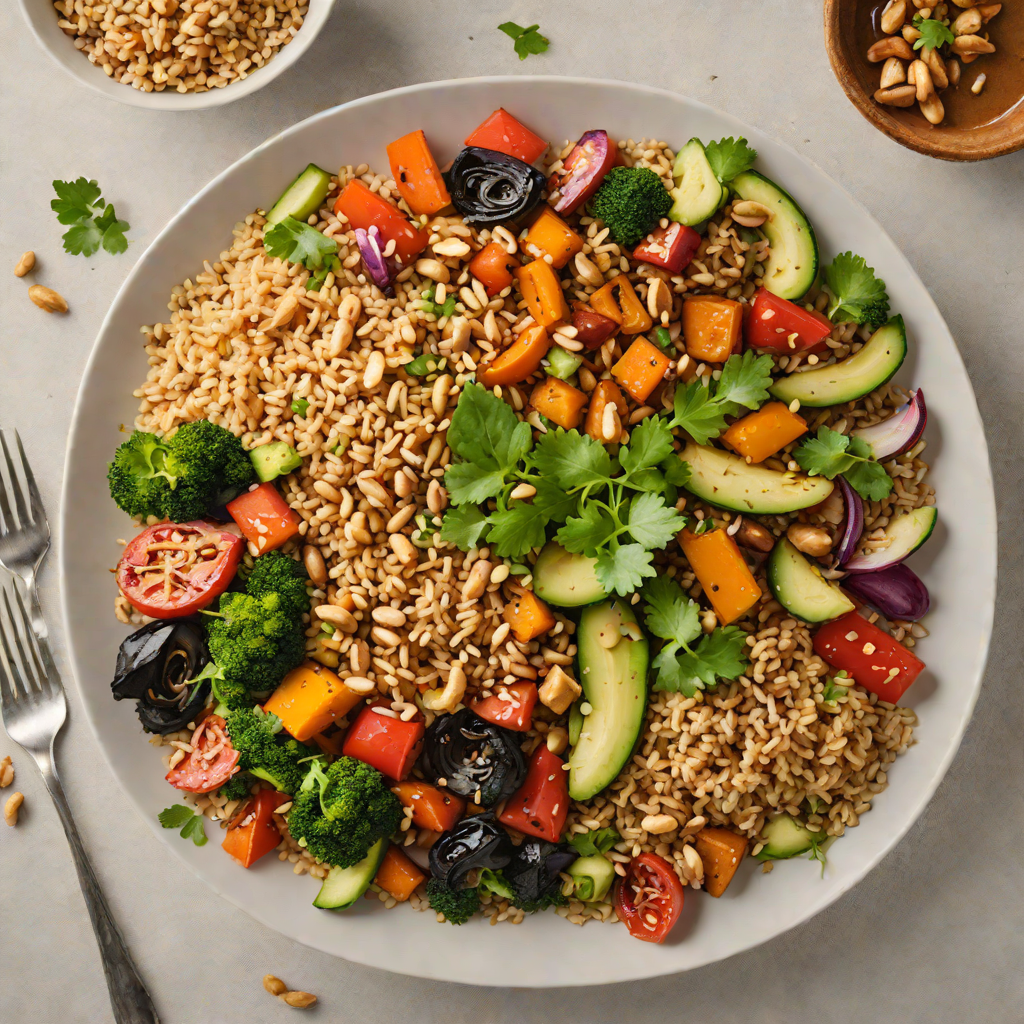
Base (1 cup cooked): brown rice, quinoa, farro, barley, couscous, or — if you're cutting carbs — shredded cabbage or cauliflower rice. Cook 4–5 cups total on Sunday.
Protein (25–35 g worth): from the table above. Roast or simmer two options, not one, so Thursday doesn't taste like Monday.
Vegetables (2 cups, split): one cup roasted (sweet potato, broccoli, cauliflower, peppers, Brussels sprouts) and one cup raw (cucumber, shredded carrot, cherry tomato, red onion). Roasted brings sweetness and holds five days; raw brings crunch and goes in on the day.
Sauce (2–3 tbsp, stored separately): tahini-lemon, peanut-lime, gochujang-sesame, harissa-yogurt, chimichurri, miso-ginger. This is the slot that does the most work for the least effort. Five sauces over five days makes the same base and protein read as five distinct cuisines.
That's the whole system. Ten worked examples follow.
10 make-ahead bowls
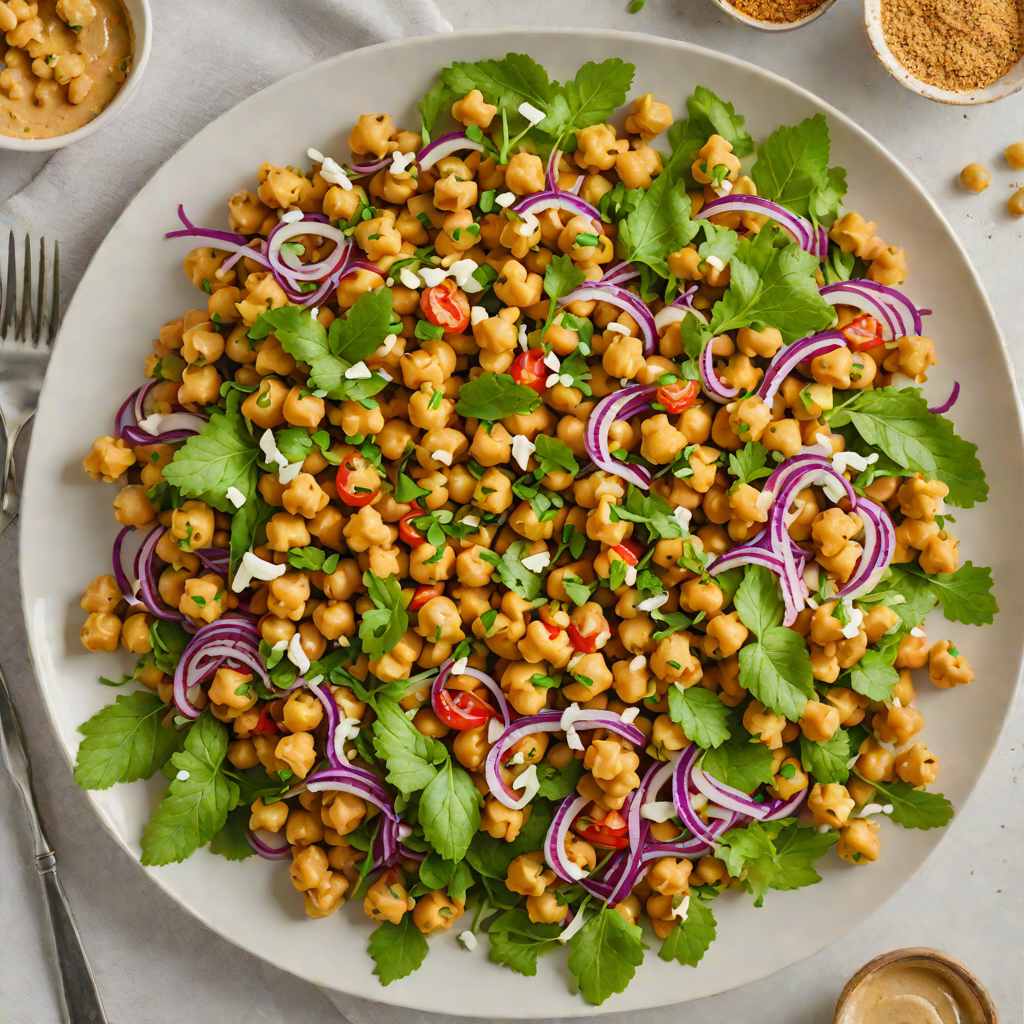
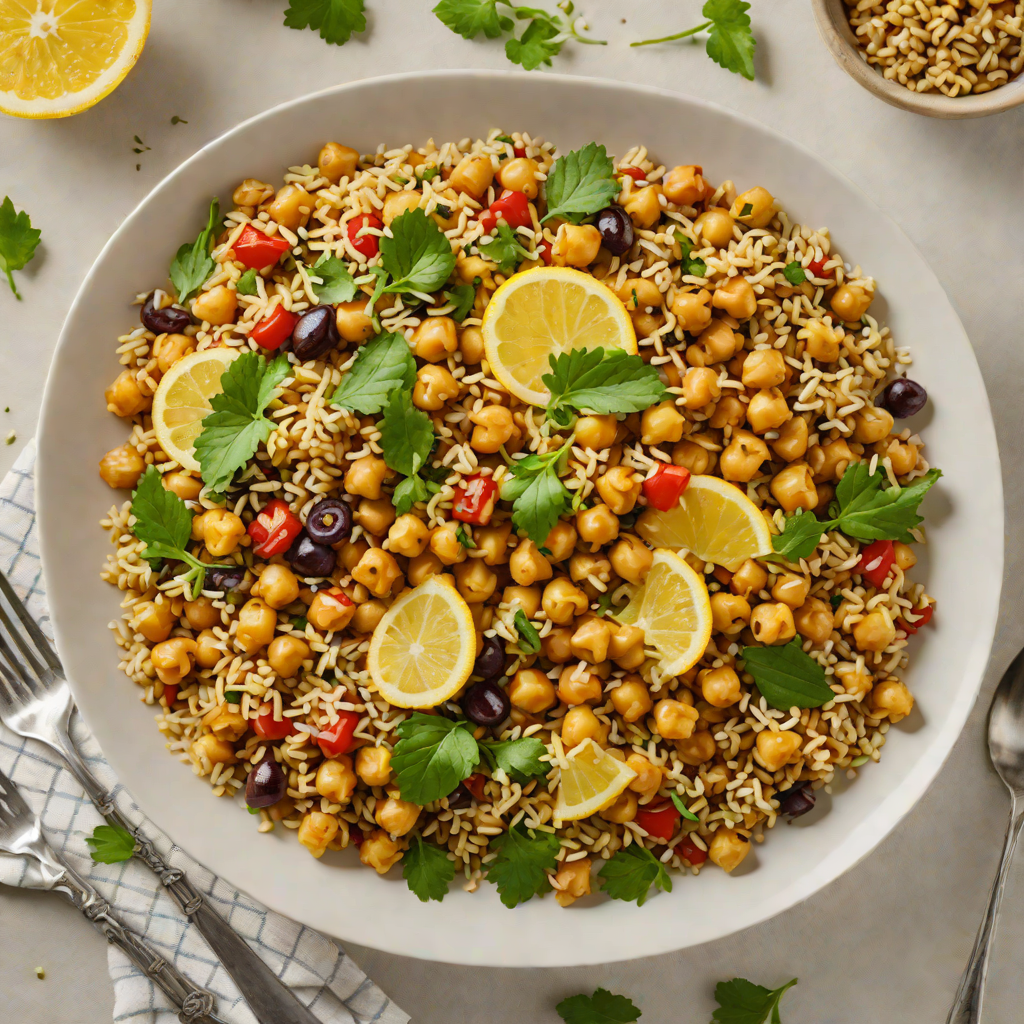
1. Mediterranean chickpea. Sautéed Mediterranean chickpea and spinach bowl — 10 min prep, 12 min cook, 320 calories, 14 g protein. Add hemp seeds or feta to reach the target. The oven-roasted variant, oven-roasted Mediterranean chickpea and vegetable grain bowl, hits 18 g and 480 calories and holds better across five days.
2. Buffalo-style tempeh. Kimchi brown rice tempeh bowl is the sturdiest tempeh bowl in the catalog — 400 calories, 22 g protein, and fermented cabbage that actually improves by day three rather than degrading.
3. Korean tofu. Korean-style tofu bowls with gochujang glaze — 480 calories, 22 g protein. Keep the gochujang glaze in a separate 2 oz container; glazed tofu sitting in the fridge for four days goes soft.
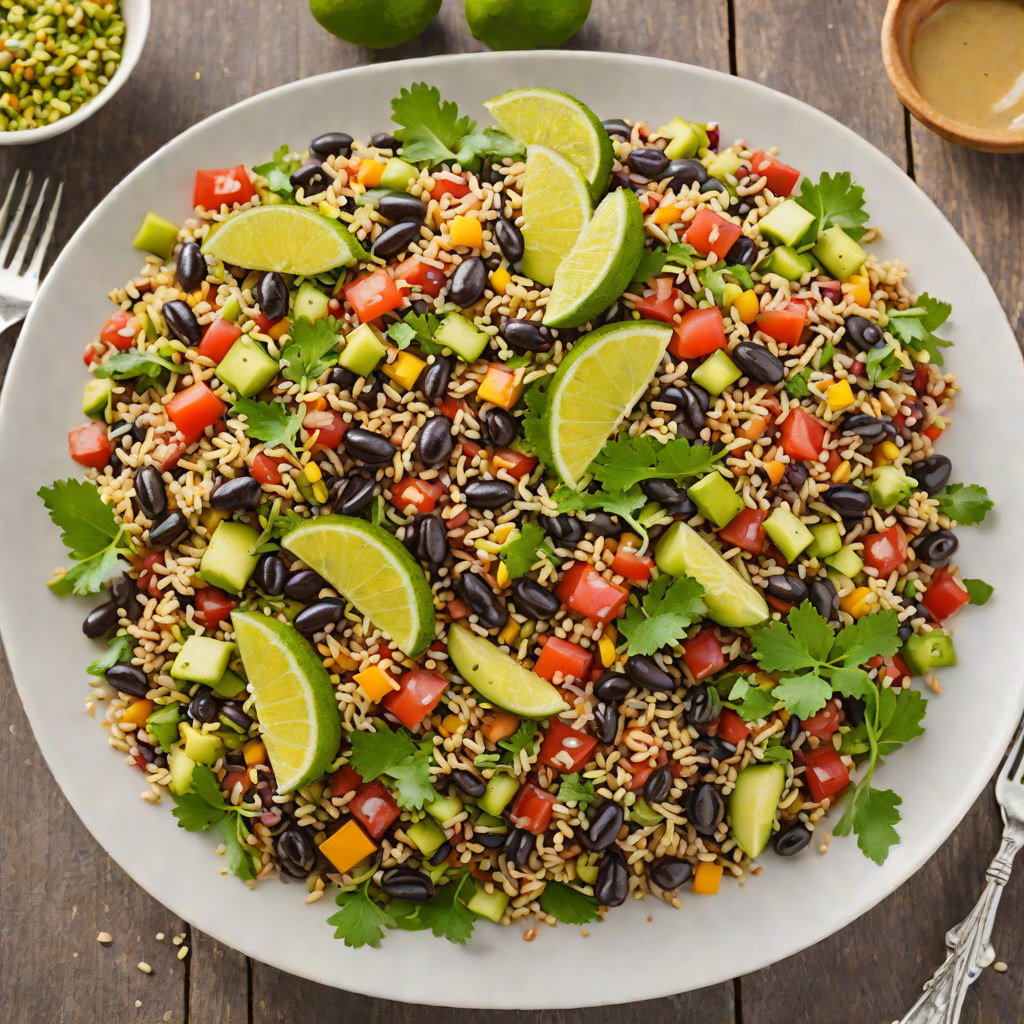
4. Burrito bowl. Coconut-lime vegan rice and black bean bowl — 5 min prep, 380 calories. At 10 g protein it's the lightest here, so top with pepitas or a second scoop of beans. Stir-fried quinoa and black bean bowl with avocado is the higher-fiber alternative at 320 calories.
5. Greek-style grain bowl. Charred vegetable and feta grain bowl with lemon-tahini dressing — 410 calories, 15 g protein, and the charred vegetables are the single best make-ahead component on this list.
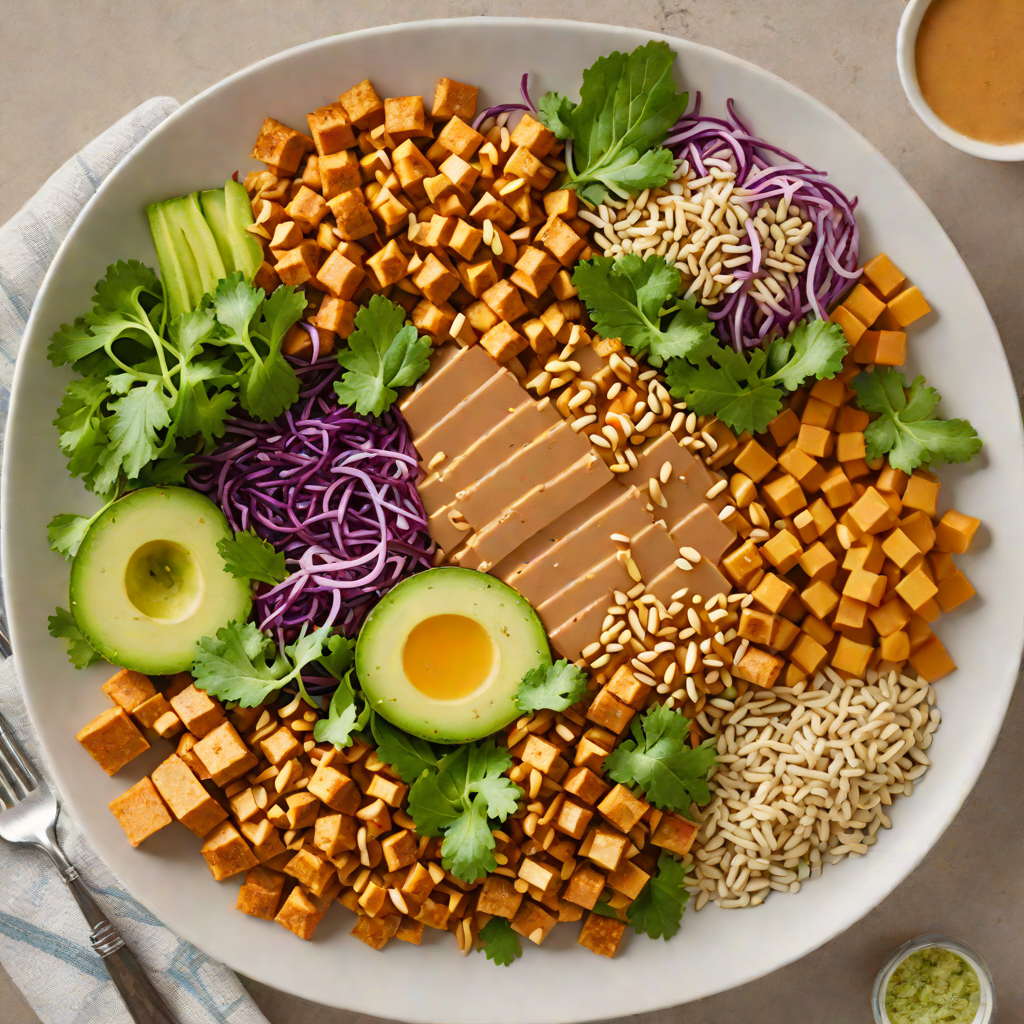
6. Thai peanut. Crisped tofu Buddha bowl with spicy peanut dressing — 15 min prep, 10 min cook, 450 calories, 25 g protein. Hits the target without additions.
7. Teriyaki tofu. Quick teriyaki tofu and rice bowl with vegetables — 420 calories, 18 g protein, 40 minutes start to finish for four portions. Sesame-ginger tofu Buddha bowls with crispy edamame is the higher-protein sibling at 28 g.
8. Harissa lentil. Harissa-spiced lentil grain bowl — 410 calories, 18 g protein. Lentils are the most prep-friendly protein on this page: they reheat without texture loss and cost about $0.40 per serving.
9. Coconut curry chickpea. Thai-inspired coconut curry chickpea bowl — 520 calories, 15 g protein, and the only bowl here that is genuinely better reheated hot than eaten cold.
10. Taco lentil. Build it on one-pot lentil and rice bowl (320 calories) with taco seasoning, or use turmeric-spiced sweet potato and lentil bowl at 380 calories and 18 g protein.
Three more worth rotating in: miso-glazed tofu and roasted broccoli grain bowl (450 cal, 25 g), savory mushroom and lentil grain bowl (490 cal, 18 g), maple-glazed sweet potato and chickpea bowl (420 cal, 14 g), smoky roasted chickpea and sweet potato bowl (480 cal, 15 g), authentic tofu Buddha bowl with quinoa (320 cal, 22 g) and falafel salad bowl with tahini dressing and pickled vegetables (430 cal, 15 g).
The 90-minute Sunday session
Run these four tracks in parallel, not in sequence. The oven and the stovetop do most of the work unattended.
| Time | Oven (425°F) | Stovetop | Counter |
|---|---|---|---|
| 0:00–0:10 | Preheat | Grains on: 2 cups dry | Press tofu, drain beans |
| 0:10–0:25 | Sheet 1: sweet potato, broccoli | Lentils on: 1.5 cups dry | Chop raw vegetables |
| 0:25–0:45 | Sheet 2: tofu, chickpeas | Simmer | Blend 2 sauces |
| 0:45–1:05 | Sheet 1 out, sheet 3: peppers, onion | Grains off, spread to cool | Blend sauce 3 |
| 1:05–1:20 | Sheet 2 and 3 out | — | Portion into containers |
| 1:20–1:30 | Off | Off | Label, refrigerate |
Yield: 5 cups cooked grain, ~5 cups roasted vegetables, 4 cups lentils, 16 oz roasted tofu, 3 sauces. That's five to six full bowls.
Two things that make the difference. Spread the grains on a sheet pan to cool before they go into containers — trapped steam is what makes day-three rice gummy. And cook the tofu until it's actually dry, 30–35 minutes at 425°F with a flip at 20. Tofu that looks done at 20 minutes will be rubbery on Thursday.
A large mixing bowl set makes the tossing step tolerable, a half-sheet pan or two is the real bottleneck if you only own one, and a sharp chef's knife turns the 15-minute chopping block into 8 minutes.
Storage: what holds 5 days vs what goes in fresh
| Component | Fridge life | Freezer | Notes |
|---|---|---|---|
| Cooked grains | 5 days | 3 months | Cool spread out before sealing |
| Roasted sweet potato, squash | 5 days | 2 months | Best-holding vegetable here |
| Roasted broccoli, cauliflower | 4 days | Not recommended | Softens but stays good |
| Lentils, beans (cooked) | 5 days | 3 months | Store in a little cooking liquid |
| Roasted tofu | 4 days | Not recommended | Texture collapses on thaw |
| Tempeh | 5 days | 3 months | Freezes better than tofu |
| Tahini / peanut sauces | 7 days | 1 month | Thin with water when serving |
| Yogurt-based sauces | 4 days | No | Separates on freeze |
| Cucumber, tomato, greens | Add day-of | No | The whole reason for separate storage |
| Avocado | Add day-of | No | Browns in hours |
Assembled bowls with dressing already on them: four days, and honestly good for three. Components stored separately: five days comfortably. That one distinction is the difference between a system you keep using and one you abandon.
Freeze components, never a finished bowl. Flat 1-cup portions in labeled bags thaw in the fridge overnight or in 15 minutes under cool water. If you're stocking up, our freezer meal-prep guide covers the batch-and-freeze rhythm in detail.
Shallow containers, again, matter more than they sound like they should: 1-quart containers chill to safe temperature in roughly 90 minutes where a deep tub takes four hours. Good lidded storage is the least glamorous and highest-return purchase in this whole system.
Build your own bowls with the planner
Everything above is a template, not a prescription. Open the AislePrompt meal-plan planner, filter for vegetarian and meal-prep-friendly recipes, and drag five onto the week — it generates the consolidated shopping list, deduplicates the overlapping ingredients (you will buy tahini once, not three times), and scales servings so a bowl designed for two feeds four.
If you want a shortlist instead of the whole catalog, our vegetarian meal-prep
collection is 22 batch-cook recipes already
filtered to the ones that hold up on day four — the fastest way to swap out a
bowl you've gotten bored of without re-testing anything yourself. The wider
meal-prep hub applies this same component system to
budget and
low-carb targets, and
the planner is where a week's picks turn into one
aisle-grouped shopping list.
If you'd rather work from a finished plan, our grain bowl dinners roundup covers the 30g-protein end of the spectrum, and 20 easy Asian vegetarian dinners is the best source of sauce ideas for the fourth slot.
Gear that earns its space
Component prep needs four things. Everything else on a meal-prep gear list is
optional, and most of it ends up in the back of a cabinet by March.
| Item | What to buy | 2026 price | Why it matters here |
|---|---|---|---|
| Nesting bowls | Wildone 5-piece stainless set with airtight lids | $30 | Prep vessel and fridge storage in one — lids mean the tossed chickpeas go straight in |
| Containers | Pyrex Simply Store 12-pack glass | $44 | 1, 2 and 3-cup sizes map exactly onto component storage |
| Sheet pans | Baker's Secret 18x14 half sheet, 2-pack | $40 | 2.7mm gauge doesn't warp at 425°F, which is where every roast in this plan happens |
| Chef's knife | Victorinox Fibrox Pro 8-inch | $44–50 | The 20 minutes of chopping in the 0:10–0:25 block is the whole knife argument |
About $158 all in, and three of the four last a decade. Compare that against
$5.40 per bowl versus roughly $12 for a prepared-salad-counter equivalent: the
kit pays for itself in about 24 bowls, or five weeks.
Nesting bowls, because prep bowls become storage bowls
The reason to buy bowls with lids rather than the cheaper open sets is that
Sunday's tossing vessel becomes Sunday night's fridge container without a
transfer. Chickpeas get oil, smoked paprika and salt in the 3-quart, go onto a
sheet pan, come back into the same bowl to cool, and the lid goes on. One wash
instead of two, and no decanting step where half the spice coating stays behind.
Stainless matters more than it sounds like it should for this particular
workload: acidic dressings sit in these for five days, and a thin plastic bowl
picks up both the smell of a harissa sauce and a permanent orange cast. The
5-quart handles a full double batch of grain; the 0.63-quart is the right size
for a single sauce. Browse the rest at utensils and prep tools.
Containers: shallow, glass, and sized to the component
The 1/2/3-cup split is the reason to pick this set over a stack of identical
32-ounce tubs. Component storage wants three sizes at once — 3 cups for grains
and roasted vegetables, 2 cups for beans and tofu, 1 cup for sauce — and a
12-pack gives you four of each, which covers one full five-day prep with spares.
Glass over plastic here is not a health argument, it's a reheat argument: you
microwave the same vessel you stored in, no transfer, and glass doesn't stain
from turmeric or curry the way polypropylene does within three uses. The
tradeoff is weight, and it's real — a packed glass bowl runs about 1.4 lb versus
0.6 lb for plastic. If you carry lunch a long way on foot, keep four plastic
deli containers for transport days and use the glass for everything that stays
home. More options in storage and containers.
Two sheet pans is the right number, not three
The Sunday timeline above stages three sheets, but it only ever has two in the
oven at once — sheet 1 comes out at 1:05 and its pan goes back in as sheet 3.
Two 18x14 half sheets cover the entire 90-minute session. A third is convenience,
not capacity.
Gauge is the spec that actually matters. Thin 0.5mm pans warp audibly at 425°F,
which tips oil to one corner and leaves half a tray of sweet potato pale and
steamed while the other half burns. At 2.7mm these stay flat, and flat is what
gives you the browned tofu edges that the whole plan depends on. Skip nonstick
entirely — the coatings degrade fastest at exactly the 425–450°F range this
prep lives in. Bare aluminum plus parchment outlasts it and costs less. See
more at bakeware.
One 8-inch knife, kept sharp
There is no version of this where a $200 knife makes the bowls better. The
Victorinox Fibrox is the standard answer for a reason: a stamped high-carbon
blade that takes an edge in three passes on a rod, a handle that doesn't get
slippery with wet hands, and a price that makes it replaceable rather than
precious. Four and a half pounds of sweet potato, broccoli, peppers and onion
per session is a lot of board time, and a dull knife turns a 15-minute block
into 25 while crushing the cell walls on anything soft.
Sharpen it every third session — 30 seconds on a honing rod, not a full
resharpen — and it holds for years. The rest of the cutting category is at
Cost: what a week actually runs
Five bowls, bought at a mid-range US supermarket in 2026:
| Item | Quantity | Cost |
|---|---|---|
| Extra-firm tofu | 2 blocks | $5.00 |
| Dry lentils | 1.5 cups | $1.20 |
| Brown rice / quinoa | 2 cups dry | $2.40 |
| Sweet potato, broccoli, peppers | ~4 lb | $9.00 |
| Cucumber, tomato, onion | ~2 lb | $4.50 |
| Tahini, peanut butter, soy, spices | amortized | $4.00 |
| Feta or Greek yogurt (optional) | 8 oz | $3.50 |
| Total | 5–6 bowls | $29.60 |
That's about $5.40 per bowl at 25–35 g protein each — roughly 40% below the same protein target built on chicken breast at 2026 retail prices, and well under any prepared-salad counter. The two things that blow the budget are pre-cut vegetables (a 2–3× markup) and single-serve sauces. Buy whole, blend your own.
Common pitfalls
You dress the bowls on Sunday. Greens are slime by Tuesday. Sauce goes in a separate 2 oz container, every time.
You under-cook the tofu. 20 minutes is not enough. 30–35 at 425°F with a flip, until the edges are genuinely browned.
You microwave grains dry. Add a tablespoon of water and cover. Retrograded starch needs steam to reverse.
You use red lentils in a bowl. They collapse into purée. Brown, green or black lentils hold their shape.
You make one sauce for the week. By Thursday you will not want to eat it. Three sauces is the minimum for a five-day rotation and adds maybe 10 minutes.
You skip the acid. A squeeze of lemon or a splash of vinegar at serving time revives a four-day-old bowl more than any amount of reheating does.
When this doesn't work
Skip component-style prep if you eat lunch somewhere without a fridge — assembled-and-dressed bowls are the wrong call, but a mason-jar build with dressing at the bottom does survive a commute, which our mason jar salad meal prep guide covers. Skip it if you're cooking for someone who won't eat cold food, since most of these are designed to be eaten at fridge temperature or barely warmed. And skip the tofu-heavy bowls entirely if soy is off the table — lentils, chickpeas and black beans cover the same protein range without it.
Sources
- Harvard Health — Becoming a vegetarian on nutrient adequacy and what a well-built meatless diet has to cover.
- Academy of Nutrition and Dietetics — Vegetarian and plant-based eating for protein planning and the nutrients worth watching.
- Harvard T.H. Chan School of Public Health — The Nutrition Source: Protein for the plant-protein figures behind the 25–35 g per bowl target.
- FDA — Refrigerator thermometers: cold facts about food safety for the 40°F storage line and safe cooling of cooked food.
Frequently asked questions
How do I get enough protein in vegetarian meal prep?
How long do vegetarian meal prep bowls last in the fridge?
Can I freeze vegetarian meal prep bowls?
How much does vegetarian meal prep cost per week?
Can I use the AislePrompt meal-prep planner to build my own bowls?
Why does my tofu go rubbery by day three?
Meal-prep recipes from the catalog
Save any of these to My Recipes — no account needed — and send the ingredients to Instacart in one tap.