20 End-of-Summer Peach Recipes: Grilled, Baked & Fresh Ideas for August 2026
20 tested peach recipes for peak season — grilled, baked, no-cook — plus the ripening tricks and freezer method to stretch a case through winter.
Peaches are at their absolute best from the last week of July through the first week of September, and if you're reading this in August 2026 you have roughly three weeks left to cook with fruit that actually tastes like something. This roundup pulls 20 tested peach recipes from the AislePrompt catalog — grilled, baked, and no-cook — with the freestone timing, ripening tricks, and equipment picks you need to run through a full case of peaches without wasting a single one.
Get a free cookout plan for a crowd
Mains, sides and quantities scaled to your headcount, with one Instacart cart instead of a spreadsheet.
No spam, unsubscribe in one click. Recipes, shopping lists and Instacart carts all work without an account either way.
Introduction: You have 3 weeks — here's how to use them
Peach season peaks August 5 through August 26 across most of the US, with the true window shifting by roughly two weeks depending on region: Georgia and South Carolina peak in early-to-mid July, California's Sacramento Valley in late July, Colorado's Palisade orchards in mid-August, and Washington's Yakima Valley in late August through early September. Buy peaches in-season and you get 18-22 grams of natural sugar per medium fruit, a peach-forward aroma at three feet, and flesh that pulls cleanly off the pit. Buy the same variety in February and you get a $2.99 tennis ball. The USDA's summer peaches primer has the specifics on regional varieties if you want to time your farmers-market runs.
The best strategy for a home cook this month: buy a full case (24-30 peaches) at a farmers market, split them into three groups based on ripeness — dead ripe for tonight, one day out for tomorrow, three days out for the weekend — and freeze the last 8-10 slices for winter cobblers. The recipes below cover every use case, from a 15-minute grilled starter to a Sunday-afternoon galette.
How to buy, ripen, and store peaches
Squeeze at the shoulder (the top, near the stem), not the equator — the flesh gives first at the shoulder when the peach is ready. Smell it: a truly ripe peach smells peachy from six inches away. The background color under the red blush should be gold or cream; green means underripe and no amount of counter time will fix it (the peach was picked too early and will just soften into sadness, never sweetness). Serious Eats' best peach recipes guide covers the visual cues in more depth if you want reference photos.
Ripen on the counter, not the fridge. A firm-but-fragrant peach ripens in 2-4 days on the counter, ideally in a paper bag with a banana (the ethylene from the banana accelerates the process). Once ripe, transfer to the fridge and use within 3 days — the cold arrests further ripening and prevents mealy texture from setting in. Refrigerating an unripe peach is the single most common home-cook mistake; the cold shocks the fruit and locks in whatever underripe starch you brought home.
Freestone vs clingstone matters more than variety. Freestone peaches (August-September varieties like O'Henry, Elberta, and Cresthaven) have flesh that pulls cleanly away from the pit — you halve them, twist, and the pit lifts out. Clingstone peaches (early-season, June-early-July: Springcrest, Redhaven) have flesh that grips the pit and are much harder to slice; they're canned or juiced commercially for exactly that reason. Every recipe below assumes freestone; check the sign at the market or ask a produce clerk before you buy.
Storage rule of thumb: dead ripe → fridge, use in 3 days. Firm ripe → counter, ripen 1-3 days. Truly underripe (rock hard, green shoulders) → don't buy it.
Grilled + savory peach dinners (5 recipes)
Fire and stone fruit are one of the best flavor pairings in summer cooking — the sugar in a ripe peach caramelizes hard on a hot grill, developing a jammy sweetness that pairs shockingly well with salt, char, and fat. All five of these are 30 minutes or under and use grill or cast-iron heat.
- Grilled peach + burrata starter. Grilled Georgia Peach and Burrata Salad with Balsamic Reduction is the fastest way to prove to a dinner guest that peaches belong in savory food. Grill halved peaches cut-side down 3 minutes, plate on burrata, drizzle with balsamic. Twenty minutes end to end.
- Peach-glazed pork chops. Whiskey-Glazed Grilled Pork Chops with Cedar Park Peach Salsa uses a two-part treatment: a whiskey-peach glaze brushed on during the last 90 seconds of grilling, plus a chunky peach-jalapeño salsa spooned over the sliced chops. Ready in 25 minutes.
- Peach glaze on fish. Rum-Braised Peach Glazed Salmon reduces peach, dark rum, and soy into a lacquer thick enough to stay on the fillet over fire. Grill it over medium-high, skin-side down for 4 minutes, flip, then brush the glaze on for the last 2 minutes only — the sugars scorch if they go on earlier. Serve with a spoonful of fresh peach-jalapeño salsa on the side for acid.
- Peach + goat cheese flatbread. Grilled Peach & Goat Cheese Flatbread is a dinner-party staple: par-bake the flatbread, top with grilled peach slices, goat cheese, arugula, and a thin drizzle of hot honey. Cuts into 8 pieces; feeds 4 as a light dinner or 8 as a starter.
- Peach BBQ chicken. Pan-Seared Chicken with South Carolina Peach BBQ Glaze turns peach purée into a thick, tangy BBQ sauce that clings to chicken thighs. Grill thighs skin-side down 8 minutes, flip, brush with glaze, finish 4 more minutes. The glaze also works on ribs and pulled pork.
The unifying technique across all five: peach hits the grill or pan at the very end, never at the start. Sugar burns fast — direct heat for more than 4 minutes turns a peach into an ash-crusted disappointment.
Peach salads + sides (4 recipes)
Cold peach in a salad plays the same role a ripe strawberry plays in June — a sweet, acidic pop that lifts everything around it. These four are the ones we keep coming back to.
- Peach caprese. Heirloom Tomato & Peach Caprese with Smoked Tomato Vinaigrette swaps half the tomato for sliced peach and adds a smoked-tomato vinaigrette that unites the two. Fifteen minutes; no cooking beyond the vinaigrette.
- Arugula + peach salad. Palisade Peach and Arugula Salad with Toasted Pumpkin Seeds is our house salad in August. Peppery arugula, sweet peach, toasted pepitas, and a shallot-Dijon vinaigrette. Ten minutes.
- Peach + corn salad. Grilled Corn and Peach Salad with Honey Thyme Dressing is what to serve alongside grilled anything. Char the corn and peaches on the same grill you just used for the main; toss with honey-thyme dressing and cotija. Twenty-five minutes.
- Peach chutney (side). Pan-Seared Pork Chops with Colorado Peach Chutney is technically a main, but the chutney itself — peach, red onion, brown sugar, apple cider vinegar, mustard seed — keeps in the fridge two weeks and elevates a Tuesday-night rotisserie chicken. Make a double batch.
Real-world numbers: what a peach adds to a plate
One medium (150g) freestone peach at peak ripeness delivers roughly:
| Metric | Per medium peach |
|---|---|
| Calories | 58 |
| Sugar (natural) | 12.5 g |
| Fiber | 2.3 g |
| Vitamin C | 10% DV |
| Vitamin A | 6% DV |
| Potassium | 7% DV |
| Water content | 88% |
That water and fiber combo is why peach pairs so well with rich fat (burrata, pork, salmon) — it cuts through and refreshes the palate between bites, the way lemon does at a fish restaurant.
Baked peach desserts (6 recipes)
Baking is where a slightly-underripe peach earns its place. The oven softens firm flesh, concentrates the sugar, and gives you 45 minutes of latitude to nail the crust. Six proven builds:
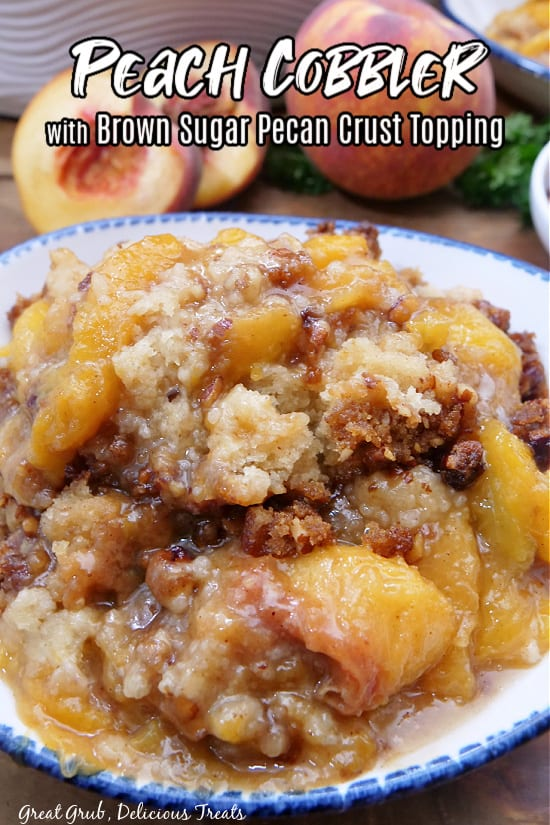
- Peach cobbler (classic). Cinnamon-Spiced Peach Cobbler with Brown Sugar Crumble is our top cobbler. Cast-iron skillet, drop-biscuit topping, 45 minutes at 375°F. The brown-sugar crumble crisps into caramel patches on top.
- Peach crumble. Baked Peach and Pecan Cobbler with Brown Sugar Glaze uses a streusel-style crumble topping instead of biscuit, with toasted pecans folded in. Better make-ahead than the biscuit version — reheats without going soggy.
- Peach galette. Sheet Pan Rustic Peach Galette with Almond Glaze is the "I don't want to blind-bake a pie crust" answer. All-butter pastry rolled thin, peach slices fanned in the middle, crust folded up around them, 40 minutes at 400°F. Almond glaze at the end.
- Peach hand pies. Peach and Cream Cheese Hand Pies turn one batch of pie dough into 12 portable turnovers. Freeze half of them uncooked; bake straight from frozen (add 8 minutes) whenever a craving hits.
- Peach upside-down cake. No dedicated catalog page yet — use the Golden Rum-Spiked Pineapple Upside-Down Cake as your base and swap fresh peach slices 1:1 for the pineapple rings. Reduce baking time by 5 minutes; peaches release more liquid than pineapple.
- Brown-butter peach shortcake. Sheet Pan Peach Shortcake with Whipped Honey Cream is the closest catalog match. The brown-butter move: melt 4 tbsp butter, cook until nutty and golden (~4 minutes), cool, then cream with sugar and fold into the biscuit dough. Adds a nutty depth the standard shortcake lacks.
Baking pan matters. A 10-inch cast-iron skillet is our top pick for cobbler and upside-down cake — even heat, easy caramelization, and it goes straight from oven to table. A rimmed sheet pan works for galettes and hand pies. Everything else (glass baking dish, ceramic pie plate) is optional; see the bakeware collection for our tested picks.
Crisps: the 20-minute answer when you don't want to make dough
A crisp is a cobbler without the biscuit discipline. No dough to cut in, no
lattice, no chilling — you toss fruit with sugar and cornstarch, rub oats and
butter together with your fingers, and bake. From whole peaches to the table is
about 55 minutes, and roughly 20 of those are hands-on. It is the format to pick
when the peaches are already too soft to slice cleanly for a galette.
- Skillet crisp. Skillet Glazed Peach Crisp with Oat Topping builds the glaze in the same 10-inch cast-iron pan you bake in — one pan, no transfer, and the edges caramelize against the hot metal. Best single-pan dessert on this list.
- Sheet-pan crisp for a crowd. Peach and Blueberry Sheet Pan Crisp with Almond Streusel spreads thin across a half sheet, which means every serving gets topping instead of the center-scoop problem a deep dish creates. Feeds 12 from about 3 pounds of fruit.
- The bourbon version. Half-Baked Bourbon Peach Crisp pulls the pan while the center is still loose, so it sets to a spoonable sauce rather than a slice. Two tablespoons of bourbon go in with the fruit; most of the alcohol cooks off and what stays reads as vanilla and oak.
Ratio to memorize: 6 cups sliced peaches, ⅓ cup sugar, 2 tbsp cornstarch,
1 tbsp lemon juice for the filling; 1 cup rolled oats, ¾ cup flour, ½ cup brown
sugar, 6 tbsp cold butter for the topping. That scales linearly and works with
any stone fruit, so the same numbers carry you into plum and nectarine season.
Fresh + no-cook peach ideas (5 recipes)
Some nights you don't want to turn on the oven in August. These five involve zero heat and take under 15 minutes each.
- Peach smoothie. No dedicated recipe yet — blend 1 cup frozen peach slices, 1 banana, 1 cup Greek yogurt, ½ cup milk, 1 tbsp honey, and a pinch of cinnamon. That's a 320-calorie breakfast with 20g protein and 8g fiber. NYT Cooking's peach recipes hub has a dozen more no-cook builds if you want variations.
- Peach salsa (fresh). Pan-Seared Salmon with Charred Peach Salsa — skip the salmon and eat the salsa with tortilla chips. Diced peach, red onion, jalapeño, cilantro, lime juice. Ten minutes. Better after 30 minutes of fridge rest.
- Peach jam (small-batch, no canning). Simmer 4 cups diced peach, 1 cup sugar, 2 tbsp lemon juice for 25 minutes until thickened. Cool and refrigerate in a mason jar; keeps 3 weeks. This isn't shelf-stable canned jam — no pectin, no water bath — just a quick fridge preserve for toast, biscuits, and cheese boards. See our Cinnamon-Spiced Peach Cobbler for the same simmer-down technique applied to a filling.
- Peach iced tea. Peach Jasmine Iced Tea uses cold-brewed jasmine tea (10 hours in the fridge) and fresh peach purée — no simple syrup needed if the peaches are ripe. Doubles cleanly for a party.
- Peach parfait. No-Bake Peach and Greek Yogurt Parfait with Toasted Almonds layers Greek yogurt, granola, sliced peach, and honey in a mason jar. Make four at once on Sunday night for weekday breakfasts.
Frozen peach: ice cream, popsicles, and a blender margarita
Frozen peach is the most underused format in August, and it is the one that
survives the heat. A peach that has gone one day past slicing-firm is better
frozen than fresh — the texture no longer matters once it is puréed, and the
sugars have concentrated.
| Format | Active time | Freeze time | Equipment | Holds |
|---|---|---|---|---|
| Ice cream sundae | 10 min | none (uses store base) | none | serve immediately |
| Frozen yogurt popsicles | 15 min | 4-6 hrs | popsicle molds | 2 weeks |
| Dump-cake à la mode | 10 min | none | 9x13 baking dish | 3 days refrigerated |
| Blender margarita | 5 min | none (frozen fruit) | blender | serve immediately |
| No-churn sorbet | 10 min | 4 hrs | food processor | 1 month |
- Ice cream, without an ice cream maker. Peach and Basil Ice Cream Sundae with Honey Drizzle skips churning entirely — you macerate peaches with basil and honey, then spoon them warm over good vanilla. The temperature contrast does the work a custard base would.
- Popsicles that aren't 90% sugar. Peach and Basil Frozen Yogurt Popsicles run about 90 calories each with 4g protein, because full-fat Greek yogurt replaces most of the syrup. Freeze 4-6 hours; run the mold under warm tap water for 10 seconds to release.
- The lazy à la mode. Peach Cobbler Dump Cake with Vanilla Ice Cream is 10 minutes of assembly — fruit, dry cake mix, sliced butter, bake. It is not as good as a real cobbler and it does not pretend to be; it is what you make at 4pm when guests arrive at 6.
- No-churn peach sorbet. No catalog page yet, and it needs none: freeze 4 cups peach slices solid, then run them in a food processor with 3 tbsp honey and 1 tbsp lemon juice for 90 seconds, scraping twice. It goes from gravel to smooth sorbet in that window — stop the moment it turns glossy or it melts to a slush.
- Frozen peach margarita. Blend 2 cups frozen peach slices, 3 oz blanco tequila, 1½ oz lime juice, 1 oz orange liqueur, and 4-5 ice cubes for 30 seconds. Frozen fruit means you need far less ice, so it does not water down over an hour on a patio table. Non-drinkers get the same build with 3 oz of the Sparkling Ginger and Peach Non-Alcoholic Punch in place of the spirits.
A high-torque blender or a food processor is the only equipment that matters
here — the sorbet in particular will stall a weak motor on frozen fruit. Our
tested picks are in the small appliances collection, and
the molds and citrus press live in gadgets.
How to preserve the season: freezing peaches
Frozen peaches are the single best reason to buy a case at peak season. Done right, they hold 8-10 months and produce winter cobblers indistinguishable from fresh-made in August.
The method:
1. Bring a large pot of water to a rolling boil; prepare a bowl of ice water alongside.
2. Score a small X on the bottom of each peach with a sharp paring knife.
3. Blanch peaches in boiling water 30-45 seconds (until skins start to lift at the X).
4. Transfer immediately to ice water — the skins slip off cleanly with your fingers.
5. Halve, pit, and slice into ½-inch wedges.
6. Toss with 1 tbsp fresh lemon juice per 4 cups slices (slows enzymatic browning during storage).
7. Lay in a single layer on a parchment-lined sheet pan; freeze until solid (about 2 hours).
8. Transfer to zip-top freezer bags; press out all the air. Label with the date.
Frozen peaches thaw in about 30 minutes on the counter, or use them straight from frozen in smoothies, cobblers, and jams. Skip the sugar-syrup step you'll see in older canning guides — it's meant for canned peaches, not frozen, and adds nothing but calories.
Quick peach pickles: 20 minutes, six weeks of shelf life in the fridge
Firm, slightly underripe peaches — the ones that never ripened right — make
better pickles than perfect ones. This is a refrigerator pickle, not a canned
one: no water bath, no pectin, no pressure gauge.
1. Slice 4 firm peaches into ½-inch wedges (skin on) and pack them into two pint jars with 4 thin slices of shallot and 6 black peppercorns each.
2. Bring 1 cup cider vinegar, 1 cup water, ⅓ cup sugar, 1 tbsp kosher salt, 2 star anise, and a 1-inch piece of ginger to a boil; simmer 2 minutes.
3. Pour hot brine over the fruit to cover, cool on the counter for 1 hour, then refrigerate.
They are ready in 24 hours and hold 6 weeks. Use them where you would use a
pickled onion: on pulled pork, next to a cheese board, or chopped into the
Whiskey-Glazed Grilled Pork Chops with Cedar Park Peach Salsa
instead of the fresh salsa once the good fruit is gone. Penn State Extension's
guide to selecting and storing peaches
covers the firmness cues that separate a pickling peach from a compost peach.
Kitchen equipment: what actually matters
Peach recipes don't demand specialty equipment, but four items make the season noticeably easier:
- A sharp paring knife. For scoring, peeling blanched peaches, and pitting freestones. A dull knife tears the flesh and wastes fruit. Our current picks are in the knives collection — a 3.5-inch paring knife runs $30-60 for a solid one that'll last 10+ years.
- 10-inch cast-iron skillet. For cobblers, upside-down cake, and stovetop-to-oven pork chops. See the bakeware category for pre-seasoned options in the $30-80 range.
- Rimmed half-sheet pan. For galettes, hand pies, freezing slices, and toasting streusel. One good aluminum sheet pan (18×13") lasts a lifetime.
- Y-shaped peeler. Blanching is faster for a whole case, but for 1-2 peaches a sharp Y-peeler works and is worth the drawer space. Any peeler in the kitchen gadgets aisle at the $10-15 tier does the job.
Common pitfalls (5 mistakes I see every August)
1. Buying underripe peaches for a Saturday dinner. Underripe peaches take 3-4 days to soften on the counter and never develop full sugar. Buy Wednesday for Saturday.
2. Refrigerating unripe fruit. Kills further ripening and locks in mealy texture. Counter first, fridge second.
3. Skinning peaches for a cobbler. The skin softens completely during baking and adds pectin that thickens the filling. Only skin for jam or if you're serving a dessert to a texture-averse audience.
4. Using canned peaches in a "fresh" recipe. Fine for cobbler and jam; wrong for anything grilled, in a salad, or paired with burrata. The canning process cooks out the aroma.
5. Slicing peaches an hour ahead and letting them sit. Peaches oxidize fast. Slice immediately before use, or toss with 1 tbsp lemon juice per 2 cups slices.
When NOT to bake with peaches
Skip peach baking entirely if what you have on hand is grocery-store peaches picked in January and shipped from Chile. They have no aroma, no sugar, and no textural payoff — even 45 minutes in a 375°F oven can't compensate for what wasn't there to begin with. Substitute frozen peaches (from your August stash) or use canned peaches in juice for baked goods; keep the fresh out-of-season fruit for smoothies where the blender masks the mediocrity.
Labor Day cookout menu: a peach-forward spread for 8
Labor Day 2026 lands on Monday, September 7 — the last weekend peaches are worth buying at full price. Local stone fruit drops off hard in the ten days after; by mid-September you are paying August money for storage fruit. Here is a full cookout menu built around one 4-pound case, sequenced so only two dishes need the grill at the same time.
| Course | Dish | Peaches used | Active prep | Make ahead? |
|---|---|---|---|---|
| Appetizer | Spiced Peach and Burrata Flatbread with Basil | 2 | 15 min | Dough only |
| Salad | Loveland-Inspired Grilled Peach and Arugula Salad | 3 | 12 min | Grill peaches 1 day |
| Main | Bourbon-Peach Glazed Chicken Thighs with Charred Scallions | 3 | 20 min | Glaze 3 days |
| Skewers | Smoky Bourbon Honey Chicken Skewers with Peach Salsa | 2 | 25 min | Salsa 1 day |
| Dessert | One-Hour Classic Southern Peach Cobbler | 6 | 20 min | Bake same day |
| No-cook dessert | No-Bake Peach Mascarpone Parfaits with Honey and Almonds | 3 | 15 min | 4 hours ahead |
That is 19 peaches, or roughly 4 pounds at 4-5 medium peaches per pound. Buy Wednesday September 2 so the fruit hits full ripeness Saturday-Sunday.
Drinks: one with bourbon, one without
Every cookout needs a non-alcoholic option that is not soda. Sparkling Ginger and Peach Non-Alcoholic Punch batches to a gallon in about 10 minutes and holds in a drink dispenser for four hours without going flat if you add the sparkling water in two stages. For the adults, Muddled Bourbon Peach Smash is a per-glass build, but you can pre-muddle the peach and sugar in a quart container the morning of and let guests top with bourbon and ice. Stock the bar and coffee shelf with a muddler and a 64-oz dispenser and you have covered both.
Cookout timing: the 3-hour countdown
- T-3h: Make the salsa and the parfaits. Both need refrigerator time. Slice nothing else yet — cut peaches oxidize within 30 minutes.
- T-2h: Mix the cobbler filling and hold it. Prep the glaze if you did not do it earlier in the week.
- T-90m: Cobbler into a 375°F oven. It comes out as guests arrive and is best served warm, not hot.
- T-45m: Grill goes on. Peaches for the salad first (cut side down, 3-4 minutes, no oil on the grates or they stick), then flatbread, then chicken.
- T-20m: Chicken thighs get glazed in the last 8 minutes only. Bourbon-peach glaze is high enough in sugar that it burns black over a 12-minute exposure.
- T-0: Dress the salad. Not before — arugula wilts in about 15 minutes under a vinaigrette.
A half sheet pan and a wire rack let you stage everything off the grill without stacking; a cast-iron skillet or grill pan handles the peaches if your grates are wide enough to lose fruit through.
Shopping in one pass
Build the whole menu into a single AislePrompt shopping list and the duplicated items collapse — you buy four pounds of peaches once, one bunch of basil, one bottle of bourbon that covers the glaze, the skewers, and the smash. Without that, six separate recipe pages send you back to the produce bin three times. For pantry staples like the bourbon, honey, and cornmeal, check what you already have before the list goes to the store; the cobbler and the glaze both want brown sugar and most people already have it.
Related reading
- Peak Summer Produce Guide: What to Cook in July & August — where peaches sit against the rest of the August market.
- 22 Best American Grilling Recipes for Labor Day 2026 — the mains to build the cookout around.
- Labor Day Weekend Cookout: 20 Grill, Side & Dessert Recipes — the full long-weekend spread, peaches included.
- 25 Best Labor Day Side Dishes: BBQ-Ready Salads, Slaws + Grilled Sides — what to serve next to the peach salads above.
FAQ
The five most common questions on peaches this time of year, from our reader mailbag and search-console queries.
Sources
- USDA — Enjoying Summer Peaches
- Serious Eats — Best Peach Recipes
- NYT Cooking — Peach Recipes Hub
Last verified: August 7, 2026. Recipe availability and pricing checked at publish time; peach season windows are approximate and vary year to year with weather.
Frequently asked questions
How do I pick a ripe peach at the grocery store?
What's the difference between freestone and clingstone peaches?
Can I use frozen or canned peaches instead of fresh?
How do I stop cut peaches from turning brown?
How should I freeze peaches for winter use?
Should I peel peaches for cobbler?
How do I ripen underripe peaches at home?
Sources
Plan the whole cookout in one go.
Ask our AI for mains, sides and quantities for your headcount — one Instacart cart, no spreadsheet.
Plan my cookout →